


We are staying two days in Kakheti, the “Napa Valley” or main wine-producing region of Georgia. We discovered Georgian wines in Tashkent. Georgia has one of the oldest wine cultures in the world, some people say the longest. The Soviets took advantage of this and converted Georgia into the “industrial” or “factory” wine production area for the USSR. Georgia still sells wine to all former Soviet Republics. Post independence, wineries are rediscovering their traditional methods and individuality. Georgian wines are now shipped all over the world, and wine production is coming into its own. We did a wine tasting here at the Schuchmann Winery last night, and I read Lisa Granik’s “The Wines of Georgia. Below is my description of what makes Georgian wines distinct from other wine regions around the world.
Georgia is different from other wine-producing countries for two main reasons:
- Many wine producers use the traditional Georgian method of fermenting, aging, and storing grapes in huge (1,000 – 2,000 liters) egg-shaped clay vessels called qvevri buried in the ground and lined with beeswax.
- There are 400 different endemic Georgian grape varieties and 18 appellations in Georgia, 15 here in the Kakheti Region. (An appellation means the wine is named after the region it was grown in, and not the grape variety, for example, Champagne.)
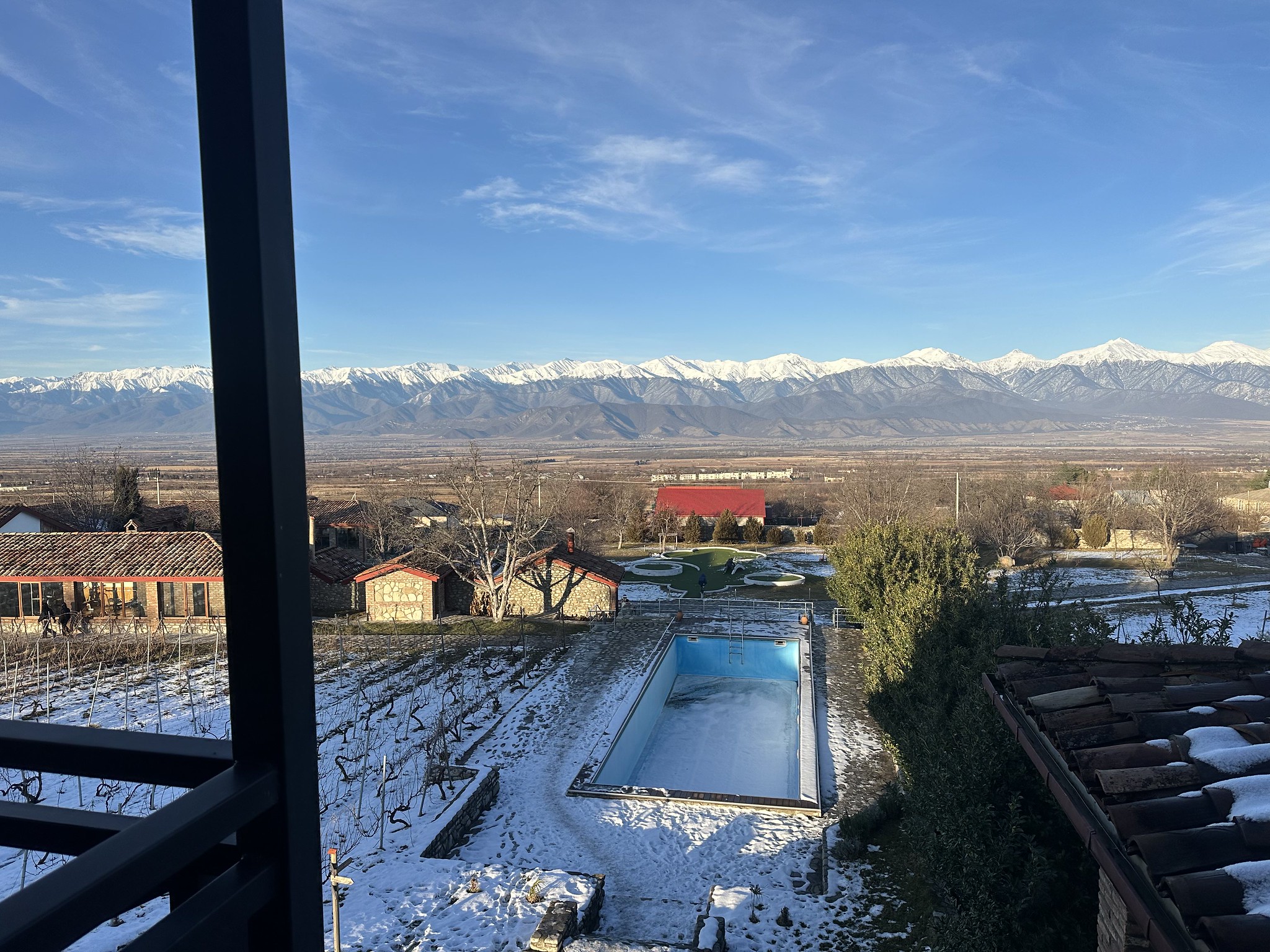
These provide challenges for Georgian winemakers. Making wine in a clay vessel is difficult. It takes hours to clean qvevri because the clay surface is prone to bacterial growth, and too many minerals from the clay seep into the wine. Qvevri are difficult to make and maintain as they are prone to cracking and leakage. Georgian grape varieties are difficult for foreigners to pronounce. A delicious, semi-sweet, red grape variety we discovered at the Ambrosiano Restaurant in Tbilisi is called “Qindzmarauli”. Say that quickly 3 times and try to market that variety to the world. The other challenge is climate change. Less snow cover in the winter (high of 13 C today) and more rain in the spring promote fungal diseases.
To simplify it for me, I summarize Georgian wines below:
- SAPERAVI: It is the most common red grape variety, accounting for 40%+ of the vineyard land in Kakheti and 10%+ of all plantings in the country. It is an ancient variety and means “to color with” or “to dye” in English. Both traditional and European methods (steel – oak casks) are used to produce it. Lisa Granik writes, “its varietal character is distinctive, speaking loudly and clearly even when produced in mass-market quantities.” Saperavi is the signature red grape and is the equivalent to other countries’ Cabernet Sauvignon.
- QVEVRI AMBER WINES: I never heard of “amber” wines before this trip to Georgia. White grapes are squeezed and then fermented and stored with the skins and stems, producing an orange or amber color. Combine fermentation and aging with the skins/stems and doing it in a clay vessel, it makes for a Georgia-only wine experience.
- Rkatsiteli: This is the signature white grape variety in the country and accounts for 45% of all grape planting in Georgian vineyards. Granik calls is “Georgia’s greatest and most noble variety. The name means “red stem” which comes from what it looks like in the vineyard. It is another ancient variety, dating back to the first few centuries CE/AD.
We tried three Georgian wines in our tasting session last night.
- 2022 Schuchmann Tsinandali – This appellation is from a royal estate in the Kakheti region. It is a white wine blend of Rkatsiteli (85%) and Mtsvane (15%) and was produced using European methods. We scored it an average of 7.95.
- 2022 Vinoterra Mtsvane – Vinoterra is the brand used by Schuchmann when they produce the wine in qvevri. This was my favorite wine of the three we tasted. The amber wine had a complex taste, including being stored in an oak barrel after being produced in the clay vessel. We scored it an average of 8.35.
- 2023 Schuchmann Mukuzani – The appellation uses Saperavi and is aged in oak. We scored it a 7.90.
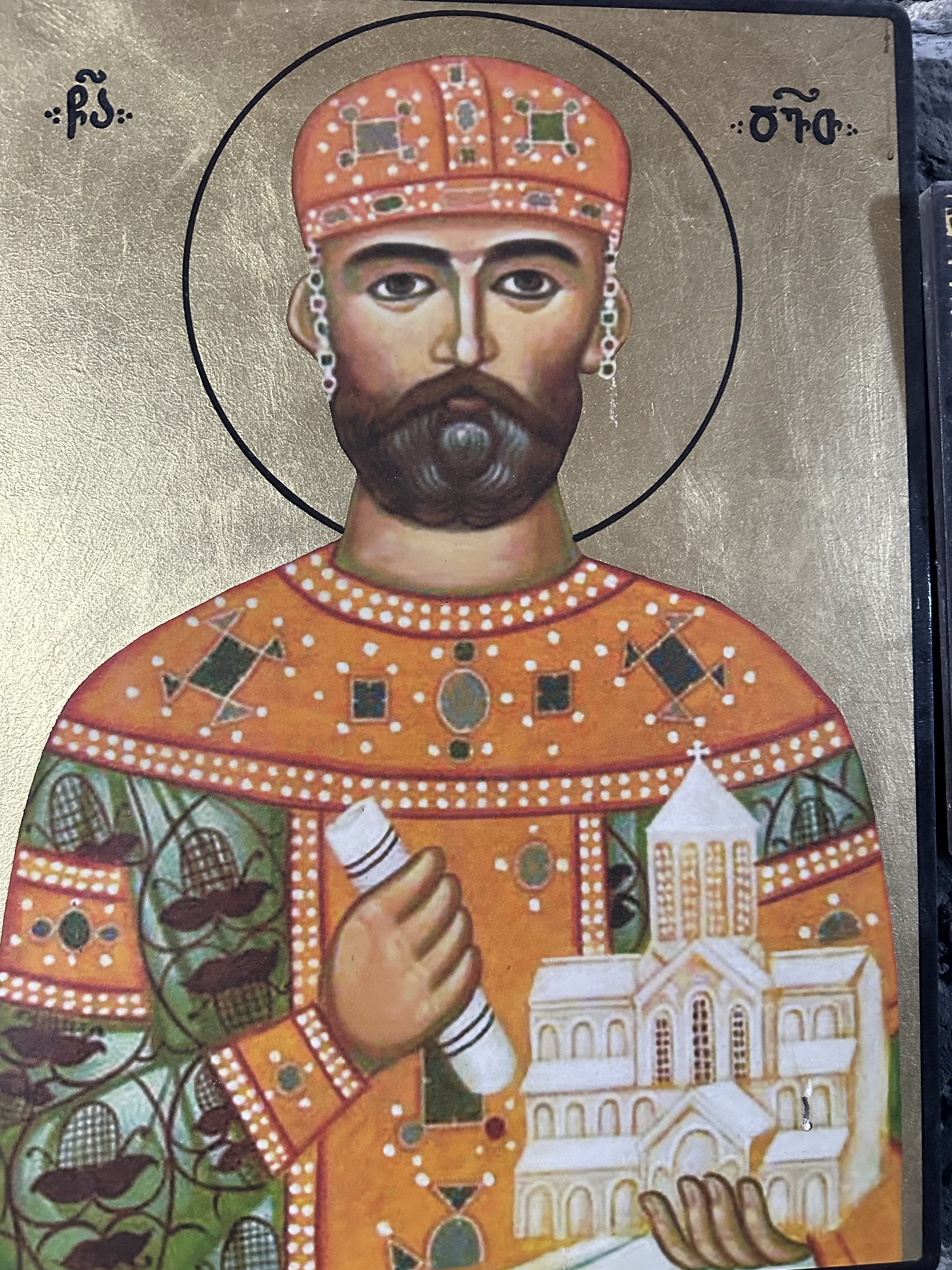
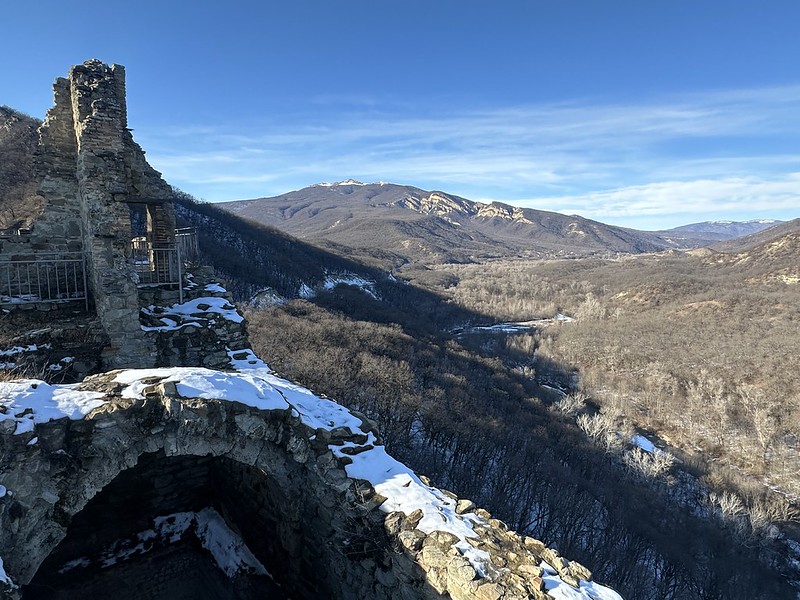
We had a great day yesterday. We stopped at the Ujarma Fortress as we drove from Tbilisi to the Kakheti Valley. Ocean and I toured the ruins of the fortress that dates back to 500 CE. We also stopped halfway on the two-hour+ drive at the Gombori Pass and soaked in the views of the Caucasus. Beautiful! I love family road trips.
 Bill's Blog