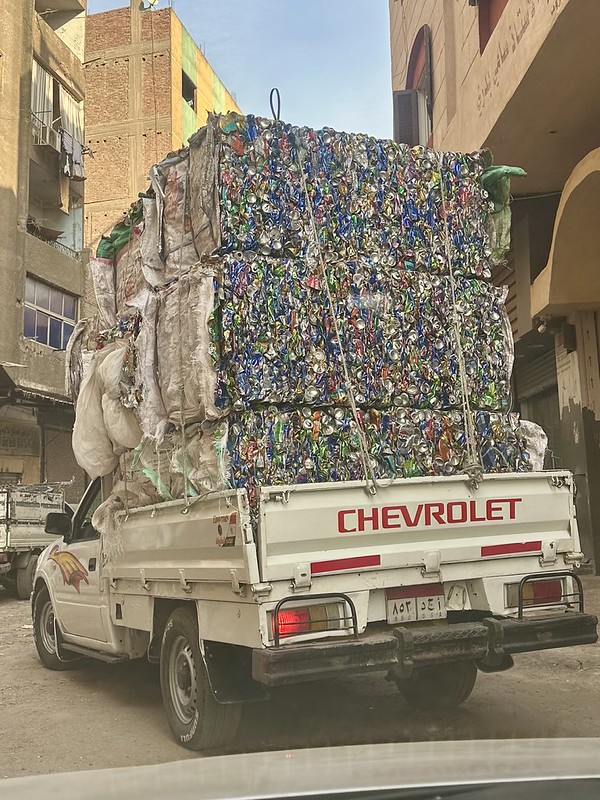
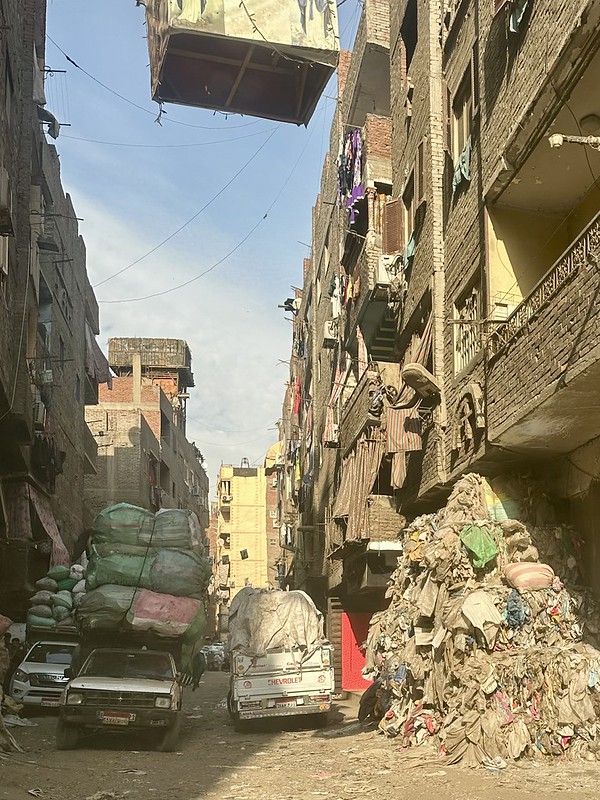
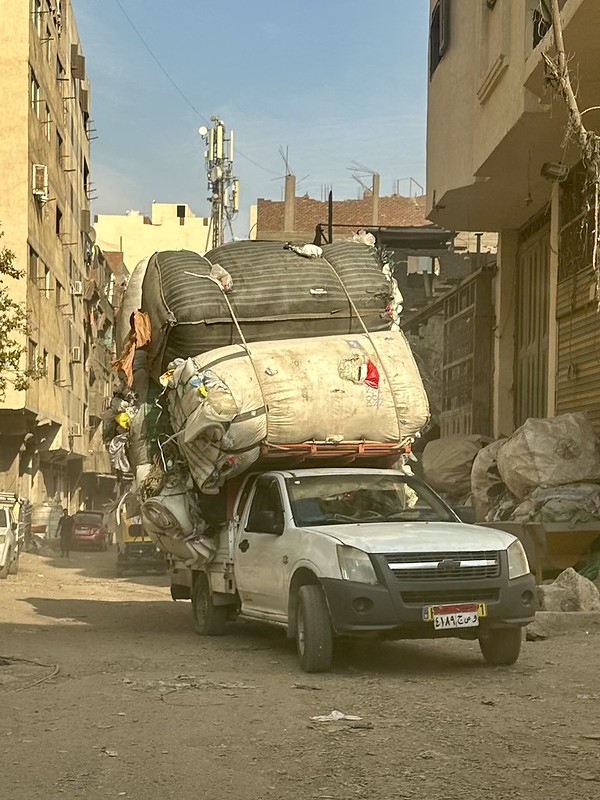
When you get to be my age (59 years old) and having traveled the world for almost 40 years, I don’t often have totally novel experiences. Yesterday afternoon Nadia and I visited the Monastery of St. Simon “The Tanner” which is less than 2 kilometers as the crow flies from our house. The monastery is carved into the cliffs of the Mokattam Plateau. The church is beautiful and one of a kind. What makes is even more fascinating is driving through Garbage City to get there. The Zabbaleen (Garbage Collectors in Egyptian Arabic) is a community that makes its living by collecting, sorting and recycling a good portion of metropolitan Cairo’s waste and garbage.
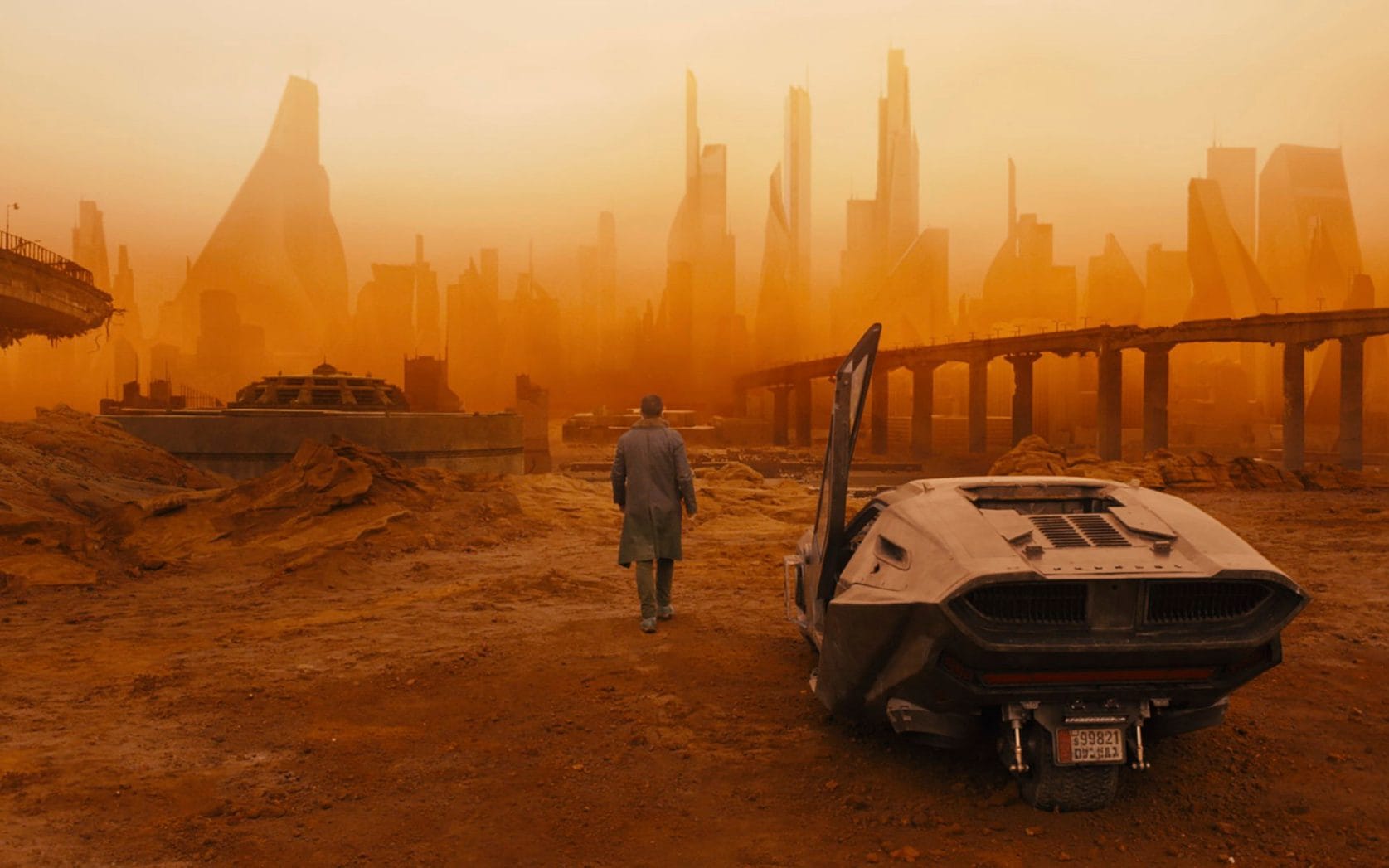
There are no warehouses or waste management facilities, families sort through bags of rubbish in the streets and in their homes. It is literally everywhere in the narrow streets. Waste laden trucks constantly come into the city and dump it for others to sort and turn into prime material for recycling. The entire city smelled like a combination of sour milk mixed with vomit. It was like the sequel to BladeRunner but after a nuclear bomb made it even more dystopian. I couldn’t believe what I was seeing. The place had a normal community feeling however, with people going about their day. School kids walking home in their uniforms, old men drinking coffee in a cafe, a vendor waiting for customers in his appliance store, etc.
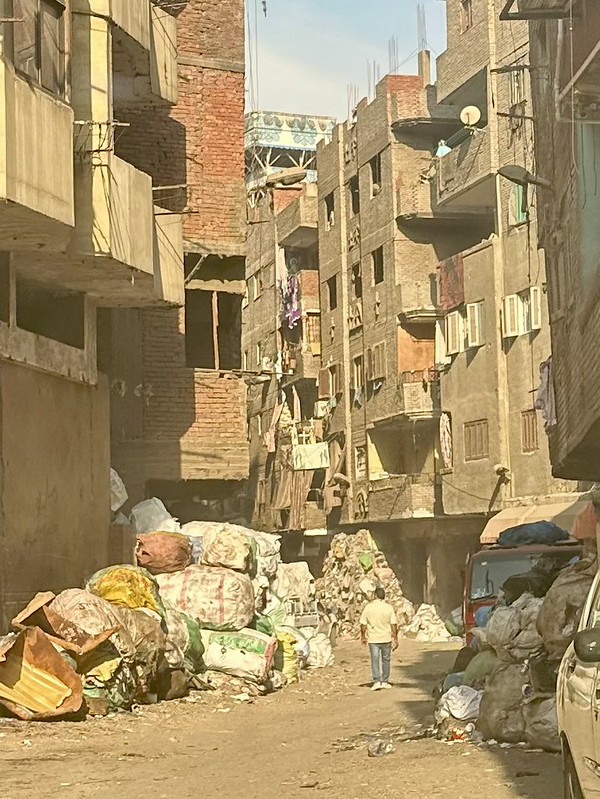
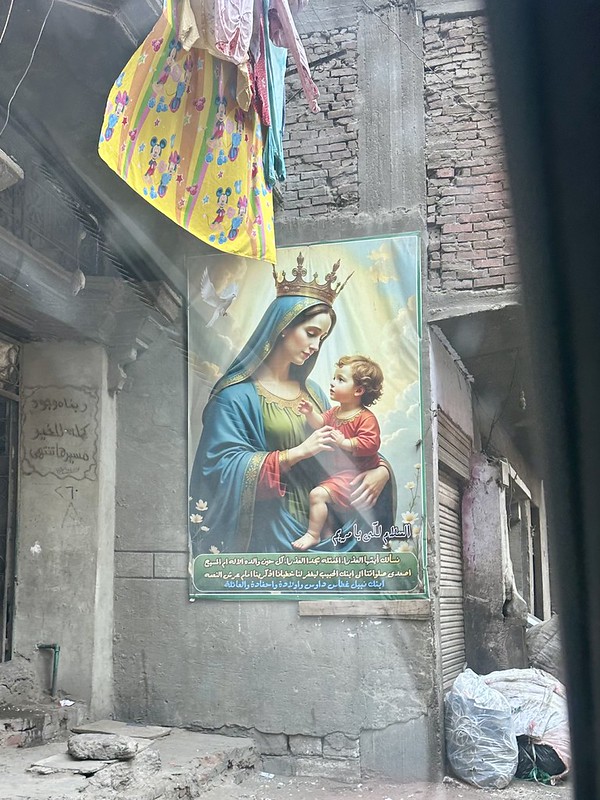
The Zabbaleen are a group of Coptic Christians that migrated to Mokattam in the 1930s and 1940s from southern Egypt. They have carved out (literally and figuratively) a living under the cliffs through being the waste management company of the city. You can watch the 2009 documentary “Garbage Dreams” that follows the lives of three Zabbaleen teenagers.
We didn’t stay long at the monastery because Nadia is sensitive to strong odors. There was no entrance charge to the monastery and we did see the main cathedral, but couldn’t explore the rest of the complex. On the way out of Garbage City after visiting the monastery, we had a Homeland moment. We were stuck in traffic and waiting for the truck in front of us to move, when suddenly a group of men wielding knives and machetes walked around the cars in the narrow street. A guy in the middle of the group was screaming with blood flowing from his head that was wrapped in a rags. It looked to me that he had been attacked and a vigilante mob was seeking the perpetrator. Thankfully they were hot on the trail of someone and quickly walked past us, but our car was vulnerable, stuck between two trucks front and back, and apartments on both sides of the road. It felt like we were in a movie. I wonder if they found the alleged attacker and what form of justice did they seek?
I’ll post about the monastery next. Here video Nadia shot as we made our way through the streets up to the monastery.