
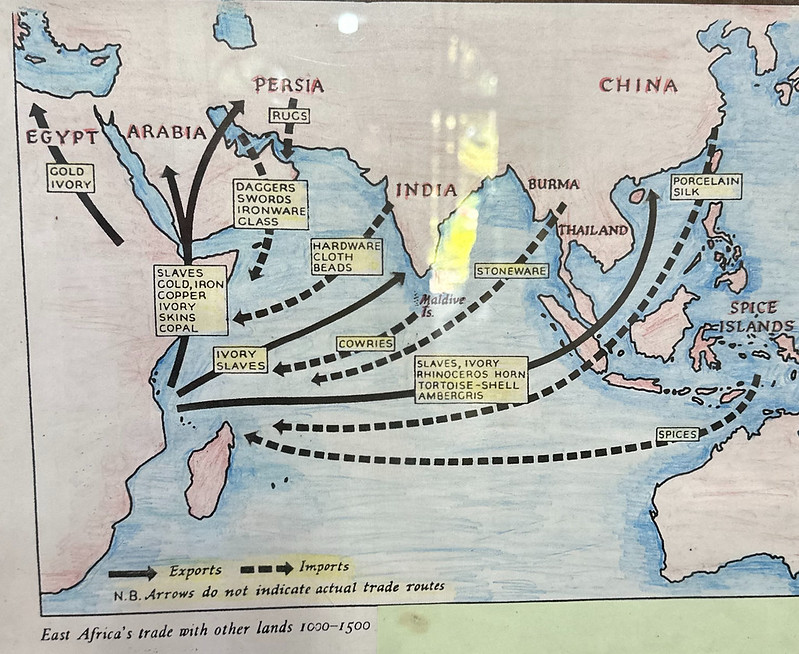
On our way back to the capital Dar Es Salaam and our flight home, we stopped at the historic port city of Bagamoyo. I was fascinated to read about the East African Slave Trade. As an American, I read a lot about the slaves from West Africa being shipped across the Atlantic to the USA. I didn’t know that almost 1.5 million slaves were captured in the interior (mostly Congo) and put to work on coastal plantations or shipped to India, China, Persia, and Arabia. You don’t see a large population of Africans in those countries today. I wonder why? In America, just under 400,000 slaves were sent to the American South and today African Americans make up around 10% of the total US population. Were they killed after slavery was abolished? Sent back to Africa? Worked to death?
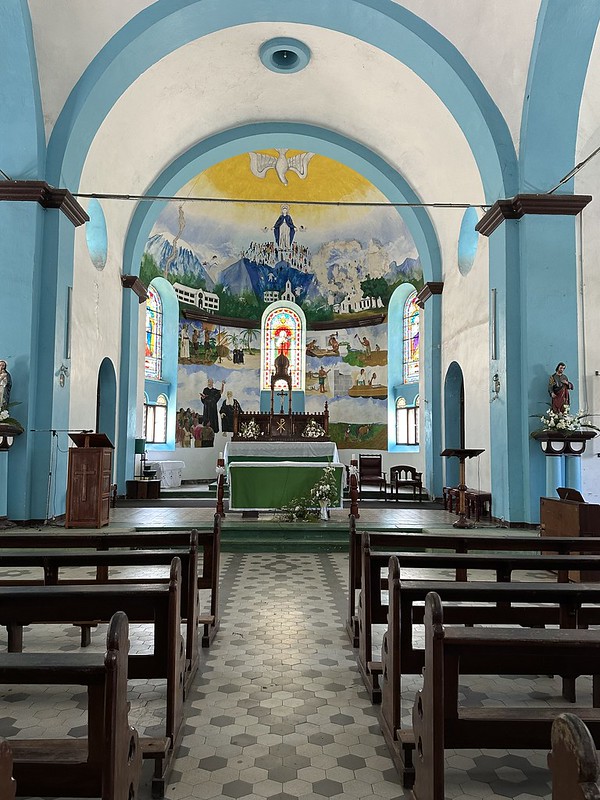
We stopped at a former Catholic mission, Holy Ghost Mission, in Bagamoyo which is now a school and a museum. In the photo above, you can see Livingston Tower on the church. It is named in honor of the famous African explorer. His body was interred in the mission while waiting to be transported back to England. The Catholic missionaries helped freed slaves and brought development to the area. It was nice to read that the Muslim leader Sultan Majid, gifted the land to the French Catholics to build the church and convent.
It was sad to read that only about 20% of the slaves captured in the interior, survived the journey to the coast. What a tragedy! I can’t imagine the conditions and I guess it is easy to look back over 200 years ago and judge the cruelty of the slave traders. The museum also gave the history of German colonization of East Africa. The British took over the settlement after World War I. In 1916 British troops invaded and took the city from the Germans.

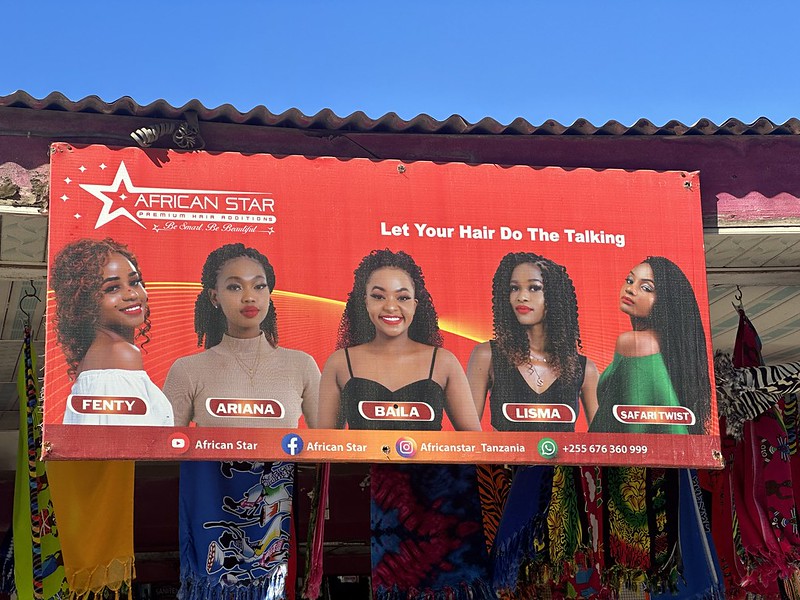
Today Bagamoyo seemed to be a sleepy small town. We stopped for dinner on the way out Fish Eagle Point and and lunch on the way back at a hotel owned by a French woman. I was trying to buy some souvenirs, but really nothing to buy. I laughed at the advertisement below of the hairstyles. I asked Ocean to get the “Ariana”.
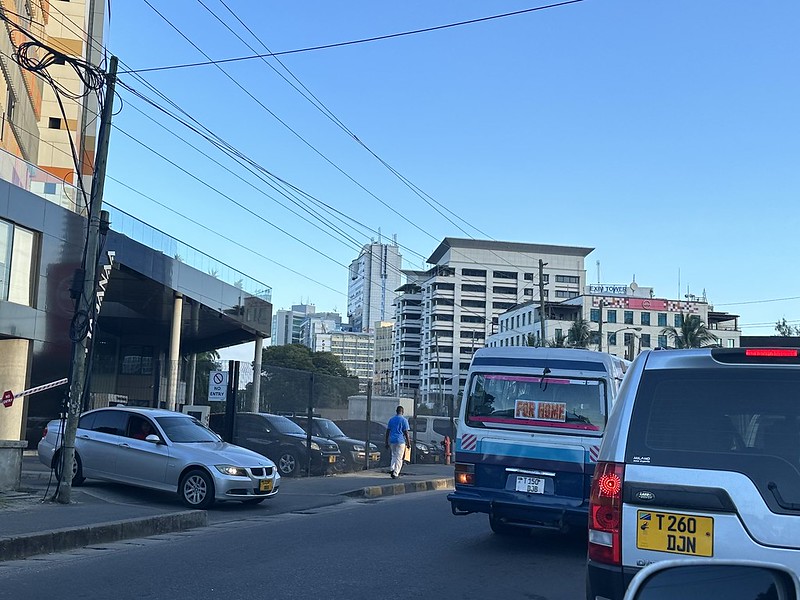
We drove through the traffic of Dar Es Salaam on the way the airport. We drove right by the US Embassy and other embassies and stopped at a shopping mall to buy some Pili-Pili Sauce. It is a hot pepper sauce that I really like and I bought the regular and mango. Delicious! We also like Aramat, an MSG/Corn/Salt seasoning that makes everything taste good. Dar Es Salaam didn’t look particularly appealing, hot, lots of traffic, a bit chaotic and crowded. I sure it has its charms but we were not in the city long enough to enjoy them.
The Tanzanians I met were very friendly, loud and positive. Like many African nations, it is fast growing (4.39 children / female) with a demographics skewed towards young people. Tanzania was country #69 on my life list and my first visit to Africa. With a population of 62 million, it is the largest country entirely south of the equator. It is one of the most stable countries in Africa, with no major strife since its independence in 1964. The nature is amazing with the world’s deepest lake, mountains (Kilimanjaro), tropical coastline, forests and one of the biggest safari tourism industry (21 national parks) in Africa. They have presidential term limits of 2 x 5 years = 10 years. I was very interested in hearing people speak of their tribes. There are over 125 ethnic groups and over 100 languages Swahili is the national language . “My people are from the mountains.” one guy told me. I couldn’t tell the difference between the tribes, only the Maasai, who were much thinner, were distinctive. It is poor with 61% below the poverty line, but I see strong relationships, large familes and generally people have smiles on their faces. The country is 2/3 Christian and 1/3 Islam and I didn’t see or feel any strife between the two groups. I would definitely return to Tanzania and I would love to live there someday.
 Bill's Blog
One thought on “History of East African Slave Trade and Bill’s Thoughts on Tanzania”