
The colon is a 1.5-meter tube that makes up most of the large intestine. Its purpose is to absorb salt and water from the remaining food as it leaves the small intestine. The waster matter that is left after traveling the long distance through the colon moves into the rectum, the final 15 centimeters of the digestive system, and is stored as stool until it passes through the anus during a bowel movement. The colon takes about 36 hours to fully process food. The average human has a bowel movement 3 times per week. The more fiber a person eats and if they drink enough water, it speeds up the process. Digesting food, absorbing nutrients, and getting rid of waste after these processes are what humans do.
I thought a lot about this process the past couple of days because I went in for a colonoscopy yesterday. This topic is not one that people usually talk about but I see this blog post as a kind of public service announcement, especially for men who tend to resist taking care of their health. Thanks to the loving persistence of my wife Nadia, I finally took the plunge and got it done.
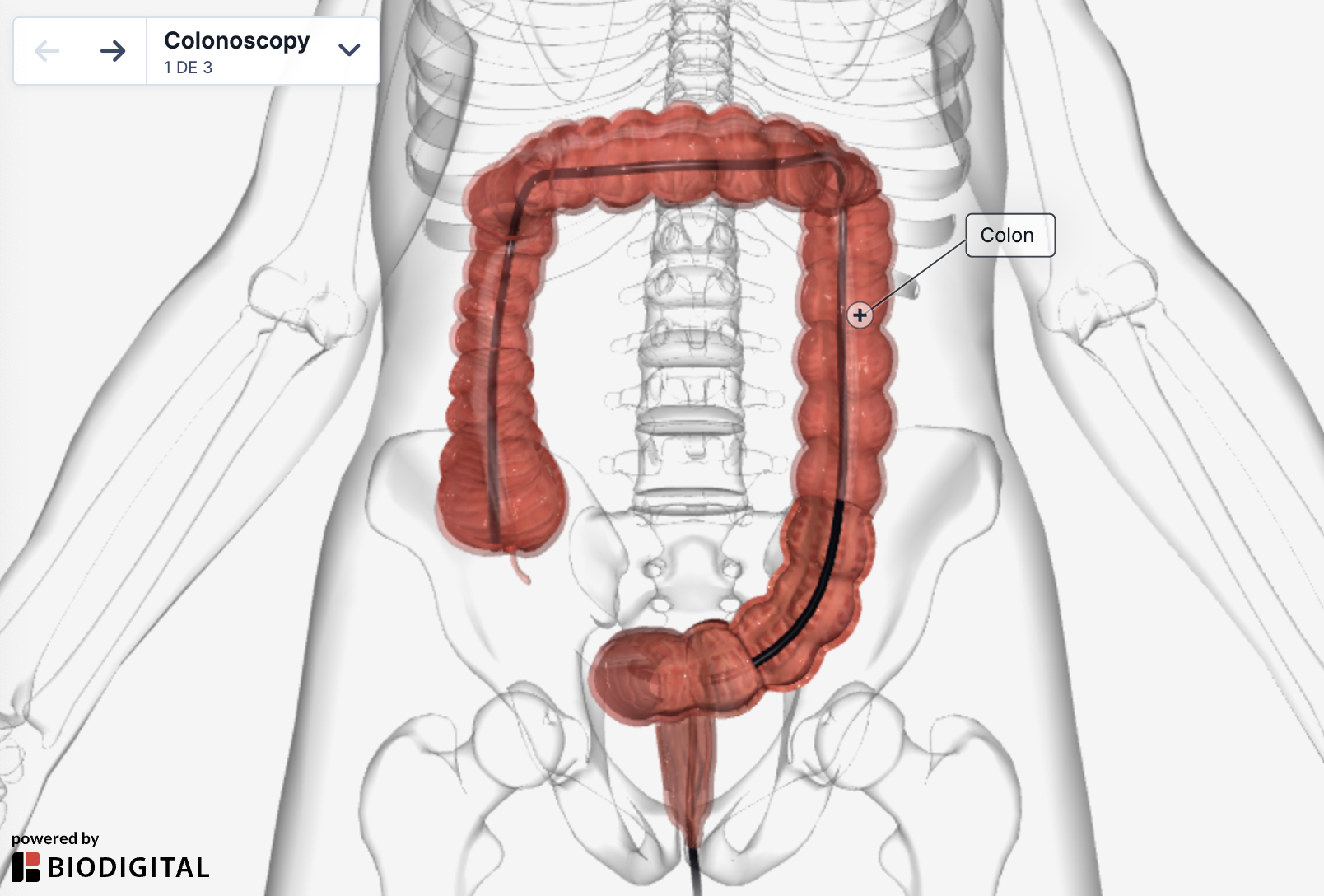
What are the risks of colon and rectal cancer? The American Cancer Society (ACS) puts males at 1 in 23 (~4%) of contracting colorectal cancer in their lifetimes. There are over 150,000 cases of this type of cancer diagnosed annually in the USA. The number of deaths is decreasing because people are more aware of screening. ACS recommends regular colorectal cancer screening from age 45 to 75 for people of average risk. There are different screening tests. Three only involve sending in a stool sample. The other three are visual examinations. The most thorough screening is a colonoscopy where a doctor inserts a tube the width of a finger into the anus, through the rectum, and all the way to the end of the colon. Thankfully this is done under sedation and is painless. (see diagram below)
It is a hassle to get a colonoscopy! The worst part for me was the cleansing of the large intestine so the doctor could get a clear look at the inside surface. Five days before the exam, I needed to stop eating food with fiber. I discovered much of my diet is fiber, which is good for a healthy colon! No fiber means no fruit, vegetables, and nuts which I estimate make up 3/4 of my diet. I was limited to foods like tofu, eggs, milk/cheese, white rice, white bread, and cooked meats. The day before the exam, I could not eat solid foods, so it was a day of chicken broth soup and jello. I also needed to drink an entire bottle of Miralax powder, a laxative. The recommendation provided by the hospital stated to start at 5:00 PM. I would have started much earlier because, throughout the night, I was going to the toilet. I fully understand the amount of waste that can fit into a 1.5-meter tube! Towards the end of the process, I was releasing an almost clear liquid with a unique odor. I didn’t feel lighter or better, just annoyed at the hassle of every few minutes having to go to the toilet.
On the day of the procedure, I was asked not to eat or drink anything. I was the last patient scheduled at the Bell Memorial Hospital in Ishpeming on that day. I was asked to come in at 12:45 PM, but due to delays in the morning, I didn’t get into the operating room until 5:00 PM. So that meant two days of fasting. I had a slight headache, probably due to a lack of coffee.
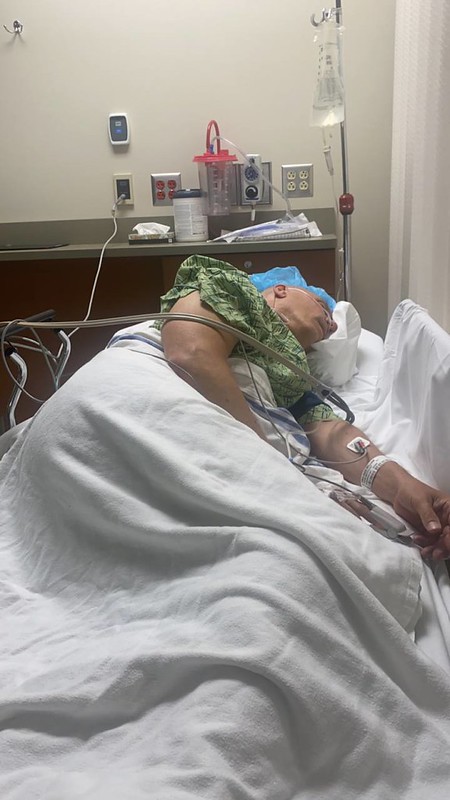
The best part of the colonoscopy was getting knocked out by anesthesia. This was my first time and I feel fortunate that the only time I’ve been in an operating room was to film the birth of my children. The doctor assistant asked me to roll on my side and the anesthesiologist put a drug in my IV and said I would be out in about 30 seconds. I remember looking at the tiles on the wall and suddenly, they started to gently sway back and forth and I was out. I woke up back in the prep room with my son Oliver and brother Jimmer next to my bed. It felt like no time passed at all which is strange. One moment I am drifting off to sleep, the next I am awake in the prep room. I think an hour or so passed, but it felt instantaneous. I am fascinated by the whole science or art of anesthesia. Why do we lose consciousness? How did medical science figure all this out? Why don’t we feel pain or discomfort? What input is the brain receiving while someone is under? I need to read a book about the history of it and the future of the science. I know anesthesiologists make a lot of money and I can see why. Putting someone under is dangerous, even though it is a common practice.
The doctor said I had an average colon and rectum and he removed one polyp. Polyps are growths that occur in the large intestines that can become cancerous. The polyp tissue will now be checked in the lab to see if it is cancerous or benign. The doctor predicted that most likely it is OK and recommended my next screening in 10 years. I am now 57 years old, so mental note, at age 67 to get it checked again. I am fortunate to have good health insurance and the luxury of a thorough colorectal screening. I am at low risk because of my healthy diet, lots of exercise, maintaining my weight, being a non-smoker, drinking little alcohol, and rarely eating little red or processed meats.
I would like to thank the medical staff at the Bell Memorial Hospital in Ishpeming for taking good care of me! I also thank my health insurance company for covering the cost of the procedure. I am also grateful for my son Oliver and brother Jimmer, who spent the day with me, supporting me emotionally and psychologically. It is good to be loved!
 Bill's Blog