
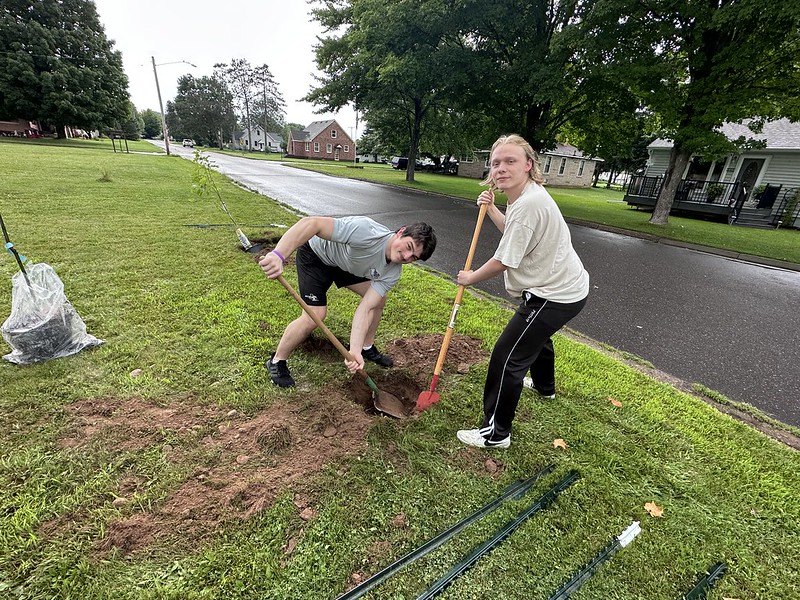
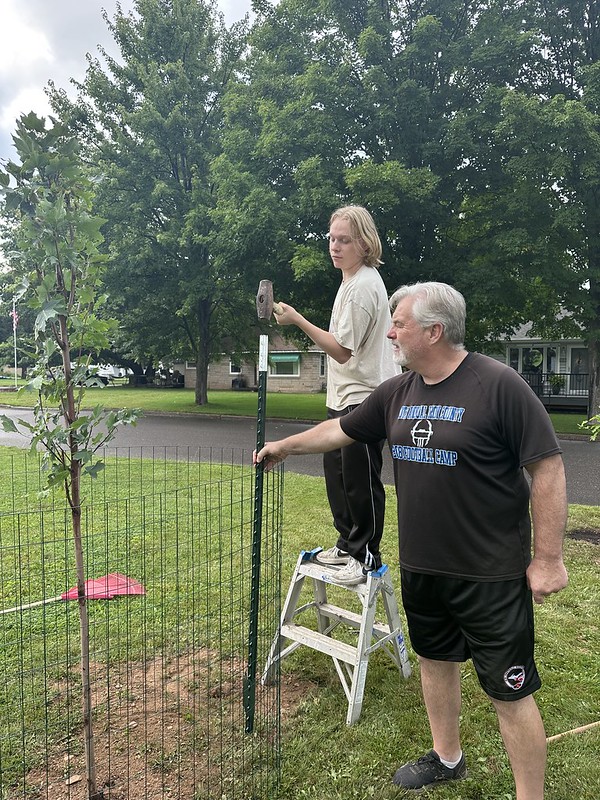
We planted three trees yesterday in our front yard. Two Northern Red Oaks (Quercas rubra), a type of Oak that can withstand the colder temperatures of Michigan’s Upper Peninsula. My village of Caspian is located at 46 degrees north latitude. I also planted one Sugar Maple (Acer saccharum). This was the first time doing this and I would probably give us a grade of “C”. The western Upper Peninsula ground is quite rocky and it was difficult to pound the poles into the soil. We need to protect the trees with fencing because deer will eat the young leaves. I am curious to see if they will survive and for how long. Hopefully, my children and grandchildren will enjoy the shade and autumn color they will provide and wildlife will be sustained by the trees fruits and seeds.
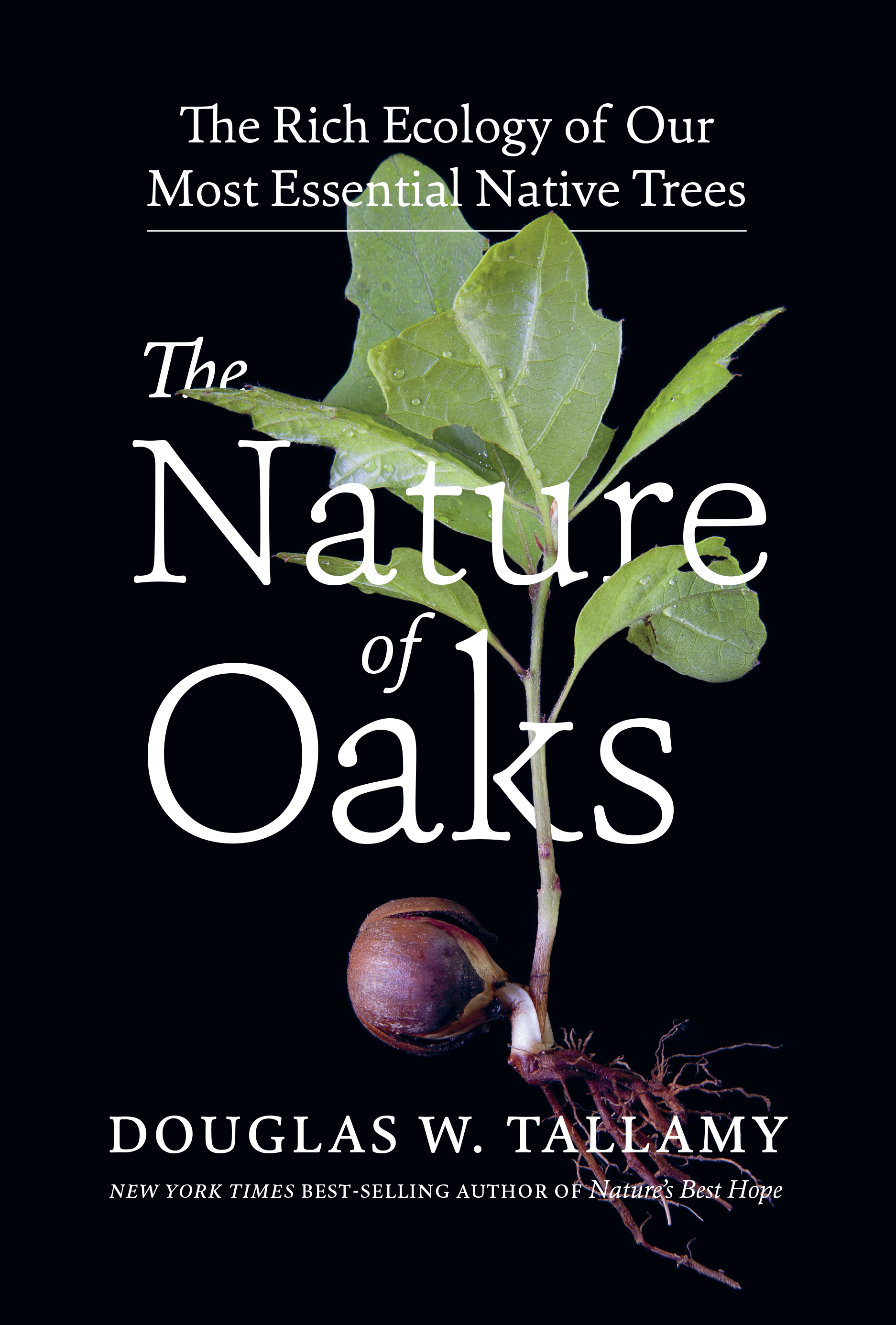
Douglas Tallamy, a professor of Entomology and Wildlife Ecology at the University of Delaware’s book “The Nature of Oaks: The Rich Ecology of our Most Essential Native Trees” really opened my eyes to how homeowners can improve habitat in their gardens and yards to support wildlife. Humans have greatly damaged the ecology of North America, especially after European settlement. The cutting down of forests, extinction of large animals (mastodons, ground sloths), and importing non-native species have devastated nature.
The tree genus of Oaks, Quercus, is one of the most woody genera in the Northern Hemisphere. They are famous for being huge, long-lived, and having the distinctive cup fruit, the acorn. There are around 300 species worldwide, with 90 oak species in North America and 14 oaks native to Michigan.
Professor Tallamy concentrates on promoting property owners to plant native plant species to help the web of life. His research counts caterpillars and other insects on native vs. invasive species and found that today’s North America provides only 4% of the food for insects than it did at the time of the European arrival. Tallamy advised planting more than one oak tree so the roots can support each other and not get knocked down in the high winds of the summer storms. He also advises not to plant older trees because they don’t establish roots well. I am planting a young and an older tree and hope that both make it. Finally, he asked owners to plant native plants and shrubs under oaks and keep the leaf litter on the ground. Homeowners usually sweep or burn the leaves to preserve their lawns (Americans love lawns), but actually, this is a sterile environment for insects. Insects provide food for birds and other animals, so fewer plants means fewer insects and fewer insects means fewer birds. Below are other things I learned from the book.
- Periodically, all oak trees in a region will produce an incredibly huge number of acorns in the same year. This is called “masting” and ecologists speculate that every so often, oaks put their energy towards acorn production instead of growth. The idea is wildlife cannot possibly eat all the acorns and so more young oaks will develop roots and start growing.
- Cicadas have 13-year and 17-year life cycles partly because as larvae, they eat xylem in tree roots which has a low nutritional content. If they ate phloem, they would not have this problem. Trees transport nutrients through the phloem and only a bit of nitrogen and water through the xylem. The long periods between adult cicadas being abundant prevents predators to specialize on cicadas.
- Oaks mostly maintain their dead leaves on trees in the winter. This phenomenon is called marcescence and is thought to be beneficial by protecting young buds in the spring.
- The percentage of oaks in eastern North American forests has dropped from 55% pre-European settlement to 25% today.
- Eastern forests were less dense before Pleistocene mammals were hunted to extinction by indigenous people. Today’s suburban landscapes mimic this savannah and mixed forest landscape.
- I never thought that when the glaciers retreated and the temperate zone offered a huge amount of insects, this drove birds to develop the habit of migrating north to take advantage of this food source. Human development has lessened this.
“Healthy oaks will grow for 300 years, maintain a stasis between new growth and canopy loss for the next 300 years, and then decline for 300 years or more. During each one of those 900 years, these magnificent plans are making outsized ecological contributions to the life around them.”
 Bill's Blog