

I am interested in the Köppen-Geiger climate classification, which is a widely used method for categorizing world climates. It simply uses temperature and precipitation annual data from a location. Wladimir Köppen (Hamburg) and Rudolph Geiger (Munich) were German meteorologists who collaborated to create this classification system in the late 1800s and early 1900s. They used a simple letter-based coding system. The top level divides climate into 5 zones
- A Tropical – avg. temperatures above 18C year-round
- B Dry – arid/semi-arid climates where evaporation exceeds precipitation
- C Temperate – mild climates with distinct seasons
- D Continental – cold climates with severe winters
- E Polar – very cold climates where warmest month is below 10C
Each main group is further subdivided using additional letters that specify seasonal Precipitation patterns (like ‘f’ for year-round rain, ‘s’ for dry summers, ‘w’ for dry winters) and temperature characteristics (‘a’ for hot summer, “d” for extremely continental) and a summary is below.

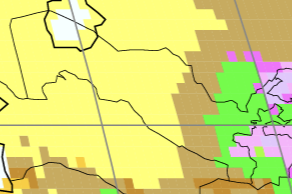
The map above (left map) shows the classifications for Uzbekistan. In the west of the country, the vast Kyzylkum Desert (“red sands”) and now the Aralkum Desert (the former Aral Sea) make up the bright yellow BWk (B – arid / W – desert / k – cold arid). As one moves east, the next climatic zone is the light brown BSk (B – arid / S – steppe / k – cold arid).
Tashkent is located in the upper “finger” in the far east of Uzbekistan near the Kazakh border. The bright green signifies Csa (C – warm temperate / S – steppe / a -hot summer). The “a” hot summer time of year has reached us. Temperatures this week this month have been reaching the 90°F (30C) range in the afternoon. I love summer and hot weather, and enjoy walking with Obi and biking/running in the city.



Climate change in Central Asia will change the Climatic classifications in Uzbekistan over this century. Hotter temperatures and less precipitation will bring two next climate classifications into the country. The map on the right shows predicted climate data from 2076 to 2100. BWh (Arid / desert / hot arid) and BSh (Arid / Steppe / hot arid) will be expanding from the south. The climate of Eastern Uzbekistan will be more like Iran, Turkmenistan, and Afghanistan, and the Gulf Region. Tashkent will be on the edge of its current CSa with BSh creeping in. That means less snow/rain and a hotter and drier city.
One of the highlights of this weekend was listening to Nadia singing a cover of Stone Temple Pilots’ 1992 song, “Plush”. Our school’s house band, “The Foul Owls,” played at last night’s staff end-of-year party. The new restaurant Lago Bianco is located close to school in a section of Furqat Park. Besides the large restaurant and bar, it has 2 artificial ponds and spacious, green grounds. It is perfect for big parties because people can dine and relax both inside and outside. It was a delightful evening of camaraderie and celebration as we wind down the school year.
 Bill's Blog