
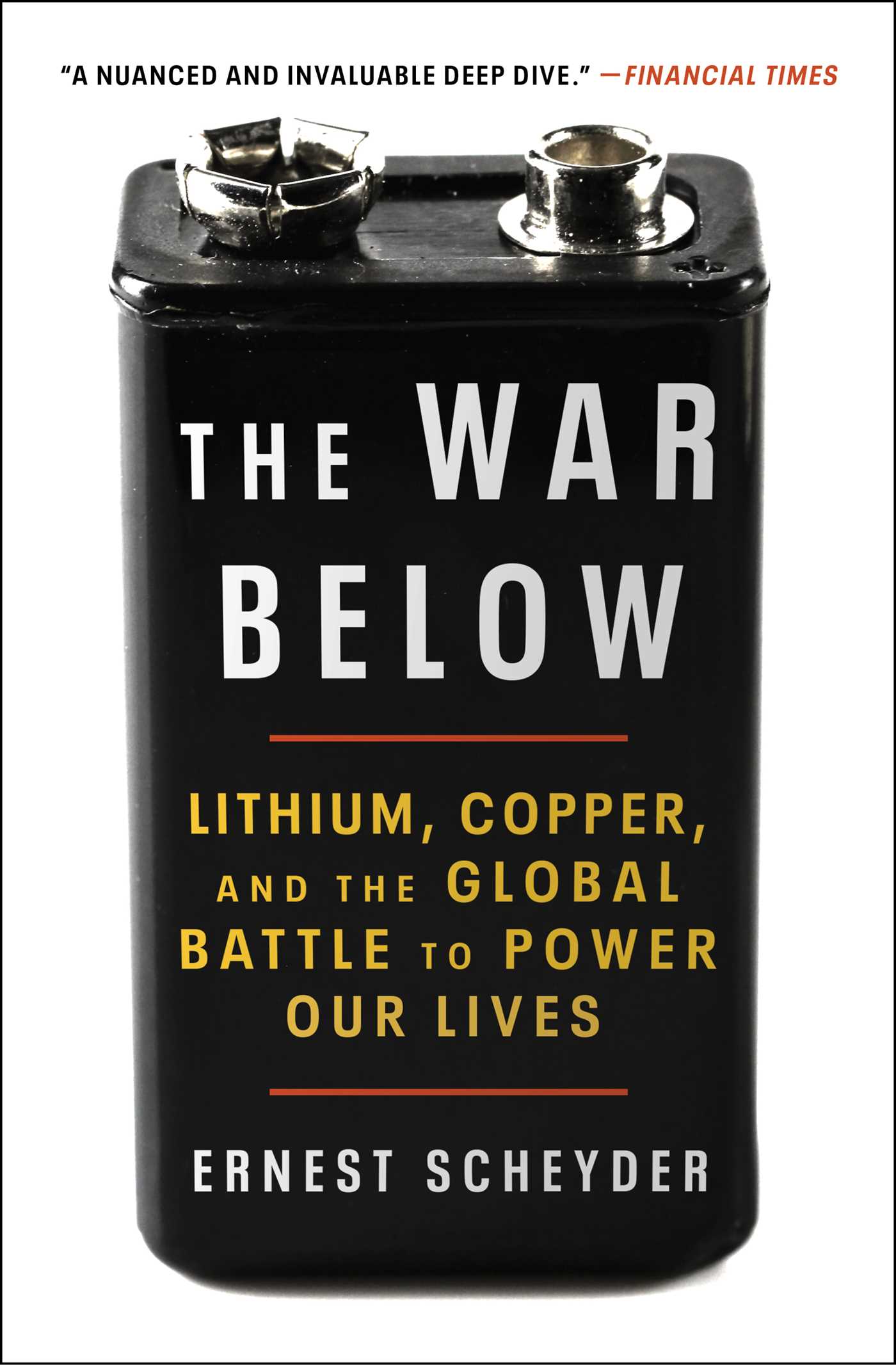
Ernest Scheyder, a senior correspondent for Reuters, has written a fascinating book about mining for the critical minerals that are the foundation of green and renewable energy technologies. Copper, Lithium, Antimony, rare earth metals, etc. are components of electric vehicle batteries, solar panels, LED lighting systems, iPhones and high-end electronics, computer processors, magnets used in wind turbines, etc. Sourcing these is driving humanity’s move away from fossil fuels and possibly saving future generations to the ravages of climate change. There is a cost however to this as mining for minerals is complex, costly, and damages the environment. Often these mines are huge open pits, requiring transportation links to the outside world, have toxic tailings ponds or evaporation pools, that may damage the local ecosystems. One of the challenges of trace minerals huge amounts of rocks need to be dug out, crushed, chemically treated to extract the desired mineral. Scheyder goes around the country and into South America to interview the key players in this story. He gives the views of all sides, mining company executives and engineers, government officials, environmental activists, etc. to tell the historical and modern story
My life has been greatly influenced by the mining industry. I grew up on Iron County in Michigan’s Upper Peninsula. In the 20th century, there were approximately 70 iron ore mines but many ended post World War II as higher percentage iron ore mines developed around the world. A few mines hung on into the 1960s and 1970s when I was a child, the last mine, the Sherwood Mine closed in 1978. In my village of Caspian, there were six iron mines with the Voroner Mining Company operated three mines:
- Baltic (1900) – It by the way is the name of my street.
- Young’s (1904)
- Fogarty (1907)
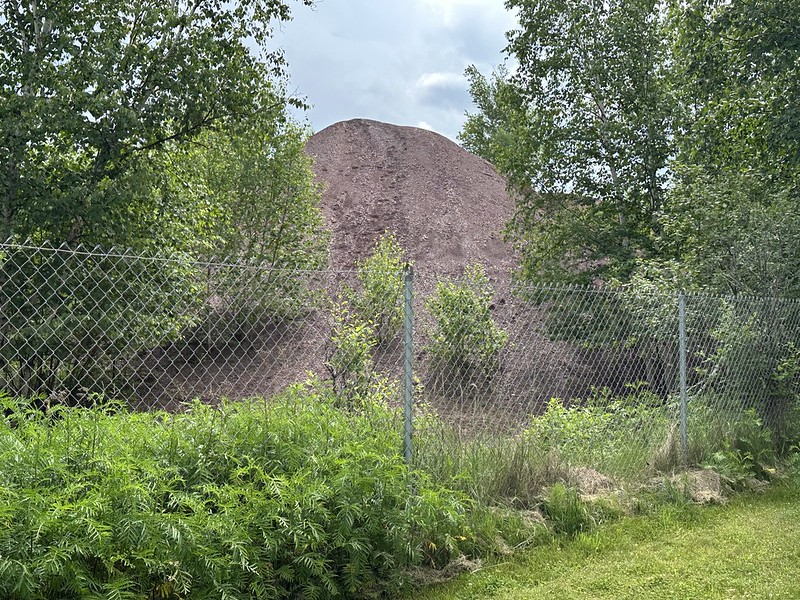
Other mines included the Caspian (1903), Berkshire (1908), and Dober (year unknown). The population of Caspian has dropped from 1,912 in 1920 to 800 in 2020 and declining at a rate of an average of 8% per decade. When I was a kid, the entire woods around Caspian and Iron River was covered in red dust/rock, and the Iron River going through the town was known to us kids as the “Red River”. 50 years later nature has healed itself. The open pits are now filled with water and create wetlands for wildlife and recreation, there are iron ore waste piles that have been mostly covered up by trees, and the Iron County museum preserves the Caspian Mine Headframe and tells the story of the mining industry here. There is a spider web of underground shafts and tunnels in the county. Back in the 1950s the road between Caspian and the neighboring village of Gaastra caved-in, killing a young man driving home in the middle of the night. I’ll do a blog post someday of that incident. Caspian was part of the greater Iron Range, an area in the Upper Great Lakes from Minnesota, through Wisconsin, to Michigan. Scheyder reports from Ely, Minnesota in the book about the attempt to develop mining in the Boundary Waters National Wilderness area just north of the town. It would be nice to have mining companies come back through the Iron Range, looking for these critical minerals in the remnants of the iron mines.


I got my first teaching job in Nevada thanks to the need for schools because of the gold mines in Elko County. They mined microscopic gold and along within came a booming economy but also cyanide-laced, leaching ponds and huge mountains of waste rock. Scheyder spends a lot of time out in the American west, in Nevada, Idaho, and Arizona, detailing the challenges of developing mines in the face of environmental concerns and indigenous people’s rights.
The book gives an overview of the global critical metals mining industry, with of course, China leading the way. It is a strategic need for governments around the world and Scheyder contrasts the policies of Trump and Biden, as well as spending a lot of time in our other home of Bolivia. The Salar de Uyuni is the biggest salt flat in the world and underneath it is a brine of dissolved lithium and salt, the largest lithium resources in the world. Due to its elevation, distance from markets, difficulty of extracting lithium, and poor governance, it just has not been developed yet. Nadia and I spent a summer break touring the Salar de Uyuni in the late 1990s, one of the most striking landscapes on Earth. I should try to find the photos from that trip and digitize them.
I also found it interesting that the mining industry will eventually end when recycling takes over. The lithium and copper in batteries can be recycled over and over again without degradation. Scheyder interviews a couple of companies trying to start recycling businesses. I highly recommend this book for anyone wanting to learn more about mining. I think it would be a good career to get into and I will encourage my students to consider a career in mining engineering.
Other facts I learned:
- A 55.4 kWh Tesla car battery has around 6 kilograms of lithium. A typical Tesla car needs 10 pounds of cobalt. The conditions of “artisanal miners” in Congo supplying the cobalt is appalling.
- The USA is moving its petroleum dependence on OPEC to mineral dependence on China, Congo, and others. The geopolitics around OPEC countries and the West is moving towards nickel, magnesium, graphite, cobalt, lithium, and rare earths.
- USA holds 24% of world’s lithium reserves but only produces 3% of annual lithium ready for use.
- Mining has a big impact on the environment. Chile is the world’s largest copper producer and #2 in lithium and 65% of the country’s water is used by the mining sector alone.
- The average 747 Boeing jetliner has 135 miles of copper wiring, and the average American house has 400 pounds of copper wiring and piping.
- If I have time, I should read the Standard for Responsible Mining (June 2108) IRMA – Initiative for Responsible Mining Assurance
- Parking your car backwards is a mining industry safety standard because backing up a vehicle in an emergency is considered a safety hazard.
- The Great Basin Resource Watch is a nonprofit focused on biodiversity in the American West.
- Center for Biological Diversity is another environmental group that advocates for rare slivers of the plant and animal kingdom.
- EV (Electric vehicles) generate 500,000 tons of battery waste in 2019, will rise to 8 million tons by 2040.
- I would like to visit the Salton Sea in California, which is similar to the Salar de Uyuni in regards to the potential of filtering the salty brine could produce a lot of lithium for the USA.
- Lithium is the lightest metal on the Periodic Table of Elements, so great for batteries.
- “Despite attempts to find alternative ways to produce metals for the green energy transition, there was no way around the fact that mining is loud, dangerous, and disruptive and will remain so for the foreseeable future, a reality that continued to fuel the global battle over our collective future”
I like the quote, “Here was a corporate leader encouraging dissent, asking for free thought, and demanding frank dialogue.”
 Bill's Blog