

I love history and learning about the places I visit. On my travel to and from Budapest, I read the journalistic account of the 1956 Hungarian Revolution against the Soviet Union. This was a contemporary account of the conflict (published in 1957) and the subsequent refugee crisis. My big takeaway was that this was the beginning of the disillusionment with the Soviet socialist/communist style of government.
Most of the twentieth century was tragedy for the Hungarians. World War I marked the end of the Austro-Hungarian Empire when they sided with the losing side, the Central Powers. It resulted in Hungary losing 2/3 of its population and territory to neighboring countries. World War II was even worse, with the Nazis invading Hungary when they tried to negotiate a separate peace with the Allies late in the war. Over half a million Hungarian Jews were murdered/deported in a two-month period. The war ended with the incredibly destructive Battle of Budapest between the Soviet Red Army and the Axis Army (Germans and the remaining Hungarian Axis army) that destroyed the city, killed tens of thousands of civilians and ended with the Soviets “liberating” the country. “Liberating” is in quotes because the Soviets dropped an “Iron Curtain” (Churchill’s famous description) over the country and took control of the lives of the Hungrians.
The Soviets promised a “workers’ paradise and a better life for all. Initially, they did help the city recover, rebuilding the infrastructure and establishing the routines of normal life. It must have been a traumatized population that just appreciated a return to normalcy. Michener’s account picks up a few years after this and the dawning realization that the Soviet regime was corrupt and oppresive. It was thrilling to read about the bravery of Hungarian soliders and civilians in their uprising and guerilla warfare in 1956. They actually drove the Soviet army out of the city that resulted in 5 days of glorious “freedom”. The Red Army during the five days recovered from the surprise defeat and brought a much bigger force to retake control of the city, crushing the Hungarian resistance.
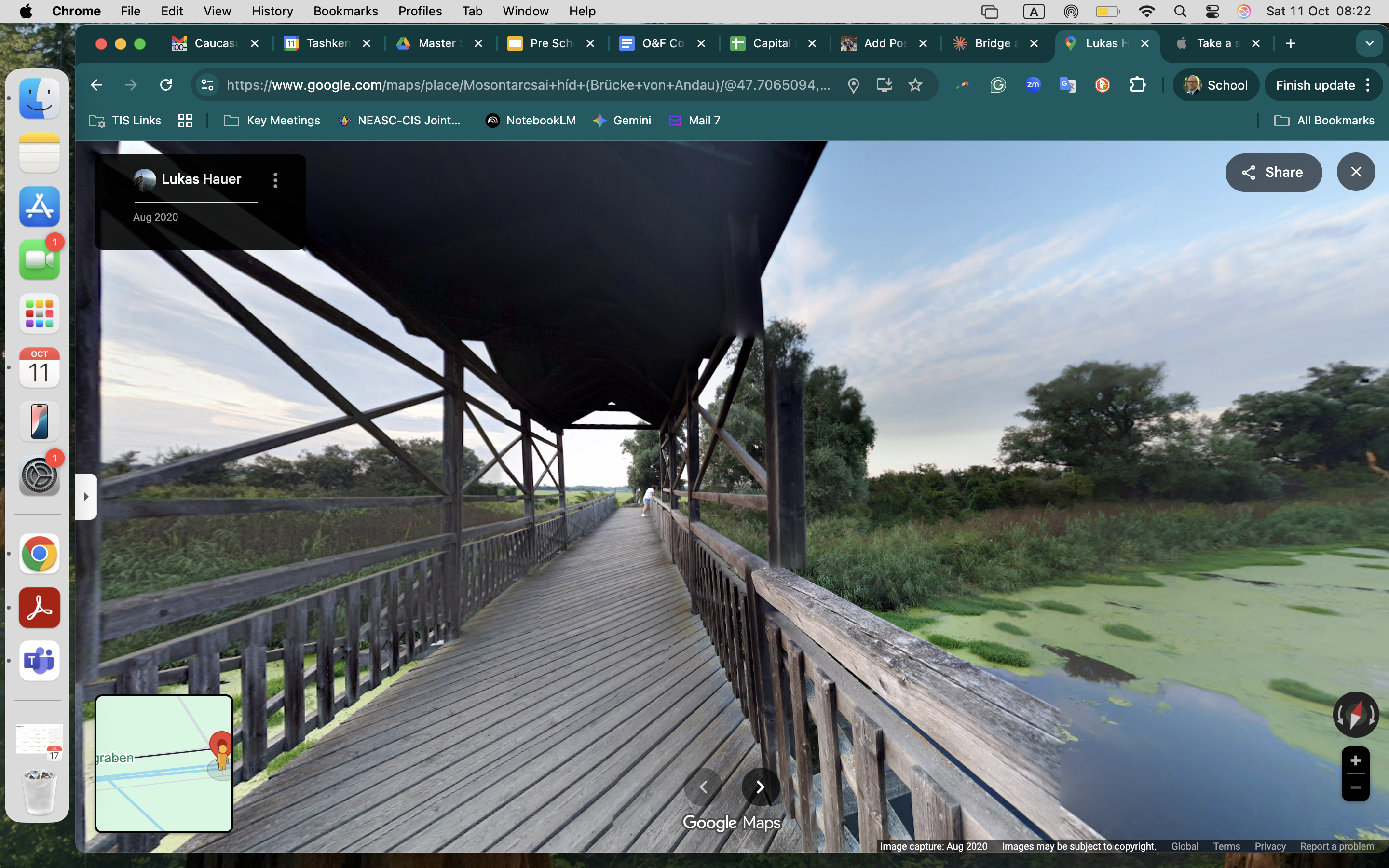
The title of the book refers to a small wooden bridge in a farmer’s field across a canal on the Austrian-Hungarian border. Hundreds of thousands of refugees fleeing Soviet control came over this bridge and other crossings in the aftermath of the revolution. Michener was at the border interviewing Hungarians. The bridge was destroyed but became a symbol of courageous Hungarians seeking freedom. Because of their long partnership during the Hapsburg Empire, the Austrians helped Hungarians fleeing Soviet control.
I haven’t read James Michener since the early 1990s when I was travelling through the Caribbean with friends. This was the start of my love of travel and history as a young man. I forgot how good of writer he is and this account reads like a thriller novel. He wrote over 40 books and died in 1997.
The Bridge at Andau gave me an appreciation of the impact of horrible tragedies of the 20th century had on Budapest. I have a greater appreciation of the spirit of the Hungarians walking through the city 70 years after the Revolution of 1956.
 Bill's Blog