

Daniel Kraus is most famous for his collaboration with the film director Guillermo Del Toro in writing “The Shape of Water” that won the Academy Award for Best Picture in 2018. Kraus in a podcast I listened to after reading the book, said we writes from 8:00 AM to 5:00 PM, six days a week. He is a prolific writer with over 20 books published. He also worked with Del Toro on the Netflix series “Trollhunters” and his 2023 novel, Whalefall, is being adapted into a movie directed by Ron Howard.
Angel Down was published in July of 2025. Kraus is fascinated by World War I, and in his usual weird way, this story is about American soldiers encountering an angel on the battlefield. I don’t understand how government leaders could allow for the slaughter of soldiers to go on for four years. It was the first time industrial warfare was used in battle, and military tactics had not kept up. Machine guns moving down advancing soldiers, poisonous gas attacks, horrible conditions in the trenches, and the introduction of tanks and flamethrowers into battle. Kraus captures the condition in gory detail. The story centers around 5 American soldiers with different personalities and how they interact with the angel. The main character is a slimy, con-artist character named Baggers whose heart is softened by a 14-year-old soldier, Arno, who lied to get into the army. I am not going to give the story away, but it is an interesting read to follow the small group of men try to save the angel they found in no-man’s land and what happens along the way.
It is a great historical fiction book! The action takes place during the Meuse-Argonne Offensive in 1918. This was one of the final major battles of WWI and the deadliest battle in American military history. Over a million American soldiers participated, with about 26,000 killed. The Argonne forest is located in northeast France, near the border with Belgium. The American Expeditionary Forces (AEF) were abused by the more experienced British and French commanders and sent into the worst situations. What a useless and tragic waste of young lives!
I liked the use of authentic vocabulary from, over 100 years ago. Below is a list of terms I learned:
- lummox – a big, clumsy, dim-witted person, popular in the early 20th century
- Jerries – Allied slang for the German soldiers, from German, they were also called “Huns” and “Fritz”. My dad called them “Krauts” in World War II.
- Doughboys – refers to the American soldiers in World War I; various theories on the origin of the name
- trenchmouth – severe gum disease caused by poor dental hygiene, poor diet, and stress
- I liked this phrase, “look how the man’s sagged flesh maps all the places he’s been.”
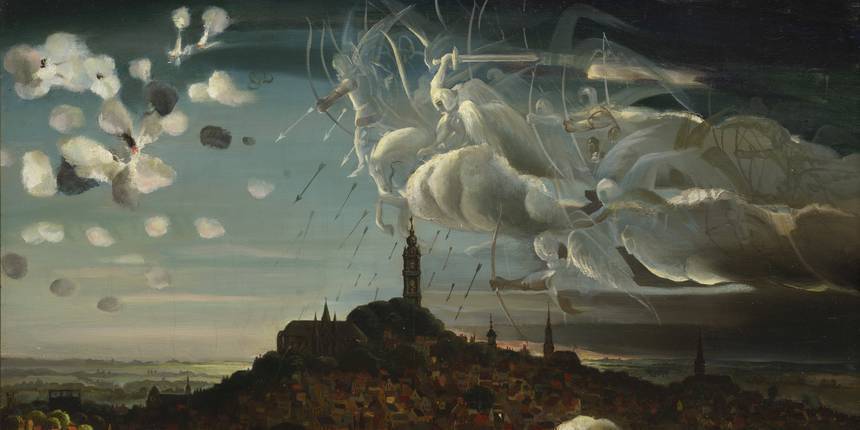
The book mentions the legend of the Angel of Mons from World War I. In the first battle of World War II in the city of Mons, Belgium, the outnumbered British lost 10% of their entire force to the Germans. The scale of death shocked people at the time. Welsh writer Arthur Machen wrote a comforting short story about a young British soldier ascending into heaven from the battlefield after he was killed. This became the legend of angels appearing above the battlefields of World War I.
Kraus also brings up General John J. Pershing, the commander of all US troops in World War I. He is known as an American hero for guiding the Americans to victory. He also lost 26,000 soldiers in 47 days of battle (over 500 per day!) and like all the WWI generals, didn’t change tactics when faced with industrial style of warfare, tragically sending hundreds of young soldiers to their death with the goal of advancing across a scorched earth battlefield. He is viewed as a hero because we won the war and WWII overshadowed WWI, but it shows the need for adaptability in leadership.
I didn’t like the fantastical and strange, dreamlike sequences of the book. It was a good story and brought the conditions of World War I to life for me.
 Bill's Blog