
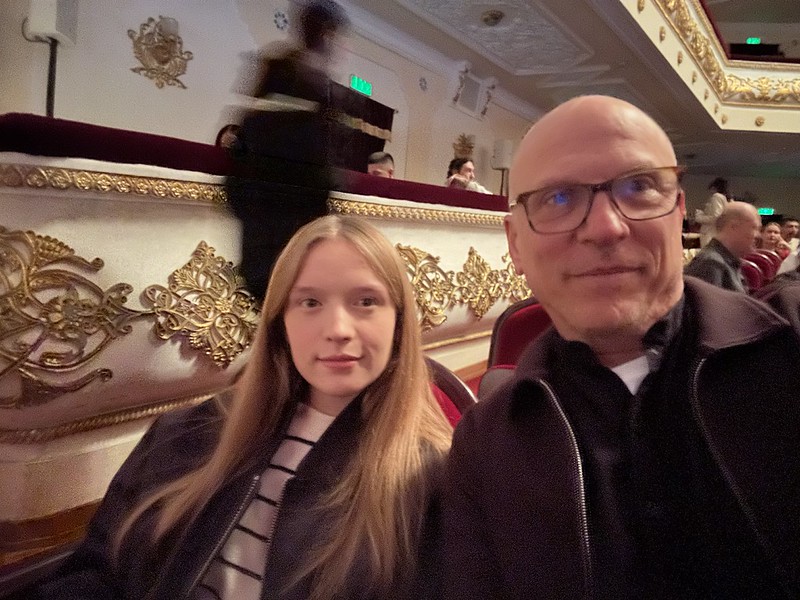
Dr. Robert Greenberg, the Music Historian-In-Residence with San Francisco Performances in his “How to Listen to and Understand Great Music” course, said that going to a classical music concert was like time travel. The concert hall is like a reanimation machine that brings back from the distance past, pieces of music that were written and performed a long time ago. I was thinking about that when my daughter Ocean and I attended Prokofiev’s ballet, Romeo and Juliet, on Sunday night at the State Academic Bolshoi Theatre named after Alisher Navoi.
Sergei Prokofiev was a child musical prodigy born in a small Ukrainian village in 1891. Thankfully for music and dance lovers, his family was wealthy, and his mother was a great pianist herself who encouraged Sergei’s talent. He composed his first full opera at age nine and entered the St. Petersburg Conservatory at age 13! Prokofiev was unlucky to be in the prime of his music career as Czarist Russia was ending the USSR was beginning. It was a tumultuous time in Russia, and for much of his life, he lived in exile with his Spanish wife in France. The Soviet government tightly censored the arts. Prokofiev was way ahead of his time, a musical genius, and many people of his time didn’t get his music. He was finally lured back to the Soviet Union in 1935 part by the lies of government officials and the urge to go back to his homeland, the Russian language. Stalin’s government demanded the arts celebrate the glories of the socialist system, be simple, and politically correct. Watching Trump’s Super Bowl halftime show reminded me of this! Kid Rock, Country Music, patriotism, the USA!, traditional family values, etc., can be compared to autocratic Russian and German regimes of the 20th Century. Stalin eventually denounced Prokofiev. His music was too complex, modern, and “Western” for Soviet officials. He, along with some other great musicians, composers, and artists were “purged” by Stalin and his works were banned in 1948. Prokofiev retired to a dacha outside of Moscow in his later years and died from a series of strokes on coincidentily, the same day Stalin died, March 5, 1953.
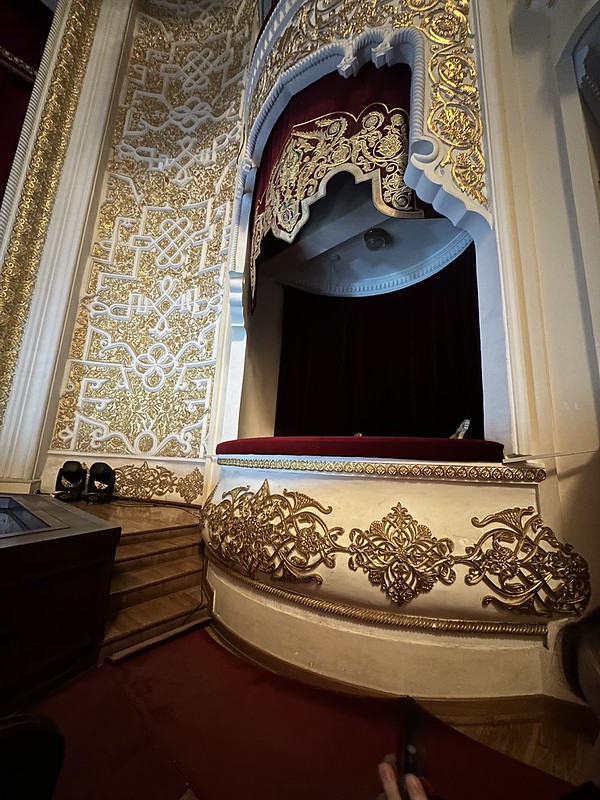
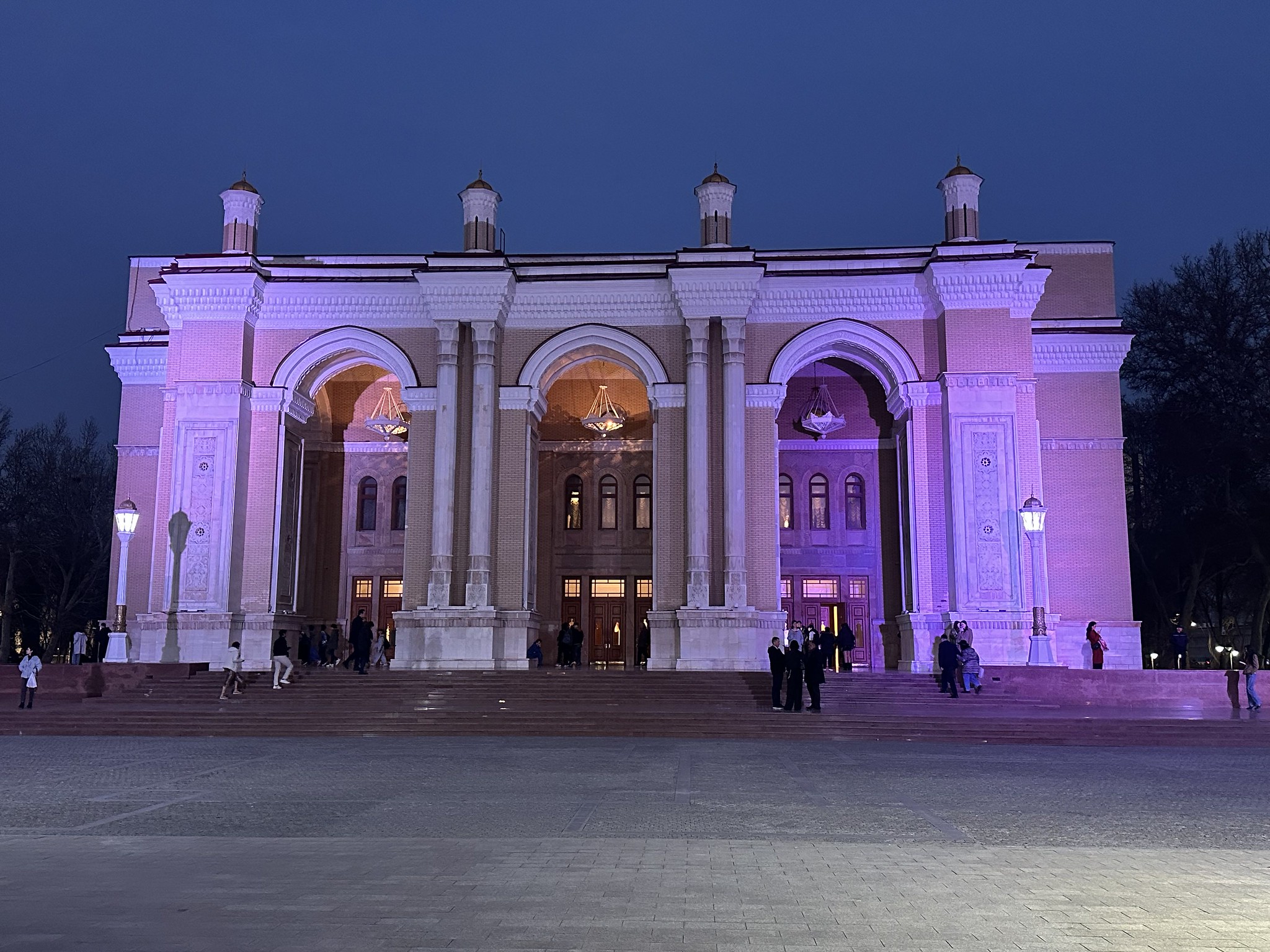
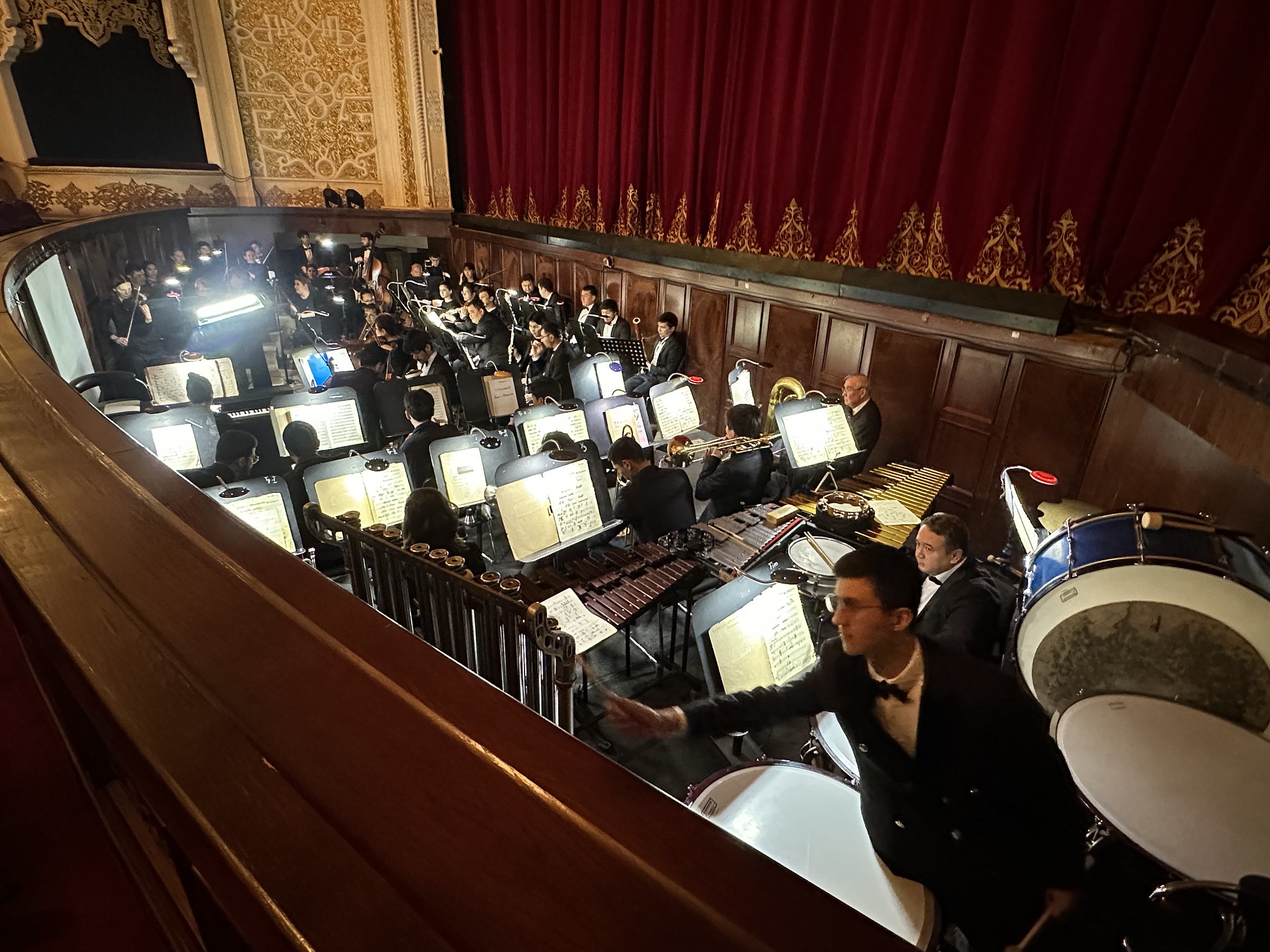
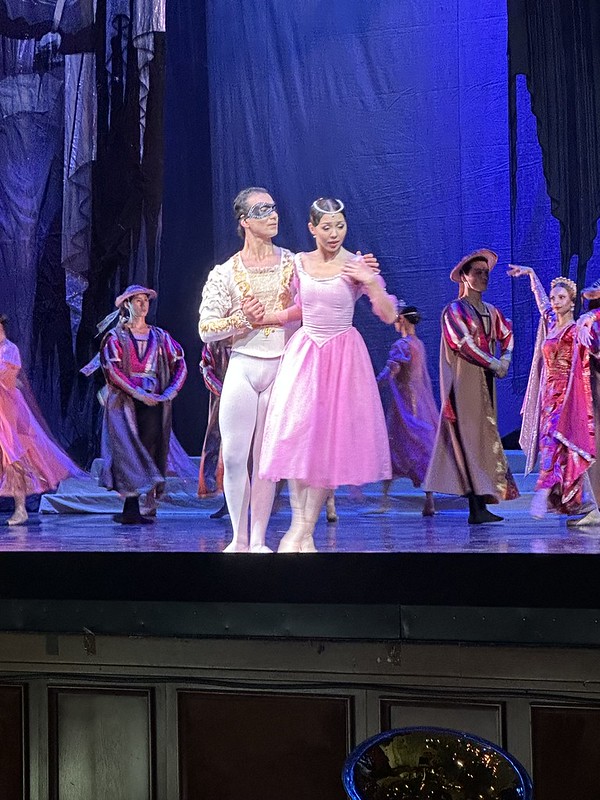
Ocean and I were swept away with the beauty and power of the concert. He composed the ballet like a director of a film score, and the music is some of the most complex ever written for dance. This was my first time in a long time watching ballet. I was impressed with the athleticism, flexibility, and grace of the dancers who moved on stage. The story was easy to follow with the music, the movements, gestures, and facial expressions of the performers; no language was needed to understand what was happening. It was like an opera without words. We were in the second row near the orchestra pit. Thank you again Russia, ironically, for supporting the infrastructure of the arts. Most former Soviet Republics have a beautiful concert venue and low costs for citizens to attend the fine arts. We paid $36 for two tickets next to the stage, including free parking 25 meters from the door!
I would like to thank the actor Timothy Chalemet and TikTok. Chalemet made a comment about the waning popularity of opera, ballet, and classical music that spurred my teenage daughter to want to attend the ballet. The “Dance of the Knights” piece in the first act is also often used on social media videos. I need to ask my daughter again what the significance of that is. I had just as much pleasure watching Ocean watch ballet as watching the performance myself.
Prokofiev’s greatness and contributions to humanity outlasted Stalin, the monster.
 Bill's Blog