Family Journal: Ramadan Begins – March 7, 2025

Al Badr Mosque – Standing Room Only

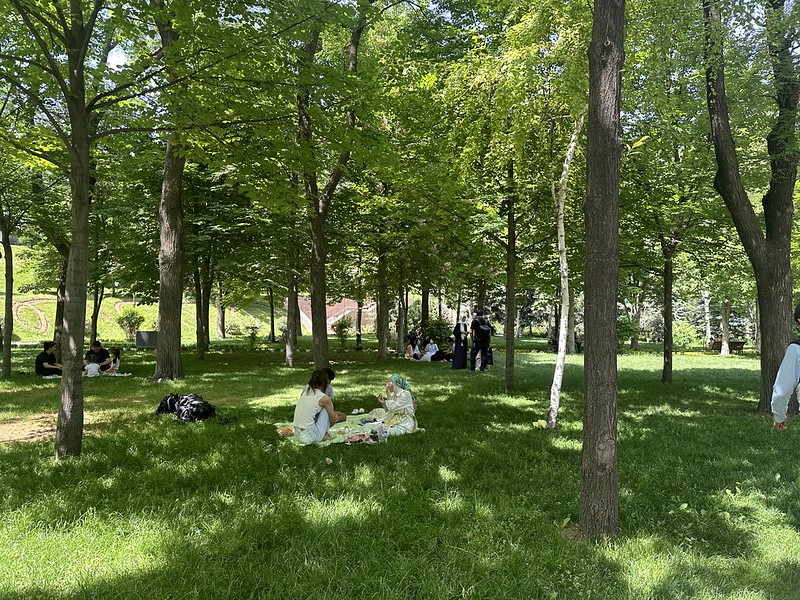
Muslims celebrate the holy month of Ramadan (Ramazon in Uzbek) based on the lunar calendar so it moves by approximately 10 days annually. This year it started on March 1 and ends on March 30. The city’s vibe definitely changes because people are more active at night. There is less traffic and fewer people in the grocery store, which I like. On my nightly walks with my dog Obi, I notice the mosques are always full to listen to the reading of the Koran. The Al Badr Mosque right behind the school was standing-room-only and men were praying outside. You can see the shoe racks to the left. Police cordoned off the street and were keeping a close watch on people walking through, including me. They never bothered me, but they were keeping an eye on me.

Above is a view from the rooftop restaurant of the Grand Mir Hotel. The busy roundabout is at the intersection of Mirabad Avenue, Shota Rosevelit Avenue, and Shakrisabz Street. We are scouting locations for the accommodation of new teachers when they arrive in August. The Grand Mir is a historic hotel. Built in 1960 and named the Hotel Russia, today it is a 4-star hotel in a prime location in the city.

Hopefully, we have had our last snowfall of the year. We received several inches of snow on Sunday and Monday this week. It was a lighter snow than the previous storm, so no downed trees. Temperatures remained cold for a few days until the sun melted the snow by the end of the week. I was careful walking on the icy sidewalks going to a dentist appointment (photo right), and the snow enhanced the view from The House Garden (left) at school.

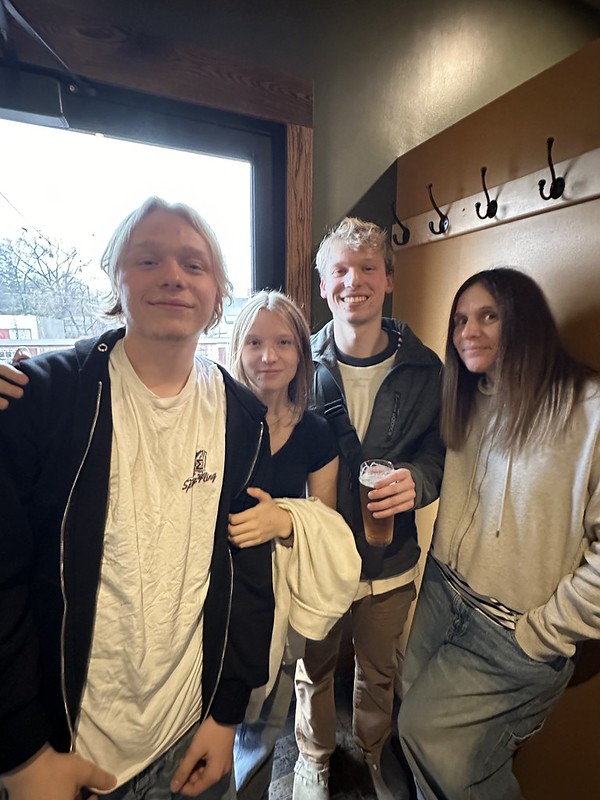
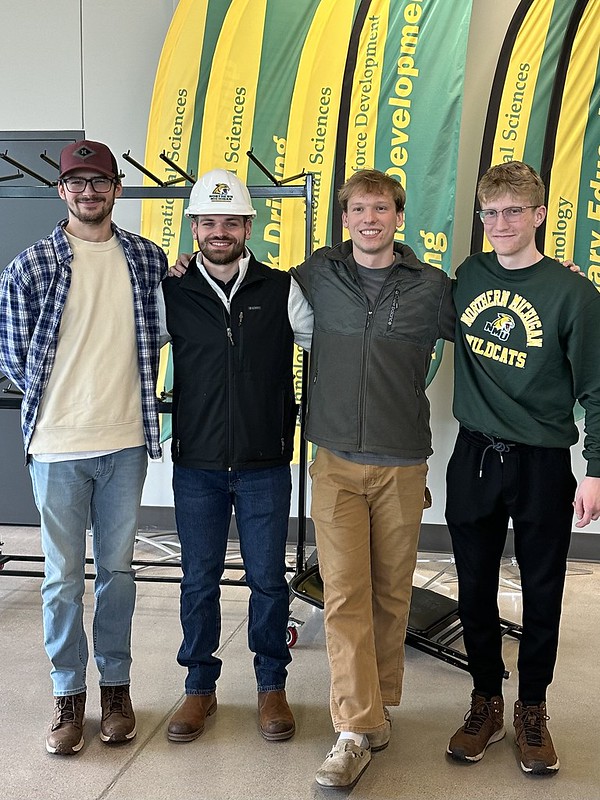
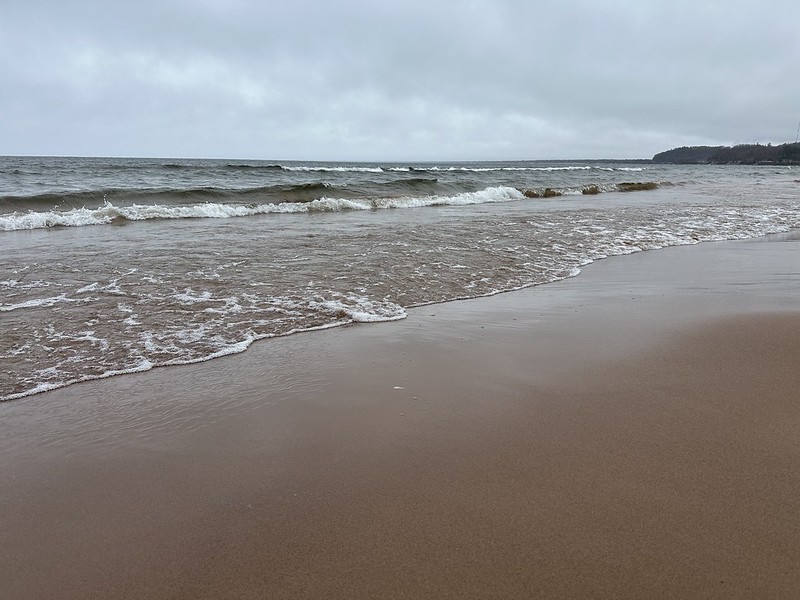
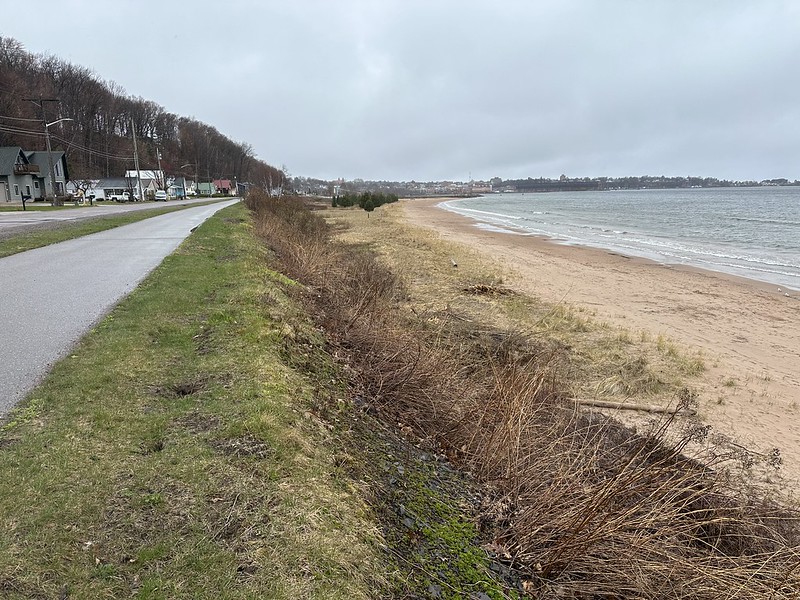
My son Owen shot a short video of driving in Marquette, Michigan. The Upper Peninsula usually gets a lot of snow and it reminds me of my childhood. Thanks for sending it Owen!

Family Journal: February 28, 2025

Ready to head down “Tango” – Amirsoy Resort – February 27, 2025

The weather has been bouncing back and forth between winter and spring this week. On Wednesday, Tashkent received a heavy, wet snow of several inches. Many tree branches came down all over the city, including on our campus. Fortunately, the snow fell overnight, and the big branches were already down by the time the students and teachers got to school. The maintenance team did a good job of securing the area under the trees that were at risk of more branches falling and clearing away the downed branches. The physics behind this natural phenomenon fascinates me. Can an arborist look at a tree and identify which branches are susceptible to cracking with the extra weight of snow on them? I had a very busy day at school and I wasn’t able to enjoy the snow much, but I did snap a few photos in the morning below of damaged trees on our campus.

Much of the snow had melted and dried by Wednesday evening. I forget that we live in a desert climate and standing water on the roads evaporated within a couple of hours. By the time Friday rolled around, almost all of the snow was melted, and temperatures reached 10 Celcius. I even saw a Red Admiral Butterfly on campus. More snow is forecasted for Sunday evening and into Monday morning.

On Thursday, I chaperoned the Grade 9 Ski Day at the Amirsoy Resort. The fresh snow made all of the runs fantastic to ski on! The resort has struggled with small amounts of snow on the top half of the mountain where they do not have snow-making equipment. I was in charge of an intermediate/advanced group of skiers, and we went down every run at the resort. It was my sixth day of skiing this season, and I felt great! There are a lot of good Instagram Reels teaching skiing techniques, and I’ve been using these tips to improve my form. I am a much more confident skiier than I was at the beginning of the season. I might try to go one more time next weekend,d but it looks to be 16C on Friday. Has the weather always been this topsy-turvy, or is it climate change?

The highlight on Friday was the Maslenitsa (масленица – in Russian) celebration at school. The Russian community put on a really nice celebration after school on Friday. Maslenitsa is celebrated in Eastern Slavic cultures and is the oldest surviving, pre-Christian Slavic holiday. It takes place the week before Orthodox Christian Lent. It is viewed as the last chance to celebrate and eat whatever you want before believers start to take their Lenten sacrifices. Activities include eating Russian pancakes (блины), which is a rich food full of eggs, milk, and butter, all of which are forbidden during Lent. They also have dancing, outdoor activities like sledding and skating, etc. The culimination of the week is burning of an effigy of the Maiden Maslenitsa. People forgive each other for wrongs during the year and exchange presents. I had a big laugh dancing with a folkloric dance troupe of older women from the Russian Cultural Center. I hope to get some pictures this week to post. I love being able to celebrate and learn about my Slavic heritage (I am 73% Polish/Ukrainian DNA) living here in Tashkent. I also love that this is the most wintry place I’ve lived in my long international school career. Although it is not as a strong winter as the Upper Peninsula of Michigan, which I am happy about.
Latest Reading: Munich by Robert Harris

I read my first Robert Harris book during the flights to and from Astana, the great historical fiction writer. I ran upon his book upon chance. Maybe with the movie the Oscar-nominated Conclave (based on Harris’s book) on Netflix, the book was being promoted in my digital library. I loved it and couldn’t put it down on my travel day on Wednesday. 

Munich refers to the Munich Agreement between England, France, and Nazi Germany right before the start of World War II. Harris has always been fascinated by the negotiations that took place between Hitler and British Prime Minister, Neville Chamberlain. Harris did a ton of research and it shows with his realistic depiction of what took place. The novel is based on two characters, one a British diplomat and speech writer for Chamberlain and the other, a German diplomat that is part of a furtive dissident group within the German government. The two are old friends from their time at Oxford University. 

Prior to reading the book, I only remembered that Chamberlain gave in to all of Hitler’s demands and in the end, Hitler did what he wanted anyway. My perception was Chamberlain was a fool and Churchill the wise politician who saw Hitler for what he was: a crazy, violent leader that was intent on taking over Europe. Harris’s account paints a more nuanced picture. Chamberlain was trying to avoid the next World War and knew that these negotiations would ultimately avoid war, but he felt it was worth it because of the delay. Chamberlain at the time was feted for his diplomatic efforts and any politician should be looked on positively who is working for peace. 

New Words / Good Quotes

  • Pompeiian Red – a hue close to red ochre that was commonly used in ancient Roman paintings and is abundant in the murals of Pompeii. 
  • Corvine – crow-like
  • Adjutant – an executive assistant for a military officer
  • Saturnine – gloomy
  • Avuncular – like an uncle
  • Peevish – ill-tempered, ready to fight

“the power of unreason” – A speech by the German diplomat from what he learned being inside the government during Hitler’s rise. People thought Hitler was not all bad and all of the anti-Jewish rhetoric in Mein Kampf would pass. At Oxford he learned the “power of reason” but working for the Nazis, he learned the “power of unreason”

“You see gentlemen, it is the same in every country; ordinary people the world over want nothing more than to live their lives in peace, to cherish their children and their families, and to enjoy the fruits that nature, art, and science have to offer them. THAT is what I wish to say to Hitler.” 

It was a good technique to use someone close to the historical moment but not one of the main characters to tell this story. It makes the reader feel like a fly on the wall. 

Nadia and I also watched Conclave. I loved it! We were both raised in strong Catholic families and are familiar with priests and bishops. Ralph Fiennes was excellent as the managing cardinal.

Impressions of Astana, Kazakhstan

I love having a lifestyle that allows me to travel to new places several times per year. I also enjoy novel experiences and Astana certainly fits that bill. It is distinct due to the absolute flatness of the treeless steppe, the newness of the city (since 1997) and the Siberian air currents bringing cold temperatures and high winds making it the second coldest capital in the world. Growing up in the upper Great Lakes region in Michigan, walking outside here reminds me of my childhood, with the frozen sidewalks, snow, and biting cold. It differs however with Michigan having hills and valleys and lots of trees. The flat grid structure of the city combined with mostly high rise buildings would be a bit monotonous after a while. However, for a short visit, it is great and a refreshing change from Tashkent.

Impressions of Astana and Kazakhstan

  • The Kazakhs love dry heat! Every place we go to, restaurants, hotel, school, I have to take off my hoodie because I start sweating. We turned off the radiator in our room from 5 to 0 to keep it a tolerable level of heat. It is similar to the USA in the summer regards to air conditioning. I complain that I need to wear a sweater in the summer because of the strong AC.
  • The Kazakhs are not a friendly and open as the Uzbeks are to foreigners and as a culture in general. They were not rude, just not as friendly and expressive.
  • Lots of people walk outside despite the cold temps and icy sidewalks.
  • Kazakhstan is about 5x richer than Uzbekistan and you can see with its development and sophistication. I noticed more Chinese businessmen in the hotel and around the city than I see in Tashkent. One person commented that the country sold its soul to the Russians and Chinese in developing their petroleum industry.

I really enjoyed the week in Astana and it makes me want to explore Central Asia even more. It was a nostalgic trip for me. Experiencing a bitterly cold, snowy, icy winter is what I grew up with.

Astana Journal: Qatar Defeats Kazakhstan Asia Cup FIBA Basketball

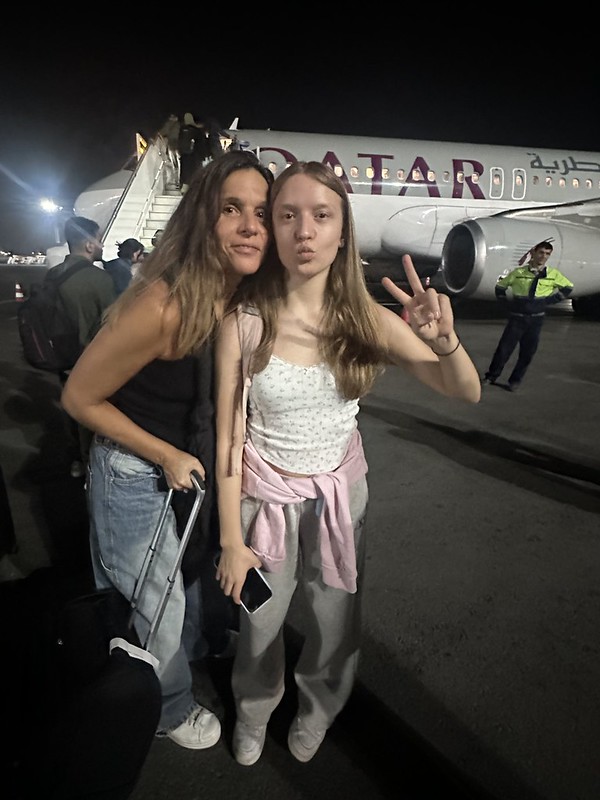
Nadia and Kamola outside the stadium

One of the highlights of the trip to Astana, Kazakhstan, was attending the FIBA Asia Cup (Saudi Arabia – 2025) Qualifier basketball game between Kazakhstan and Qatar. Qatar qualified for the Asia Cup by defeated Kazakhstan 92-71. It was a fascinating game. I knew Qatar gives citizenship to athletes to supplement their international sports teams. It makes sense with their big pot of money and few Qatari athletes. The men’s basketball team had two Americans, Tyler Harris, a 6-10 center who played for the Auburn Tigers, graduating in 2016. The other was point guard Mike Lewis, who played his college basketball at Duquesne, a mid-major university in Pittsburgh. They were the class of the game, being a clear tier above everyone else and they combined for 33 points. Qatar completed its roster with Montenegrin, Bosnian and some Afro-Qatar players. All of them seem to play or have played in the QBL (Qatar Basketball League). Qatar did have a local on the team, the 5-8 point guard was Qatari and he was pretty good. They were up by 24 points when we left late in the third quarterKazakhstan had 4 or 5 “bigs” but they were all pretty mechanical. I was surprised by the many mistakes and sloppy play by both teams. Qatar seemed to be working on their younger players, especially a big center that looked like Zion Williamson. There was a pretty good crowd and oil money paid for a beautiful, modern arena. I was left wondering how much the foreign players get paid by the Qatar government to represent their country. The team was led by a Morrocan coach. 

Kazakhstan (white) versus Qatar (maroon)

For the first time in my life I saw three consecutive 5-second violations. Kazakhstan couldn’t inbound in time and turned the ball over. Then Qatar did the same thing so it went back to Kazakhstan. Again, a 5-second violation gave the ball back to Qatar. Finally, Qatar inbounded the ball and play continues. It was indicative of the level of game play for the evening. I was highly entertained however and will try to see how the teams do in the Asia Cup! 

We had fun walking to the game from our hotel on the icy sidewalks. The students chose to eat at Burger King; adolescents love fast food, and the BK franchise has not come to Uzbekistan yet, neither McDonalds or Starbucks.

Family Journal: Travel to Astana – February 19, 2025

This is my first time visiting the capital city of Kazakhstan, Astana. The city is known for its cold temperatures. It is the second-coldest national capital in the world after Ulaanbaatar, Mongolia, due to its position in the middle of the very flat, semi-arid steppe region. At 51 degrees north latitude, it would be equivalent to the north side of Lake Superior. Ottawa, Canada used to be number two before the capital of Kazakhstan was moved from Almaty to Astana. The city is in the path of the northwest Siberian winds, hence, the dry, cold, long winters.

It is also famous for its name changes. Named “Akmola” (white grave) in 1850, later it changed to Akmolinsk to Russianize it a bit. USSR President Nikita Khrushchev renamed it Tselinograd (City of Virgin Lands) in 1961 because it was in the center of a region the Soviets were developing for agriculture. After Kazakhstan’s independence, it went back to Akmola in 1991. In 1997 it was named “Astana” which means capital city in Kazakh because the president moved the capital from Almaty to Astana. In 2019 it changed again to Nur Sultan after the outgoing president, but in 2022, the new president reverted back to Astana. So that is 6 name changes in 150 years!

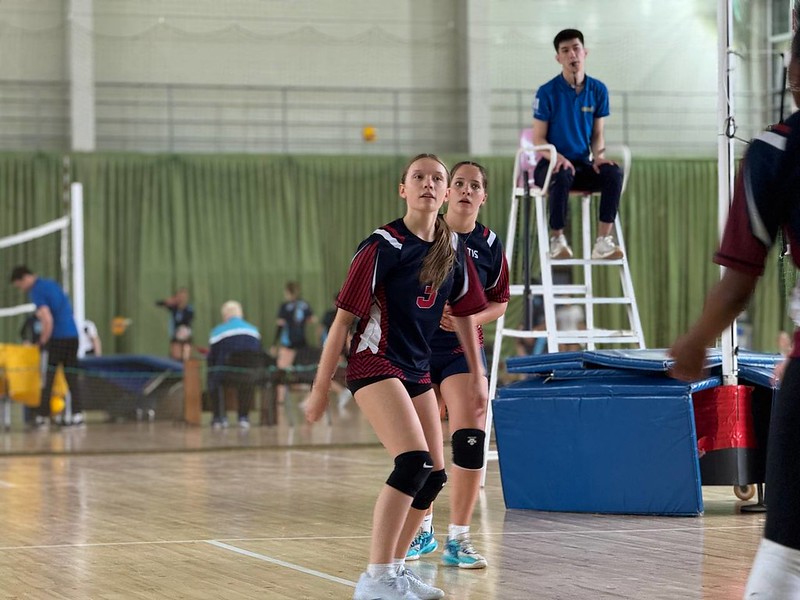
My daughter Ocean plays on the varsity girls basketball team and so it is nice to see her occasionally on the trip. The first two days, the boys and girls are at different schools.

My initial impressions of Astana is that it feels like my childhood growing up in the Upper Peninsula of Michigan regarding the ice and snow. It is a little bit soulless with straight stress and highrise apartment buildings. It reminds me of the newer cities of China.

Latest Reading: “Autocracy Inc.”

I recently finished Anne Applebaum’s “Autocracy Inc.: The Dictators Who Want to Run the World”. It was recommended by one of the Books of the Year by The Economist. An Autocracy is a government in which a head of state and government hold absolute power. The autocratic governments featured in the book are Russia (Vladimir Putin), China (Xi Jinping), Venezuela (Nicolas Maduro), the Islamic Republic of Iran (Ali Khamenei), and North Korea (Kim Jong Un), and the basic premise is they cooperate to help them hold onto power and wealth in their respective countries and undermine democratic and liberal countries.

The book made an impression on me. I knew most of what she wrote about. I have lived in autocratic countries for almost 12 years of my life and I understand them well. Applebaum framed it into a conceptual framework that helped me see the big picture. It is not a long book, but it changed my lens on how I view global politics. I highly recommend it. Below are some of the ideas I will be taking away from the book.

I like how she put it that even though these countries do not have much in common, they are bound by a “single-minded determination to preserve their personal wealth and power.” They are together against “the West”, the USA, NATO, EU and “their own internal democratic opponents and the liberal ideas that inspire all of them” She defines the West as having the following characteristics:

  • the notion that the law is a neutral force, not subject to the whims of politics;
  • that courts and judges should be independent;
  • that political opposition is legitimate;
  • that the rights to speech and assembly can be guaranteed;
  • that there can be independent journalists, writers, and thinkers who are capable of being critical of the ruling party or leader while at the same time remaining loyal to the state.
  • there is a set of universal human rights and in practice, a collection of documents and treaties collectively known as the “rules-based order” on how the world ought to work.

It was shocking to read that when Russia invaded Ukraine, they arrested “public officials and civic leaders; mayors, police officers, civil servants, school directors (me), journalists, artists, museum curators, etc. Those are the kind of people in a society that champion the ideas above.

“Everyone assumed that in a more open, interconnected world, democracy, and liberal ideas would spread to the autocratic states. Nobody imagined that autocracy and illiberalism would spread to the democratic world instead.”

Autocratic governments use the dark global financial system to hide assets and launder money. For example, three-quarters of the $80 billion value of Rosneft, a Russian petroleum company, was built on stolen assets from the state. Western financial organizations earn profits from the sale of stocks in these types of companies.

“One in five condos in Trump-owned or Trump-branded buildings is owned anonymously.”

She reminded me that China absorbed all of the technology of Western companies, before banning them and pushing them out. Google left in 2010, Facebook was banned in 2009, Instagram in 2014. Even Tik Tok is banned in China!

China, Russia and other autocratic governments use internet trolls to disseminate misinformation and weaken democratic governments. They will use any ideology and things like medical conspiracies, moral panic, etc. in hopes to rewrite the international system itself. Autocratic governments use smear campaigns to defeat internal liberal opponents.

China is trying to remove the language of human rights and democracy from the international institutions that were formed in the aftermath of World War II. China prefers language like “the right to development” and they rely heavily on the word “sovereignty”. This basically means leave our autocracy alone so we can rule how we please. The President of Iran visited Cuba, Nicaragua, and Venezuela to show the world to stand up to “imperialism and unilateralism” but what he meant, according to Applebaum, was “to solidify their opposition to democracy and universal rights.”

Applebaum in the last chapter gives advice on how people can fight back against illiberalism. It is not a fight against any of these individual countries or governments, but a fight against autocratic behaviors. Networks of lawyers and public officials inside our own countries are needed to cooperate with democratic activists who understand kleptocracy the best.

“You have bad roads and bad health care, Navalny told Russians, because they have vineyards and oyster farms.”

Family Journal: February 13, 2025

It is quiet here without the boys visiting. They headed back to the US. Oliver sent us this photo of him in his military uniform. He is taking a Military Science class at his university. They have physical training three times per week and on some weekends they do military exercises. Unfortunately, many of the morning trainings are taking place in northern Wisconsin. I see it is -7C and snowing in Green Bay as I write this post. “Olympic Village” of sports facilities east of the city. I peeked through the fencing to see the progress they are making. The goal was to have it ready for the Asian Youth Games in September, but those have been moved to Qatar. I am looking forward to it being completed. The article I linked it to mentions a 10,000-seat soccer stadium, velodrome!!!!, hockey arena, running track, etc.

There is no snow in the city, only the mountains. I took the photo below of the Papa Run at the Amirsoy resort when I chaperoned a ski trip with the students. It did snow this week but quickly melted with sunny skies and spring-like temperatures in the afternoon.

Amirsoy Resort

Family Journal: February 7, 2025

We are enjoying our Ski Break long weekend in Tashkent. We are at the halfway point between the end of Winter Break and the start of Spring Break, so it comes at a good time.

We started the break by attending the classic Italian opera, The Elixir of Love at the State Academic Bolshoi Theatre of Uzbekistan Named after Alisher Navoi. The Russians value the fine arts and built a beautiful opera house theatre dating back to the 1930s. The Uzbeks have maintained the building after independence and I saw there is another renovation project taking place on the facade. It could use a renovation inside as well, the men’s bathrooms smelled horribly and the old tiled flooring has seen better days. However, it is a gorgeous venue, and because it is subsidized by the government, it is inexpensive to attend. There is something to be said to see a live full orchestra and hundreds of singers, actors, and crew perform and only pay around $10. The story itself was a bit silly, but the costumes and performances were awesome. They had both Russian and English subtitles which made it even better! We could follow along the story. We had reservations for a Japanese restaurant that was recommended to us by someone from the Japanese Embassy so we left at intermission.

Nadia and I stopped to check out the new shopping mall (Alfraganus) that is nearing completion near our house. There are only a few stores open as construction is taking place. We liked the new Korzinka supermarket and the layout of the outdoor mall. It is nothing special, but nice to have another shopping option close by. The city is growing so rapidly that a major project like this is just another development among literally hundreds of construction projects taking place.

Besides resting and enjoying some well-deserved leisure time, we are also getting organized. We are buying flights for the summer, getting documents for Nadia’s Green Card application, etc. Below is a photo of Nadia and Obi after we visited the Japanese Embassy. We took the little guy for a walk after waiting patiently in the car for us.

Reflections of London

Oliver in Trafalgar Square

London is one of the great cities of the world. As the capital of the largest empire in history, London was the center of the world for a long time. I think about the Industrial Revolution and all of the great scientists, explorers, authors, musicians, etc. who called the city home. Amazing! The city oozes history and there are so many iconic sights to take in. I’ve been lucky that one of the biggest international school recruitment fairs is in London, so this was my third visit. Every time I visit, I see another facet of London and I’ve only scratched the surface.

London’s importance in the world has slowly declined along with the British Empire. City officials and UK leadership have been desperate to keep it an international financial hub, but other cities and regions of the world are taking over. It felt a little bit like a museum when we exited the underground at Trafalgar Square. It was mostly tourists and comparable to Times Square in New York. There is still a lot of wealth in London, but it dropped to number 5 in the world. The UK leaving the European Union didn’t help and banks and investment firms welcomed investments from dodgy clients (ex – Russian oligarchs), it hollowed out the city in recent years.

We had time to kill before our flights after the fair so we visited the British Museum. I like to call it “The Loot We Stole While We Ruled the World” Museum. Like the Metropolitan Museum in New York, you could spend days taking in the different eras of history. It was amazing to see in person the Rosetta Stone, Roman and Greek statues and friezes, Egyptian mummies, etc. Having all these relics in one place gives one a sense of the span of world history.

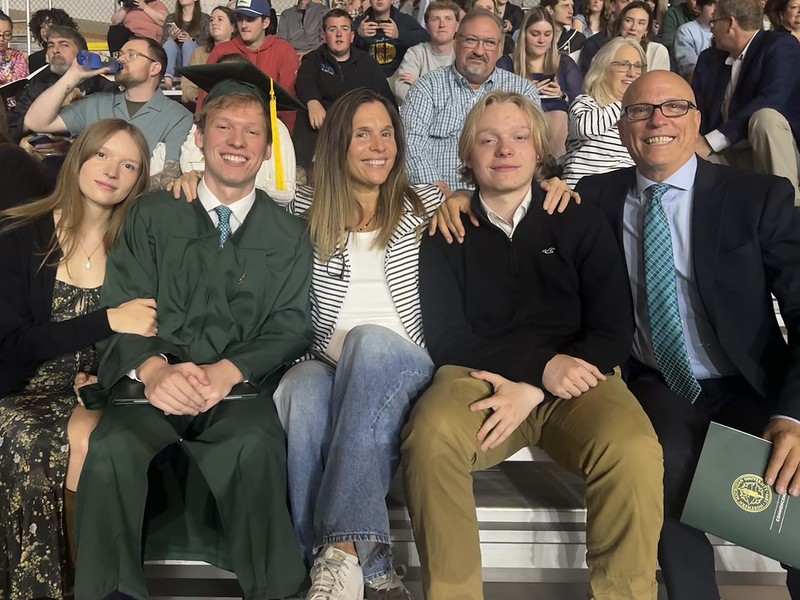
The best part of this visit was to share it with my son Oliver! We had a great time together and it was cool to combine work with family. He was very helpful at the job fair and is old enough to take care of himself. It gave me great pleasure to take him to the home of the English Premier League, a dream trip for him. It is the cycle of life and seeing the world through a young man’s eyes is always special for me. I won’t see him until May when we go to his brother’s graduation.

Oliver and Dad at Gloucester Road Station