Our school has a robust Model United Nations program for the students. It is quite appropriate because a big portion of our students come from diplomatic families. The Model United Nations or Model UN or MUN is a simulation of proceedings of the actual United Nations. The students are assigned nations to represent After researching the country, they act in their perceived interests of that country. Student-Delegates put forth motions to debate and vote on and serve on various smaller groups like the Security Council or International Court of Justice, etc. Every MUN has a theme so teachers propose topics and issues for the MUN to solve. There is also always an “emergency” on Day 2 of the activity, which may be a major natural disaster, pandemic, breakout of war, etc. that the students have to react to. I love watching the students engage with each other on global issues and it breaks up the routine of teacher-led classes. Students serve as chairs and run all sessions.
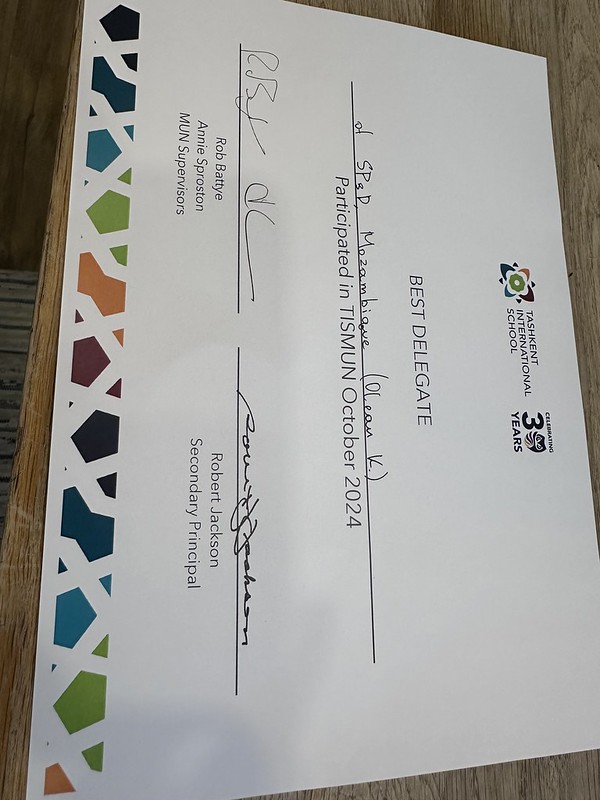
Ocean won a “Best Delegate” award for her level. She is a good student, organized, curious, caring, and it showed during this MUN. I watched a few of the sessions but missed her getting the award due to afternoon meetings. I asked her to get to a microphone and make a motion while I was there, but she just laughed.
I read a bit about the history of MUN. I didn’t know that it started in the 1920s at Oxford University and shortly thereafter, moved to Harvard University as well. Back then it was the League of Nations, and through the years has morphed into the United Nations. Our school annually attends one or two conferences and hosts one conference. We usually attend the MUN in The Hague, Netherlands. I don’t think Ocean will be attending that conference.
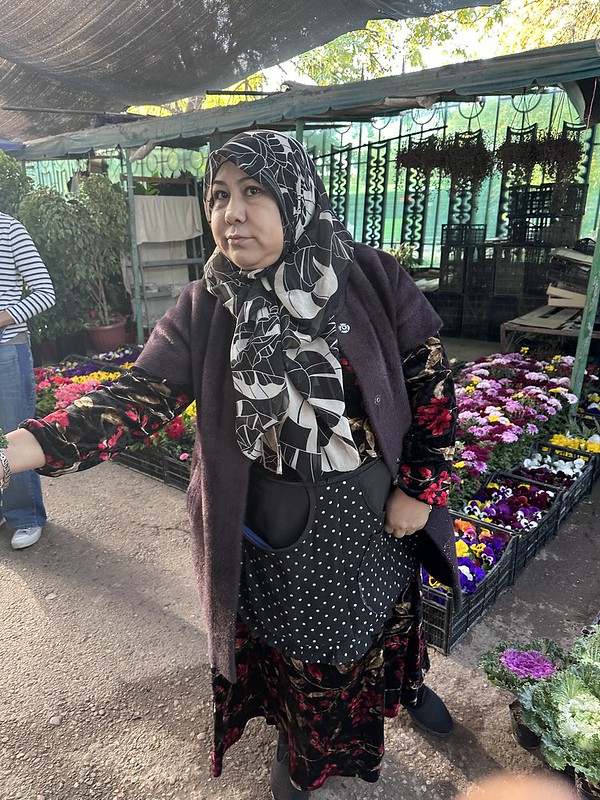
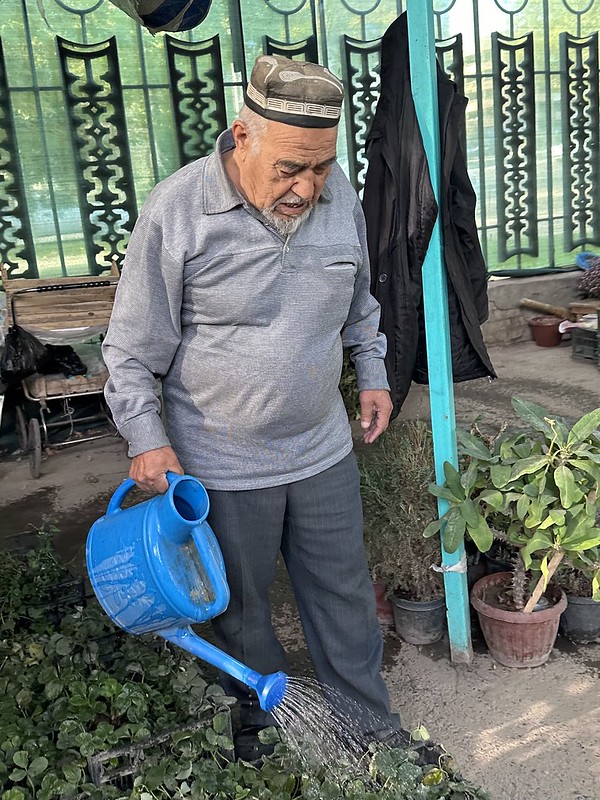
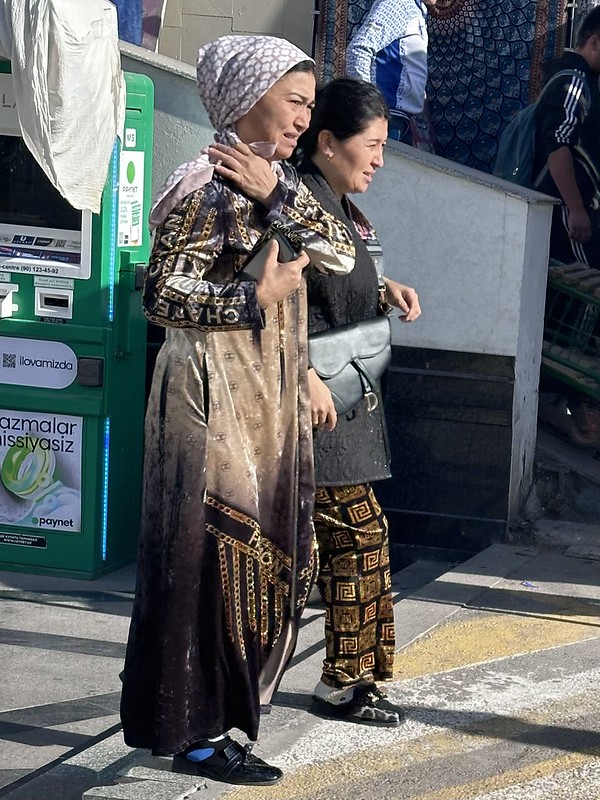
I always love people-watching when I visit Chorsu Market, the largest, most traditional market in the city. The sprawling complex contains just about anything one needs with different sections for fruits/vegetables and other groceries, carpets, gold, live animals, textiles, etc. Some people have the misperception that Uzbekistan is a religiously conservative country. There is no pressure on women to cover and one sees a range of dress styles. Generally, I notice younger and richer women dress more “Western” and in secular styles. We arrived at the market around 8:30 AM on Saturday which is early for Uzbeks so the market was blissfully empty. On our way home, we noticed traffic picking up around 10:00 AM. Nadia was shopping for winter plants for our garden. Uzbek women like colorful and comfortable jumpsuits. Autumn has reached Tashkent and Uzbeks have a tendency to bundle up with heavy clothing.
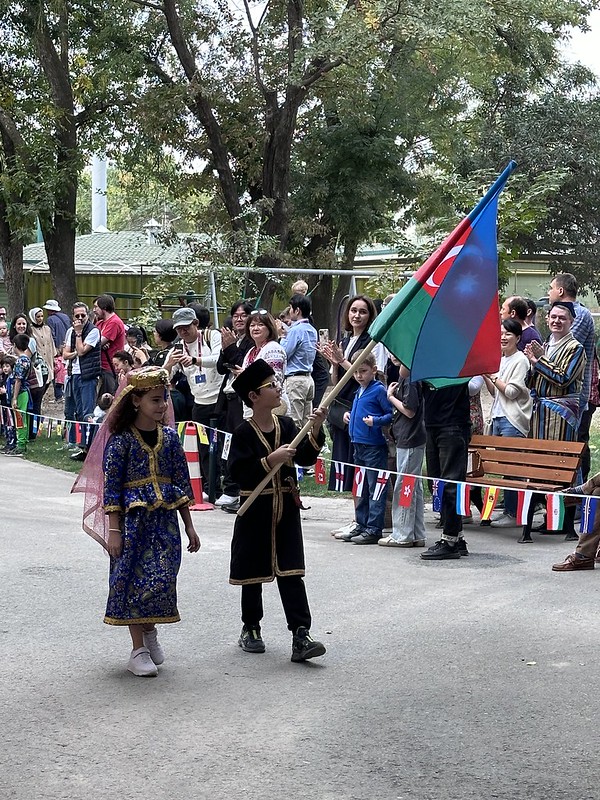
On Sunday we host the school’s annual United Nations Day. Our school has people from over 60 different countries and it is always awesome to see the full spectrum of humanity’s colors and customs. From India and the Marshall Islands, from China to Nepal, we have nations large and small. Some delegations are large like the USA and Uzbekistan but most are single families. I think have a wide variety of nations represented at our school softens conflict and disagreement between nations. Everyone in attendance was respectful and supportive of all cultures. It is one of my favorite days of the school calendar.
We had a fun week of school with the Terry Fox Run taking place last Friday and the Book Character Parade happening this past Wednesday. Nadia helped me with my costume, which was inspired from the children’s book, Harold and the Purple Crayon. I don’t know what is says about me that I have a purple velvet jacket and bright pink shorts in my wardrobe? I love events like these as it breaks up the routine of school days and brings smiles to community members. These events also give me a chance to connect with people.
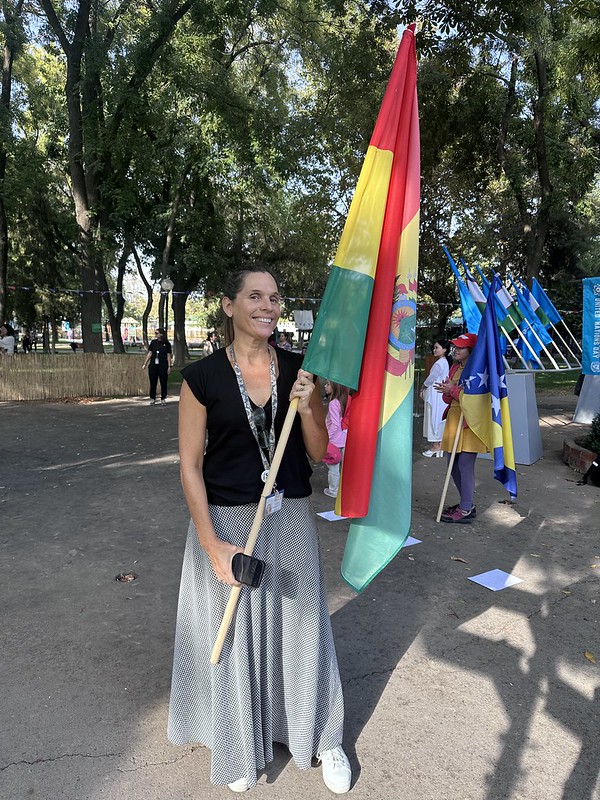
We are also preparing for United Nations Day, the big international celebration at our school. We have over 60 nationalities represented at our school and it is always breathtaking to see the diversity of humanity on display. With so many different ethnic groups, religions, cultures, etc. it allows us to focus on what humans have in common rather than comparing self versus the other. With so many different “others” I feel it is a useless exercise to rank or compare one’s own”tribe” or cultural group to others. Nadia and Ocean are marching as Bolivia this year.
It was a nice quiet weekend in Tashkent, the highlight being Ocean’s soccer games on Saturday afternoon. Our school hosts a local tournament to help prepare the student-athletes for the culminating Central Asian Federation of Athletics and Activities (CAFAA) tournaments.
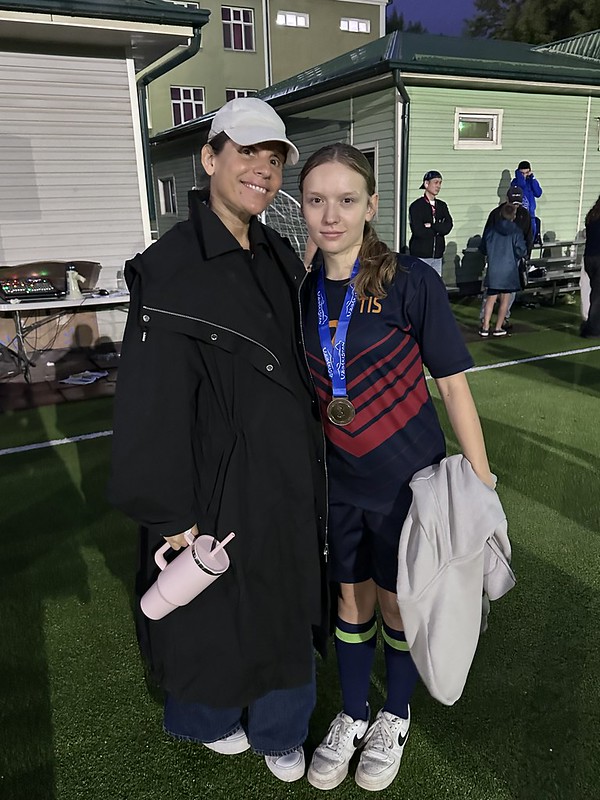
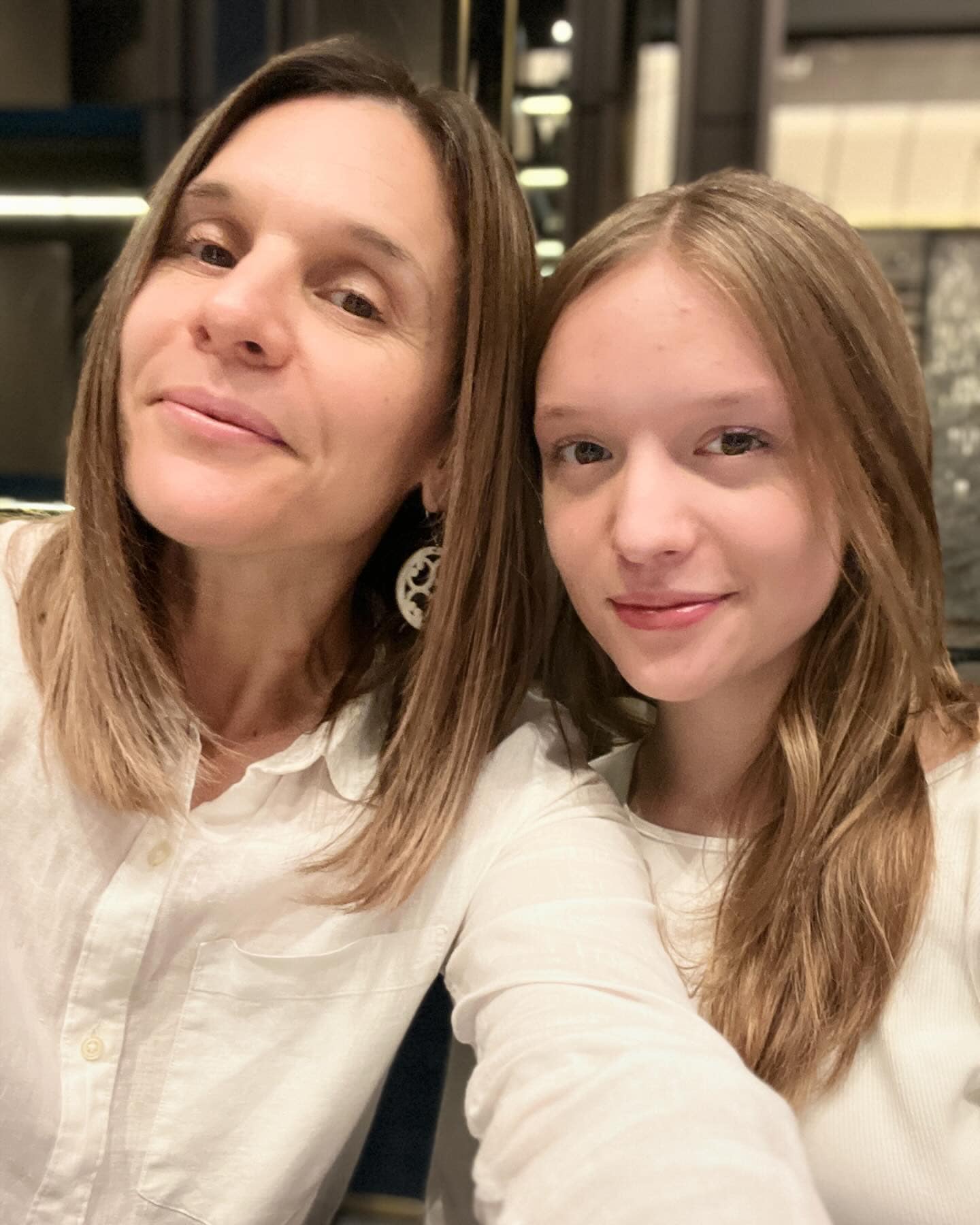
Nadia, Ocean, and coach VictorOcean and KateMom and Ocean
Ocean was sick this week with flu-like symptoms. She stayed home from school on Friday, but after some encouragement, she participated in the tournament. They played four 40-minute games in the afternoon, and her team finished in third place. Our school had difficulty finding schools with female soccer teams. Female sports in general and soccer specifically are not popular in Uzbekistan due to cultural mores. The athletic director said out of the 20 schools we interact within the city and region, only one, the British School of Tashkent, had a girls soccer team ready to play. We did invite two club teams, one from our section of the city and another from Bekabad, a city 140 kilometers from Tashkent on the border with Tajikistan. The club teams pull from a wider population than schools and have much more training that we do. The two club teams were above the two school teams. However, it was good for TIS to play them to lift their game in preparation of next month’s CAFA championship that we are hosting for the first time since I’ve been here in Tashkent. Her coach wants to play them again.
Ocean played midfield and centerback in defense and got action in every game. She is a really good athlete and as she plays more soccer, will feel more comfortable. It was a rare rainy day in Tashkent. It didn’t feel like we were in Uzbekistan as this is the first steady rain we’ve had in months. TIS played BST in the consolation game and it was a highly entertaining match. We fell behind 0-1 and eventually rallied to win 3-2 and take home a bronze medal.
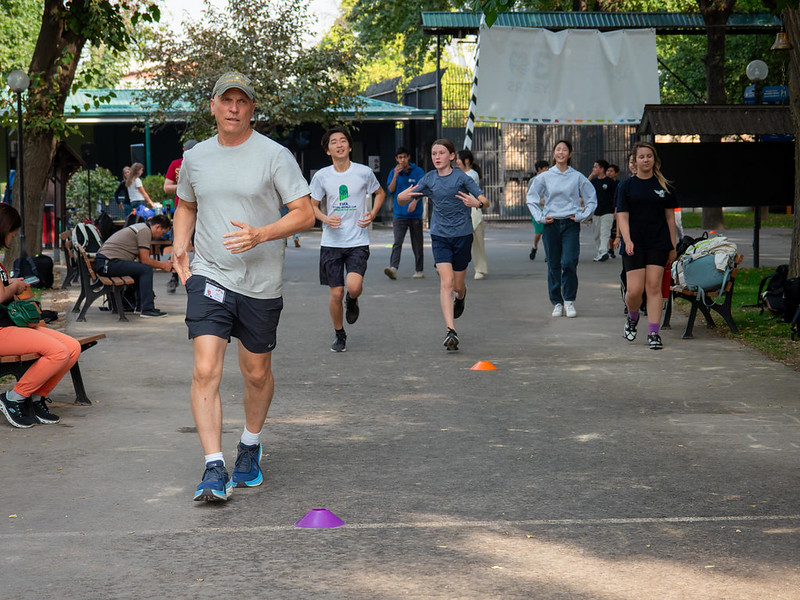
Nadia and I went out with friends on Saturday night for drinks at the Hyatt. We had a lot of good laughs! I played 3 sets of tennis with our friend Noah this morning at the Olympic Tennis School. Nadia sat out because she fell during the Terry Fox Run on Friday afternoon. Our school held two runs around the campus for elementary and secondary students to raise funds for our Cancer Curesaders. The student-led group collaborates with the children’s cancer hospice in Tashkent. Nadia scraped her knee, arm and lip as she fell on a small rise in the path on the asphalt.
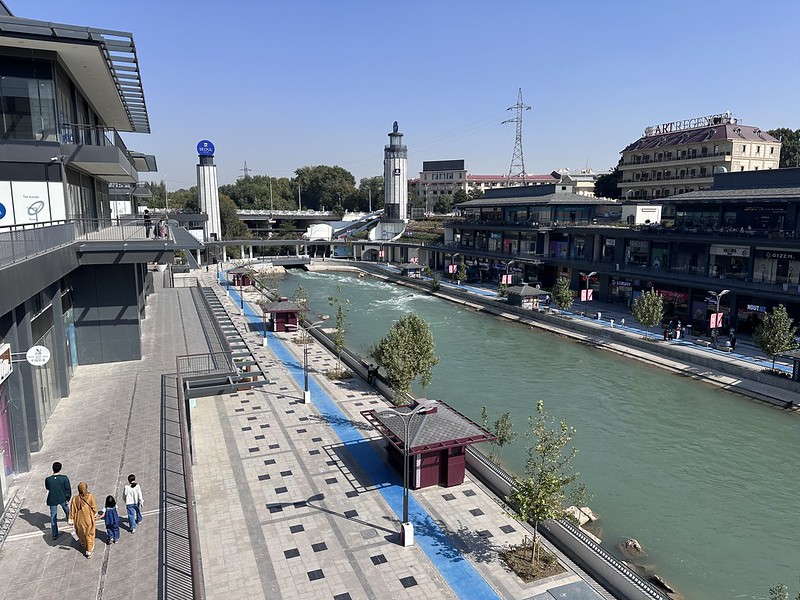
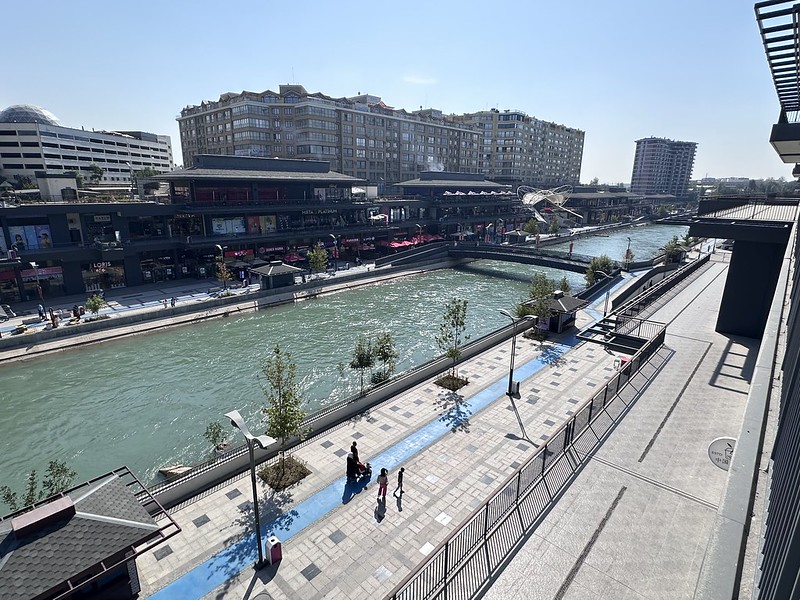
Tuesday, October 1 was Teachers’ Day, a national holiday in Uzbekistan. It was nice to have a day off in the week. I took advantage of the perfect weather and went for a long bicycle ride followed by a walk with Obi. I walked along the Seoul MUN development along the canal. It is almost complete and an example of the incredible business growth in the city. When I was here five years ago, it was a deep ravine with grassy clay soils on both sides and kind of an abandoned part of the city. There was a trail about halfway down the cliff and remember running on it as it was too soft to ride a bike. It is a massive project with three floors of retail shops on both sides of the ravine, a hotel, several apartment complexes and bridges with walking trails. It is in a nice part of the city and would be a good place to have an apartment, although they have to work out the traffic flow with the access roads on both sides of the canal.
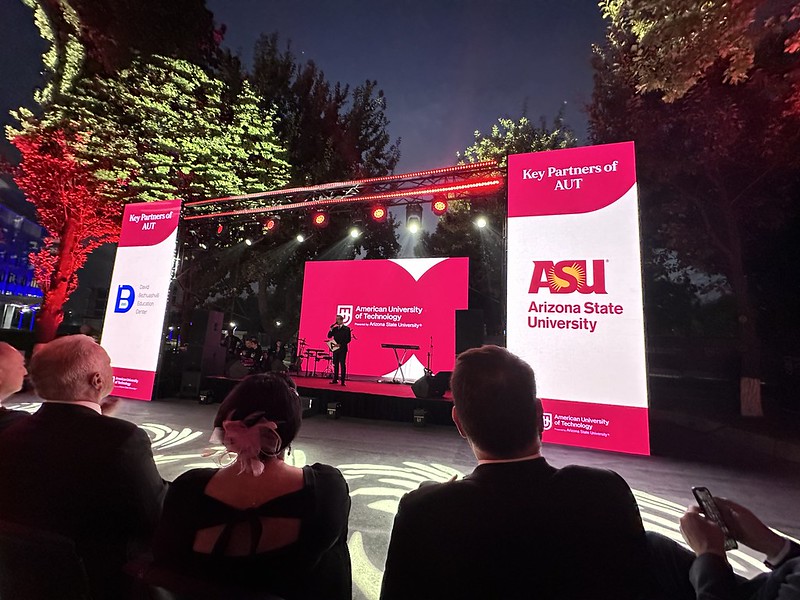
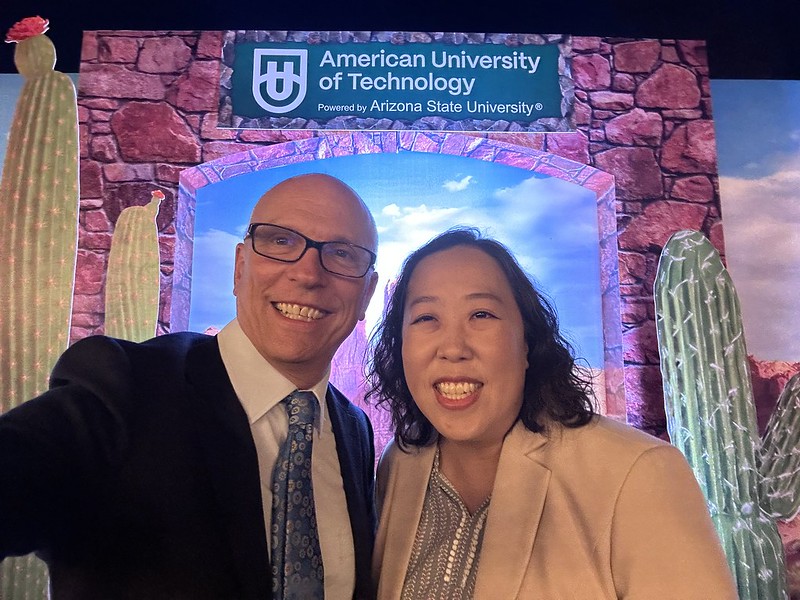
A beautiful evening Bill & JeanetteMinister of Higher Education
In the evening I attended the grand opening of the American University of Technology – Arizona State University campus. The Uzbek government is courting international investment and supporting this venture. Many universities are opening in Uzbekistan due to the demographic bubble here of many young people coming of age. Arizona State is the largest public university in the USA and they have partnered with 12 universities globally similar to what they are doing here. Students can attend AUT for 3 years and 1 year at ASU and earn a ASU degree. They also have dual programs with Masters degrees. They are starting this year with 50 students on scholarship and two programs (computer engineering, international business). They are adding a bunch of programs next year as the program grows.
It is fascinating to the point where a dispute or conflict becomes an all-out war. What is the trigger that pushes incidents and skirmishes to everyone on both sides deciding to go to war. It reminds me of the outbreak of the Balkan Wars in the 1990s and the attack on the Holiday Inn in Sarajevo. Larson uses Fort Sumter, a federal fort protecting the Charleson, South Carolina harbor as the Holiday Inn of the American Civil War. The book is also wide-ranging and follows many characters and settings, including Lincoln taking office in DC, the various secession conventions in the southern states, etc.
The book also left no doubt in my mind that the American Civil War was mostly about the question of slavery. Most people and more importantly, most leaders in the northern states were abolitionists and could not live in a country that permitted slavery. I can’t believe slavery lasted so long in the United States. This was 1860, which was only 164 years ago. The society and culture that grew around the cotton plantations and slavery was so different from the rest of the Union. I now see why we had to go to war to keep the country together. I am glad they sorted it out 100 years before my birth and today, the United States of America has the largest economy in the world and is a beacon of individual rights and rule of law for the world. We would have been a lesser nation split into two.
History does not look favorably on President James Buchanon (1857-1861). He did not take strong measures to reign in the South and support keeping the Union together. I learned of the Ghost/Shadow or Corwin Amendment, that he tried to push through that would have tolerated slavery within the Union. It never was ratified by the states due to the outbreak of the war, despite being passed by both houses of Congress. The amendment was a product of a “Peace Convention” where 133 delegates from 14 free states and 7 slave states gathered to try to reach a compromise to keep the Union together.
The saying that history repeats itself is a cliche, but the book describes the certification of the electoral vote of 1861. There was concern that Buchanon’s Vice President, the Southern Democrat John Breckinridge, would stage a mutiny or suppress the session of Congress to ratify the results of the election. This is part of what sparked the January 6, 2020 riots in the Capital building. It is a quirk of the Consitution needing Congress to officially certify of the results the election that took place several months before. I would abolish it. If this year’s vote is close and the Republicans lose, there will once again be tumult in January. It is also interesting that the Vice President was often an opposing party member back then, unlike today where it is the same party.
Through the book, I was noting the order of the Southern states that were seceding. South Carolina was the first state, followed by Mississippi, Alabama, and Louisiana. In the official declaration of Mississippi after the 84-15 vote in favor of leaving the Union, they wrote,
“Our position is thoroughly identified with the institution of slavery – the greatest material interest of the world…Its labor supplies the product which constitutes by far the largest and most important portions of commerce of the earth. These products are peculiar to the climate verging on the tropical regions, and by an imperious law of nature, none but the black race can bear exposure to the tropical sun. These products have become necessities of the world, and a blow at slavery is a blow at commerce and civilization.”
With a mindset like that, I see why the Civil War started. Mississippi’s leaders viewed Lincoln and the northern Republicans as a threat to their livelihood and way of life. Other deep south slave states felt the same and many of them broke away from the Union even before Lincoln started his term. Slavery is abhorrent and I see Lincoln and the north really had no choice. The wife of Buchanon’s Secretary of State Henry Seward, Frances Adeline Seward criticizing her husband’s compromise of allowing slavery within the Union wrote the following.
“Compromises based on the idea that the preservation of the Union is more important than the Liberty of nearly 4 million human beings cannot be right – The alteration of the Constitution to perpetuate slavery – the enforcement of a Law to recapture a poor, suffering fugitive – giving half of the Frontier of a free Country to the curse of Slavery – these compromises cannot be approved by God or supported by good men.”
The Montgomery Daily Post newspaper advertised “Negro Dogs” for rent at $5 per day and $10 for each slave that they caught. Absolutely disgusting.
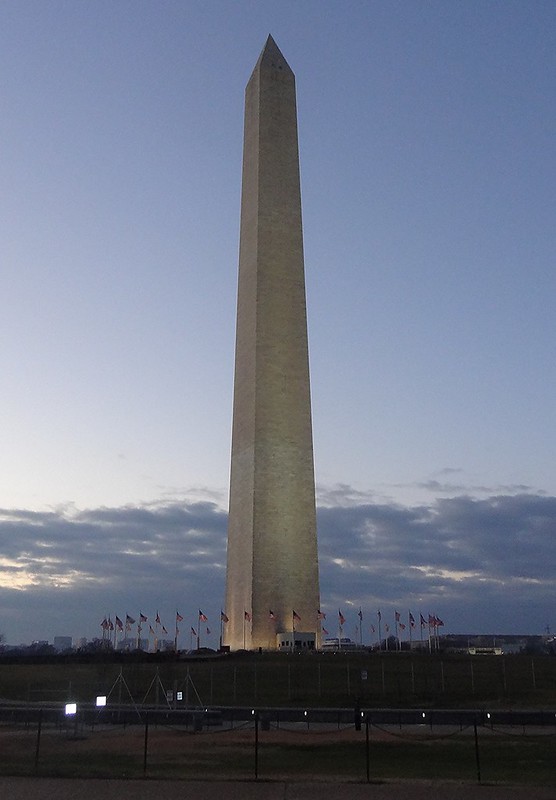
I never noticed it, but I learned that the Washington Monument has two tones of marble. Construction started in 1848 with enslaved labor but stopped in 1858 due to the secession crisis. It did not resume until after the Civil War with paid labor using a different color of marble.
Notice the change of color about 1/3 the way up from the bottom. (my photo from 2012)
Transportation and technology were so slow back then. There was no electricity and no microphones so many people relied on newspapers to learn what President Lincoln said in a speech, even events they attended but couldn’t get close enough to the stage. Transport was by train and horse and Lincoln’s journey from Illinois to Washington DC, took a long time!
Like today, the president was surrounded by lots of people with opinions, often many of them with wrong opinions. A skillful leader needs to know when to take advice and when not to. Lincoln’s security advisor was a self-centered, pompous, idiot.
In reflecting on the Civil War, I can see why the Confederacy was so devastated by its defeat. They had built their society, culture, and lifestyle around cotton plantations and the use of slave labor. From a broader perspective, it’s difficult to understand how they could have expected to win. Perhaps they believed the Union would not be united or determined enough to mount a full-scale national effort to defeat the South. The odds were stacked against them: the Confederacy had only around 5.5 million free citizens (plus 3.5 million enslaved people) compared to a population of 22 million in the industrialized North, including the four border slave states (Maryland, Delaware, Kentucky, and Missouri) that remained in the Union. The human cost of the war was staggering – about 2% of Americans died, which today would be equivalent to about 7 million people.
I feel pride in Michigan and the North for standing up for human rights and fighting against the abhorrent practice of enslaving fellow humans. Abraham Lincoln is rightly enshrined as one of our great presidents for his leadership during this pivotal time. However, even though slavery was abolished, a cultural divide between “North” and “South” persists, though it has shifted to more of a coastal versus interior split. My Great Lakes region is still considered “Northern,” but faces its own internal cultural challenges. The divide is no longer between cotton plantations and industrial centers, but more between urban, highly educated, diverse communities and rural areas with more hands-on jobs and homogeneous populations. Racism continues to be a factor, partly due to demographic changes as white Americans become a minority and some resist this change.
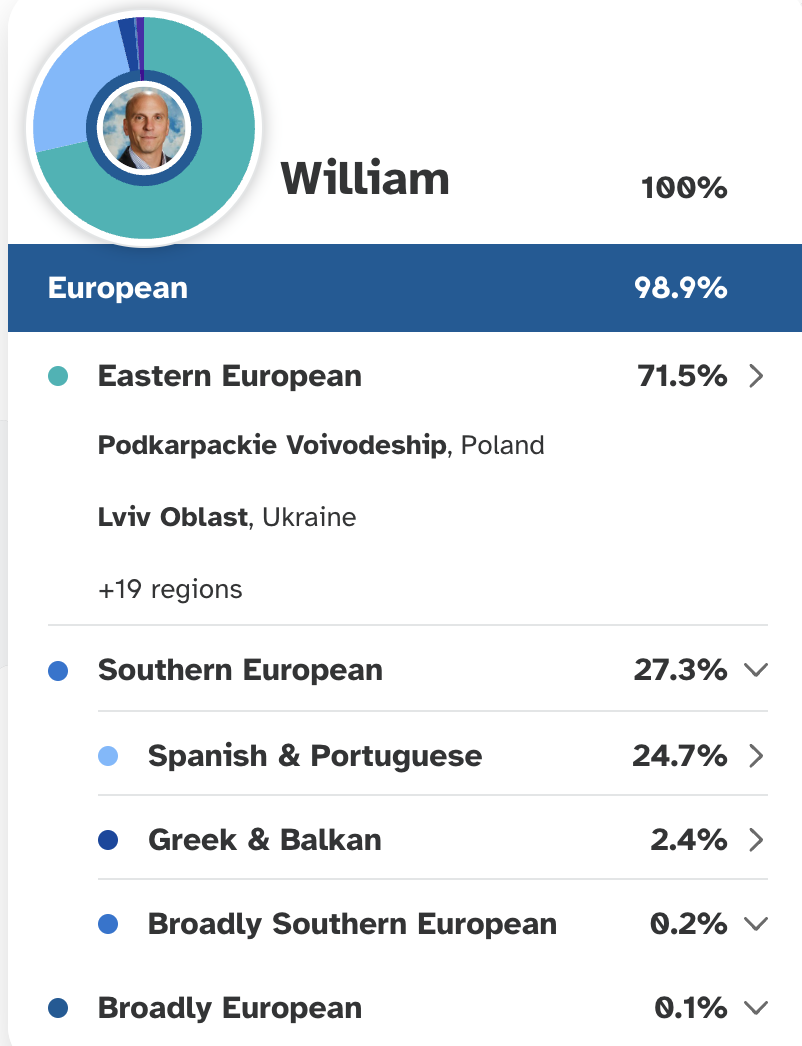
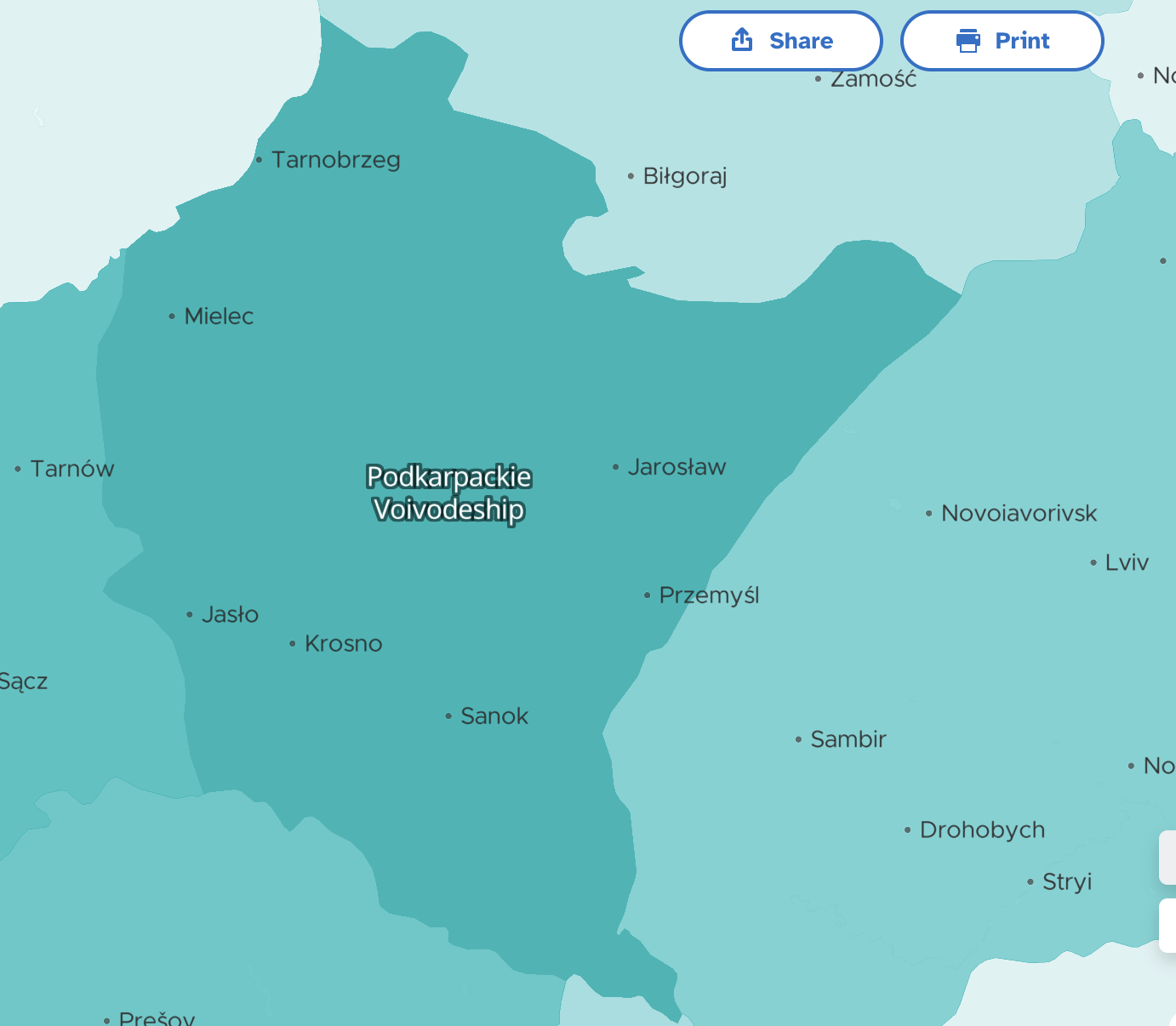
Poland is a special country for me because 71.5% of my DNA is from there. The most likely origin of my DNA is the Podkarpackie Voivodeship which is located between Krakow and Lyiv in Southeast Poland and Western Ukraine. I do look Polish and it was fascinating to be a couple of generations removed and to come back. Poland is a lot different from USA. The impact of World War II was so much greater in Poland than in the USA. Germany and then the USSR invaded and basically destroyed the country. The Soviets occupied the country for close to 50 years after the war, installing a totalitarian system that suppressed human rights and freedoms. Most of the Jews killed in the Holocaust were Polish Jews and most of the concentration camps were located in Poland. Millions of soldiers and civilians were killed in the war and huge populations were displaced and forced to leave their homes. All that trauma must have a big impact on the psyche of the people of the nation.
Despite their sad history, the city of Warsaw had a positive, lively vibe to it. People were friendly and talkative to visitors, the locals seemed to enjoy themselves in bars, and restaurants, and young people just hanging out in the plazas around the city. Like other Eastern European nations, Poland is considered by some to be racist, against LGBTQ+ people, and politically conservative. I think that when a country or area is mostly homogeneous, there is always a distrust or fear of outsiders and people who look and act differently. I experienced this in Japan, where I was an outsider. Like many developed countries, they are struggling with low birth rates and the need for immigration. It may be one of the underlying reasons for the schism in US politics that white Americans will become a minority (under 50%) in the coming years.
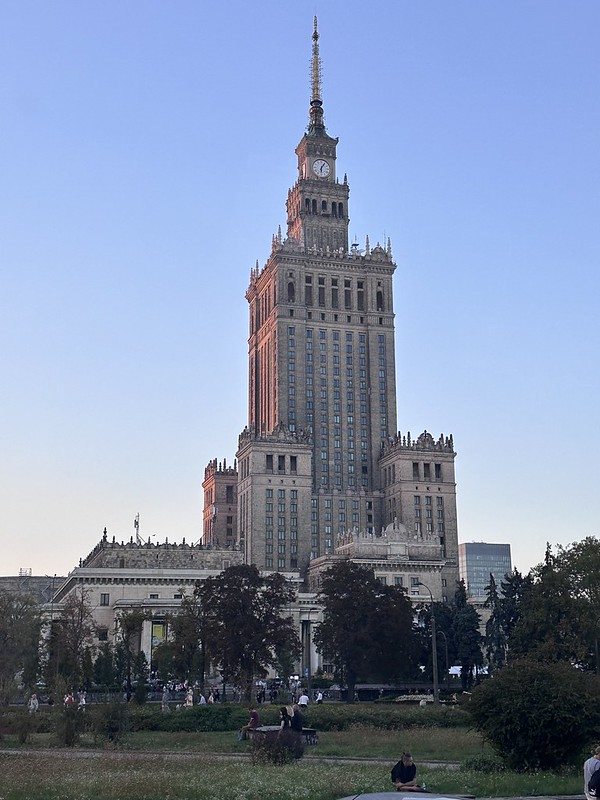
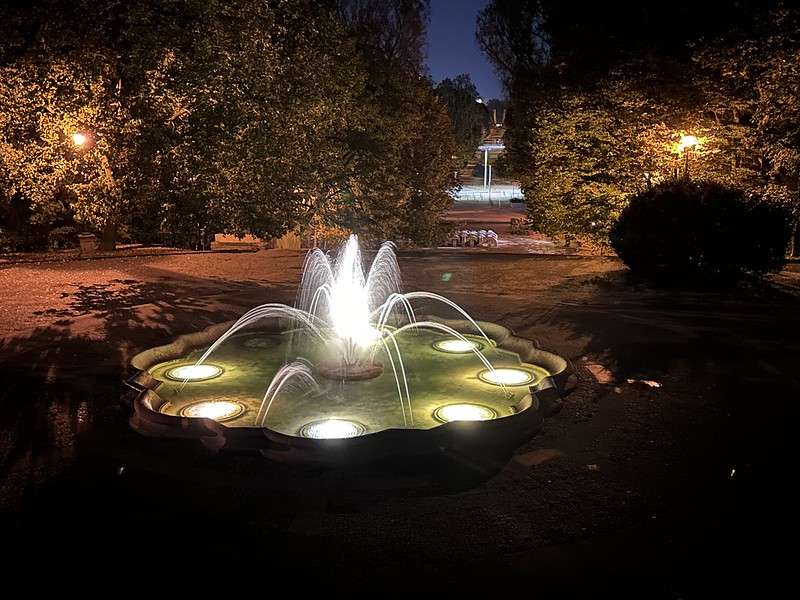
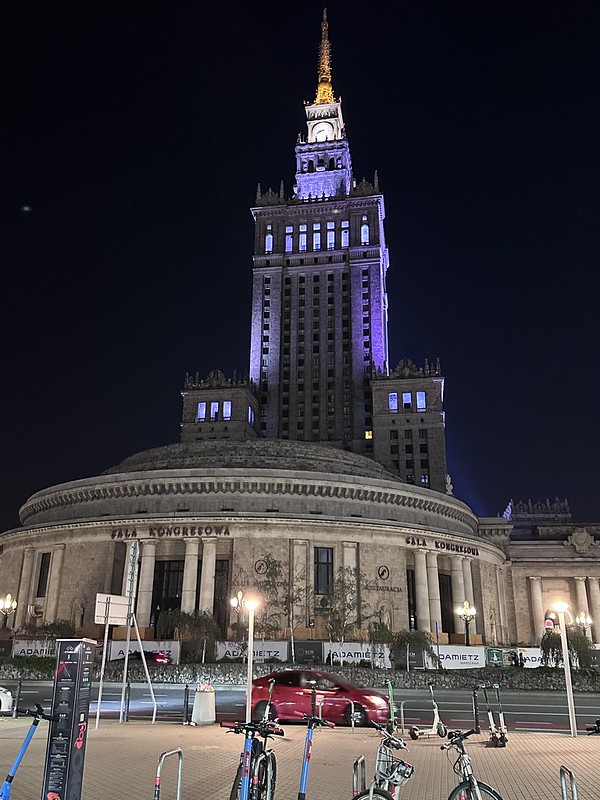
Stalin’s Center of Science and CultureA fighting mermaid is the symbol of the cityPark near my hotel at night
The weather during my four days in Warsaw was absolutely perfect! I had a delightful time and was pleasantly surprised by the cuisine and laid-back attitude of people. I hope to visit again and explore my genetic heritage more.
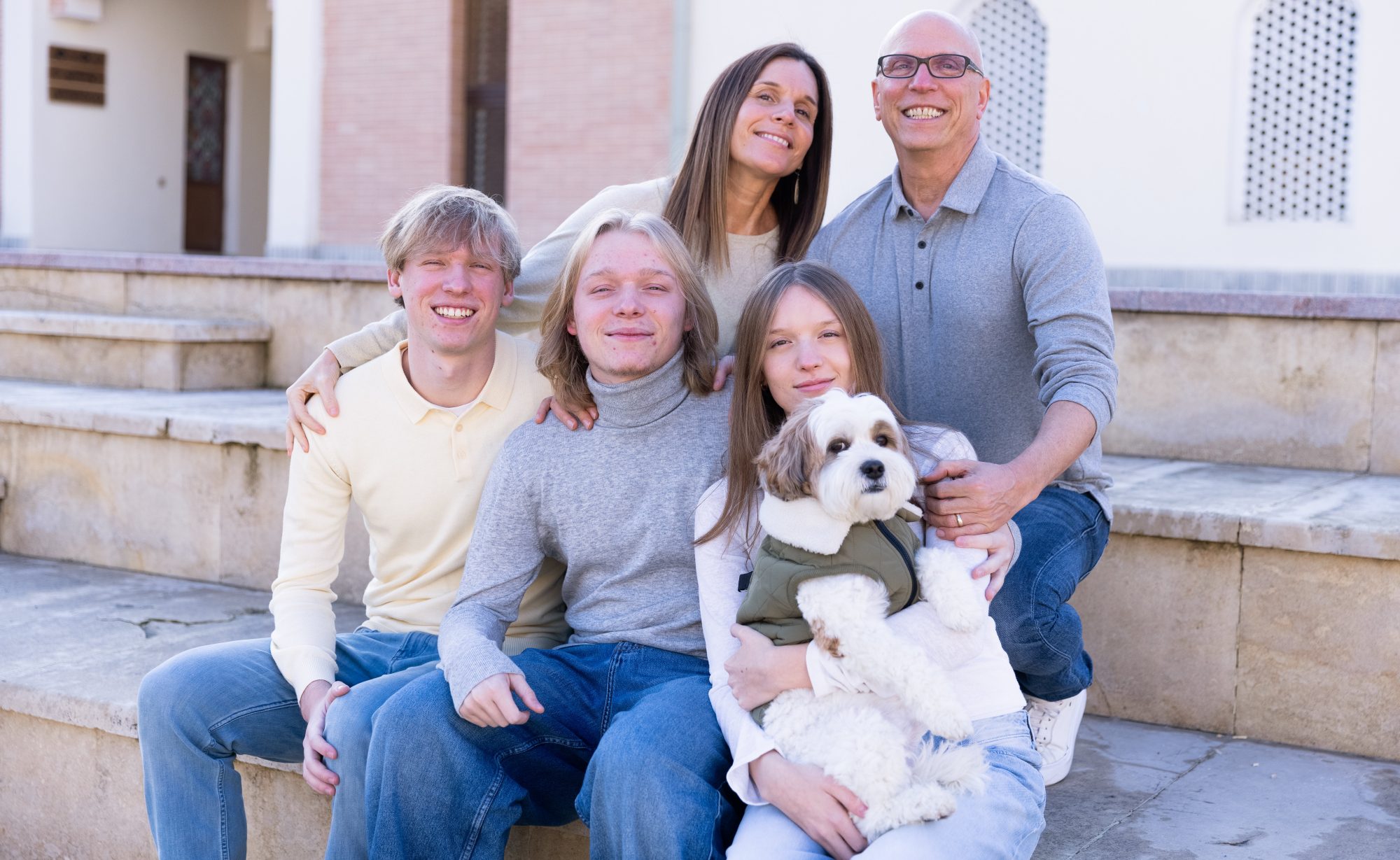
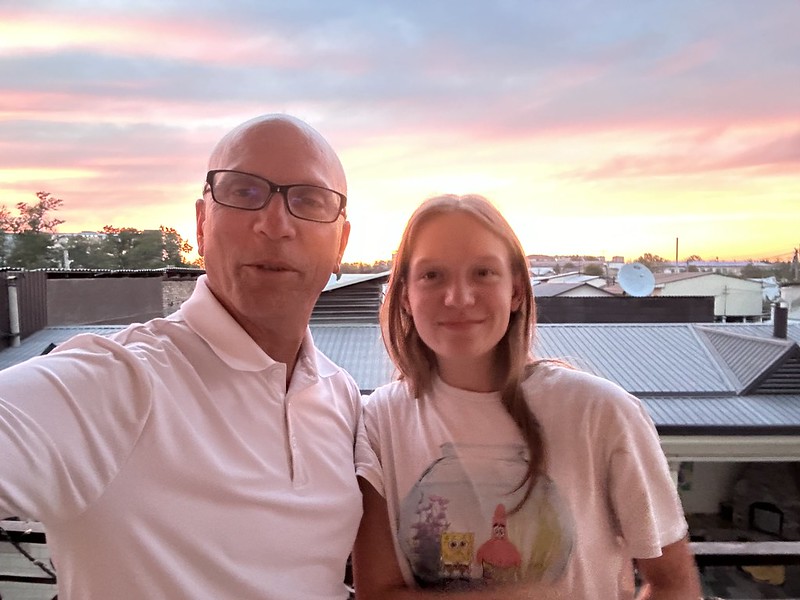
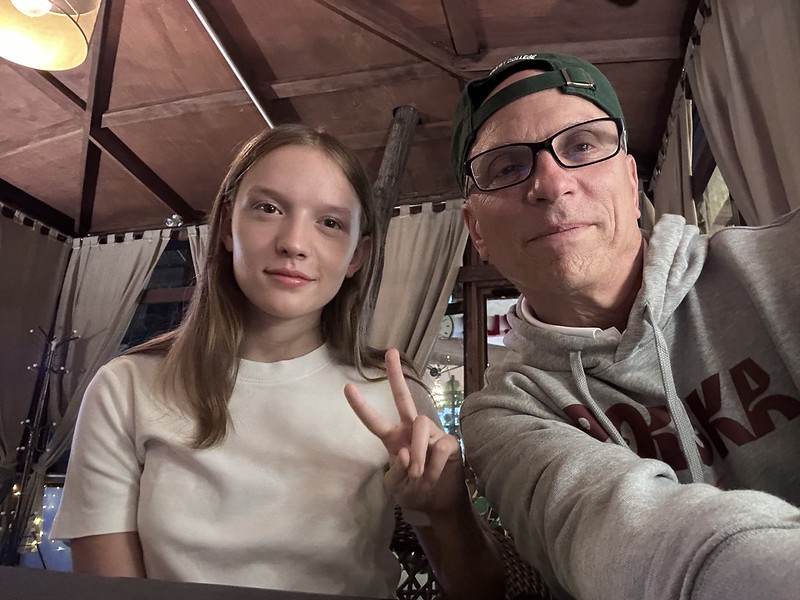
My daughter Ocean turned 17 years old this past week. We are so proud of her as she develops into a mature woman. She is the last of our children still at home and Nadia and I are probably pestering her too much, but she is a sweet soul. We always say she is the best of the Kralovec family! Ocean loves watching the sunset from the balcony of her bedroom and the other night it was a spectacular sunset. Love the corrugated roofs of Uzbekistan!
I am in Warsaw, Poland this weekend for international school meetings.I flew overnight directly from Tashkent to Warsaw via LOT Polish Airlines. I slept OK during the six-and-a-half-hour flight and it was convenient not to have to transfer planes in Istanbul. It is a sign of the developing economy of Uzbekistan with more flights opening out of Islam Karimov International Airport.
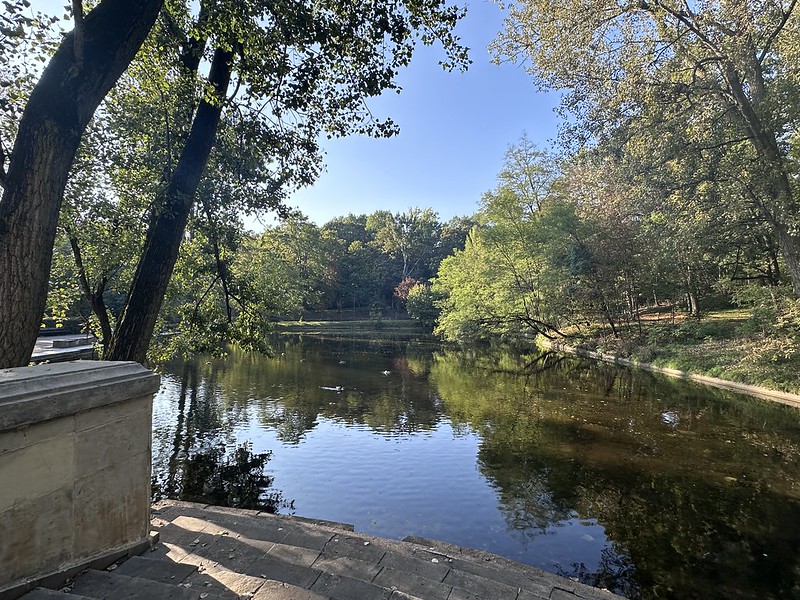
Park na Ksiażecem – Warsaw
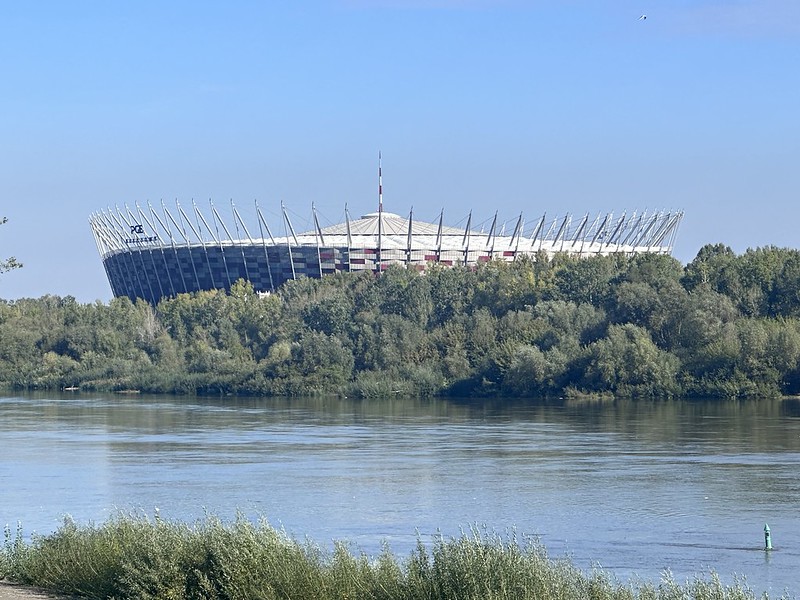
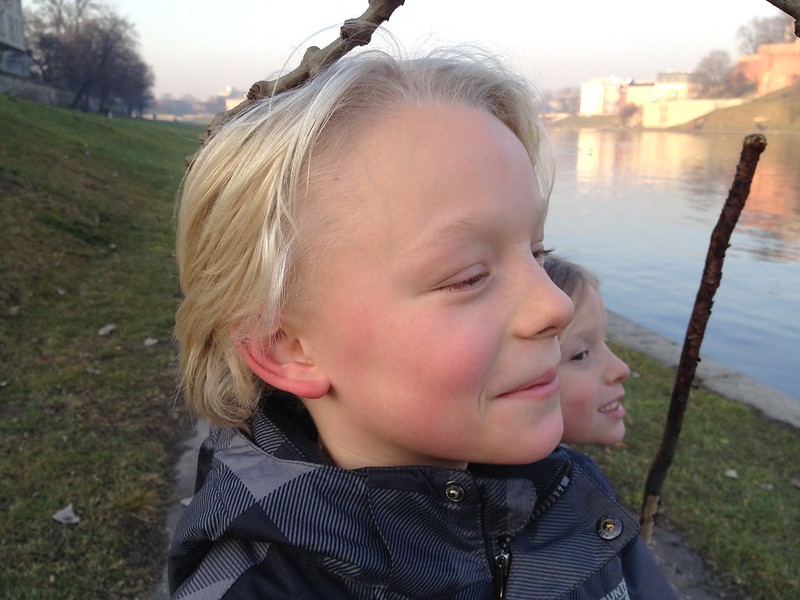
My room was not ready when I arrived early Thursday morning so I went for a long walk down to and along the Vistula River. The Vistula is the longest river in Poland (1,047 kilometers) and originates in the mountains of the border region with the Czech Republic and Slovakia and flows through Krakow and Warsaw. It is one of Poland’s national symbols “Country upon Vistula” (Polish: kraj nad Wisłą) and would be somewhat similar to the Mississippi River in the USA or the Magdalena River in Colombia. It flows north and empties into the Baltic Sea between Gdansk and the Russian enclave of Kaliningrad. I remember the last time I was on the Vistula, ten years ago in Krakow. Ollie and Ocean were angels!
September 19, 2024 – WarsawJanuary 3, 2014 – Krakow
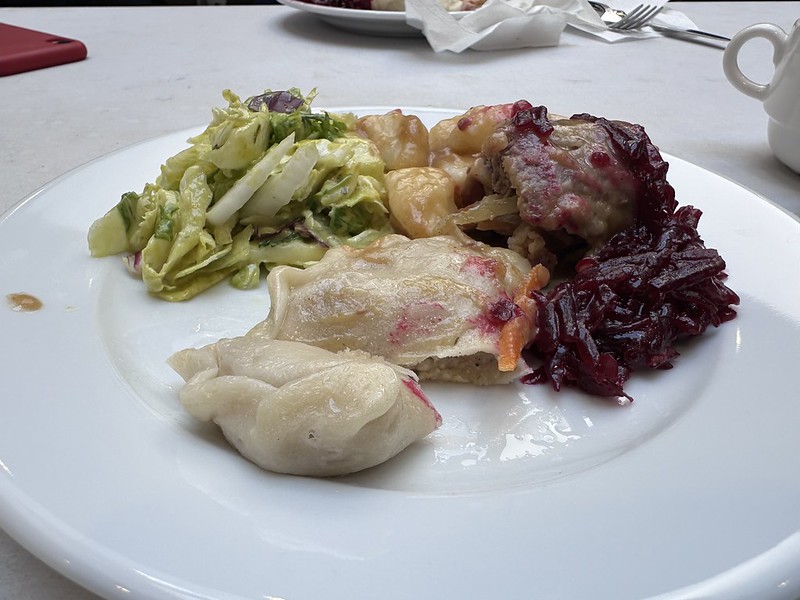
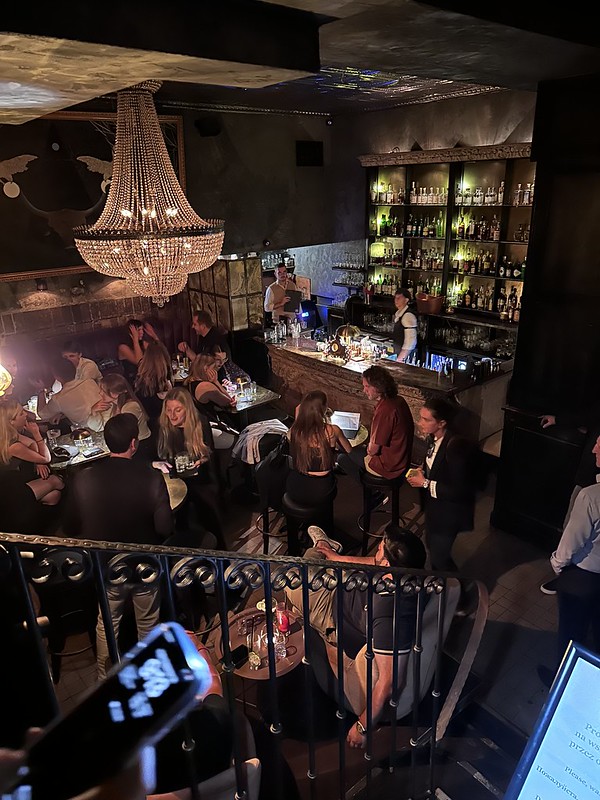
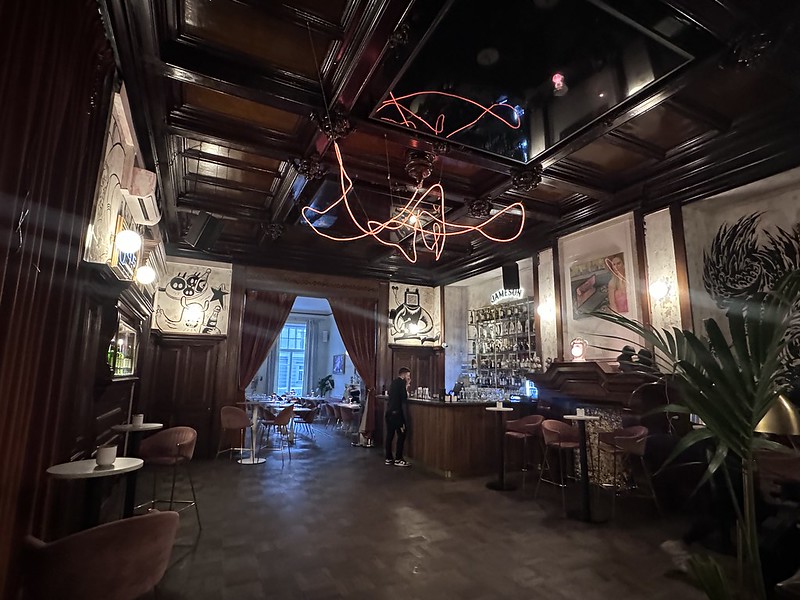
We always eat well during these meetings! Warsaw has great restaurants We ate last night at the Pod Gigantami. The Polish cuisine was delicious and I noticed an interesting looking maître d’ who turned out to be a popular television host and journalist, Piotr Kędzierski. After dinner we went for a drink at two bars close by and enjoyed a bit of dancing and camaraderie. Warsaw has a good vibe to the city! People were friendly and interesting.
Pieroghi, Dumplings and BeetsPod Gigantami
I have mostly been working for the first two days and am looking forward to seeing more of the city today on a tour organized by the American School of Warsaw.
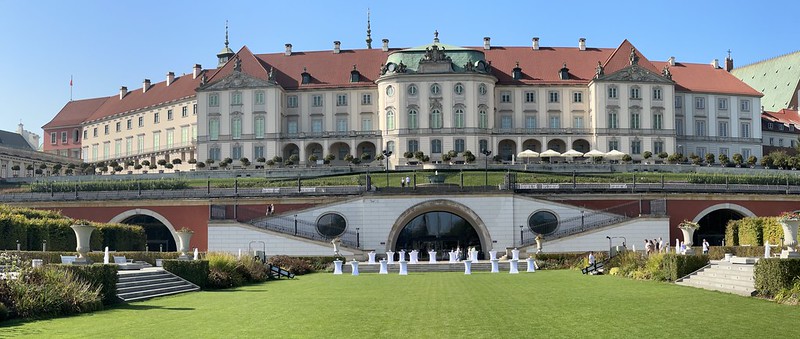
We had a great day together touring the beautiful city of Warsaw! The highlight was the old city, a UNESCO World Heritage Site. Sadly, the entire area was flattened in World War II and everything we saw was beautifully restored. The Royal Castle is interesting because there is no royal family in Poland. Aristocrats voted on the successor when a king died. The guide told us Sigismund III Vasa, the King of Poland and Lithuania from 1587 to 1632, moved the capital from Krakow to Warsaw. He was Swedish and wanted to be closer to Sweden and away from the borders. He was a fervent Catholic and wise leader who expanded Poland to its zenith regarding land and power. His statue is on top of the center column of the plaza behind the castle.
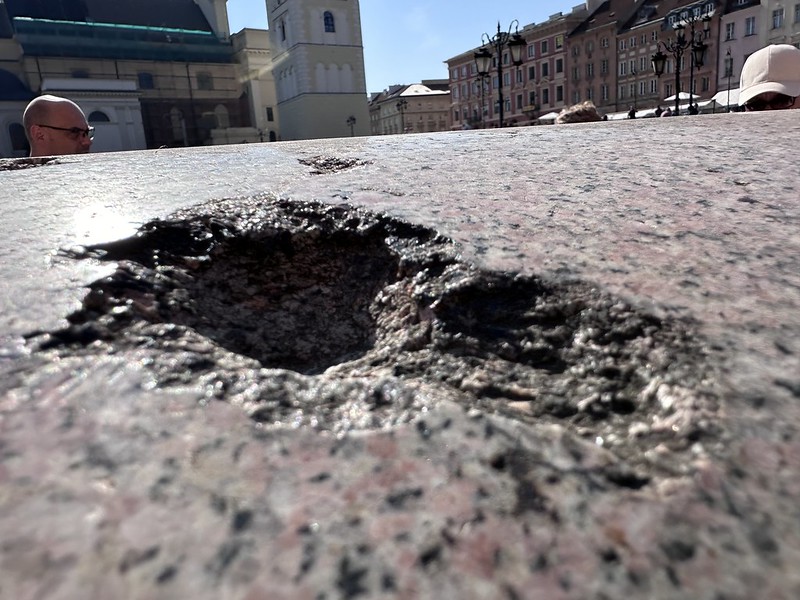
We walked around the old city, seeing the Marie Skłodowska-Curie museum and memorials to the war heroes. I realized the horrors of war must have scarred the Polish national psyche. To have your city destroyed, millions of Poles murdered or deported as “sub-human slaves” by the Nazis, and then to top it off, territory lost, over 40 years of occupation by the Soviets, it must affect Poles. I hope the new generations can recover and I am happy that Poland is a free nation after being subjugated for so many years. The Austro-Hungarians, Prussians, Nazis, and the USSR ruled over the Poles for centuries.
Beautiful Narrow Streets ŹurekGerman Bullet Holes
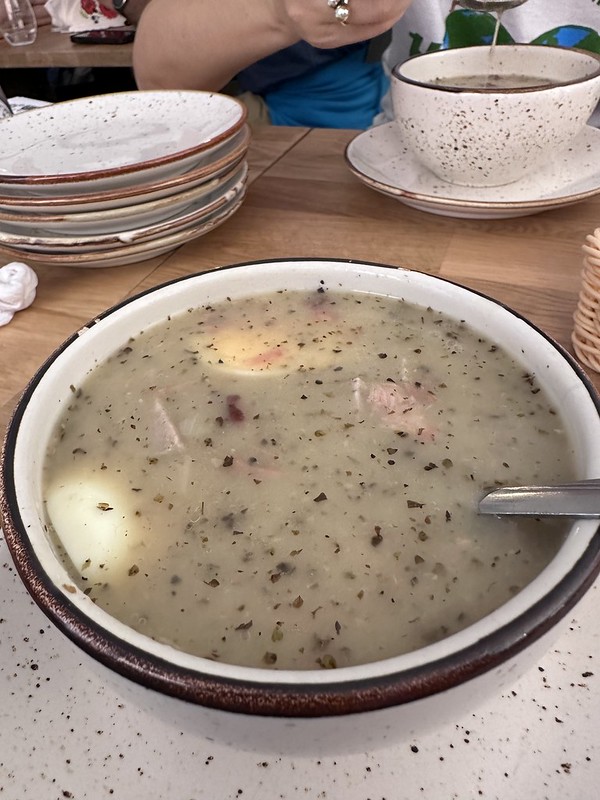
I had a delicious sour soup Źurek for lunch. It is made with a fermented rye starter and served with boiled eggs and white kiełbasa sausage. I definitely want to have a bowl of that today, my last in Warsaw.
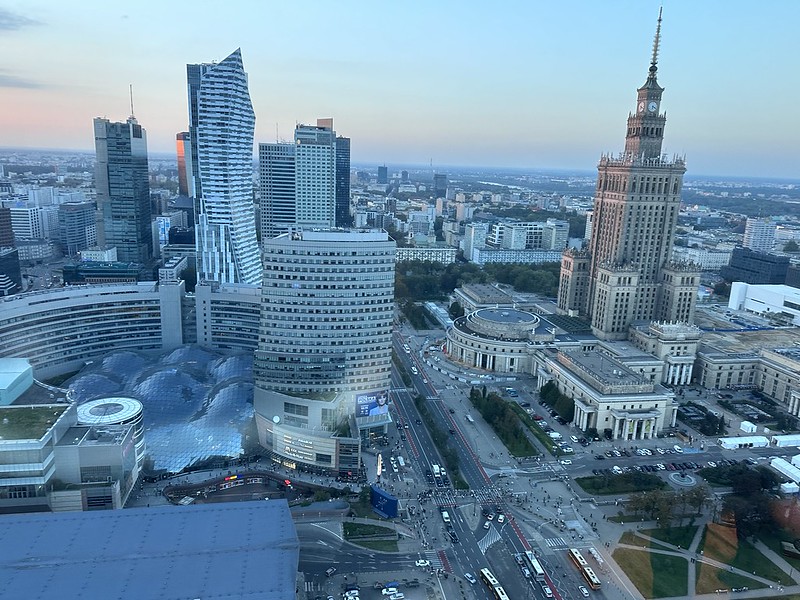
On Saturday night we had a light dinner and drinks at the Panorama Sky Bar on the 40th floor of the Marriot Hotel. The views of Stalin’s Palace of Culture and Science were spectacular. Completed in 1955 in an Art Deco / “Seven Sister” Stalinist Tower architectural style, it is a distinctive landmark in downtown Warsaw. I read some critics want to demolish it as it was built by the Soviets and serves as a huge reminder to that horrible oppression, but I think it would be a shame. I would love to tour inside and I see where there is a university, theatres, concert hall, shops, swimming pool, convention hall, etc.
The best part of the trip was my time with my CEESA friends. Being a director in an international school can be lonely at times and it is so important for me to connect with colleagues. We face similar challenges and the collaboration in the group is invaluable for me.



















 Bill's Blog