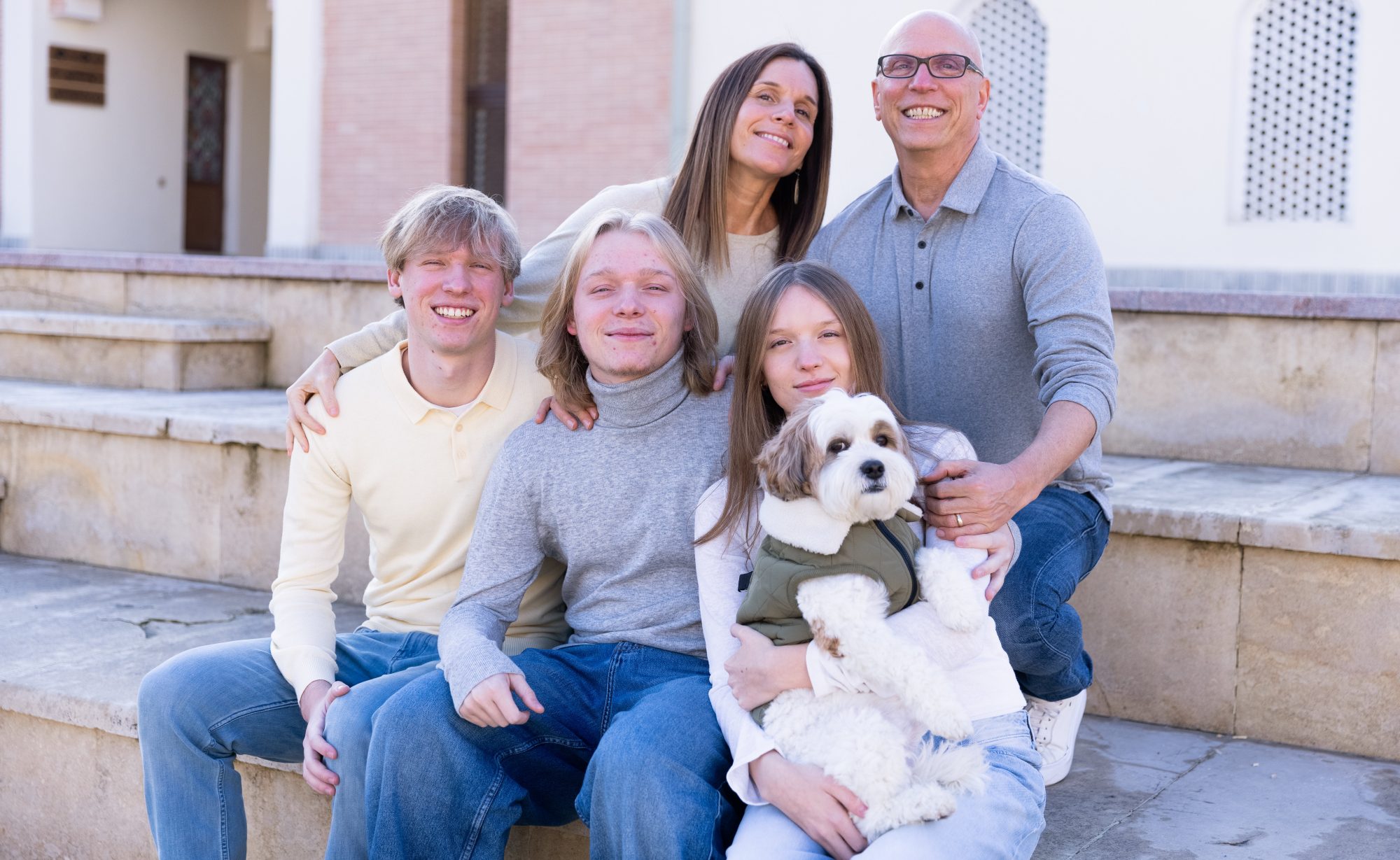
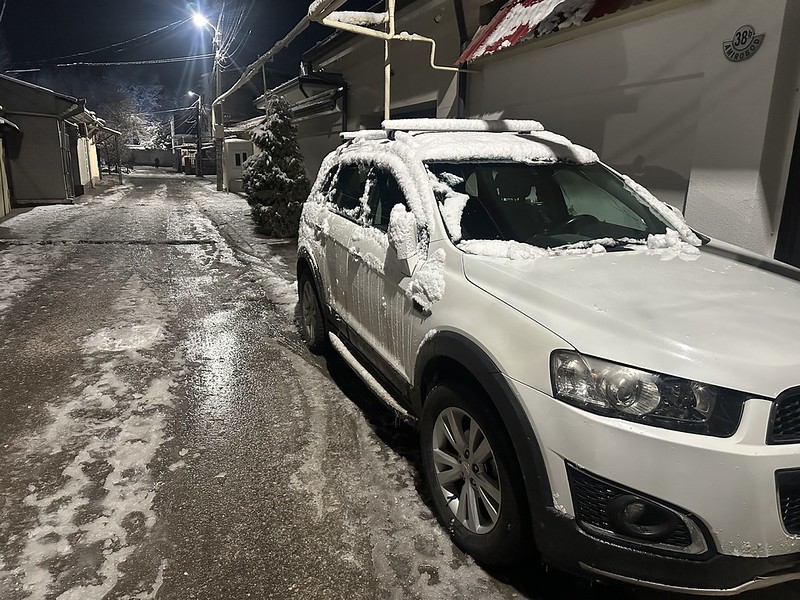
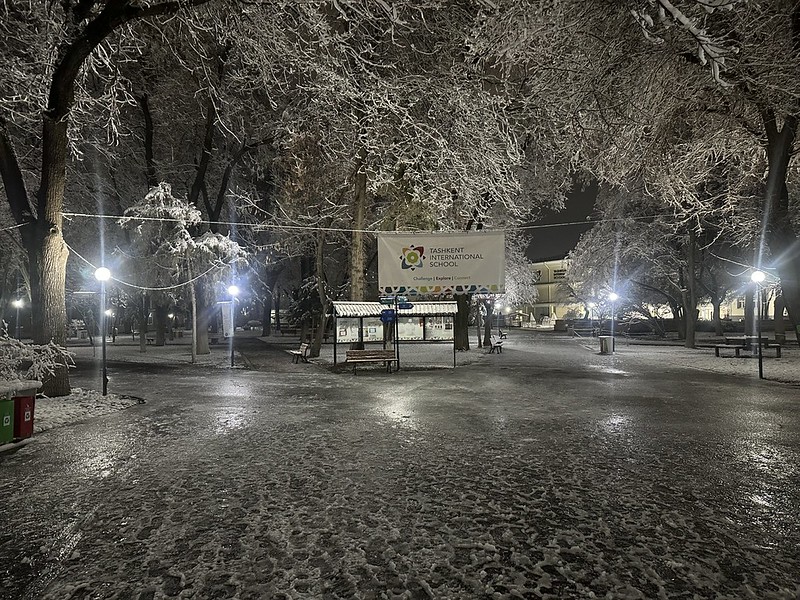
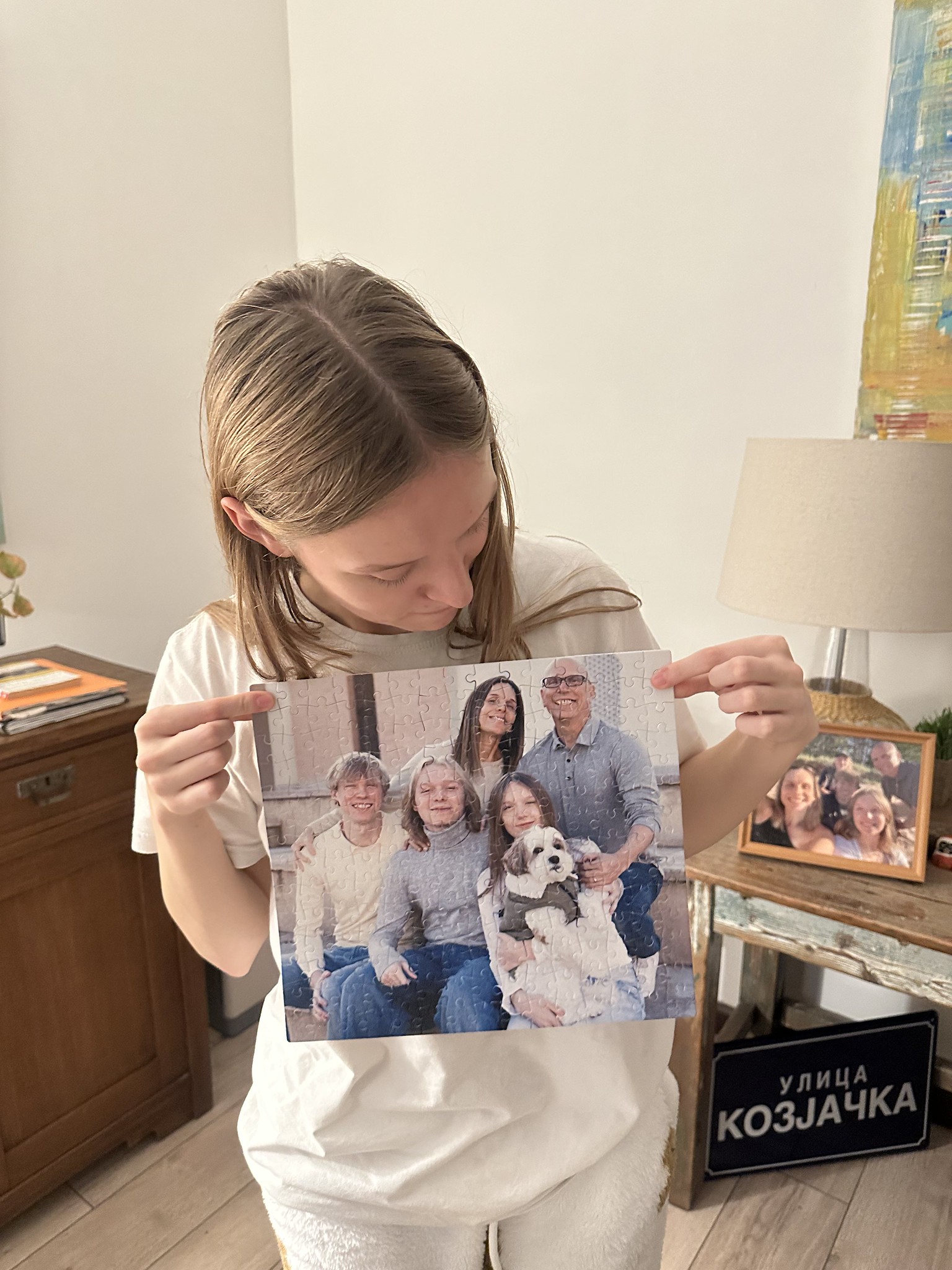
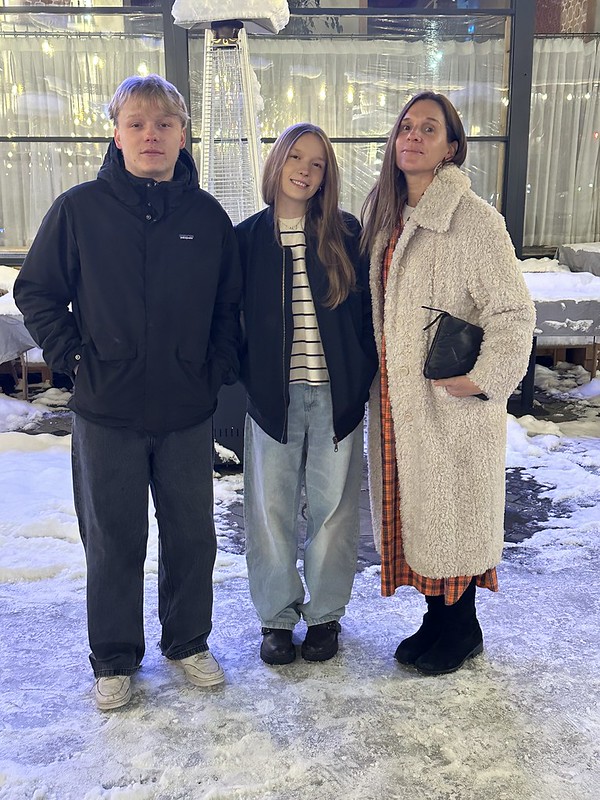
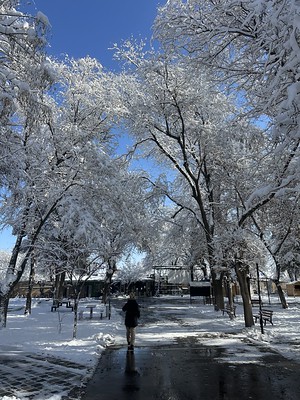
We had a wet snow storm on Wednesday afternoon. It was not enough to delay or cancel school . The subsequent melting caused wet conditions which is a hassle when walking our dog Obi. We need to wash the dirt off his paws, legs, and belly after every walk. We celebrated Nadia’s birthday this week. I got her a really nice gift. One of her friends, Nuriya, gave her a custom family photo puzzle that Ocean put together. It was a thoughtful gift!
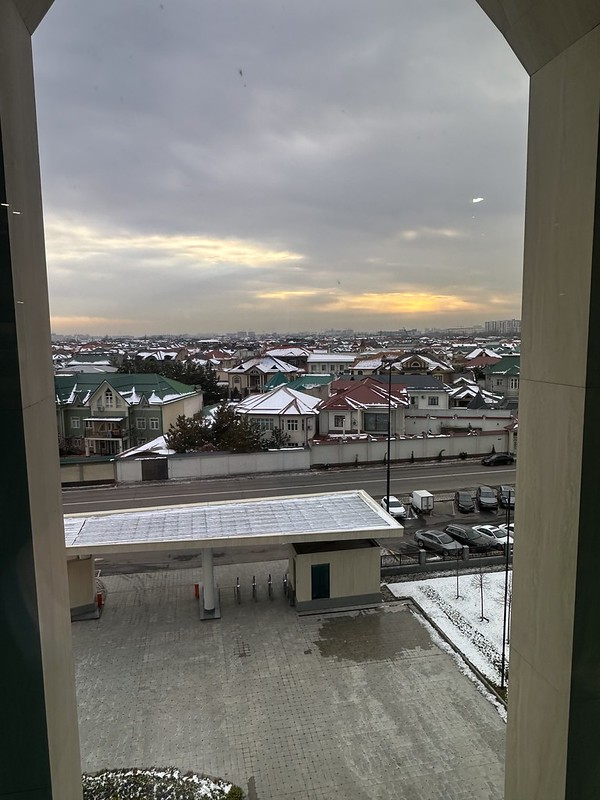
I had two off-campus meetings this week. Yesterday I visited British Management University, one of the many new private, English-language universities that have opened in Tashkent over the past few years. With 60% of the population under age 30, higher education, and K-12 schools, are taking advantage of the growth students. Unlike the USA where universities and schools are closing due to less young people, Central Asia is a growth area. I snapped the photo below from the fifth floor of a building on campus. It shows the incredible growth of homes in the flat, east part of the city. None of those homes were there when I first arrived to Tashkent in 2019.
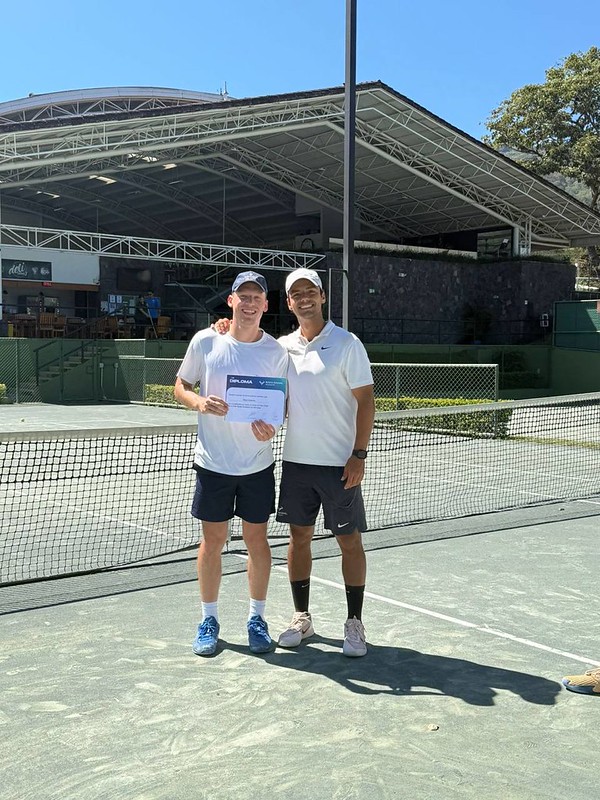
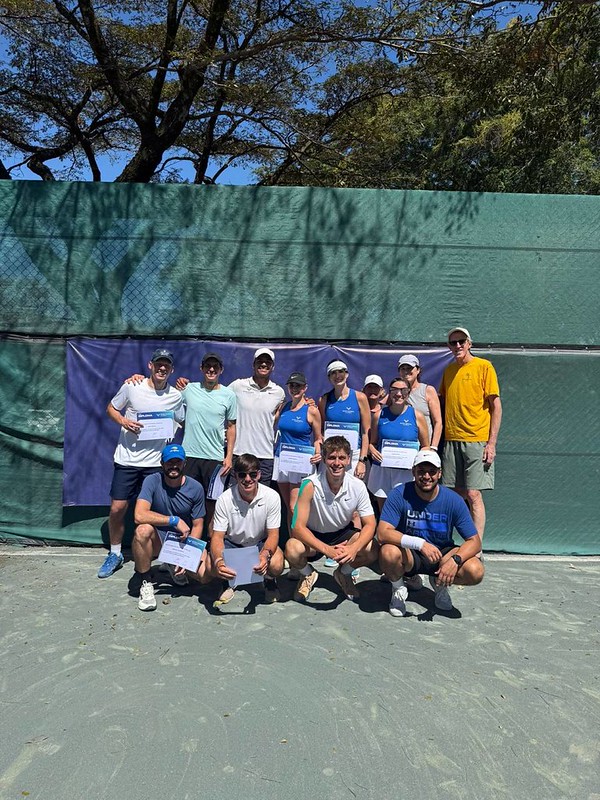
The highlight of the week was Novak Djokovic’s victory over Janik Sinner in the Australian Open Semifinal. We lived in Belgrade for 6 years (2008-2014) and are Serb-philes! Nadia had her sister in the Gold Coast on Facetime (she is dating a Serb), Owen in Costa Rica and Oliver in Green Bay on WhatsApp, and Ocean and me in Tashkent, watching the game. It was an amazing feat to win at age 38 years old against the #2 ranked player in the world. We are going to be glued to the television on Sunday for the final. Owen sent some photos from attending Raphael Nadal’s tennis camp in Costa Rica. He is an strong tennis player and loves the sport. One of the coaches was from Santa Cruz, Bolivia!
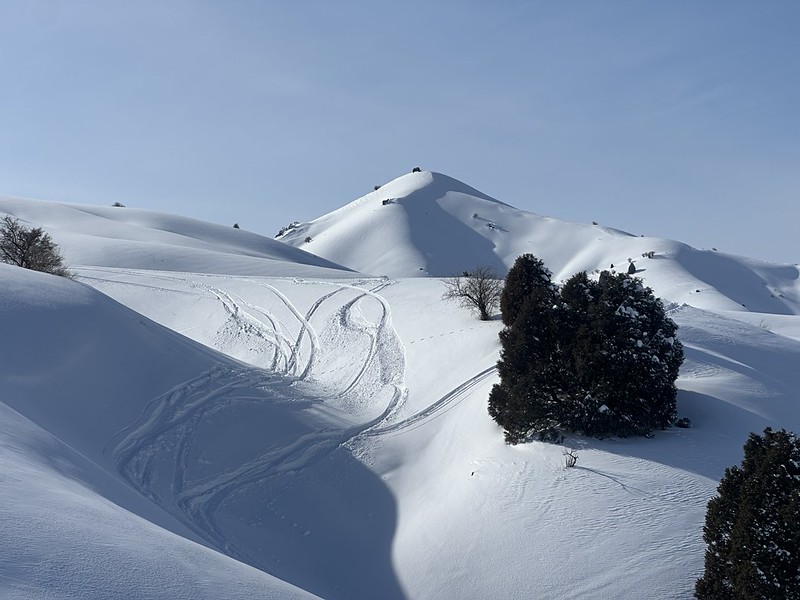
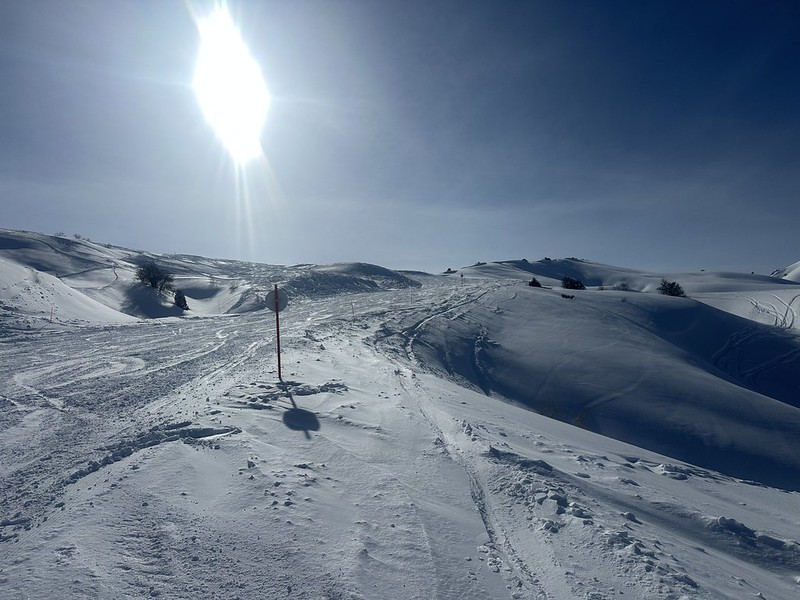
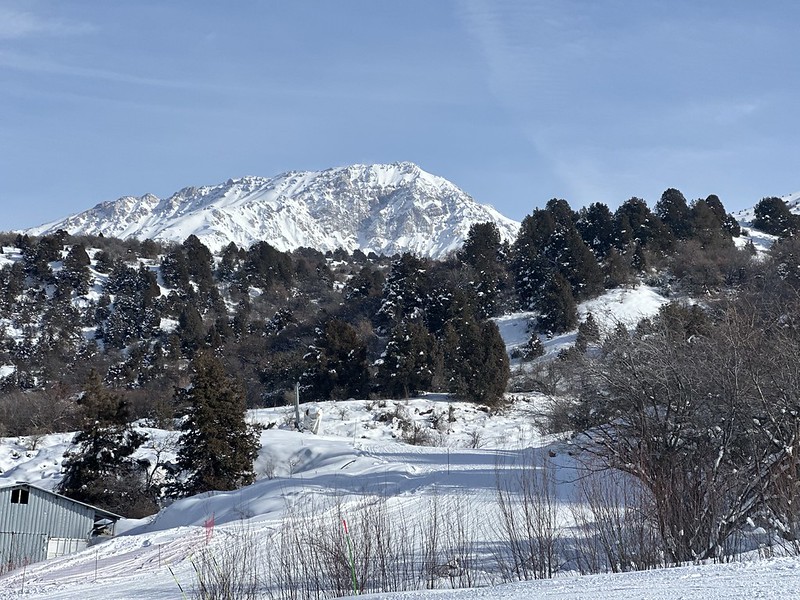
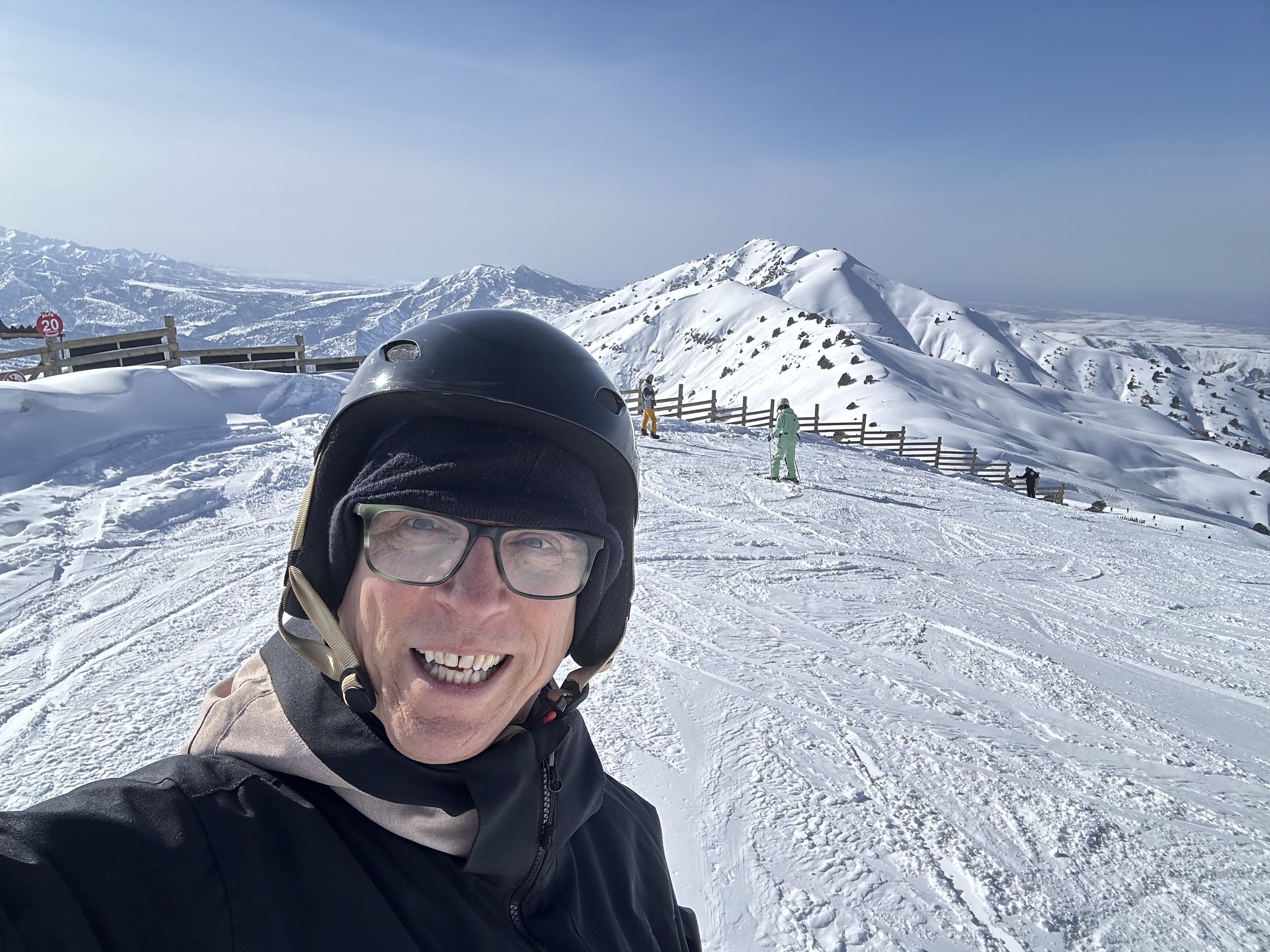
It was so nice to get back onto skis on Monday! Two chaperones couldn’t make the Grade 10 ski trip and I was able to replace them. Our school’s adventure program has a “snow” strand. It is our goal to have all students learn to ski. Conditions were perfect with soft, dry snow, sunny skis and cool, but not cold temperatures. It was rewarding to give advice and help the students gain confidence on the slopes. We have loved the Amirsoy Ski Resort over the past seven years in Tashkent. I continue to soak up the winter experiences. My big takeaway from the day is drier snow is much better than icy snow and makes it easier and safer to make turns
We had a quiet Sunday without Oliver with us. I had a full day of exercise, including yoga in the morning, a long walk with Obi around midday and then a bike ride along the canal in the afternoon.
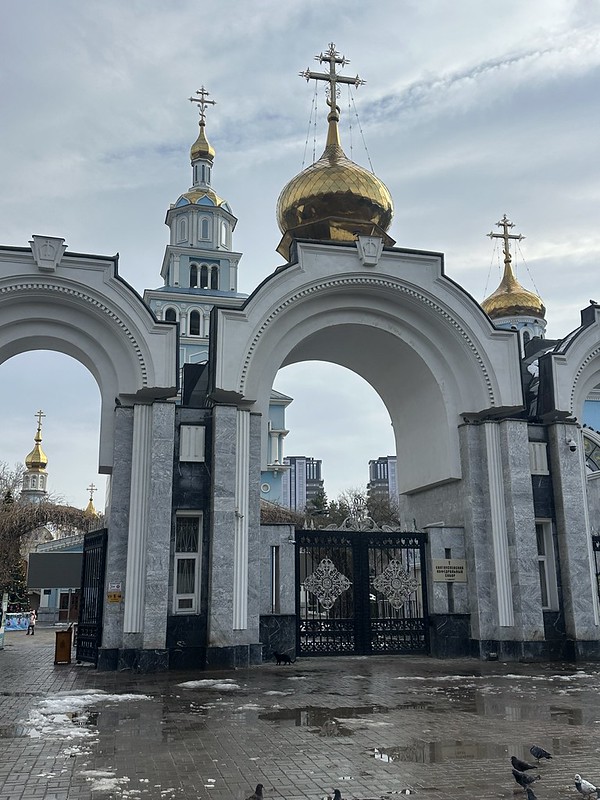
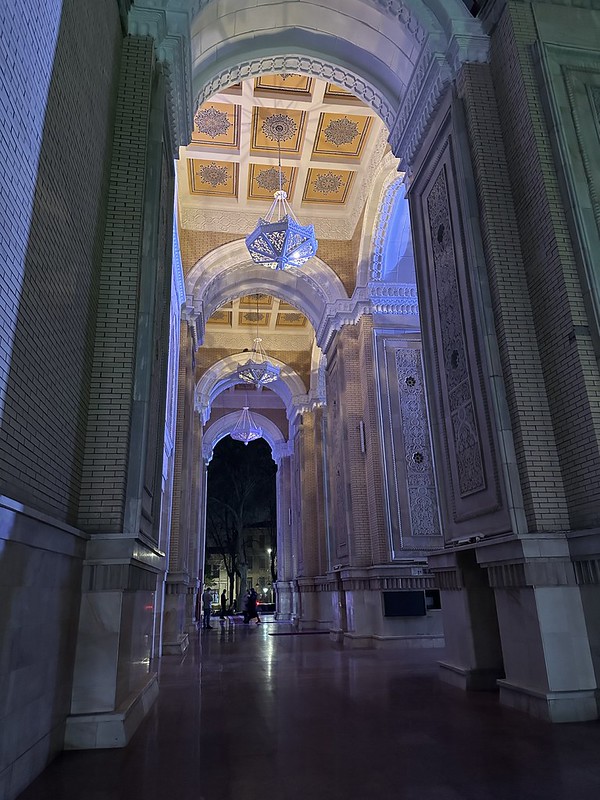
Holy Dormition Cathedral Ankhor Canal Bike Path
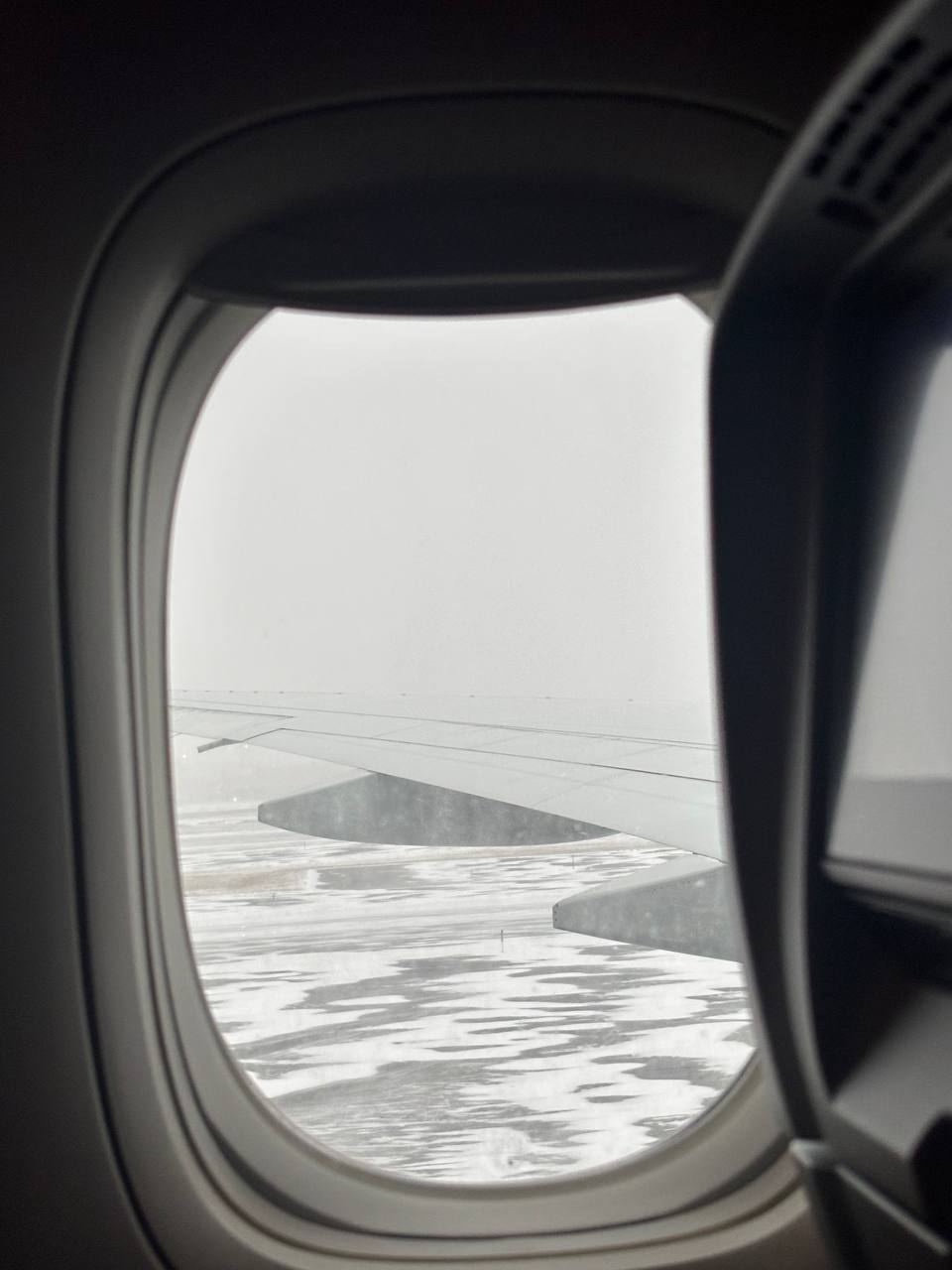
Oliver got stuck in Newark, New Jersey, for two days because of the big storm. This was the photo he sent as he landed. He is now back at school!
We spent Saturday preparing Oliver for his long flight back to Wisconsin. Nadia, Ocean, and I were doing his laundry, packing his bags, and making contingency plans in case his flights are delayed. He is heading into the “arctic vortex” winter snow storms in the USA. As I write this, he is on his United Airlines flight from Dubai to Newark. We’ll see tonight if his connections to Chicago and then Green Bay will be able to go. The start of the second semester is Monday at Saint Norbert College. Oliver is a sophomore at the private, Catholic, liberal arts college in DePere, Wisconsin.
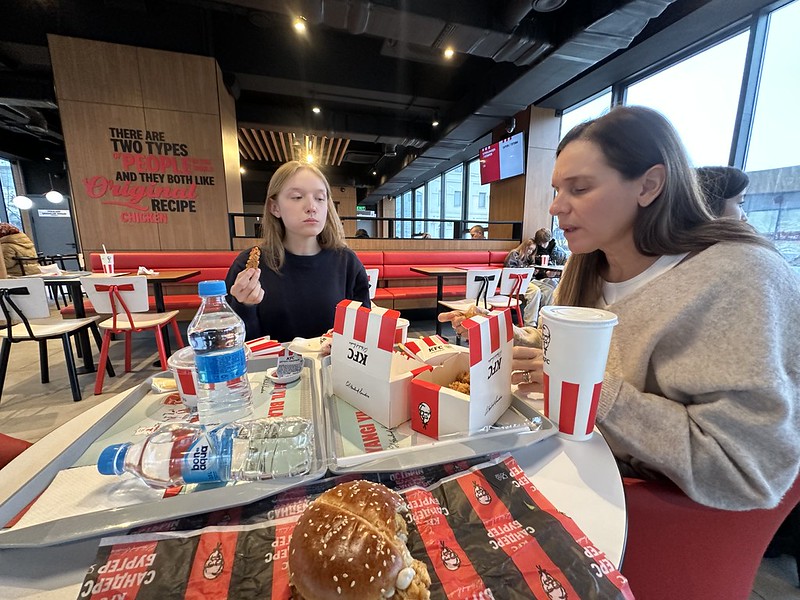
Nadia, Ocean and I then went shopping for Nadia’s birthday present. Her birthday is Monday and I’ve learned that Nadia knows what she wants in life, so we have a tradition of her picking out her own present. She was happy with her Dyson hair appliance. We also ate at KFC. We were looking for Burger King, but it was not open yet in the Poytaxt Strip Mall. We had a quiet night at home. The house was quieter with only three of us.
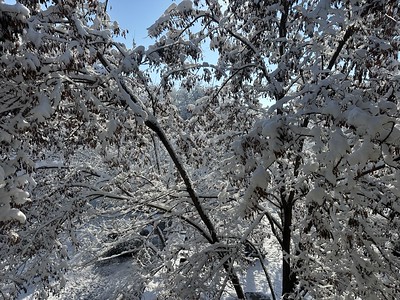
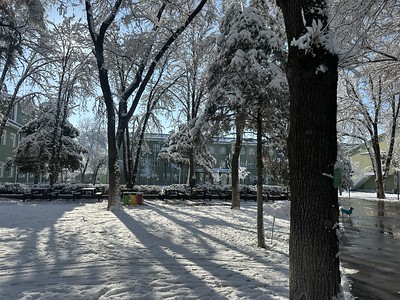
We celebrated Oliver’s last full day in Tashkent by going out to dinner at Manana, a Georgian restaurant in the Shevchenko area. The fish and my chicken soup were delicious, but everything else was below average. We had a snow day on Friday because of icy road conditions. I got caught up at work and took a few photos of the campus. It is so beautiful with snow in the trees and the bright sun shining. My office on the second floor of The House is surrounded by the tops of the trees, giving me an inspiring view as I held meetings, answered emails, and finished document preparation.
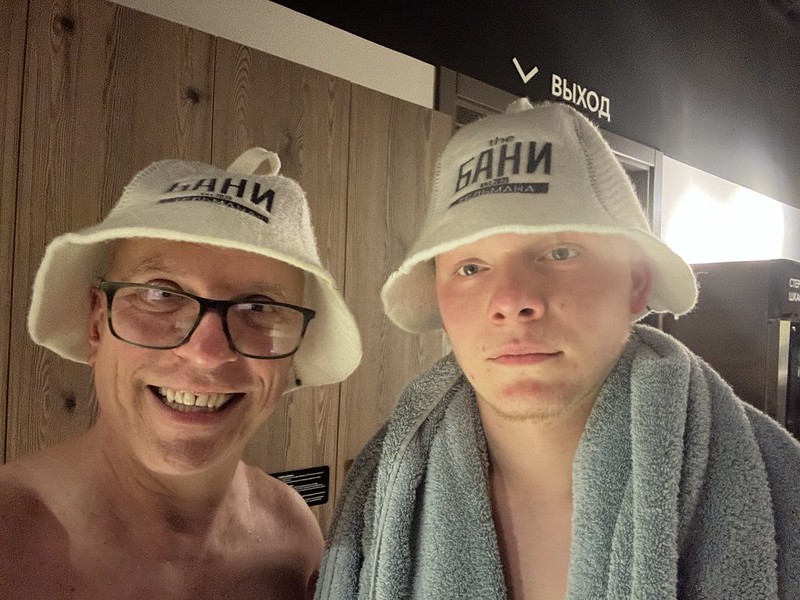
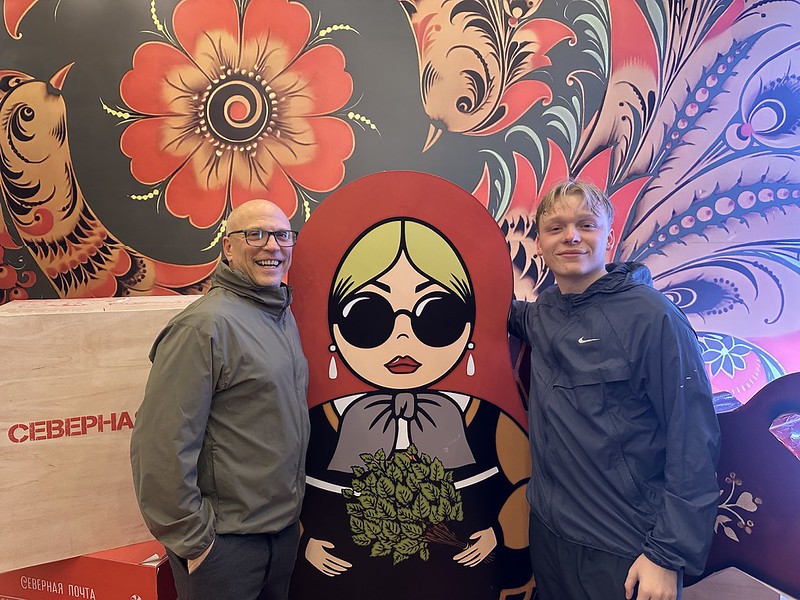
In the early evening, Oliver and I had our final session at The Bani before he leaves today. Ollie loves the intense heat followed by the 13C pool and relaxation. It really does make you feel better! I also like the higher humidities of a Russian bath compared to the Finnish sauna. He is taking back a шапка для бани (traditional felt banya hat). Unfortunately for him this winter, the nearest banya to DePere, Wisconsin is Chicago, Illinois. The next time we are in Chicago in cold weather, we’ll have to check out the Red Square Bathhouse.
Owen is getting ready for his week at Rafael Nadal’s tennis camp starting on Monday. He sent a short video of his serve. We watch Australian Open tennis in the mornings together. My favorite players on the men’s tour this year are Novak Djokovic, Tommy Paul, Francis Tiafoe, Danil Medvedev, and Ben Shelton. We’ll see if anyone else catches my eye. I look for entertaining styles of play and personality.
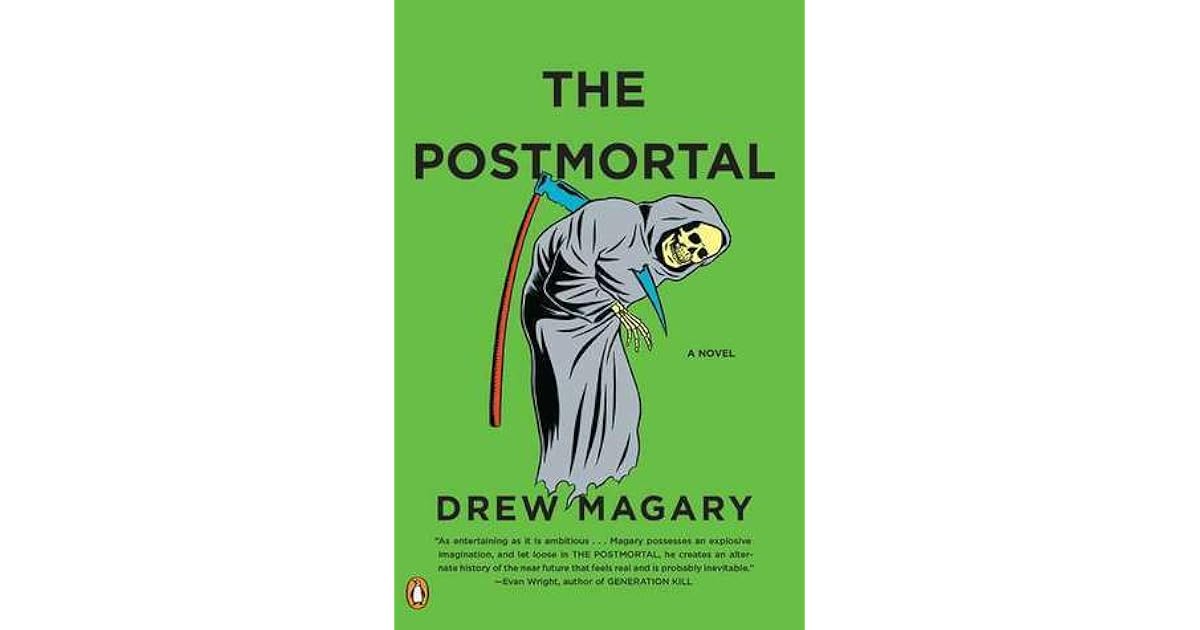
I breezed through this 2011 science fiction novel by Drew Magary, the long-time columnist from Deadspin, the sports blog. I was not familiar with Deadspin or Magary before finding this book in my digital Michigan library. His career combines humor, politics, and love of sports and I am surprised I was not familiar with his work.
The premise of the book is that a cure for aging has been found. People have a “cure age”, the age they received the vector to stop aging, and their chronological age. The format is like Albert Brooks’ World War Z, a combination of news reports, diary entries, etc., which I liked. It is a dystopian story with overpopulation and climate degradation creating a post-apocalyptic world.
The book forced me to think about my own mortality. With all the time in the world, people started viewing their lives differently. For example, the “cyclic marriage”. Couples would commit to a 20-year marriage, long enough to have children and then with eternal youth, find another partner, family and wife. In a non-Post Mortal world, we don’t have that option. Nadia and I have been together since 1997 and married since 1999 and are growing old together. The last of our three children is going off to university next year. We are happy in our marriage and plan to stay together as we eventually retire and look forward to more free time and caring for our grandchildren. Magary’s book asks the question what we would do if we were not aging. What comes after grandchildren? Another partner and family? Another career? It reinforced the idea that every generation has its moment and it might be good for humanity to move out of the way for the next generation.
How long is sufficient for a life well lived? I am trying to maximize my active years through diet, exercise, relationships, and good medical care. Will I get bored in this life? Would I get bored after 2 or 3 normal lifetimes? I can relate to people who are ready to die, especially if their loved ones are gone or they are facing health issues.
Magary wrote an interesting book that was entertaining and insightful. That is good science fiction.
We are enjoying Oliver’s final week with us in Tashkent. On Sunday Oliver and I went for a bike ride around Yangi Uzbekistan and the new Olympic Village. Most of the buildings are completed. I hope it will be open to the public or at least they develop a cycling/running path around the area. We ran into a bit of mud on the backside, but overall it was a fast ride. Afterwards we went to The Bani, the Russian banya and warmed up and relaxed. It is nice to see Oliver and Ocean bonding this week. The person who will be in your life the longest is your brother and sister. I hope they maintain a strong relationship throughout their lives.
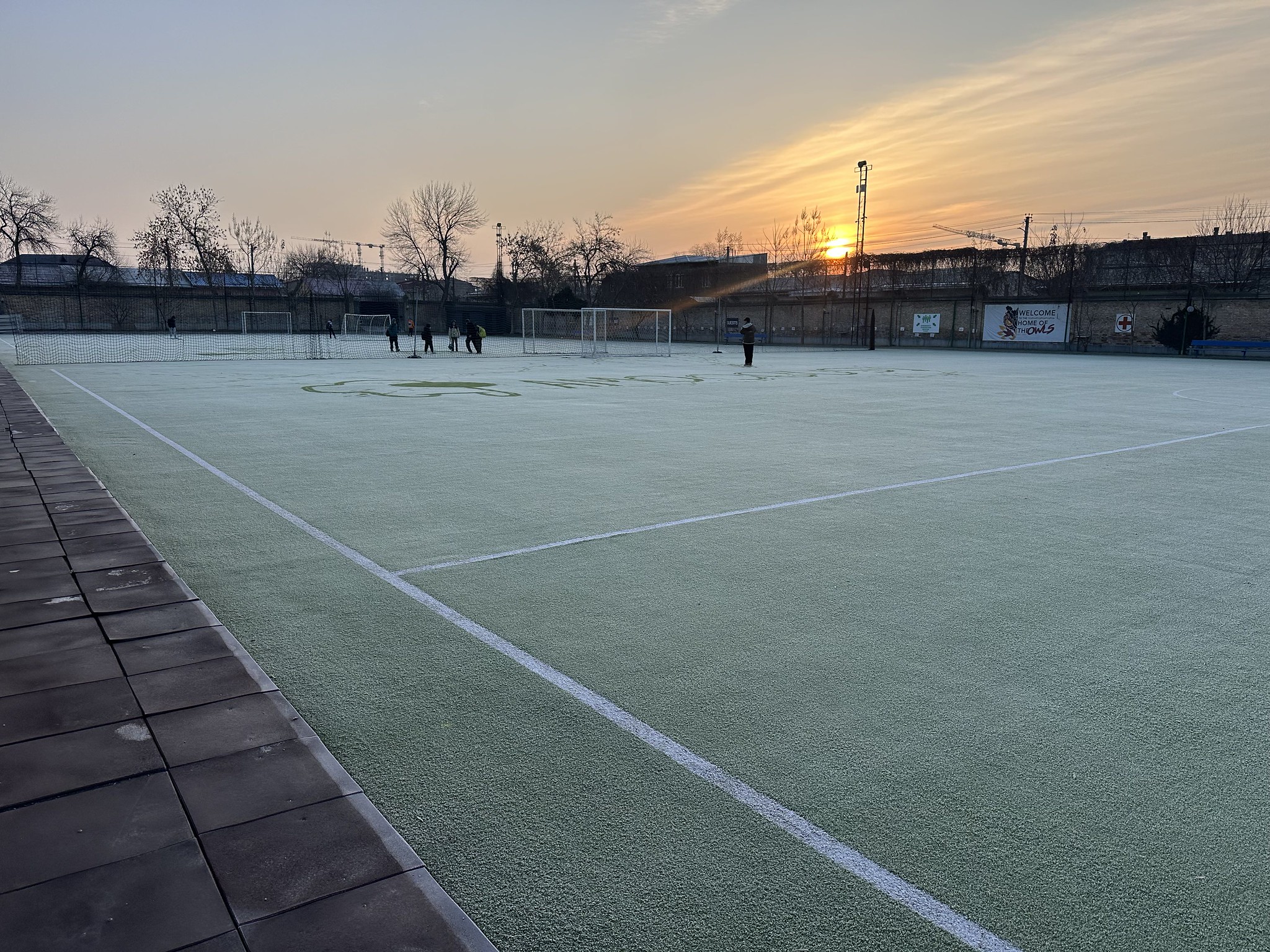
It has been cold this week in Tashkent as you can see by the sunrise photo above of the frosty turf of the school’s sports field. We have had wintry mixes of precipitation mixed with sunny skies. Temperatures are hovering around zero Celcius daily. I made a video of Ocean, Oliver and I walking the dog around our mahalla last night.
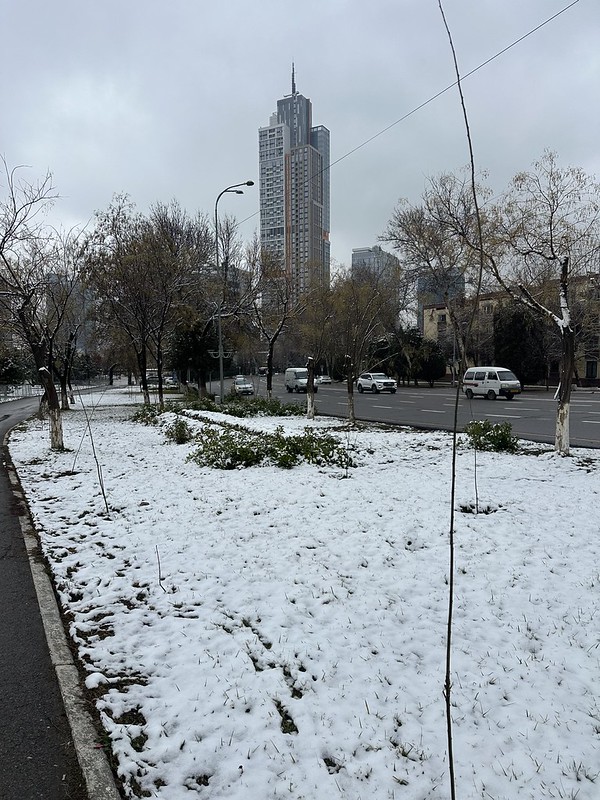
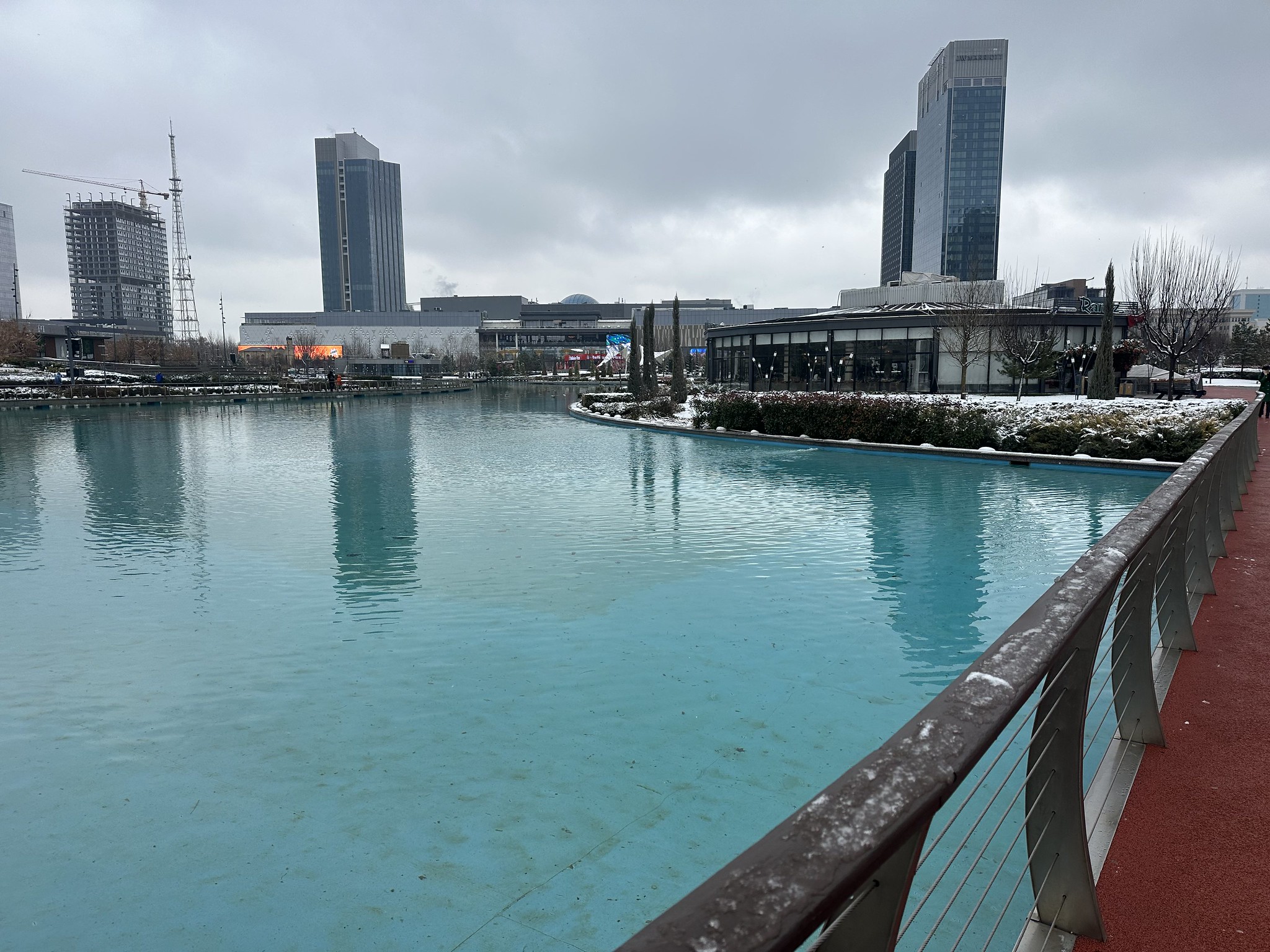
We are having a quiet and cozy weekend so far, with rain mixed with snow falling almost all Friday night and all day Saturday. As I am writing this on early Sunday morning, light snow flurries are gently swirling down on our front lawn. The photo on the left is of the tallest skyscraper in Central Asia, the Nest One Tower. Murad Building Company, with the Turkish construction company Ozguven concieved and built the building over the past several years. I met with Mr. Murad and some of the Ozguven directors when we were looking for a company to build our elementary school. I am happy for them that they completed the project! I hope they have full occupancy. I am noticing that with all of the residencial apartment blocks in the city, that the occupancy rates must be quite low. Uzbeks use apartments like we use 401 (k) s and stocks. They put their savings into real estate and hope it grows in value. I would love to have some data regarding occupancy rates.
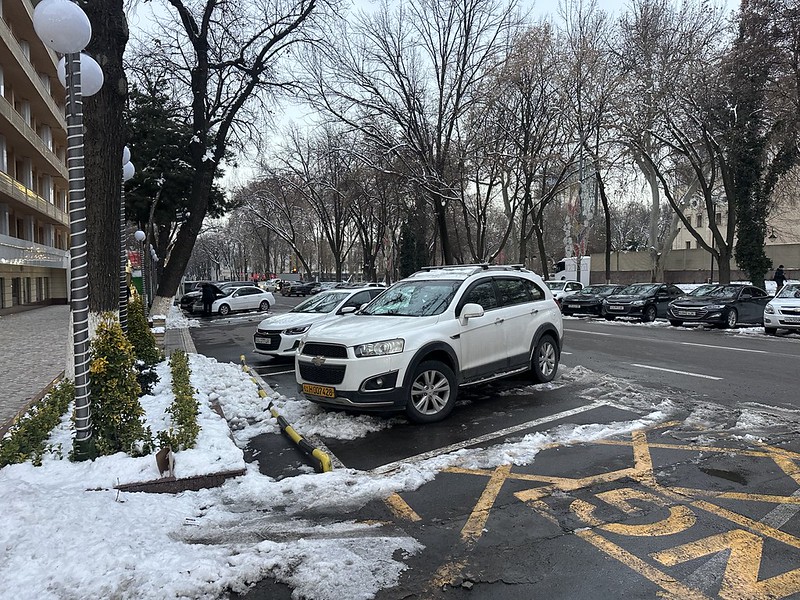
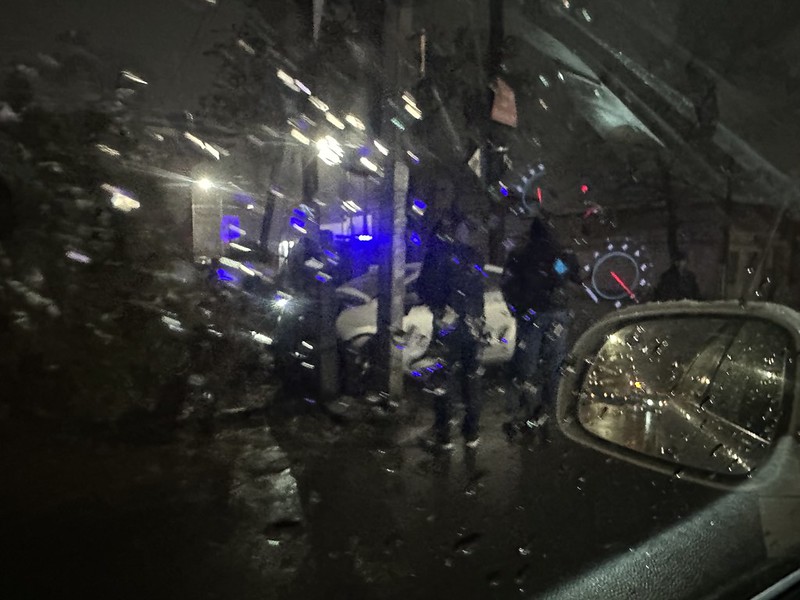
The other photo I took was through my car window on Friday night. Oliver and I came across the white car smashing into a utility pole. Many Uzbeks are new to driving, and driving recklessly is a bit of a macho thing. You see a lot of car accidents and fender benders throughout the city. It will take a coupleof generations to realize that higher velocities mean a higher chance of accidents.
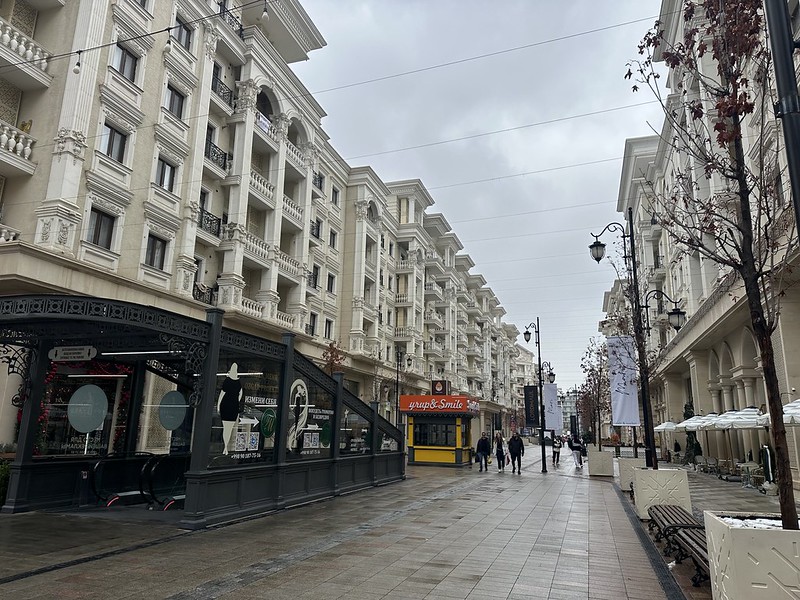
Tashkent City Pool Tashkent City Walking Street
I did Day 15 of my 60 for 60 yoga workout in the morning and went for a run in the afternoon. I ran 6 kilometers around the Tashkent City development. I have not been there for a while. I see they have opened underground parking and established European style walking streets full of shops and restaurants on the ground floor of residential apartments. Nadia and I went to lunch at Breadly Bakery and restaurant. We spent the late afternoon and early evening taking down all of our Christmas decorations in the house. We have a lot more space with the tree, Nadia’s nutcracker and wreath collection put into storage.
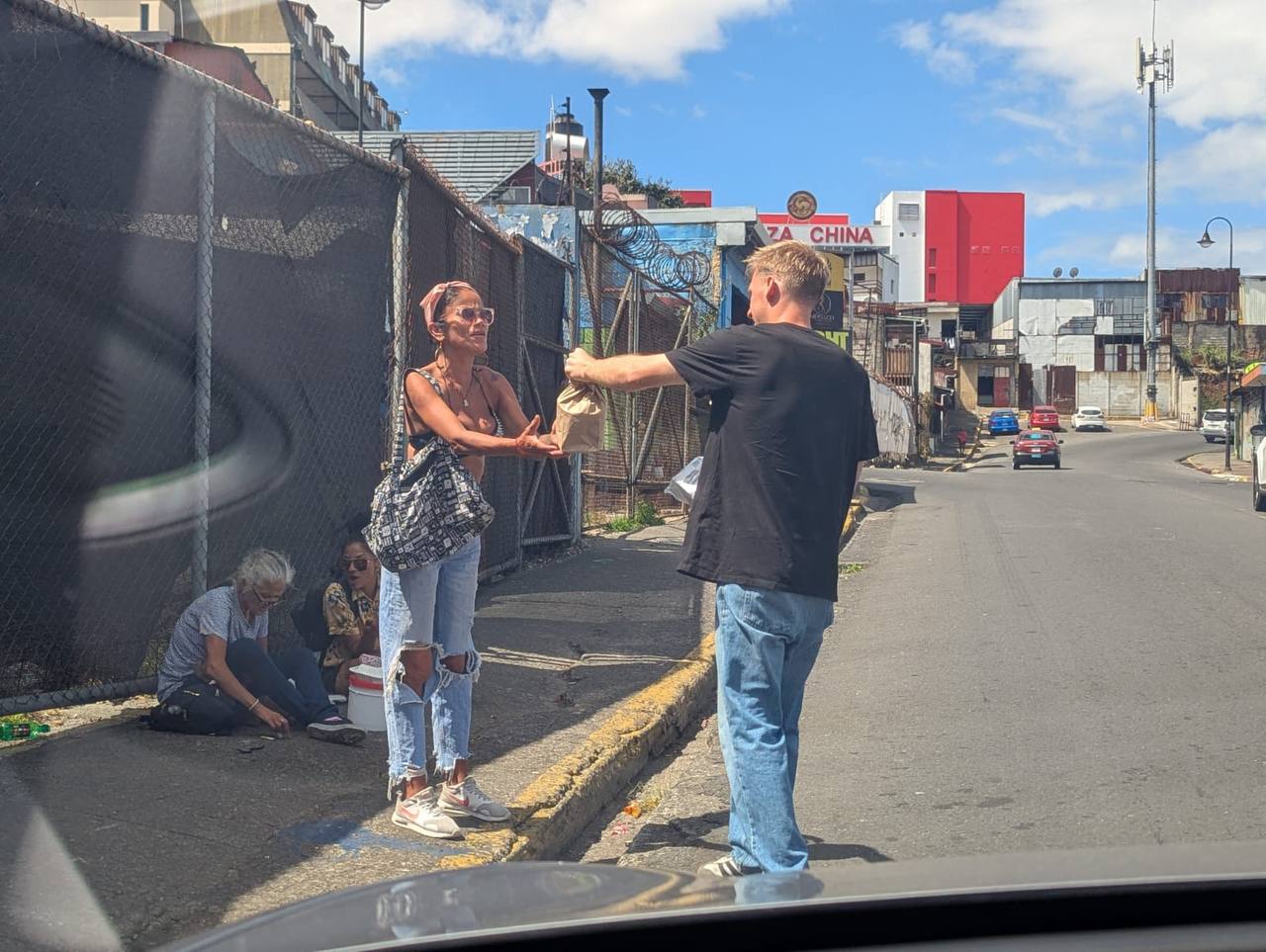
My eldest son Owen, is serving in the United States Peace Corps in Costa Rica. He occasionally sends us photos of his life. It is nice to see him giving back to the community and helping the disadvantaged of Costa Rick with their food drive.
We finished our Winter Break yesterday by Oliver and I seeing Tchaikovsky’s “Evgeniy Onegin” Opera performance at the Alisher Navoi State Academic Grand Theatre here in Tashkent. I was most excited sharing an opera experience with Oliver, his first experience. We were both impressed with the vocals of opera singers. It got me thinking about how many people can be opera singers. My vocal cords and lungs are not strong enough to project sound, and I am tone deaf. Most people are like me. Even people with good singing voices can’t necessarily be opera singers. It takes strong vocal cords, lungs, throat, etc. to get the volume needed for opera. It is amazing they can sing so loud that no microphones are needed. Opera singers also require many years of training to get to that level of performance. Only a small percentage of humans (1-5%) of people can become opera singers, and it takes so much hard work and decidation to become the best. I am in awe of their ability and swept away by the live music and performances. Oliver enjoyed the experience and was gracious enough to stay for at least the first act. I wanted to stay, but didn’t want to push it with him. I think it was a great introduction for him.
Ollie in the FoyerEntrance Orchestra
I have not read Pushkin’s verse novel. The performance is sung in Russian, and the theatre had subtitles in both Russian and English. I learned the word сосед – neighbor in Russian. It is a great night out for the $12 ticket price and free parking. Onegin is the story of a carefree bachelor who rejects the advances of a woman because he wants to stay single and fancy free. He later meets her when she is married to a prince and he regrets his youthful decision. It is a good lesson for Oliver that who you marry (or don’t marry) is the most important decision a person makes for a happy life.
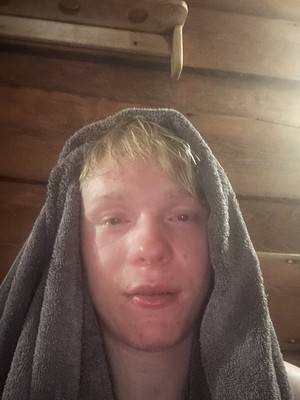
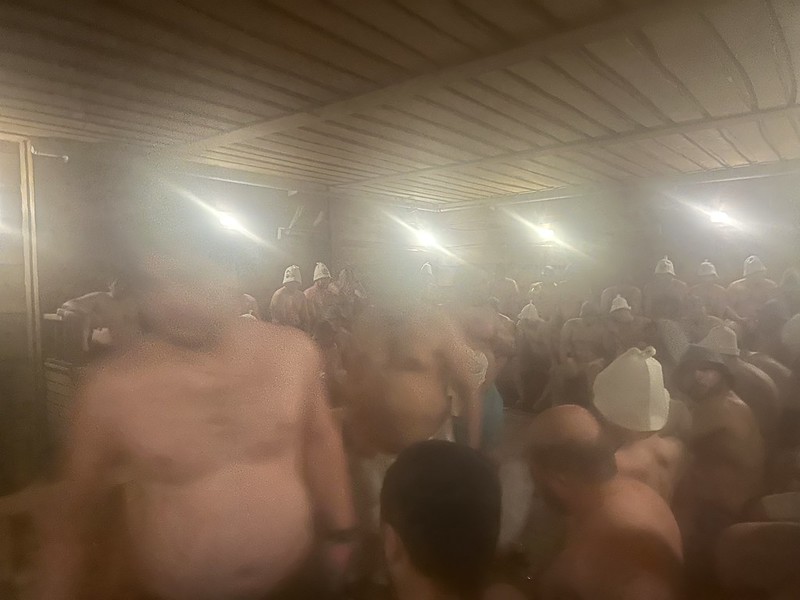
One of the pleasures of winter is going to a Russian баня (Banya – Baths). The Bani is a large Russian spa here in Tashkent. I usually go with friends on Friday evening to kick-off the weekend. Oliver, my friend Aaron, and I went to the The Bani last night. It was Oliver’s first time as the place is only a couple of years old. It is located inside Central Park and features a restaurant, sauna, snow room, various cold temperature pools, and massage rooms. It felt good to warm up after my bicycle ride. Oliver loved the top-of-the-hour group sauna session where the banya master fans the hot air on the patrons. 50 guys in a huge sauna playing Russian rock music is hilarious!
OliverSocial Banya
A Russian banya differs from the Finnish sauna in that it has lower temperatures (140-176°F) and higher humidity levels. The Russians also use a веник (broom) of birch leaves. Banyas are also more social than the saunas, with multiple rounds of heating, cooling, eating, and drinking. The Russians also use a шапка, or felt hat to keep the head cool while in the sauna.
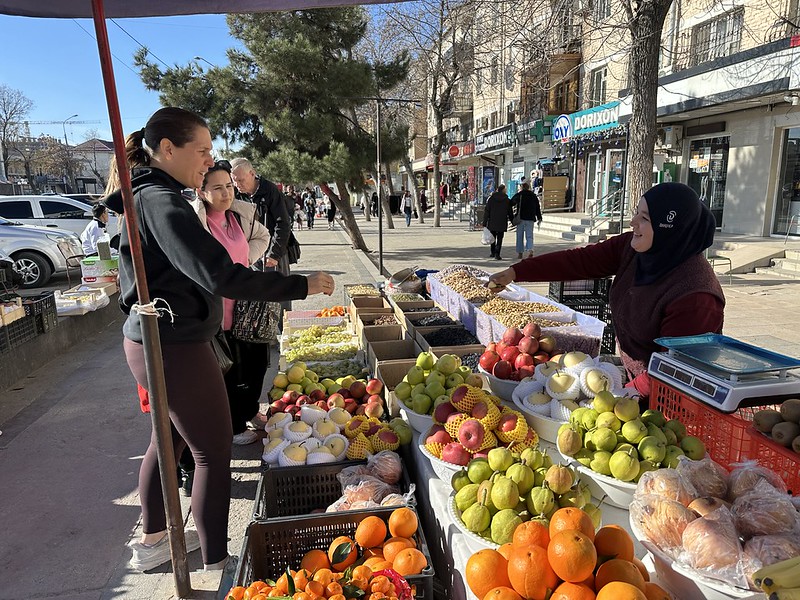
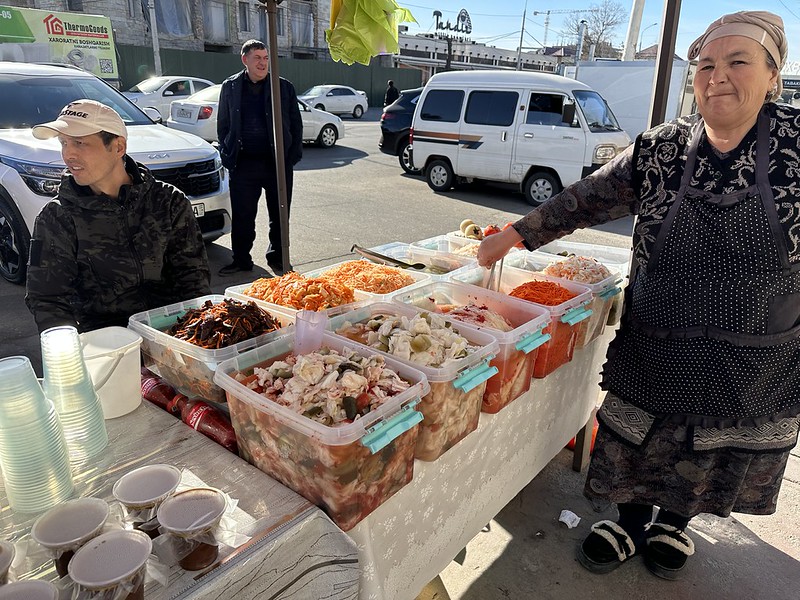
It was a beautiful, warm, sunny day yesterday! The air quality was also good, making for a great day for outdoor exercise. As I write this on Sunday morning, the air quality is back up to AQI 158 (Unhealthy). Nadia and I went shopping in the morning after working out in the TIS gymnasium. I always laugh that it is allowed for private vendors to sell goods out from of the super market. There are makeshift mini-markets all of the city. Almost any sidewalk is city has vendors.
Georgia is country #71 on my life list of countries I visited. We spent one full week of our Winter Break here, with 5 nights in the capital city of Tbilisi and 2 nights at a winery in the Kakheta Wine Region. The highlights for me were the beautiful mountain and valley views, the European feel to the city, and of course, the food and wine! I would like to come back again in the summer to do some hiking in the mountains and stay on the Black Sea coast. On a wider view, it was my first time in the Caucasus, the region between the Black Sea and the Caspian Sea. I never thought of the Caspian Sea marking where Europe ends. Tashkent is east of the Caspian Sea and it doesn’t feel like Europe. Tbilisi felt like an Eastern European city to me.
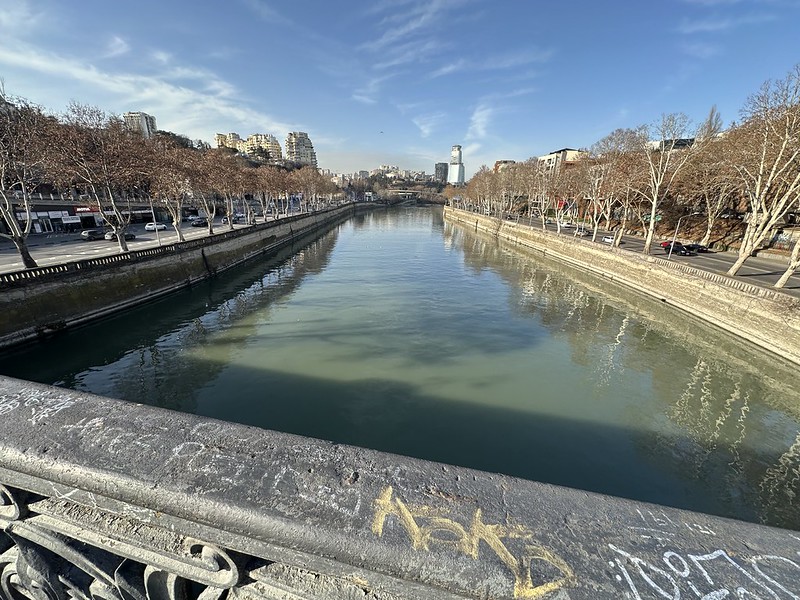
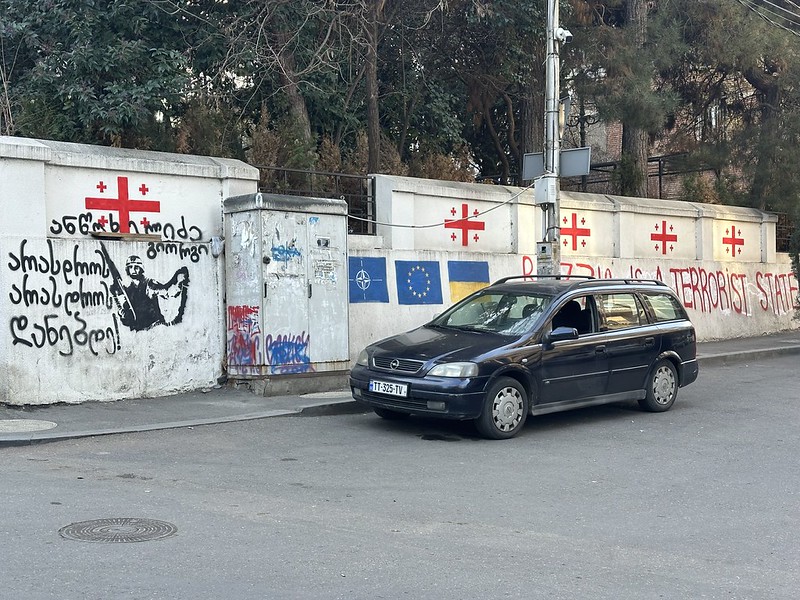
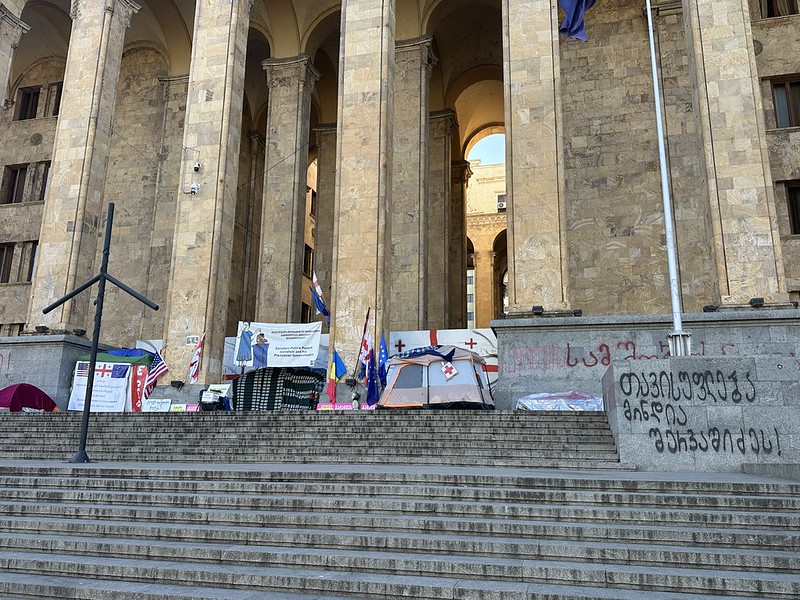
Kura RiverEU ProtestsParliament of Georgia
Tbilisi reminded me of our beloved Belgrade, Serbia, a proud, distinct culture, a gritty city with a fun nightlife. It was a bit rougher than Belgrade I guess, due to the Russian influence for so long. The Georgians have an interesting look; some look Arab, and overall, they are light-skinned with dark hair. They were not overly friendly in a customer service kind of way, but they were not mean. We also noticed that they asked us not to speak Russian. We use Russian to get around Tashkent, but in Tbilisi, they prefer tourists speak English or Georgian. The city sits in the Mtkvari or Kura River valley that provides for dramatic scenery.
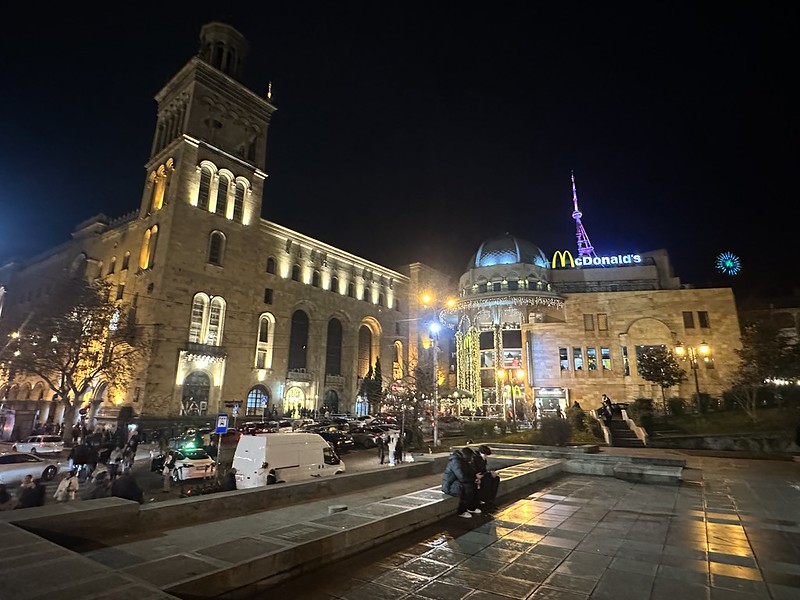
Freedom Square – Tbilisi, Georgia
I read the New York Times How Georgia Went From the Vanguard of Democracy to the Front Lines of Autocracy that gave an in-depth analysis of the current political crisis and the history of the country. It is remarkable that the Georgians kept their culture and language intact after centuries of rule by larger foreign powers. The Persians (twice 400-600 AD & 1490-1750), Arabs (645-1122 AD), Mongols (1220-1330), Russians (1801-1918) and finally the Soviets from 1921 to 1991. I see why they cling so tightly to their Christian identity today. Just under 4 million people and about the size of the US state of West Virginia, Georgia is a small country near the larger powers of Turkey, Russia, and Iran. They are masters at navigating this, both historically and today. As in many countries today, the current government in power is conservative. I sensed most Georgians don’t like Russian interference in their country, especially after losing about 20% of it to the Russians post-independence. I also sense most citizens want European Union membership and an orientation towards the West. I think it will eventually play out this way; however, talking to expatriate friends who lived there previously, and went back during the Winter Break, the country is a lot less liberal and free, and has definitely swung more towards an autocracy. The Georgian Dream Party, led by reclusive oligarch Bidzina Ivanishvili, rigged the last elections and halted the EU application process. He made his fortune by purchasing state assets at bargain prices during the breakup of the Soviet Union. I don’t think he wants to be part of Russia, but he also does not want EU interference in his business empire or in how Georgia is governed.
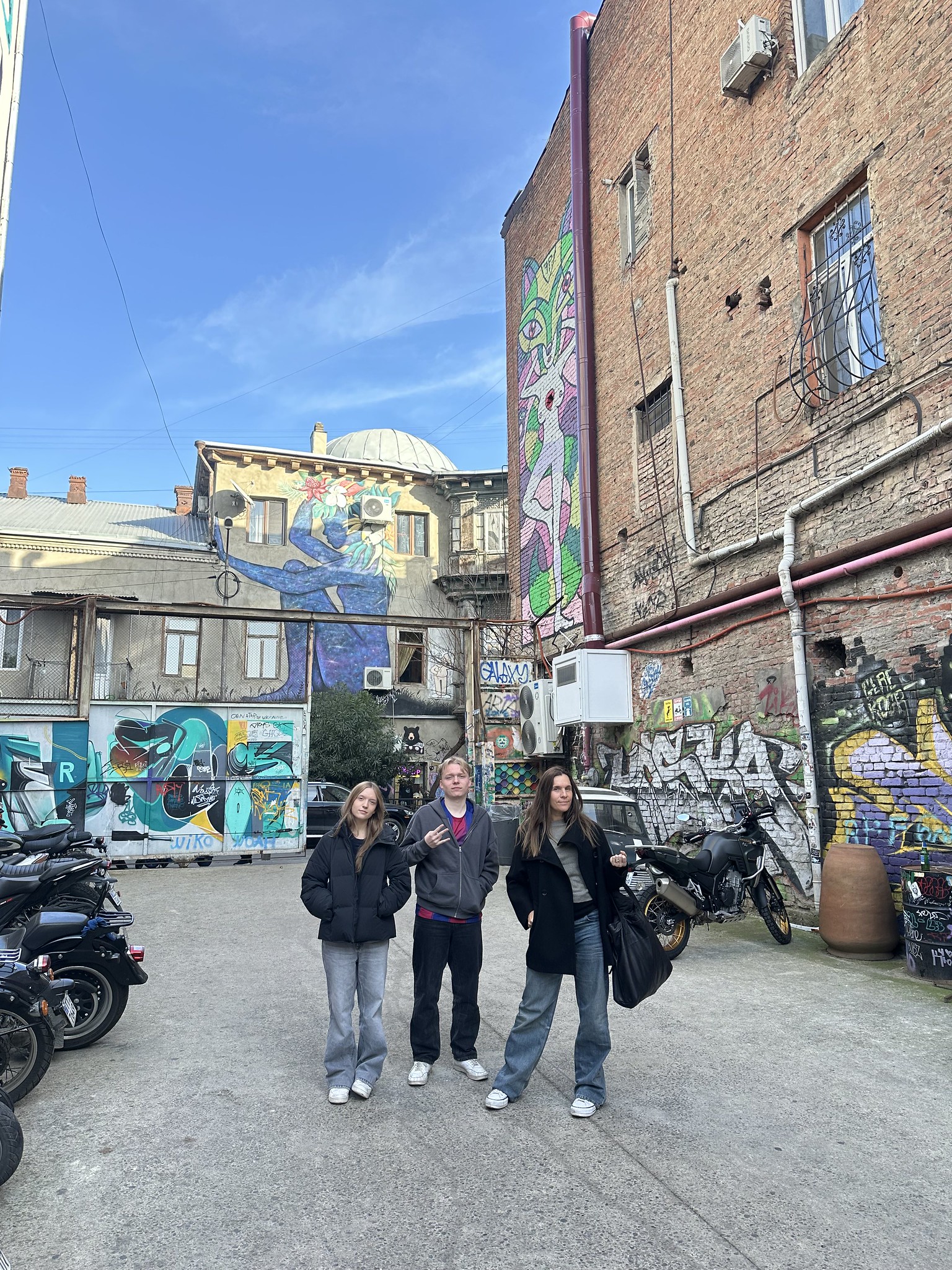
Ocean, Oliver, and Nadia at Fabrika Arts Centre – Tbilisi
I would definitely live in Georgia, and the Caucasuses are similar to the Balkans. The Balkans, being part of Europe, are more Western in their orientation and lifestyle. The Georgians are an “in-between” of Slavic and Persian people, and it makes for a fascinating mix. The scenic beauty of the region, access to water (Black and Caspian Seas), snow-capped mountains, and fertile valleys make it a delightful place to visit and live. It is definitely on the list of places I could live (Balkans, Mediterranean, Upper Peninsula of Michigan, eastern Bolivia).




 Bill's Blog