Latest Reading: Phil: the Rip-Roaring (and Unauthorized!) Biography of Golf’s Most Colorful Character

I am not a golfer but with my son working at a golf course this summer and him starting to get into the sport a bit, I decided to read a book about golf. The Saudi government program of “sports washing” is fascinating to me and Phil Mickelson was one of the first professional golfers to switch to the LIV Tour. I also heard he is entertaining and controversial so I thought the book would be a good read for the summer.

I thought the book was good read. It went through his career from growing up in San Diego in a golf-obsessed family to attending Arizona State University and then hitting the PGA tour. As the title says, Mickelson is quite the character! He makes controversial comments all the time, takes risks on the golf course and his life that many think are crazy or imprudent. He differs from many golfers, who always play the percentages and play “boring” golf. I can see why he was popular and got a lot of endorsement deals. He has a lot of charisma and can “work a room”. I didn’t know he was the main rival to Tiger Woods during Wood’s heyday. Mickelson had a way with people that made people who met him in person like him immediately. He was also vain, selfish, fake, and rude at times, which are all human qualities. I think this was his appeal as well. Fans saw themselves in him, with his propensity to overeat, gamble, have an undisciplined approach to his fitness and game, and say crazy things. This was in stark contrast to the robotic approach to golf of Tiger Woods.

The author, Alan Shipnuck has a new book coming out about the whole PGA/Saudi fight and eventual agreement. That may be a good book to read as well.

The book did not make me a golf fan or want to play more. However, it did give me an appreciation of a Hall of Fame golfer’s career and life. Below are some new words I learned.

  • “Nassau” – This is a type of bet among players. They bet the first 9, then the second 9, and then the full 18. It is three bets for a round of golf.
  • “duende” – In Latin America, it is a type of goblin, but I learned it also means passion …Ballesteros recognized the kid’s duende.
  • “consigliere” – This is an advisor to a boss, someone who resolves disputes, challenges the boss, and at times, can be the elder statesman of the group. The term originated with the Sicilian mafia.

Pictured Rocks National Lakeshore

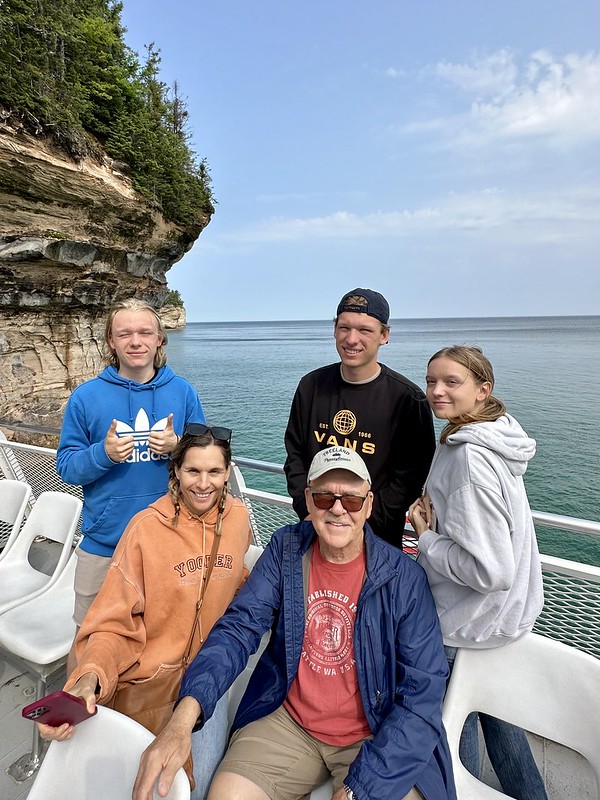
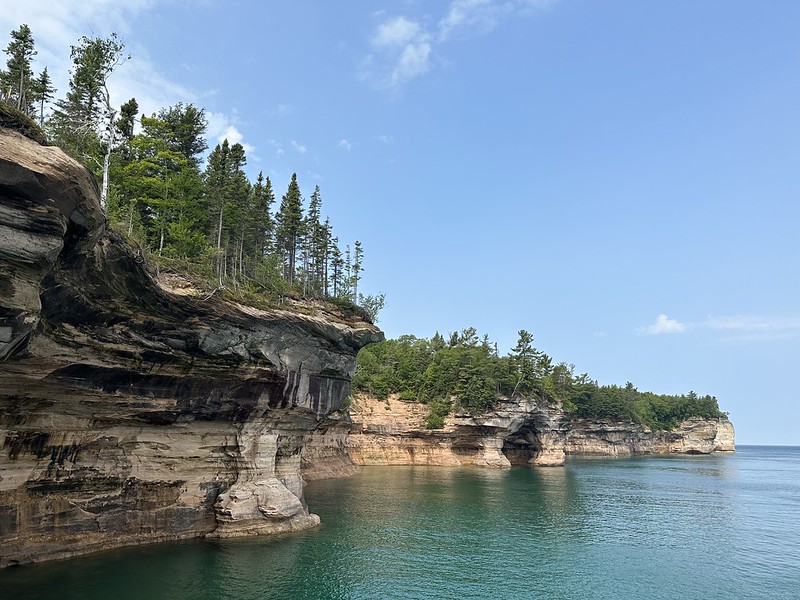
The Pictured Rocks National Lakeshore preserves 42 miles (67 kilometers) of Lake Superior coastline between Munising and Grand Marais. The wind and waves eroding the sandstone cliffs are truly awesome and beautiful and I can see why National Park Service designated it as the first national lakeshore area. It is like Bryce Canyon or the Grand Canyon meets Lake Superior! We took the boat tour with my uncle and I highly recommend seeing the cliffs and rock formations from the lakeview. I would take it via kayak next time, but to get a full overview of the park, a boat tour is the best introduction, especially if you have limited time and a mixed party. We also saw many birds, including two Bald Eagles (Haliaeetus leucocephalus) and plenty of seagulls and cormorants.

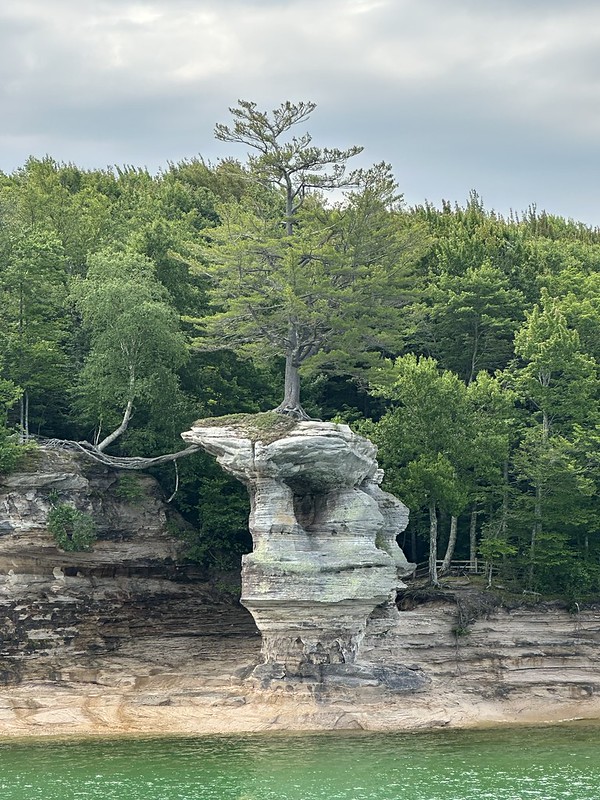
The geology is fascinating with spring water coming out of the cliffside to create a palette of colors. There is also plenty of evidence of major chunks of the cliffs suddenly collapsing. These take place over many years. The trees on the edge live a precarious existence, and I thought it was a good metaphor for humans. Enjoy life while you can because you never know when the bottom will fall out.

We were last in the area with the kids when they were little probably about 15 years ago. We stayed in some cabins in the nearby town of Christmas, and we had a summer celebration of Christmas. This time we stayed in Munising at the Econo Lodge. After the tour, we stopped at Captain Ron’s Fish Truck and had a delicious Lake Superior whitefish and chips lunch! The truck is on the side of M28 just on the outskirts of the town on the Marquette side. Munising is a picturesque town of 2,500 people, the same size as Iron River. The school is right on Lake Superior. What a place to teach!

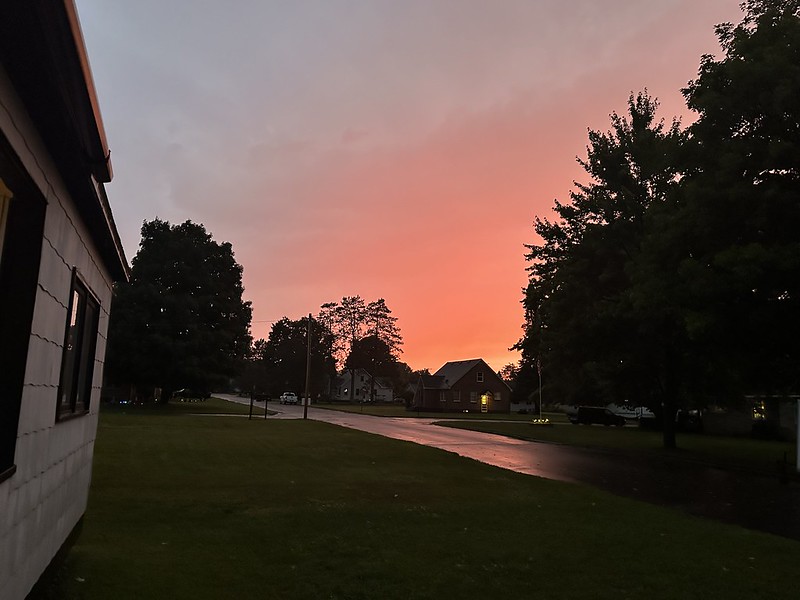
We stopped at Star Bucks and I shopped for eyeglasses in Marquette on the way home. My home village of Caspian is quite isolated and services like good restaurants and medical care are limited. We finished the evening with a Riverside Pizza from Iron River. There was a big thunderstorm with hail while we were eating. The sunset was spectacular. The fresh air and skies of the UP are relaxing. It was a great day!

Baltic Avenue Sunset

Run Your Bass Off

Uncle Jack, Ocean, Oliver, Nadia, and Owen are set to go!

My family ran the 42nd annual Crystal Falls Bass Festival “Run Your Bass Off” this morning. Owen and I ran the 10-kilometer race, Ocean the 5-kilometer race, and Nadia, Oliver, and Uncle Jack completed the 2-mile non-competitive walk. Owen had the best time of all of us, finishing under 54 minutes for the 10.6-kilometer course. I ran exactly 1-hour and didn’t feel good the entire race. I think I need to incorporate more aerobic training, especially running. I had trouble catching my breath and my leg were very sore immediately after the race, telling me I need to train more. I can’t rock up to a race and crank out a decent time anymore. 😦 The important thing was we all did it together and had a great time! The weather was perfect and I ran into my cousin Debbie. It was a good morning.

Bill at the finish!

We then drove to Marquette in the afternoon and stopped at Owen’s house. We took a nap before going for an early dinner at Teriyaki Bowl restaurant. The food was excellent and the waiter was from Thailand so it was authentic Asian cuisine. I recommend it and we will definitely come here again. It is nice to be able to get good Asian dishes in the Upper Peninsula. Only in Marquette!

Owen and Jack at Owen’s House

We watched the fifth and final installment of the Indiana Jones series, “The Dial of Destiny“. We all enjoyed the movie and it brought up a lot of the best scenes from the earlier Indiana Jones movies. The de-aging effects are amazing and I think CGI/AI can make a movie even with dead people. It was interesting to see Clark Gable come back to star in a modern movie. It delivered what people want from the series, Nazis, chase scenes, archeology, etc. I thought it was a little too long, but overall an OK movie and it was good to share the experience with the kids.

After the movie, we drove an hour during the sunset along M28 to Munising and checked into our hotel. My uncle’s observation about the Upper Peninsula is that it has a lot of trees and not much urban development. The trees make driving hypnotic and a bit boring. I remember the first time I visited the American West in Nevada. I was amazed at the open vistas and being able to see miles and miles in the distance. Growing up in the UP, my views were mostly of trees. The eastern half of the UP is much flatter than the western half. The drive along Lake Superior is beautiful, only ruined by the number of cottages along the lake. There are several protected areas for the public to enjoy however and I hope to stop at one of them to admire the lake.

Happy Independence Day!

Beau and Oliver stand at the start of the Michigan-Wisconsin land border

The Fourth of July celebration of America’s independence always gets me thinking of the history of the USA. In honor of the historical day, I took the boys to the Treaty Tree and Mile Post Zero. This site commemorates Captain Thomas Cram placing the first survey marker establishing the Wisconsin-Michigan border in 1841. That is one of the things I like about the USA is the federal system of government. Much of governance is left to the states and every state has its quirks and local customs.When states were being carved out of the Northwest Ordinance of 1787, there was a dispute between the states of Ohio and Michigan regarding its borders. Most of the problem was poor surveying. If this happened today, GPS would accurately define borders. Because of mistakes made by surveyors and early map makers, both sides claimed the Toledo Strip, the narrow green area in the picture below. The strip of land had the port city of Toledo, the Maumee River and farmlands to the west. The state militias intimidated each other across the river but never started fighting over the strip of land. (see Toledo War).

The western Upper Peninsula (top green) for the Toledo Strip (bottom green)- sign at the Stateline Park

The dispute was resolved because then President Andrew Jackson needed Ohio’s electoral votes. He made a compromise, giving Ohio the Toledo Strip (500 square miles) and giving Michigan the western side of the Upper Peninsula (16,000 square miles) and statehood. At the time they were not happy, but as a Michigander, I think it was a good deal. I graduated from Adrian College which is located in the far southeast corner of Michigan, very near to the Toledo Strip. The city of Toledo is not a picturesque city and the huge amount of land (the UP is the size of Switzerland) makes Michigan the largest state in area east of the Mississippi. I see where Wisconsin would complain they lost the UP but they were not powerful enough as a territory to weigh in on the decision.

Today the Michigan border counties (Gogebic, Iron, Dickinson, Menominee) share the Central time zone with Wisconsin and many cultural similarities. We are a mix of Wisconsin and Michigan influences are the Western UP is probably more similar to northern Wisconsin than Michigan’s Lower Peninsula. The city of Green Bay, Wisconsin is the unofficial “capital” of the UP. The most important city in the UP is Marquette.

July 4, 2023

Getting back to Captain Cram, the US government thought that they could use rivers to separate the Upper Peninsula from Wisconsin. This mostly works with the Menominee and Brule Rivers emptying into Lake Michigan. However, there is a gap from where the Brule River starts at Brule Lake to where the Montreal River empties into Lake Superior. Cram’s job was to draw a straight line between the two spots. The Treaty Tree marks the start of this line at the headwaters of the Brule River. Surveyors often carved into trees to mark special spots and that is exactly what Cram did. The Tamarack tree he chose is dead and preserved at a museum in Marquette. As you can read below, the idea of land ownership and precisely defining state borders was lost on the Ojibwa (Chippewa) indigenous people of the time. I don’t think future surveyors left gifts for them at the site. Cram sent his report to Congress and the border was redefined. Instead of rivers separating the two states, a section would be a land border.

Sign at Treaty Tree site – July, 2023

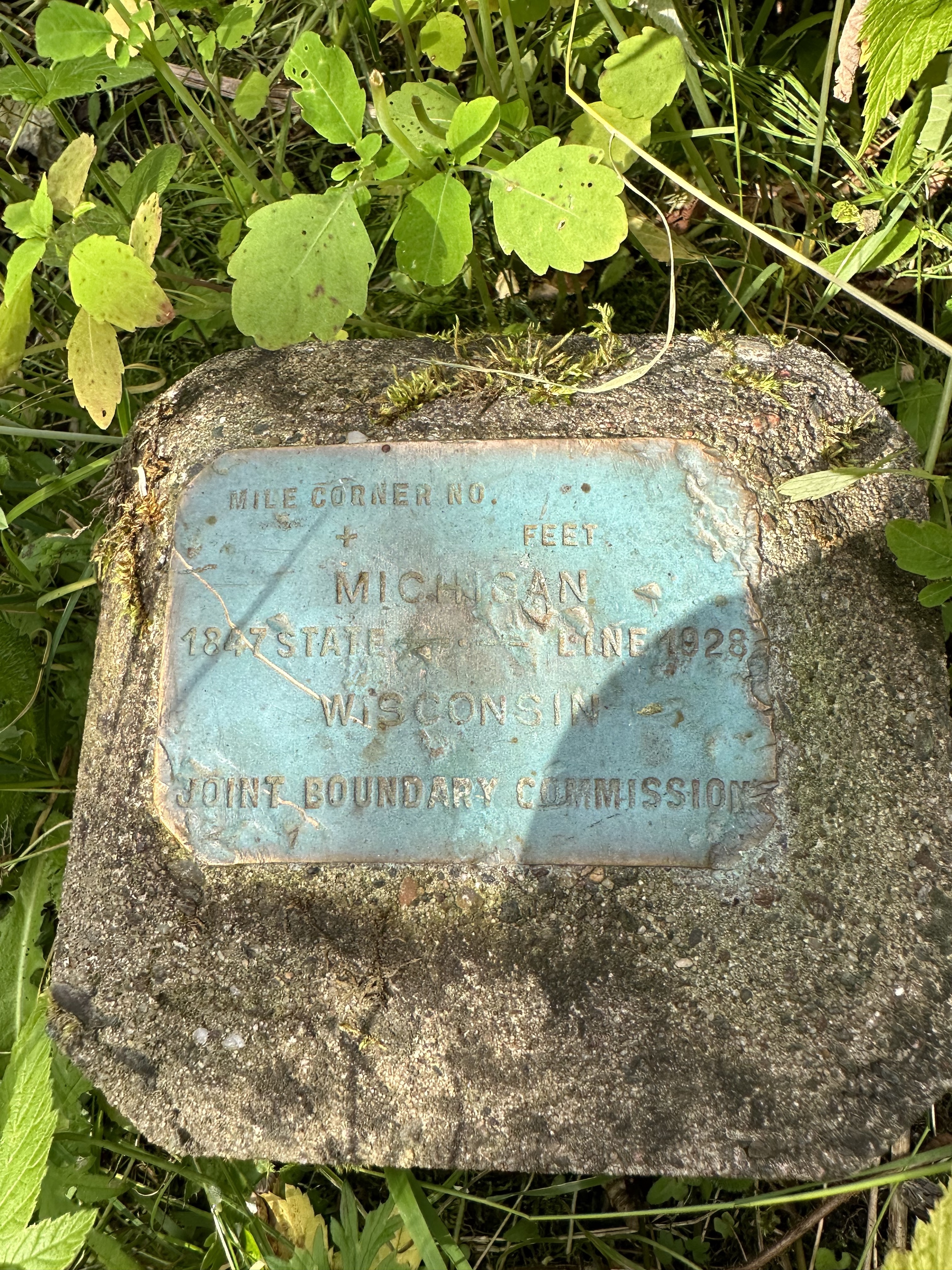
William A. Burt came back in 1847 to make it official and a monument is in place marking “Mile Zero”, which is the start of the land border between the Brule River, going to Lac View Desert and continuing to the Montreal River and eventually Lake Superior. In 1928 a Joint Border Commission put in the plaque below. The site is maintained today near a state campground. We had to clear some vines that were covering the marker.

The marker from a 1928 ceremony

We finished the day by watching the City of Iron River fireworks show. The fireworks were literally over our heads because we were about 50 meters from where the Iron River Fire Department was shooting from. It was a great way to end the day and to celebrate 247 years of the United States of America.

Kralovec Family Enjoying the Fireworks

Hiking Lake Mary Plains Pathway

Beau and Jimmer flex in Glidden Lake

We were looking for a hike today combined with swimming. I settled on the Lake Mary Plains Pathway after looking at the list of Iron County hikes on the official county website. I used to go on the cross-country ski trails at Lake Mary. I don’t know much about the history of the area. I think the Department of Natural Resources pulled together a combination of private and public lands to form a state forest campground and hiking/biking/skiing area. A sign memorialized a fire in 1983 that was started by an arsonist that burned 119 acres including a 27-year-old plantation of red pines. The campground has 23 sites and there are 9 miles of trails. We completed a 5-kilometer loop on the northwest side of Glidden Lake. The mosquitos, ticks, and bugs were quite fierce so we cut the hike short and headed back to the lake.

The highlight for me was swimming in Glidden Lake. The dark water was so refreshing! There were many cold spots in the lake, especially in the deeper parts. I wonder if it is spring-fed. I swam across the lake and back.

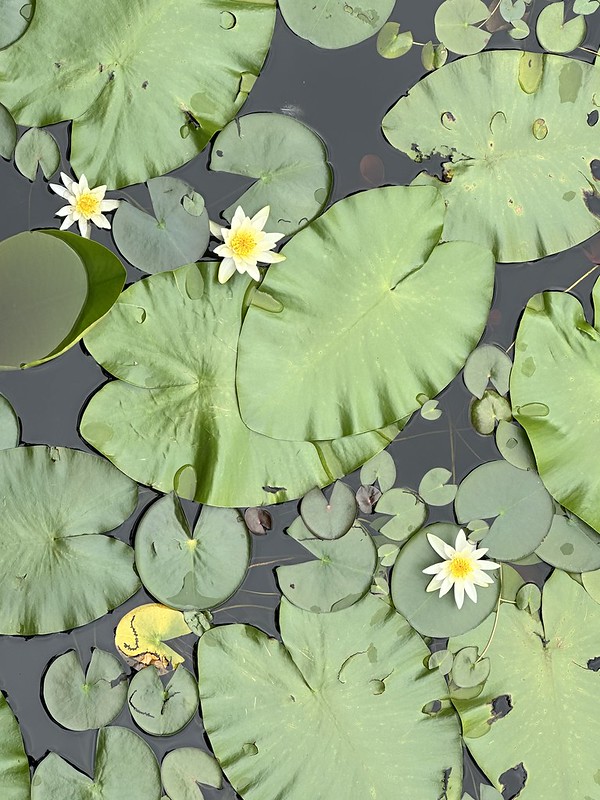
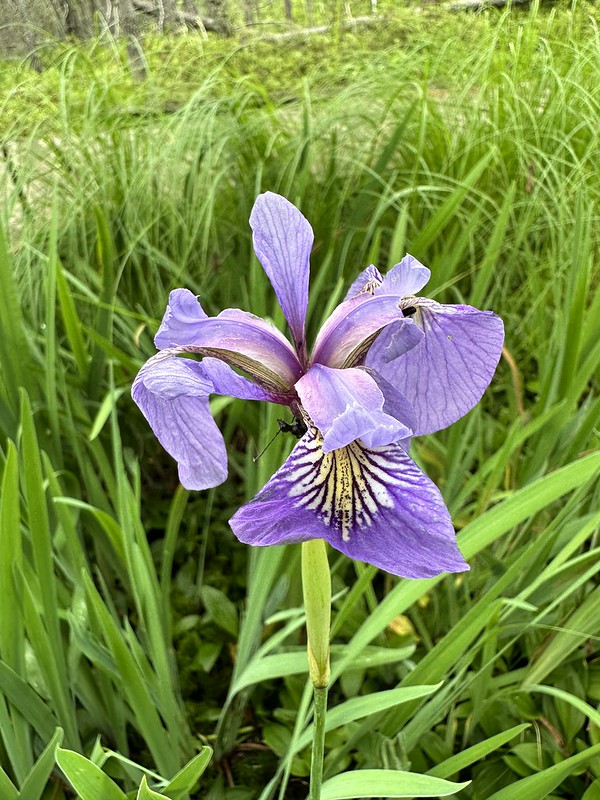
The trail went through the wetlands surrounding the lake. An elevated platform bridge keeps hikers dry. We were able to admire the aquatic plants of the northern Great Lakes region.

We also saw a bit of wildlife. Unfortunately, two of the species were ticks we picked off our shoes. All of us had 3 to 4 ticks on our legs after the hike. The new iPhone 14 has a superior camera and I was able to identify two different species of ticks. The American Dog Tick (Dermacentor variabilis), or Wood Tick, and Black-legged Tick or Deer Tick (Ixodes scapularis) are common in the eastern United States. The deer tick is a vector of Lyme Disease. On a more positive note, on the way home we spotted Sandhill Cranes (Antigone canadensis) alongside highway 424.

It was a relaxing summer afternoon and I thank my brother Jimmer, nephew Beau and son Oliver for going out with me.

Family Journal: July 1, 2023 “The Sport of Golf”

I am not an avid golfer, I find the sport too difficult, expensive, and time-consuming. However, when my son asks if I want to go golfing, I am all in! I took my two sons, Owen and Oliver, and two of my nephews, Beau and Tony to the local George Young Golf Resort. It is a beautiful 18-hole course located on the shores of Chicagoan Lake in Iron County. Owen is part of the groundskeeping crew at the course (his first summer job!) and so he is becoming interested in golf.

I had a wonderful day hanging out with my sons and nephews yesterday. We played tennis in the early afternoon at Nelson Field courts in Stambaugh followed by a round of golf in the late afternoon. We finished the day with me cooking them a rigatoni and fish sticks dinner at the house. Spending time with my family is the most rewarding time for me and I realize how precious the time is with our children. They will soon be full adults with careers and families of their own.

The strategy of learning what your children enjoy doing is my chance to spend time with them. I see the appeal of golf. I get a “buzz” when I hit a good shot. The sport is outdoors and you have lots of time for talking and joking with friends while walking around the course. I’ve been really interested in the Saudi takeover of the PGA and the LIV tour. I want to read Alan Shipnuck’s books on Phil Mickelson and the LIV tour. I fear they will be coming for tennis next, which has a similar setup as golf. Tennis professionals are independent contractors and the WTA/ATP lead organizations are not united and well-funded. It is ripe for a takeover.

As I wrote, golf is expensive and time-consuming. We completed 9 holes in 2 hours. An 18-hole round would take around 4 hours. Avid golfers must devote much of their leisure time to the sport, away from family. Sports podcaster and commentator Colin Cowherd advises not to hire people who are avid golfers because they devote too much time to golf and not enough to work. I also read a study that showed that companies underperform when their CEO is a golfer.

My Impressions of Sicily

I fell in love with the Mediterranean while completing my Master’s degree through the College of New Jersey’s program on the island of Mallorca, Spain in the 1990s. The sunlight, mountains, sea, culture, restaurants, and history of the places around the Mediterranean are incredible. I’ve explored quite a bit of it during my lifetime. I was thinking of all of the places around the Mediterranean I’ve visited which include Malta, Valencia, the Croatian coast (Dubrovnik, Trogir, Split, Rovinj, Novigrad), Haldiki peninsula in Greece, Trieste, Cyprus, and of course, Mallorca.

I can now add the largest (25,000 km – the size of Massachusetts) and most populous island (5 million) in the Mediterranean, Sicily. It is just as beautiful as the other places I’ve visited. The Italians add incredible cuisine to the views. I see why so many tourists come here. I wonder how much HBO’s White Lotus helped tourism this summer from the USA here. I heard a lot of American accents. Being the largest island in a strategic position, Sicily has been populated by many people in its long history. I am reading John Julius Norwich’s Sicily: An Island at the Crossroads of History. Greeks, Romans, Germans, Byzantines, Arabs, Normans and now the Italians have ruled over the island. It would be interesting to see a DNA analysis of Sicilians who lived here for many generations.

We stayed in the south-central part of the island for the first part of the week. The Mandranova Azienda Agricola is located just outside of Monte de Chiaro, which is close to the city of Agrigento. For the second part of the week, we were in Scopello, near the capital of Palermo in the northwest part of the island at an Air BNB.

Some parts of the island are not as picturesque as others and we are noticing some poverty. Sicilians have been emigrating from the island since the 1800s due to poverty and lack of economic opportunities. Today, an estimated 10 million people of Sicilian origin live around the world and 15% of the current residents have lived abroad sometime in their lives. The tourism and hospitality business is doing well here and I bet Sicilian wines and olive oil must do a brisk trade.

The one thing I do not like about the land Mediterranean is the lack of wilderness. Because it has been inhabited for so long, the original trees and animals of the region disappeared a long time ago. The result is a drier climate and in driving around the country, it could be compared to Iowa with agriculture replacing the ecological biomes. I know humans have greatly altered the natural world all over the globe, but here it is more prevalent than in North America. Vineyards and olive groves are romantic, but it would be nice to have more trees and the wild flora and fauna of the region.

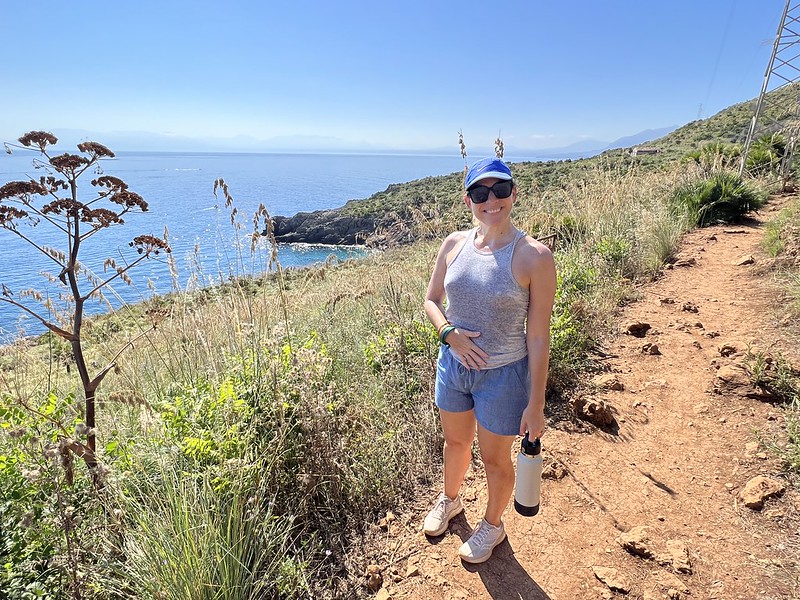
A highlight of my trip to Sicily was the Zingaro Riserva Naturale Orientata. This is a protected coastal area located between San Vito lo Capo and Scopello on the Golfo de Castellammare. We hiked 10 kilometers round-trip from the south entrance of the park to the fifth beach from the entrance, Cala Dell’ Uzzo. As you can see from the photos below, the views are spectacular and it was nice to have a Mediterranean landscape not filled with buildings or farms. We took the coastal trail and I wish we would have had time to take the inland, mountain routes. Cala Dell’Uzzo was the most beautiful of the beaches. It was not too crowded in the morning, with people coming from the closer north entrance or boats dropping anchor in the small bay. There is another protected area west of Zingaro, Monte Cofano that would be nice to hike as well. It was quite hot and Nadia had quite the workout. The water was a godsend and refreshed us enough for the 5-kilometer walk back to the parking lot.

Some other nice things about the trip were our stay at the Villa Drago Air BNB. They had a hot tub and outdoor dining area that had spectacular views over the Mediterranean. We also had a delicious dinner in the old part of Golfo de Castellammare.

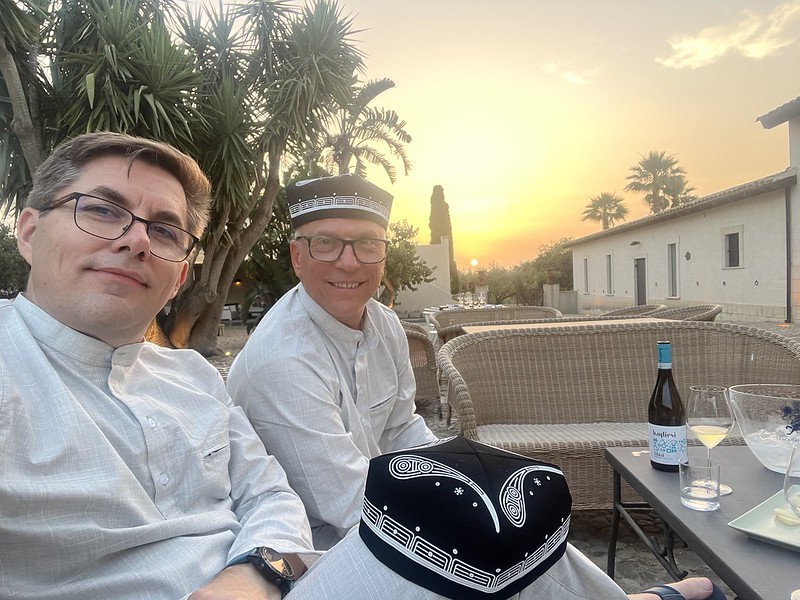
Another highlight was a visit to the Tenute Camilleri winery. Our good friends Claudiu and Vesna joined Nadia and me for wine tasting. The “Semprevento” white and “Terraranni” rosé were excellent. The owner Pepe showed us around the vineyards and gardens. He also shared photos of his family and I really felt we understood his life’s work. The setting sun, a slight wine buzz, and good company were great way to start the evening.

Tenute Camilleri Winery

We met a nice Italian couple at the beach from Lake Como that summed up Sicily. “You cry twice when you visit Sicily. Once when you first arrive because of how beautiful it is and the second time when you leave because you ate too much.”

Greek & Roman Sicily

Temple of Concordia

The Valley of the Temples is an ancient Greek archeological site located on a ridge outside the town of Agrigento. We drove the 30 kilometers to the site to take in the more than 3000-year-old ruins. The Greeks called the colony “Akragus” which takes the name of a river nearby that supplied crabs. There was an extensive parking lot and lots of tourists and it was an extremely hot day. Despite this, it was an awesome spectacle and made me contemplate the ancient Greeks and human existence on Earth. The Greeks were one of the first nations to colonize Sicily and it was amazing to experience one of their fortresses.

I remember learning in elementary school the difference between Doric style and Ionic style columns. This site only had Doric columns which are older and simpler. The Temple of Concordia’s six-column facade is featured in the UNESCO logo, which says a lot about the place of Greek archeology and culture with the UN world heritage system. As with many religious sites, later civilizations converted it to their religion, and the Romans and other groups converted it to a church. “Apart from the Parthenon in Athens, this is the best preserved Doric temple in the world.”

Claudiu, Oliver, Bill, Marc, Ocean, Vesna, and Nadia

Looking out to the sea from the ridge, I see why the Greeks set up fortifications in that location. They can see who is coming and defend the high ground. It was in contrast to the modern city of Agrigento located on a parallel ridge a few miles further inland. The ancient Greeks would have marveled at Agrigento while today, we marvel at the ancient Greeks.

Fortifications looking to the sea

Bookending the site is the other awesome temple, the Temple of Hera Lacinia. This one is not as restored as the Temple of Concordia. The temple was built in 450 BC and dedicated to the wife of Zeus, Hera, or as the Romans called her, Juno. It is the twin of Concordia, also consisting of six columns in front and 13 columns on the side. The building is approximately 38 by 17 meters in area. The Carthaginians and later Romans pillaged the site.

Temple of Hera

It was awesome to see Greek history and mythology come alive and be in the same spot as the ancient Greeks.

Jurmala, Latvia

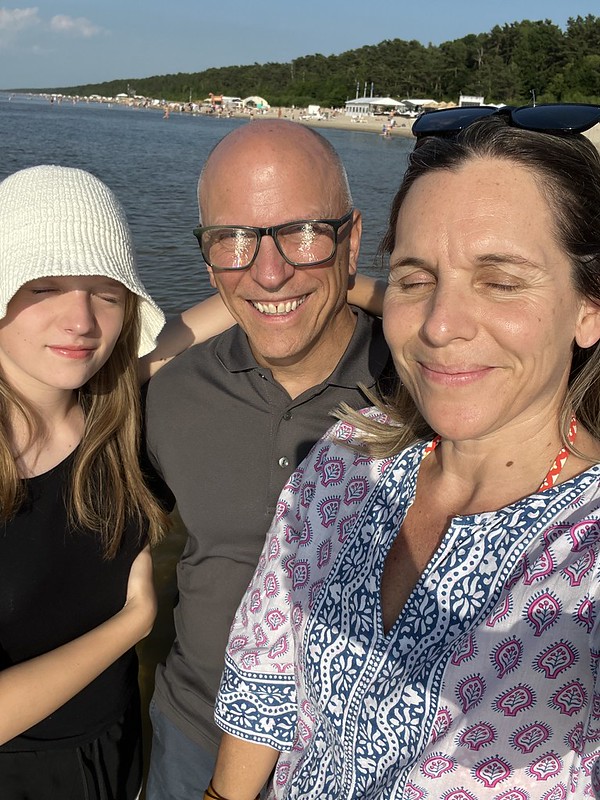
We have a one-day layover in Riga, Latvia today, on the Summer Solstice. We are flying Air Baltic (operated by Uzbekistan Airways) from Tashkent to Riga, a 5-hour and 30-minute flight. We are on our way to a week in Sicily. I’ve been to the Baltics many times because of working in two CEESA (Central and Eastern European Schools Association) member schools. This is my third visit to Latvia. The two previous visits took place in March for basketball tournaments. This is the first time here during the summer. I chose to stay on the Baltic Sea coast in the village of Jurmala, a 30-minute drive north of the Riga city center. Living in a double landlocked country, I am craving the ocean. Juurmala was THE USSR summer holiday destination for top politicians and bureaucrats. Both presidents Kruschev and Brezhnev spent summers in the famous resorts and wooden houses that Juurmala is known for. When I stayed in Juurmala previously, the beach looked like the Arctic so I can’t wait to see what it looks like in the summer. 

We had a fantastic day in Jurmala. It is so much nicer in the summer! I knew Ocean and Nadia would love the shops and restaurants. I love the long beach and the mighty trees of Latvian forests. The town is not overcrowded and I think most of the tourists are either Latvian or Russian. Many people from Riga come out to spend the day in the resort town. I did hear some American English and I think there is a university group visiting here. We are staying in an apartment in town, called Wooden Villa. It is only a short walk to the beach and quite comfortable. The only downside to the trip so far is our baggage was checked through to Palermo so we had to go with what was in our carry-on luggage. Nadia and Ocean loved the cute shops.

Our Lady of Kazan Cathedral – Jurmala

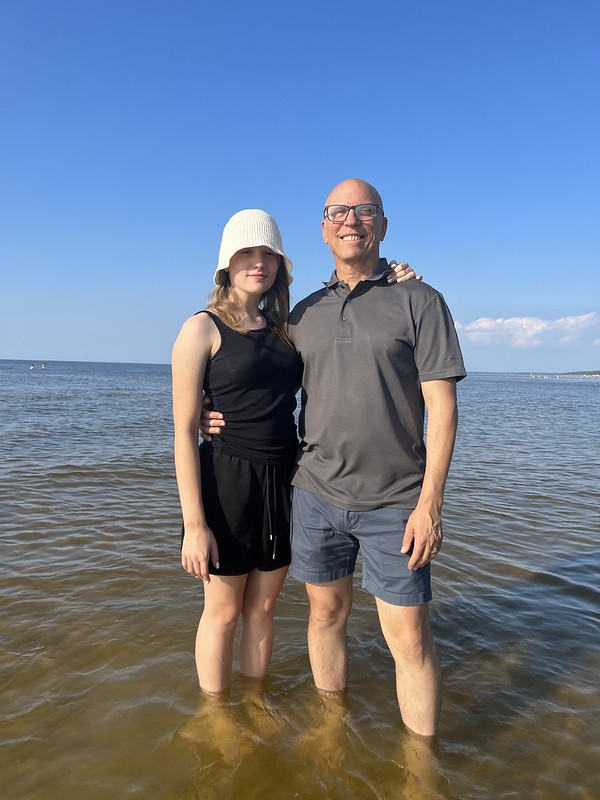
The water is shallow for a long way from the sandy beach. It is not very salty and has warm and cold parts. As I get older, the simple things in life bring me more pleasure. Treading water while watching the seagulls and the vastness of the ocean on one side and the trees giving a backdrop to the beach was delightful. Nadia and I enjoyed an evening on the sandy beach. The sun did not set until 10:00 PM and I took my traditional sunset Solstice photo. I am always surprised that we do not make a bigger deal out of the longest daylight day of the year in the northern hemisphere. We seem to acknowledge a lot of holidays or anniversaries, but not one of the most important natural events of the year. Starting tomorrow, the daylight slowly gets less and less until the Winter Solstice in December, another big day. I think people should take time out to view the sunrise and/or sunset on the Solstices and Equinoxes and mark the occasion with family and friends. Humanity has lost something with our modern lifestyles separated from nature’s rhythms.

Ocean & Nadia at the Lighthouse Restaurant

The food and view at the Lighthouse Restaurant were world-class. All of our dishes were gourmet-level seafood and I highly recommend it. I also discovered one of my favorite Latvian drinks, Riga Black Balsam has Cherry and Black Currant variations. It is nice over ice or ice cream in the summer or a straight shot in the winter warms the soul. It is a traditional, herbal liqueur made from mint, sage, dill, cinnamon, etc. It is similar to the Finnish salmiakki.

This visit got me thinking about the Baltics. I’ve visited all three, Estonia once for a CEESA Educators Conference (also in March) and Lithuania four times, once for an interview, once for the CEESA Educators Conference and once for a basketball tournament, and once for a principal/AD meeting. Estonian is a Finnish language and they are similar in culture, appearance, and temperament. Lithuanians have a long association with the Polish and I am surprised they kept a separate identity. They are tall and handsome and were one of the last groups to adopt Christianity, so pagan and worship of nature is kind of popular there. The Latvians are more similar to the Lithuanians than the Estonians. They are good at hockey and I sense their country has more Russians than the other two. All of the Baltics remind me of the topography and fauna of the Upper Peninsula of Michigan. Lots of conifers, snow, and bodies of water. 

Latest Reading: The Wager: A Tale of Shipwreck, Mutiny and Murder”

I can see why “The Wager” is number one on the New York Times Best Seller list. What a story! I was surprised when it turned up in my Great Lakes Library Libby App as I am sure lots of library patrons wanted to read it.

I read David Grann’s “The Wager: A Tale of Shipwreck, Mutiny, and Murder” on a couple of travel days we had on our way to our summer holidays. He combines thorough research with writing like an adventure thriller. I couldn’t put it down and I highly recommend it. I love stories of people overcoming incredible hardships in nature. (This post contains SPOILERS, don’t read this post if you want to read the book.)

This non-fiction work tells the story of a British Navy contingent of 5 ships in 1740 that sets sail for an around-the-world trip to find and take a Spanish treasure ship. The British and Spanish governments were sort of at war as they were developing colonies in the New World. Some of their ships are lost at sea or shipwrecked while going around Cape Horn at the bottom of South America. One ship did complete the mission and bring home treasure. The story focuses on the sailors that were castaways on a cold, rocky island in the Straits of Magellan during a southern hemisphere winter and their struggle to get back to England. Once back, they faced British Naval justice as there were conflicting reports of mutiny and murder while the sailors were stranded.

1740 was almost 300 years ago and the technology was not there yet for ocean global travel. Imagine the following:

  • Not knowing your longitude and only being able to figure out your latitude through looking at the stars. With my iPhone, today you can tell exactly where you are on the planet Earth with detailed maps. Because the earth rotates, each hour per day corresponds to 15 degrees of longitude.
  • No weather forecasts. The ships were at the mercy of the weather and they often were caught in fierce winds, rain and rough seas.
  • Having to rely only on the wind to propel you across the planet. The combustion and steam engines were not invented yet.
  • A ship doctor that didn’t know about bacterial infections or Vitamin D deficiency.

I can’t believe Ferdinand Magellan circumnavigated the earth over 200 years before (1519) this expedition took place. These sailors were absolutely courageous and mad for going on these epic journies so long ago.

The old and rich businessmen and politicians of England at the time should be ashamed of themselves for sending young men to sea in these conditions. They were looking to enrich themselves by concocting this war against Spain (The War of Jenkin’s Ear). Sending ships at that time to sail to the Spanish colonies to hunt down a treasure-laden galleon ship was a suicide mission and not worth the loss of young lives. For example, the one ship that did accomplish the mission lost over 1,700 sailors of the 2,000 that started the trip. All throughout the book, sailors are dying of starvation, disease, hypothermia, and drowning. The incredible lack of sympathy for the death of navy sailors is astounding. “…sending their troops off on ill-conceived, poorly funded, bungle military adventures.” …”the war cost taxpayers 43 million pounds” It is never the politicians that get blamed or suffer the consequences, but the usually men, who have to follow orders and go off and do the government’s bidding. See Ukraine/Russia war.

My wife Nadia and I traveled to the tip of South America in the southern hemisphere summer of 1998-1999. We visited an island full of penguins in the Strait of Magallanes, although I can’t remember the name. It was the coldest I’ve ever been in my life. The rain and wind went right through my clothing and I remember shaking and my teeth chattering as we got off the boat to return to our hostel in Punta de Arenas, Chile. I can’t imagine what those sailors went through being stuck on Wager Island without food, shelter, or proper clothing in the southern hemisphere winter.

The book also highlighted the help of indigenous tribes, the Kawesqar, Yaghan, and Chono. It is tragic that they were wiped out. What a loss of knowledge of nature in an incredibly harsh and beautiful part of the world. “By the late 19th century, the Chono had been wiped out by contact with Europeans and by the early 20th century there were only a few dozen Kawesqar, who had settled at a hamlet about 100 miles south of the Golfo de Penas.” I would like to read more about these tribes. I remember spending an afternoon in a library in Punta De Arenas reading about the Patagonia indigenous people when I was down there.

  • boatswain – a naval officer in charge of the crew and equipment

I was fascinated with how many nautical words and phrases these early sailors used that are still in use today.

  • “toe the line” boys on a ship were forced to stand still for inspection with their toes on a deck seam
  • “to pipe down” the boatswain’s whistle signaling for everyone to be quiet at night
  • “piping hot” the boatswain call for meals
  • “scuttlebutt” water cask sailors gossiped around while waiting for their rations; the modern-day water cooler
  • “three sheets to the wind” when lines to a sail broke and the boat pitched drunkenly out of control
  • “turn a blind eye” – Vice Admiral Nelson deliberately placed his telescope against his blind eye to ignore his superior’s signal flag to retreat

I like this description of what was needed in a captain. “command of temper, integrity of purpose, vigour of mind, and abnegation of self…” Another sailor quoted John Dryden’s poem, “Presence of mind, and courage in distress, Are more than armies to procure success.”

Shocking to learn about the 1945 “Minnesota Starvation Experiment”. 36 volunteers starved themselves over six months for scientists to study the impact both physical and mental on them.

On a final note, I went for a swim yesterday in the warm waters of the Mediterranean. I swam to a buoy that was probably 50 meters from shore. The waves coming from the deep waters were rolling through me. I was trying to put myself in those sailors’ shoes. Being on a rickety boat, miles from shore, with strong winds, huge waves, pouring rain, and cold water, wow! The sea is powerful and just getting a taste of it on a summer day off the coast of Sicily was enough for me.