Family Journal: Winter Solstice Day

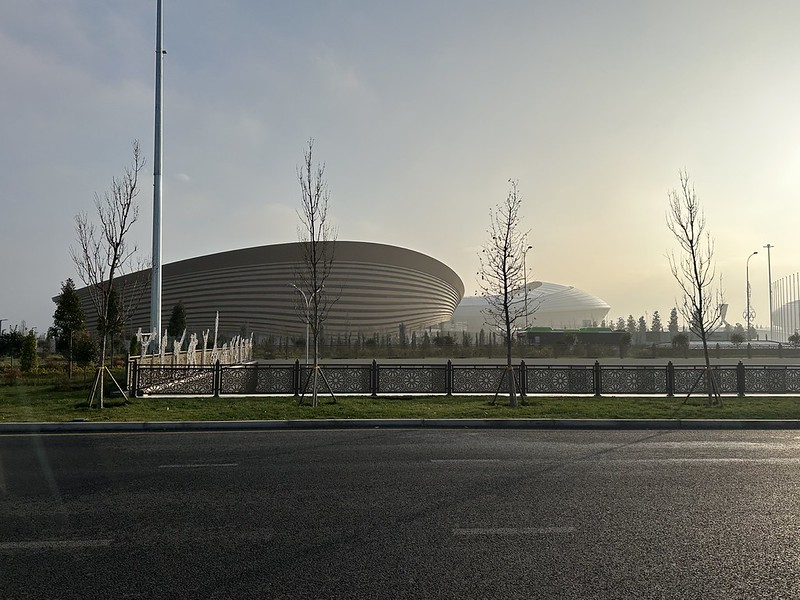
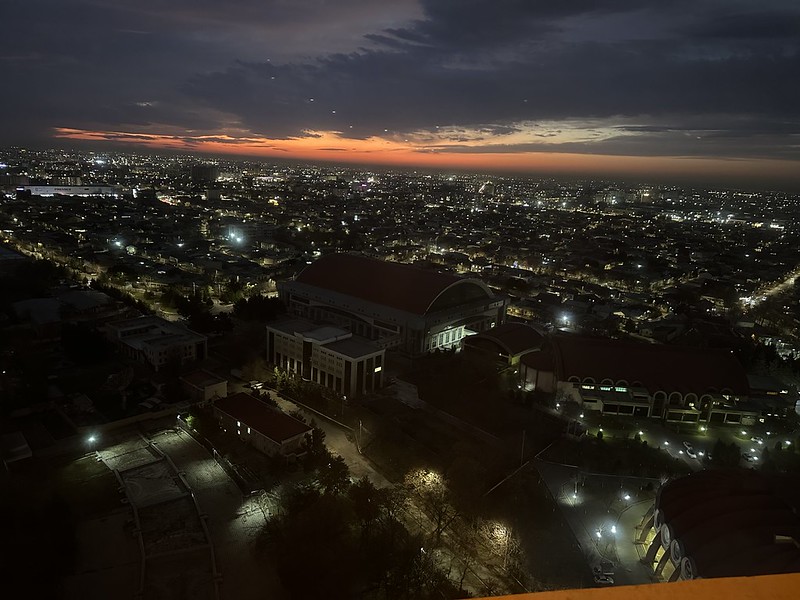
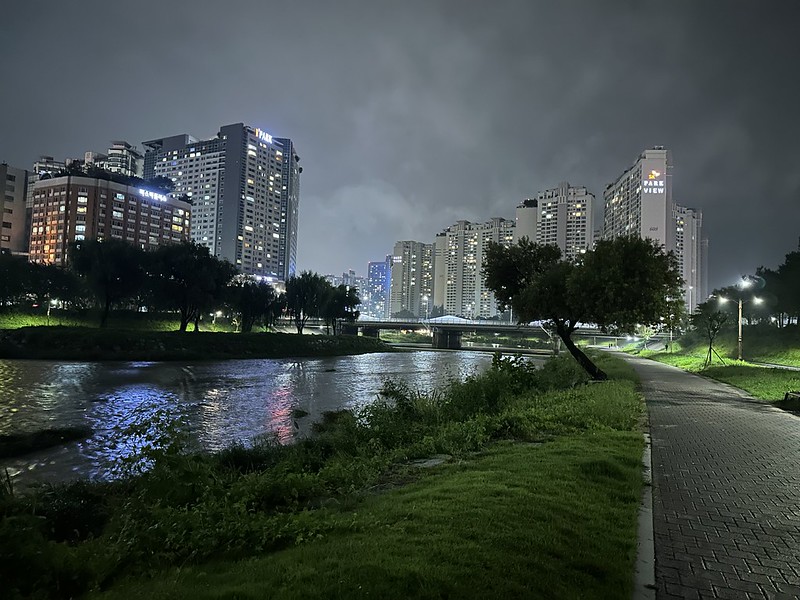
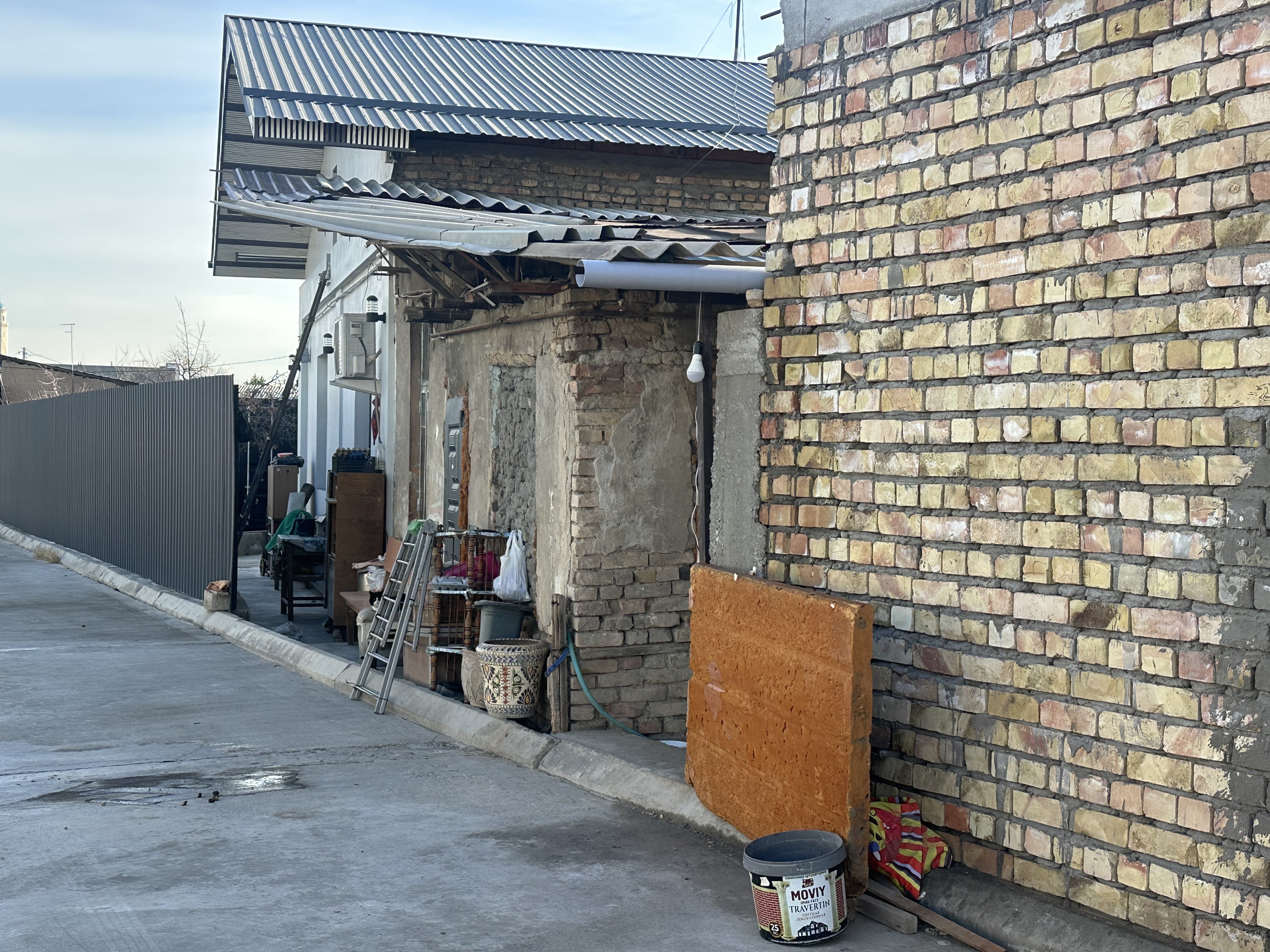
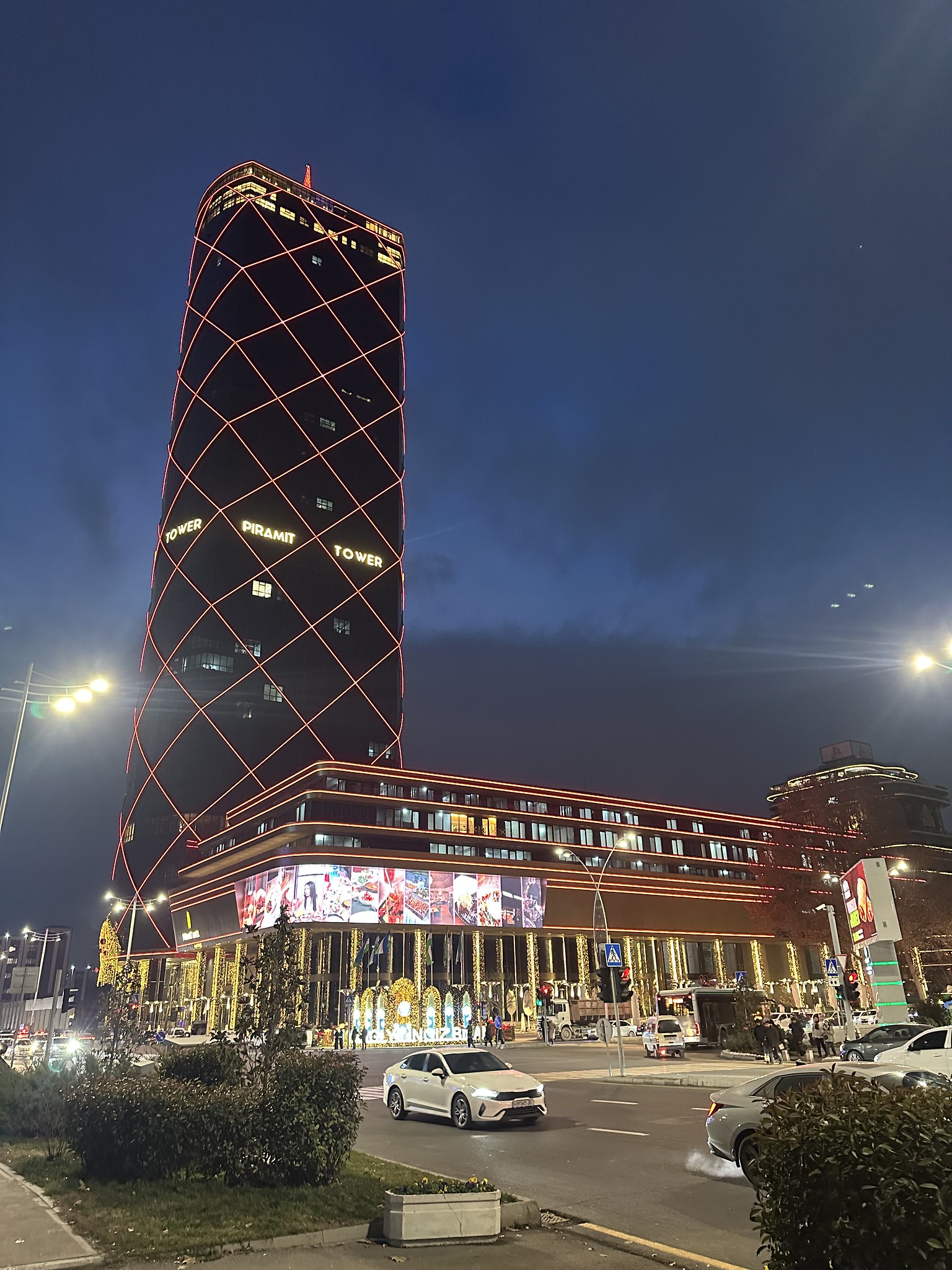
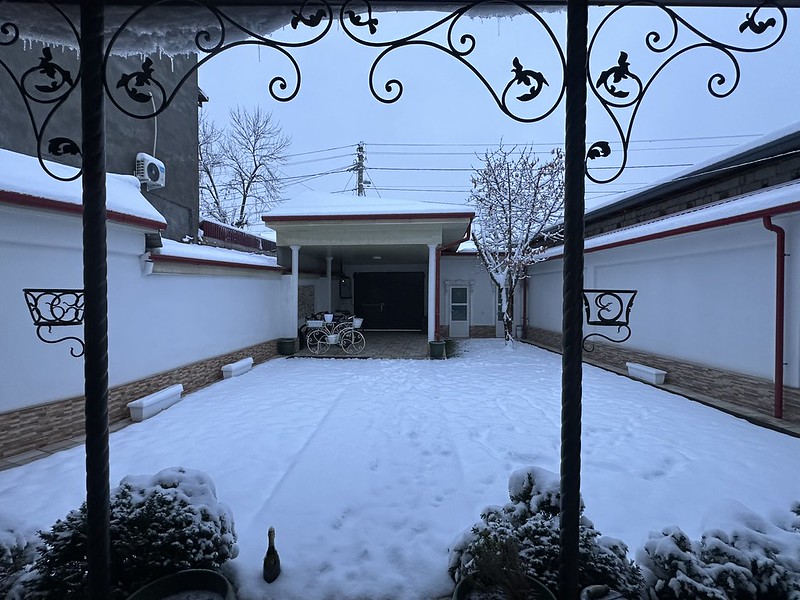
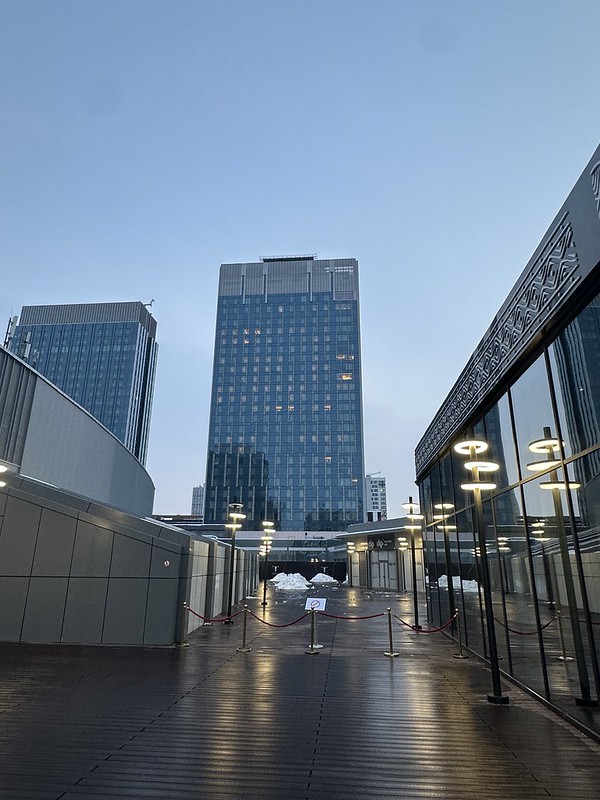
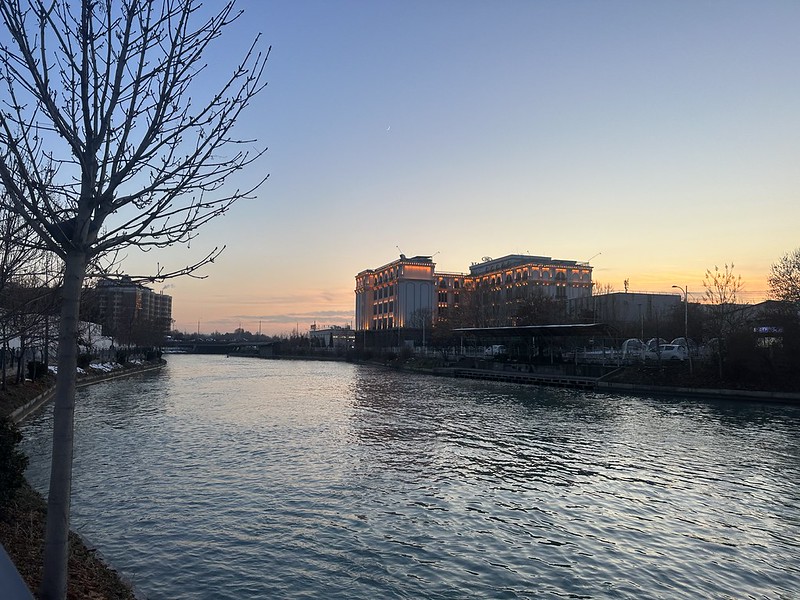
I always photograph the sunrise and sunset on December 21, the shortest day (Winter Solstice) of the year in the northern hemisphere. Most people are unaware of the significance of this day. This was a big day for humans historically, marking the return of the sun and hope for warmer weather. The sunset was at 4:56 PM in Tashkent. The next day, sunset was 4:57 PM. Tashkent is located at 41.3 degrees north latitude and you can really feel the loss of daylight. Most days, I arrive at and leave school in darkness. January and February are still a bit bleak for my taste, but when you can’t do anything about the weather, you need to embrace the cold and dark of winter. As you can see above, the morning sunrise at my house, it was overcast. We spent most of the day in the Tashkent City Mall, Christmas shopping. I snuck out and took a photograph of the sunset on the rooftop.

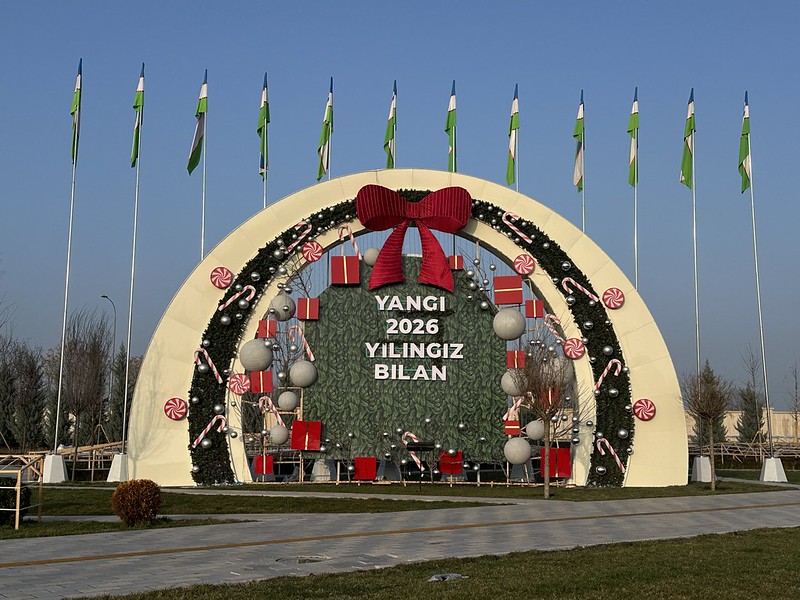
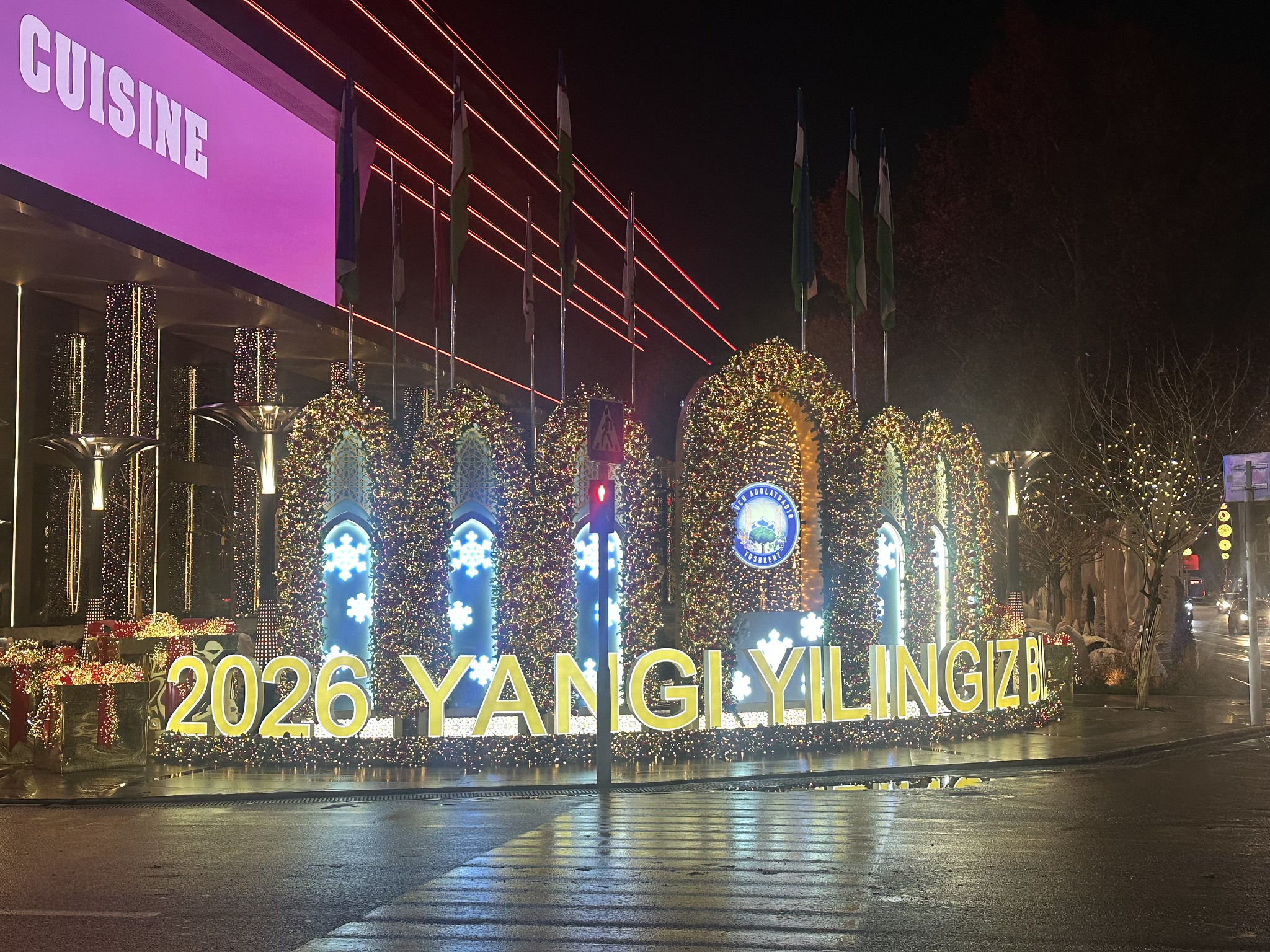
Tashkent City Mall Christmas Tree

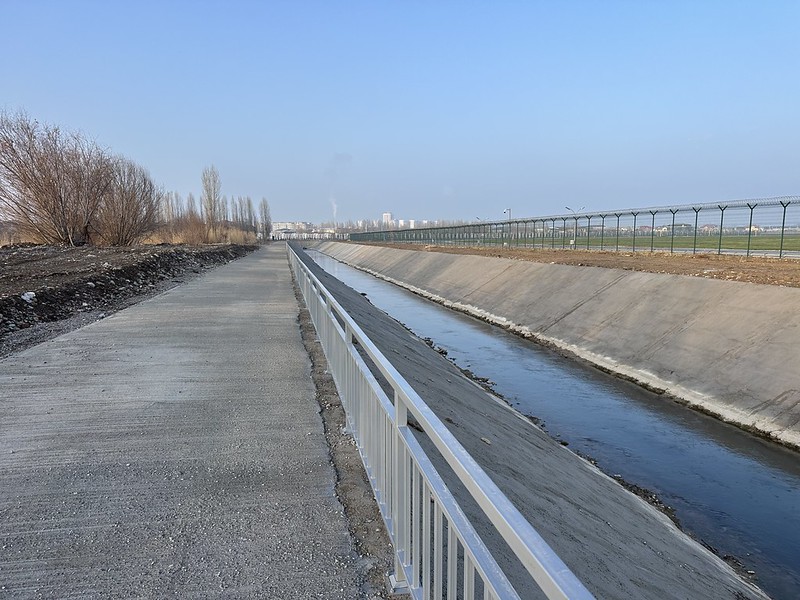
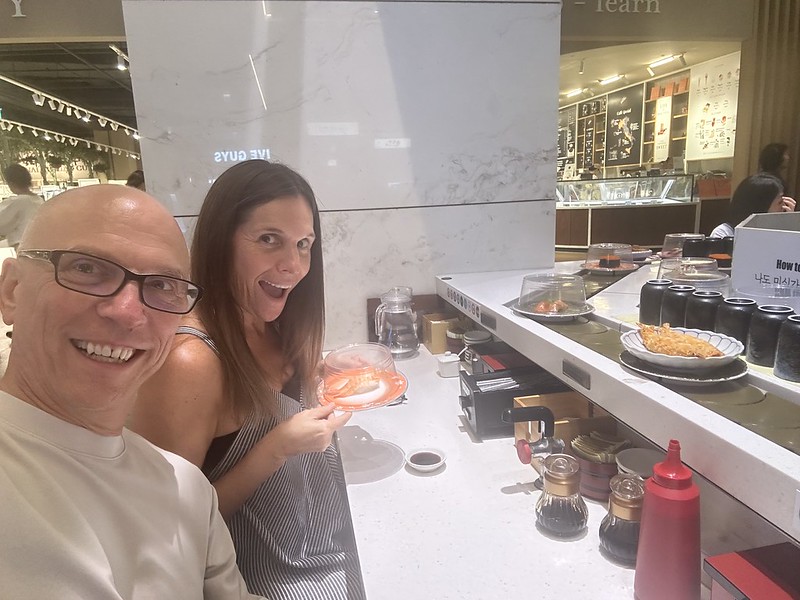
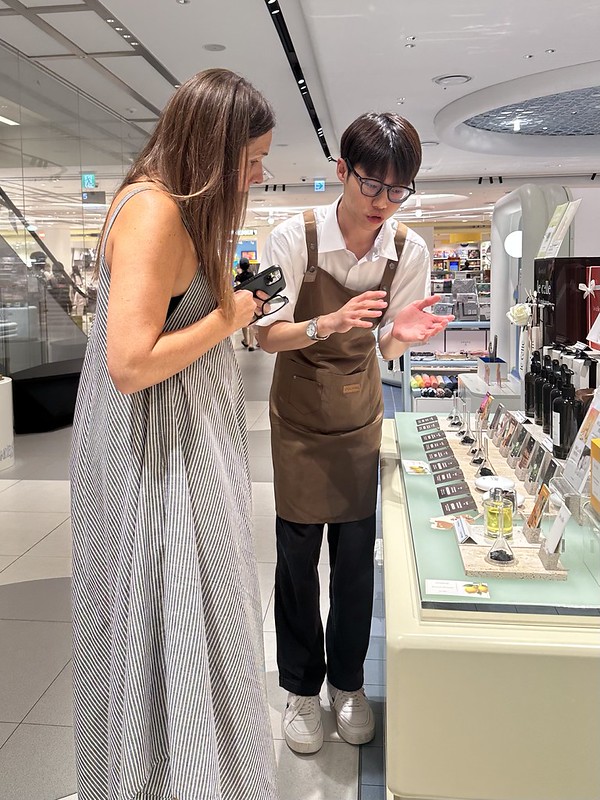
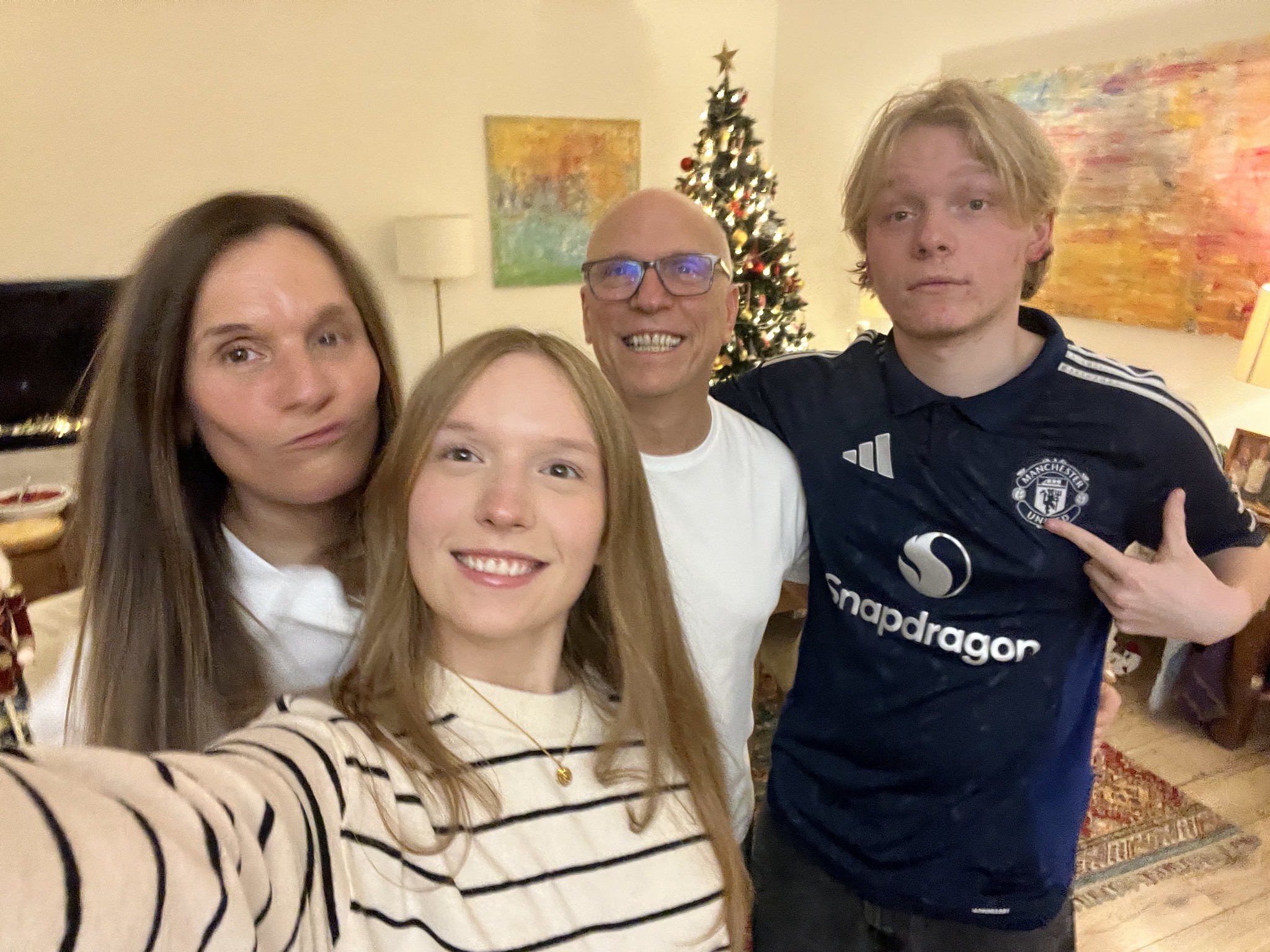
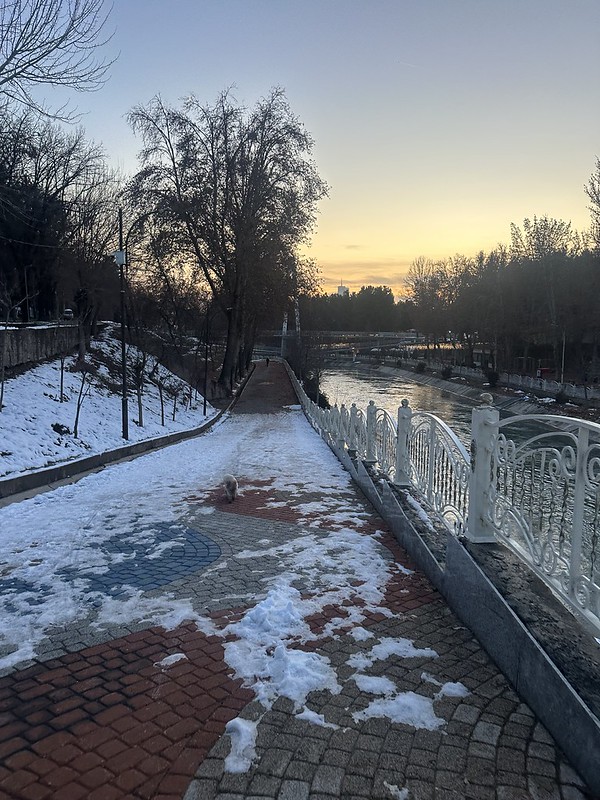
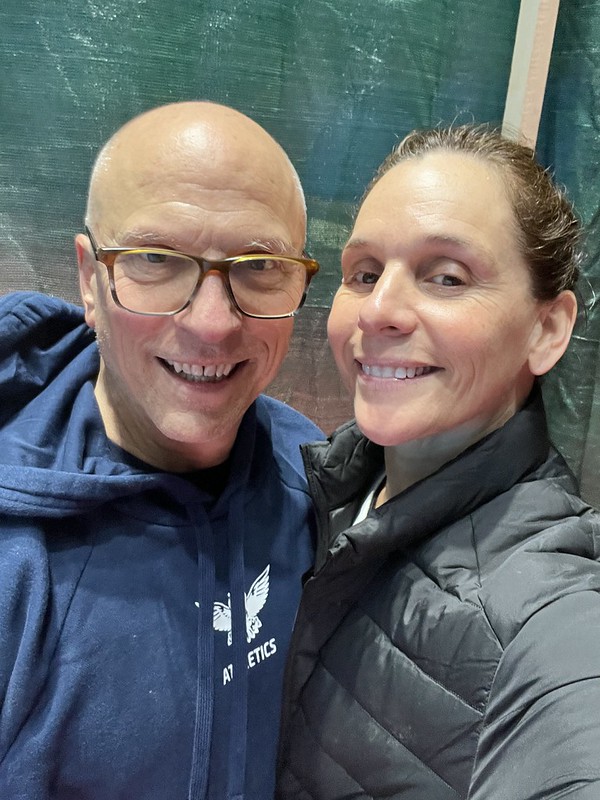
I don’t like shopping, but I do like spending time with my family. Oliver, Ocean, Nadia, and I had a lot of fun! We also made travel arrangements for Georgia in January. I am writing this on Christmas Eve morning. I spent most of Monday and Tuesday closing the school office. We are finishing recruitment, preparing for an alumni gathering, and monitoring winter construction works. In the afternoon, I took Obi for a run/walk along the Ankhor Canal. The sun finally came out in the afternoon.

Family Journal: December 22, 2025

Nadia – Yunusobod Sport Complex – Tashkent, Uzbekistan

I am closing the office at school on Monday and Tuesday, so I worked most of the day. Everyone wants to see the director before a long break. I spent the morning catching up on emails and tasks. In the afternoon, I played Yandex Driver. I picked up Nadia from her swimming workout, took Oliver and Ocean to the dentist, and then Nadia and I to the sports complex. We had a late lunch at a nice cafe on the ground floor of the Orient Business Center. We had a delicious (облепиха) Sea Buckthorn tea. The popular winter drink in Russia and Central Asia is full of antioxidants and many health benefits including lowering cholesterol, skin hydration, and with 12 times as much Vitamin C than oranges, it is also a boost to the immune system. I am going to find some at the market this week and try to brew my own this winter.

Sea Buckthorn (облепиха) Tea

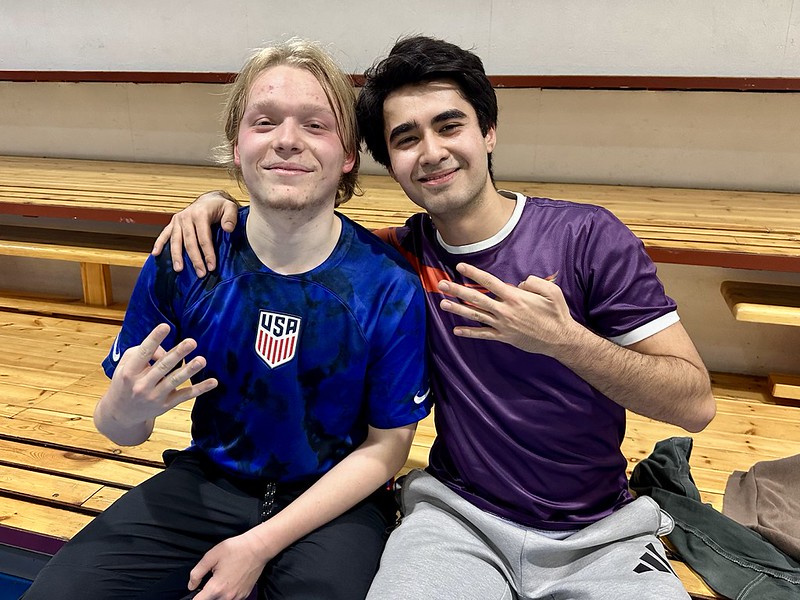
Nadia and I played tennis at the Yunusobod Sports Complex. It was the first time I played in many months due to a sore elbow and shoulder. My shoulder loosened up over the course of the game, but I still felt a little bit of tenderness in my elbow. I defeated Nadia 6-2, 1-2 before our hour expired. Complex officials arranged three tennis courts in the indoor volleyball stadium. The surface was a little slippery, but it felt great to be back playing tennis! Nadia and I had some spirited points and it is something that we enjoy doing together. Followers of my blog know we love and follow tennis. We are all looking forward to the 2026 ATP/WTA seasons. I had a great post-match interview, which Nadia missed. 😦 Nadia and I then went grocery shopping and a bit more of Christmas shopping. I picked up a nice bracelet for Ocean.

Family Journal: November 9, 2025

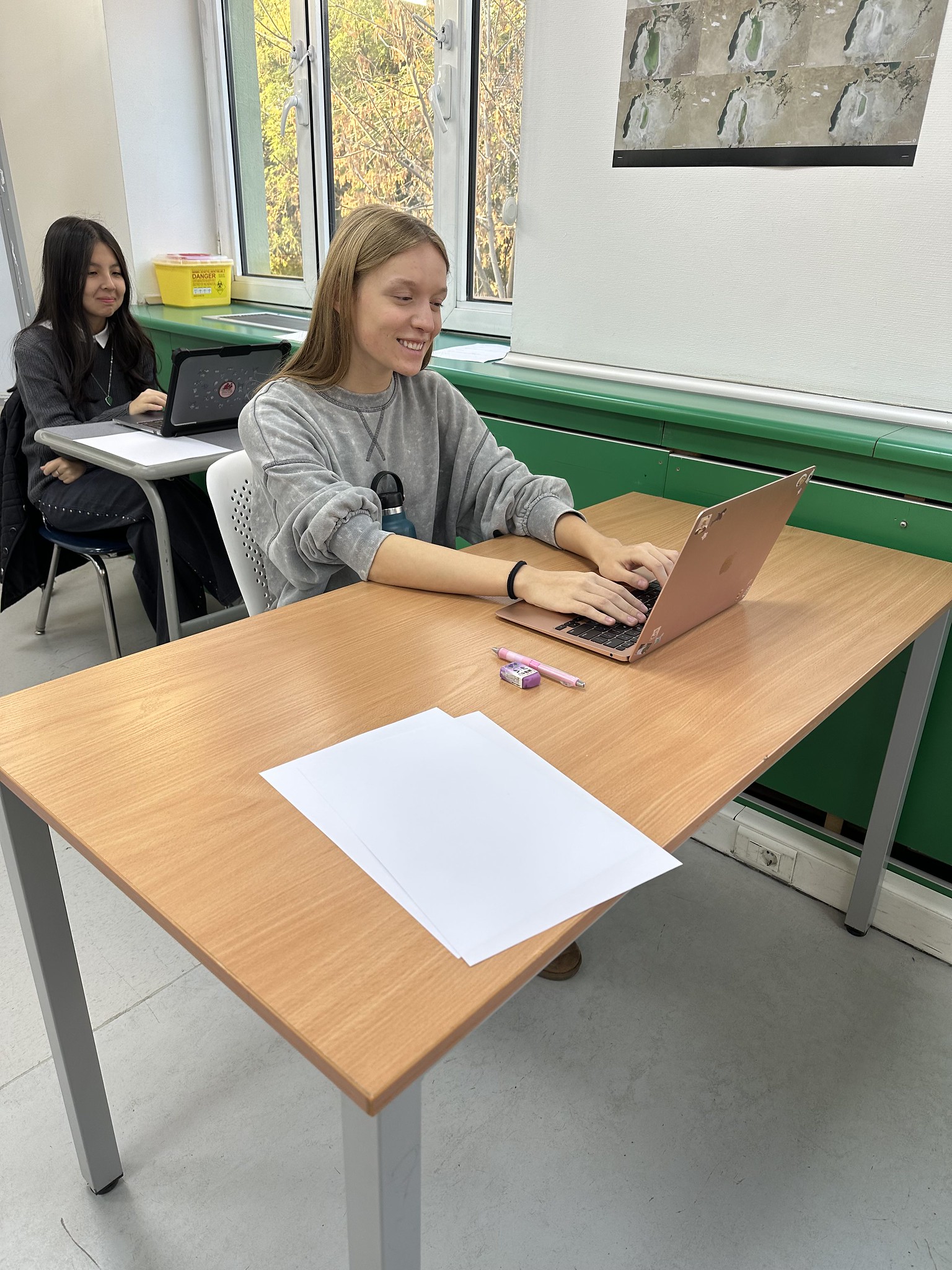
It was a quiet weekend, and nice to be back home after a busy travel schedule. One of the highlights was waking up my daughter and taking her to the SAT exam at school. Being the director of the school, I have access to the test site and snapped the photo of Ocean (above left) right before they started. Our school is a College Board testing center and our personnel do a good job of providing a comfortable and secure testing environment.

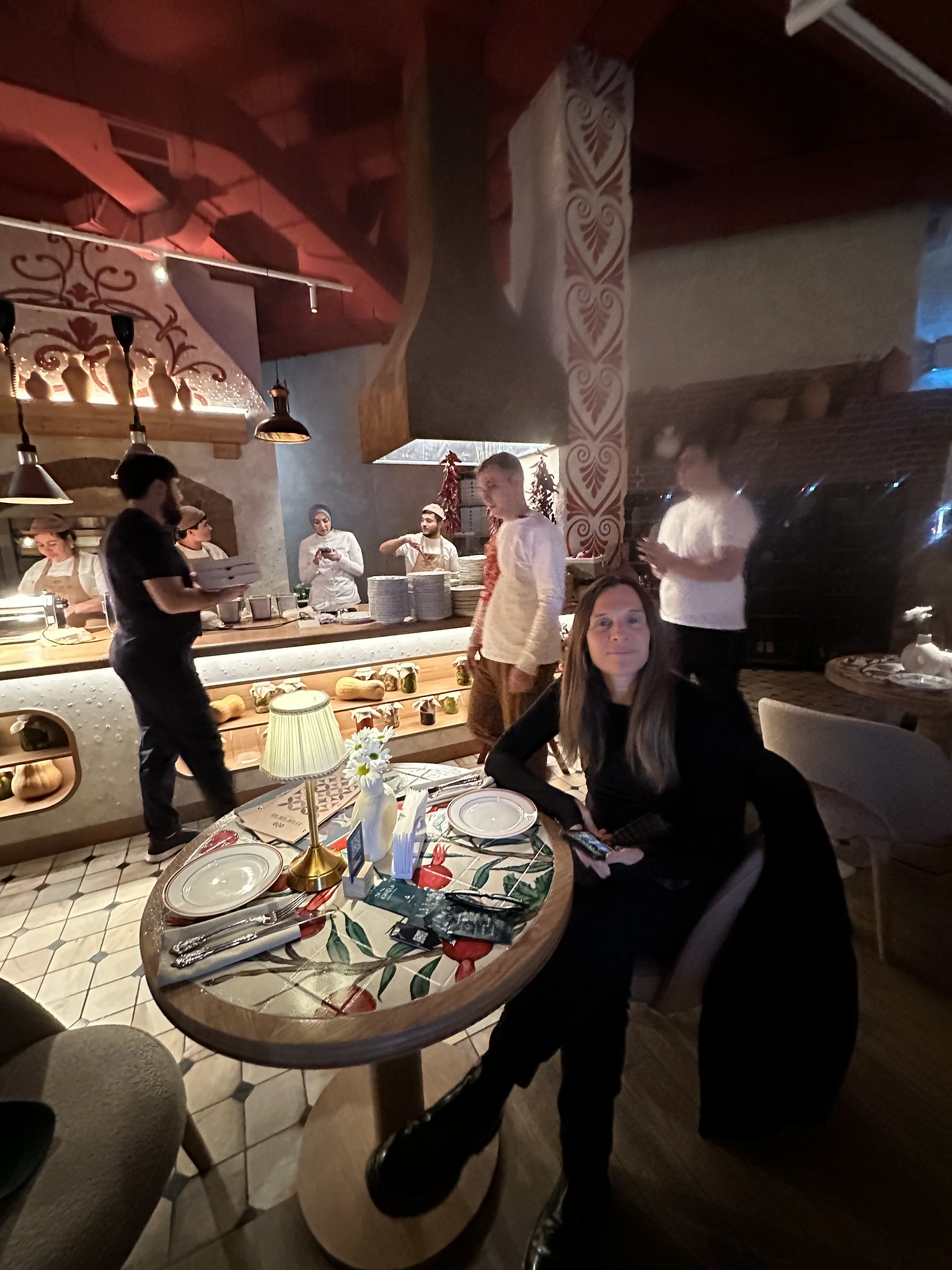
Nadia and I were forced out of the house Saturday night because Ocean was hosting a Halloween party with her friends. We had a delicious meal at Manana Restaurant, a new Georgian restaurant near the Shevchenko district. We both want to visit the country before we leave Central Asia. We then stayed out longer by shopping at the Tashkent City Mall. I replaced my black winter overcoat, which got lost in the move. Nadia’s seamstress made some alterations (removed pocket flaps, reduced the length, shortened the collar) that really makes it much more comfortable. We had a couple of below-zero Celsius temperature days, the first of the autumn.
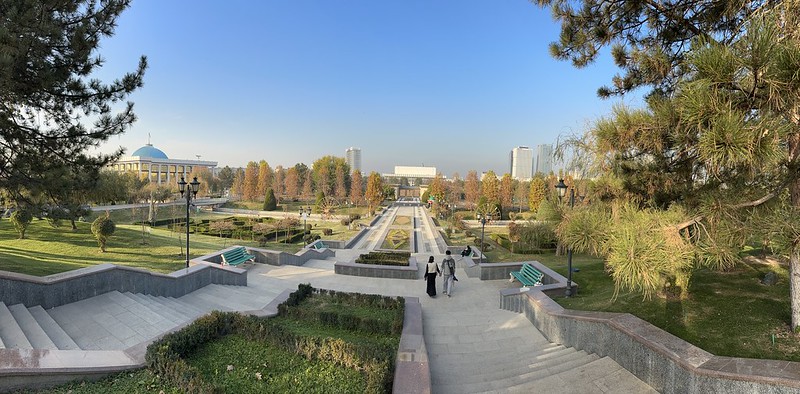
Milly Bog National Park

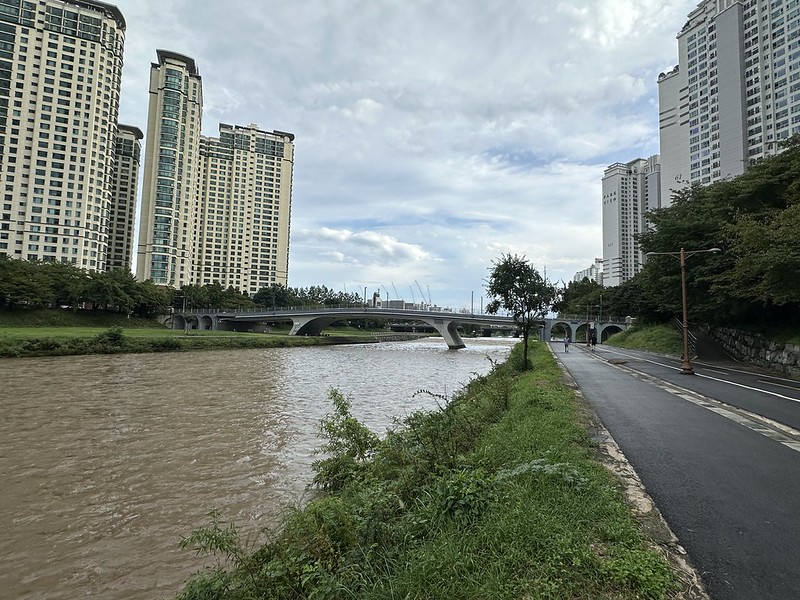
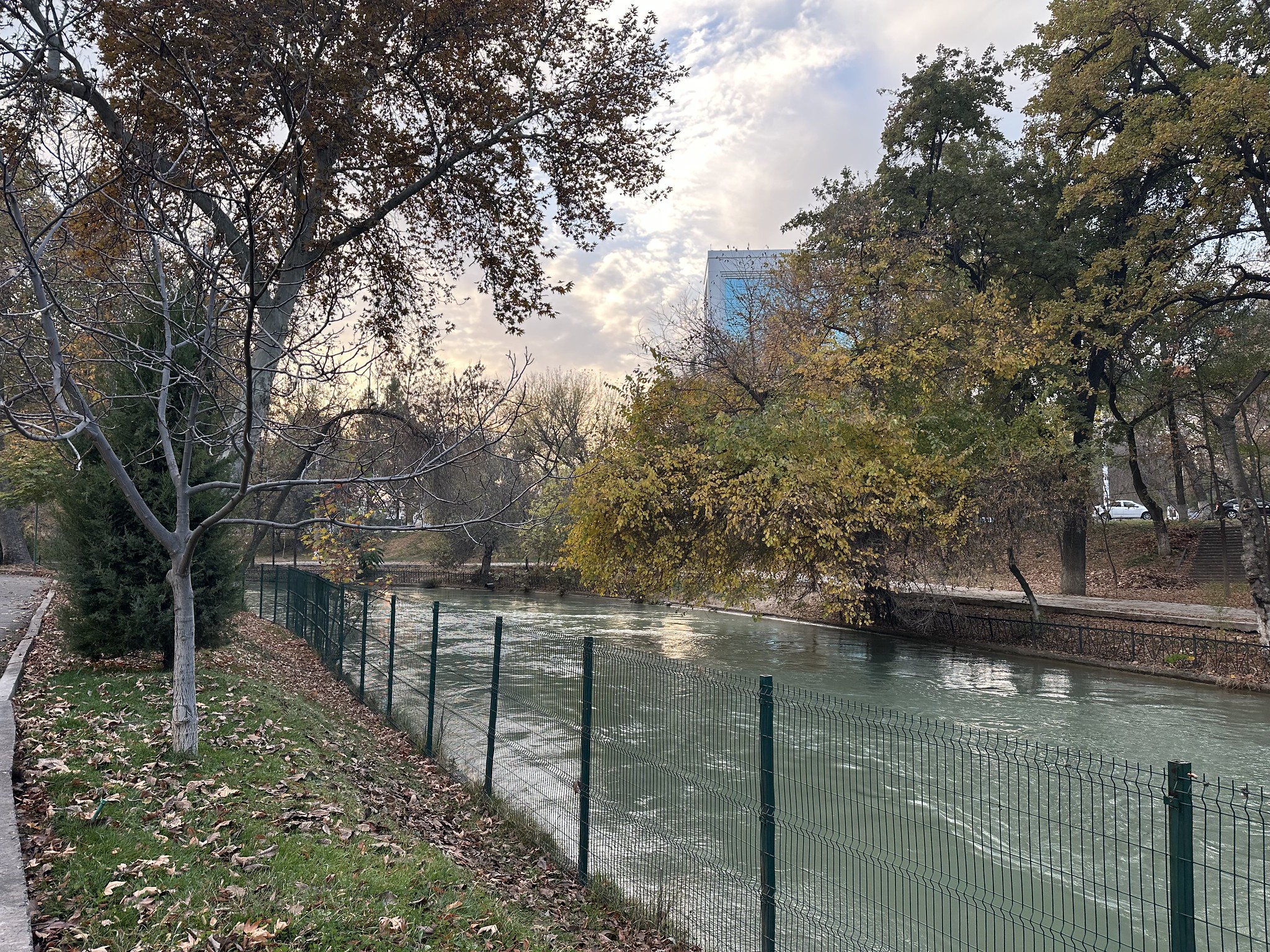
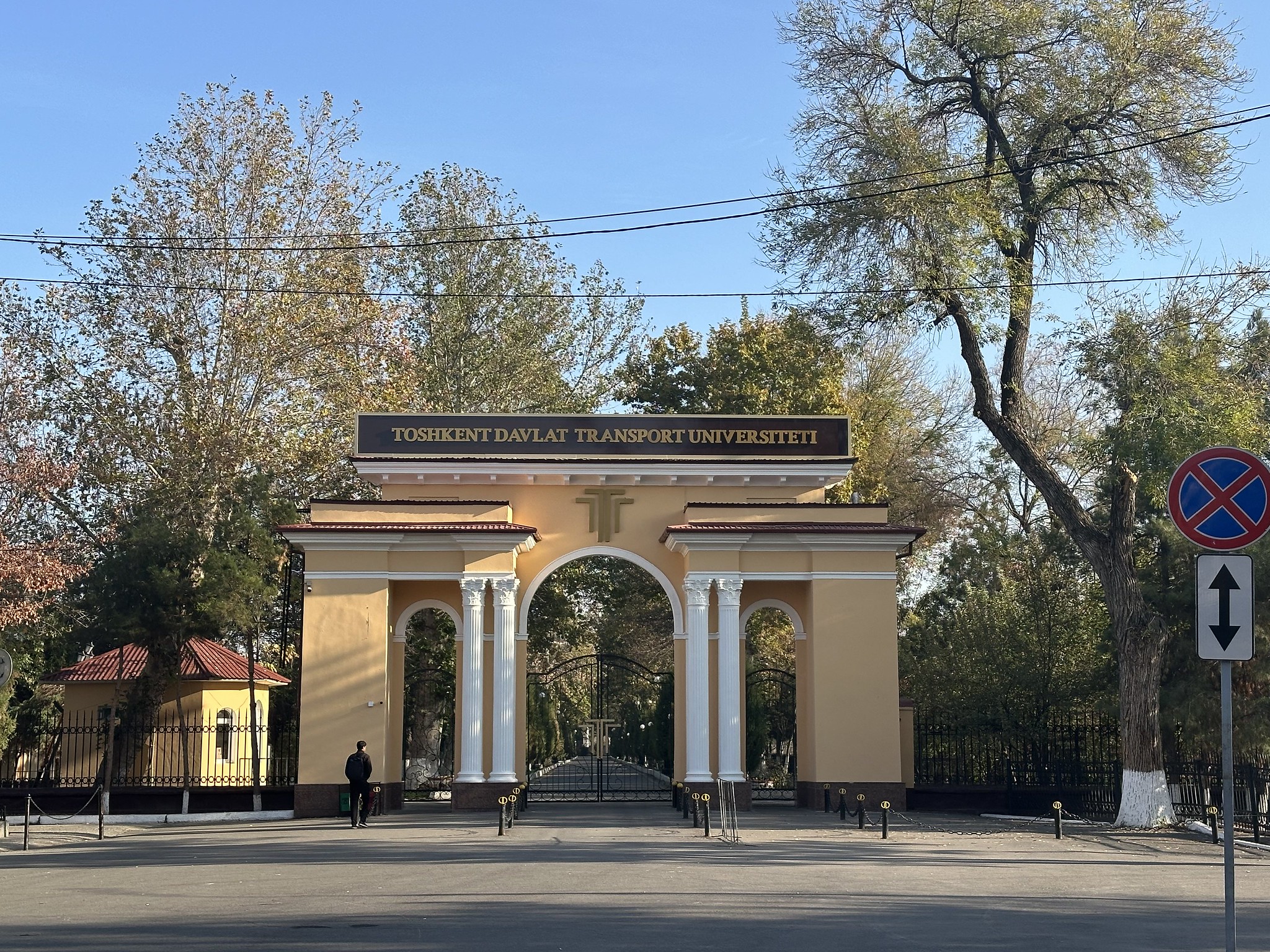
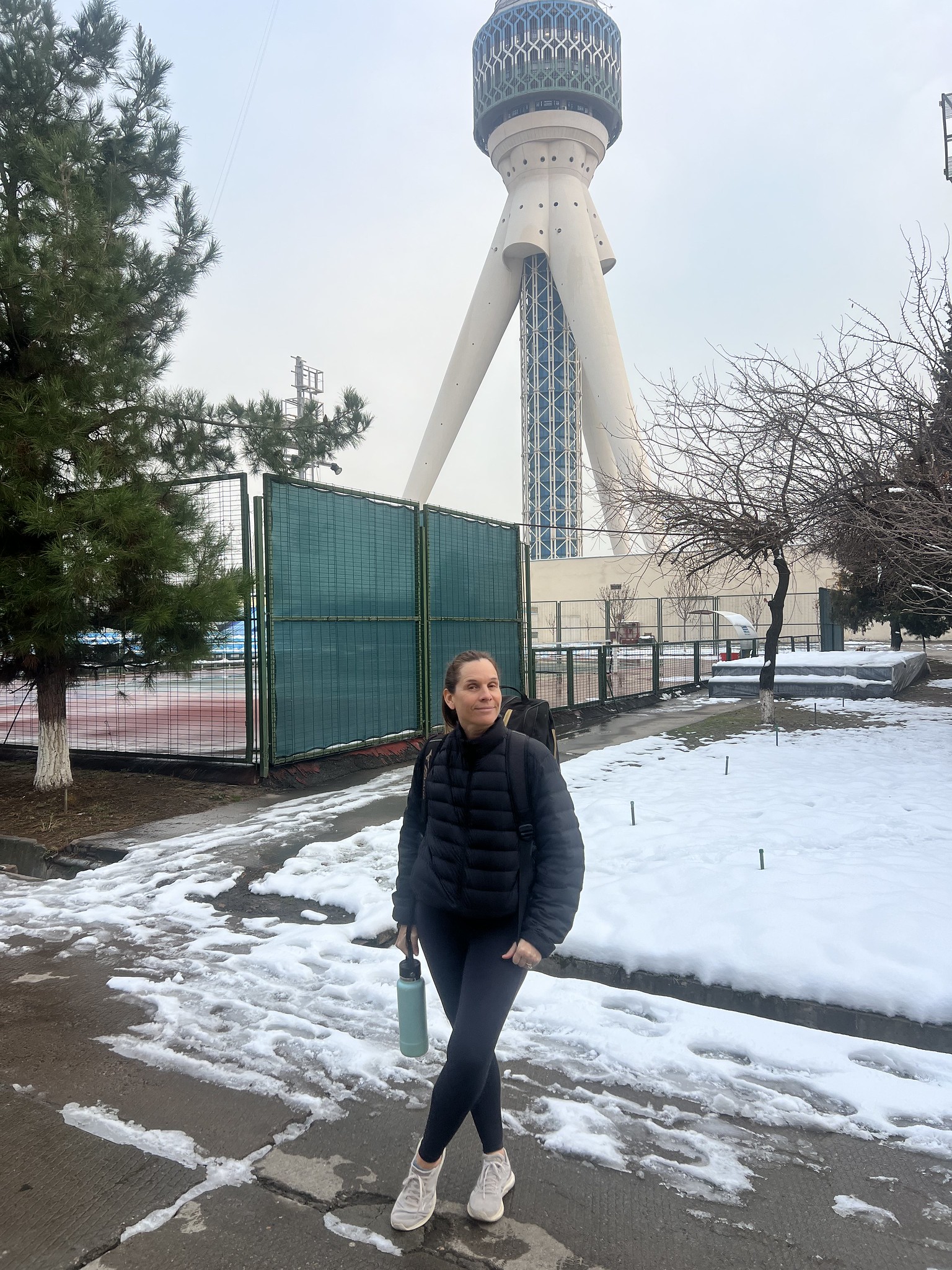
I went for a bike ride on Saturday for the first time in a long while. I also ran at the Milly Bog Park. I am trying to exercise more. Between being busy at school, early sunset, poor air quality, and cold temperatures, I am working out less than this summer. The days are sunny and warm and it was refreshing to be exerting myself outdoors. Since this is my last year in Tashkent, I am photographing and documenting the sites of the city. Below is an autumn photo of the bike trail along the canal and the Transportation University near our house.

Bill’s Thoughts on Egypt: November 4, 2025

Egypt is the 70th country I visited on this first trip to the great world city of Cairo. I didn’t realize how big the Cairo metropolitan area is. Current estimates are between 20 and 22 million people, which is comparable to the Kobe/Osaka/Kyoto metro area, where I used to live. It is the biggest city in the Middle East and larger than Tehran and Istanbul, making it the largest predominantly Islamic city in the world. The Cairo metropolitan area ranks similarly to São Paulo, Dhaka, and Mexico City.

My biggest impression from my short visit (3 days) was the vibrant energy of Egyptians and Egyptian culture. They are much like Latin Americans, loud, emotional, in your personal space, quick to laugh and smile. It is quite infectious, and I immediately felt affection towards them. I also noticed the Egyptian DNA codes for beautiful, loosely curly hair. I see the many influences from the southern Egyptian Nubians and the Mediterranean people through time that give Egyptians a different appearance from the Gulf Arabs. Anywhere I went, I was greeted with smiles. There was no inhibition at all by all ages of Egyptians to interact with me. I saw several wedding or family formal parties at the hotels I stayed. The women were dressed to the nines and wanted lots of selfies and photos of themselves. This is another similarity to Latino culture. 

Egypt is an Arab country without large reserves of oil. You could see the economic differences in the apartment buildings and gated communities throughout the city. I spent the entire trip in New Cairo City, a part of the city about an hour’s drive east of the center of Cairo. This is an area of large residential and commercial developments built out of the desert. Every other billboard along the highway was advertising new real estate communities. People were saying that due to the instability of the currency and an unstable economy, the locals invested their savings in something tangible like real estate. This has elevated the prices of real estate similar to my home of Tashkent. I didn’t see the Nile River or any of the tourist attractions.

I was busy working most of the time there, but I did manage to do a few fun things. We ate a Carlos 5 – On the Water, a Lebanese restaurant. It is located in a really nice outdoor mall, better than anything so far in Tashkent. It was an upscale, smaller outdoor mall with shops and restaurants. The weather in Cairo at this time of year is perfect, another difference from the Gulf Region. It is 31 degrees north latitude and near the Mediterranean, giving it a climate similar to southern Spain and Perth, Western Australia, drier and a bit cooler in the evenings and winter. Ideal! 

I arrived on the day of the opening of the Grand Egyptian Museum. This project was many years in the making and replaced the old museum. Humans organized themselves into settlements along the Nile approximately 3,500 BC, so lot of history here. Last January, I visited the British Museum, which housed a lot of ancient Egyptian artifacts, including the famous Rosetta Stone. It is nice that the Egyptians can display their heritage in such a beautiful building. Security was in full force in the airport and along the highway leading to the museum. Traffic was light, and there were police or security personnel stationed every 100 meters or so along both sides of the highway.

I stayed at the Renaissance Hotel located in New Cairo, inside the Mirage City Compound. I enjoyed downtime on my arrival day after the overnight flight. I went for a swim and for a couple of walks inside and outside the compound. Hotel personnel were friendly and helpful. I had access to the compound and ate dinner at the JW Marriott Hotel across from the golf course. Mirage City is an upscale development with multimillion-dollar homes with swimming pools, private security, and expensive cars parked outside. The neighborhoods adjacent to Mirage City were also nice, but definitely more middle-class level.

Revisting Budapest Hungary – September 25-28, 2025

During a long career in international education and visiting 70 countries, I still take pleasure in travel. I am catching up with reflecting/blogging on a hectic fall travel schedule. In the last weekend of September, I annually attend the CEESA Directors’ Meetings hosted by one of the schools. This fall’s conference was in Budapest, Hungary, one of my favorite cities in Central Europe. The city holds memories for Nadia and me when our children were young. We used to visit often when we lived in Belgrade, Serbia (2008-2014). It was only a roughly 3-hour drive north of Belgrade. We were newly living in Europe and were amazed that in a short distance, you could have a totally different language and culture. We loved taking the kids to the baths in the evenings, and Budapest has the best Christmas Markets in all of Europe, even better than Austria and Germany. Nadia and I ran the Budapest Half Marathon, and we loved walking through the squares and the beautiful buildings left by the Habsburgs. Coming back after more than 10 years, I didn’t think the city had changed much. The architecture along the Danube (Dunav in Serbian) is magnificent. Combining the sites with Hungarians enjoying good restaurants, bars, and clubs makes for a fun weekend. The nightlife had a vibrancy that felt much different than the scene in Tashkent.

Walking along the Danube is one of the highlights of the city. Above to the left is the Széchenyi Chain Bridge, the first bridge established that connects the Buda and Pest sides of the river. I remember the Neoclassical architecture style with the famous lion statues. The kids used to love crossing the bridge and seeing the lions. We crossed it twice to go to dinner on the Pest side, where most of the bars and restaurants can be found. The lighted Hungarian Parliament Building was stunning. I didn’t know that the central dome you see in my photo rises 96 meters, signifying the year 896, when the Magyar tribes settled in Hungary.

The dining scene is brilliant in Budapest! Of course, I needed to order the famous mangalica gulyás (Hungarian Goulash). The “Mangalitza” is a famous Hungarian breed of pig, distinctive for its long hair and delicious-tasting flesh. We went to a rooftop bar that overlooked the famous Vörösmarty Square, the site of the main Christmas Market in the city. It is named after a 19th-century Hungarian poet. Looking up to Gellert Hill, I was reminded of what this city and its inhabitants went through in the 20th century. The city was the scene of horrific battles during World War II followed by a brutal occupation by the Soviets. On top of the hill is the Liberty Statue (Szabadság-szobor). I am happy the Hungarians have an independent country after so many years of oppression.

This visit was different for me because I didn’t have young children. That allowed me for the first time to experience Budapest’s most famous “ruin bar” Szimpla Kurt located in the old Jewish Quarter of the city. “Ruin Bars” (romkocsma) are a uniquely Budapest phenomenon. These are bars/night clubs that opened in abandoned warehouses, factories, and courtyards. Szimpla Kurt opened in 2002 and inspired the movement. It is a huge complex with a central courtyard, multiple floors, and various distinct bar areas with a capacity of probably 1000 people. My first thought was I wish I had visited a ruin bar 40 years ago! There was one table with people my age, but it was mostly a younger crowd with a lot of tourists mixed in with Hungarians. It was a cool experience to soak up the vibe, but we didn’t stay long.

I finished the weekend with a run up into the Buda hills on Sunday morning. I ran to the Buda Castle District Town Hall (Budavári Önkormányzat) and took in the views from the Holy Trinity Square. The memorial column to the left of the photo commemorates the end of an epidemic from 1713. I wonder if they erected one for the end of COVID? It was so nice to run along the Danube again. I stopped for a bag of groceries which is a traditional activity of my business trips. Nadia and Ocean love seeing the delicacies and foods I buy that we can’t get in Tashkent.

I flew out in the afternoon, making a connection overnight through Istanbul. It was great to reconnect with friends and the delightful city of Budapest again after so many years.

Family Journal: December 20, 2025 “Winter Break Begins”

Our Winter Break started on Saturday, December 20th. It snowed all day, starting about 11:00 A,M and as I write this the next morning, it is still snowing. I measured around 5 inches (12 centimeters) of snow in our garden this morning. We had a nice family day together. The highlight was attending a dinner at our friend Dilia’s home in honor of her grandson’s wedding next week. It was a classic Uzbek feast with a table spread with gold plates and chalices filled with more food than we could possibly eat. The courses included trout (форел), lamb (шащлик). They also served (холодец), a meat jelly that is popular in Russia and the countries of the former USSR. It is served as an appetizer, cold, and during holiday dinners. It is considered a comfort food. The meat is well-seasoned and delicious, but it takes a leap to get over the texture and the idea of a meat jelly. I ate mine and Oliver gave it a try, but it was a no-go for the girls. We had good conversations and a lot of laughs. The roads were slippery with lots of wet snow. I drove carefully through the conditions. Increased traffic in the city has lengthened driving times through the city. It took us more than 50 minutes to cross the city. It used to take about 25 minutes seven years ago.

I loved being out in the snow. I drove Nadia to her swimming session and beauty salon. I took Obi out for a couple of walks as well. After dinner, we tried to go to the Gravity Bar in the Sapiens Hotel, but they would not let us in without a member. We then went home and watched an episode of Homeland before going to bed. It takes me a while to get into a holiday sleep schedule. I usually go to bed around 9 or 10 PM and awake between 5 AM and 6 AM. It will take a while to get out of my routine.

Oliver and I had a laugh at the Vin Tash Liquor Store (Vino/Vodka as they are known here; “Party Store” in Michigan vernacular). The Kaleshnikov Vodka bottle is hilarious. We passed on the $200 price tag. Due to the Russian influence, vodka is the most popular spirit in Tashkent.

Family Journal: December 18, 2025 “Oliver Arrives”

The big news this week was the arrival of our middle son, Oliver! He is in his second year at St. Norbert College in DePere, Wisconsin. His flight was delayed leaving Newark, New Jersey, which caused him to run to make his final connection in Dubai. Ocean and I met him at the airport on Monday morning at 3:30 AM. Flights in Central Asia depart and arrive at ungodly hours. Oliver came to school on Thursday to have lunch with me. It is so nice to have him back in our home this month.

It finally feels like winter here in Tashkent. We had our first snowfall in the city this season on Thursday. The freezing temperatures continue as I write this on Saturday morning, with some melting in the afternoon. This will be my last winter with snow for a while, so I am going to enjoy it as much as I can. One of the hassles of snow as a school leader is evaluating road conditions to determine if it is safe to hold school. Everyone loves a snow day, and I routinely have had my children’s friends beg me to close school! This time, we didn’t need to cancel or delay school, and it was delightful to watch the students make snowmen and have snowball fights. For some of our students and families, it may be the first time they experienced snow.

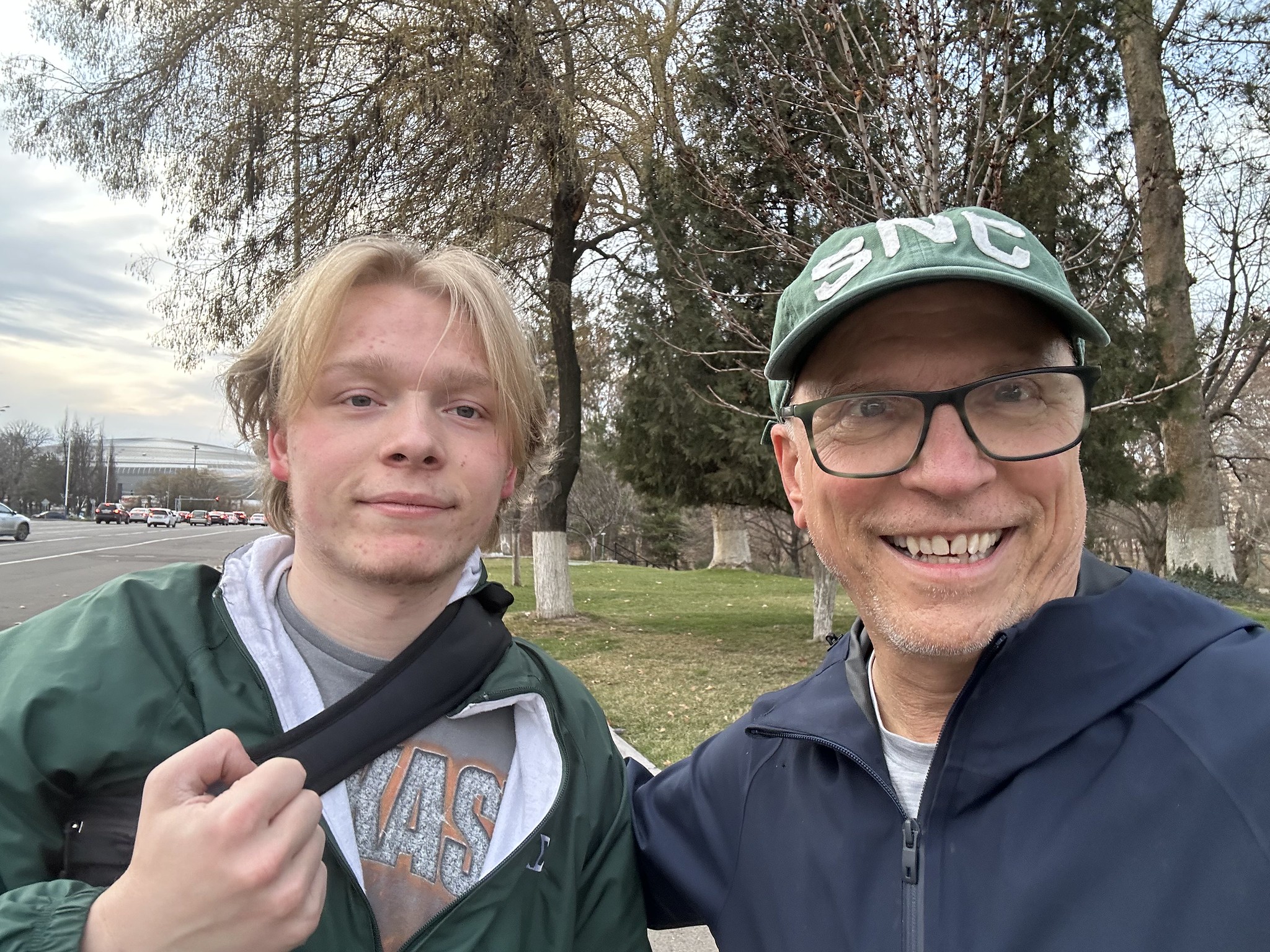
Rashid, Rob, and Bill

It felt like a long week at school. Everyone is tired at this time of year. We all need the 3-week Winter Break. A highlight was supporting Ocean in her senior year. We met with the outstanding TIS college counselor, Jeanette, who gave us some good advice. Ocean is looking at universities in the USA, Czech Republic, and Spain to study nursing/medicine. We will be helping her complete applications this break.

There was an electrical problem in the elementary building this week. Nadia brought out the flashlights and her kindergarten students loved it. It is so uplifting to visit her class and watch her interact with the students. She is such a good teacher. Her classroom is a full expression of the International Baccalaureate’s pedagogy.

It is always fun to people-watch at the airport. The government is constantly improving and redesigning the airport. It is completely different from when Nadia and I first arrived in 2018. There are always groups departing to or arriving from Mecca. For many older people, it is a trip of a lifetime.

Family Journal: December 13, 2025 Happy Birthday Owen

Nadia, Umida, Nuriya, Stefania, and Mokhira

We hosted the TIS Faculty and Staff Christmas Party last night at the Hammersmith Bar and Grill. It was nice to see everyone having a good time. Uzbek dancing is good for people with limited dance skills because much of it involves moving the arms rather than the feet. The food was excellent, the music a bit too loud, an evening full of comity.

I spent most of the day supporting Ocean. The ACT moved the location of the scheduled test to the Saint Andrews College. The information on the ACT website was not helpful in finding it. Thanks to Nadia asking questions to Chat GPT, we were able to call someone and get the location. It is not a school, but rather, a testing center in a suite of offices. After 30 minutes of panic, we were finally able to find it and get her started. Nadia left a pot of beans boiling and it burned, so we had to air out the house and clean lots of the fabric. The house still has a faint odor of smoke in some places. As I write this, I need to check on our smoke alarms. I don’t think they made it over to our new house.

On the way home from the ACT, we stopped for lunch at Hardees at the Seoul MUN outdoor mall along the canal. I also needed to wash our car because we will be transporting principal candidates over the next three days. I checked out a new Yoga Studio while the car was getting washed. It was nice to spend time with her and get some things done around the house (grocery shopping/prepping the guest bedroom for Oliver’s arrival tonight, etc.)

Nadia and I then attended the faculty and staff Christmas party. The local employees thoroughly enjoyed the night out, and everyone appeared to have a great time. We will miss many of our TIS colleagues next year. Finally, it was our eldest son’s birthday today. On December 13, 2002, our parent journey began! I caught up with him right after he finished a paddleball game in his village of Zacero, Costa Rica. I picked out a random photo from our family’s Flickr account. Owen is 8 years old in the photo below at Charles De Gaulle Airport in Paris. Living the expatriate life meant at least two long air travel trips annually. I always loved those travel days with the kids! It is amazing that Nadia and I started having children at home 23 years ago! It ends this fall with Ocean leaving for university.

Family Journal: December 8, 2025

Ocean and Nadia

It was a restful long weekend in Tashkent thanks to Constitution Day. Monday, December 8, was a national holiday celebrating the publication of the constitution. I think all of us welcomed the day off. As we near the end of the calendar year at school, my colleagues (and I) at school are tired and looking forward to the longer break. We took advantage of the day off to put up Christmas decorations in our house. The girls were not in the mood, but I think I inspired them. Nadia was a tour de force, putting up the lights on the big arch in our home.

The weather was miserable with lots of rain and cold temperatures. I got a lot of work done, although my things-to-do list never ends. We are looking forward to Oliver’s arrival next week. It was great to hear from our other son, Owen. He attended a Bad Bunny concert in San Jose over the weekend. The Puerto Rican recording artist Bad Bunny is performing at this season’s Super Bowl. I started listening to his music, and a lot of it is pretty good. He was also very funny on Saturday Night Live. I am adding him to my Spotify playlists.

I finish this post with a photo my colleague Grace took of me in her mathematics class. When I have a lull in my schedule, I often walk through classrooms to see what is going on. This week I went to the secondary mathematics wing and tried some math problems. The higher level class was a bit out my league. I had more success at the standard level problems. My daughter Ocean happened to be in the third classroom I visited and we worked on some problems. A special thanks to Ananyia for her help. I wish I had graphics calculator in my early 1980s math classes!

Latest Reading: Choked: Life and Breath in the Age of Air Pollution

I wanted to learn more about air pollution since Tashkent experienced a spate of high AQI ratings recently. As the head of an international school, I am especially concerned about the impact of air pollution on young people. I learned from the book that air pollution does impact health over long-term exposure. Thankfully, it does take years of exposure, and a relatively small percentage of people are burdened with a lifelong health problem. However, as Gardiner shows through hundreds of research studies, air pollution, especially particulate matter under 2.5 microns in size (PM2.5) does negatively impact health by entering the bloodstream and penetrating vital organs. Air pollution may speed up or increase the severity of diseases such as cardiovascular disease, infertility, dementia, and even depression.

The author Beth Gardiner is an environmental journalist from New Jersey currently living in London. She traveled to all over the world, interviewed hundreds of pollution experts, clean air activists, and shared the stories of people hurt by air pollution. I loved the chapter on Delhi! Like here in Tashkent, the US Embassy and the American School were some of the first organizations to identify the severity of the air pollution problem in the city. When I began tracking air quality with our school’s air monitor 7 years ago, it was only us and the embassy on the IQAir App. Today there are almost 50 stations contributing to the app.

She also visited Poland, where coal burning is still common in people’s homes today. I experienced this when I lived in Belgrade, Serbia. I’ll never forget the first cold day we experienced there. My wife Nadia was freaking out during recess when she smelled the distinctive smell of brown coal exhaust. She was shuttling the students back into the building during recess. Balkan cities like Skopje and Sarajevo struggle with air quality in the winter because of coal.

I highly recommend this book! I learned a ton, which helped me put air pollution into perspective. I will be moving to Cairo next school year, and that is another place that can have air pollution issues. I am going to look into air purifiers to assist with indoor air quality. Below are other things I learned from Gardiner’s book.

  • Pollution concentrations can be up to 3x higher by a busy roadside than even 100 yards away.
  • Just 5% of humanity breathes healthy air, and 1 in 9 deaths on earth is caused by air pollution.
  • Wood smoke is thick with PM2.5 particles and has toxins like benzene and formaldehyde. Gardiner spent time in India with women in poor households who are constantly breathing wood smoke from cooking fires in their humble homes. Thankfully, in Latin America, reliance on biomass (wood, agricultural waste, dung, etc.) has dramatically decreased in recent decades to about 15% of households. 33 billion people worldwide live in households that cook this way.
  • Coal-fired power plants are big sources of pollution; however, most of it does not end up in someone’s lungs. Exhaust from cars in densely populated areas or home cooking fires is more dangerous.
  • Industrial-sized agriculture is responsible for about half of the man-made air pollution in America. Gardiner reported from California’s San Joquin Valley in her chapter titled, “Cows, Almonds, Asthma”.
  • Vehicles that use diesel fuel are bad polluters. The fuel burns hotter than regular fuel, but also burns incompletely, releasing more toxins into the atmosphere. This is a problem in Europe, where diesel cars are popular than in the USA.
  • London is famous for its historical “fog,” which was actually air pollution. Today, it still has air quality issues due to diesel fuel and a high number of cars.
  • The invention of the catalytic converter, which has saved millions of lives, was spurred on by the passing of the 1970 Clean Air Act in US Congress. Senator Edward Muskie is an American hero for his leadership in getting stricter air quality requirements into law. This reversed years of putting the profits of companies above the health of Americans.
  • The ports of Los Angeles and Long Beach are California’s biggest sources of air pollution. Los Angeles also has the challenge of being surrounded by mountains and abundant ozone-causing sunshine, which keeps pollution from escaping higher in the atmosphere.
  • apotheosis – ah-pah-thee-OH-sis (with the emphasis on the fourth syllable) The highest point of something. It can also mean raising someone to the status of the divine.
  • comity – civility, treat with mutual respect, courtesy