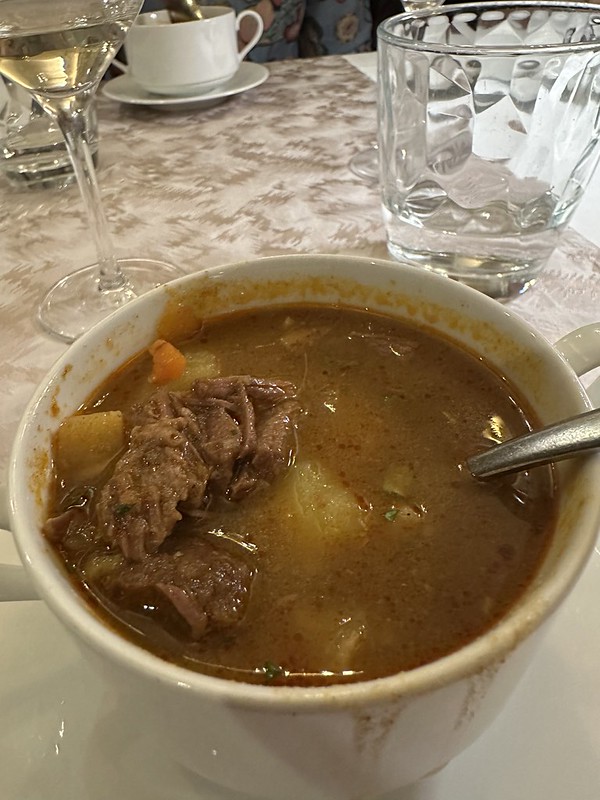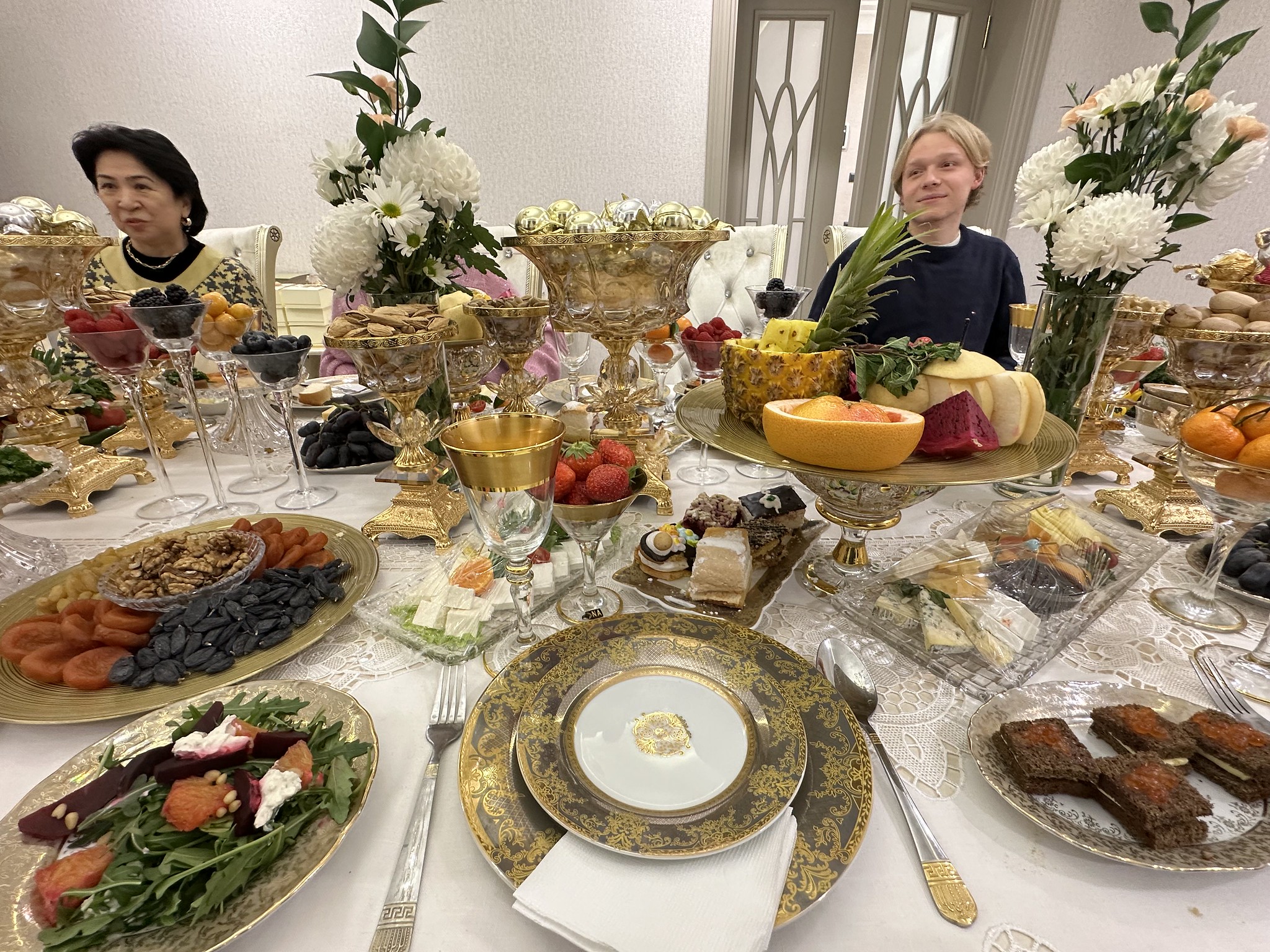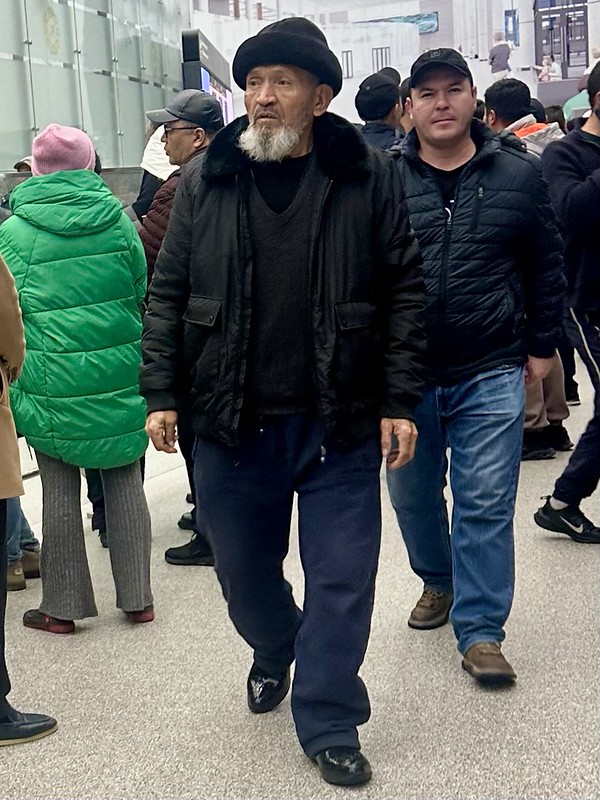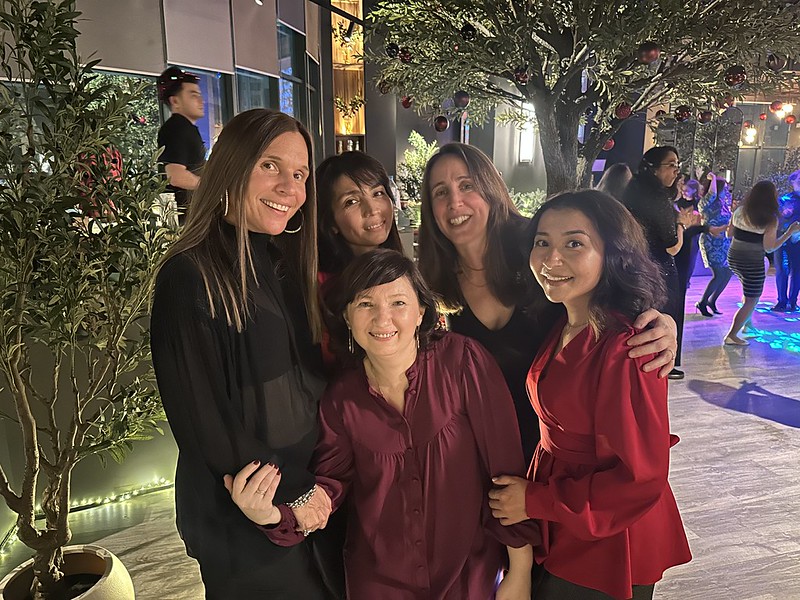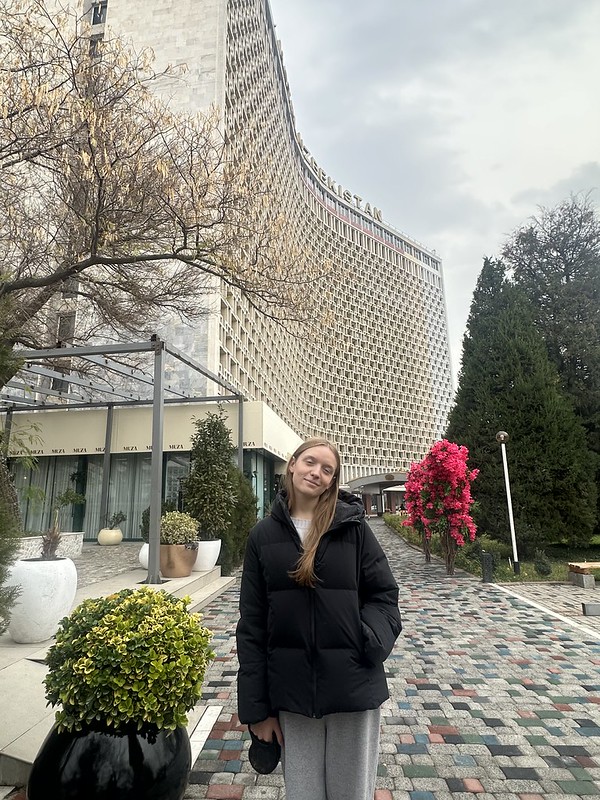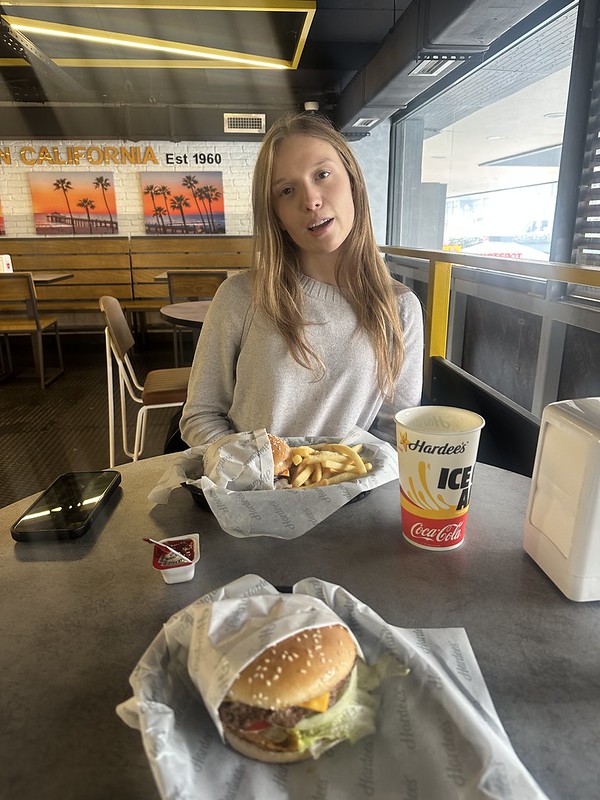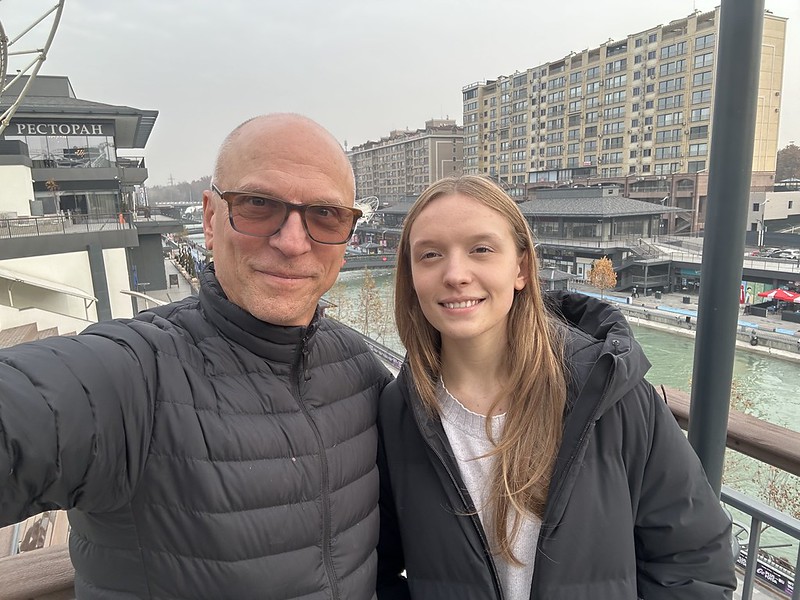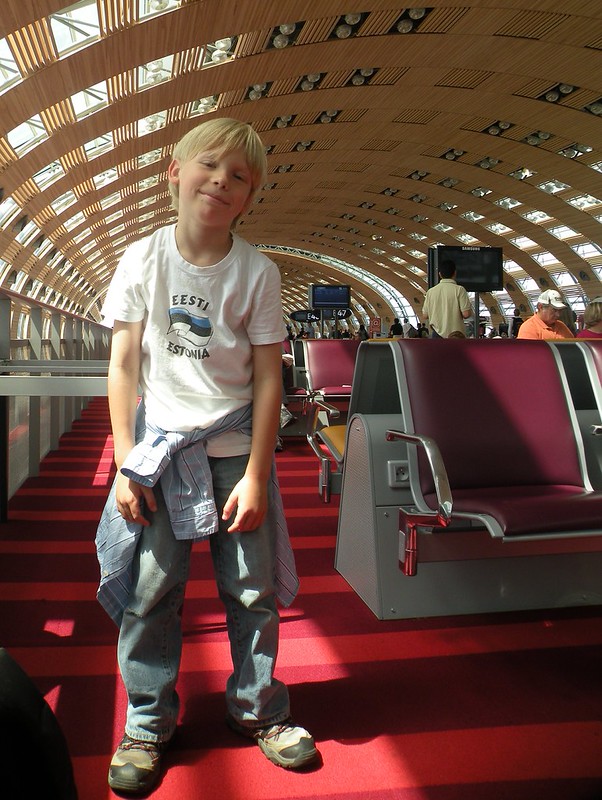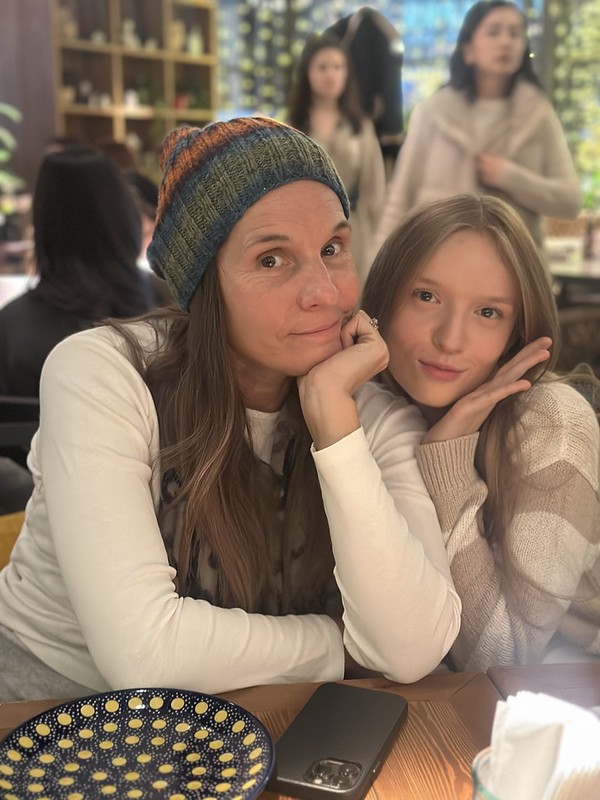
The highlight this week was dinner at the restaurant сырщвварня (Syrovanya) (Cheese Factory). My daughter Ocean takes after her mother, very beautiful! We were on our way to the German Embassy’s Christmas Market when police roadblocks and traffic caused us to redirect our plans for dinner. I was hoping to give Nadia some Christmas spirit, and the embassy was advertising bratwurst and mulled wine! It was not to be. We ended up enjoying a delicious and delightful late dinner.
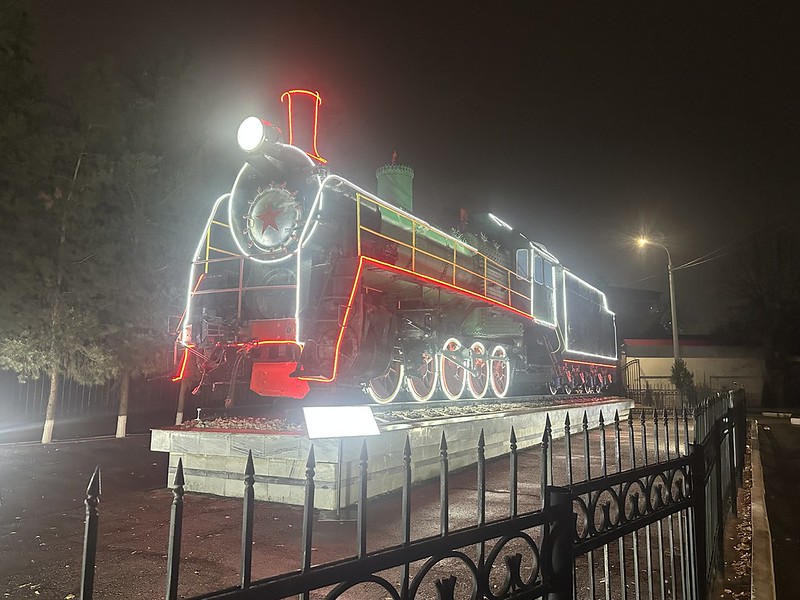
E-Series Soviet Locomotive Train Th
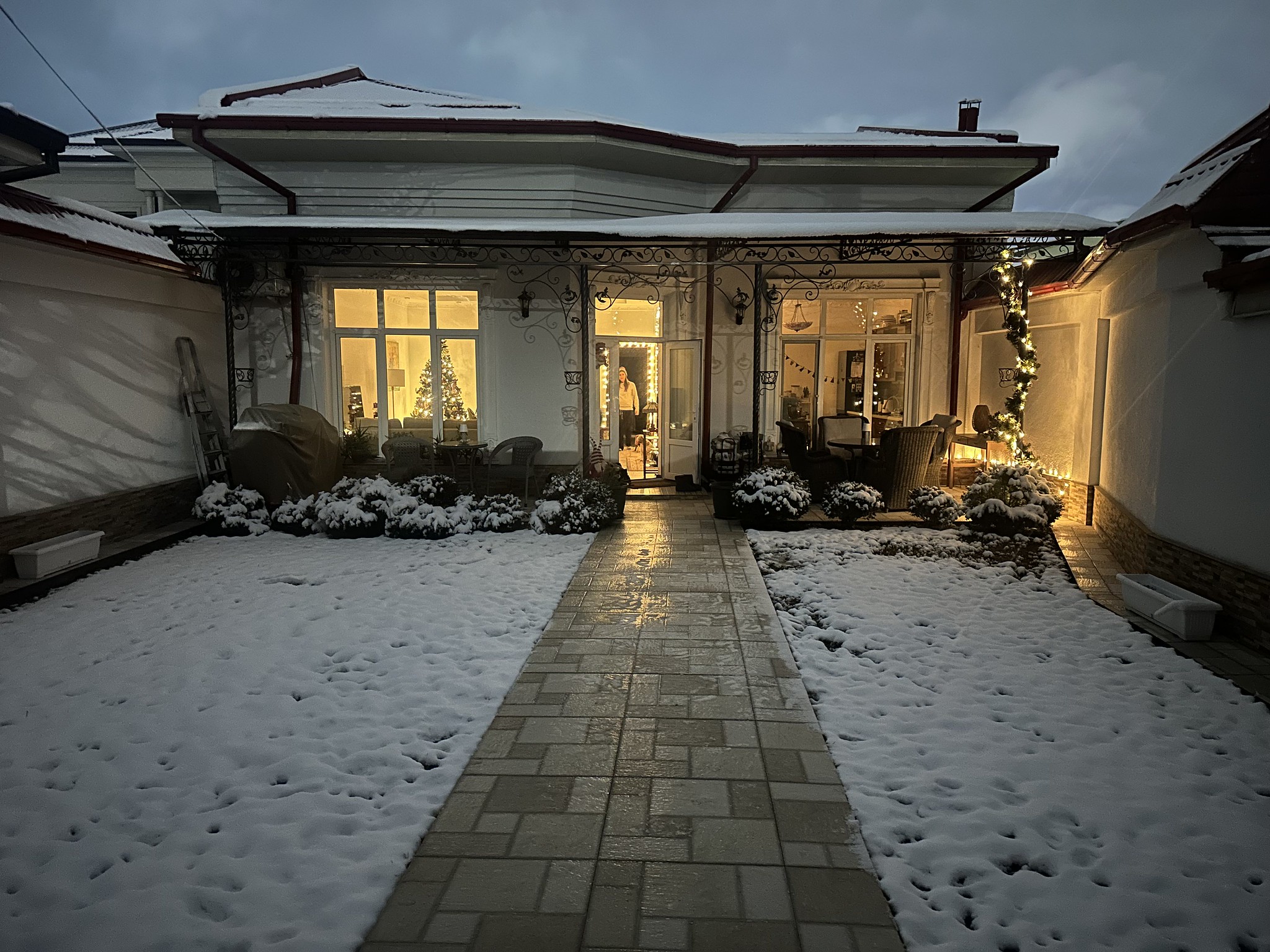
After dinner, I took Obi for a walk. We live near the transportation university of Tashkent. Near the front gate, they light up an old steam locomotive train. It is a з-791-40 built in the 1950s. The Soviets designed these to haul heavy freight long distances. They had a maximum speed of 65 kilometers per hour. The E-Series steam locomotive was finally retired in the late 1970s. I love the Soviet Star in front of the train.
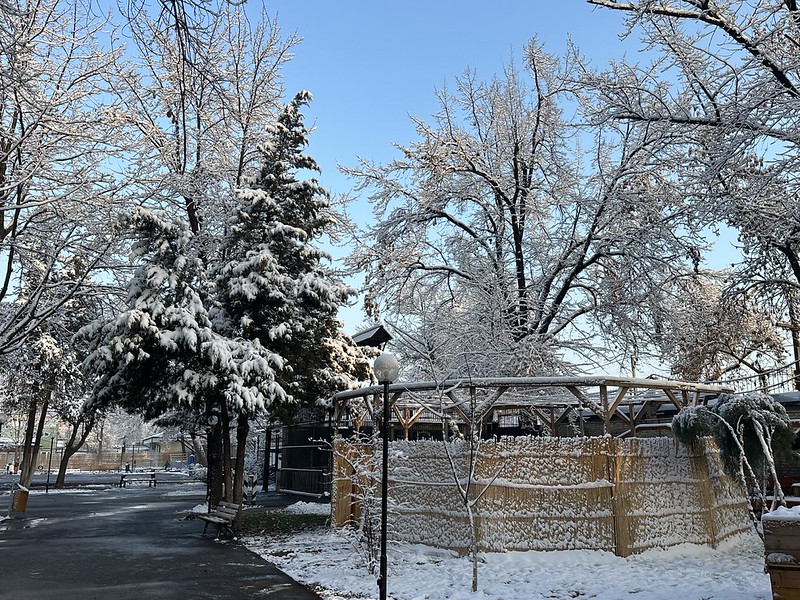
The air quality finally improved thanks to the rain. It is currently 92 AQI (Moderate) as I write this blog post. Temperatures are near freezing in the mornings with more rain in the forecast next week. Hopefully, that means snow in the mountains so we can start ski season.
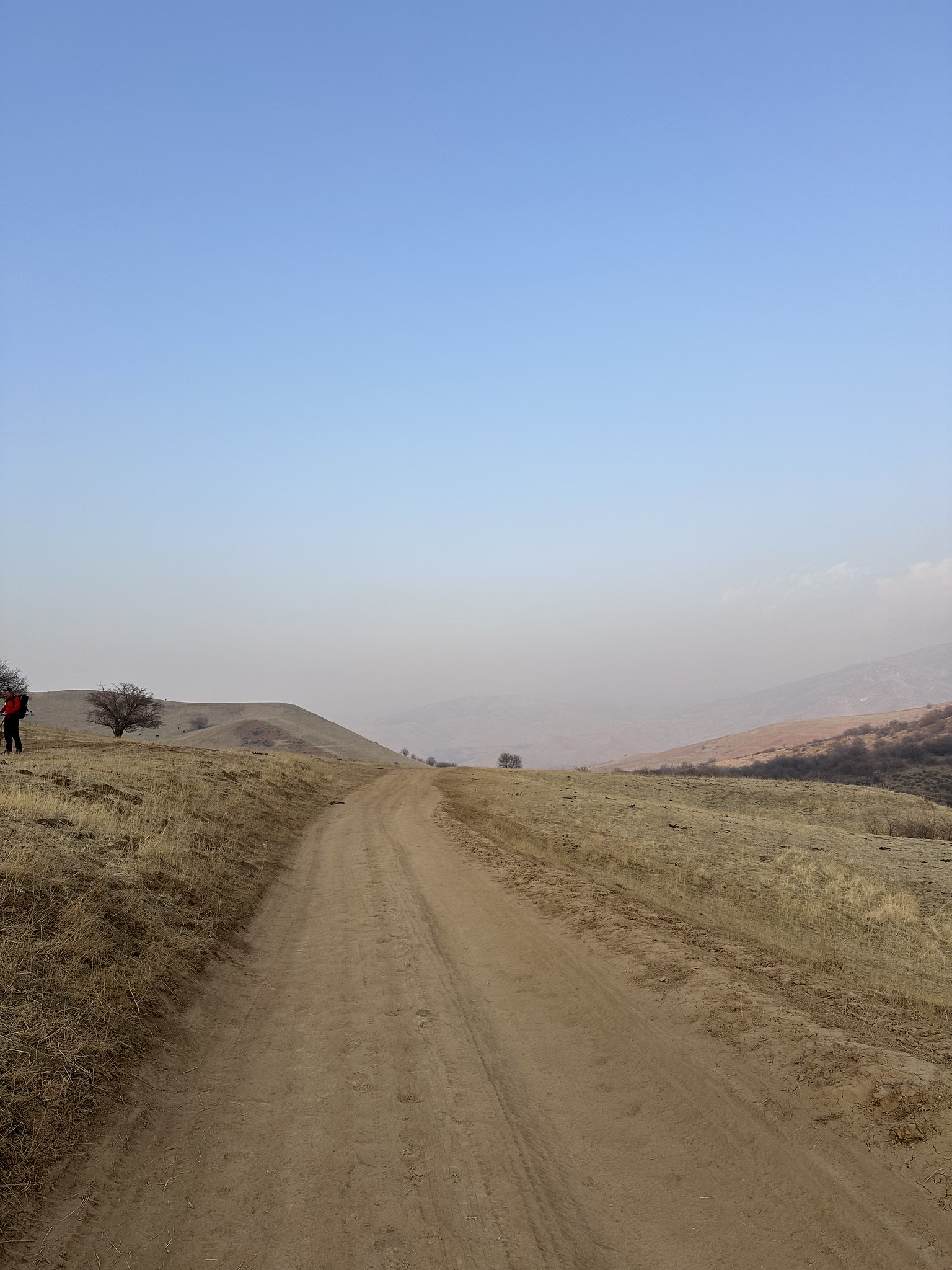
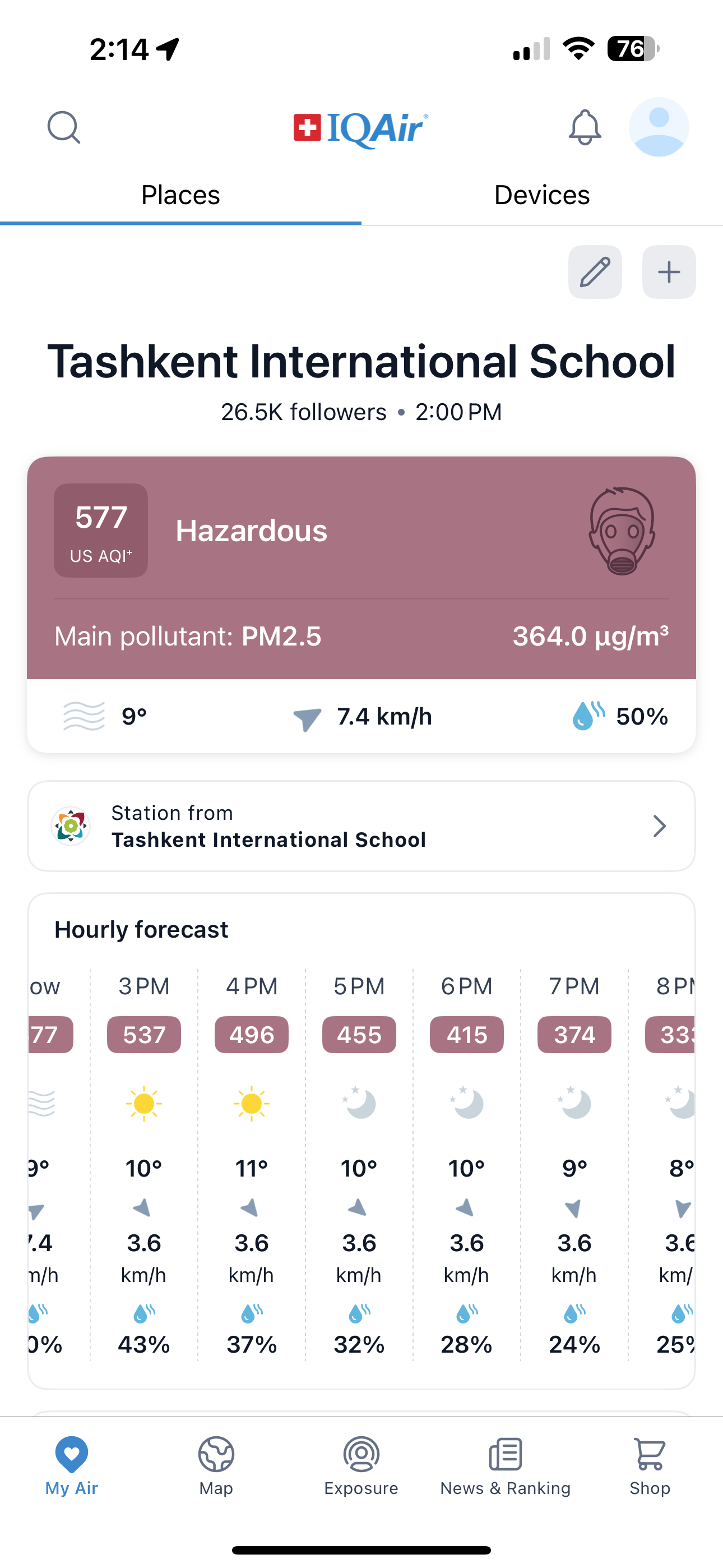
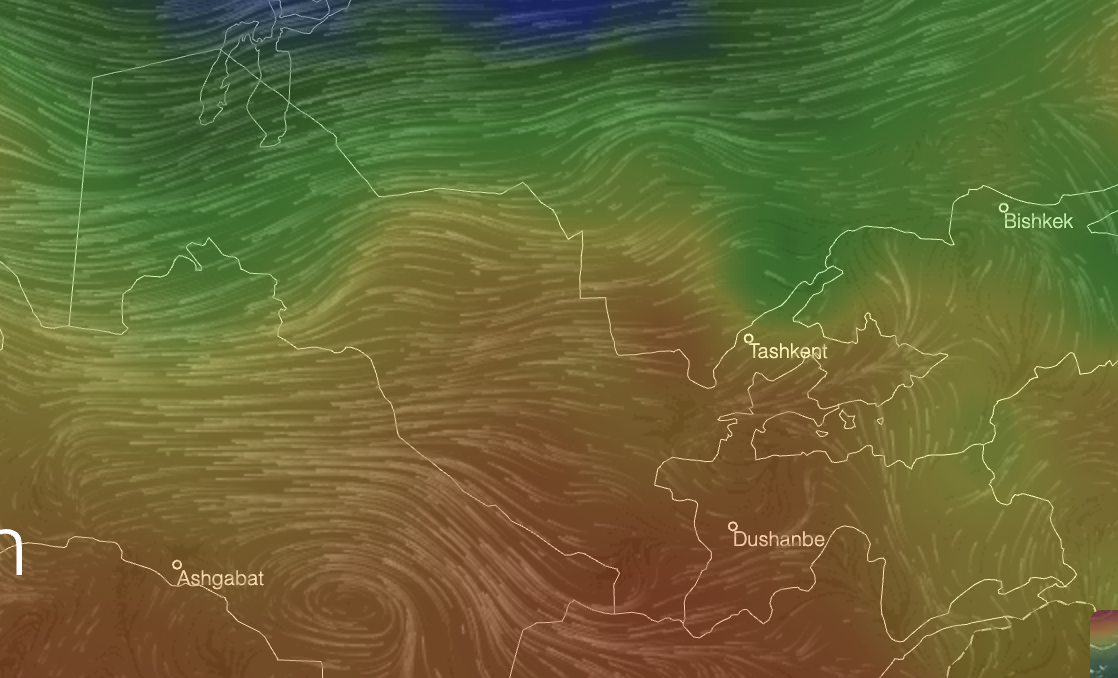
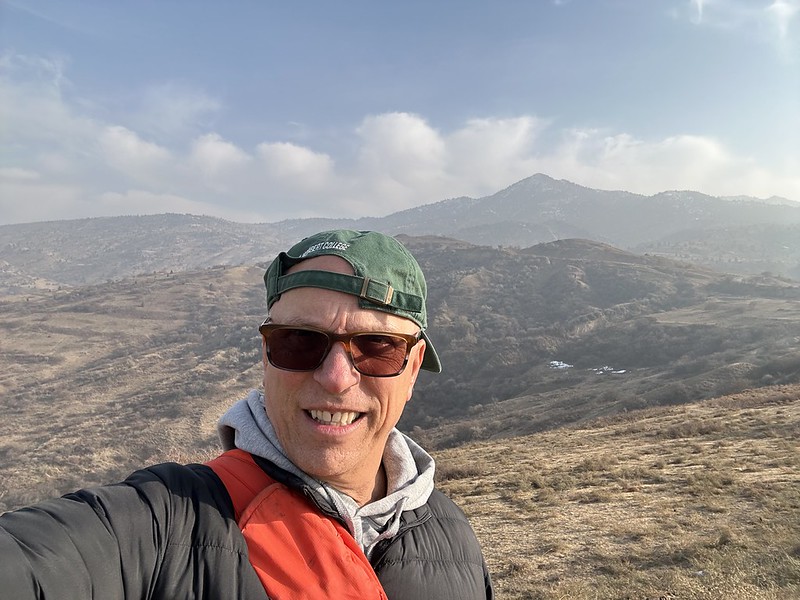
As I write this blog post this morning, Tashkent finally has an AQI PM2.5 of 112, which is considered “Unhealthy for Sensitive Groups. It is the first time in that I woke up to an AQI under 150 in the last two weeks. In fact, two days ago, the AQI reached over 600 overnight. I captured the screenshot below of the monitor at our school, which reached a 577 AQI in the afternoon (bottom left). To the bottom right is the IQAir Earth Live Air map from this morning. I went for a hike on Sunday in the mountains and even at elevation, there was a haze in the air. It was much lighter than in the city, but as you can see in the photo above, there is a distinct zone where the haze can be seen, and blue skies start to appear.
The government seems to be taking the right steps by converting greenhouses to natural gas, inspecting construction sites, mandating 20% green areas for developers, installing fountains throughout the city to increase humidity, etc. We have not historically been one of the most polluted cities in the world. Tashkent is ranked #22 today between Phnom Penh and Skopje. Between 2017 and 2024, Tashkent was ranked the 510th most polluted city in the world.
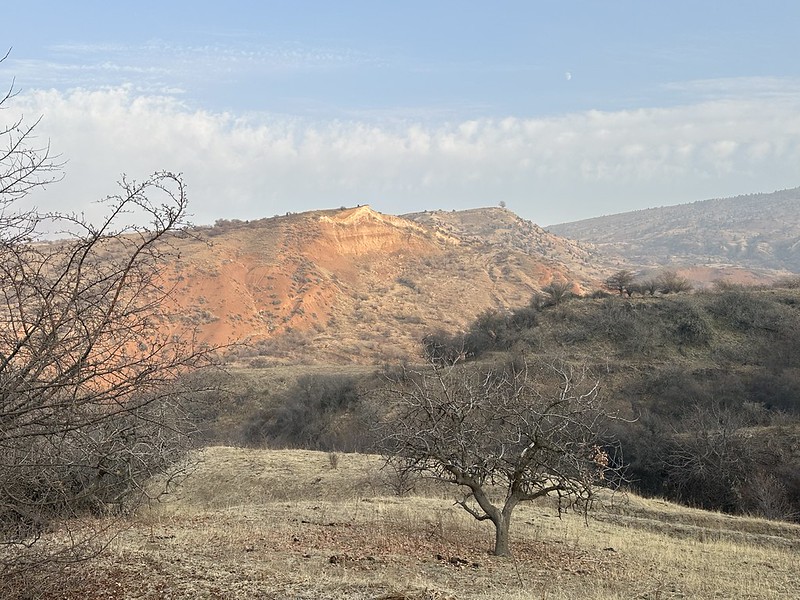
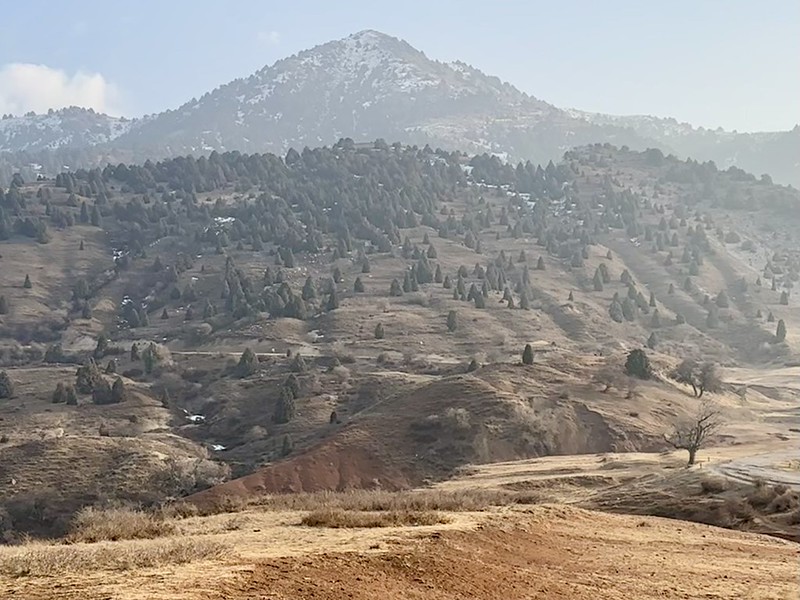
It felt great to finally walk outside after being stuck indoors most of last week. My friend Aaron and I explored a canyon near the Kumbel Weather Station, a former Soviet facility. Next time I go there, I will drive just below the station and then continue up higher into the juniper forests and get into the snowline. Beautiful views and exercise are always rejuvenating for me.
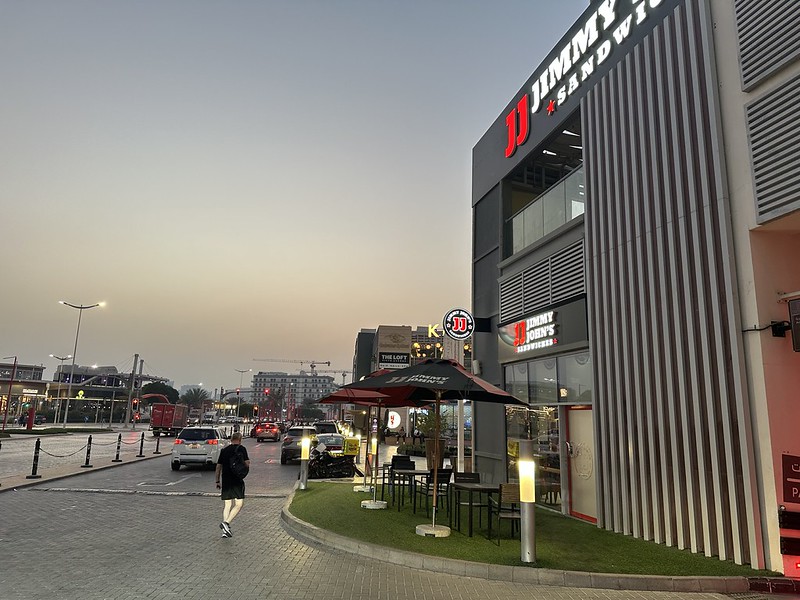
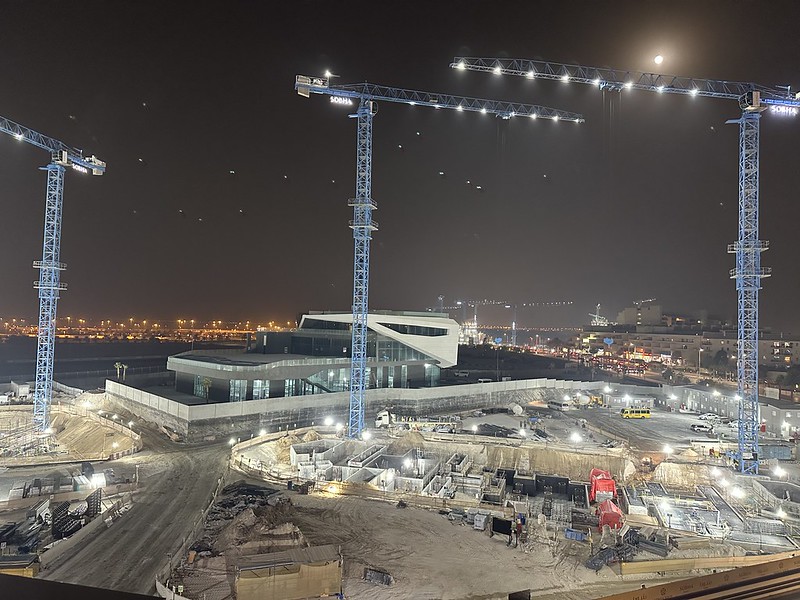
The first thought that came to me during my 15 hours in Dubai on a Tuesday in early November is “this is the future”. I think it was the numerous huge construction projects in progress and the modern residential communities rising out of the desert. It was also that the city grew from the recent oil boom and everything is new and shiny, like much of Salt Lake City. I was there for work so didn’t get much time to explore the city. It was my third trip to this global city of expatriates.
TrafficRetailGrowth
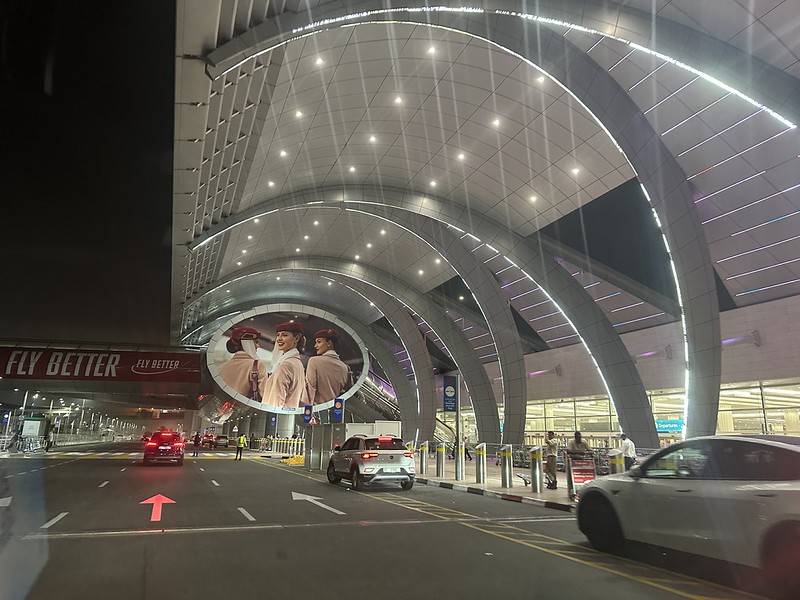
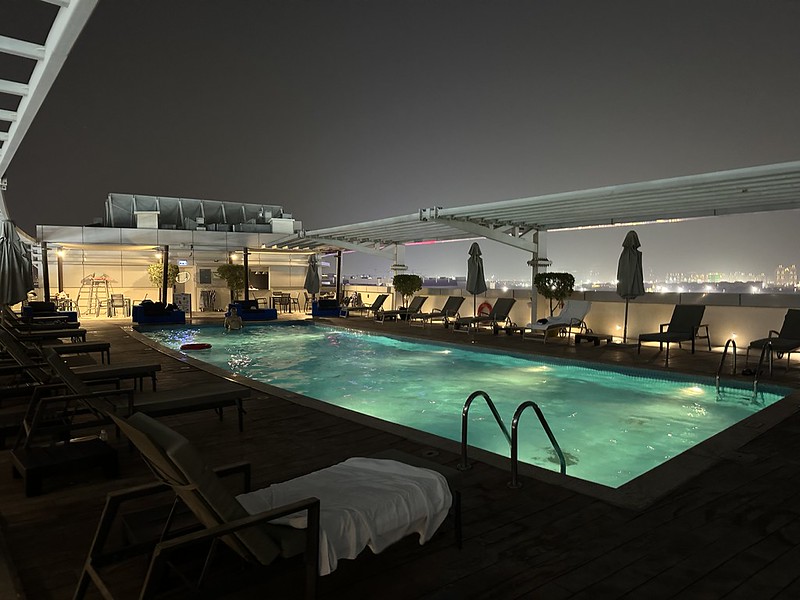
I stayed at the Park Inn by Radisson located in Dubai Motor City. It is right next to Autodrome Racetrack that is open to the public. People can drive several different categories of cars or ride shotgun with a professional driver on a Formula One Racetrack. Only one car that day was driving around the track. The hotel was connected to a small shopping mall which led to a small business district. After my meetings, I walked to a Daiso Japan and did some grocery shopping. Nadia and Ocean like it when I bring home a bag of groceries with products they can’t get in Tashkent. After returning to the hotel, I went for a swim on the rooftop pool and then packed and headed out to the airport. Traffic congestion is a problem during peak times (6:00 AM – 10:00 AM) and (5:00 PM – 9:00 PM) during the week. Both of my Uber drivers pointed this out as we were bumper-to-bumper to and from the airport.
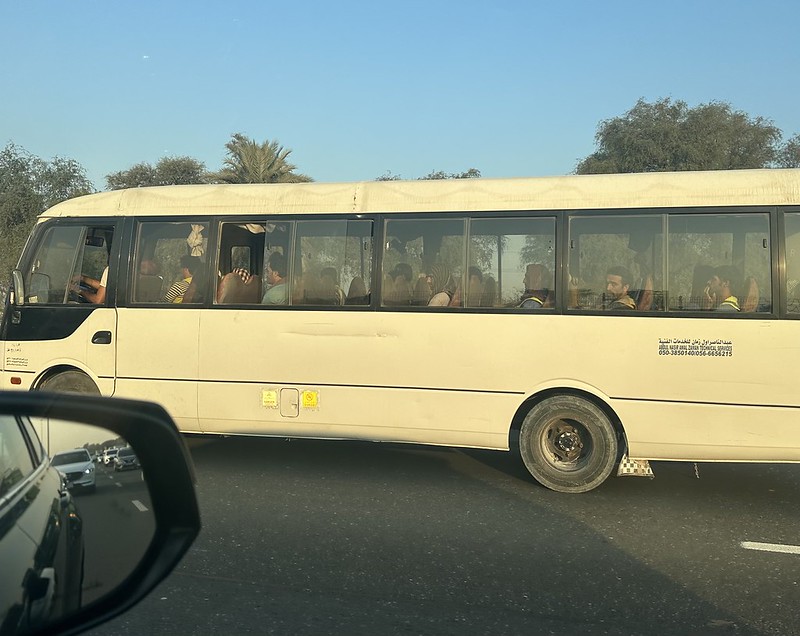
Low-wage WorkersAirport Rooftop Pool
During the day I visited two beautiful, modern international schools packed with expatriates. Developers collaborate with school owners to anchor their residential gated communities with a high-quality international school. This attracts families to their development. One in particular caught my attention, Sustainable City. We went to lunch at a restaurant on the development and walked through a pond area with free range chickens, ducks, and gardens. The Dubai-based Diamond Developers invested $354 million dollars into a 114-acre site with 89 apartment buildings and 500 villas. The community has 2,700 residents and many of them walk or bike to the school and other amenities. I saw mostly Scandanavian families, who are probably wealthy due to the cost of the villas ($1 million+). Below is a description of the site from One Key Marketer Mike Anderson.
The Sustainable City boasts a number of genuinely impressive green features. The homes are designed to shade each other, making them easier and cheaper to cool in the desert heat. Strategically placed wind towers cool the air on the streets. A verdant park runs the length of the development, complete with 11 biodome greenhouses for urban farming that are irrigated by two lakes filled with recycled greywater. Designed primarily for pedestrians and bicyclists, vehicles are banished to a nearby car park shaded with solar panels. These, and the solar arrays on the roofs of the villas, generate the lion’s share of the community’s electricity. LED lights, solar water heaters, and low-power appliances reduce energy needs by up to 50%. Each resident is furnished with a free electric golf cart to get around the development, or a $10,000 subsidy for an electric vehicle of their choice. Onsite amenities include a gym, swimming pool, and equestrian stables, as well as a small mixed-use plaza containing a variety of retail stores, entertainment, offices, restaurants, and coffee shops.
We celebrated Thanksgiving on Saturday instead of the actual day, Thursday, this year. We didn’t have time for all the preparations since we had two days of professional development training at school. We usually have a big Thanksgiving dinner, hosting 25-35 people. This year we went much smaller (8 guests + 3 Kralovecs) due to our smaller home. It was truly a festive occasion with delicious food, bonhomie, and laughter. Everyone helped out with preparing the meal, including our domestic team of Dilia and Katia. Aaron and Lisa brought “Happy Salmon” and “Dead Certain” two card games. Players need to put in chronological order the deaths of 5 celebrities and famous people. It created a lot of conversation. I am always surprised by how much young people don’t know about celebrities from history and from my childhood. Nadia has perfected how to cook a turkey.
We called Owen and Oliver to have them included in the festivities. I can’t wait for Oliver’s visit to Tashkent in December.
16th Floor View from The Pearl apartment block – November 28, 2025
The big story in Tashkent this week is air pollution. We have one of the worst air quality indexes in the world lateley due to a “temperature inversion”. In normal meteorological conditions, air gets colder as one ascends in the atmosphere. However, in an inversion, a layer of warmer air traps colder air below, acting like a lid on a pot and preventing warm air from rising and taking pollutants with it. Tashkent is vulnerable to inversions because it is located in a basin surrounded by mountains, which makes them more frequent and more severe. The air quality has worsened over the past two years. There are several sources of air pollution in Tashkent.
73% of gasoline sold in the city has an octane rating of 80, which is the cheapest of the three options of gasoline available at gas stations. 80-octane fuel emits more harmful byproducts than the cleaner-burning 92-octane and 95-octane fuels. The Uzbek government is acting quickly and banning the sale of 80-octane fuel as of December 1, 2025.
The growth of cars in the city over the past 5 years has been incredible! Car ownership has increased by 32% over the last two years, and now, more than 1 million cars pass through the city streets daily. This has increased traffic but also emissions. Studies show vehicles contribute 60% of air pollutants.
Another factor is real estate development. 15 years ago, the city was covered with 20-30% greenery, but today it has dropped to 10-18%. Developers are using green areas to build large apartment blocks. Uzbeks see apartments as investments, and developer greed means guaranteed profits. The dust from the construction and loss of trees is contributing to air pollutants.
The average temperature in Central Asia increased by 1 degree Celsius in the last 10 years. The climate is drier and hotter. We have not had any precipitation this November, for example.
Factories and greenhouses around the city burn cheap coal, and I’ve heard even tires are burned. There is a large coal-burning electrical plant near Angren, Uzbekistan.
I had a busy week with finance committee, full board meeting, and a Director Parent Coffee. Thursday and Friday were professional development days at school. I did manage to take care of my health by getting my teeth cleaned at the dentist and getting an influenza vaccine for the 2026 season.
I really enjoyed reading Australian author Charlotte Wood’s latest novel, Stone Yard Devotional. In an interview at the Sydney Writers’ Festival, Charlotte called it a “quiet” book. It is not plot-driven, and the author doesn’t attempt cliffhangers or to get the reader to turn the page. Instead, it is exquisite writing in a calm setting. I loved lying down in bed to wind down from a busy day and settle into the story.
The main character is a middle-aged woman burnt out from a career of environmental activism and a recent divorce. She leaves Sydney to go back to her hometown in the dry plains of southern New South Wales and ends up living at a convent. The area Wood described reminded me of the sheep country south of Perth in Western Australia. Before Nadia and I had children, we lived in Perth for a couple of years. I think we even stayed a long weekend at a monastery there, so I could picture the setting easily. The woman joins a religious community, more for the rest than her beliefs. She likes the quiet lifestyle of working with her hands on the farm and going to prayers multiple times per day.
She spends time reflecting on her life. I could relate to her looking back at her parents and characters and events that happened in her small town when she was growing up. I am probably around the same age, and living into your late fifties gives you an insightful perspective. Charlotte Wood’s story has the major themes of forgiveness, retreat from the world, and grief. Experience a long life, all of us deal with the death of loved ones or people we can forgive, or acts that we seek forgiveness for.
Two plagues, one the COVID pandemic and the other a massive infestation of mice, form the backdrop of the story. The peace of the convent is broken with the arrival of an activist nun who is a former school classmate of the main character. She brings the remains of a former sister of the convent. She was unfortunately murdered in Thailand by a pastor while they were on a mission to serve the poor of that country. The nun is to bury the remains on the grounds of the farm surrounding the chapel.
It is not the typical kind of book that I read and I can’t remember now how I found the book on my digital library, but I am glad I read it.
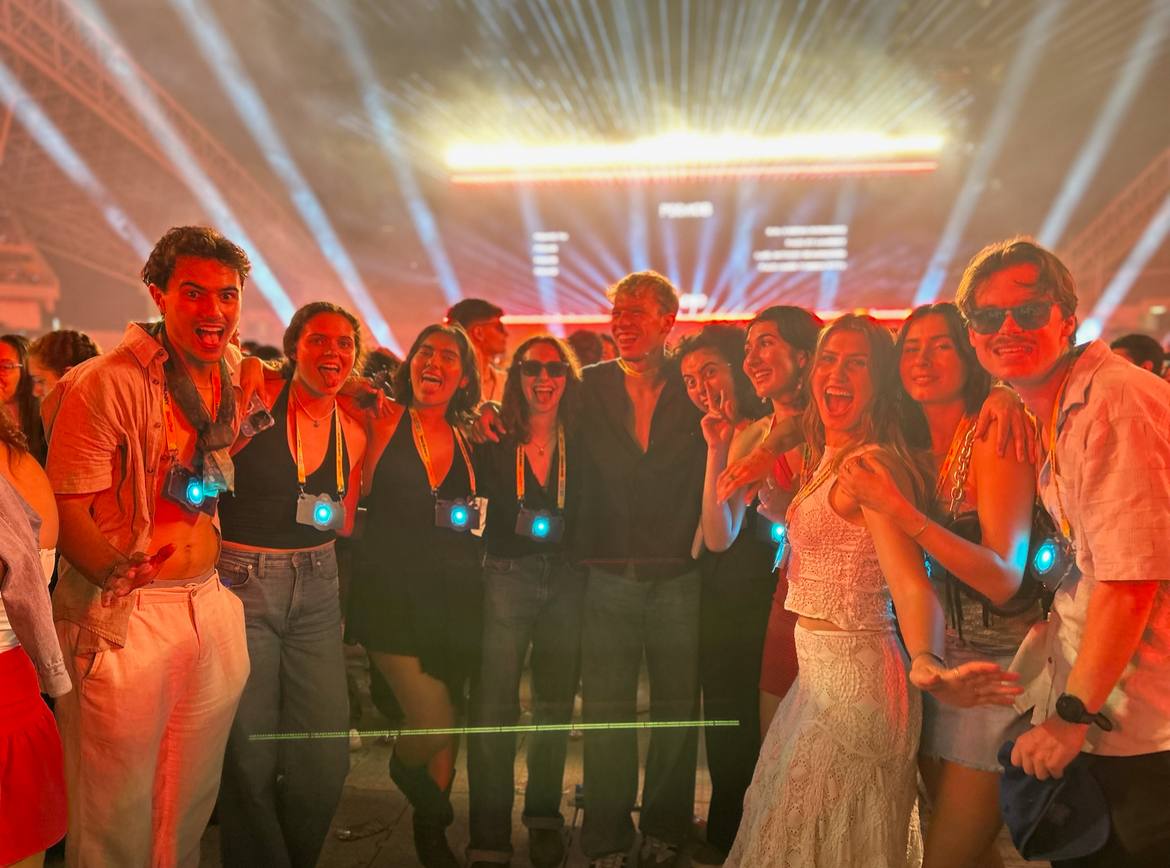
Victims of Repression ParkVictims of Repression ParkTurkiston Outdoor Concert Venue
This is my final year in Tashkent, and I am documenting the beautiful sights and sounds of my life here. I cycle on the weekends occasionally and one of my safe routes is along the Ankhor Canal, from near the Seoul Mun mall all the way to the Victims of Repression Park. I can ride safely on sidewalks and the pedestrian/bike path along the canal. I captured the setting sunlight on the fall trees. Fall colors in Tashkent are similar to Europe, a lot of yellows and no reds. However, my friend pointed this out: the leaves stay on the trees longer here than in North America. Peak fall colors in the Upper Peninsula of Michigan are amazing, but by a week or two, the leaves are all gone, leaving bare trees until the first snowfall.
On Sunday, I went for a hike with my friend Aaron. After a busy and stressful week, it is nice to get out into nature. Due to a political summit meeting of Central Asian leaders in Tashkent, many of the road leading out of the city were blocked. We found a way out that led us to Tavaksay Canyon area. We walked up the left side of the canyon as you are looking towards the falls at the end. We were rewarded with the view below. We only saw four mountain bikers and two other hikers on the other side of the canyon. We had the place to ourselves. The snow-capped mountains in the background reminded me of the state of Nevada (USA) when I lived in the high sage deserts many years ago.
This was my second visit to Tanzania; my first visit was in October of 2023. I was there both times for our school’s adventure program with a diving trip to the Indian Ocean coast in the far north of the country and a safari to the Mkonozi National Park, in the north-central part of the country. I spent a total of around three weeks in the country, spending time in the cities of Dar es Salaam, Moshi, Bagomoya, and Tanga, besides the beautiful nature. It is the most spectacular of African countries for landscapes and wildlife, and I am grateful to my friend Robin for introducing me to the country. As I said last time, I would definitely live there and perhaps someday will go back and visit the Serengeti National Park and climb Mount Kilimanjaro.
Mount Kilimanjaro (plane view)Campaign “Mama Samia” First & Present Presidents
With elections taking place next week in the country, people were talking about the current president Samia Suluhu Hassan “Mama Samia”. She is the first woman president of Tanzania, moving from vice-president to the top post when the former president, John Mugufuli, died in office. Mugufuli had a preexisting heart condition and probably died from COVID in 2021. He stopped COVID-19 testing, expressed distrust of Western developed vaccines, and called for religious faith to protect the country. Her political party’s colors of green and yellow were on signs and banners all along the roads. Chama Cha Mapinduzi (The Party of the Revolution) has ruled the country since 1977. With the main opposition party Chadema banned from participating and one of their leaders jailed for treason, the consensus is she will continue to the country.
Dad & OceanUsumbara Mountains Liverpool Truck Stop
Tanzania is an African success story. They have strong economic growth, low inflation, and more foreign investment, mostly through tourism, coming into the country. The 67 million citizens are young demographically. The 120 or so different tribes that make up Tanzania get along well and the country since independence in 1964 has not had any civil wars. The only time they had a war was when Idi Amin Dada, the Ugandan dictator, tried to take a section of the country. Tanzania successfully repelled the Ugandan army to keep all of its coastline on Lake Victoria. Much of the progress of the country can be attributed to the first president, Julius Nyerere, who ruled for 24 years, brought unity through language, making Swahili the national language. It is spoken in 14 different countries today. He retired peacefully in 1985 and serves as a role model for peaceful transitions of power for today’s elected officials.
Getting to know Tanzania has intrigued my interest in learning more about Africa. Hopefully I will be back again.
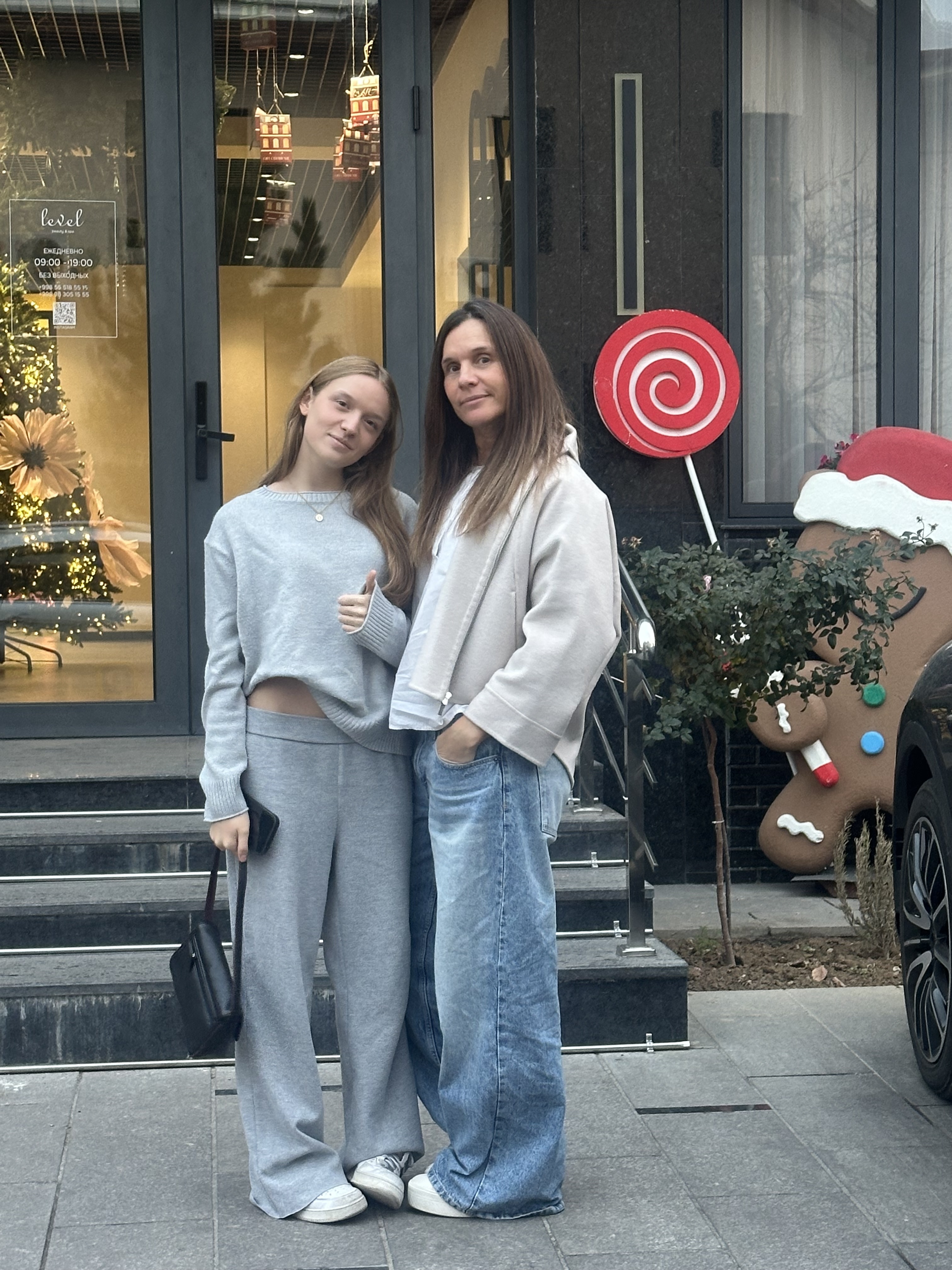
We had a nice family weekend in Tashkent. On Friday night, Nadia and I went out to dinner with friends. Ocean and her were looking so beautiful! I snapped this photo of them together before we left for dinner and Ocean went out with her friends. I am blessed to have these gorgeous women in my life!
On Saturday morning, the Detroit Tigers lost to the Seattle Mariners in the MLB playoffs, 2-3 in 15 innings. The best thing about the game was that our sons Owen and Oliver were watching online with us over FaceTime. My parents listened to or watched every Tigers game while I was growing up in the Upper Peninsula of Michigan, all through the 1960s to the 1980s. They are one of the soundtracks of my childhood. My family and I still follow the Tigers, and they had a remarkable season. They had the best record in professional baseball for much of the summer and the best pitcher, Tarik Skubal. He had 14 strikeouts in the game, but in the end, they couldn’t score enough runs to win the deciding Game 5. It was disappointing and nerve-racking to watch. Even Nadia enjoyed following the game! The Tigers won the World Series 41 years ago (1984) when I was a senior in high school. They made it to the World Series twice in the 2000s (2006 and 2012) but lost both times. I will wait another year and hope they can win the title before I leave this earth.
Karamazar HikeObiVillage Below
I went for a hike with my friend Aaron on Sunday morning. One of the nicest things about Tashkent is the easy accessibility to nature. We walked in the dry, dusty rolling hills over the village of Karamazar (Black Cemetery). The silence and cool, overcast skies made for a delightful hike. The dogs loved it!
My daughter Ocean is training for our trip to Tanzania next week. She is an excellent swimmer, and I supported her and her classmates on Saturday afternoon.
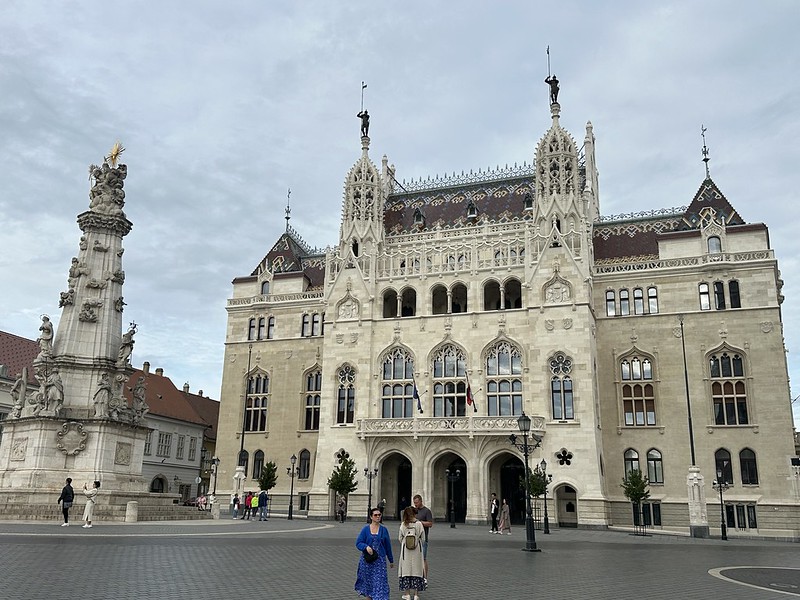
I love history and learning about the places I visit. On my travel to and from Budapest, I read the journalistic account of the 1956 Hungarian Revolution against the Soviet Union. This was a contemporary account of the conflict (published in 1957) and the subsequent refugee crisis. My big takeaway was that this was the beginning of the disillusionment with the Soviet socialist/communist style of government.
Most of the twentieth century was tragedy for the Hungarians. World War I marked the end of the Austro-Hungarian Empire when they sided with the losing side, the Central Powers. It resulted in Hungary losing 2/3 of its population and territory to neighboring countries. World War II was even worse, with the Nazis invading Hungary when they tried to negotiate a separate peace with the Allies late in the war. Over half a million Hungarian Jews were murdered/deported in a two-month period. The war ended with the incredibly destructive Battle of Budapest between the Soviet Red Army and the Axis Army (Germans and the remaining Hungarian Axis army) that destroyed the city, killed tens of thousands of civilians and ended with the Soviets “liberating” the country. “Liberating” is in quotes because the Soviets dropped an “Iron Curtain” (Churchill’s famous description) over the country and took control of the lives of the Hungrians.
Google Maps Image of the Bridge at Andau Today
The Soviets promised a “workers’ paradise and a better life for all. Initially, they did help the city recover, rebuilding the infrastructure and establishing the routines of normal life. It must have been a traumatized population that just appreciated a return to normalcy. Michener’s account picks up a few years after this and the dawning realization that the Soviet regime was corrupt and oppresive. It was thrilling to read about the bravery of Hungarian soliders and civilians in their uprising and guerilla warfare in 1956. They actually drove the Soviet army out of the city that resulted in 5 days of glorious “freedom”. The Red Army during the five days recovered from the surprise defeat and brought a much bigger force to retake control of the city, crushing the Hungarian resistance.
The title of the book refers to a small wooden bridge in a farmer’s field across a canal on the Austrian-Hungarian border. Hundreds of thousands of refugees fleeing Soviet control came over this bridge and other crossings in the aftermath of the revolution. Michener was at the border interviewing Hungarians. The bridge was destroyed but became a symbol of courageous Hungarians seeking freedom. Because of their long partnership during the Hapsburg Empire, the Austrians helped Hungarians fleeing Soviet control.
I haven’t read James Michener since the early 1990s when I was travelling through the Caribbean with friends. This was the start of my love of travel and history as a young man. I forgot how good of writer he is and this account reads like a thriller novel. He wrote over 40 books and died in 1997.


The Bridge at Andau gave me an appreciation of the impact of horrible tragedies of the 20th century had on Budapest. I have a greater appreciation of the spirit of the Hungarians walking through the city 70 years after the Revolution of 1956.