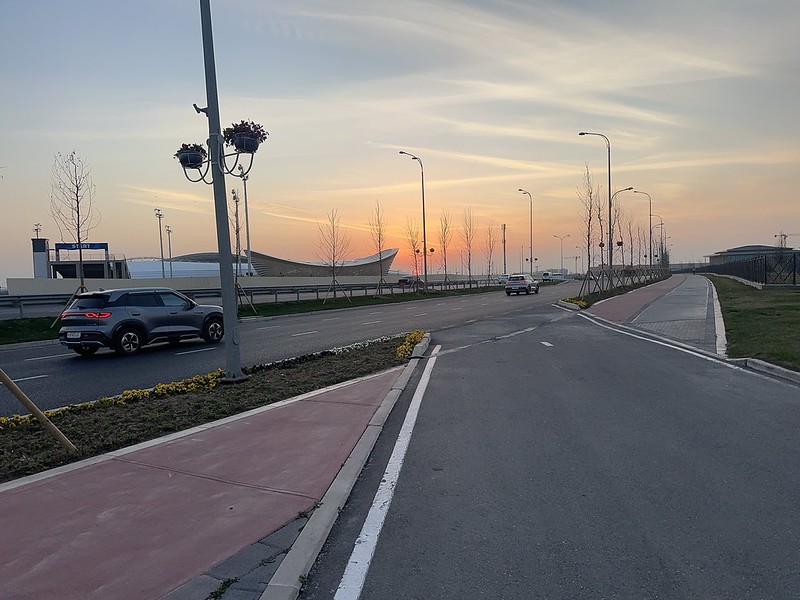
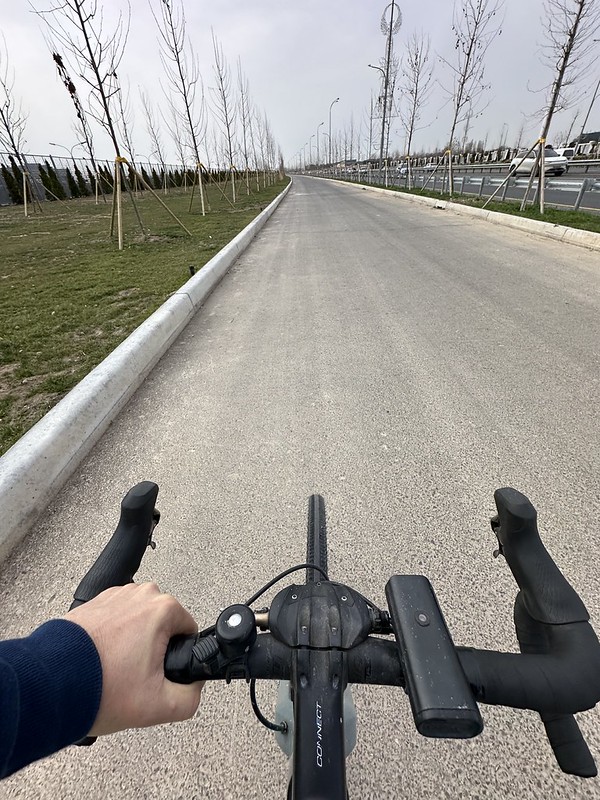
It was a peaceful weekend in Tashkent. My highlight was taking Nadia and Ocean on a bicycle ride to the recently opened Olympic Park. I love cycling and love my two girls, so it was a delightful afternoon for us. Both have the potential to be strong riders, and I actually got a good workout in, chasing after Ocean on the way back to the car. Officials have not granted permission to use automobiles on the access roads along the highway, so this is a boon for cyclists. All of the venues were open. I would love to get on the velodrome before I leave Tashkent. We had a great dinner at home on Sunday night. Lots of laughs and great food.
On Saturday, I went for a run with Obi near Milly Bog (National Park) and the Seoul MUN development.
I am sharing a couple of photos our kids sent us recently.
Ocean in classOliver’s view at St. Norbert College
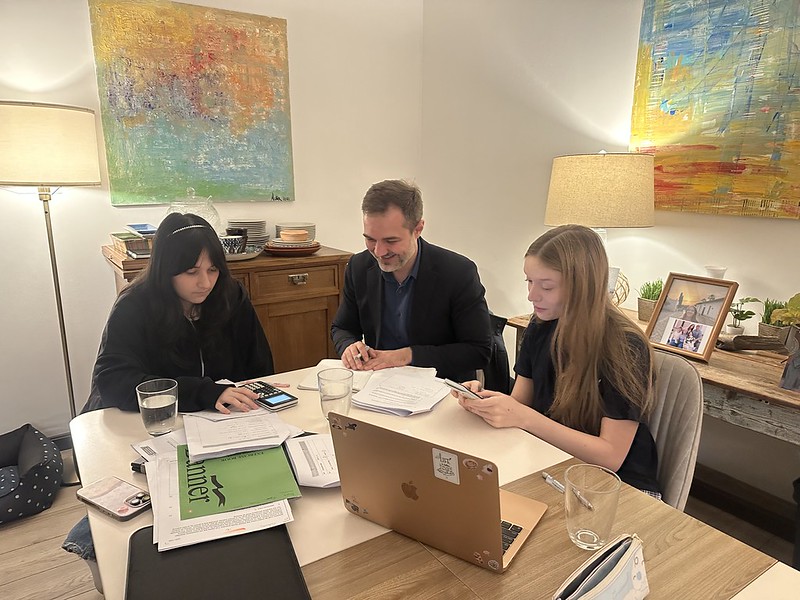
Ocean is in the final stretch of her senior year, and she looked so cute studying mathematics, I had to take a photo. Alexi tutored Oliver to get a 5 in his mathematics exam, and hopefully, we will get similar results for Ocean. Ocean invited her friend Hadicha this evening. Ocean recently completed her “mock” exams and is now preparing for the final exams in May. Her last day of regular classes will be April 15. The countdown to graduation is on…
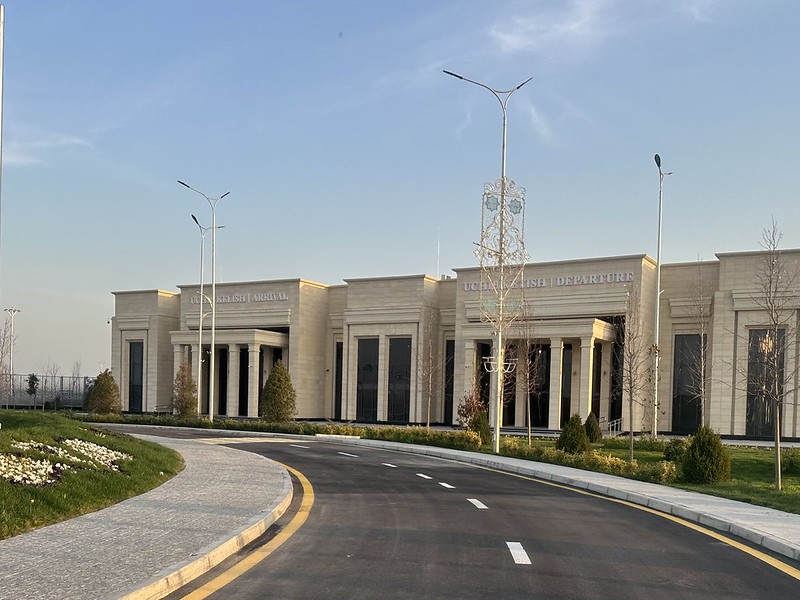
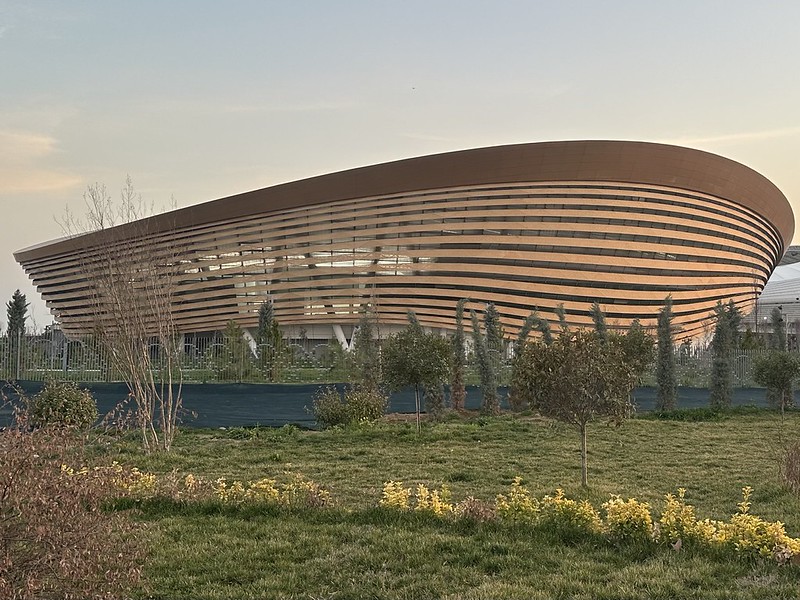
Arrivals & Departures GateVelodromeBike Trail
I toured around the Olympic Village on my bike ride on Sunday. It is finally open to the public. I also rode by the new private airport, although it is not in use yet. The New Uzbekistan development project east of the city is on a grand scale.
Ramadan started this week (dawn February 18) and will run until sunset on March 19th. Ramadan is known as Ramazon in Uzbek and came to the region with the Arab conquests of the 7th and 8th centuries. I conducted research on the background of Ramadan, as I was curious about its origins and the role it plays in the lives of Muslims. Ramadan dates back to 610CE when the Angel Gabriel revealed the first revelation to the Prophet Muhammad. This occurred in the ninth month of the Lunar calendar. In 624CE Muhammad and his followers made fasting during this month one of the Five Pillars of Islam around the time they migrated to Medina. Ramadan today is a time for Muslims to draw closer to God through prayer, gratitude, and communal solidarity.
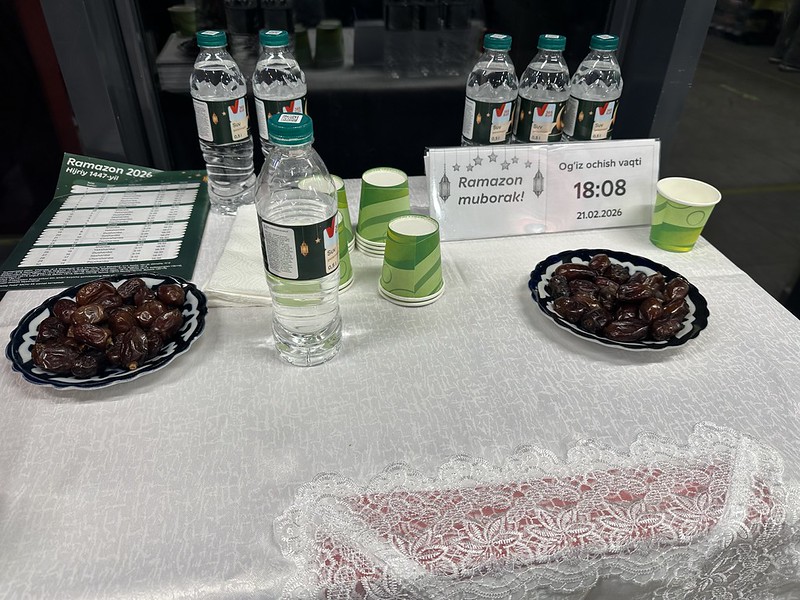
I took a photo of the table above at the Korzinka Supermarket. Ramazan muborak means “blessed Ramadan” in Uzbek and it is accompanied by the Uzbek phrase Og’iz ochish vaqti that awkwardly translates to “mouth opening time” in English. Yesterday Muslims broke the fast at 18:08 as noted on the table as well. Religious observations were banned during the Soviet Era (1924-1991) and Uzbeks are slowly regaining religiousosity. I would estimate probably around half of the eligible population is fasting and it might be a bit less in my circle of cosmopolitan Uzbeks.
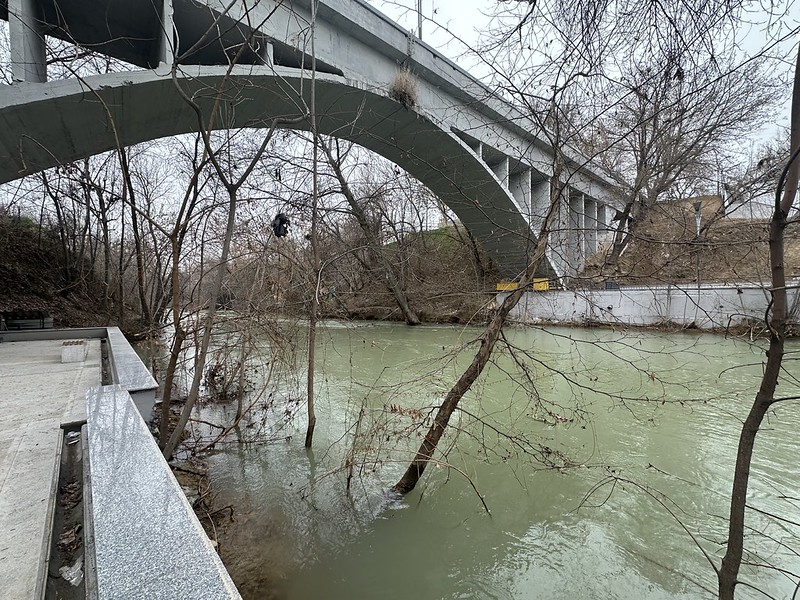
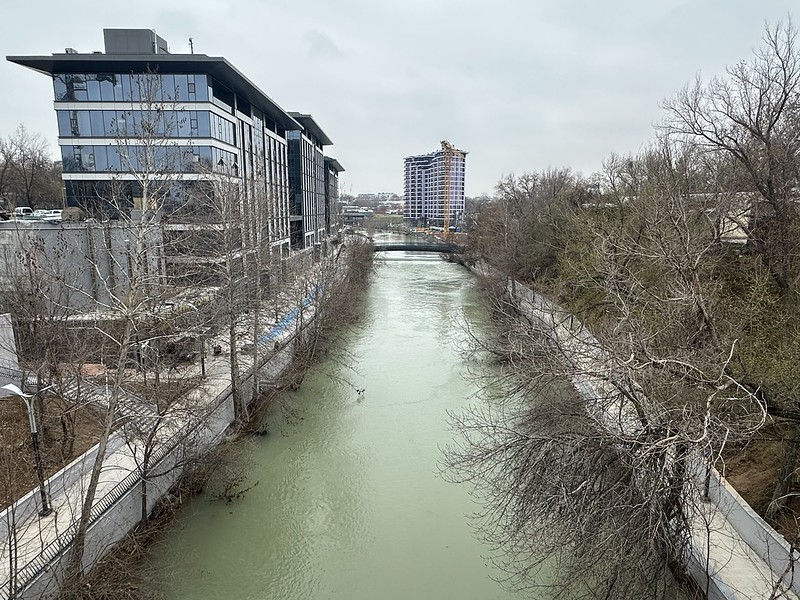
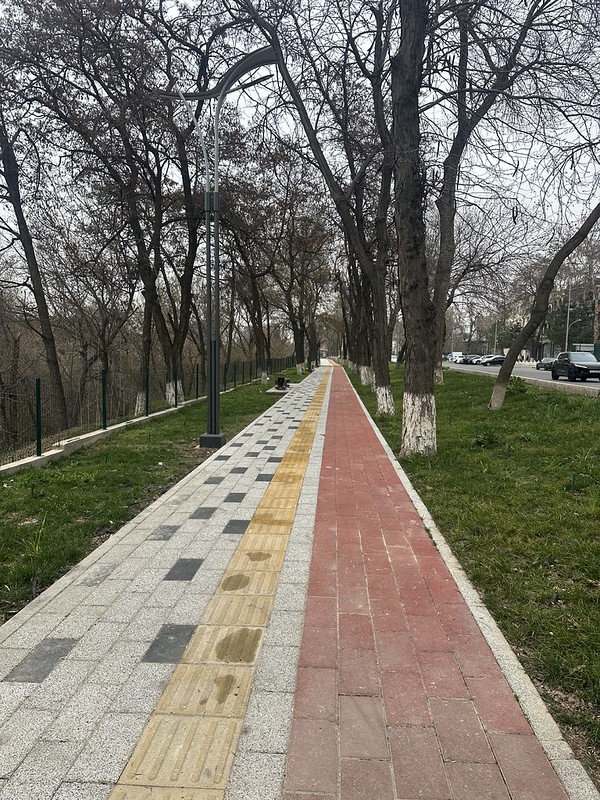
It was a cold but sunny day yesterday with temperatures getting closer to monthly averages. Evenings and mornings can dip to 4C (39F) and highs in the sunshine in late afternoon rise to 16C (61F). Nadia joined me for a bicycle ride along the canals. The swimming pool at her gym is closed this month for repairs.
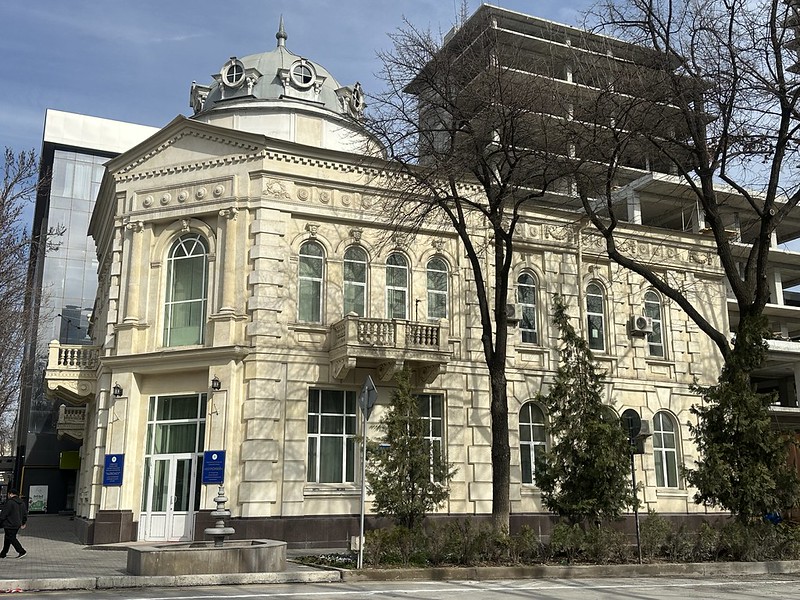
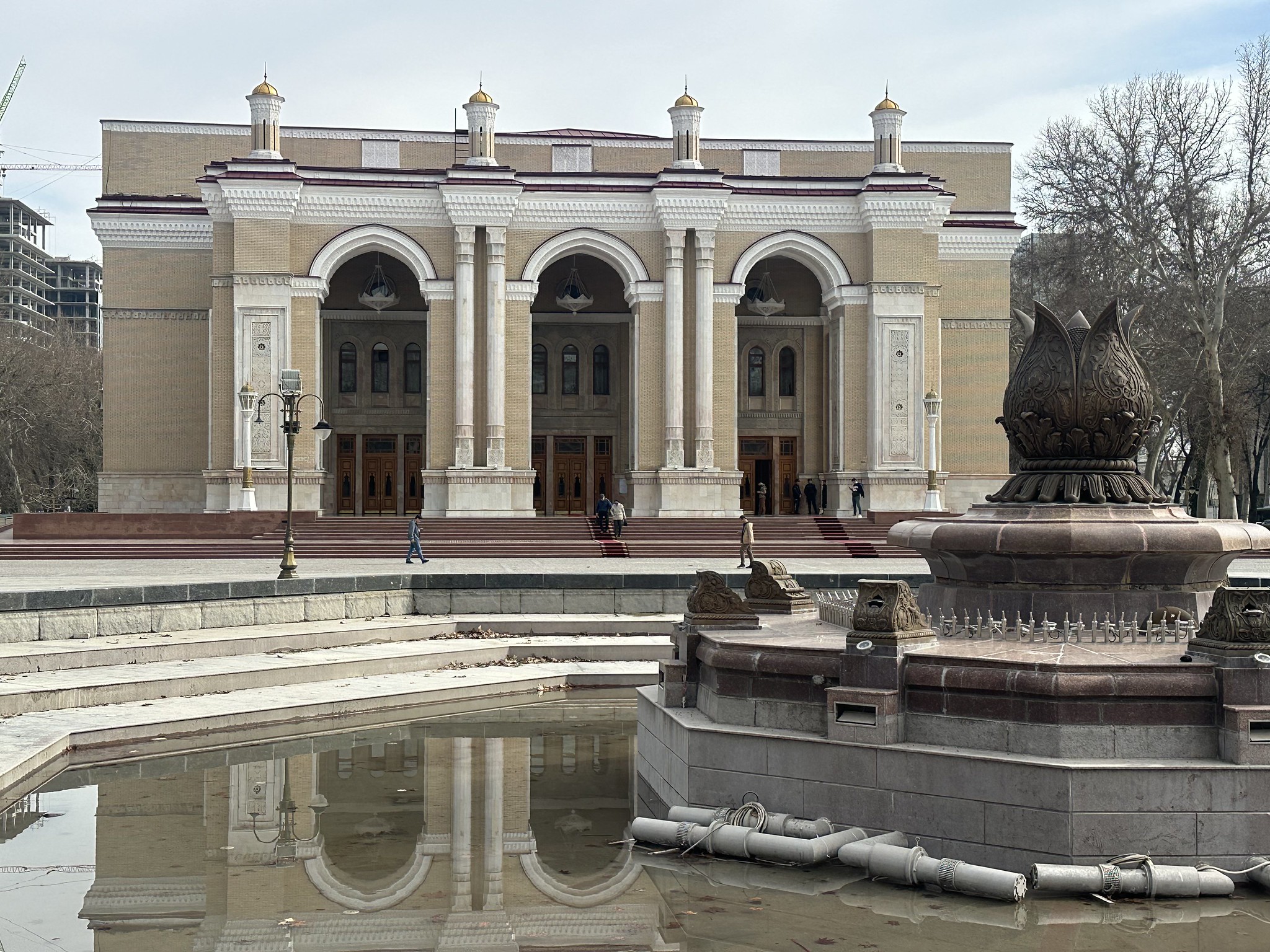
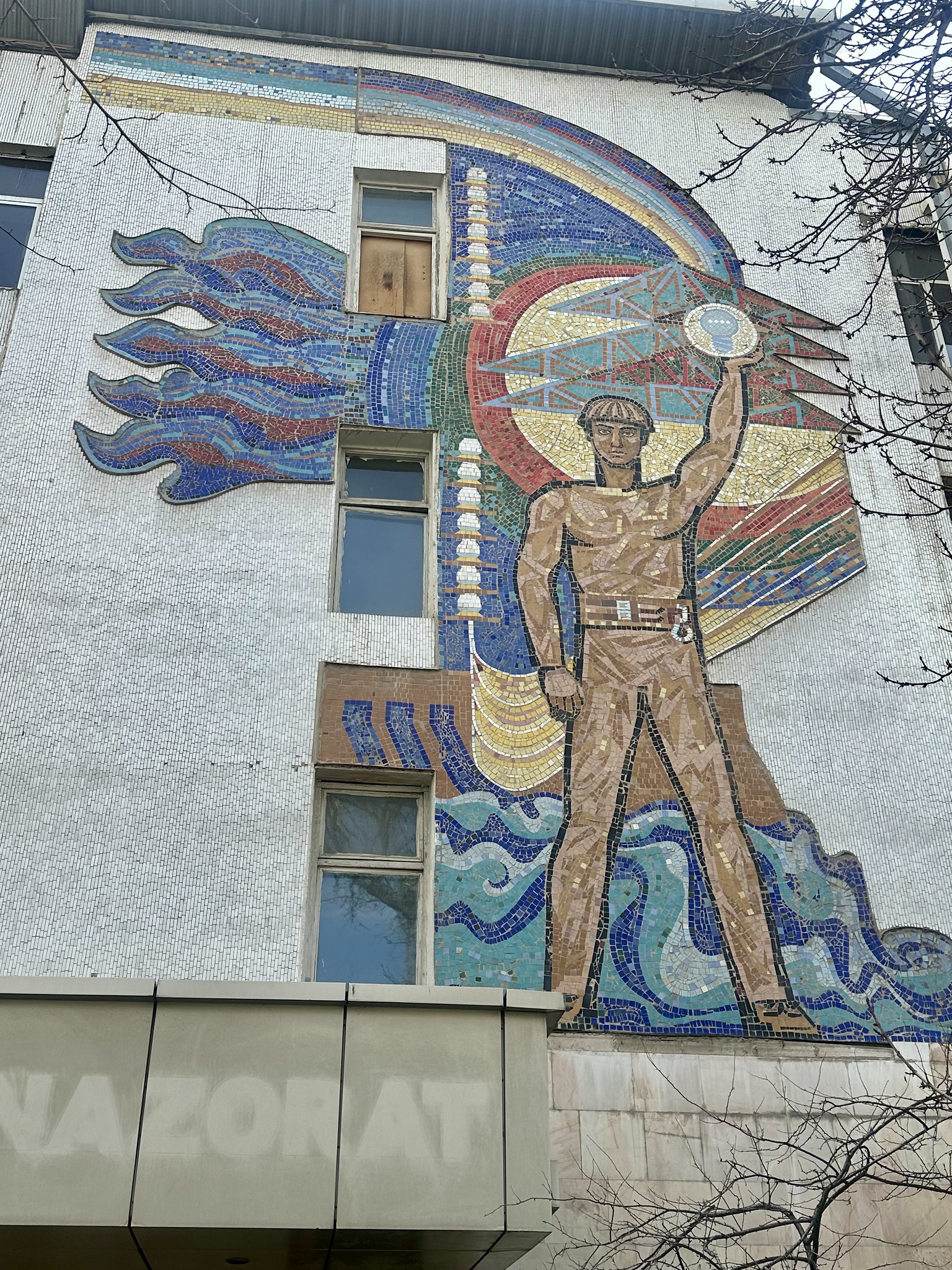
February is usually the most dreary month of the year. The holidays have passed, the grey skies, cold temperatures, and snow/rain mix make for weeks you just want to get through until spring arrives. February 2026 in Tashkent has been unusually war,m with the average high temperatures historically (8C-46F) being the low temperatures, and the thermometer reaching into the high 60s and low 70s this week. Yesterday afternoon, it reached 72F(23C), and students were wearing shorts and t-shirts. Nadia and I took advantage of the warm temperatures and went for a walk downtown. We are getting used to soon becoming empty nesters and the next phase of our lives. I love the beautiful architecture of the city and the beauty of Nadia. The neighborhood around the Opera Theatre is my favorite place in Tashkent.
Ashurbeyov HouseState Academic Bolshoi Theatre Soviet Era Mosaic
With the warmer weather, I am getting out more and exercising and improving my fitness. During the Lunar New Year Break, I ran or cycled every day. The government built a huge sports complex in anticipation of the Asian Games. Uzbekistan didn’t host the games as scheduled in September of 2025, but it did get a huge, open area for recreation. The facilities and grounds are not open to the public yet, but there are traffic-free access roads all around the area that make for a perfect bicycle ride. I hope they maintain clear paths for bicycles and running when it finally opens.
Daniel Kraus is most famous for his collaboration with the film director Guillermo Del Toro in writing “The Shape of Water” that won the Academy Award for Best Picture in 2018. Kraus in a podcast I listened to after reading the book, said we writes from 8:00 AM to 5:00 PM, six days a week. He is a prolific writer with over 20 books published. He also worked with Del Toro on the Netflix series “Trollhunters” and his 2023 novel, Whalefall, is being adapted into a movie directed by Ron Howard.
Angel Down was published in July of 2025. Kraus is fascinated by World War I, and in his usual weird way, this story is about American soldiers encountering an angel on the battlefield. I don’t understand how government leaders could allow for the slaughter of soldiers to go on for four years. It was the first time industrial warfare was used in battle, and military tactics had not kept up. Machine guns moving down advancing soldiers, poisonous gas attacks, horrible conditions in the trenches, and the introduction of tanks and flamethrowers into battle. Kraus captures the condition in gory detail. The story centers around 5 American soldiers with different personalities and how they interact with the angel. The main character is a slimy, con-artist character named Baggers whose heart is softened by a 14-year-old soldier, Arno, who lied to get into the army. I am not going to give the story away, but it is an interesting read to follow the small group of men try to save the angel they found in no-man’s land and what happens along the way.
It is a great historical fiction book! The action takes place during the Meuse-Argonne Offensive in 1918. This was one of the final major battles of WWI and the deadliest battle in American military history. Over a million American soldiers participated, with about 26,000 killed. The Argonne forest is located in northeast France, near the border with Belgium. The American Expeditionary Forces (AEF) were abused by the more experienced British and French commanders and sent into the worst situations. What a useless and tragic waste of young lives!
I liked the use of authentic vocabulary from, over 100 years ago. Below is a list of terms I learned:
lummox – a big, clumsy, dim-witted person, popular in the early 20th century
Jerries – Allied slang for the German soldiers, from German, they were also called “Huns” and “Fritz”. My dad called them “Krauts” in World War II.
Doughboys – refers to the American soldiers in World War I; various theories on the origin of the name
trenchmouth – severe gum disease caused by poor dental hygiene, poor diet, and stress
I liked this phrase, “look how the man’s sagged flesh maps all the places he’s been.”
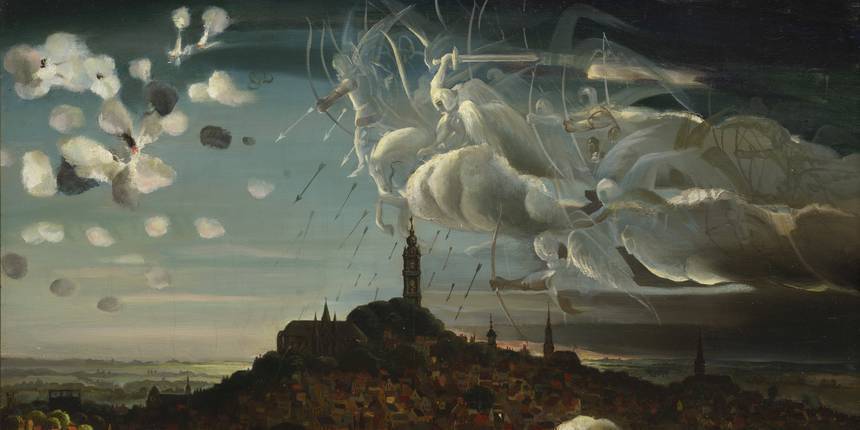
The book mentions the legend of the Angel of Mons from World War I. In the first battle of World War II in the city of Mons, Belgium, the outnumbered British lost 10% of their entire force to the Germans. The scale of death shocked people at the time. Welsh writer Arthur Machen wrote a comforting short story about a young British soldier ascending into heaven from the battlefield after he was killed. This became the legend of angels appearing above the battlefields of World War I.
Kraus also brings up General John J. Pershing, the commander of all US troops in World War I. He is known as an American hero for guiding the Americans to victory. He also lost 26,000 soldiers in 47 days of battle (over 500 per day!) and like all the WWI generals, didn’t change tactics when faced with industrial style of warfare, tragically sending hundreds of young soldiers to their death with the goal of advancing across a scorched earth battlefield. He is viewed as a hero because we won the war and WWII overshadowed WWI, but it shows the need for adaptability in leadership.
I didn’t like the fantastical and strange, dreamlike sequences of the book. It was a good story and brought the conditions of World War I to life for me.
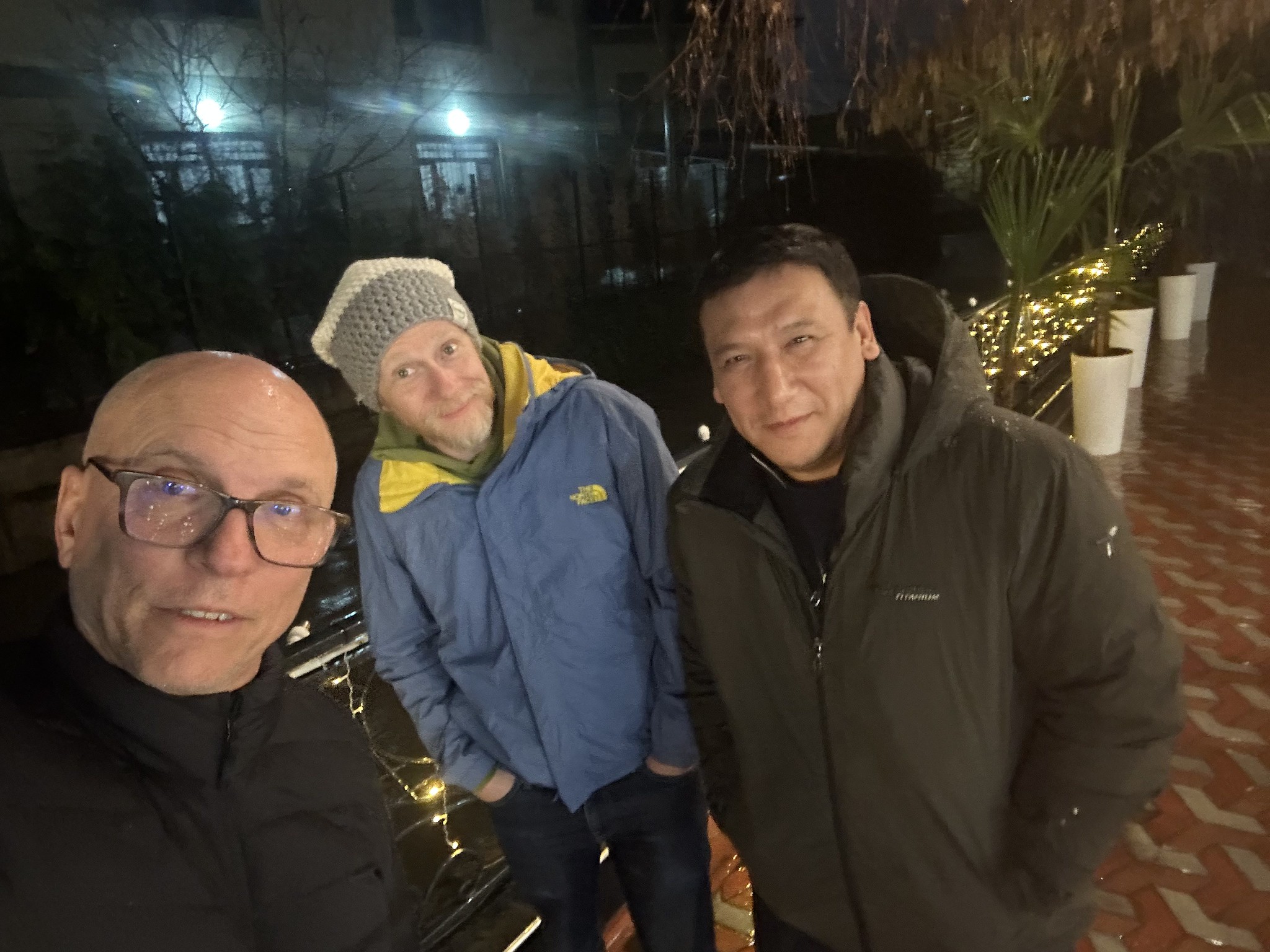
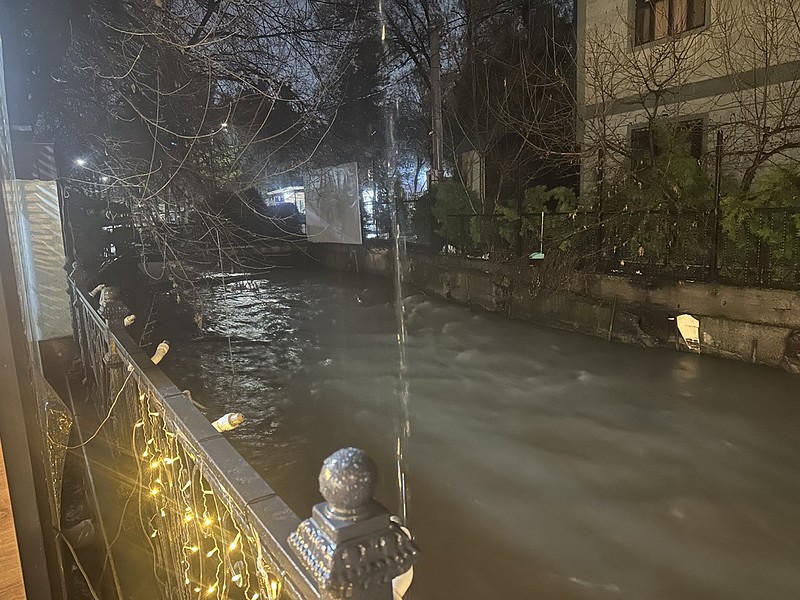
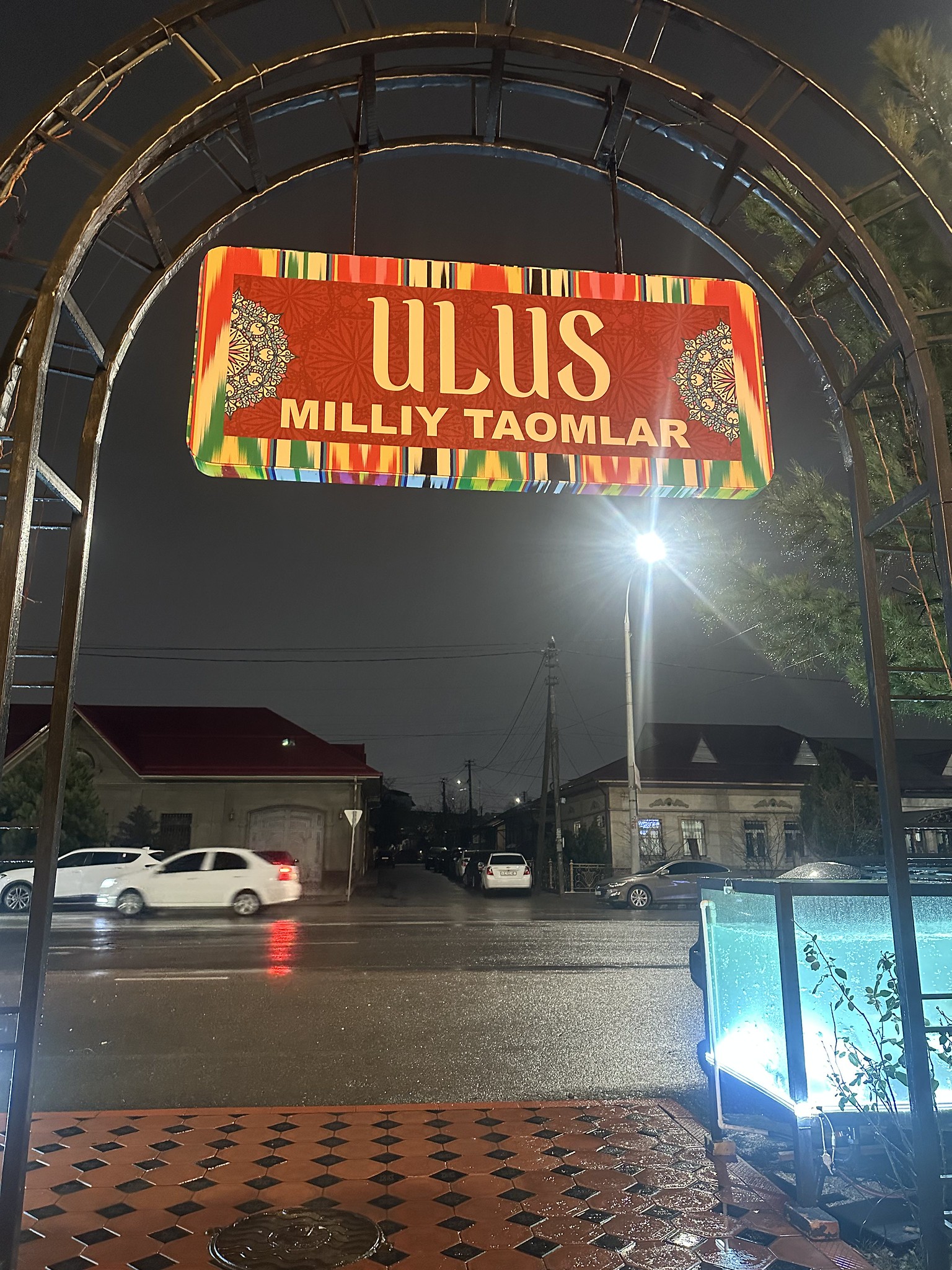
We started the long weekend with a chayhona with the local guys from work. It was a downpour for most of the evening. We had a good meal at the nearby Ulus Restaurant, just a few blocks from the school. They specialize in “milly tamolar” (national cuisine). I thought the lamb chops were delicious. It was good to have some laughs with male friends.
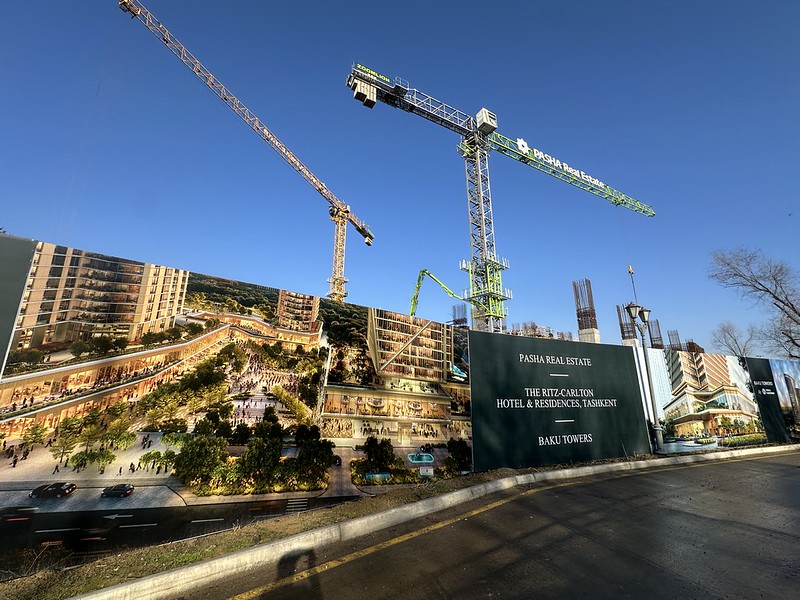
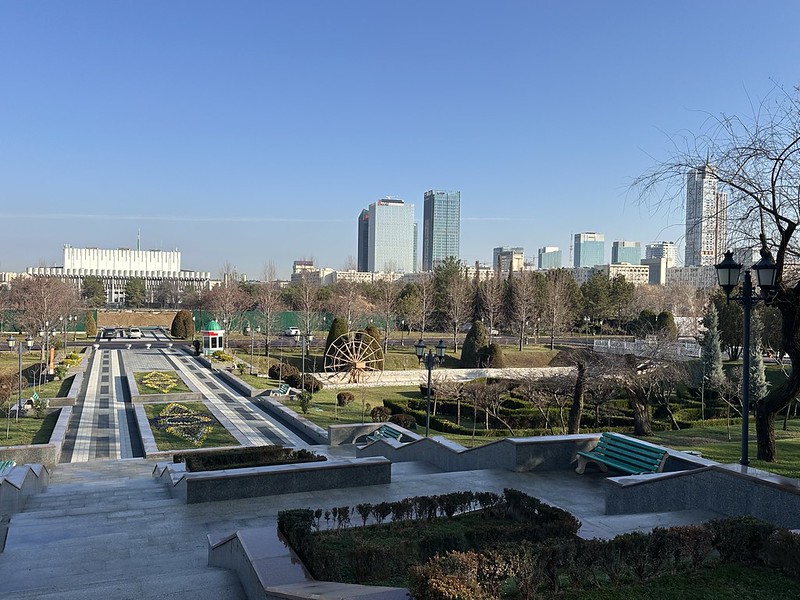
The sunshine and warm temperatures came back to Tashkent on Saturday. I went for a run around the Milly Bog National Park and soaked up the fresh air. My run was interrupted with phone calls from Oliver and Nadia, but I love walking and talking. I need to do more of that at school when I am talking to people. I noticed another large housing/retail development (Baku Towers) starting right next to the park. Just what Tashkent needs…
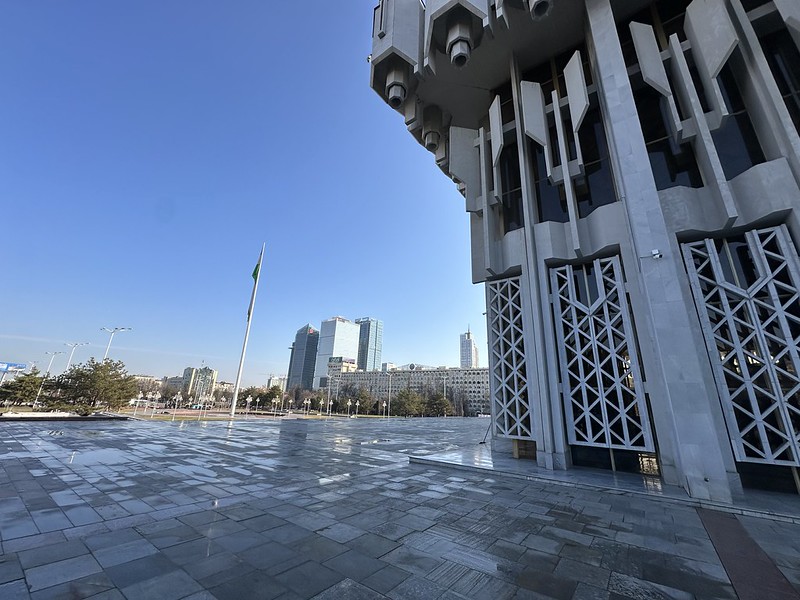
More DevelopmentView from Navoy MonumentFriendship Palace Theatre
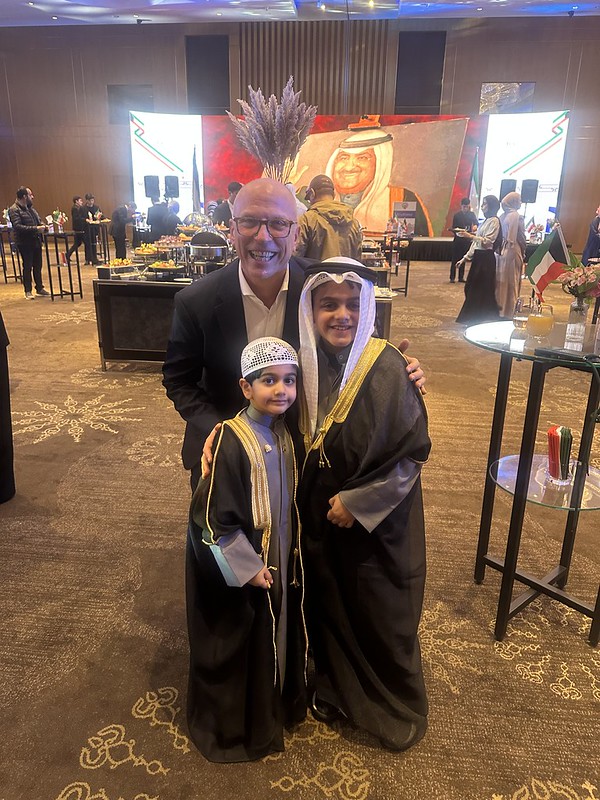
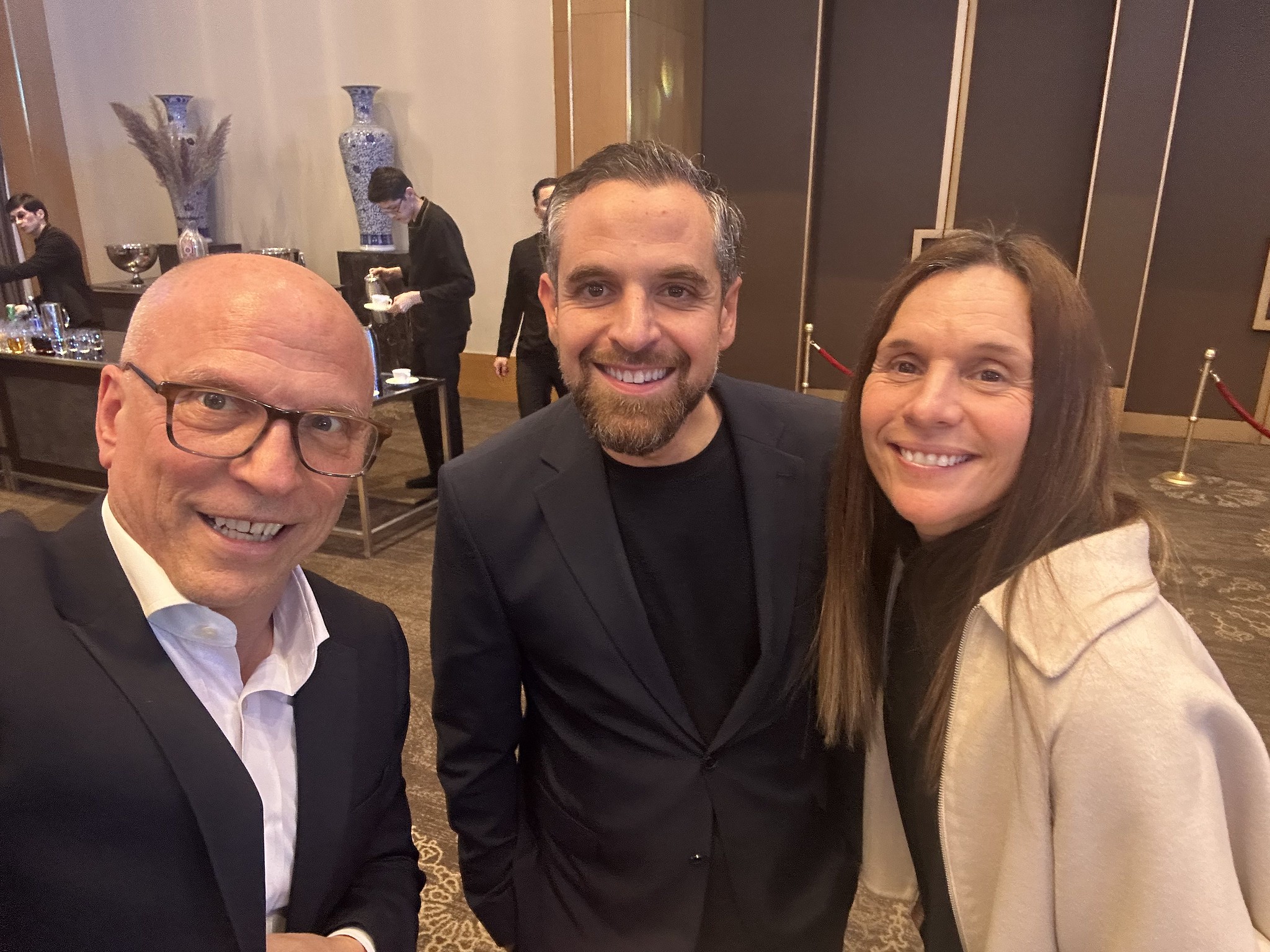
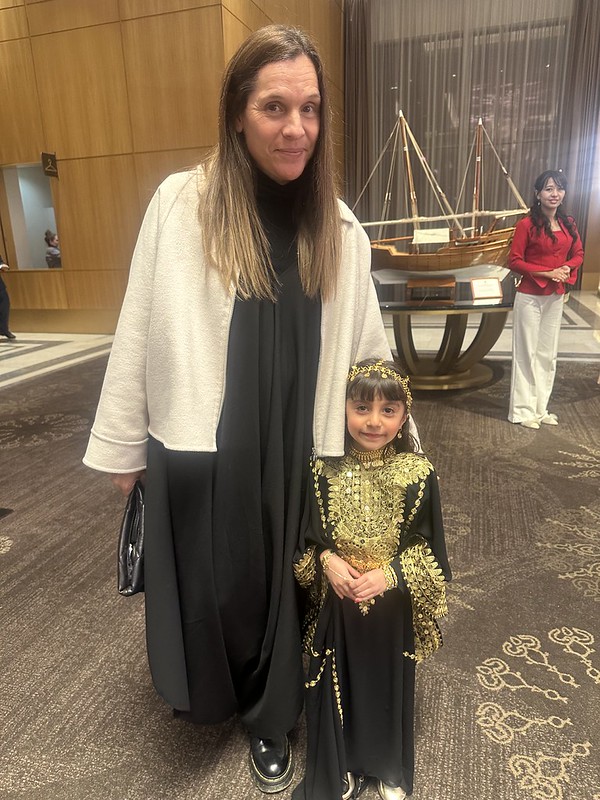
Nadia and I attended a reception hosted by the Kuwait Embassy on Thursday evening at the Hyatt Regency Ballroom. We have several Kuwaiti families at the school, and it was nice to connect with them on their special day. Kuwait marks February 25 as the National Day. It marks their independence from British Protectorate Status in 1961 and the accession of the Amir (Ruler) in 1978. It has become the primary holiday to celebrate Kuwaiti sovereignty and identity. I always invite my friend and TIS teacher Ahmad, to any Arabic language event, as he is a native Arabic speaker and is a good representative of the school. Nadia usually doesn’t attend these events with me, but came because one of her students really wanted her to come to the party. It was a special evening for us.
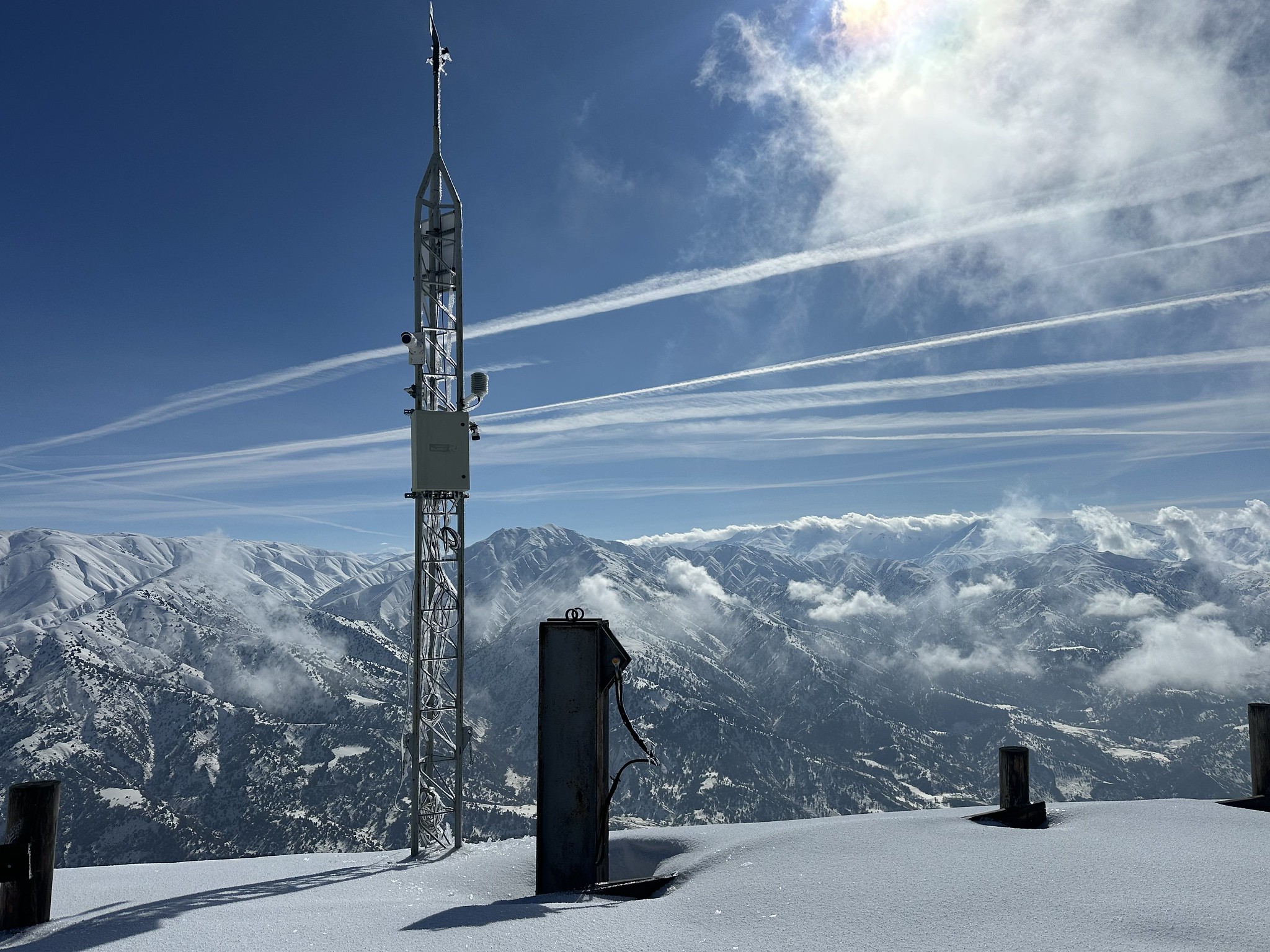
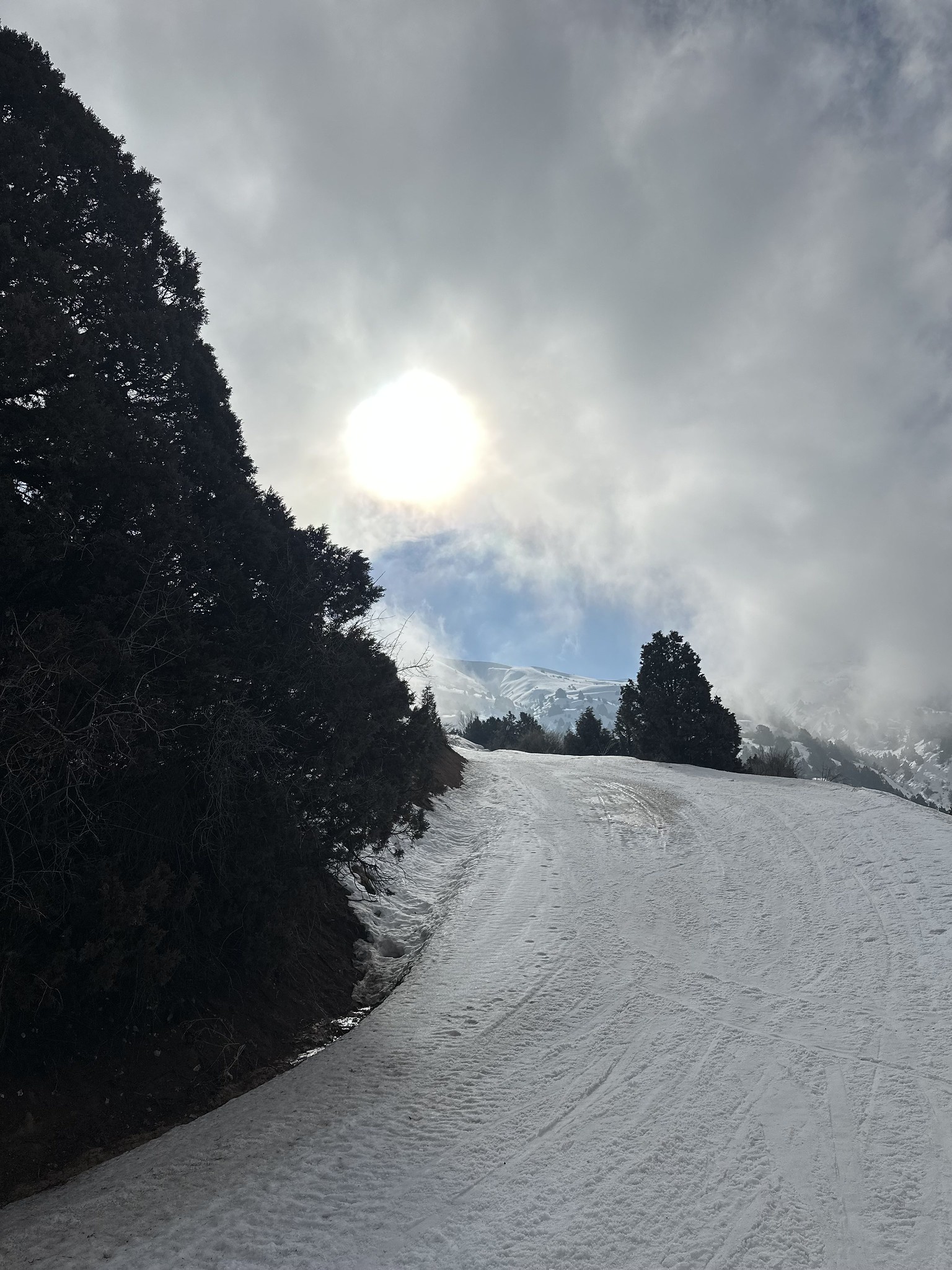
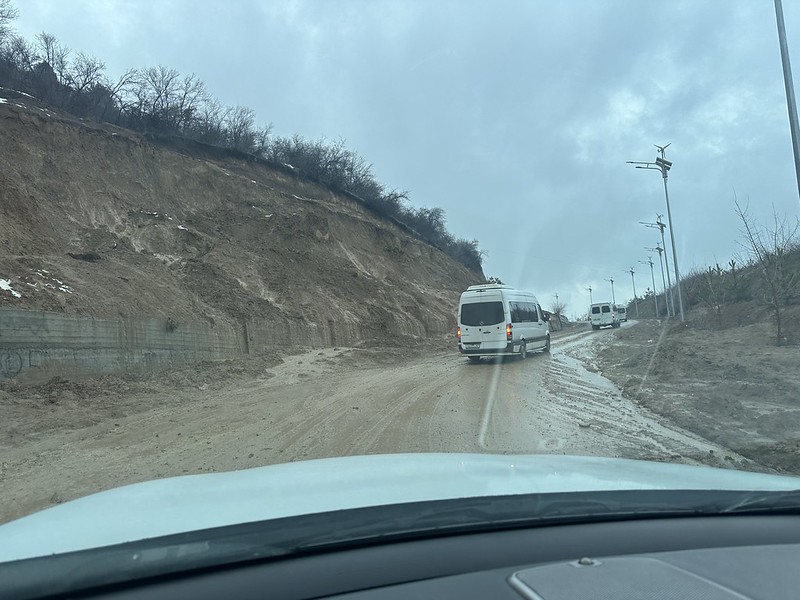
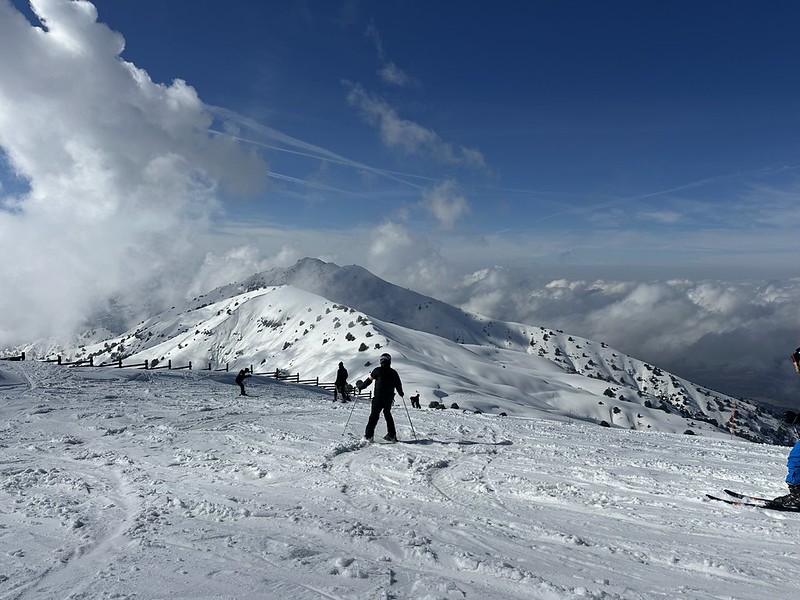
I was a chaperone for the grade 10 ski day on Friday. Unfortunately, the snow conditions were not great. The slopes were very icy with lots of bare spots on the lower slopes and choppy conditions on the upper slopes. All of us were cautious to avoid injury. I fell once and feel it in my shoulder today, but I am glad all of us avoided anything serious. It felt like the end of the season, with temperatures in the mid-50s in the city and snowmelt all over the resort. I noticed some mud slides covering the road, depositing an inch or two of mud on the pavement. There were heavy rains in the city last night and I wonder if they had rain or snow at the resort. I belong to an English language Amirsoy channel and it looks like the upper slopes are OK and they have the groomers out.
SummitPapa Mudslide
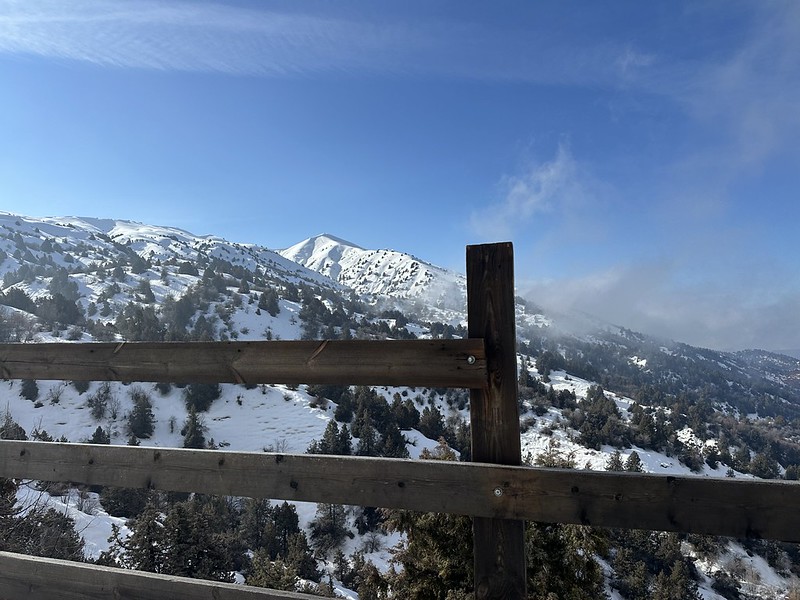
I still enjoyed myself challenging ourselves with the students. The views of the Ugam-Chatkal Mountains are spectacular regardless of the snow conditions. The mountains feel a world away from the city! I will certainly miss the snow-capped peaks next year.
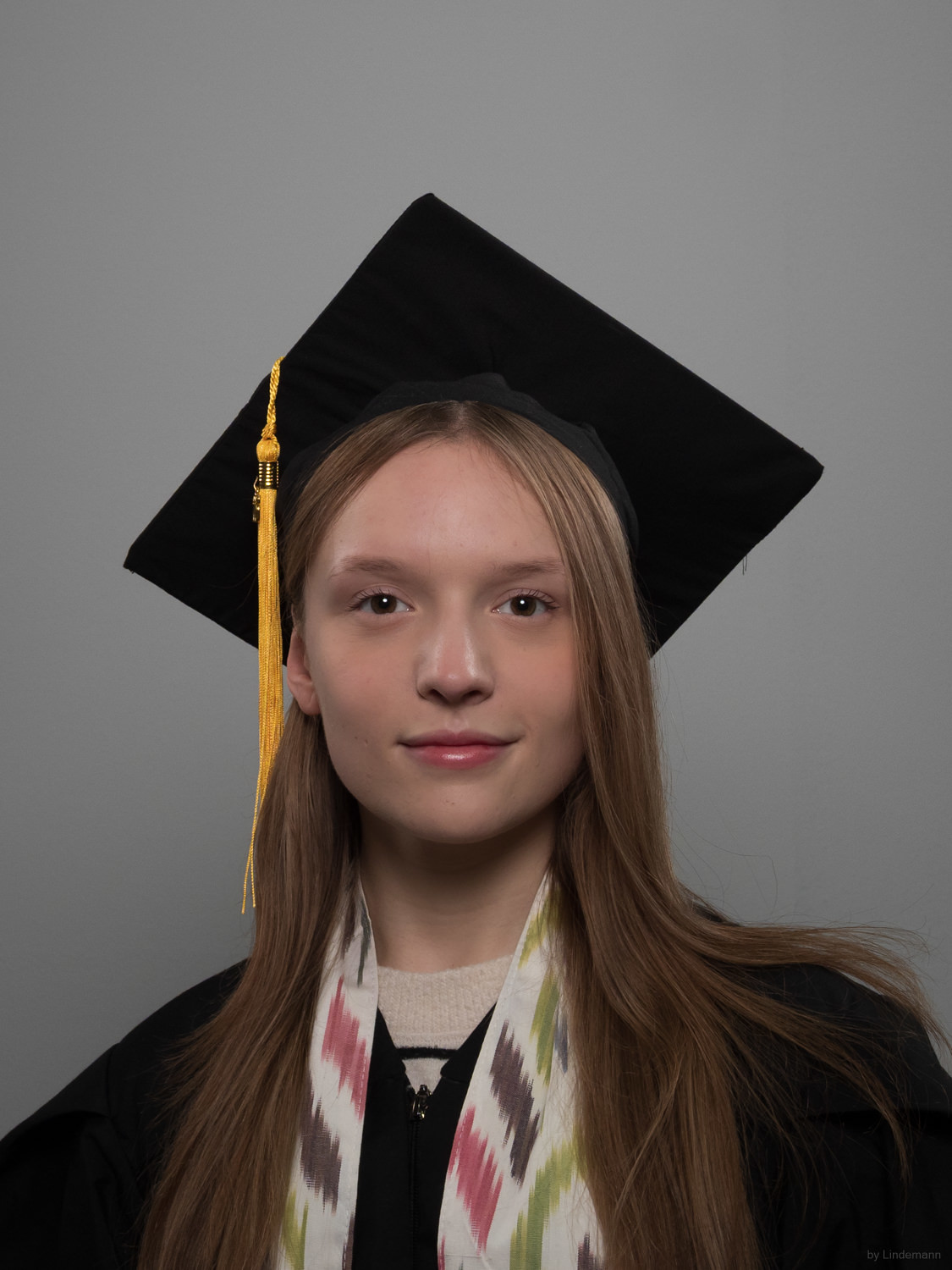
Ocean shared her graduation photo with us from earlier this week. What a beautiful, mature, young woman she has become! I like the nod to Uzbek culture with the ikat sash featured with the robe.
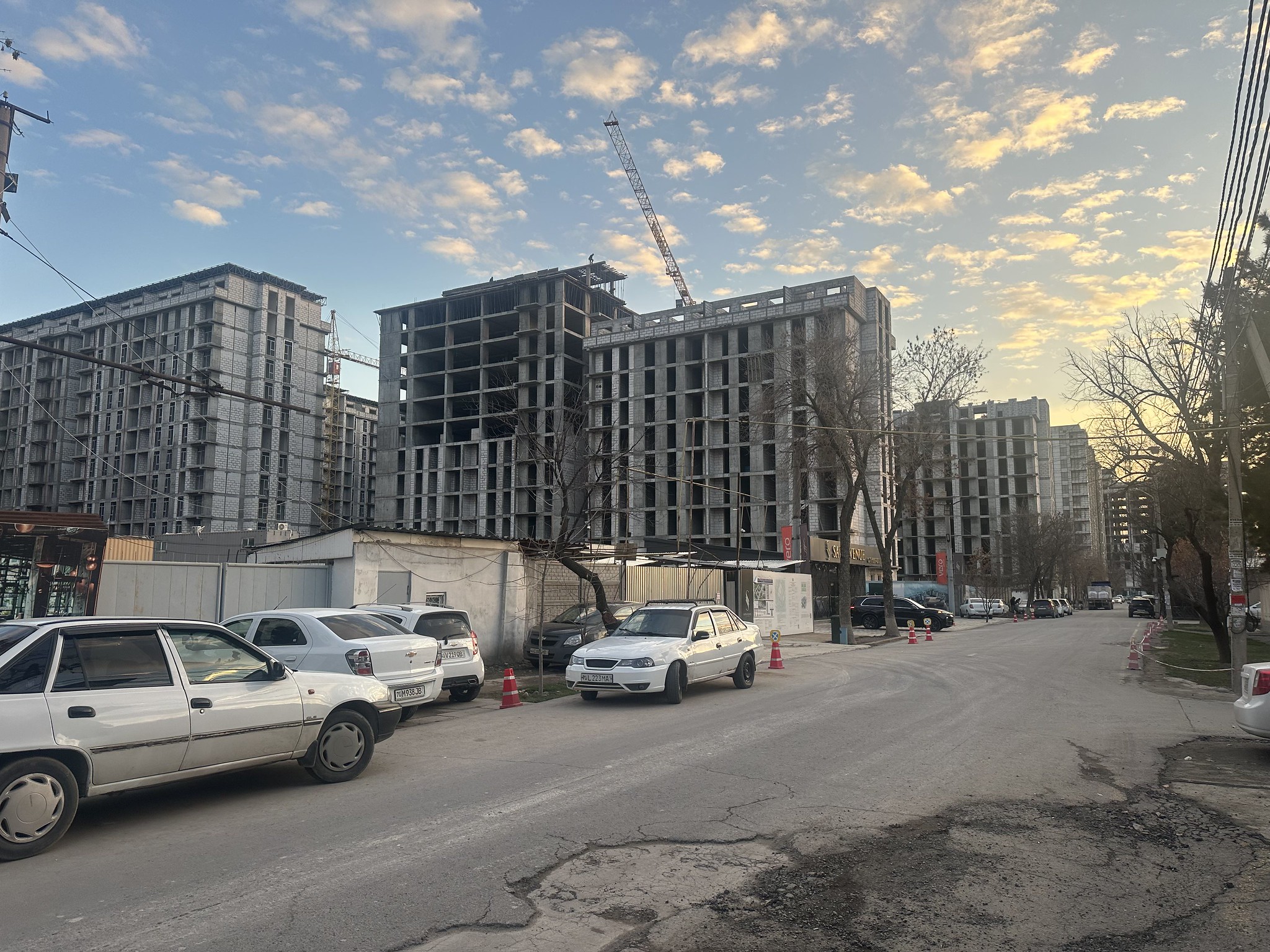
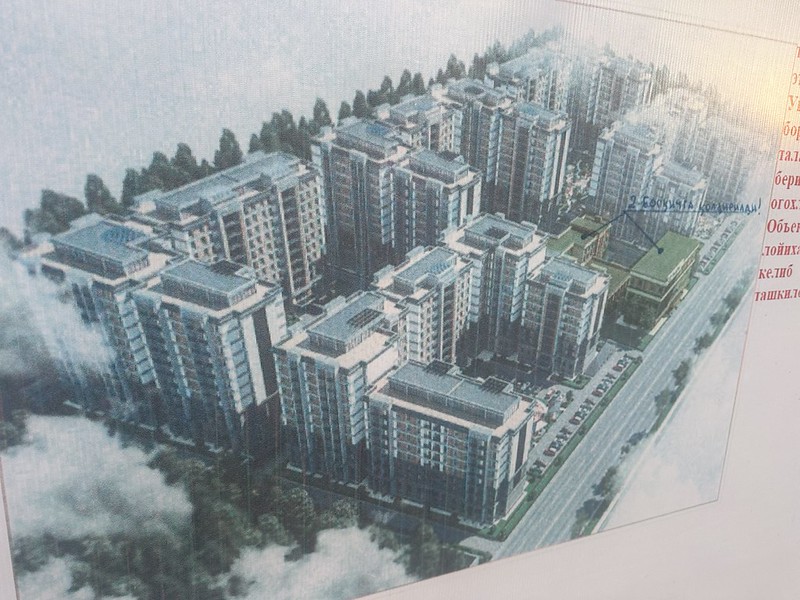
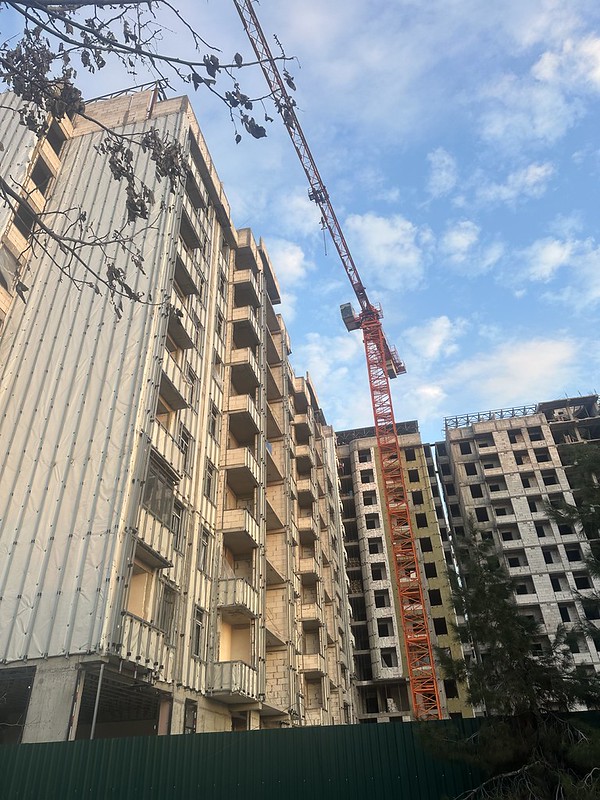
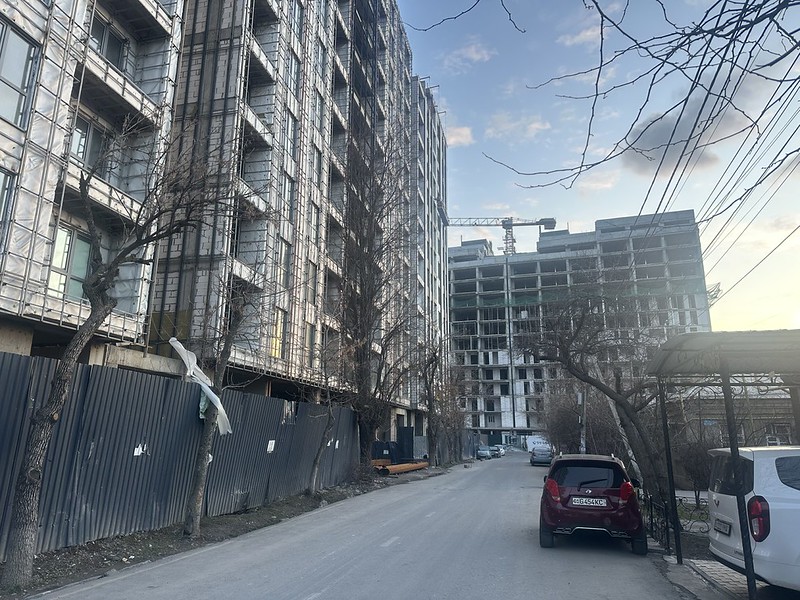
I took Obi for a walk late yesterday afternoon by the Savr Avenue Development. It is located on the former grounds of a pharmacuetical factory near our school in the Mirabad District of the city. It is a huge complex with three companies putting up complexes. I am not pleased with the development as it will increase traffic on the two main streets (Sarikol and Fitrat) that our community members travel on to get to the school coming from the center of the city. The apartments are like most apartments, very small and densely packed. Developers are greedy and put profits over quality of life. I would guess there are close to 1,000 apartments in the various buildings. Even with low occupancy rates, there will be many more families living in the neighborhood near the school. There are two more developments going up on the other side of the school near Furqat Park. I wonder what traffic will look like in the next 5 to 10 years.
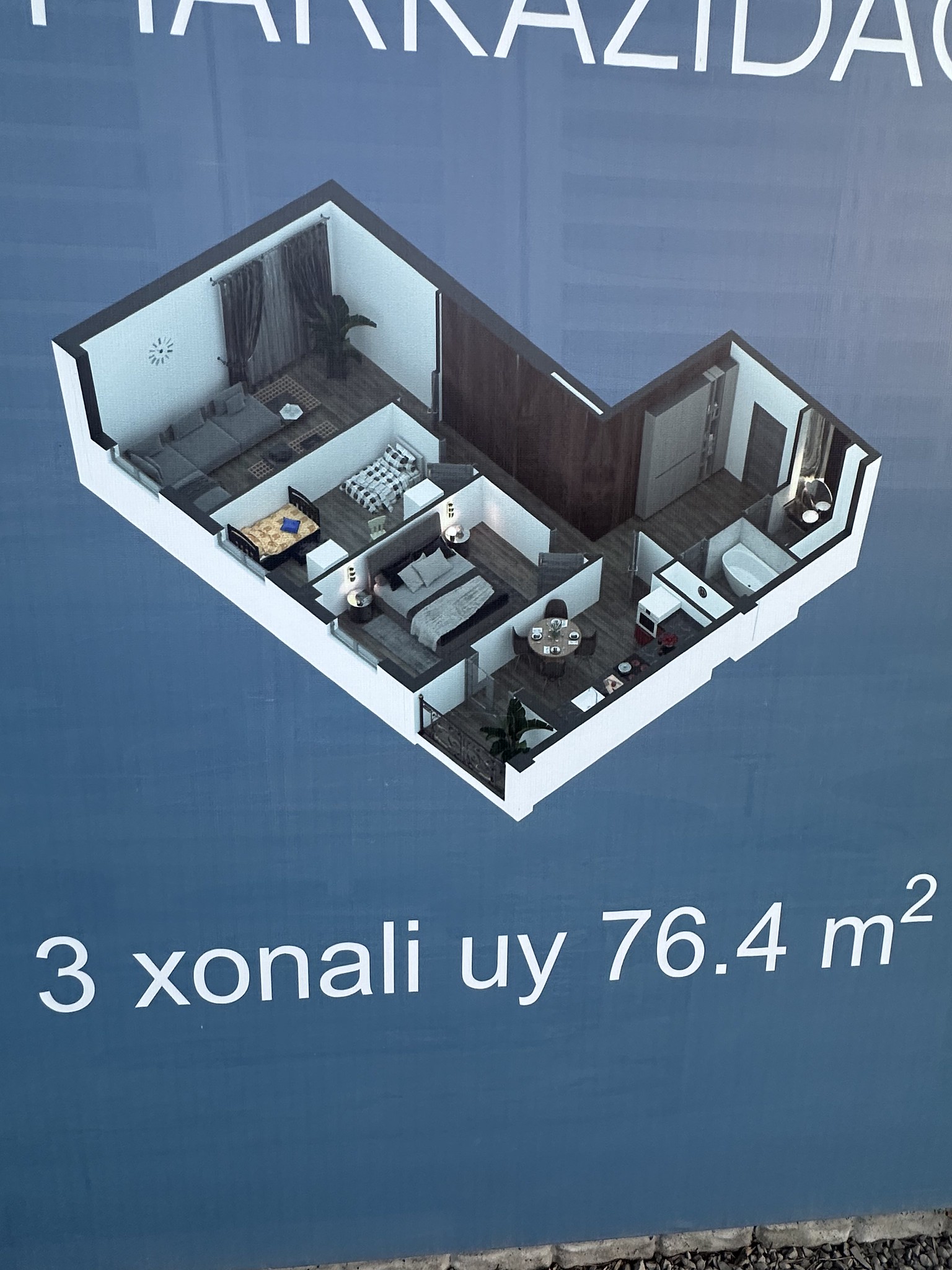
The advertised apartments range from the largest (818 square feet – below left), which features two bedrooms, one bathroom, a kitchen, and a living room, all located on opposite ends of the apartment. The smallest apartment (300 square feet – below right) is a rectangular room with a bathroom and a living room/kitchen combination that would be more common in Japan than in Uzbekistan. Many of these apartments will be purchased by people as investments.
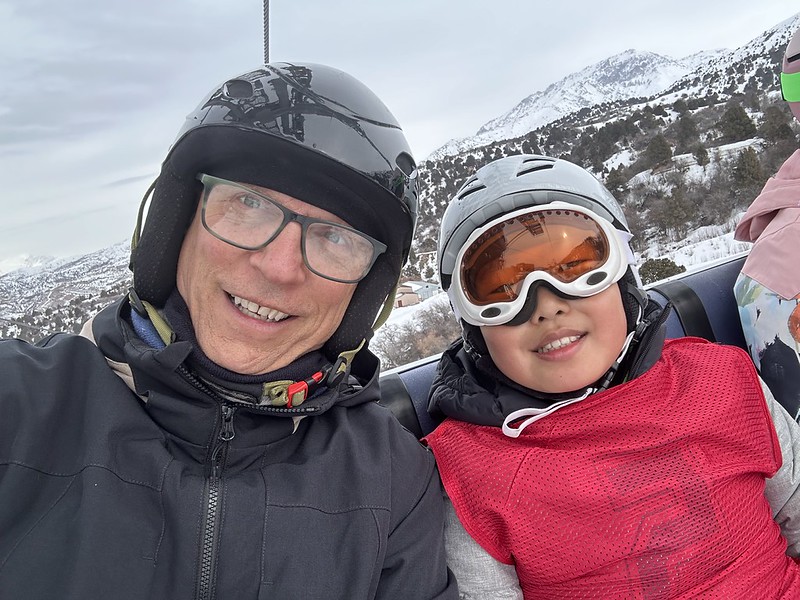
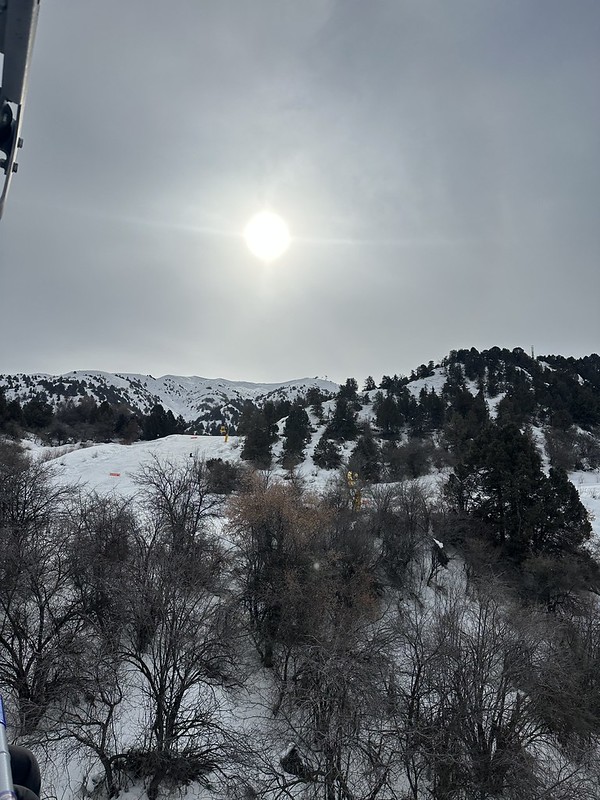
The highlight of my week was chaperoning the Grade 4 Ski Trip to Amirsoy Resort on Thursday. I spent the day on the intermediate “green” slopes of the mountain and had a blast skiing with the boys and girls. Conditions were great in the morning, with cold temperatures, slightly overcast skies, and decent snowpack. Conditions deteriorated slightly in the afternoon as it became warmer; the snow was a bit slushy. I always say any day I am outside more than inside, is a great day!
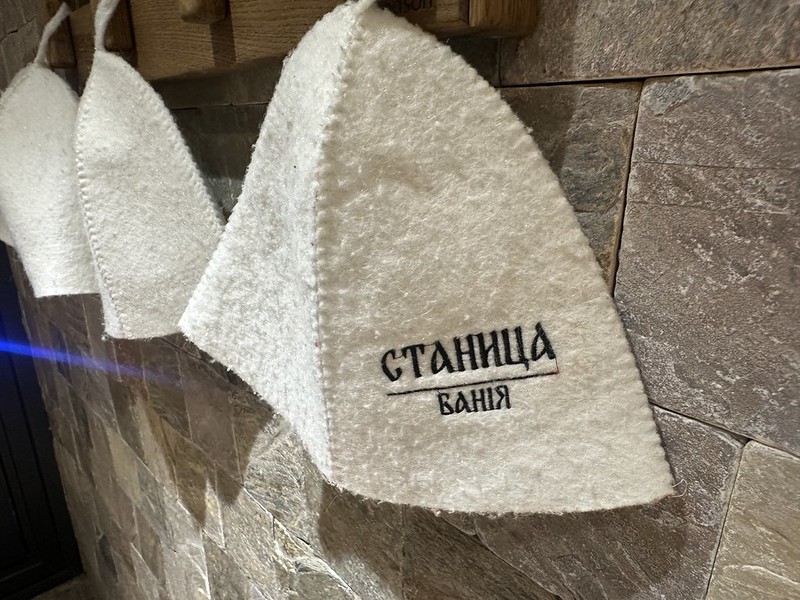
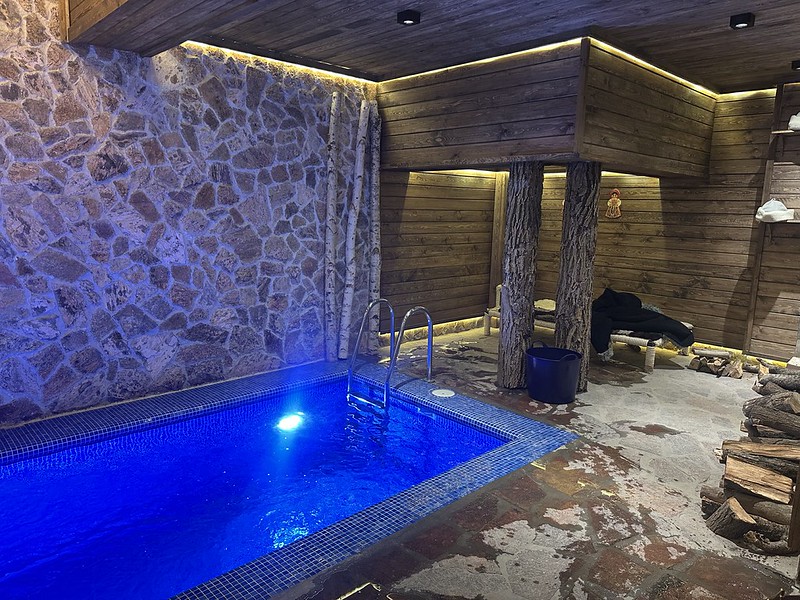
Last night, my friend Aaron and I discovered a new Russian-style баня (banya) called Stanitsya. They have two private lounges with a sauna, a Turkish steam room, a cold pool, a regular pool, a dining area, etc. The facilities are well finished and come with a spa master and a masseuse. Each lounge can fit between 6-10 people. It is a bit expensive, and they tried to charge us for 3 and 1/2 hours when we were there for 3 hours. This was after they told us upon arrival that the spa was fully booked. They had a late cancellation. One of the employees ran out to our car as we were pulling away and brought us back in. I would recommend the bath house to others if you have a group of people.
All of the snow melted in the city with temperatures getting up into the 60s earlier this week. We had a “wintry mix” on Friday with rain and temperatures ranging from 1 to 15 degrees C (highs of 50s F). Climate change is causing weather fluctuations between warm and cold all over the world. This is only the beginning and I wonder what the climate will be like for my children and grandchildren.
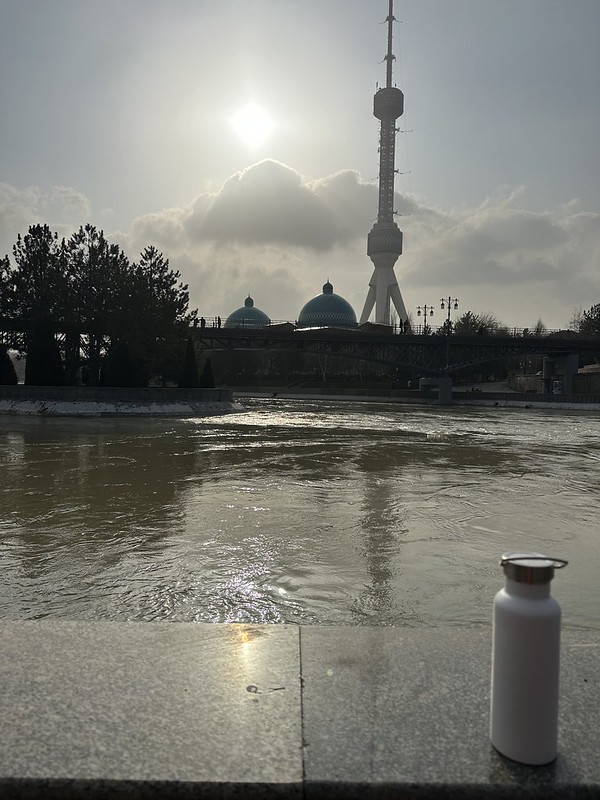
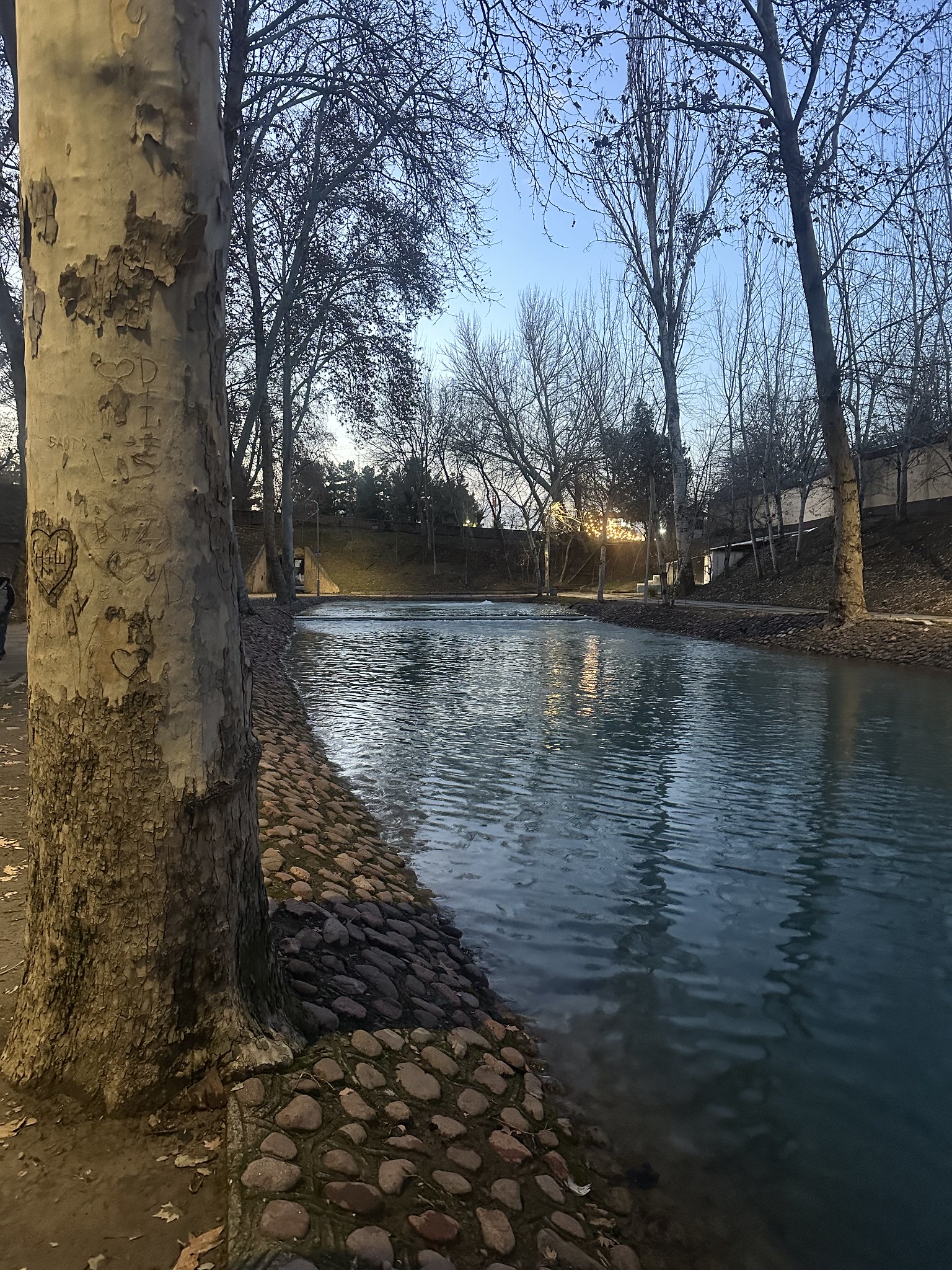
I am taking time to savor my final year here in Tashkent. I went for a run after work along the canal yesterday and captured this sunset photo on one of the side canals beneath the hill of the Uzbekistan Olympic Museum. The weather this week has felt like a mini-spring with temperatures reaching into the mid 60s with a high today of 64 degrees F!
Senior PhotosSenior Photos
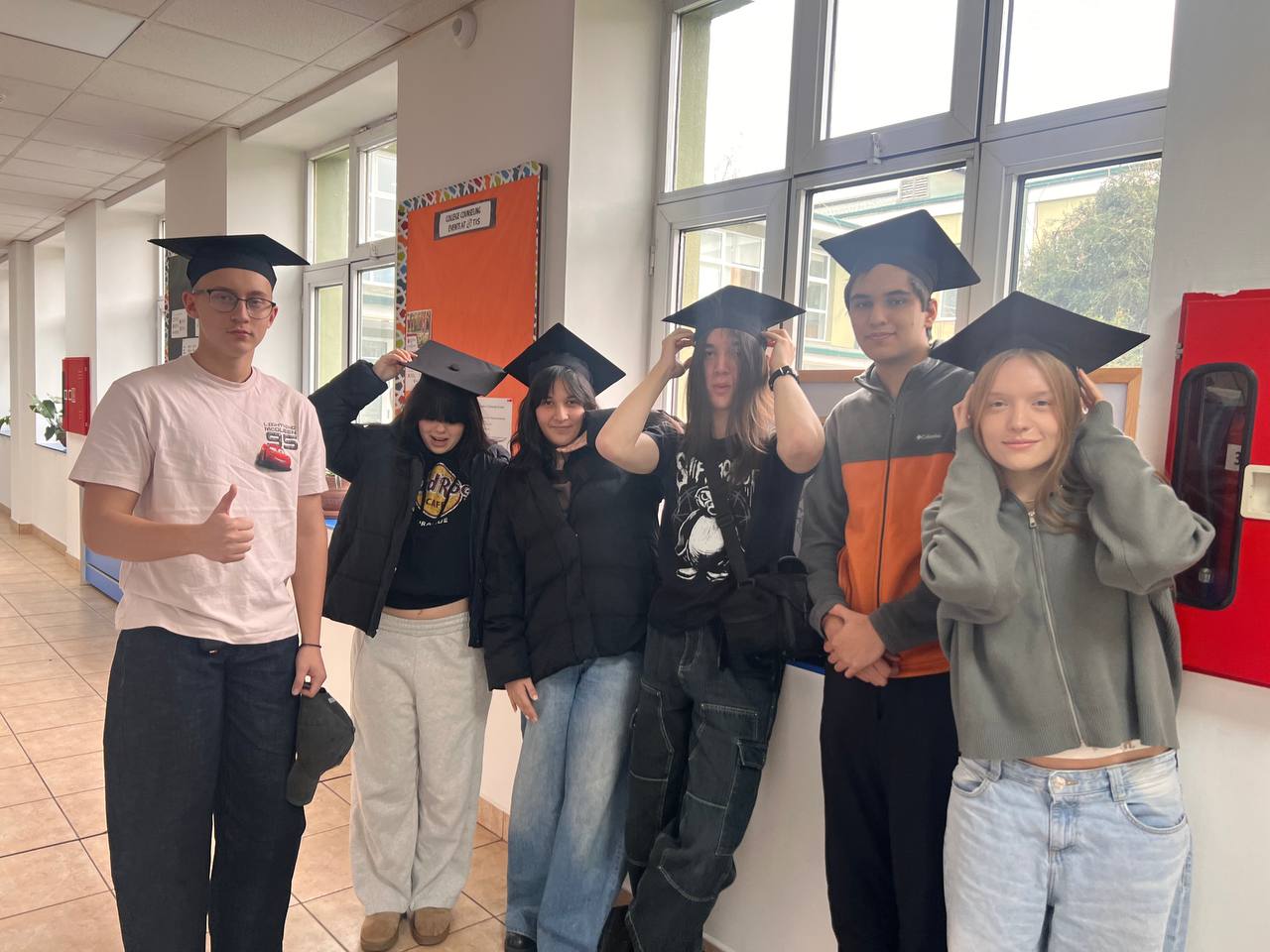
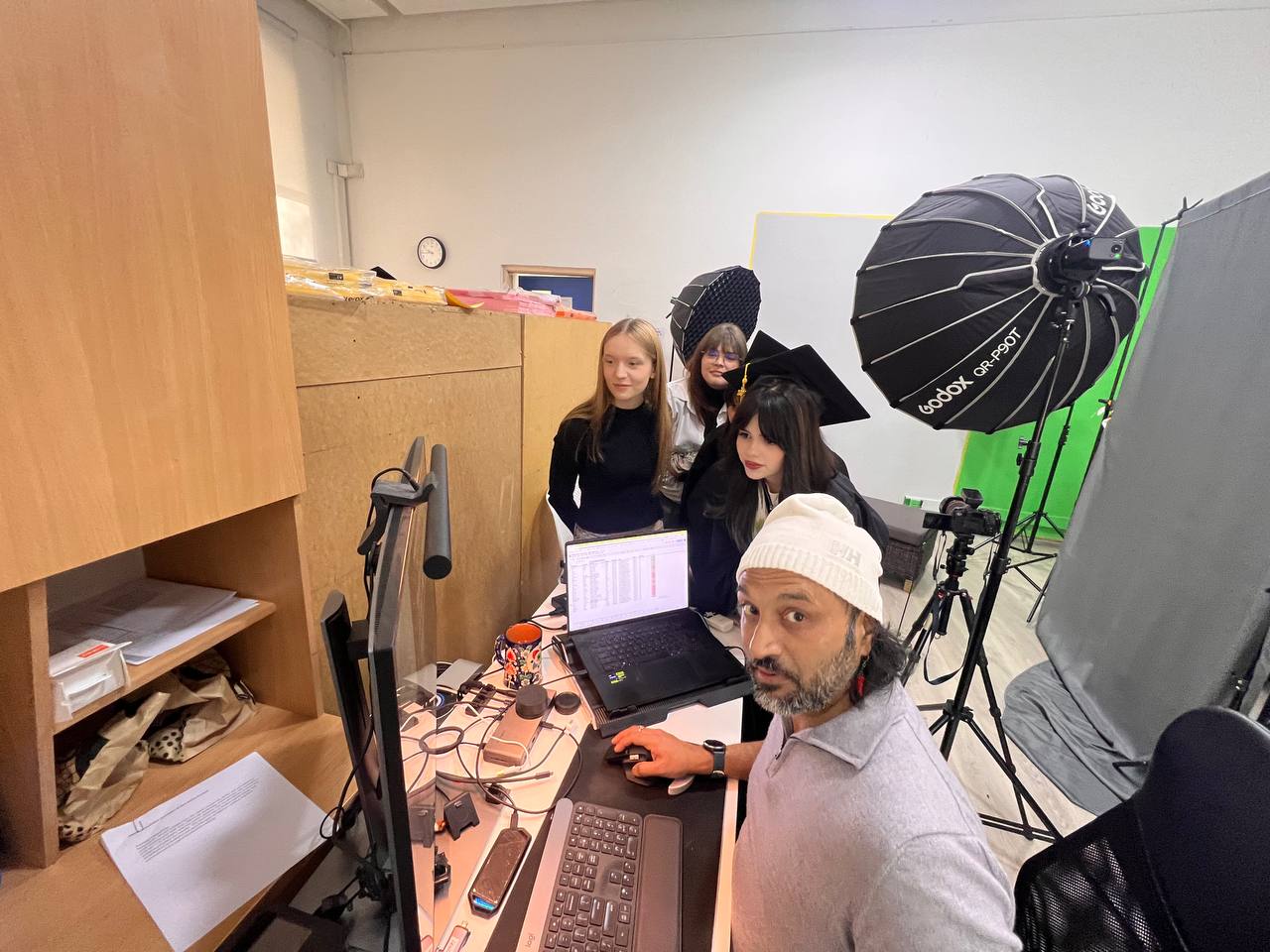
Ocean had her senior photo day at school yesterday. The grade 12 students took their individual portraits with their graduation caps and gowns. Graduation this year will take place on May 22, and Nadia and I are both excited and dreading the big day! The photos took place in the administration building, and seeing 17 and 18-year-olds fret about their looks makes me laugh from the perspective of someone in their 50s. I’ve reached the age where anyone with skin with no wrinkles and all of their hair looks fantastic.




 Bill's Blog