Family Journal: May 25, 2024 – Zhemchug Apartment Tour

View from the rooftop of Zhemchug Apartment Building

One of my favorite aspects of the city of Tashkent is the legacy of Soviet architecture. UNESCO is considering granting “World Heritage” status to 16 Tashkent Modernist Architecture. I hope this gets approved and these projects will be protected. I understand that Uzbekistan was under Russian control for many years, but I think at this point, it is part of the history of the place and it enriches city experience for future generations of visitors and inhabitants.

Tashkent was the fourth most populous city in the USSR. The Russians invested a lot in the infrastructure as they viewed the city as a showcase of the “Soviet Orient”. The UNESCO bid for heritage status argues that the Soviets held many conferences and meetings in Tashkent and brought back the idea of “east meets west” from the heydays of the Silk Road. The 16 TMA (Tashkent Modernist Architecture) projects are outstanding examples of unique buildings the Soviets and Uzbeks designed and built from 1961 to 1990.
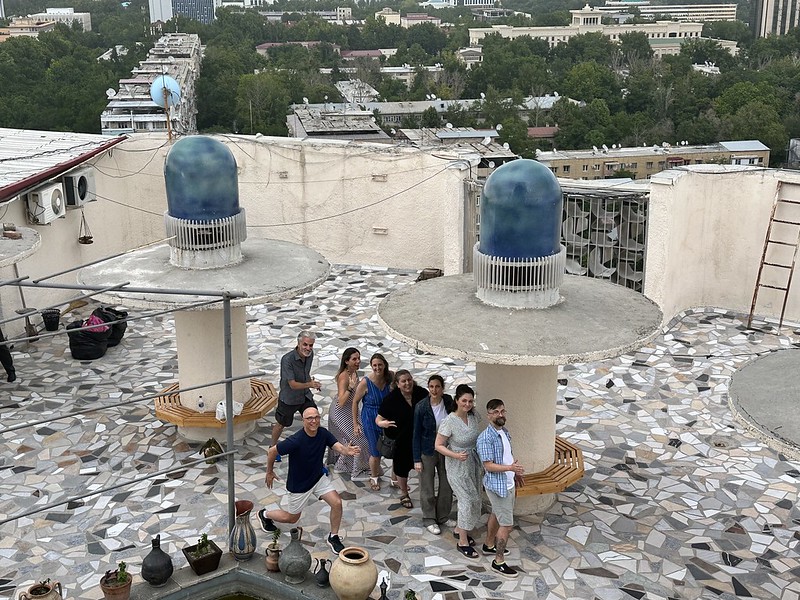
For my birthday last weekend, I went on a tour of the жемчуг “The Pearl” apartment building. UNESCO describes it as follows:

Zhemchug (design 1972–1984, construction 1975–1985) is a seventeen-story residential building designed by Ophelia Aydinova. In 1986 it was awarded the gold medal as the building of the year by the Union of Architects of the USSR. Zhemchug is a highly experimental building aspiring to create a vertical analogue to the single-story community housing of Central Asia’s historic cities, the mahallas. The apartments are grouped around three-story suspended courtyards where inhabitants could practice the collective way of living within extended family units. Zhemchug was also one of the first uses of fully monolithic concrete construction in Tashkent, with the sliding formwork liberating the architecture from the rigid constraints of prefabricated construction. The experimental construction and the ability to merge modernist architecture and quasi-anthropological interpretation of traditional mahallas make Zhemchug a unique example in the global scenario of modernist architecture.

A resident of the building gives tours. She welcomed us in front of the building and walked us through the building, including going up to the roof top. She didn’t say much and it was cool to explore on our own and experience the architecture. People live in the apartments and we saw several residents coming and going in the lobby and standing outside of their doors. The architect, Ophelia Aydinova’s big idea was to recreate the traditional mahalla inside a high-rise apartment block. She did this by designing five, three-floor plazas that encouraged residents to interact with each other. She also made the rooftop a public space with a pool and gardens. The building is in a great location in the central area of Tashkent surrounded by big urban parks. We were told the apartments are not spacious and the construction has not been adequately maintained since it completion almost 40 years ago. It would be fun to renovate an apartment and rent it out on Air BNB.
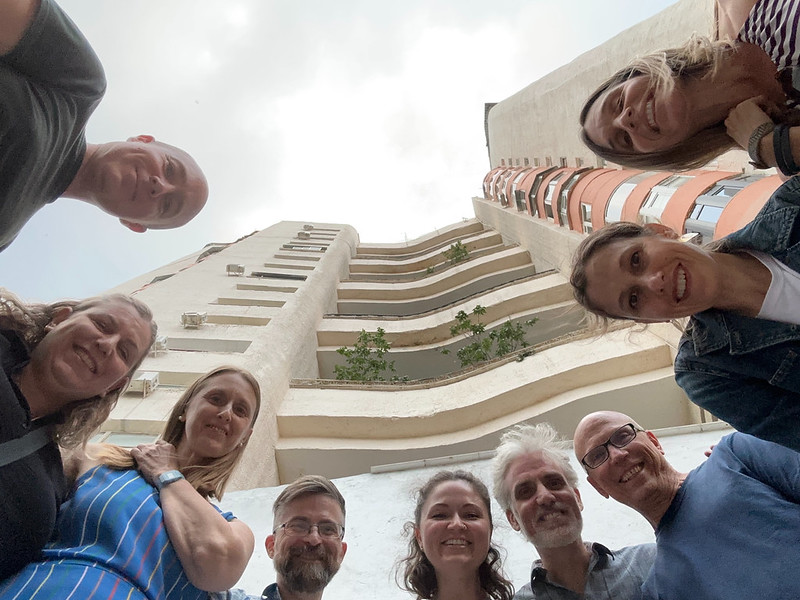
The best part of the tour was to be able to share the experience with my wife Nadia and friends. Nadia knows I love doing stuff like this and she made it happen! I am blessed to have such a supportive wife and fun friends. It was a great day!

Oliver Graduates! Family Journal: May 24, 2024

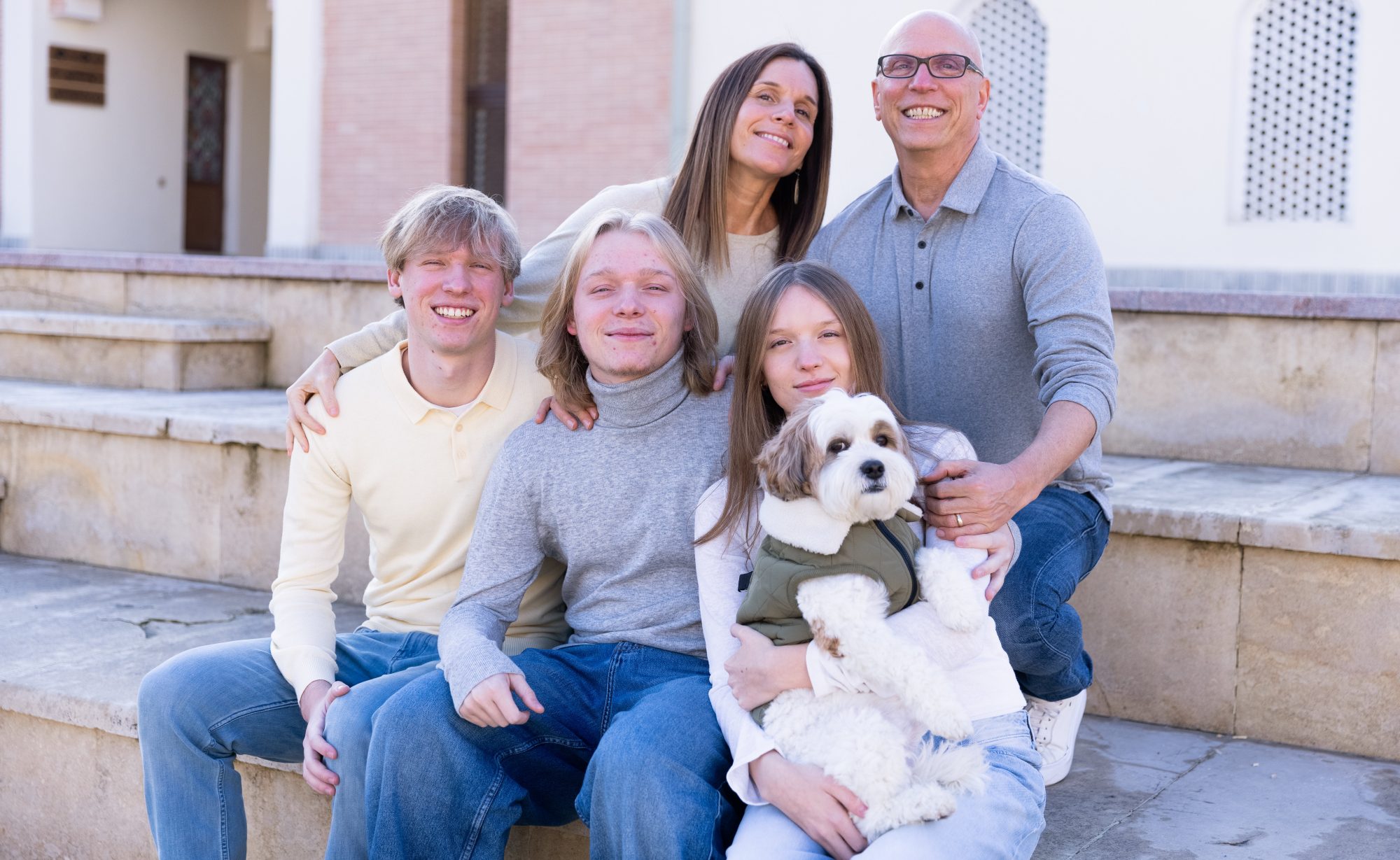
Dad, Oliver, Ocean, and Mom

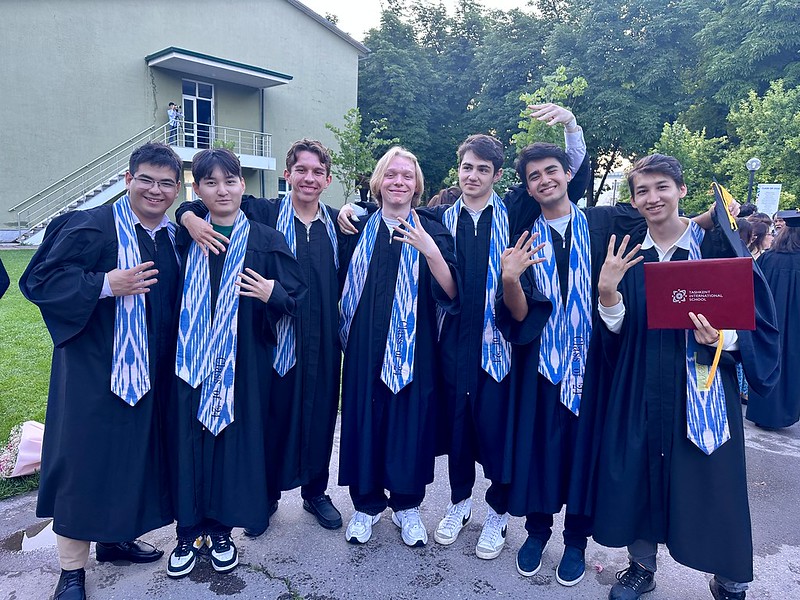
It was a special day in the Kralovec family with Oliver’s graduation from the Tashkent International School yesterday. Oliver received his high school diploma as part of the TIS Class of 2024. We were all emotional to see him complete his PK-12 education and we are very proud of his accomplishments.

The graduation ceremony is traditionally held in “the quad” an open area outside, adjacent to the TIS Park. Community members love the forested central area of the campus and it provides a backdrop to the stage. The only problem with an outdoor ceremony is always the weather. Will rain force the ceremony inside? Tashkent technically has a “Mediterranean” climate (Köppen Climate Csa) which means “hot, dry summers”. Our graduation ceremony is held near the end of May which usually has higher temperatures and less rain. However, for two of the last three years, rain was forecasted. Two years ago we had to move the ceremony to the gym. As the director, I am ultimately responsible for deciding where the ceremony will take place. The leadership team looked at forecasts and satellite images for the past couple of days and tried to make a data-driven decision. A wrong call would result in either, a downpour during the ceremony, or a bright sunny late afternoon and everyone wondering why were inside on such a beautiful day. Ultimately, we decided to go with the wishes of the students who wanted it outside, and the weather reports indicated rain clouds slowly subsiding throughout the afternoon. We were worried about the decision when it was still drizzling around 2:00 PM, four hours before the ceremony was to begin, but thankfully, the sun came out around 4:00 PM and despite the damp grass, it turned out to be a lovely day. I have a theory that climate change is causing spring rains to move further into the summer.

Oliver with his best mates (Said, Jin, Tristan, Oliver, Simeon, Muhkamad, Ulugbek)

We are excited for Oliver to start his journey towards adulthood. We are sad that another of our babies is leaving the nest. Nadia and I are heartbroken to be down to 3. I wish Oliver a life full of ups and downs and the opportunity to experience all it has to offer.

Family Journal: Oliver’s Prom – May 17, 2024

Dad and Oliver – Miras Restaurant – Tashkent, Uzbekistan

We are celebrating Oliver as he finishes his high school education this month. On Friday night, he attended the school prom with his girlfriend Nicole. Nadia and I stopped in to see him and his friends. I love seeing the students dress up and have a good time together. Young adults always give me hope for the future of humanity. Lots of good energy! He finished his IB exams this week and we are looking forward to an emotional graduation ceremony next Friday.

He didn’t play volleyball this spring so he could focus on his IB exams. He did get a chance to play in his final high school sports tournament as a player on the developmental squad. It was nice to see him play one last time as a TIS Owl. His team did not medal, but on three hours of sleep, I thought he played well. Ocean’s team won the championship and the girls played well as a team. I didn’t get to see much of the games because I was taking an Emergency First Responders Training Course. Along with six colleagues, I am not a certified PADI Emergency First Responder Instructor! It is helpful to have trainers on staff so we can get the entire faculty and staff trained easily. I managed to video a few highlights of the games and they are below.

Travel Journal May : Lake Ohrid, North Macedonia – May 9-12, 2024

Church of St. John at Kaneo

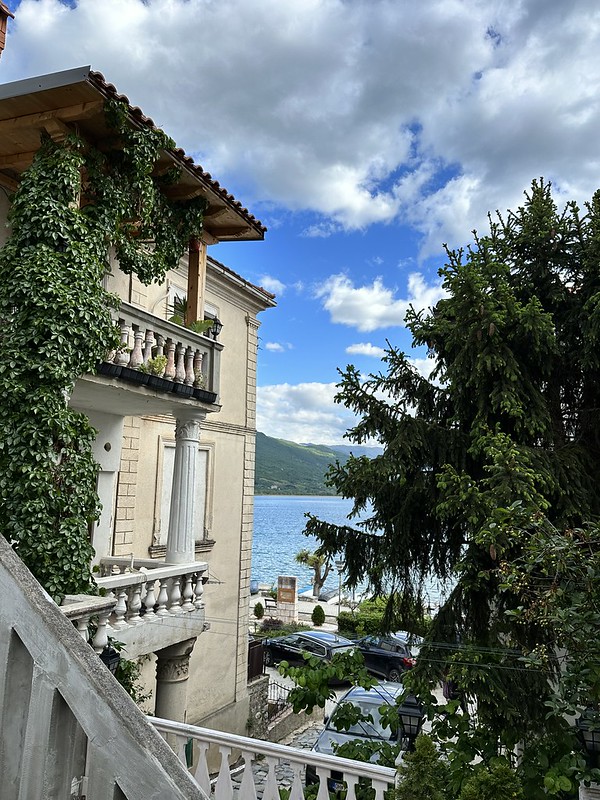
After the CEESA meetings on Friday, we spent the weekend up at Lake Ohrid to sightsee, unwind, and continue having conversations about our schools. Lake Ohrid is stunningly beautiful with a delightful, Mediterranean-like atmosphere with picturesque villages, steep green mountains, and clear, blue waters. It is one of the oldest and deepest freshwater lakes in Europe. It is a poorly developed Rift Valley lake (technically a graben) which is a tectonic fault. It is similar to Lake Titicaca in Bolivia. The water comes from underground springs, seeping through the limestone sediments. The lake has over 200 endemic species that can thrive in the unique alpine environment.

Ancient Theatre of Ohrid

We took a boat tour leaving the main harbor in front of the town of Ohrid. We traveled south and stopped at an archaeological site (Bay of Bones) and visited a recreation of an ancient fishing village based on Roman descriptions of the area. The lake is shared with neighboring Albania which has 36% of the shoreline and Macedonia which has 64% of the shoreline. The water in very clear and with the sun coming through the clouds, it was a beautiful sky backdrop while on the water.

The view from the church dedicated to John of Patmos (top photo), the writer of the Book of Revelation, was stunning. I love history and the Orthodox Church was probably constructed in the 1200s, before the Ottomans took over the area. The theatre dates back to the Hellenistic Period (200 BC) which was the time from the death of Alexander Great to the emergence of the Roman Empire. The theatre was only discovered in the 1980s. The Romans used it for the execution of Christians and the locals hated the place and avoided it. This preserved it until during the construction of homes, the workers were uncovering Roman-era stone slabs. Today it hosts a summer music festival.

Ohrid village is picturesque, with over 300 churches for a population of 42,000 people. There were lots of tour groups and we completed a walking tour along the waterfront up to the fortress and back through the town by a Roman-era amphitheater. The quaint homes reminded me of many of the Mediterranean villages like Valledamosa in Mallorca, Trogir in Croatia, etc. I would definitely come back and stay for a week, hiking in the mountains around the lake and kayaking/diving in different sections of the lake, including exploring the Albanian side.

We had a lively dinner with Macedonian folk music and dancing. America lacks rousing folk songs that everyone can sing by heart and use an accordion to play. Slavic Eastern Europe has many of them and it makes for a community feeling of strangers in a restaurant. We were trying to think of an equivalent and only could come up with YMCA, or some pop music hits. The restaurant band tried, playing “Oh Sussanah” and “When the Saints Come Marching In”. I could only think of “This is My Land, This is Your Land”.

The next day I went for a run along the bike path on the shore outside of the town of Ohrid. We took a bus back to Skopje (3-hour drive) and flew through Istanbul back to Tashkent in the evening. Of course, our flight was delayed by 3 hours, so it was a long night in the Istanbul airport and a later arrival at school on Monday.

Overall it was a relaxing and insightful trip. It was great that Nadia was able to come and we reconnected with each other, spending a lot of time together. Often during a busy week, we do not see each other a lot. North Macedonia is an overlooked country because it is small and landlocked. It is north of Greece and it was the far south of Yugoslavia. Skopje is similar in many ways to Belgrade, just a lot smaller and less developed. We love the Balkans and the ex-Yugoslavia and perhaps will be back next spring in Zagreb or Split Croatia. I would like to thank our host, Ivan for his gracious hospitality and joie de vivre!

Enjoying Skopje – May 10, 2024

Macedonian Square at Night

Election monitors from the OSCE – ODIHR (Organization for Security and Cooperation in Europe – Office for Democratic Institutions and Human Rights) are staying at our hotel. On Wednesday, the country held parliamentary elections and the ceremonial Presidential elections as well. The Right-wing opposition party won big in both elections. The VMRO-DPMNE (Internal Macedonian Revolutionary Organization – Democratic Party for Macedonian National Unity) is a political party in North Macedonia. Founded in 1990, it is a center-right party with nationalistic and conservative positions. The party emphasizes Macedonian identity and heritage and has been a significant force in North Macedonian politics, often advocating for pro-European and NATO integration while maintaining a cautious approach to certain international and ethnic issues. That is a diplomatic way of saying the party advocates for the ethnic Macedonians over the minority Albanians and Turks in the country. For example, the new president, Gordana Siljanovska-Davkova, is against the Albanian language extension law and wants to revert back to the old name of the country. The outgoing president, Stevo Pendarovski, seemed like a nice guy, being the son of teachers and with a more moderate and progressive outlook. Citizens are frustrated however by how slow negotiations are going with the EU and the levels of corruption in the country.

OSCE Election Monitors in the Marriot Lobby

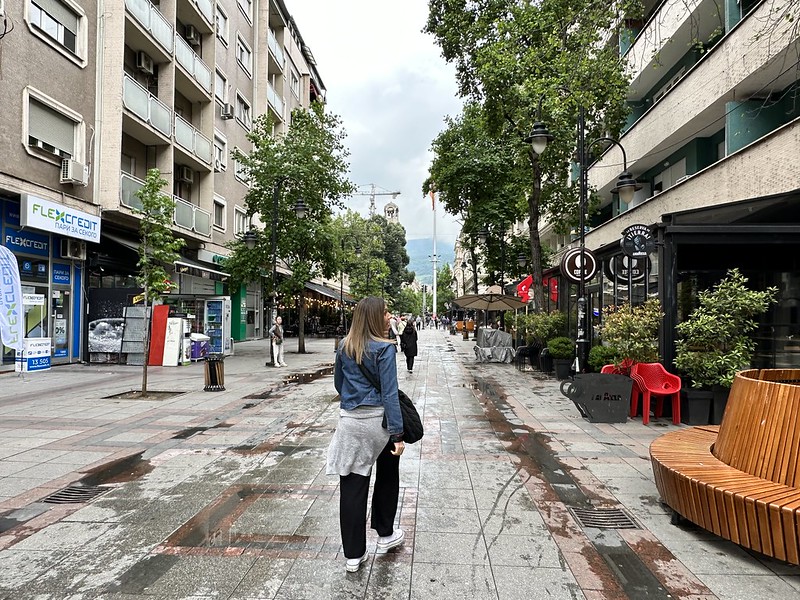
Skopje is distinctive for its 284 statues which was part of the Skopje 2014 Project. VMRO-DPMNE officials ordered the construction of monuments and buildings to highlight classic Greek architecture and Macedonian heroes. The idea was to bring in tourists. There were allegations of corruption, nepotism, and complaints that the money could be used more wisely. The project did succeed in making the city distinctive and I’ve seen a lot of tourist groups around the city. The city was destroyed by an earthquake in 1963, so I wonder what it looked like before the project? I notice some Socialist/Tito influenced aging architecture around the city in between and behind the monuments. Skopje feels like Sarajevo to me with the Ottoman-style turrets of mosques and the surrounding mountains.

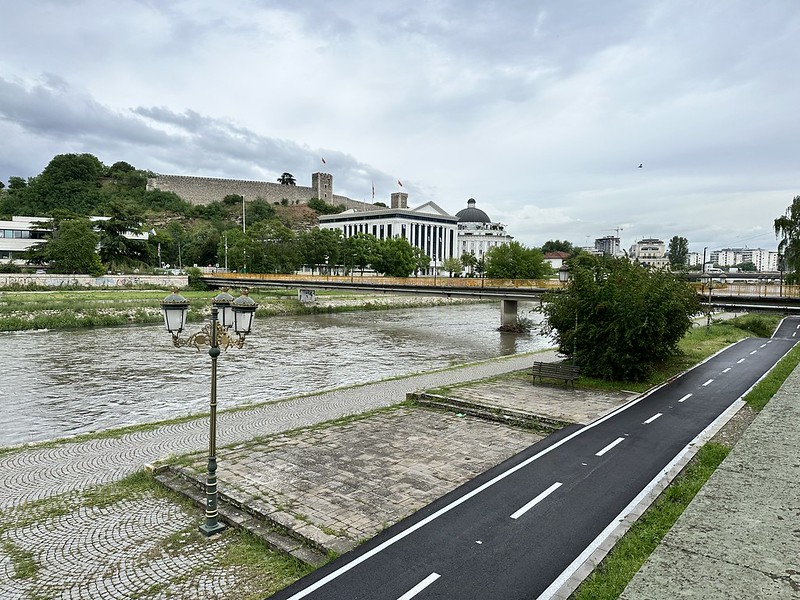
Bike/Running Path Along the Vardar River

I had a nice afternoon yesterday. I went for a five kilometer run along the Vardar River path and did a loop through City Park. I loved the humid air after the thunderstorm and the green trees. Much different from the desert climate of Tashkent. I did a yoga session and then Nadia and I went out to “Stara Kukja” (Old House) restaurant with the other directors and their partners. I had a Šljivovica (plum brandy) appertif and a hearty, Macedonia meal of lamb, beef, pork and accompaniments. We walked back through the lighted city and the Stone Bridge was beautiful and reminded me of Ivo Andrić’s book, Bridge over the River Drina. The famous historical fiction work set in Ottoman-era Bosnia.

Family Journal: Arrival to Skopje – May 9, 2024

Nadia in front of “Man on a Horse”* in Macedonia Square

This is my third visit to the capital city of Skopje. The last time I was here was about 10 years ago, however, it was then capital of The Former Yugoslav Republic of Macedonia. Today it is the Republic of North Macedonia due to a compromise made by Greece and North Macedonia. Greece has a problem with the country using “Macedonia” because it is a region in Greece and historically associated with Greek culture. Greece was blocking Macedonia’s application to the European Union and NATO. The two countries signed an agreement on the shores of Lake Prespa in 2018 for Macedonia to change the name of the country in exchange for Greece allowing Macedonia to join NATO and the EU. North Macedonia has been a member of NATO since 2020 and has been in negotiations with the EU since July 2022. In my research, I learned the origin of the word Μακεδόνες may come from the Greek adjective “tall” which is appropriate for the Balkans. The South Slavs are a tall people!

North Macedonia is a tiny country of 1.8 million people. The Macedonians are a Slavic people. Their language uses a Cyrillic script and is mutually intelligible with Bulgarian. In reading a bit about the history of the Macedonians, they were usually under the control of a larger, outside empire, most recently the Bulgarians, Serbs, and Ottomans. All of the people of the Balkans are related linguistically and genetically to varying degrees. The Macedonians are probably closest to the Bulgarians and are sometimes called “Western Bulgarians”. The country first became independent in 1991, escaping peacefully from the breakup of Yugoslavia. I worry about the 25% Albanian minority population of the country. The relationship was destabilized with Kosovo’s breakaway from Serbia. The Slavic Macedonian group composes about 2/3 of North Macedonia. The two groups signed an agreement in 2001 preserving the minority Albanian rights and giving them some autonomy within the country. One of the big challenges is the economic disparity and the cultural differences between ethnic Albanians and ethnic Macedonians. I can see the lighted Christian cross shining over the city from the nearby mountains, similar to the cross in Bethlehem, Pennsylvania. I sense it is there to remind everyone that is a Christian nation.

meat and cheese burek with yoghurt for breakfast

Nadia and I flew to Skopje overnight through Istanbul. We had a quiet day exploring the city in the morning and sleeping in the afternoon. I am here for school leadership meetings of our regional association of international schools. The spring meetings coincided with our Victory and Remembrance Day holidays that are taking place today throughout the former Soviet Union Republics. The Russians mark May 9 as the anniversary of the World War II victory over Nazi Germany. We took advantage of the school holidays for Nadia to come with me. Often, school directors are accompanied by their partners, but Nadia is usually teaching and not able to attend. I hope to blog more about our experiences in North Macedonia this weekend.

We love the “grungy” vibes of the Balkans

* Part of the Prespa agreement was to not to proclaim Alexander the Great as Macedonian so the name of the statue was changed from “Alexander” to “Man or Soldier”.

Family Journal: May 5, 2024

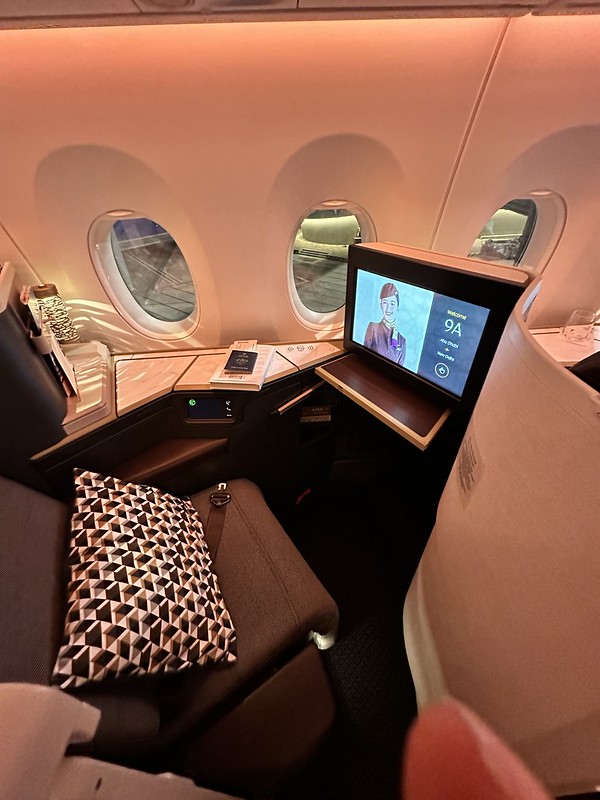
I am not often shocked, but on the way home from Abu Dhabi I was magically bumped up to Business Class on my Emirates flight to Delhi. Approaching the attendant at the gate ready to board, I was preparing myself for a 3-hour journey in economy seat 61D. When the airline employee scanned my ticket, a “conflict error” message flashed on the screen. He immediately issued a new business class ticket, moving me to seat 9A. I was stunned. I had a private compartment and a full bed! What a nice gift from either the Emirate desk agent or the flight gods. 

I want to travel to India and my connection went through Delhi so it doesn’t count on my life list, but I got to experience it a bit in my 3+ hours in the airport. It is the world’s most populous nation and many commentators and academics think it will play a leading role this century. I need to convince my wife to go during one of our breaks as it is close to Tashkent and a cheaper holiday. My brother lived in Bangalore for two years and I regret not visiting him during one of our spring breaks while we were in Japan. One of the major challenges for the country is air pollution. I could see the brown haze on our morning flight. 

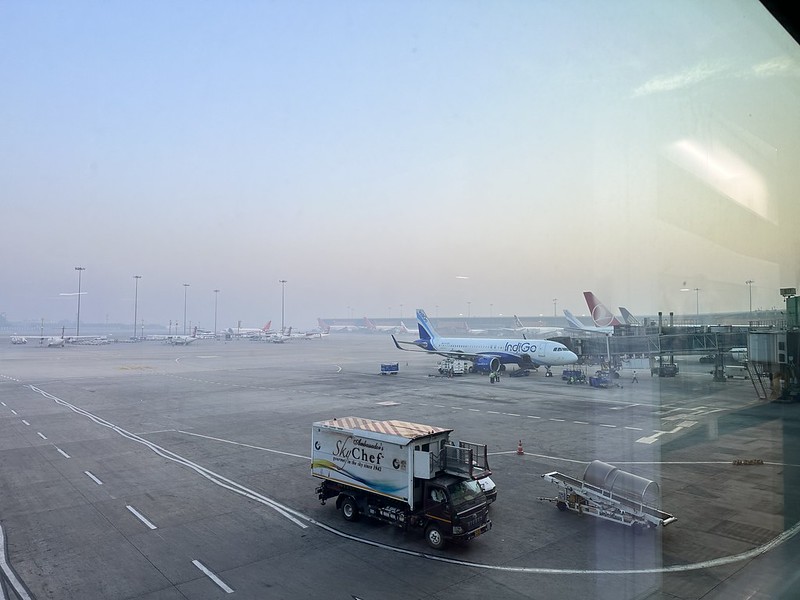
Dehli Airport

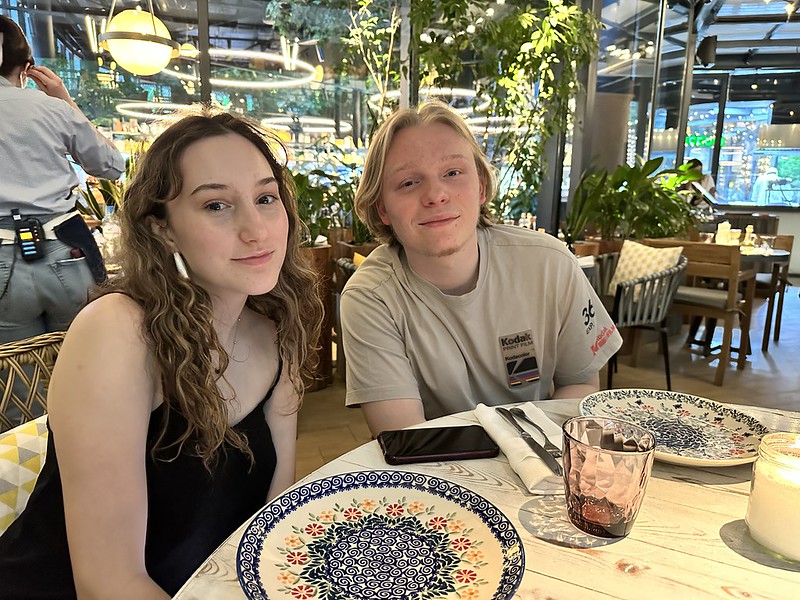
Our family had a nice weekend together as I recovered from an overnight flight. I came to school on the Friday in the afternoon. We celebrated my son Oliver’s 19th birthday by going out to dinner at the Cheese Factory (Сированя in Russian). It is part of the Novikov restaurants, owned by Russian restauranteur, Arkady Novikov who has ties to the Kremlin. They make fresh cheese right on the site and the food and drinks are delicious. Oliver is in the midst of IB final exams, so we had a relaxed night out. 

Oliver and Nicole – Happy Birthday Oliver!

Saturday night Oliver and I went to pick up Nadia who was with her girlfriends at the karaoke bar, Baritone. We ended up singing a lot of Bon Jovi! He has several classic sing-along arena rock anthems (Living on a Prayer, You Give Love a Bad Name) that are perfect for karaoke. We had a great time! Sunday night I took Obi for a walk downtown and I am surprised at how drastically the cityscape is changing with the Tashkent City Development. 

Nest One (left) – Luk Oil (right)

My Thoughts on Abu Dhabi and the UAE

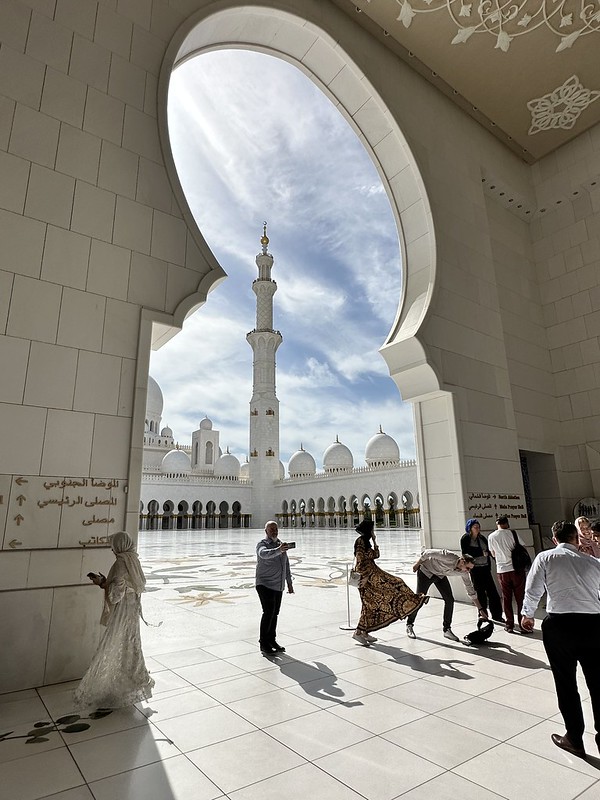
Bill and Mahmud in the courtyard of the Sheikh Zayed Grand Mosque

The United Arab Emirates (UAE) is similar in population to my home state of Michigan, the UAE hosts approximately 10 million residents, yet only 1 million are Emirati citizens. The vast majority are expatriates drawn by lucrative job opportunities in a region fueled by its significant oil production—around 3 million barrels per day. UAE is richer than Michigan, with a GDP per capita reaching $70,000 and Michigan at $50,000.

Leaders in the UAE government however, recognize the finite nature of oil resources and the UAE is strategically diversifying. Utilizing its $1.5 trillion sovereign wealth fund, it is transformng into a trading entrepôt, financial center, and transport hub. This is evident in the user-friendly and aesthetically pleasing airports in Dubai and Abu Dhabi, which enhance the experience of international travel. I was so impressed with my travel experience. There are no hassles going through immigration or customs. Many countries, you feel like a war crimes suspect when they check your bags, leaf through your passport, look at you menacingly. Why? UAE does it right. They have the attitude of please come and spend your money, enjoy our country and then go home.

During my third visit to the UAE, I spent a week in the suburbs of Abu Dhabi, the wealthiest and most influential emirate. My last day was marked by an unusual event: rain. It was a light, steady rainfall that amusingly led to school closures—a rarity in the region. Last night’s high winds were a dramatic prelude, shaking my hotel windows around 1:30 AM. By 2:00 PM, after our final accreditation meeting at a local school, the rain ceased.

With some time to spare before our evening flights, a group of us visited the Sheikh Zayed Grand Mosque. Constructed under the guidance of the late President from 1994 to 2007, who was buried in the courtyard in 2004, the mosque is a monumental tribute to Islamic diversity, incorporating architectural elements from across the Muslim world. It can accommodate over 40,000 worshippers and was built at a cost of $545 million, now serving as a major tourist destination similar to the Taj Mahal.

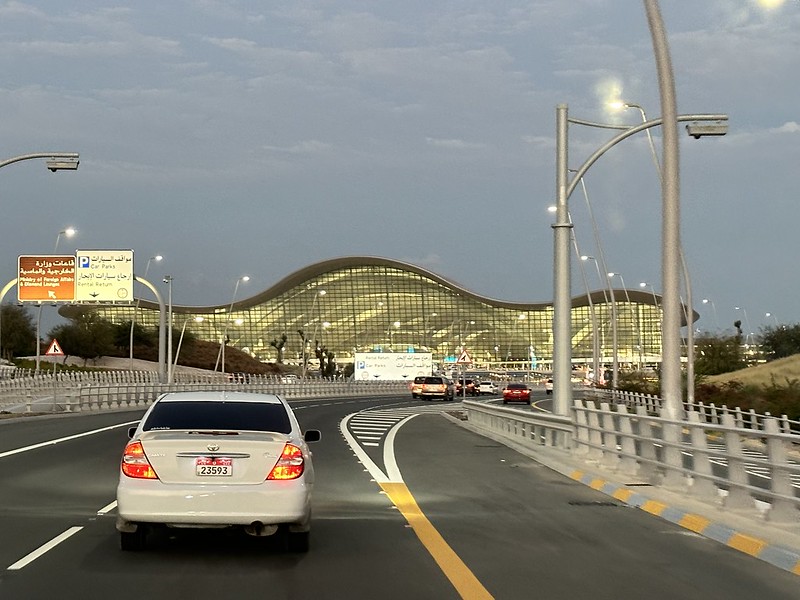
Abu Dhabi Airport

Entry to the mosque is free, although access requires navigating through a bustling shopping mall. The scene at the mall was lively, with a diverse crowd of international tourists. The contrast was striking as some female visitors, initially clad in revealing Western attire, had to adapt to local norms by donning headscarves and robes before entering the sacred space. After the visit, I went back to the hotel, took a nap, did a bit of yoga and headed out to the airport.

Aldar Headquarters

The one big difference between this visit and my previous visits to UAE was a might a lot of locals. The school we were accrediting had an Emirati population of over 60% and I talked with many students and parents over the five days at the school. I found them to be kind, open and not much different from other cultures. Very few of the girls wore headscarves and they acted like typical teenagers. A group of second graders helped me spell my name in Arabic. The government is pushing its citizens to complete education and training programs so they can be productive contributors to the economy. In the past, many received cushy government appointments that didn’t really ask much of them. This is definitely changing. It was fascinating to hear their perspective on the differences between their state school experience and the international school. These students were not the ultra-wealthy, spoiled Arab students I had heard about from some international educators.

I liked Abu Dhabi more than Dubai as it was not a congested, in-your-face, over-the-top vibe. I could live in the Gulf Region, although I wonder if I would miss green landscapes. There are definitely pleasures to be had in Abu Dhabi.

Hello Abu Dhabi

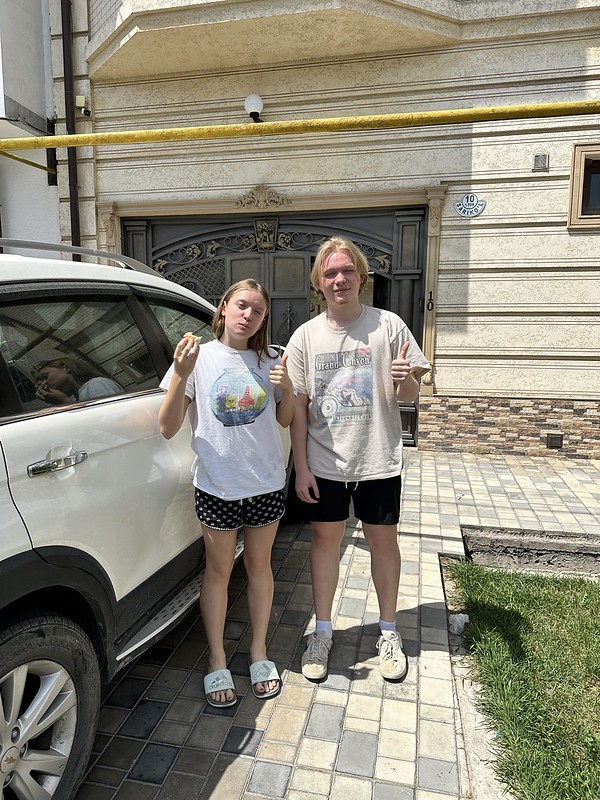
Ocean and Oliver looking forward to my shopping in Abu Dhabi 🙂

It is always hard to leave my family when I go away on business trips. I made Oliver and Ocean take a picture while I was getting into my Yandex. I spent Saturday morning with Nadia, taking her to her swimming club and then Ollie and I went grocery shopping. I also checked in at school to make sure everything was going smoothly with the PTO Garage Sale. Expats who are leaving Uzbekistan in June always appreciate the opportunity to sell some of their stuff they are not shipping on to their next post.

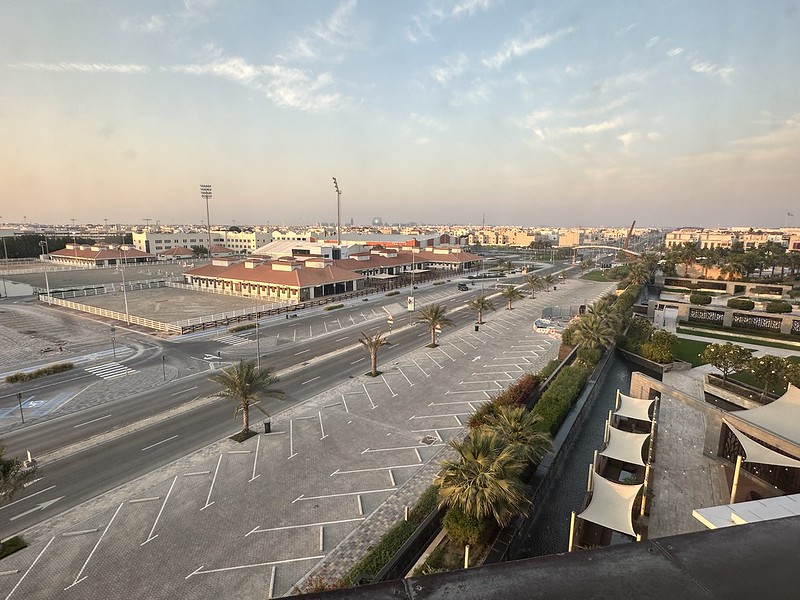
View of the equestrian center from my hotel

I am on an accreditation visit of a school in Abu Dhabi. This is my first time in the capital of the United Arab Emirates. My previous two visits have been to Dubai and Hatta. My first impression of the richer and more traditional emirate of Abu Dhabi is that it is much quieter than Dubai. I am staying out in the suburbs (Khalifa City) but it is much easier to get around with less traffic and tourists. It is less densely populated and makes it a much more pleasant ambiance. The prices are much more reasonable here than in Dubai. In speaking with the taxi driver, he moved from Dubai to Abu Dhabi because the cost-of-living was less and it was less hectic. You can really feel the difference.

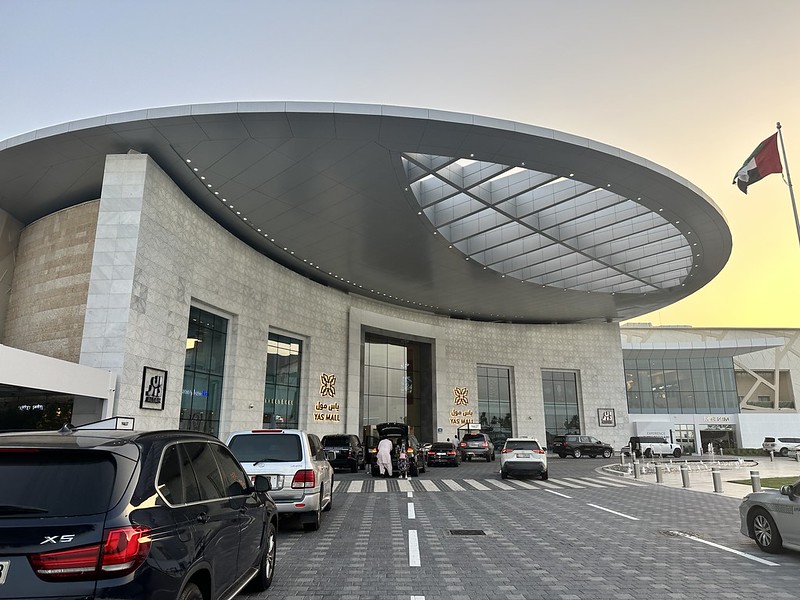
The only time I saw Emiratis was in the Yas Mall. So far most of the hotel workers, taxi drivers, retail sales people are all foreigners. I am doing a little survey to see where they are from. So far it is India number one, Pakistan number two, and Phillipines number three. I also talked to an Ethiopian and Frenchman (Apple Store). The Yas Mall was a much more peaceful experience than the Dubai Mall. They love their shopping malls in the Gulf Region and Abu Dhabi is no exception. I completed my shopping list from my family in less than 20 minutes, so a good night.

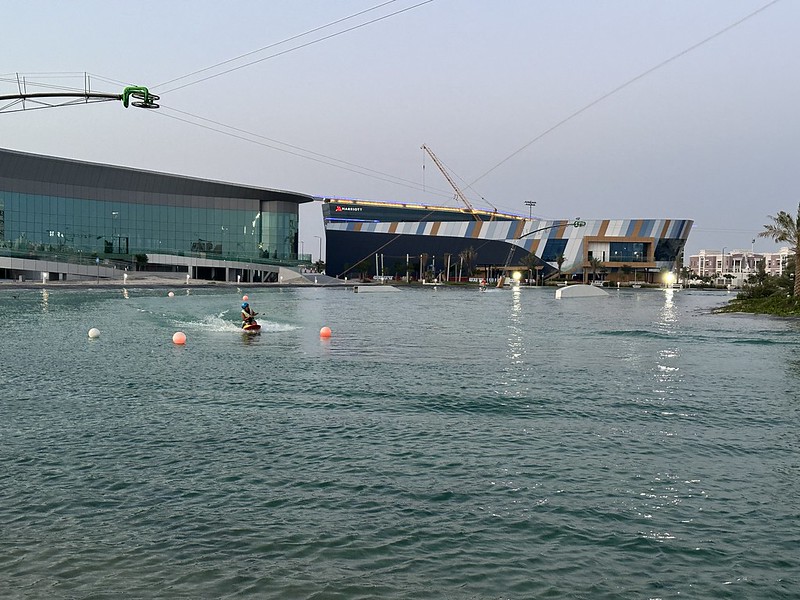
Al Forsan Water Ski Park

On my first night I ran around the Marriot Al Forsan where I am staying. Crazy to see the artificial water skiing lakes. The hotel is next to the Al Forsan Sports Center that also has go-carts, shooting range, paddle ball courts, horse riding, etc. There is also Al Forsan gated community right next door. There are hundreds of gated communities with pretty big townhouses or detached homes with small gardens.

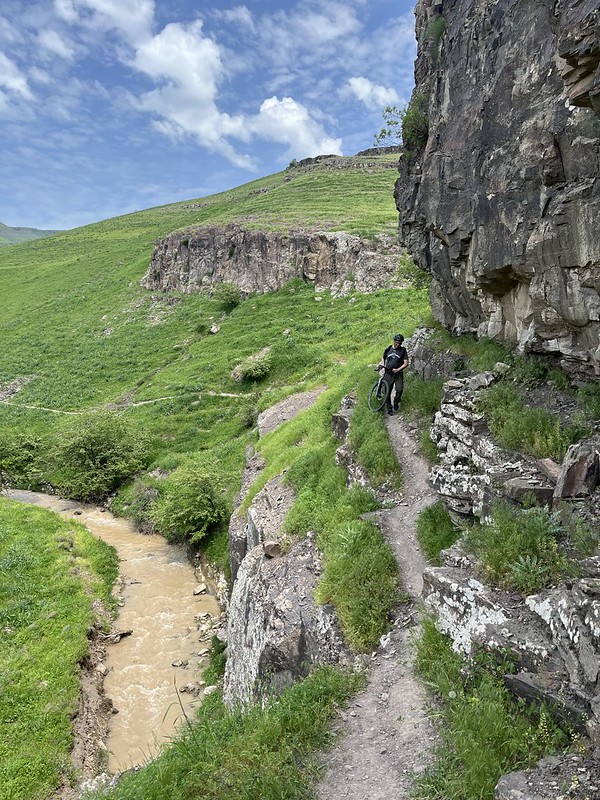
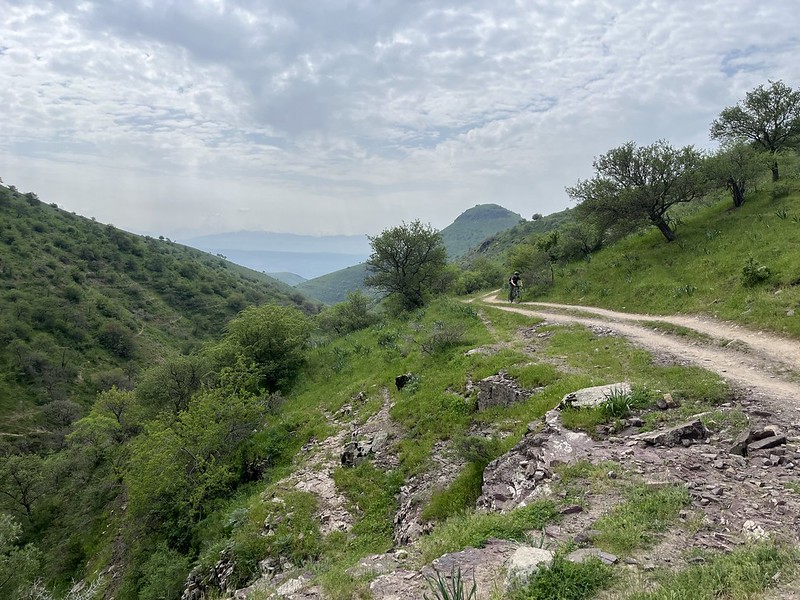
Cycling Tavaksay Canyon

Last Sunday, April 22, my friend Brian and I rode from the village of Tavaksay up to the waterfalls and back down the other side of the canyon. The ride was 18 kilometers and it took us about 3 hours. The left side of the canyon heading up to the falls was brilliant for cycling, but the right side was mostly spent carrying the bikes on rocky precipices. The weather was beautiful and Brian and savored meeting the physical challenges at our advanced ages. 🙂

There were many hikers making their way up to the falls. The Uzbeks are so kind! Several younger accountants helped carry our bikes up the mountain to make it to the falls. We also met a lot of people that wanted to practice their English and who admire Americans. We had some laughs with them and my limited Russian helped us communicate.