Family Journal: February 9, 2024

My family has a four-day long weekend as our school is celebrating Lunar New Year. We are staying in Tashkent for the break and enjoying the city. I savor holidays as a time to be off the clock and have more time to devote to myself and spend time with my family. I had 5 full weeks, plus Saturdays, of working and it is an ideal time to decompress and recoup my energy and enthusiasm.

In the morning, I completed workout #63 in my Inner Dimension Power Yoga 108. It has been transformative for my body, increasing my muscle strength, flexibility, and balance. It has improved my body and I feel I am a calmer person. I do need to incorporate a better diet, mostly eating less, but overall, I feel years younger. I can’t recommend it enough. After taking Obi for a long walk, I then spent the afternoon with Ocean and Nadia.

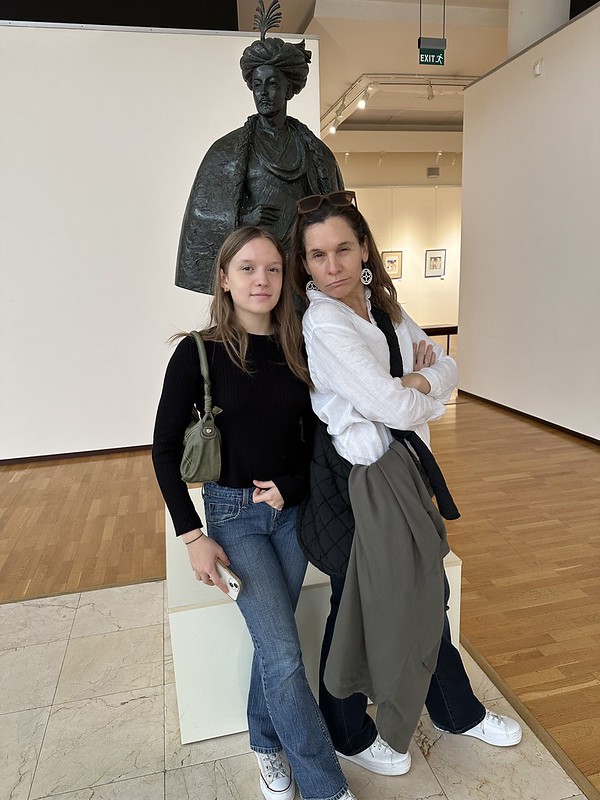
We visited the Fine Arts Gallery of Uzbekistan. There was an exhibition of miniature paintings “Oriental Motifs” and it cost 75 cents to enter. I especially liked the video demonstrating how an artist copies traditional painting. They also had a display of ancient coins from the time of Alexander the Great and Tamerlane. We walked around the many parks in the area, enjoying the 64F (18C) spring-like weather. I dropped the girls off for a night at the InterContinental Hotel and then went to a professional hockey game.

Tashkent Humo is in second place in the Kazakhstan Professional Hockey League. They are 37-12 and 5 points below league-leading Kokshetau. They lost 1-2 in an exciting, physical game last night to fifth-place Aktobe (26-22 – 55 points). Aktobe is the fourth largest city in Kazakhstan, in the northwest near the border with Russia. There were many penalties and hard hits and both teams had lots of chances for goals. I would say overall, Humo deserved the win, but the goalie for Aktobe was good. In the third period, Aktobe scored to go up by a goal. Humo put on a flurry of pressure at the end, but couldn’t get the equalizer. The bottom tier of the stadium was full and it was a vibrant atmosphere. I put together some footage below of the game. The Humo have a nice uniform and logo and I bought Nadia a jersey. Oliver came with his girlfriend and it was a good night out.

Belarus Signs/Flags Are everywhere

I saw many signs of Belarussian President Alexander Lukashenko and Belarussian flags all over the city. He is here in Tashkent on an official state visit. Uzbekistan really tries to be a good host, celebrating the visiting leader and the relationship of the country with Uzbekistan. I don’t know how many countries would celebrate the visit of Lukashenko and I wonder what benefit Uzbekistan gets through its relationship with Belarus. Security has been tighter around the city with police posted everywhere. The president and his delegation visited the Amirsoy Ski Resort and hockey game and there have been restrictions on the gondola and tighter searches entering the stadium.

Day of Skiing

Parking Lot of Lower Amirsoy

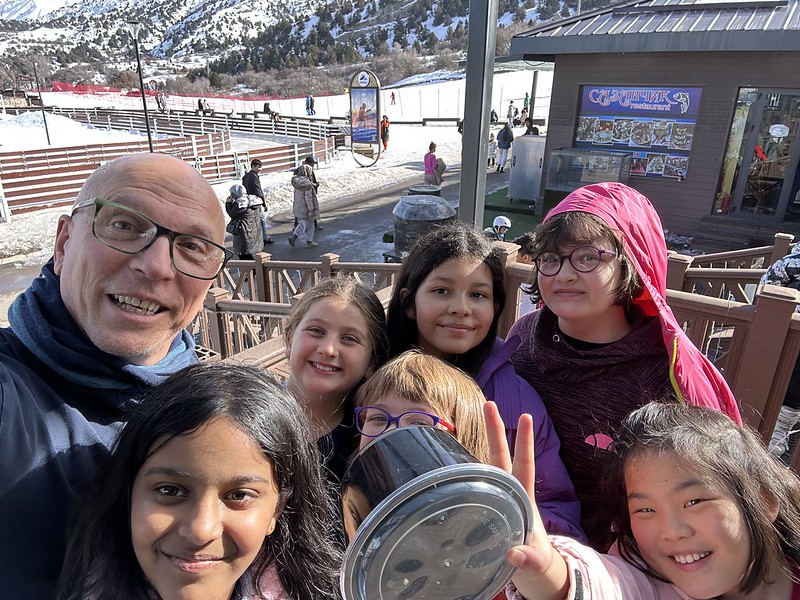
I had the opportunity to chaperone the grade 10 Ski Day yesterday. The school is introducing Adventure Learning to our curriculum and in the winter, it is “Snow”. It is rewarding to teach students how to ski and see them gain confidence and skills. I was assigned 4 intermediate level students and we were working on going to the top of the mountain and feeling comfortable going down difficult runs. Two boys especially completed courses from the top gondola for the first time!

My daughter Ocean attended also and I had the opportunity later in the day to assist her group when a chaperone went down. We had fun with her friends. The resort was a bit restricted with extra military and police presence. Belarussian president Alexander Lukashenko is visitng Tashkent this week and I guess a part of his entourage was at the resort. The top gondola was closed for most of the morning with only security people going up and down. Eventually it opened up and provided for a good day. The morning was spent honing our skills on the “green” slopes and the chair lift and the afternoon on the “blue” and “red” slopes serviced by the higher altitude gondola. Amirsoy is a nice resort to have in our backyard with 660 meters (2,165 feet) of vertical drop.

Snow levels were deep on both the lower and upper slopes. We’ve had quite a bit of recent snow in the mountains but I fear warmer temperatures in the forecast are going to melt a lot of it.

Global Warming

Having the fortune of living over 50 years on planet Earth gives me the perspective of seeing changes in climate over time. I am amazed at global warming. This process started before I was born. When humans started burning fossil fuels (coal, natural gas, oil) to produce energy, carbon emissions started collecting in our atmosphere. 2023 was the hottest year on record, 1.2 degrees C (2.1 F) above the average baseline from 1951-1980. 1.2 doesn’t sound like a big deal to me, but the effects are dramatic.

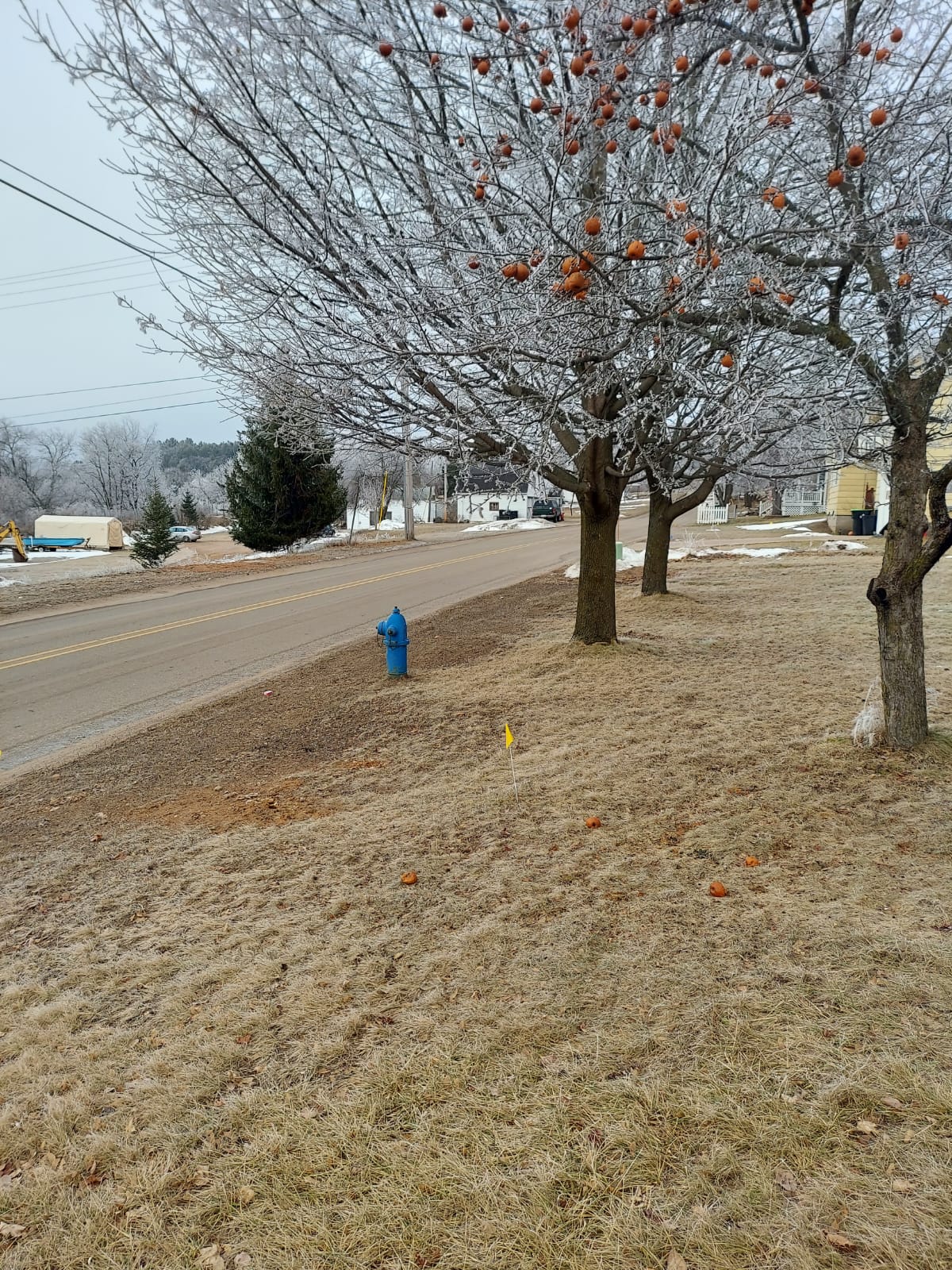
One manifestation is warmer winters with less snow. My brother sent me a photo of his front yard in Iron Mountain, Michigan (left). The Upper Peninsula of Michigan is famous for its snowfall. Winds often come from the west, flowing over Lake Superior picking up moisture. Winds drop the water in the form of snow in the first land mass it encounters, which is the Upper Peninsula. Even the towns closer to the lake like Marquette (live camera screenshot right) show a lack of snow in February.

Contrast this with the photo below of my dad, Charles Kralovec taken in the late 1960s or early 1970s. He is showing the snow bank level in front of the door of my childhood home in Caspian, Michigan. I remember we used to get stuck in the snow when I was a kid. We would pull our foot out of our boot and then have to try to fish it back out while laying flat on the snow. We also made snow tunnels all over the yard.

I sense the winters are also shifting to be more in the spring (March/April) and less in December-February. This is only anecdotal however and I have not done any research. We are having a mild winter in Tashkent this year. It has snowed probably 5-6 times but it only lasts a day or two. Temperatures this week will reach 18C (64 F) this weekend and will be in the 70s the following weekend. I’ve been taking my dog for walks when it snows to enjoy the fresh air and quiet snow brings, but the next day, it is like it never happened.

Family Journal: February 3, 2024

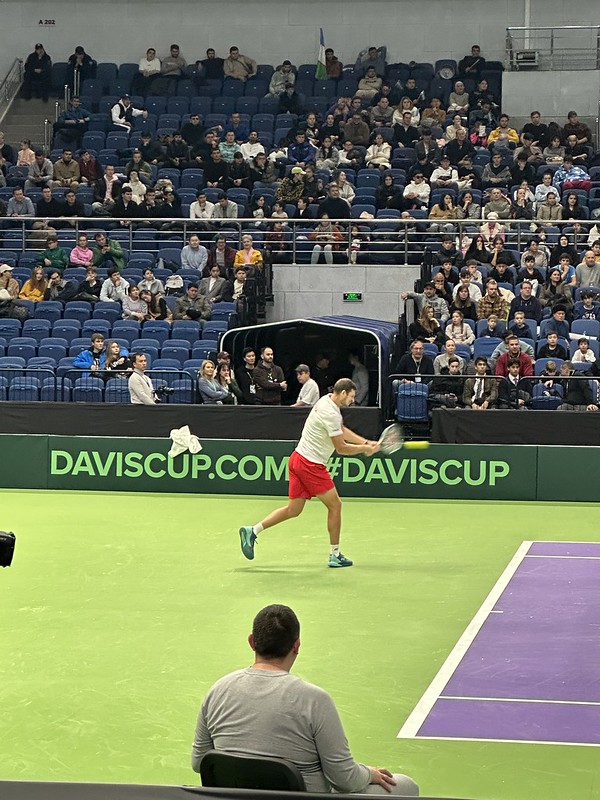
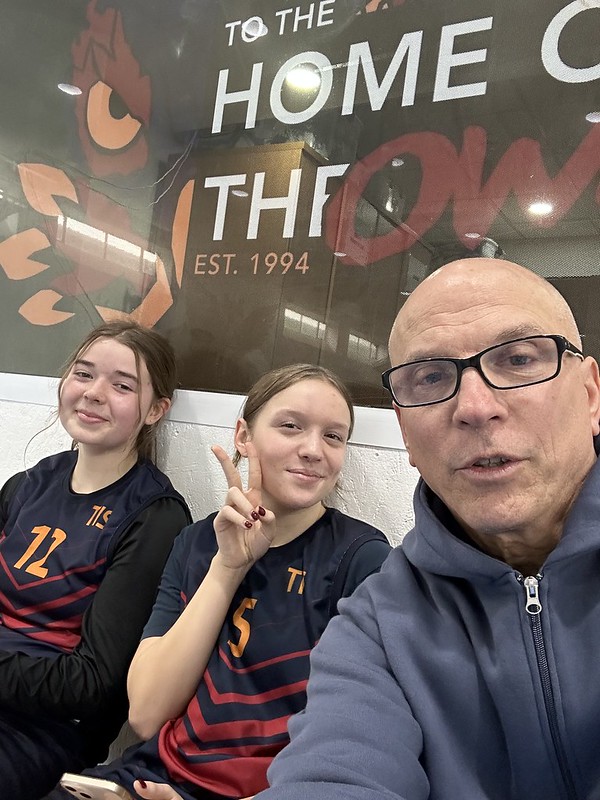
I had a lovely day on Saturday. After my morning yoga, I coached two of my daughter’s high school basketball games. The girls won both games and are showing improvement. Nadia and I then watched the doubles match on Day Two of the Davis Cup at Humo Arena. Poland won 7-6, 6-4 to win the tie, 3 matches to 0. Hubert Hurkacz and Jan Zielinski defeated the Uzbek team of Sergey Fomin and Khumyon Sultanov. The class of Hurkacz was on full display as he made some amazing shots at the end of both sets. You could see the difference of 200 ranking points in the players. Poland (world ranking #51) now moves to World Group I playoffs and Uzbekistan (world ranking #36) drops to the World Group II playoffs. Both will be played in September.

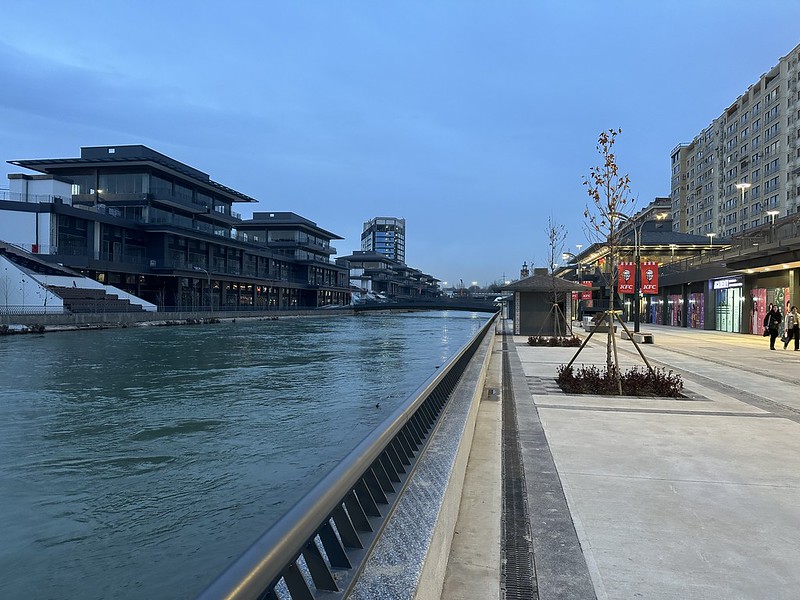
We had a late lunch at Farsh (minced meat in Russian) a new hamburger restaurant. It has a nice atmosphere with a selection of good imported beer/wine/ciders. At sunset, I took Obi for a long walk around a new commercial development, Seoul Mun (Seoul Gate). Developers are constructing a shopping and restaurant district along both sides of a deep ravine on the Ankhor Canal in the city. They are also building apartment blocks that look really nice around it. The site used to be a little used dirt trail when I first arrived in Tashkent 5 years ago. Only one phase is nearing completion.

Davis Cup World Group 1 – Day One

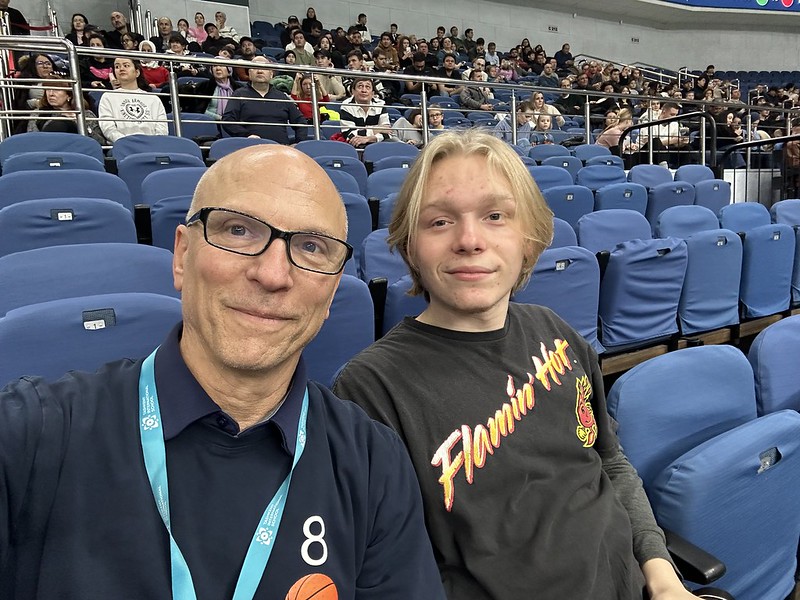
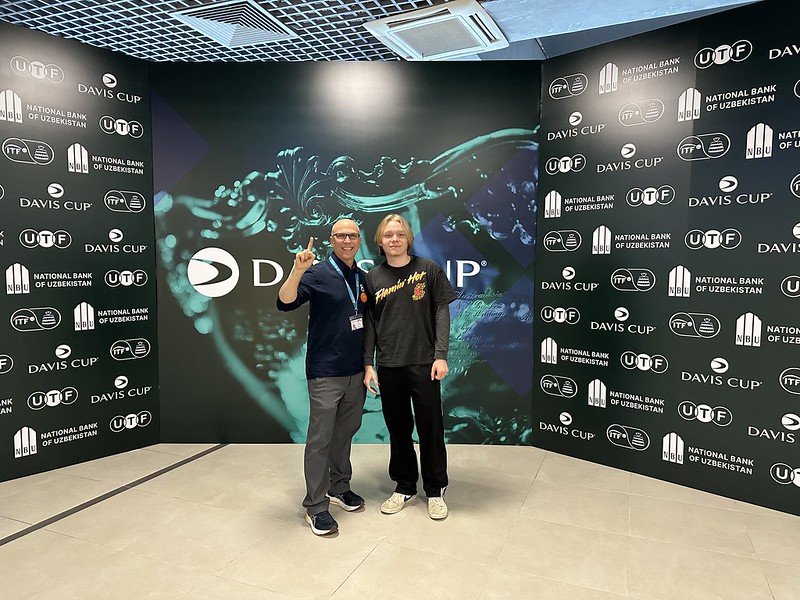
Dad and Oliver at the Davis Cup!

As readers of my blog know, I am passionate about tennis. Uzbekistan is hosting Poland this weekend in the Davis Cup World Group Playoffs here in Tashkent. The matches are played in Humo Arena, home of the Humo Tashkent Hockey Team. The Uzbek Tennis Federation purchased a beautiful Rebound Ace hardcourt from a German supplier (approximately $200,000) and installed it in the arena. I had great seats thanks to friends yesterday (thanks Sasha and Igor!). Oliver and I watched the first two singles matches in the “tie” as it is called in the Davis Cup. A tie is a best of 5 matches, featuring four singles matches and one doubles match. All matches are best of three sets (this is a change from the previous five sets).

The big name in this event is the top Polish player Hubert Hurkacz, the world #8. Last week he lost in the Australian Open quarterfinals in five sets to world #3 Danil Medvedev. Hurkacz is the best Polish tennis player ever. He has won 2 Masters titles and 7 ATP tour titles and the 26-year-old is now ranked #8, his highest ever. Hurkacz is 6-5 and has a big serve (9 aces in two sets yesterday) and with his long arms, gets to a lot of balls. I thought his opponent, Sergey Fomin #403 ranked, put up a good fight and despite the 6-2, 6-1 scoreline, was an exciting match with many games having multiple deuces. He was clearly outclassed by Hurkacz, but I think he could have used a bit more of the slice to get his big opponent off-balance and moving.

World #8 Hubert Hurkacz

In the second match, 20-year-old Maks Kasnikowski, the #277 ranked Polish player had an easy time 6-3, 6-1 over the Uzbek top player, Khumoyun Sultanov #330. The Uzbekistan team was disappointed in the result as they had a chance with the older Sultanov being closer in rank to the up-and-coming Kasnikowski. It really shows how much of an anomaly Hurkacz is on the Polish team with the second-strongest player, Kasnikowski, being ranked 269 places below him. We will be attending the doubles this afternoon.

Maks Kasnikowski

I love the Davis Cup! The Davis Cup is the “premier international team event in men’s professional tennis”. My favorite aspect of the Davis Cup is that it brings professional tennis to places that normally do not host professional tennis tournaments. The International Tennis Federation (ITF) changed the format in 2019, in an attempt to make it more like a tennis World Cup. They formed a World Group of 18 national teams to play against each other in one venue in one week. Formerly it was a knock-out tournament throughout, with each “tie” being played in one of the team’s countries. Outside of the World Group of 18, the qualifying groups still play the old format. The new format has not been successful as the World Group Finals is barely covered in world media. I would prefer if they went back to the old format. I think the Summer Olympics has taken over as the “World Cup” and it should be left at that. There is no interest or space in the professional tennis schedule for a World Cup. I think it is good that professional tennis is at the Olympics and gets a broader audience and the Davis Cup will bring a team competition to lots of countries that would never be able to see live tennis. Other team competitions in men’s tennis tried to become the premier “World Cup” like the Laver Cup, but they are nice, but not it.

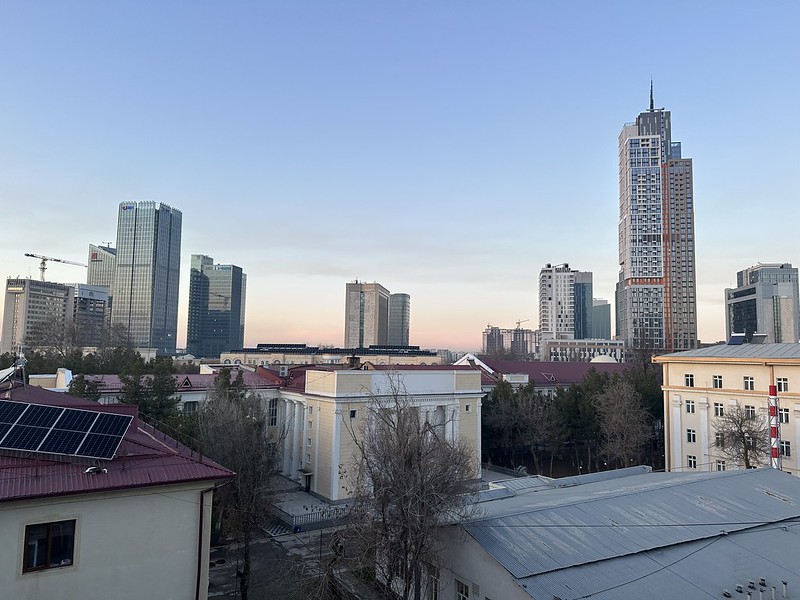
View of the city from the parking garage

The competition is named after Dwight Davis (1879-1945) an American tennis player and government leader. He was the Secretary of War under Calvin Coolidge and Governor-General of the Philippines under Herbert Hoover. He was also a tennis “professional” before the ATP at the turn of the century. He won the “All-Comers” US Champions doubles three consecutive times from 1899-1901 and lost in the singles finals twice in 1898 and 1899.

Family Journal: January 29, 2024

I had a nice weekend, doing typical father stuff. On Saturday morning I coached the girls varsity basketball game. My daughter Ocean is on the team and it has been rewarding seeing her and the other players’ improvement over the past month. We are preparing for two tournaments in February. I’ll be posting more about basketball in this space. I’ve been coaching basketball for many years and I feel every year I am getting better. This is a young team with no grade 12 girls but they are rapidly getting better.

My wife Nadia and I hosted friends at Steam Bar for her birthday. It is my favorite nightclub establishment in Tashkent. It is an American-style bar with food and drinks. The decor is “steampunk”, kind of a Mad Max theme. They have a fun floor show that signifies the transition from eating to drinking. They also have live bands mostly playing pop tunes modified to sound like heavy metal and rock. It is nice to see people doing elaborate shots of the bartenders, dancing, and enjoying themselves, especially in a Muslim country. At my age, I really watch how much I drink because I enjoy each day more and my body cannot handle too much alcohol. The best part of the night was watching how much fun Nadia had with our friends. She loves dancing and socializing. I also had her pick out a big bouquet of tulips and Ocean made her a cake. She had a great weekend.

Most of the weekend was dad stuff. I helped Oliver research for his history essay on the bombing raids over Germany at the end of World War II. Nadia and I bought a vacuum cleaner, grocery shopping, cooked, tidied up the house, walked the dog, etc. The weather has been mild but with high levels of air pollution. The city is using more coal for electrical generation and heating which raised AQI levels to between 150 and 200 almost daily. This is interspersed with rain and or snow which clears the air temporarily. When I am doing power yoga, if I go out for a run in these conditions, I sense a chemical odor in my sinuses as I sweat through a hard workout. I stopped running when AQI levels get above 150. Tashkent officials need to reduce coal burning and switch to more electric cars and solar.

I end this post with some photos from the Amirsoy Resort. Last Monday I chaperoned the Grade 4 Ski Trip. It was challenging and rewarding to introduce three students to skiing. I was “super dad” with lots of clicking in ski boots and picking kids off the snow and back on their skis. One of the students from Brazil, it was her first time on snow. That is a day they will never forget. Experiential learning expands us and introducing students to camping, skiing, hiking, kayaking and other outdoor skills lets them explore boundaries within them.

Latest Reading: The Heat Will Kill You First

I savored reading Jeff Goodell’s “The Heat Will Kill You First: Life and Death on a Scorched Planet.” He gives the reader a complete picture of global warming through the stories of individuals. The chapters cover all aspects of the impact on our lives and the environment of rising global temperatures. This includes the following chapters:

  • how humans evolved to handle the heat
  • increased deaths due to heat stroke
  • cities becoming urban heat islands
  • animals moving north and south toward cooler temperatures
  • heat waves and the basic physics of heat and temperatures
  • declining agricultural production
  • hotter oceans
  • outdoor workers’ deaths
  • the melting West Antarctic ice shelf
  • mosquitos spreading disease
  • impact of air conditioning
  • the value of trees and white streets

This might be the story of my lifetime. I’ve been ahead of the curve regarding awareness of what a warming planet will have on our lives. I finally feel the majority of people are realizing how much our lives will possibly be diminished. One of the challenges of humanity getting its act together and reducing the amount of CO2 we are putting into the environment is that it is a slow-moving phenomenon and it doesn’t sound drastic enough. A rise in the average global temperature of 1 to 4 degrees Celcius doesn’t sound all that menacing. However, the impact of that, although not existential for humanity, will make our lives less pleasurable and rich. Society has been putting CO2 in the atmosphere since before I was born and global warming started when I was a child. However, in my over 50 years on the planet, I’ve seen how there is less snow, less precipitation, warmer winters, and summers, and more natural disasters (hurricanes, drought, flooding, etc.) over my lifetime. I wonder if this process will speed up in my later years if I am still alive. Currently, humanity is more than halfway to 3.6 degrees C increase, at 2 degrees C increase. And that temperature is locked in for years until CO2 dissipates.

Goodell’s chapter on tree planting to combat climate change really helped my thinking on the power of trees. As a school leader, I’ve always planted trees on campus and made a big deal about it with the students. I liked the symbolism of delayed gratification, future thinking, schools planting the seed, and the fruits being the student’s path to adulthood, etc. I am now adding that the planting of trees is important for cooling the planet. Cities can be urban heat islands and trees can reduce temperatures greatly. They also provide shade for plants and wildlife. I also think trees calm children and adults, improving mental health. Goodell refers to a study in the city of Portland. Rich neighborhoods with trees are 25 degrees F cooler than poorer neighborhoods without trees.

Heat waves will be more common in the years to come and I want to understand them better. The military developed a more accurate measure of heat stress than heat index. The wet bulb globe temperature (WBGT). It takes into account temperature, humidity, wind speed, and solar radiation. Goodell used the example of a day in his residence in Austin, Texas. Air temperature of 95 degrees, humidity of 40%, and a light wind. The heat index would be 99, but due to the light cloud cover and relatively low humidity, the WBGT is only 86.4.

UK climate scientist Friederike Otto advises during a heat wave, close windows and draw curtains early in the day to keep out both the sun and heat. Below are some other points that were interesting to me. Overall, a great book that gives a complete and emotional picture of climate change.

  • The mathematician and scholar Al-Bīrunī was the first person to divide hours into minutes and seconds. I am amazed at the innovative thinking of ancient Islamic scientists and mathematicians. I wonder why they still are not at the cutting edge of science, mathematics, and technology.
  • Heat is the vibration of molecules. Temperature is the average speed of a collection of molecules.
  • NASA scientist James Hansen testified before US Congress in 1988 detecting a global warming of 0.4C. He is considered the grandfather of climate science.
  • Exxon Mobil is responsible for 3% of historical global CO2 emissions.
  • I didn’t know that Anders Celcius originally designed the scale in the opposite order from today, 0C was the boiling point of water and 100C was the freezing point.
  • By 2050, the world’s population will be nearly 10 billion. I wonder if that will be the peak of the global population?
  • A Cornell University study found global crop production is 21 percent less today due to climate change. I immediately thought of Interstellar.
  • If the West Antarctic deglaciates, there will be a 5-meter rise in sea level.
  • Mosquito-borne diseases are going to be on the rise as Aedes aegypti spreads north. The ordinary mosquito is from the Culex genus.
  • Some tick species are moving as much as 30 miles north each year. Crimean Congo Hemorrhagic Fever (CCHF) is spread by the Hyalomma genus ticks. They are predators, not like deer or wood ticks that wait on grass to be picked up by a passerby.

Latest Reading: Talking To Strangers

I read Malcolm Gladwell’s 2019 book, Talking to Strangers: What We Should Know About the People We Don’t Know. I read through the book through my professional lens. As an international school leader, annually a significant portion of the school community are “strangers”. Around 20% of the school community changes every year, including 100 new students and their families and approximately 15 new employees. Sizing up and quickly connecting to new people is a valuable skill. Gladwell’s premise of the book is that humans are not very good at it! We evolved to automatically trust people as a survival mechanism. It is easier to live one’s life not having the constant worry of strangers. I believe that most people are not out to hurt others or are not deceiving others.

This really comes into play in recruiting. Recruiters need to be open to signals or red flags of candidates. This is a change to our every day, trusting mindset. Gladwell goes through many examples of how even people trained in deception, ie spies and judges, get it wrong often. Gladwell is a genius at weaving history and news stories into a coherent narrative. He uses British politicians trying to figure out Hitler’s motives just before World War II, to the example of Amanda Knox, the American student wrongly accused of murder during her year abroad in Italy. Below is a list of my takeaways from the book.

  • Amanda Knox’s facial expressions and emotional responses didn’t match the stereotypical responses we think people should exhibit with grief, guilt, remorse, etc. Studies show that it is impossible to discern the truth based on a person’s body or facial language consistently. I see this most often with teenage boys. They do not have the emotional maturity to respond to events “appropriately” or express their feelings, both physically and verbally. It made it difficult for me as a principal while I was investigating behavior issues.
  • There was a fascinating chapter on university drinking culture and consensus. It is difficult to evaluate the truth between young men and women when they have been drinking and there are accusations of sexual misconduct. “Drinking puts you at the mercy of your environment. It crowds out everything except the most immediate experiences.” In other words, being inebriated clouds your perception and judgment. It also impacts your memory as alcohol inhibits the hippocampus from forming memories. Scientists now think that alcohol doesn’t lower your inhibitions but instead, impacts your brain to think in the short-term (alcoholic myopia).
  • “Having a meal in your stomach when you drink reduces your peak BAC (blood alcohol content) by a third.”
  • “How can we expect students to respect boundaries when no consensus exists as to what they are?” Lori Shaw, legal scholar
  • The idea of “coupling” means a behavior is linked to the circumstances and conditions available. The key example was more women committed suicide in the UK when it was easy to do so by using the cooking gas in British homes. Once a cleaner gas was used by municipalities, the suicide rate dropped. The same today with guns and men in America. About 40,000 Americans commit suicide every year, half of whom do so by shooting themselves. Banning handguns would conservatively save 10,000 lives a year.

My major takeaway from the book is to force myself to question my perceptions during recruiting. Use data, references, past work history instead of totally relying on my gut instinct.

Orthodox Christmas

Christmas Mass – January 7, 2024

Last Sunday, January 7 I attended the Russian Orthodox Christmas mass at the Cathedral of the Assumption of the Virgin in Tashkent. Orthodox churches are designed to be inspire awe and people to reflect on the majesty of God. It worked on me as I was a bit swept away as I listened to the hymns while the priest was giving communion. It is a beautiful setting as you can see above with the lighted dome, the colorful Orthodox icons and the lighted birth scene of Jesus. An Orthodox mass is much different to the Catholic mass I am used to. There are no pews and people seem to be doing their own thing often, paying respects to the various icon stations are the cathedral and lighting candles while people were receiving communion.

On special occasions like Easter and Christmas, Tashkent police and military provide security in front of the church. Although there has not been a terrorist attack in Uzbekistan in many years, this is a predominately Islamic country. There have been a number of new mosques constructed throughout the city over my 4 years living here and the practice of Islam is growing. The government has a huge police force that monitors for any signs of religious violence. It is nice that there is religious diversity here and a thriving Russian Orthodox parish in the city. In many Islamic countries, other religions are driven out. There are a couple of other Orthodox churches and monasteries in Tashkent. Sadly, the Bukharan Jews have mostly left Central Asia. The old Jewish Quarter is a fascinating area preserved in Bukhara which I visited in October. The former synagogue is preserved here in Tashkent, but there are no longer any Jews in Tashkent. There are also several Korean Christian Churches in Tashkent as well.

I was curious about the percentage of ethnic Russians that live in Tashkent. I often see many people who look Russian with fair skin and hair and light eyes. A friend referred me to this August 2021 article that reports population figures from the State Committee on Statistics. In the census published on January 1, 2021, you can see the national composition below. At the time, the total population of Uzbekistan was counted as 34.6 million.

  • 84% Uzbek
  • 3% Tajik
  • 1.4% Kazakh
  • 750,000 Karakalpaks (an ethnic group mostly living in the far west of Uzbekistan near the Aral Sea)
  • 720,000 “Russians” – The Uzbek government used to list the “nationality” of a person in passports, but this is no longer practiced.
  • 174,000 Koreans

The article goes on to say that the number of Russians has halved since the country became independent in 1991. Most left in the early days for economic reasons and the uncertainty of what would become of the new country. Most of the Russians lived in Tashkent when it was Uzbek SSR with 37% (850,000) of the city being Russians. Today it dropped to 105,000 (2.6%). This is less than I expected and the Causcasian people I see may be Tatars (south central Russian region), ethnic Ukrainians, or ethnic Greeks. I live on the more Russian side of the city in Mirabad so that may have influenced my perception.

I find it endearing that Eastern Orthodox Christians still use the Julian Calendar, even though it has been replaced by the rest of the world with the more accurate Gregorian Calendar. I think they do this because the development of Gregorian Calendar was commisioned by Pope Gregory III, and it looked like the Roman Catholic Church was dictating when to celebrate Easter and other important holidays. Even though the Gregorian Calendar is more accurate than the Julian Calendar, it is still not 100% accurate. It takes the Earth 365.2422 days to complete an orbit around the sun.

Chat GPT mentioned the International Fixed Calendar developed by Moses Cotsworth in 1902. It aligns with the Gregorian calendar but divides the year into 13 months of four weeks and 28 days each. The days of the Gregorian calendar cut off from the 28 days limit are pooled together between June and July and the month is called Sol. The leap day is inserted every 4 years as June 29, the day before Sol 1 begins. The only famous person who used the Cotsworth calendar was George Eastman, who insisted Kodak adhere to it. I would love to live through a Cotsworth year to see if I like it better than the Gregorian year.

Layover in Seoul, South Korea

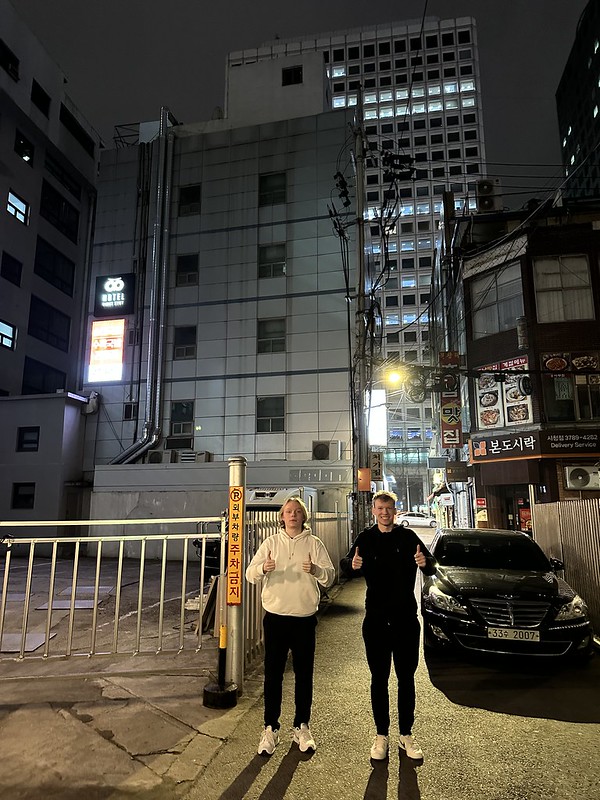
I really love it when we have flights with overnight layovers. It gives me and my travel companions an opportunity to visit places without having to pay for additional flights. The only expense is accommodation and transportation to and from the airport. In the past couple of years, we had overnight layovers in Almaty, Kazakhstan, and Riga, Latvia. On our way back from Japan, we had an overnight layover in Seoul, South Korea. We landed around 7:00 PM in the evening and flew out the next day at 3:40 PM. Upon arrival, we took a taxi to the Hotel FirstStay in the heart of the city. It was a perfect hotel, a great location, comfortable beds, hot showers, and for me, a reasonable price ($120 for 5 people).

The hotel is situated between the Namdaemun Market and Myeong-dong (“bright tunnel – neighborhood” in English) the most famous tourist and shopping districts of the city. I convinced Owen and Oliver to go with me for a craft beer and chicken in the cafe/bar/restaurant district located just outside our hotel lobby. I discovered the popular Korean alcoholic beverage Soju, a distilled, clear drink from rice or other grain with an alcohol content of around 15%. I liked the Andong Lager I tried. Andong is a city in northern South Korea that is famous for Soju. My sons are adults now and it is so pleasurable for me to go out with them and have conversations. They are developing into fine young men and it makes me think of the cycle of life. The food was so-so and we were tired from travel and headed back to the hotel early.

This was my third visit to Seoul and my fourth visit to South Korea. The last time I came with my family was in July of 2016 and you can see how much the kids have changed since. I remember it being a hot day and we climbed the park overlooking the city to the Seoul Tower. I came a couple of times as the head of school in Japan as we were part of an athletics conference with schools in Korea. Seoul is the capital of South Korea and a mega metropolitan city of over 26 million people. My big impression this time is that it felt more Western and Chinese than Osaka. The hustle and bustle of Sejong Street reminded me of New York.

Gyeongbokgung Palace

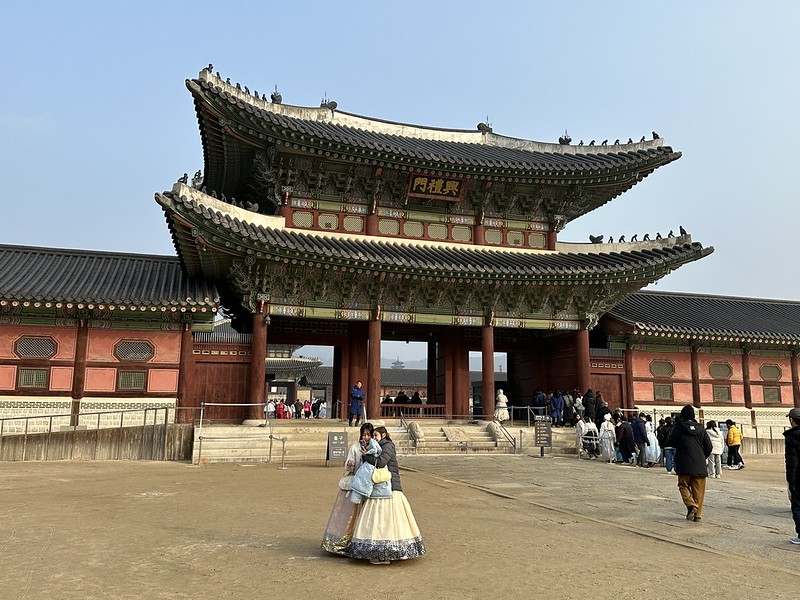
I got up early as usual and went for a walk. I was fortunate to catch the changing of the guard ceremony at the Gyeongbokgung Palace. This was the palace of the Joseon Dynasty that ruled the Korean peninsula from 1392 to 1897. It looks like the Forbidden City in Beijing and reinforces my impression that Koreans are more like Chinese than Japanese culturally. It makes sense that they share a border with China and although I have not read extensively on Korean history, China must have had a large impact on the Koreans. It is nice that they were not assimilated into the Han Chinese nation-state. The Japanese systematically dismantled the palace but in the 1960s until today, it has been restored. The Palace is huge and appropriately portrays the power of the Joseon Dynasty. It is worth seeing the ceremony which takes place four times a day. I saw the 10:00 AM performance.

In front of the Seoul Financial Center, there was a display thanking the US military for its efforts in the Korean War (1950 – 1953). A policeman asked me if I was an American and thanked me personally. My father didn’t serve in the Korean War but was stationed in Stuttgart, West Germany from 1954-1955. I am glad that South Korea and the USA are strong allies.

Several activist groups were also promoting political causes on Seoul Square alongside Sejong Street, some I never heard of. The first was a sign asking for “fairness” and using “common sense” in the investigation of Korean First Lady Kim Keon-Hee. She is under investigation of taking kickbacks and not paying taxes. She also embellished her relationship with NYU’s Stern Business School on her resume. Two pro-Israeli banners were encouraging the destruction of Hamas and another stand was a memorial for victims of the COVID-19 epidemic. There was also a wall of photos of the 159 people who were killed in the Halloween Crowd Crush in 2022. I like seeing free speech in action!

Nadia and I explored the Namdaemun Market before the taxi came to take us to the airport. It is a huge, sprawling market with stalls lining the streets. It has been a market since 1414 so a lot has gone on there. We bought some knock-off hoodies for the kids and I had a delicious soup, Korean noodle empanada, and of course, bibimbap.

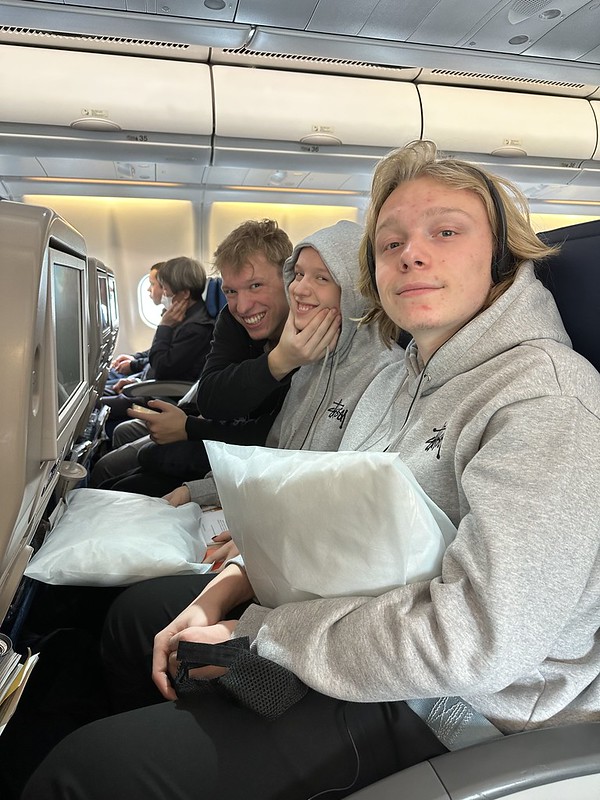
We snapped a few photos on the plane as this might be the last time all five of us fly together! We have had so many good times traveling together over the past 16 years (from the birth of Ocean until yesterday). Hopefully, we can have more opportunities to travel together.