Latest Reading – “Eager: The Surprising, Secret Life of Beavers and Why They Matter”

I have a special interest in the North American Beaver (Castor canadensis) because the Upper Peninsula of Michigan was first explored by French fur trappers in the 1600s. The fur trappers opened up the UP to European immigrant settlement. Early immigrants devastated North America’s natural ecosystems and the fur trappers greatly changed the wilderness by trapping and killing the estimated 150 million beavers present when the first Europeans arrived in North America in the 17th century. By the turn of the 20th century, around 100,000 beavers were left. Today there are an estimated 15 million beavers, still only 10% of the original population.

My main takeaway from the book is the profound positive impact the North American Beaver has on wilderness. By damming rivers, beavers create micro ecosystems by slowing down flowing rivers to form wetlands. Beaver-created wetlands greatly benefit plants, insects, fish, amphibians, bird life, mammals, especially predators, groundwater levels, etc. By wiping out the beaver, early fur traders turned life-enriching bogs into fast-flowing rivers (east) or dried river bottoms and deserts (west). I didn’t know that beavers were so widespread in the USA, from California to Georgia. The same thing happened to the closely related Eurasian Beaver (Castor fiber) which was down to 1,200 individuals at the start of the 20th century. I also didn’t know that beavers are in the rodent family and are the second largest rodent after our beloved Capybara (Hydrochoerus hydrochaeris). I’ve spent a lot of time in Bolivia observing capybaras.

I don’t think I’ve ever seen a beaver in the wild. I see plenty of muskrats and as a kid, used to go out with a neighborhood friend to help him check his trap lines. This summer if I am in the UP, I am definitely going to be searching for beaver dams, especially around Ishpeming, to see if I can find the oldest “infrastructure” in Michigan. Goldfarb mentions an 1868 beaver map by explorer Lewis Henry Morgan and the recent work of South Dakota State University researcher Carol Johnston who says you can still discern most of the dams today.

The author spent most of his time in the American West in the book, but he covers a lot of historical and contemporary beaver projects. Goldfarb describes reintroduction programs and techniques to allow humans to live next to beavers. Most people consider beavers to be pests because they eat lots of trees, cause flooding, and stop the flow of rivers. As a kayaker, carrying my kayak around beaver dams would be a hassle. Beavers are amazing workers and I see why we say, “busy as a beaver”.

Other takeaways from the book are as follows:

  • A big issue in the Western United States is livestock (mostly cattle) grazing in riparian areas. Beavers protect rivers, streams, and creeks by creating mini-dams that hold water in the dry season and create wetland areas in the arid West.
  • Goldfarb devotes a chapter to Elko County, Nevada, and the Uintas Mountains of Utah. I am very familiar with these areas.
  • Streams should not be “strings” or “ribbons” but “meal of spaghetti” instead. Taking out a keystone species like the beaver severely altered the landscape.
  • Researchers in 2005 estimated between 15 million and 250 million beaver ponds puddled in North America before European arrival. Beavers once submerged 234,000 square miles of North America, an area larger than Nevada and Arizona combined.
  • The term “mad as a hatter” came from manufacturers of beaver fur hats in Danbury, Connecticut. They used mercury nitrate that matted fur into malleable felt.
  • perspicacious – astute, intelligent
  • avuncular – like an uncle
  • joie de vivre – joy of living
  • The Great Basin is America’s coldest and most northernmost desert.
  • Society must align the benefits of beavers (fish and wildlife habitat, carbon storage, cleaner water) with private landowners who view them as eating Cottonwood trees, plugging irrigation ditches and flooding fields.
  • USA had over 90,000 dams, 15,000 of which are “high hazard”. By killing beavers, Americans depleted the Western landscape’s ability to store water, so instead we built thousands of concrete dams.
  • 16 million Greater Sage Grouse once lived in the high desert sage, today is it 400,000. Sage Grouse chicks need summer streams to live and this is a win-win for both species.
  • There is a chapter devoted to Yellowstone National Park. There is a popular theory that the wolves brought back Yellowstone because they prevented wild ruminants (elk, deer, bison) from riverside grazing. It is a bit more complicated than that with the beaver also playing a role.
  • The UK is properly described as a land barren of wilderness, with every tree and large animal wiped out centuries ago.

“The conservation of the common,” the author JB MacKinnon has written, “represents a deeper ambition than the 20th century’s lopsided division of the world into islands of wild… It calls on us to integrate conservation into every aspect of human life.” Beavers – catholic in their habitat requirements, ark-like in their ability to support other forms of life- represent a spectacular opportunity to practice MacKinnon’s ideal.

Eager: The Surprising Secret Life of Beavers and Why They Matter

I copied and pasted Michigan Department of Natural Resources website under nuisance animals. Beavers: Michigan’s largest rodent, the beaver, is known for great feats of engineering, building dams and lodges out of logs, sticks, and mud. However, beavers can cause problems for landowners when their gnawing habits ruin landscape trees and when their dams create flooding.

Damage prevention and control tips:

  • Eliminate food sources like desirable trees and woody vegetation where possible. Beavers especially enjoy cottonwood, willow, and aspen.For landscape trees, place metal flashing, hardware cloth or tree guards around the trees at least 3 feet high to prevent gnawing on trees.Fence around small critical areas like drains, culverts or other small areas to prevent dam building.With a permit from the local DNR wildlife biologist, continually destroy dams and materials used to build dams. If the dam has grown large enough to require the use of tools, contact the Department of Environment, Great Lakes, and Energy Environmental Assistance Center, 1-800-662-9278, or the EGLE district office for your area to obtain a dam removal permit.
Removing a beaver from private property
  • Install a Clemson beaver pond leveler or beaver baffler in or near coverts and dam openings. These devices allow water to move through them while preventing dam construction.If you live in an area where trapping is allowed, beavers may be trapped in season with a valid base and fur harvester license.Contact the Michigan Trappers and Predator Callers to see if they have anyone interested in trapping the beaverIf these methods do not alleviate the beaver issues you’re experiencing, the final step is to contact a nuisance animal control company or the local wildlife biologist, depending on where you’re located.
    • If you’re located on private land in Zone 3 (southern MI) and it is between April 1st – April 29, contact a nuisance control company for their assistance. See the Hunting Digest for the zoning map.
If you are located on private land in Zone 3 and it is outside of that timeframe, or if you’re located in any other counties, contact the local DNR Customer Service Center, year-round, to obtain a Damage and Nuisance Animal permit

Family Journal: December 21, 2023

The View from Our House

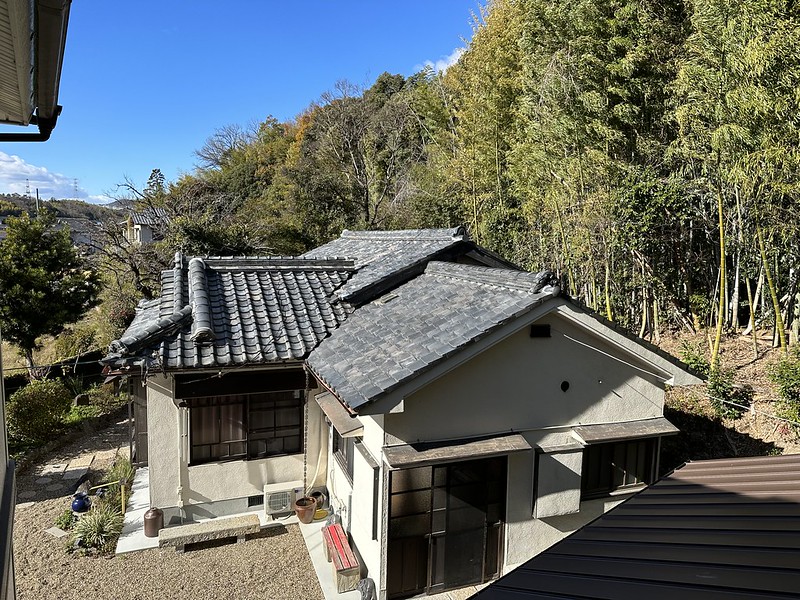
We are getting over jet lag (4-hour time difference) and travel fatigue and settling into our holiday in Japan. We are renting a home of a former colleague in the suburb of Ibabraki, the suburb next to our former home suburb of Minoh. We are on the outskirts of the Osaka metropolitan area and are surrounded by the hills and trees of the Minoh Hills National Park.

3-3-12

On our first full day in Japan, we visited our old house, which is now vacant and in dire need of TLC. We also visited former school, the Senri and Osaka International Schools of Kwansei Gakuin. I was impressed with the improvements to the campus that Kwansei Gakuin University has been doing, the place looks great. The kids are full of nostalgia and we did have a nice life in our beautiful neighborhood of Onohara Nishi. I loved going to our old Starbucks and Q’s Mall. Q’s Mall is an outdoor mall that is now at the end of the Senri Chuo Line. They are opening a subway station which started right before we left 4 and 1/2 years ago.

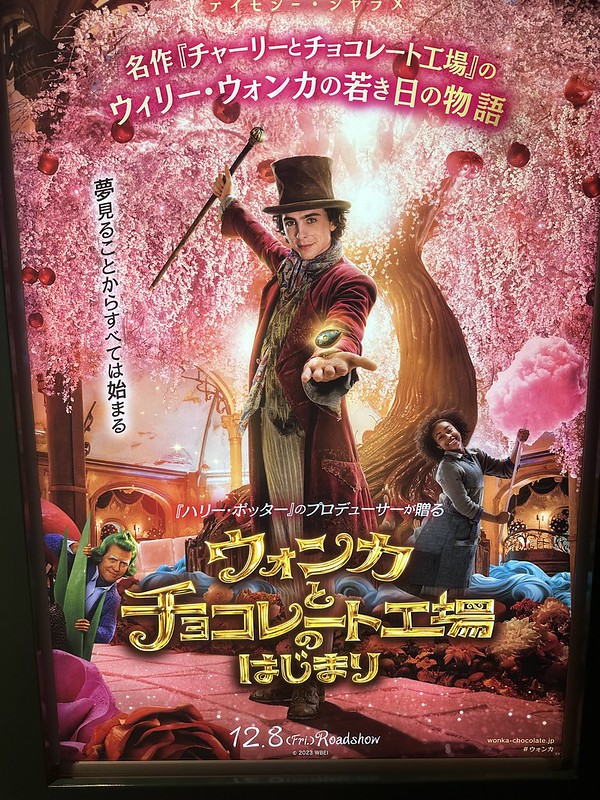
The Japanese language poster of Wonka

We watched Wonka, the musical by director Paul King. I loved it because the songs were great, it was old-fashioned in that it had the look and feel of the original 1971 movie that I loved as a kid and lots of great actors, costumes, and sets. I see the appeal of star Timothee Chalamet who starred in a young Willy Wonka. The story was a prequel to the 1971 original. I give it a “thumbs up”!

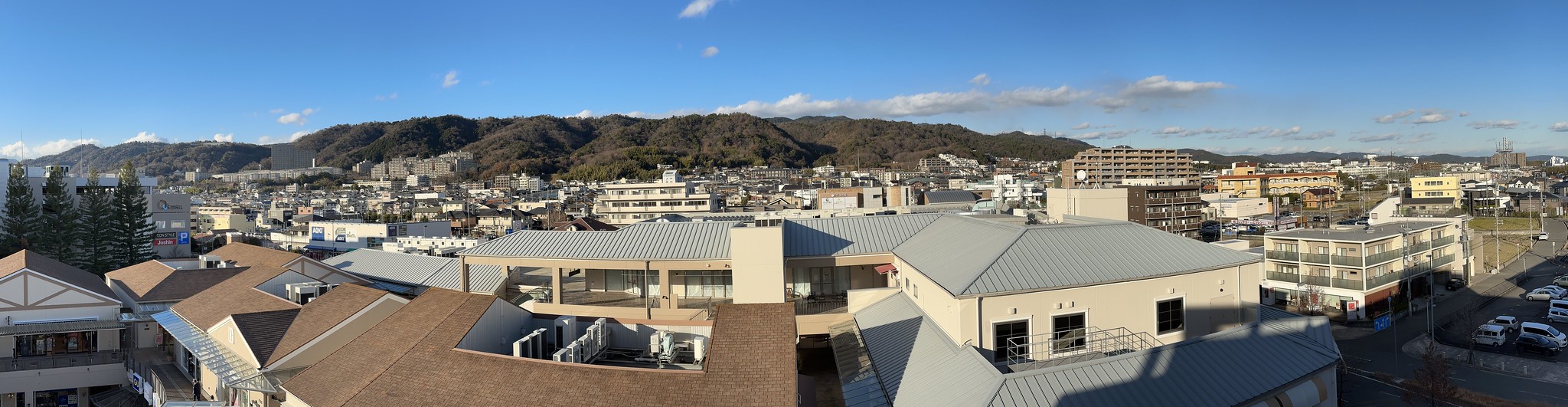
View from rooftop parking garage of Q’s Mall

Winter skies in Japan are so blue and clear! The summer is hot, humid and hazy but winter is dry and cold usually.

Family Journal: December 19-20, 2023 “Travel to Japan”

We had a nice final day in Tashkent before traveling to Japan in the evening. I did a lot of yoga in the morning, went to school to close a few pending issues, and packed for the trip. The kids and Nadia were so excited to return to Osaka where we lived from 2014 – 2019. We have never returned to a place where we lived and waves of nostalgia came over our kids as we drove around our neighborhood.
Incheon Airport with a dusting of snow this morning

The Tashkent airport was unusually calm with few people flying out. We flew Korean Air, the flag carrier of South Korea. They have 3 flights per week to Seoul and I highly recommend them. Koreans are much quieter and politer than Uzbeks when they are flying. It made for a pleasant night of travel. We made our 90-minute connection with no problems. Incheon Airport is one of my favorite airports, very comfortable with complimentary sleeping pods and plenty of male skin care products. 🙂 Korean is much more western and modern than Japan in my opinion.

Arriving at KIX (Kansai International Airport) brought back many memories. I used the toilets and forgot that the Japanese make the rest of the world look like barbarians when it comes to the bathroom experience. I need to install a Toto toilet seat in my house in the USA. Nothing better! We then took the “limousine bus” to the Hankyu Umeda Train Station in the center of Osaka. KIX is on an artficial island in southern Osaka Bay, a 70-minute bus ride from the center of Osaka. From their we took our old Kita Senri Hankyu train to the end of the line. From Kita Senri Station, we took a taxi to our friend’s home in Ibaraki, a far northern suburb of Osaka. It is adjacent to our former suburb of Minoh, so we are familar the area.

After getting settled in, we drove to our old house and school. We decided to eat at Nishiki Warai Restaurant that specializes in Kansai-style Okonomiyaki, a popular street food in Osaka. In English it is translated as “What you like” – “grilled”. It is basically a flour based dough mixed with yam and cabbage and then add pork, shrimp, octopus, squid, green onions, etc. It is known as “Osaka Soul Food” and the closest in our cuisine would be pizza. There is a hot griddle (teppan) in the middle of the table and the patrons finish cooking it. You can also put bonito flakes, Japanese mayonaise, a dark type of Worchester Sauce. Delicious!

Kansai Style Okonomiyaki

Family Journal: December 18, 2023 “Owen Returns”

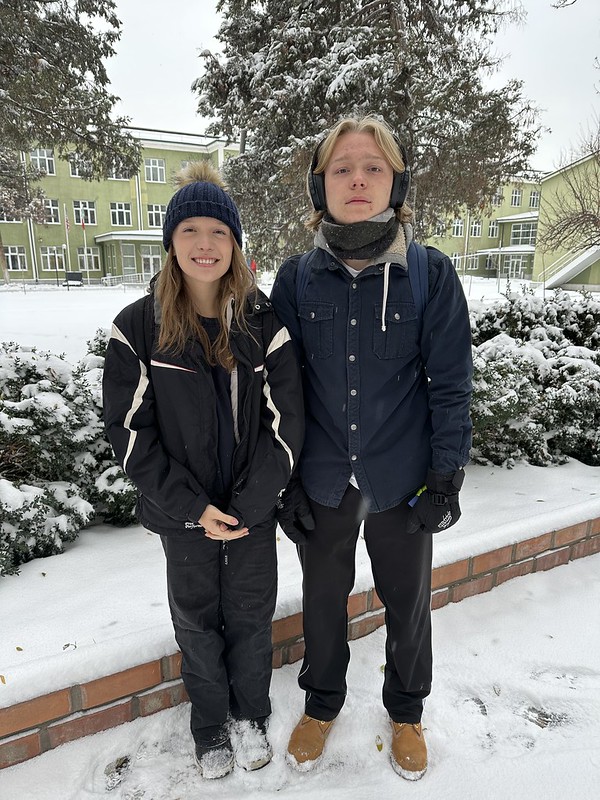
Oliver (18), Owen (21), Ocean (16) – Syrovarnya Restaurant – Tashkent

It has been a relaxing few days since we ended school last Friday, December 13. I am on flexible working schedule this week and am spending more time with family. On the work side of my life, I am wrapping up personnel and facilities issues before the end of the calendar year. I also got a couple of basketball practices in with the girls varsity team. On the personal side, I am doing more fitness and exercise, blogging my trip to Tanzania, and preparing for our trip to Japan.

Winter Garden at the Kralovec Residence…

The snow has mostly melted in Tashkent as temperatures are now mostly above freezing. I need to wear my Japanese Heat Tech™ underwear to feel comfortable when temperatures are below zero Celsius. I heard that older people feel cold more because of decreased circulation. I don’t remember feeling this cold when I was younger. With the long underwear I am fine and I enjoy the cool weather of a Tashkent winter. I’ve been walking Obi more to get daily sunshine and went for a 5 kilometer run yesterday. I want to add cardio to my power yoga workouts over the 3-week Winter Break. When I return in January, I want to add weights as well. Listening to a Peter Attia interview, as one ages, especially after age 75, muscle mass decreases significantly. I want to have muscles to ensure an active lifestyle for next 20 years. After today, I will be 1/3 the way through my Power Yoga 108 which is truly life-changing experience for me as advertised.

Two Beautiful Women – Ocean and Nadia

The big news in our family is the return of our eldest son Owen. He is visiting us this month after completing the first semester of this third year in university. It is always nice to have our family whole again and I really miss having him around. We celebrated his 21st birthday last night by going out to Nadia’s favorite restaurant in Tashkent, “Cheese Factory” or Сыроварня. He is maturing into adult and we are all looking forward to reconnecting with him the month. He is suffering from jet lag but fought through dinner last night. Ocean and I are connecting over basketball. She is a really good athlete and I am slowly getting through to her regarding her use of fundamentals. I am quite positive over our team’s chances this year in the year-end tournaments. Oliver and I ran some errands the past couple of days for Nadia. She made a Venezuelan Christmas favorite, Pan de Jamón. It is baked bread with ham, cheese, olives, and raisins inside. I also take every opportunity to drive Oliver and Ocean to where they want to go.

My mouth is healing from a tooth extraction last Monday. The swelling is going down but I was not able to take out the stitches last night. I just need to not smile as I am missing two teeth on the left side of my mouth. I need to do some research about implants because I don’t think it should take this long. Sitting at dinner waiting for my family to arrive to the restaurant, I was so filled with joy when they walked in. I am so blessed to have such a beautiful and healthy family. I am trying to savor all of these special moments with my wife and children. Below are some scenes of Tashkent from my walks with Obi.

History of East African Slave Trade and Bill’s Thoughts on Tanzania

Holy Ghost Mission – Bagamoyo, Tanzania

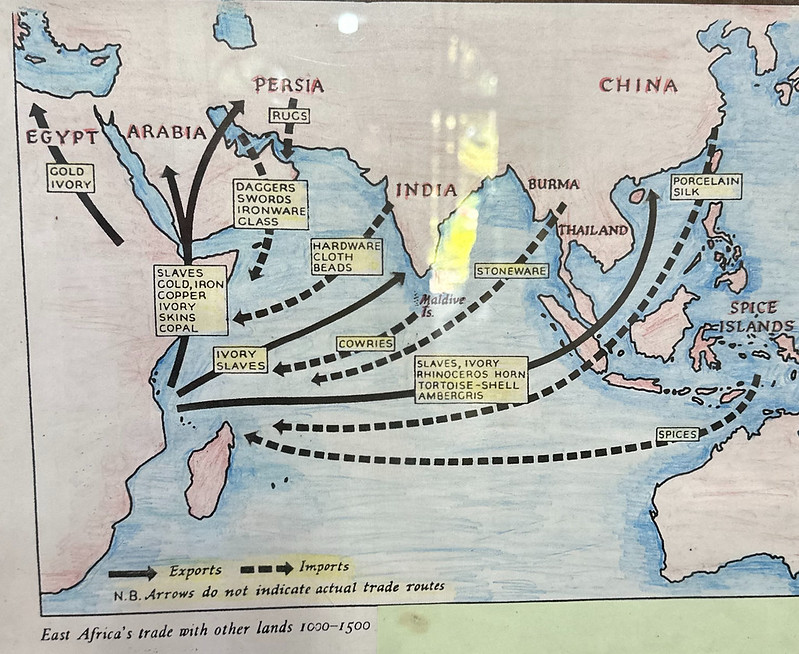
On our way back to the capital Dar Es Salaam and our flight home, we stopped at the historic port city of Bagamoyo. I was fascinated to read about the East African Slave Trade. As an American, I read a lot about the slaves from West Africa being shipped across the Atlantic to the USA. I didn’t know that almost 1.5 million slaves were captured in the interior (mostly Congo) and put to work on coastal plantations or shipped to India, China, Persia, and Arabia. You don’t see a large population of Africans in those countries today. I wonder why? In America, just under 400,000 slaves were sent to the American South and today African Americans make up around 10% of the total US population. Were they killed after slavery was abolished? Sent back to Africa? Worked to death?

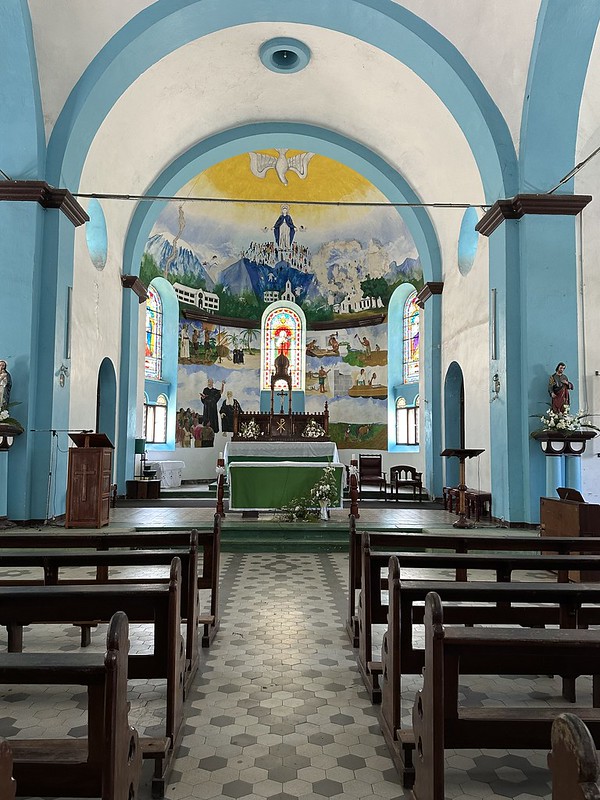
We stopped at a former Catholic mission, Holy Ghost Mission, in Bagamoyo which is now a school and a museum. In the photo above, you can see Livingston Tower on the church. It is named in honor of the famous African explorer. His body was interred in the mission while waiting to be transported back to England. The Catholic missionaries helped freed slaves and brought development to the area. It was nice to read that the Muslim leader Sultan Majid, gifted the land to the French Catholics to build the church and convent.

Interior of the Holy Ghost Mission

It was sad to read that only about 20% of the slaves captured in the interior, survived the journey to the coast. What a tragedy! I can’t imagine the conditions and I guess it is easy to look back over 200 years ago and judge the cruelty of the slave traders. The museum also gave the history of German colonization of East Africa. The British took over the settlement after World War I. In 1916 British troops invaded and took the city from the Germans.

Today Bagamoyo seemed to be a sleepy small town. We stopped for dinner on the way out Fish Eagle Point and and lunch on the way back at a hotel owned by a French woman. I was trying to buy some souvenirs, but really nothing to buy. I laughed at the advertisement below of the hairstyles. I asked Ocean to get the “Ariana”.

We drove through the traffic of Dar Es Salaam on the way the airport. We drove right by the US Embassy and other embassies and stopped at a shopping mall to buy some Pili-Pili Sauce. It is a hot pepper sauce that I really like and I bought the regular and mango. Delicious! We also like Aramat, an MSG/Corn/Salt seasoning that makes everything taste good. Dar Es Salaam didn’t look particularly appealing, hot, lots of traffic, a bit chaotic and crowded. I sure it has its charms but we were not in the city long enough to enjoy them.

Typical Traffic Scene from Dar Es Salaam

The Tanzanians I met were very friendly, loud and positive. Like many African nations, it is fast growing (4.39 children / female) with a demographics skewed towards young people. Tanzania was country #69 on my life list and my first visit to Africa. With a population of 62 million, it is the largest country entirely south of the equator. It is one of the most stable countries in Africa, with no major strife since its independence in 1964. The nature is amazing with the world’s deepest lake, mountains (Kilimanjaro), tropical coastline, forests and one of the biggest safari tourism industry (21 national parks) in Africa. They have presidential term limits of 2 x 5 years = 10 years. I was very interested in hearing people speak of their tribes. There are over 125 ethnic groups and over 100 languages Swahili is the national language . “My people are from the mountains.” one guy told me. I couldn’t tell the difference between the tribes, only the Maasai, who were much thinner, were distinctive. It is poor with 61% below the poverty line, but I see strong relationships, large familes and generally people have smiles on their faces. The country is 2/3 Christian and 1/3 Islam and I didn’t see or feel any strife between the two groups. I would definitely return to Tanzania and I would love to live there someday.

Ocean Becomes a Certified Scuba Diver

Dad and Ocean – Indian Ocean

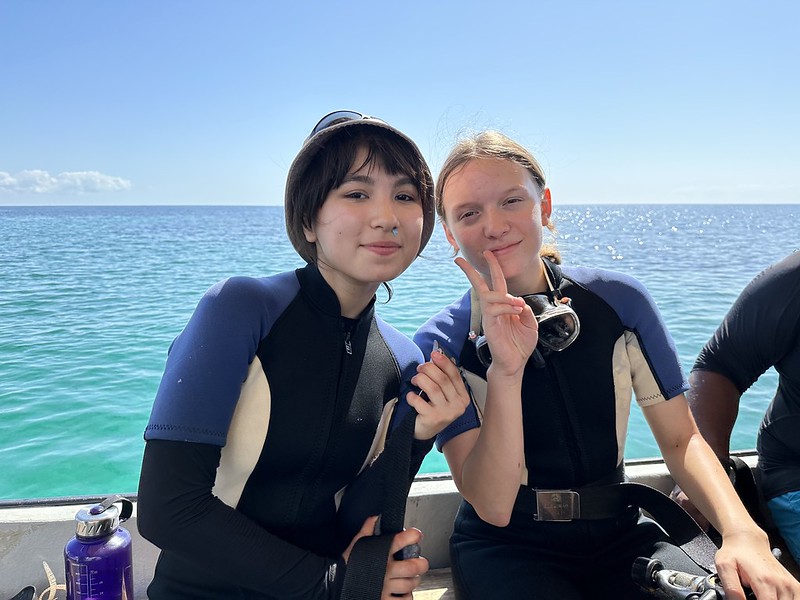
The last time I went scuba diving was in 2001 in the Western Australian Aquarium shark tank in Perth. My daughter Ocean completed her PADI open-water certification diving course and it was awesome for me to go on her first dive together as a certified diver! I did a refresher dive practicing all of the skills of diving and the safety precautions. Ocean is a natural in the water, it might have to do something with her name.

Ocean and her friend Oygul

I earned my certification in 1991 with Dawn’s High Desert Divers in northern Nevada. I remember my first dive was in a geothermal hot pond in the Great Salt Desert. I continued diving on the Caribbean coast of Colombia, earning an advanced diving certification. Since then I’ve done quite a bit of snorkeling and swimming, but not much diving. Part of it was in Colombia I suffered from seasickness and hated all of the preparation to dive. My motion sickness has diminished as I am getting older, one of the only nice things about being in my 50s. I am not crazy about diving, but I think everyone should do it in their lives. The earth is 2/3 ocean and for those people who do not dive, they are missing out on a wonderful part of the planet.

I did six dives during the week, some with the students, some service dives, and others, just with the other teachers. The coral reefs of the Indian Ocean Tanzanian coast are making a comeback. Efforts of conservation and restoration of the reefs are taking place all up and down the coast. Country officials are realizing the economic value of ocean biodiversity. We helped the restoration of the reefs by planting cement shells that serve as a medium for coral growth. Local fishermen use dynamite to fish which destroys the coral. This is not prohibited, although it still occasionally occurs. Our school is establishing a relationship with Fish Eagle Point and others in the region to support their conservation and rehabilitation of the Tanzanian coral reefs.

I am proud of Ocean! She found time to complete the online course before leaving for the trip. She has a busy academic schedule and Ocean was not entirely enthusiastic about going. She had a little trouble equalizing her sinuses on the first couple of dives, but after that, excelled as a diver. She is now a certified PADI diver. I would love to get Owen and Oliver as divers as well so we could all do a Lake Superior dive this summer. We’ll see.

Placing the sound recording device anchor in the boat

Mkomazi National Park – Tanzanian Majesty

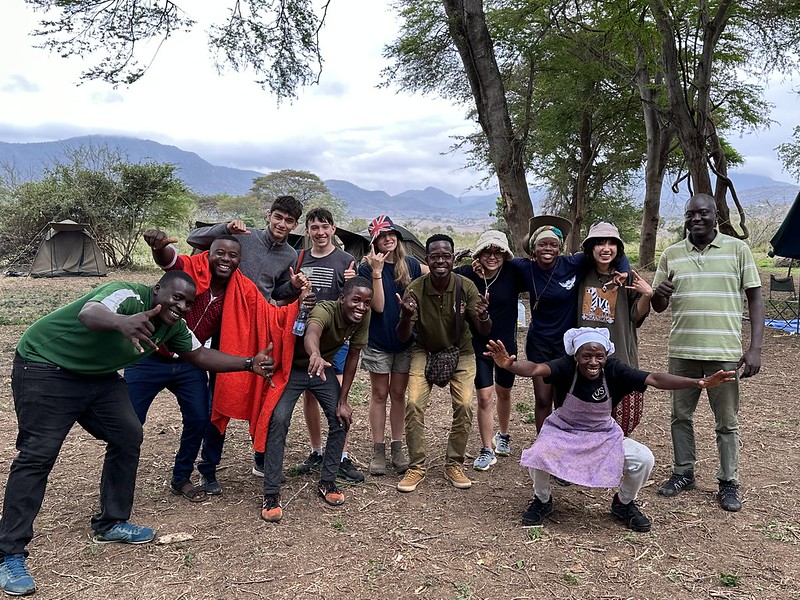
Our friendly crew at the Mkomazi Campsite

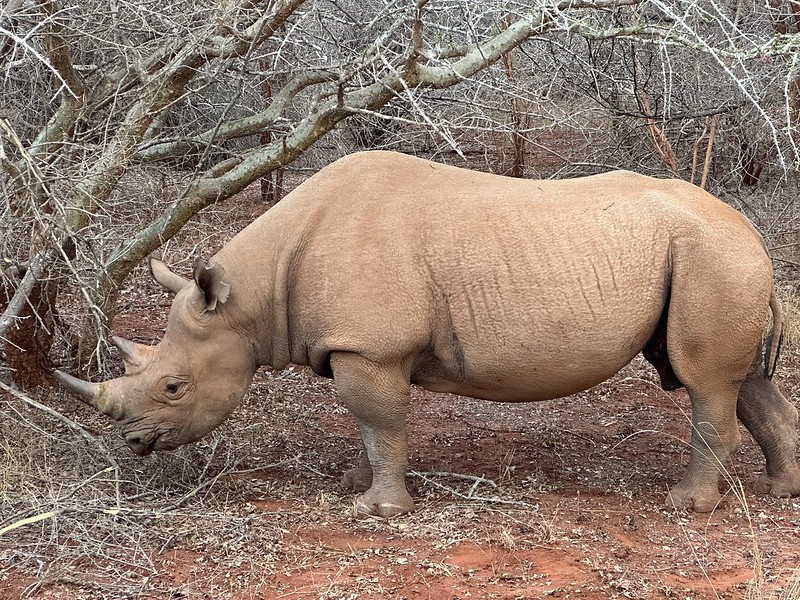
I completed a lifelong dream of going on a safari in Africa. My daughter Ocean and I visited the Mkomazi National Park located on the border of Tanzania and Kenya. It is adjacent to the Tsavo West National Park on the Kenyan side. Mkomazi is little visited compared to the more famous Tanzanian parks in the Serengeti region. However, I was swept away by the majesty of the African savannah and Acacia-dry woodlands all the same. The park features breeding programs for Black Rhinos and the African Wild Dog. It was patched together through combining reserves and somewhat controversially, evicting pastoralists and local villagers without giving adequate compensation. During the long drive from Fish Eagle Point to the park, we saw many poor villages all the way up to almost the border of the park. We also saw the occasional Maasai herders, walking along the side of the road. I have mixed emotions as a rich foreigner able to visit the rhinos and celebrate the success of conserving a big piece of land.

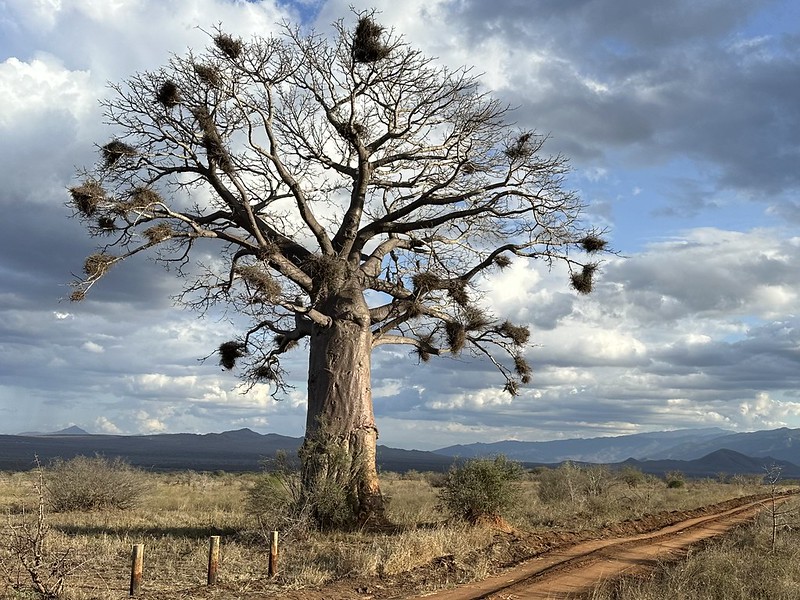
The majestic African Baobab Tree Adansonia digitata

I was pleasantly surprised by the size of the park. It is slightly larger than my home of Iron County in Michigan’s Upper Peninsula (over 3,000 square kilometers). We didn’t start seeing large concentrations of animals until the interior of the park. It is the end of the dry season and many of the animals concentrate near watering holes. The Black Rhinos were used to tourists which was good that we got to see them, but bad in that it was a bit more of a zoo than a park.

The Black Rhinocerus

Our campsite was beautiful. The views of the mountains in the background, the immense Boab trees, and the clear night skies were dreamy. We were definitely not “glamping” as it was a school trip. We all had basic tents with sleeping bags and mats. We had a delicious dinner on picnic tables. We paid extra to visit the rhinos and wild dogs’ breeding areas. I was disappointed that you just can’t go on an unaccompanied hike through the park. Part of it is for safety and part of it is not to disturb the wildlife.

Dad and Ocean

I see the economics of tourism and national parks in Tanzania. I am glad my tourist dollars go to the local employees and government to give them a good life and conserve the incredible wilderness of Africa. The trip really opened my eyes to the beauty of Africa. It is similar to South America in many ways. It is a bit poorer with less infrastructure, but the nature of the tropics is on par with the Amazon, Pantonal, Andes, etc. I feel so fortunate to experience a safari. I remember Mutual of Omaha’s Wild Kingdom with Marlin Perkins as a kid (1963-1988). Growing up in a little town in northern Michigan, I always wanted to visit the exotic locales and see the wilderness that they featured on the show. I hope to go back and experience more of African wilderness.

Family Journal: December 12, 2023

Oliver and Ocean December 12, 2023

Tashkent received its first major snow of the winter on Monday evening! I was awake at 5:00 AM on Tuesday checking road conditions to make a call regarding school closure. We kept school open and I am glad we did. The students enjoyed playing in the snow and everyone made it to and from school safely. It is always interesting to hear from students experiencing snow for the first time in their lives. Snow brings out the kid in all of us and less snow on the planet is one of the sad consequences of global warming. Snow and cold always remind me of growing up in Michigan’s Upper Peninsula. Combined with Christmas music, it brings back memories of my childhood in Caspian and my parents. I always miss them at this time of year. Temperatures stayed well below freezing all week and the local Amirsoy Ski Resort is opening on Saturday. Winter is in full swing!

Nadia on Recess Duty

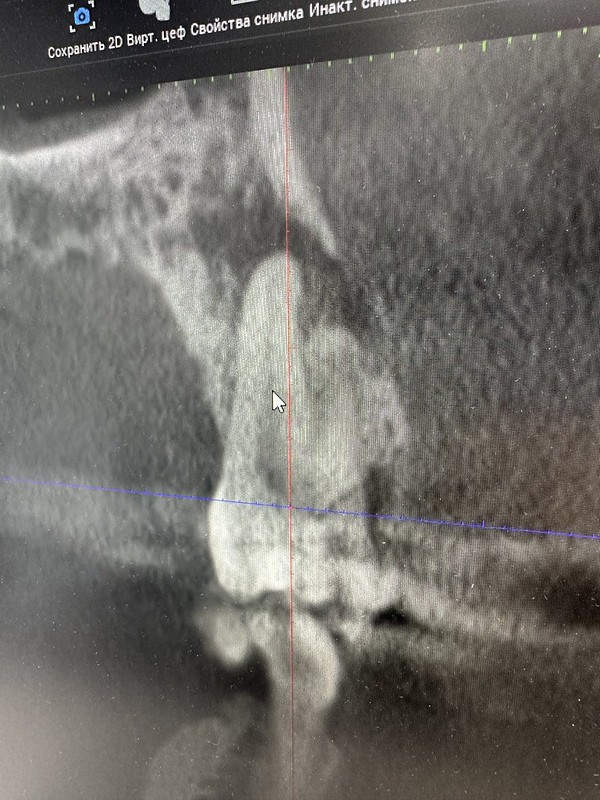
Yesterday I got a tooth pulled. I discovered a large crack in the tooth and after x-rays, the dentist needed to take it out as the root was infected. He drilled the implant base into my jaw and sewed the incision. My mouth is swollen on the left side and I have a headache today. While he was taking out the tooth, the neighboring tooth cap fell out so I am missing two teeth this weekend. I go back Tuesday to put the cap back on and take out the stitches. I always think about what people did before anesthesia and modern dental tools. Pain, pain, pain…

X-ray of my tooth

Family Journal: December 10, 2023

Beaders!

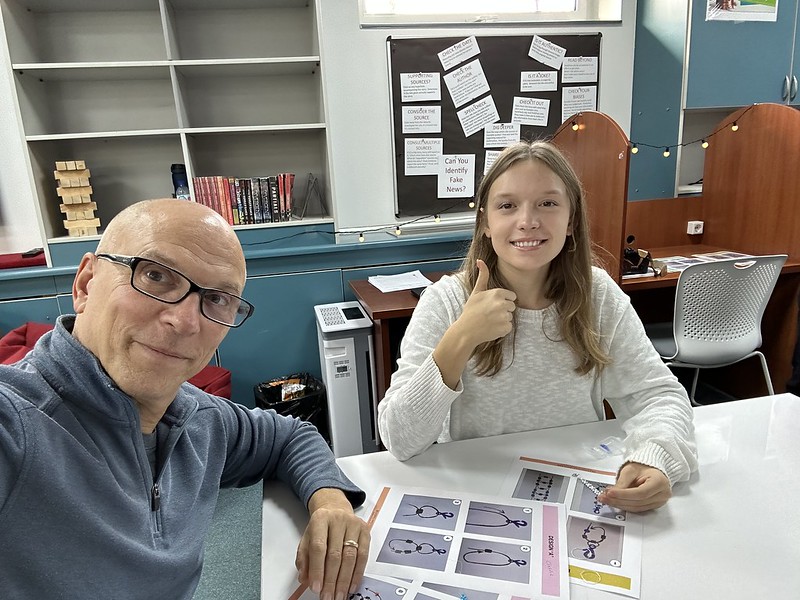
I had a relaxing long weekend before we headed into the final week of school before Winter Break. Uzbekistan celebrated Constitution Day. On Saturday Ocean and I attended a beading workshop at school. A classmate of Ocean led a workshop on bracelet making for her Personal Project. Of course, Ocean’s bracelet was perfect and beautiful and mine was not so perfect and not so beautiful. It was fun to spend time with her and I was proud of my sense of accomplishment in making a bracelet for my wife Nadia. We all had a lot of laughs over it! I chose turquoise and orange, Miami Dolphin colors, which Nadia did not have any matching outfits for. She wore it anyway to be nice to me.

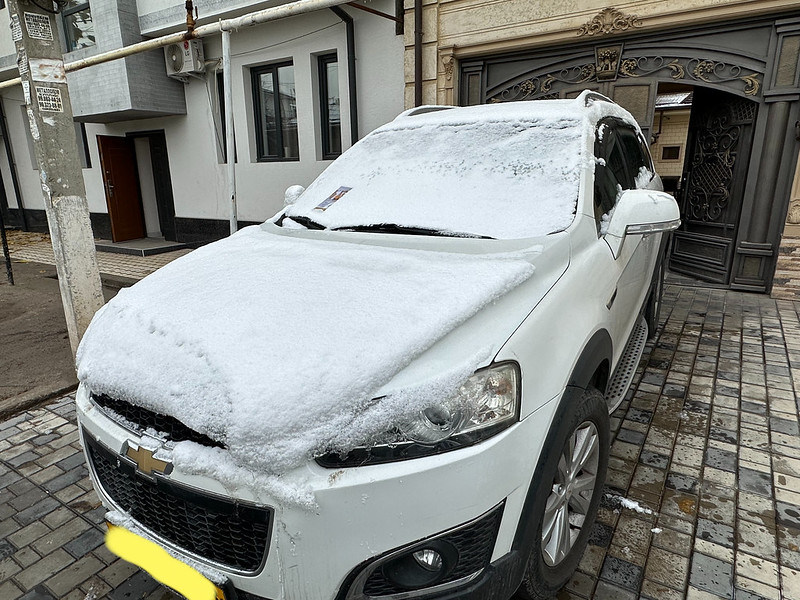
Evidence of First Snowfall – December 9, 2023

Tashkent received its first snow of the year on Friday night (December 8) the latest since I’ve lived here in 5 years. The snow hung on through the weekend but was only around in patches by Sunday evening. I hope we get more this week as it makes it feel more like Christmas.

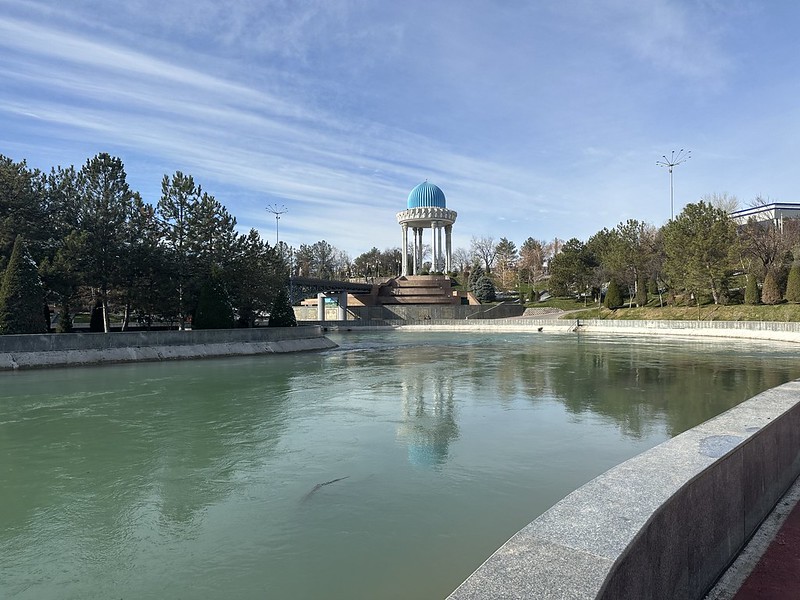
Bozsuv Canal – State Museum “In Memory of the Victims of Repression”

Nadia hosted a Christmas Cookie Swap on Sunday evening. My highlight was going with my son Oliver and his girlfriend Nicole to buy Kirkland sharp cheddar cheese at Alay Bazaar. I took Obi out for several long walks over the three days to get outside and enjoy the city views. (above)

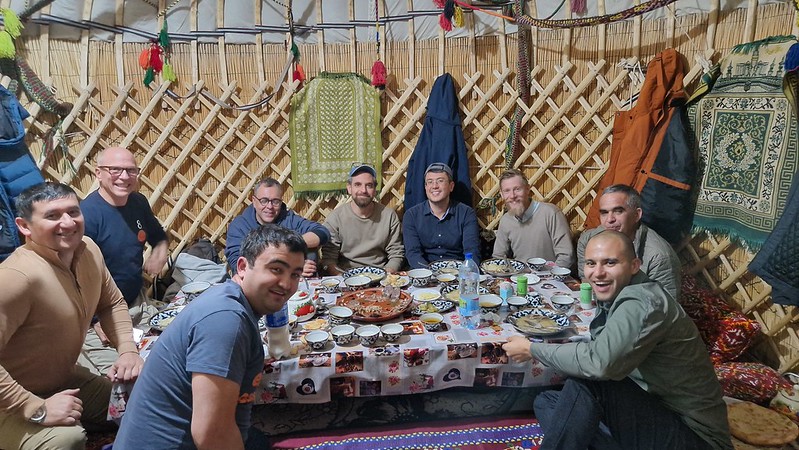
A Golden Horde Feast

Mukhtor, Bill, Oybek, Noah, Ahmed, Rashid, Sean, Walid, and Ahad

I had a quintessential Central Asian experience Thursday evening, courtesy of my friend Oybek. He took a group of us to a Kazakh restaurant to celebrate the start of the long weekend.

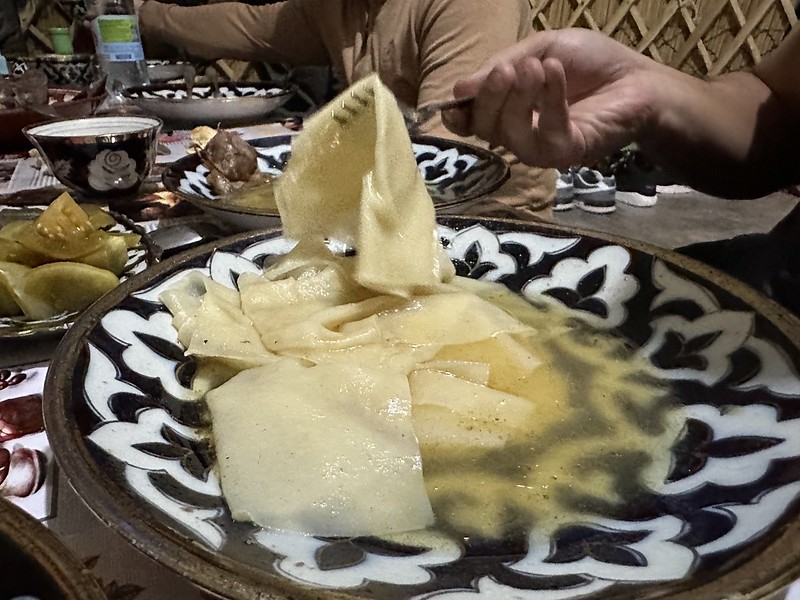
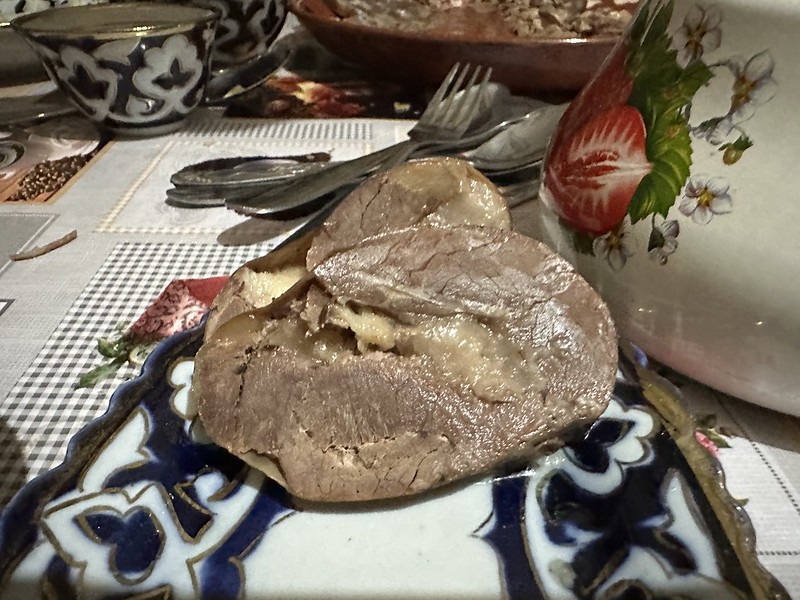
Beshbarmak is the national dish of Kazakhstan and Kyrgyzstan and is a traditional meal of the Central Asian nomadic steppe tribes. It is called “five fingers” because it was traditionally eaten without utensils. The dish is a combination of beef, horse and/or lamb meat wrapped in flat pasta noodles in a broth. I recently read a Genghis Khan biography and this was a meal of the Mongol armies. They were reliant on their animals while traveling and their diet was rich in meat and dairy products. Both the meat and dough are boiled. It is a heavy meal but delicious. The Kazakh nomadic tribes were probably similar to the Mongols. You can see Mongolian DNA in Kazakhs with their Asian eyes which differ from the Uzbek eyes, which are rounder and more Turkic.

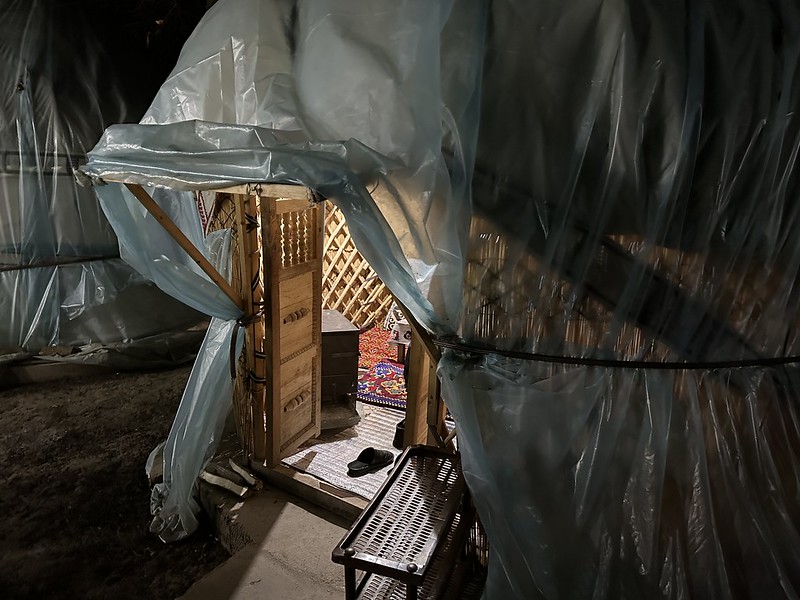
To make the experience even better, the restaurant (Shilpildoq) was in a village about an hour out of Tashkent halfway between the villages of Parkent and Chirchiq. We also were served the traditional shorpo (mutton broth) and kumis, fermented mare’s milk. We reserved one of the yurts. It was a cold night and the wood stove made it cozy inside.

I was really curious about the fermented horse milk. It tasted better than I expected, slightly sour, and carbonated, but not an overwhelmingly bad taste as I was expecting. It is served cold and has an alcohol content of about 2% so it would take you quite a few drinks to become intoxicated. One of the guys Rashid said that it was a different kind of buzz, instead of vodka that goes to your head, getting drunk on kumis is more of a body buzz with a clear mind. I had two cups so I didn’t feel anything. Horse’s milk is high in lactose, closer to human milk than a cow’s. I remember drinking a bottle of Nadia’s milk when she was nursing and it was surprisingly sweet. The sugar is a good medium for fermentation to occur. I would drink it again, especially in the summer.

I was quite gassy Thursday night as my body is not used to so much meat. The pasta in broth was tasty and the meat was OK. Horse sausage was served with the meal and it was salty. It was a special evening for me. I love the friendship and camaraderie and felt honored that Oybek shared his ancestral culture with us.