
I listened to the audiobook, “The Gales of November: The Untold Story of the Edmond Fitzgerald” by John U. Bacon. The University of Michigan graduate was a journalist for many years at the Detroit News and writes non-fiction books about sports and history. I highly recommend his latest book! It gave me insight into the world of freighters on the Great Lakes, the economic history of the Great Lakes, and some touching stories of the sailors and their families. Below are my takeaways from the book.
- From World War II to 1975, the Great Lakes were the Silicon Valley of their time. It was the economic powerhouse of the USA with the most populous and richest states (PA, NY, IL, OH, MI, IN, WI, MN), besides Texas and California, being on the Great Lakes. I now better understand the term “The Rust Belt” that describes the economic and cultural decline from 1975 to 2026, with people and money leaving the Great Lakes for the American West and South. I predict a renaissance of the Great Lakes with climate change being favorable to them.
- Shipping is the most efficient way to move goods. It is 600 times cheaper to use a large freighter instead of trucks. This does not take into account the cost of maintaining highways.
- A Great Lakes freighter is designed much differently than an ocean freighter. Because the Soo Locks are shallow and narrow, ships need to be long and thin. This makes them harder to move in storms. A freighter can carry the equivalent of 17,000 automobiles’ worth of taconite.
- Great Lakes storms are more dangerous than ocean storms. The salt in ocean water dampens the force of the waves. Great Lakes freshwater waves are higher and closer together.
- Taconite is a lower-grade iron ore that freighters transported in the 20th century on the Great Lakes. Mining companies crushed rock and used magnets to draw out the diffuse iron in the ore. The powder was then rolled into small pellets for easier shipping.
During the school year, I used the image of the Edmond Fitzgerald in a presentation to the school community. I was using a ship as a metaphor for the school, and the Board of Trustees sets the course for the ship and looks out for storms, but does not load cargo or steer the boat daily. No one in the audience knew about the Edmond Fitzgerald. The ship sank in 1975 off the east coast of the Upper Peninsula of Michigan, so of course all Yoopers know about it. Canadian musician Gordon Lightfoot released a 6 and 1/2 minute ballad about the tragedy in 1976, and it reached #2 on the pop music charts in the USA that year. I guess referencing a ship that sank 50 years ago would not be a common reference for an international and younger audience. 🙂

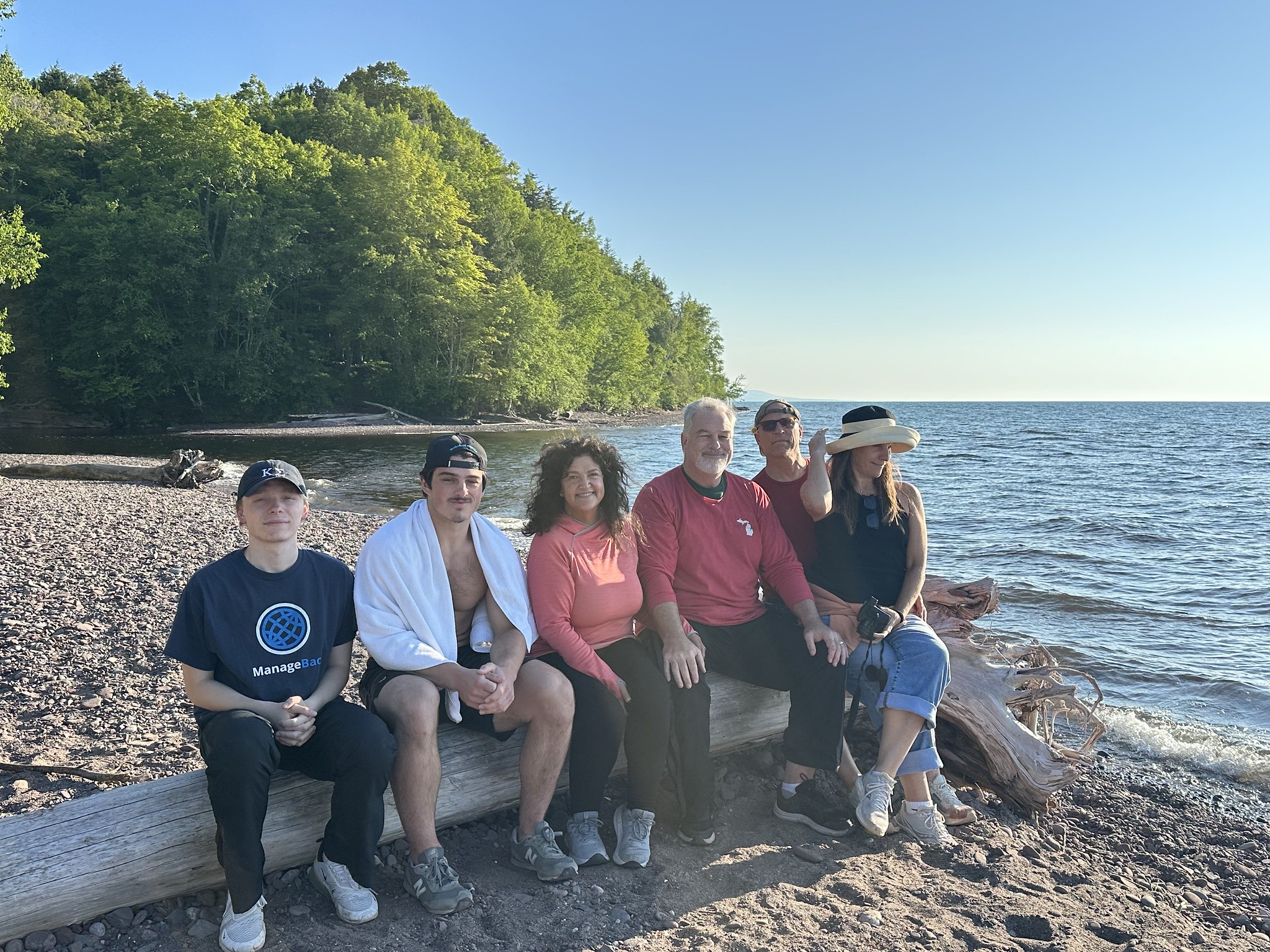
I was thinking about the Edmond Fitzgerald yesterday while I was swimming in Lake Superior. We visited the Porcupine Mountains Wilderness State Park and “hiked” to the Presque Isle River Beach on the far west side of the park. We were in mixed company (non-hikers) and got off to a late start, so needed to keep our walking distance to a minimum. People who have never seen one of the Great Lakes doesn’t understand their size. They have the power and vastness of oceans. Walking along the shore and taking in the intense greens of the trees, the red of the rocks and soils, the blue skies and the never-ending grey horizon of the water always invigorates my soul. The water was cold but not too bad and Jimmer and I managed about 10-15 minutes in the water. We collected some beautiful rocks and driftwood and had a great late afternoon/evening by the water. The sun does not set until 10:00 PM at this time of year.
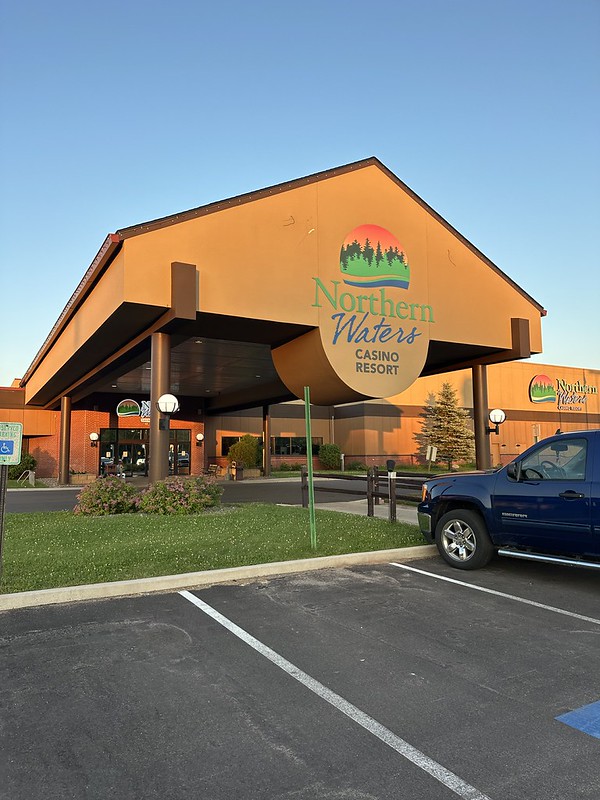
We stopped at the Northern Waters Casino and Resort to watch the Mexico versus England match. The Ojibwe tribe owns a nice casino/hotel on their reservation just outside of the town of Watersmeet, a 30-minute drive from Caspian. I see that European teams are the majority of the quarterfinals with five teams already in and a sixth, Swizterland, taking on Colombia.
 Bill's Blog