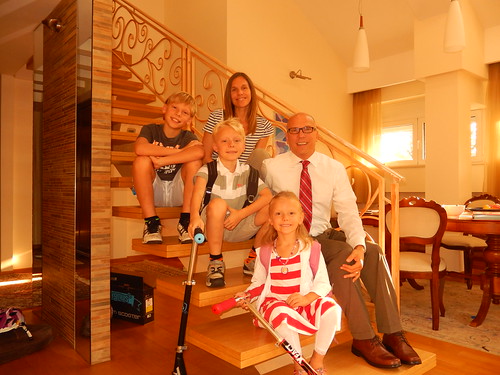
It was an exciting morning today as we started the 2013-2014 school year. The kids were up early in anticipation and we eager to ride their new scooters to school and see all of their friends. Owen is in his final year of the PYP programme and is a big fifth grader. Oliver is “a new man” and promises to listen to his teachers and obey the rules, and Ocean can’t wait to “learn the small letters” of the alphabet and start reading. Nadia is teaching first grade for the second year and really loves it. I am starting my sixth year at ISB and we welcomed over 200 students to the Upper School.
We also love the convenience of living right next to the school. It makes our lives soooo much easier. I highly recommend ending commutes for families. We are all looking forward to another year of adventure and growing for our family.
Last weekend we escaped to the heartland of Serbia – Šumadija. Šuma is forest in Serbian and the area used to be covered in forests and the Serbian people have been in this region for a long time. It is just south of Belgrade and today is full of small farms and rolling hills with pockets of forests.
We visited the Radovanović Winery in the small town of Krnjevo. It is one of our favorite wines from Serbia. The country has an excellent wine industry and it is growing. They were very friendly and gave us the full tour of the premises and arranged for a wine tasting. They even had low alcohol wine for the kids to taste. We are not that big of wine drinkers, although I did take a wine-tasting course at Western Australia University years ago and am interested in science and pleasures of fermenting grapes.
Fresh Grapes Ready for Wine Production
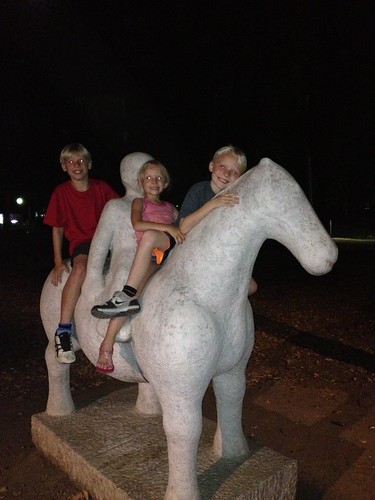
We then spent the night in the spa town of Aranđelovac, home of the famous Knaz Miloš bottled water. They opened up a large new hotel and water park. The park was quite crowded but the kids liked it. In town there is a huge park where the original spa used to be and it is filled with these beautiful statues carved from the local venač marble. We walked around and the kids played on the statues. It was a glorious mid-summer evening and lots of people walking about.
The Marble Statues of Aranđelovac
It is only 78 kilometers from Belgrade and makes for a perfect overnight get-away. I also highly recommend Radovanovic wines and visiting the mali podrum (little cellar).
I’ve been loving the extremely hot temperatures in Belgrade this August. The day time temperatures have been up into the 90s Fahrenheit and even the nights have been in the 80s. We have been spending as much time as possible in the water, both at Ada Ciganlija and in swimming pools. Owen is shown above diving into the pool at a friend’s house.
This weekend we went to one of the many “green markets” in Belgrade, this particular one in Blok 44 in New Belgrade. It is funny how in the US they make a big deal of the “Farmers’ Markets” and in Serbia they are everywhere. Many of the stalls do buy directly from local farmers as the ties to the countryside and small farms have not been lost like in the USA. The family is shown below shucking corn.
Finally, our recommendation for the best ice cream in the city, Moritz EIS located downtown on Ulica Vuka Karađića near the walking street. The Austrian owner has high quality homemade ice cream that come in interesting flavors. There is a nice outdoor area to sit and it is convenient to go for a stroll afterwards down Knez Mihajlova Street.
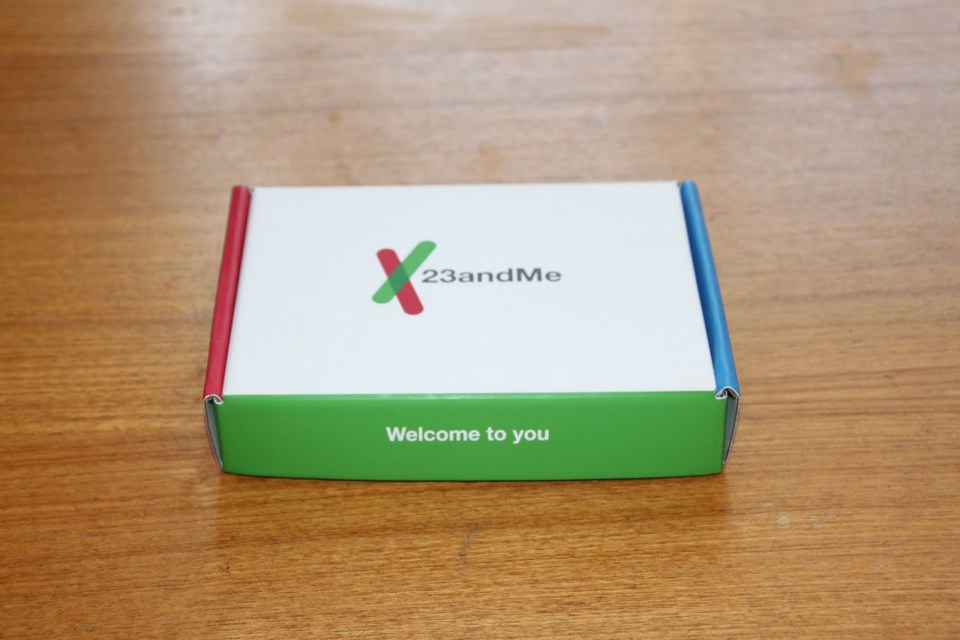
The 23 and Me Testing Kit (Photo courtesy of James Hadfield)
Earlier this month I submitted a sample of saliva to the genomics and biotechnology company called 23 and Me. The company, founded by the wife of Google co-founder, Sergey Brin, allows individuals to get a portion of their genome decoded and they give some health and ancestral information. Only around 1 million of the 3 billion base pairs are read by the company and based on this, the report shows people their genetic predisposition to some diseases and other traits. I haven’t explored this part yet and will do in the coming weeks.
I was really interested in the ancestry part of their services. I am adopted and have found my biological mother and know a bit about my heritage, but it was really amazing to see in detail the percentages. It was also awesome to think about how humans came out of Africa and some of my DNA sequences are the same as the Neanderthals and the cavemen who painted those beautiful drawings in France.
Humanity is just in the beginning stages of understanding our genome and I hope I live long enough to see the advances in the field. It would be a great field to go into if I was younger. I am not sure how accurate the results are given that only a small portion of my DNA was decoded. The “speculative” read of my DNA was as follows:
Overall, I am 99.3 % European ancestry. The breakdown of this European DNA reads:
38.6 % Eastern/Northern European
19.1 % French/German
12.7% Non-specific Northern European
8.4% Balkan (yea Serbia!!!!)
1.2% Iberian
1.1% Italian
7.9 % Non-specific Southern European
9.6% Non-specific European
There are too many “non-specifics” for my liking and I am not sure how they arrived at this. Is it because they didn’t read enough of my DNA? Could it be that because Europeans interbred so often, that to distinguish between countries, or groups is difficult? Living in Serbia and being of Slavic origin, I always wondered if I had some Balkan blood in me, and yes indeed I do. The 0.7% of non-European DNA was defined as Middle Eastern/Northern Africa.
The company is also crowd sourcing DNA for its mega database to find insights into the human genome. I gladly contributed to this and with the 300,000 other people who have done this also, wish them luck in their research. The company also matches genetic relatives, known and unknown from the database. I found I have a second cousin who also submitted a saliva sample. There were a bunch of third to sixth cousins. Out of respect to my biological mother, I probably won’t look them up.
Another part of the company are collecting health and ancestry surveys from the participants. With this they can get more specific regarding country origins. The top two countries for me were Poland and Slovakia, which matches what my biological family has told me. Other countries earning percentages were Russia, the Ukraine, Estonia, Romania, and strangely, El Salvador and Cuba.
I am 2.8% related to Neanderthals, and the average European is 2.7%. That puts me in the 72 percentile. Very odd to think that humans bred with Neanderthals and we still carry some Neanderthal DNA with us today.
In tracing my maternal and paternal DNA lines, on my mother’s side I am Haplogroup H, which is typical of Europeans, and found in the Basque and Scandinavian populations. On my father’s side, I am the R1b1b2a1a, which comes from the fringes of the North Sea and over 50% of European men possess this group. Sharing the same paternal line is the media sociologist and author, Malcolm Gladwell.
I will be blogging more about this as I delve into the reports on the web site.
We recently spent 4 glorious days on the island of Čiovo, located just off the Croatia mainland next to the beautiful town of Trogir. The island is in the center of Croatia’s Dalmatian coast and it is our third trip to the Croatian coast and each time I like it more and more.
The highlight for me was renting a sea kayak for an afternoon with Owen. It was a great way to spend the day with my son. We paddled out of Okrug Gornji and found some secluded coves that were perfect for “cliff diving” and swimming.
I can see the allure of the Adriatic Sea. The turquoise water, that Mediterranean bright sun, the smell of pines and sea, and the white limestone rocks, really renews one’s soul. We spent most of the time on the beach because the kids couldn’t get enough of the water. In the evenings we enjoyed fresh fish dinners and took the ferry over to the mainland Trogir for ice cream. The town is an UNESCO world heritage site and it was pleasant to see the yachts in the harbor and meander through the old city in search of ice cream.
Okrug Gornji Harbor – Our Dinner View
There were a lot of tourists, mostly from Germany, Poland and other northern European countries. There were enough places to get away however and it didn’t feel that crowded.
We stayed on Čiovo because our good friend, Nemenja, his mother is originally from there and they have a summer home there. He and his family showed us some typical Balkan hospitality and made our stay even more wonderful. I want to thank Dragica, Milena, and especially Nemenja for showing us the secrets of Dalmatia.
I would bet the Croatians have an ambivalent attitude towards the crowds of tourists. Most locals have gotten into the rental business and converted their homes into apartments. The tourists also bring lots of revenue to the supermarkets, restaurants, ferries, shops, etc. They have changed the character and physical look of the place however, and it was interesting to hear Nemenja’s description of the town pre-tourist boom. There were very few Serbs around, and that stems from still ill feelings of Croats towards Serbs from the war. A bit inland is the former Serbian enclave and short-lived independent country (Republic of Serbian Krajina), Knin. A lot of violence occurred there and it would be a fascinating place to visit. The city went from being 79% Serbian to 75% Croatian. Serbians usually go a bit further south to the Montenegrin coast. We did get quite a few looks because of our licence plates. Croatia was celebrating their recent membership to the EU (July 1) and I am closely watching the impact on the country. Serbia is in the process of membership and so I am curious to see what benefits and disadvantages EU membership brings.
Ocean and Ollie Take a Break at Labadusa Beach
I learned that the Dalmatian breed of dog is not common in Dalmatia. The breed was originally from there, used as a guard dog for nomads, but the breeding and popularization of Dalmatians took place in England. The unofficial capital of Dalmatia is Croatia’s second city of Split. I would like to go and visit there. I also did not understand much of the Croatian language. They have a different accent and in this part of Croatia, they mix in a lot of Italian and Croatian terms that differ from Serbian. For example, they do not say prijetno, but dobar tek instead.
We will definitely be back to Dalmatia. It is seven hours from Belgrade via a fast, four-lane highway, although it goes in a roundabout way and not a direct route. Someone needs to put a large, straight highway from Belgrade through both Bosnia and Montenegro. Travelling through those countries is an uncomfortable and slightly dangerous experience due to the winding narrow roads.






 Bill's Blog