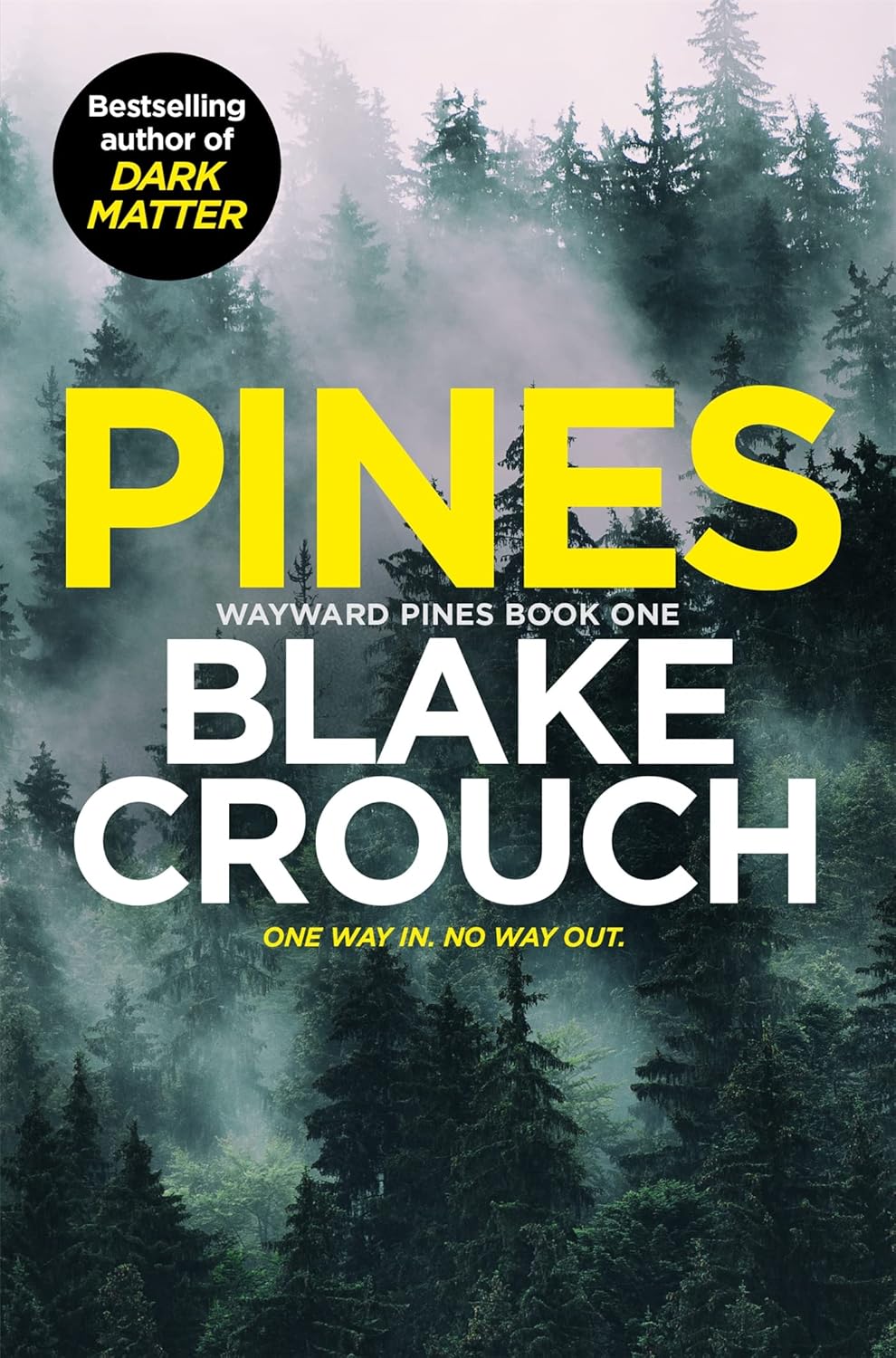
The Pines (2012) is a classic airplane read. The science fiction thriller has tight chapters ending with a hook, a protagonist trying to put together the mystery along with the reader, and a plot that keeps escalating. It is easy to pick up and read on my phone between travel disruptions. The North Carolina native author Blake Crouch is most famous for his novel, Dark Matter, and he is the head writer and showrunner of the Apple TV series based on the book. This novel is the first of three novels called the Wayward Pines Trilogy. It too was adapted into a television series back in 2016.
I don’t want to spoil the book too much in this blog post. Stop reading here if you want to pick up the book yourself.
The book begins with Ethan Burker, a secret service agent, surviving and car crash and waking up in the small Idaho mountain town of Wayward Pines. Crouch writes in the Afterward that he was inspired by David Lynch’s 1990 television series Twin Peaks. I have not seen the series but know it is set in a seemingly idyllic small town that has dark and mysterious undertones. The science behind the science fiction is decent and thought provoking. It turns out to be a apocalypse story set thousands of years in the future. I particularly like the “abbies” creatures evolved from humans through the effects of climate change on our DNA over the generations. I am mulling over reading Book Two in the trilogy and checking out the Apple TV series Dark Matter. Idaho is a beautiful state, most of it in the Rocky Mountains. I’ve been Twin Falls, Boise, and the Snake River Canyon and would like to travel to the northern part of the state someday.
The Idaho theme continues…
True Crime novels and documentaries are a guilty pleasure of mine. I call it “guilty” because they can be a bit low-brow and can be disrespectful towards the victims and their families. They are popular because of the story telling and the “whodoneit” aspect that turns the consumer into an armchair detective. I think is a great genre for adolescents to become interested in reading, podcasts, and deep-dive documentaries. I downloaded the three-episode Netflix Series, “Idaho Murders: College Nightmare” on my phone and finished watching the second half of the series on the journey between JFK and Tashkent.
This is the story of four university students from the University of Idaho in the small town of Moscow. On Sunday, November 13, four students (Kaylee Goncalves, Madison Mogen, Xana Kernodle, and Ethan Chapin). The documentary really hit home for Nadia and I with two of our three children currently in university. The interviews with the parents and family members of the victims were particularly heart wrenching. It was such a tragedy to end the lives of the promising, enthusiastic youth with everything in front of them, careers, marriage, children, etc.
It was a difficult crime for the police and FBI to solve because it was not a crime of passion, involving an ex-boyfriend, or someone who personally knew the victims. They eventually found the murderer because he left a knife sheath with his DNA at the scene. Forensic scientists eventually matched the DNA to him and from there, they matched his car, that was spotted on several security cameras in the neighborhood and is mobile phone pings to local towers. Without the sheath, I don’t think this crime would have been solved. The murderer is a psychopath who formally and informally studied serial killers and criminology. I think his goal was to become a serial killer and this was his first attempt. Modern tracking technology, CCTV, mobile phones, DNA analysis, etc. make it much more difficult for serial killers to get away with their crimes than previous generations. He was in the news lately because he wants to get out of the plea deal he made instead of taking it to trial. He is currently serving four consecutive life terms without the possibility of parole. From watching the documentary, it looks like they have enough evidence to convict him (his DNA at the scene, receipt of purchasing that type of knife, his car and mobile phone in the area that night, etc.). The series did receive some criticism from people who thought it was released too soon after the events and it was a money grab for Netflix. There were two other documentaries (Amazon and Peacock) already released. I thought the producers and writers of the documentary did a good job respecting the victims and portraying the students. None of this brings back the kids and my condolences go out to the victims and their families. The Moscow Chief of Police, Anthony Dahlinger, really did a good job of telling the story with compassion, dignity, discretion, thoughtfulness and authenticity. He is a role model for policemen everywhere.

