
It is remarkable that Frankl was able to survive and fortunate for posterity that he chose to bear witness to the atrocities of the Holocaust. He was born in Vienna, Austria in 1905 and became a respected neurologist and psychiatrist, leading the department starting in 1940 at the Rothschild Hospital. It is a coincidence that one of my last blog posts about Positive Discipline teaching pedagogy was based on the work of Viennese psychologist, Alfred Adler, was one of the mentors of Frankl.
I wondered why Frankl ended up in a concentration camp when many German Jews had the means to escape an increasingly agressive German government. He did get a US visa in 1941 and chose not to use it due to his aging parents. In December 1941 he got married to a nurse at the hospital, Tilly Grosser. Their happiness was cut short when his family was sent to the Jewish Ghetto Theresienstadt in Terezín, now part of Czechia in September 1942. Approximately 140,000 people were sent there with the overcrowding and horrible conditions killing over 33,000 people, including his father who died of exhaustion in January 1943. Another 88,000 residents eventually died in concentration camps. Frankl served the traumatized residents of the ghetto.
The couple was forced to have an abortion because Jewish people were not allowed to have children in the ghetto. In 1943 they were transferred to the Auschwitz-Birkenau concentration camp where his mother was immediately sent to the gas chambers because she was not physically able to work. Tilly was transferred to the Bergen-Belsen camp in late 1944 and later died there in 1945 shortly before the camp was liberated. What trauma he endured with the death of his parents, the forced abortion, and being separated from his wife. He was transferred to different Dachau subcamps and eventually was freed by American forces on April 27, 1945 after over 2 and a half years as prisoner 119104.
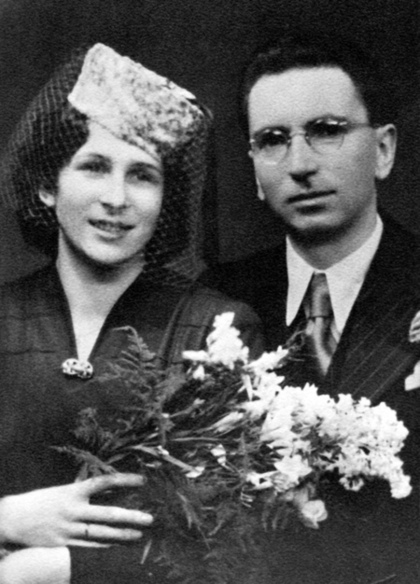
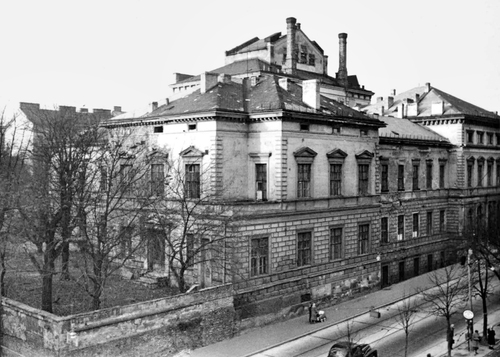
He would go on to be a director of the Vienna Neurological Policlinic for 25 years and a world famous author and speaker. He married again in 1947 and had a daughter. He founded the Logotherapy movement and eventually dies of heart failure in September 2, 1997 at the age of 92. He taught and spoke around the world including Harvard and the University of Vienna.
Going through such a traumatic experience shaped his philosophy and him as a person. Having a scientific mind, he viewed it as an experiment where the subjects, him and his fellow prisoners, got everything taken away from them. Stripped of material possessions, family, comfort, health, reputation, etc. allowed him to clearly see that humans need meaning or a reason to live and thrive. It was easy in the those conditions to lose hope and many prisoners died from sadness and grief. It shows how powerful the mind is to strengthen the body’s immune system and other biological processes.
That is good advice for all of us even today. We are not subjected to the suffering he had, although suffering is a part of life. I get a lot of joy by being able to provide for my family and love my wife Nadia and my children. I also get satisfaction and reward by serving others as a school leader. It is the idea of something bigger than oneself, something that is not self-centered, that actually gives me the most pleasure. I do still pursue happiness in the in Jeffersonian sense. Exercise and sport (yoga, tennis, cycling), exploring history and culture through travel, and contemplating nature and wilderness give me much pleasure. But without meaning, they are a secondary concern.
The second half of the book details his Logotherapy, which is the therapist helping patience find meaning in their lives. The idea is depression and despair come from the feeling that life has no purpose. The three paths to meaning are creating something for doing a deed, experiencing something or loving someone, and choosing one’s attitude towards unavoidable suffering. Below are quotes from the first half of the book that resonated with me.
- “Forces beyond your control can take away everything you possess except one thing, your freedom to choose how you will respond to the situation.” “…everything can be taken from a man but one thing: the last of the human freedoms – to choose one’s attitude in any given set of circumstances, to choose one’s own way.|
- “I understood how a man who has nothing left in this world still may know bliss, be it only for a brief moment, in the contemplation of his beloved.”
- “For success, like happiness, cannot be pursued; it must ensure, and it only does so as the unintended side effect of one’s dedication to a cause greater than oneself or as the by-product of one’s surrender to a person other than oneself.”
- “…the most depressing influence of all was that a prisoner could not know how long iis term of imprisonment would be.”
- “One could make a victory of those experiences, turning life into an inner triumph or one could ignore the challenge and simply vegetate, as did a majority of the prisoners.”
- “I once had a dramatic demo of the close link between the loss of faith in the future and this dangerous giving up.”
- Nietzsche – “He who has a why to live can bear with almost any how.”

