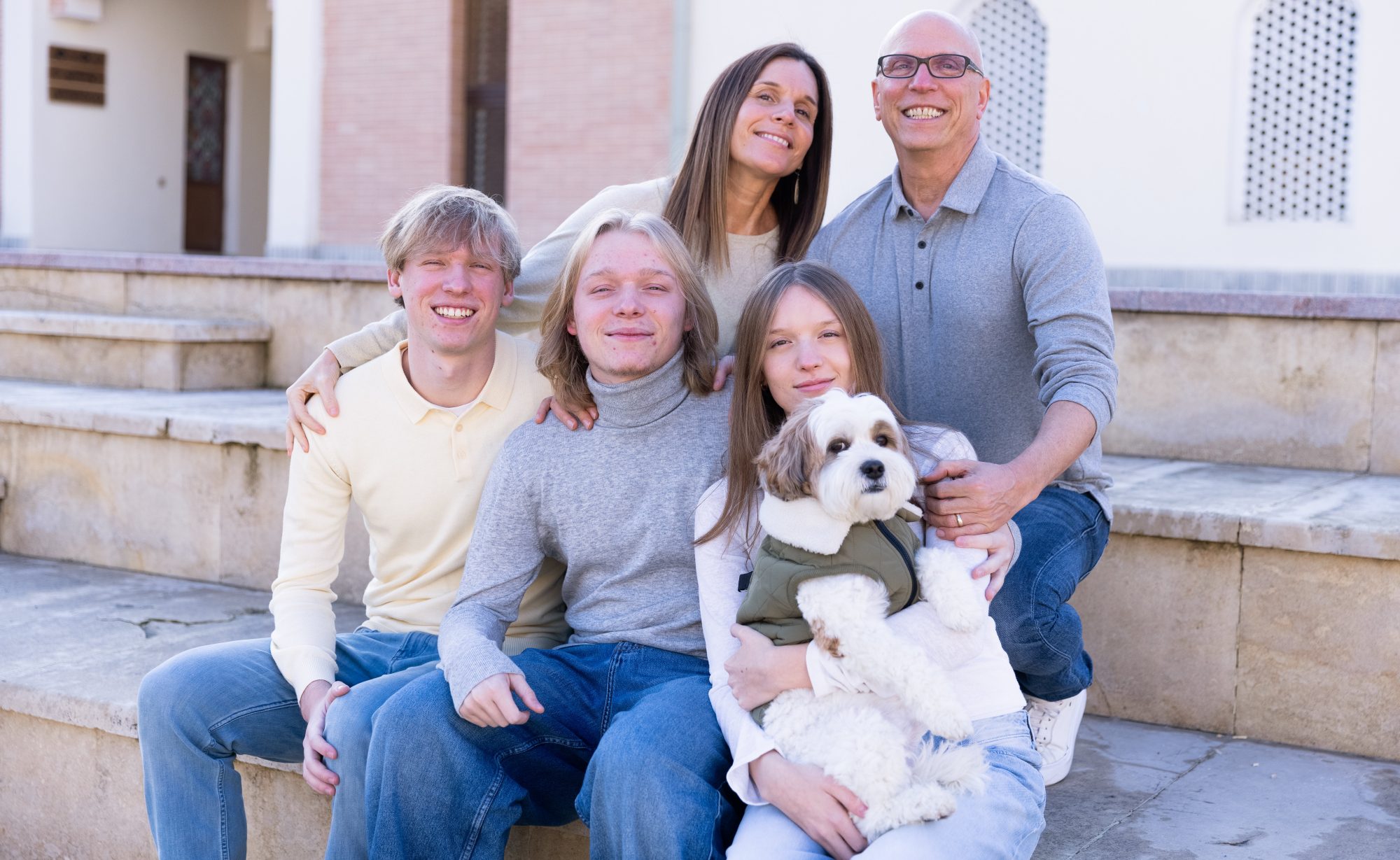
Family Journal: January 7, 2026 “Merry Christmas from Georgia”

We drove back to Tbilisi yesterday. I watched the Georgian traditional Christmas Alilo Parade that was close to our hotel on Shota Rustavelti Avenue. Like many things here in Georgia, the traditional procession dates back to the 400s AD as a way for people to express their faith and the joy of the season. The name comes from the ancient form of “alleluia” that was sung in a Georgian Christmas Carol. Loudspeakers on a truck played Georgian polyphony music, a UNESCO-recognized tradition. This was banned during the Soviet era and came back in earnest in the year 2000, where it was made a national event. The parade today is a fundraiser for charity and is led by the church.

Nadia loves the Rooms Tbilisi Hotel / Stamba Hotel, where we are staying for our final two nights in Georgia. Developers renovated the old state printing press and transformed it into a hip, retro vibe hotel and office workspace with several cafes, restaurants, bars, and shops. She spent the afternoon watching Netflix on the couch in the lobby. After the parade, Oliver, Ocean, and I went to the Galeria Tbilisi and bought him a PlayStation 6 at Game Zone. The salesman said they sold 50 units on the first day they arrived at the store, with people coming from Turkey to purchase them. He didn’t have the special anniversary edition of the console, which is going for up to $2000 on the black market. Oliver was very happy, but he can’t play it until I collect the 18% refund on the Value Added Tax tomorrow at the airport. They are hard to find in the USA because of the demand, and the price is actually lower here in Georgia for the unit. He was over the moon with happiness.

Family Journal: January 6, 2026 “Kakheti Wine Region”

Caucasus Mountain Sunrise

We had a cozy two-night stay at Schuchmann Wine Chateau, located in the Kakheti Valley just outside the town of Telavi, Georgia. We had a lot of family laughs playing UNO: Show’em No Mercy card game and enjoying their fine wines and French fries. Nadia and I worked out in the adequate gym in the morning before we left to explore more of the area. Housekeeping and reception took good care of us and the rooms were comfortable with beautiful balcony views of the snow-capped mountains. I highly recommend staying here if you are visiting the area.

In the afternoon, we drove to the tourist town of Sighnaghi. It is located on a steep hill overlooking the Alazani Valley in the heart of Georgia’s wine-growing region. King Heraclius II of Georgia commissioned a fortress on this high ground in 1762 to protect the town from marauding Dagestani tribesmen coming over the beautiful Caucasus Mountains. The town is probably nicer in the summer. It was cold and muddy, but we did have an exquisite meal at the Pheasant’s Tears Winery.

We finished our tour by visiting the Badbe Monastery. It is the burial site of Saint Nino, who died between 338 and 340 CE. King Mirian III built a monastery on the site. Georgian kings chose the site for coronations during the medieval period. The atheist government of the Soviets converted it to a hospital. It has been restored since independence and is a tourist and pilgrimage site today. It looked to be a functioning monastery with brothers and sisters living, working, and praying on the grounds. We made it there near sunset in time for lighing perfect for photography.

Family Journal: January 5, 2026 – Georgian Wines Simplified

We are staying two days in Kakheti, the “Napa Valley” or main wine-producing region of Georgia. We discovered Georgian wines in Tashkent. Georgia has one of the oldest wine cultures in the world, some people say the longest. The Soviets took advantage of this and converted Georgia into the “industrial” or “factory” wine production area for the USSR. Georgia still sells wine to all former Soviet Republics. Post independence, wineries are rediscovering their traditional methods and individuality. Georgian wines are now shipped all over the world, and wine production is coming into its own. We did a wine tasting here at the Schuchmann Winery last night, and I read Lisa Granik’sThe Wines of Georgia. Below is my description of what makes Georgian wines distinct from other wine regions around the world.

Georgia is different from other wine-producing countries for two main reasons:

  1. Many wine producers use the traditional Georgian method of fermenting, aging, and storing grapes in huge (1,000 – 2,000 liters) egg-shaped clay vessels called qvevri buried in the ground and lined with beeswax.
  2. There are 400 different endemic Georgian grape varieties and 18 appellations in Georgia, 15 here in the Kakheti Region. (An appellation means the wine is named after the region it was grown in, and not the grape variety, for example, Champagne.)
View from the Schuchmann Winery Hotel

These provide challenges for Georgian winemakers. Making wine in a clay vessel is difficult. It takes hours to clean qvevri because the clay surface is prone to bacterial growth, and too many minerals from the clay seep into the wine. Qvevri are difficult to make and maintain as they are prone to cracking and leakage. Georgian grape varieties are difficult for foreigners to pronounce. A delicious, semi-sweet, red grape variety we discovered at the Ambrosiano Restaurant in Tbilisi is called “Qindzmarauli”. Say that quickly 3 times and try to market that variety to the world. The other challenge is climate change. Less snow cover in the winter (high of 13 C today) and more rain in the spring promote fungal diseases.

To simplify it for me, I summarize Georgian wines below:

  1. SAPERAVI: It is the most common red grape variety, accounting for 40%+ of the vineyard land in Kakheti and 10%+ of all plantings in the country. It is an ancient variety and means “to color with” or “to dye” in English. Both traditional and European methods (steel – oak casks) are used to produce it. Lisa Granik writes, “its varietal character is distinctive, speaking loudly and clearly even when produced in mass-market quantities.” Saperavi is the signature red grape and is the equivalent to other countries’ Cabernet Sauvignon.
  2. QVEVRI AMBER WINES: I never heard of “amber” wines before this trip to Georgia. White grapes are squeezed and then fermented and stored with the skins and stems, producing an orange or amber color. Combine fermentation and aging with the skins/stems and doing it in a clay vessel, it makes for a Georgia-only wine experience.
  3. Rkatsiteli: This is the signature white grape variety in the country and accounts for 45% of all grape planting in Georgian vineyards. Granik calls is “Georgia’s greatest and most noble variety. The name means “red stem” which comes from what it looks like in the vineyard. It is another ancient variety, dating back to the first few centuries CE/AD.

We tried three Georgian wines in our tasting session last night.

  • 2022 Schuchmann Tsinandali – This appellation is from a royal estate in the Kakheti region. It is a white wine blend of Rkatsiteli (85%) and Mtsvane (15%) and was produced using European methods. We scored it an average of 7.95.
  • 2022 Vinoterra Mtsvane – Vinoterra is the brand used by Schuchmann when they produce the wine in qvevri. This was my favorite wine of the three we tasted. The amber wine had a complex taste, including being stored in an oak barrel after being produced in the clay vessel. We scored it an average of 8.35.
  • 2023 Schuchmann Mukuzani – The appellation uses Saperavi and is aged in oak. We scored it a 7.90.

We had a great day yesterday. We stopped at the Ujarma Fortress as we drove from Tbilisi to the Kakheti Valley. Ocean and I toured the ruins of the fortress that dates back to 500 CE. We also stopped halfway on the two-hour+ drive at the Gombori Pass and soaked in the views of the Caucasus. Beautiful! I love family road trips.

Family Journal: Georgian Orthodox Church History – January 4, 2026

I am interested in how Georgia became an unlikely Christian nation. It shares borders with several Islamic cultures, including Turkey, Azerbaijan, Dagestan, and Chechnya. From what I read, the answer is that it became Christian before Islam started and the Georgians identified with religion, even while being ruled by foreign powers (Persians, Mongols, and Arabs). It is amazing that they held on to the Orthodox Church through over 1,300 years of rule by non-Christian empires. The Orthodox Christian Church has been the official religion of Georgia since King Mirian announced it in 337 CE (AD). Why did he do this? Since this happened 1,689 years ago and with no records, it is, of course, a legend. The story goes like this:
Nino was a woman who grew up in the Cappadocia region of what is now Turkey. This was before the Turks came to Anatolia and before Islam started, and most likely, Nino spoke Greek as a mother tongue. It is speculated that she was raised in the early Eastern Christian faith, as this was one of the early centers of Christianity. The Virgin Mary came to her in a vision/dream and gave her a cross made from grapevines. She tied the cross together with her own hair and, being so inspired, went to Georgia to proselytize there. While in the ancient capital of Georgia, Mtskheta, she was preaching and performing miracles and healing the sick. She cured King Miriam’s wife, Queen Nana, from an undiagnosed illness that the royal physicians could not. That was not enough to convert King Mirian, though, until one day he was struck blind while hunting. In shock, he called out to “Nino’s God,” and his sight was restored. From that day, he became a fervent Christian and hence, made his kingdom of Georgia Christian, too. 

Nino continued to spread Christianity in Georgia until she died in 340 CE in Bodbe, Georgia, where there is a monastery in her name today. I am going to explore her story and during the trip, I am learning about the Georgian Orthodox religion. The original grapevine cross is located in the Sioni Cathedral near our hotel here in Tbilisi. When I asked one of the priests where the Saint Nino cross was, he pointed behind him. It is only shown to the public on special occasions. I would guess it will be on display on her feast day on January 14.

Saint Nino erected a cross on the site of the Jvari Monastery after converting King Mirian to Christianity. The original wooden cross became a pilgrimage site. The current church on the site was built between 590 and 605 CE (AD) and is a masterpiece in early Georgian Christian architecture. The word jvari means cross in Georgian. It is located on a stunning promontory overlooking Mtskheta. It is absolutely beautiful and was the highlight of our trip yesterday. The place could easily be the Castle Greyjoy scene in HBO’s Game of Thrones.

Svetitskhoveli Cathedral – Mtskheta

Another interesting legend associated with the Georgian Church is that Christ’s robe is said to be buried underneath the Svetitskhoveli Cathedral. A Georgian Jew, Elias, was present at Jesus’s crucifixion and took Jesus’s robe before he was crucified. He brought it back to his home in Mtskheta and showed his sister, Sidonia. When she grasped it, she was so overwhelmed that she instantly died while holding the robe and her grasp could not be unlocked. She was buried holding the robe. 

A large cedar tree grew over her grave, and the locals regarded it as sacred. When Saint Nino arrived at the place, she ordered that a church be built on the spot, and workers cut the cedar to make pillars for the new church. One of the pillars reportedly levitated in the air and “performed miracles” before being set into place with the other cedar pillars. The cathedral’s name, Svetitskhoveli means “Life-giving Pillar” in English. The cathedral still stands, and there is a marker where Sidonia’s grave was located and frescoes depicting the miracles. No official excavation of the site has been undertaken to search for the robe or the grave. The inside of the church was breathtaking and had a more relaxed vibe than the other churches we visited so far on the trip so we took a lot of photos.

It was a beautiful day with the family and we are really enjoying our time in Georgia. We finished the day by having dinner here at the hotel. We are heading to the wine region later today for two nights before we return to Tbilisi.

Family Journal: January 3, 2025 “Tbilisi Botanical Gardens”

View of Narikal Fortress and Tbilisi from the Botanical Gardens

We had a quiet day recovering from travel, sightseeing, and a late dinner on Friday. I managed to tour the Tbilisi Botanical Gardens located in a deep gorge below Narikala Fortress. The garden sits in a deep gorge below Narikala Fortress, following the Tsavkisis-Tskali River. The canyon walls probably provide a microclimate and protect the extensive collection inside. I walked through most of the gardens and a long waterfall and views of the city were the highlights. A layer of snow on the ground made everything look even more scenic.

Ocean and Oliver “Tree Pose” – making fun of Dad

The gardens date back to 1845 and house close to 5,000 different plant species. I particularly enjoyed the Eastern Georgia and Coniferous sections. I didn’t realize the Himalayan Pines (Pinus wallichiana) could get so big. They were planted all over Belgrade and I only saw smaller versions. It is one of the most beautiful pine trees in my opinion. It was a good workout for me walking up and down the sides of the canyon. The waterfall was still flowing, but large ice chunks were forming.

In the afternoon, we went shopping at the AgroHub grocery store. Nadia loves grocery shopping in foreign countries! I took a long nap before we went to Ambrosiano Restaurant for dinner for the second consecutive night. We are loving hanging out and talking with Oliver and Ocean! We laughed a lot on an after-dinner walk through the streets of Tbilisi. There is a lot of good nightlife here.

Family Journal: January 2, 2026 – Arrival to Georgia

Ocean & Nadia at Ambrosiano Restaurant – Tbilisi

It was a relatively smooth travel day from Tashkent to Tbilisi, Georgia, yesterday. Our 8:05 AM Uzbekistan Airways 3-hour flight departed on time, and only high winds caused a bit of turbulence as we descended into the airport. After sorting out our rental car, we, of course, stopped at McDonald’s for lunch. We started to notice that there are many dogs roaming the city, including the McDonald’s parking lot. They must be sanctioned by city officials because they have yellow ear tags and are generally docile. There was a dog house in the parking lot, and they must survive on a combination of handouts from the general public and either the city or citizens adopting to feed them.

View of Tbilisi and the Kura River from the Metekhi Church

The countryside, including the snow-capped Caucasus Mountains are beautiful! There are patches of snow and ice on the ground that make it even more scenic. We dropped our bags off at the hotel and went to the Galeria Tbilisi to buy socks and underwear for our son Oliver. We want to take care of our middle son and because he is studying in Wisconsin and so far away, we are devoting much of the Winter Break with supporting him. I just love spending time with him! It is great to have another male in the house again.

In the afternoon I went for a walk across the Kura River to see the Metekhi Church of the Nativity and the Holy Trinity Cathedral of Tbilisi. I am fascinated with the history of the Georgian Orthodox Church. Mostly because Georgia and neighboring Armenia are Christian nations on the edge of the Islamic sphere. Why did they convert to and maintain practicing Christianity in this part of the world? Orthodox Churches more so than Catholic Churches, inspire that sense of beauty and awe upon entering. The high domes, the gilded icons, the smell of incense, and monotone singing in the background raise that sense of the sublime and the power of God into one’s consciousness. It was very peaceful and awesome in the true sense of the word (inspiring awe). I like going to Christian churches as well because it reminds me of my parents and my childhood, being raised in a Catholic family.

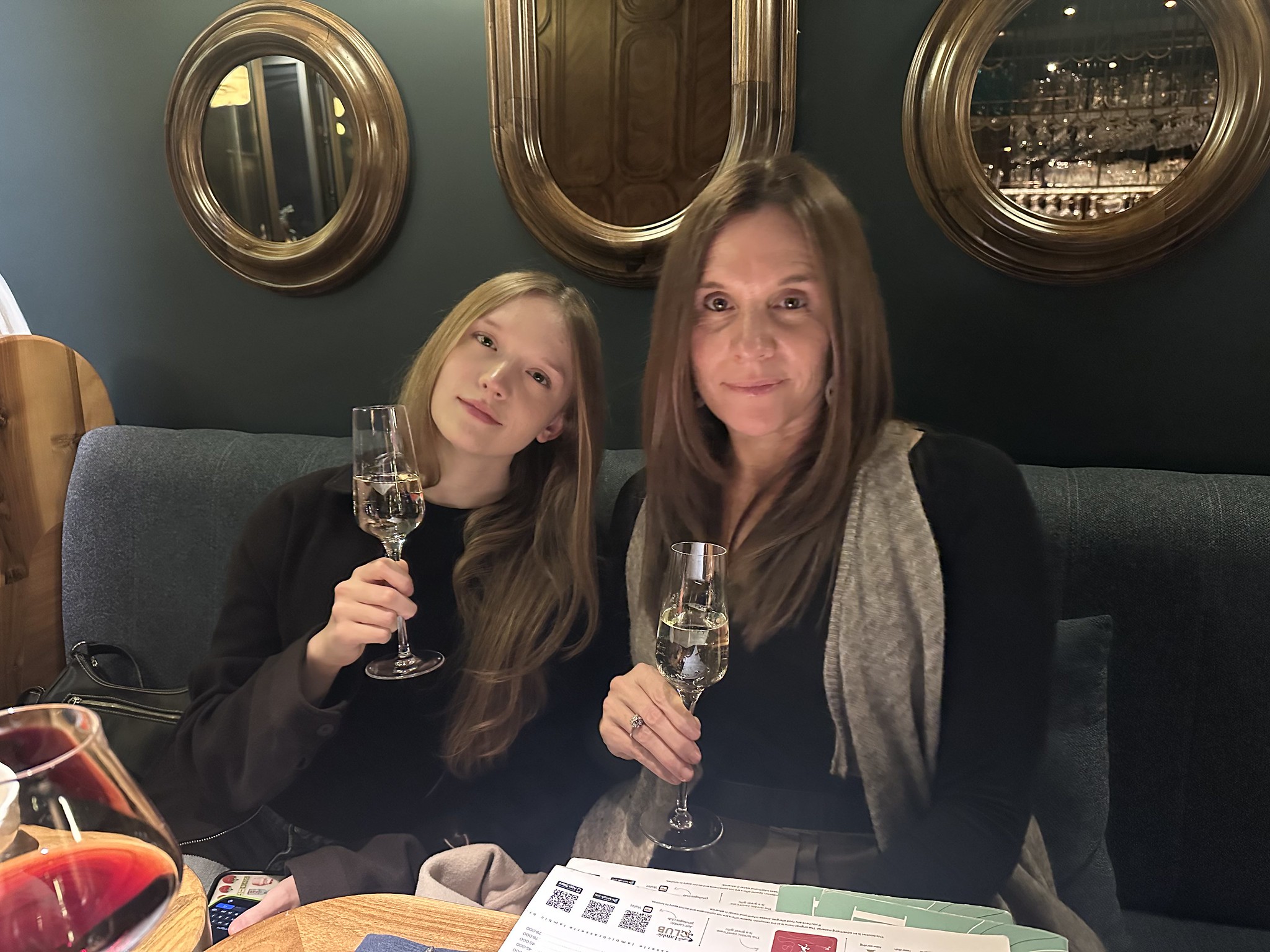
The highlight of our first day in Tbilisi was dinner at Ambrosiano Restaurant. We had such a good meal it inspired me to write a review on Google and TripAdvisor. “A delightful meal and some of the best ravioli I have ever eaten! A 10/10 rating from our family. The restaurant is in a converted apartment from the Soviet era and has a cozy, elegant atmosphere. The restaurant was fully booked, but the maître ‘d found us a table in the foyer. Delicious red sauce, pasta cooked to perfection, and the prosciutto pizza was divine. To top it off, the house red wines (Saperavi and Qindzmarauli) were smooth and complex. I highly recommend it, make reservations, it is quite busy.”

Family Journal: January 1, 2026 – TIS Owls Glory

The highlight of my New Year’s Day was playing basketball with Oliver and some TIS alumni and current players. The Open Gym attracted eight players, including Ollie’s former classmate, Mukhammed. I really enjoy watching Oliver compete in sports and after his Veteran’s Day attendance of the Milwaukee Bucks game last month, he is into basketball. He played well and his team won 4-3 in a seven-game series of games. I played 1-on-1 against Oliver and a short time, 3-on-3 while we were waiting for everyone to arrive. I was the referee of the full-court games. At my age, I try not to play too many team sports to avoid injury.

Of course, we needed to check out Oliver’s soccer championship banners hanging on the gym walls and his Junior Varsity Cross-Country Running Record on a bulletin board in the foyer. He completed the cross-country Junior Varisty Race at the Tashkent Botanical Gardens in 17:45 in November of 2020. His soccer teams were the greatest in school history with back-to-back Central Asian Soccer Classic championships in 2022 and 2023. With us leaving Tashkent in June, this will likely be the last time Oliver visits Tashkent and the school.

I get a lot of satisfaction from coaching sports, and it was so nice to interact with some of my current and former players during Winter Break.

It was a cold but thankfully dry New Year’s Day. I did yoga in the morning and explored the Olympic Park on bicycle in the afternoon. The complex was originally scheduled to host the Asian Games in September, but it was not ready. It is still not open to the public, but most of the sports facilities are completed. There is a new road around the complex and the new airport. As with other areas of Tashkent, the growth and development of residential and business infrastructure make the place unrecognizable. Thanks to the New Year’s Day holiday, there were hardly any cars at all, and I had a fantastic and fast 21-kilometer bike ride. I hope it opens to the public in the spring before I leave.

Family Journal: December 31, 2025

I am looking forward to the Inner Dimension Yoga “60 for 60” program. I did the first session entitled “Intention” yesterday. The program consists of approximately 60 minutes of yoga for 60 consecutive days. At the core of the program is Power Yoga, which was developed in the 1990s from the traditional Ashtanga Vinyasa Yoga from 2500 years ago. It translates from Sanskrit to “8-limbed yoga practice with breath-linked flowing movements” in English. It essentially means smoothly transitioning between poses while maintaining focus on one’s breathing. Modern Power Yoga uses poses to increase strength, balance, flexibility, stamina, and cardio in one session. Travis also focuses on the mental health aspects of yoga through posting short meditation videos (10-15 minutes) and encouraging participants to be aware of their breathing. Every session has an inspirational message or theme. In 2026, one of my themes will be eliminating the clutter of digital media to focus my attention on what I think is important.

I will be capturing life in Tashkent and Uzbekistan over the next six months as I end my time working at Tashkent International School in June. I took the photograph on the left of the ubiquitous cotton boll logo that you still see all over the city. Back when Uzbekistan was part of the Soviet Union (Uzbek SSR) this emblem was its main symbol when it produced 70% of the USSR’s cotton. Uzbekistan is moving away from the monoculture of cotton production. The country has a desert climate, and cotton needs a lot of water. It has damaged the environment here, especially the Aral Sea in the west of the country. Water for agricultural and inefficient irrigation schemes has stopped the flow of the two major rivers in the Aral Sea. Climate change means a hotter and drier Central Asia, which is not helping the water problems that will only get bigger in the future. Uzbekistan is still the world’s sixth-largest producer of cotton ($2.31 billion in exports), but the economy is diversifying, and total cotton field acreage has significantly decreased. The cotton symbol is part of Uzbekistan’s history and heritage and is featured on today’s coat of arms. The 8-pointed star was also taken from this symbol, signifying unity. In the center of the current coat of arms is the mythical “Khumo” bird, with ironically, the two major rivers (Amu and Syr Darya) representing life-giving water sources. The Humo comes from Persian mythology, representing wisdom, healing, and divine blessing. The Russians refered to it as Семург (Semurg), based on the Persian name rather than the Turkic name the Uzbeks use.

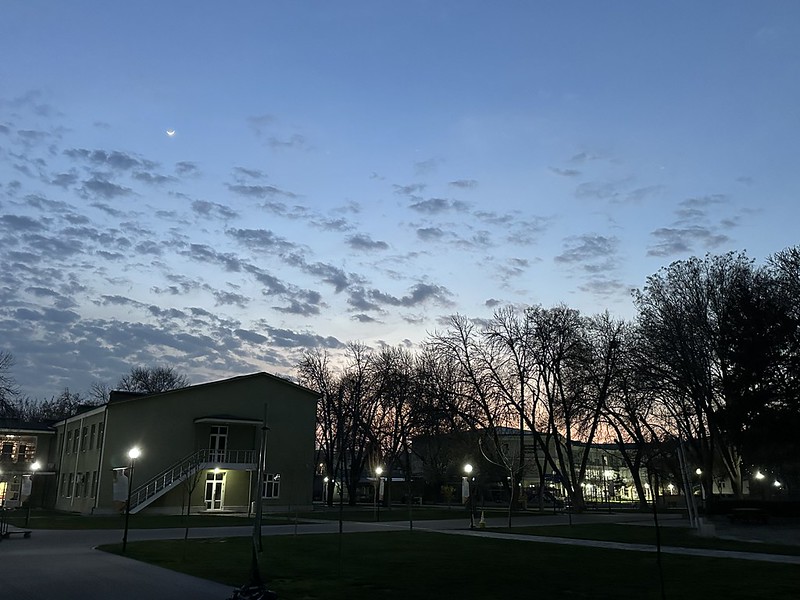
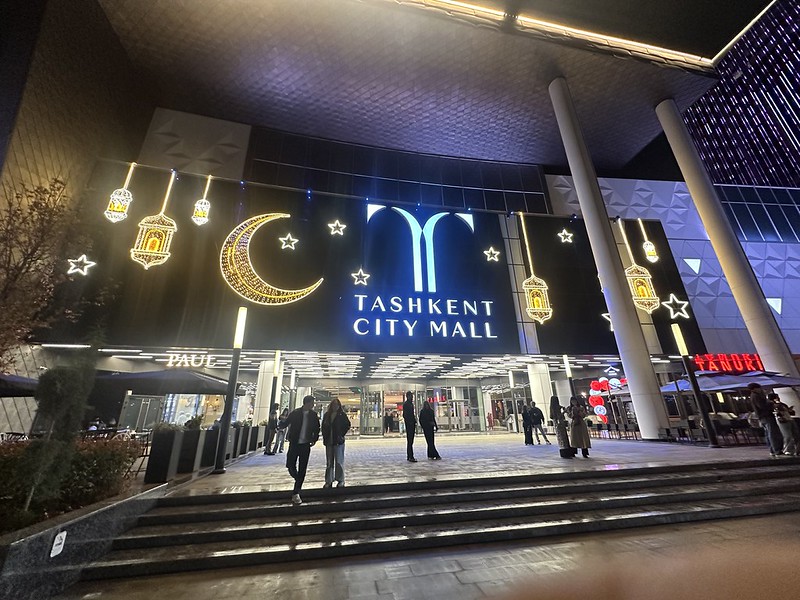
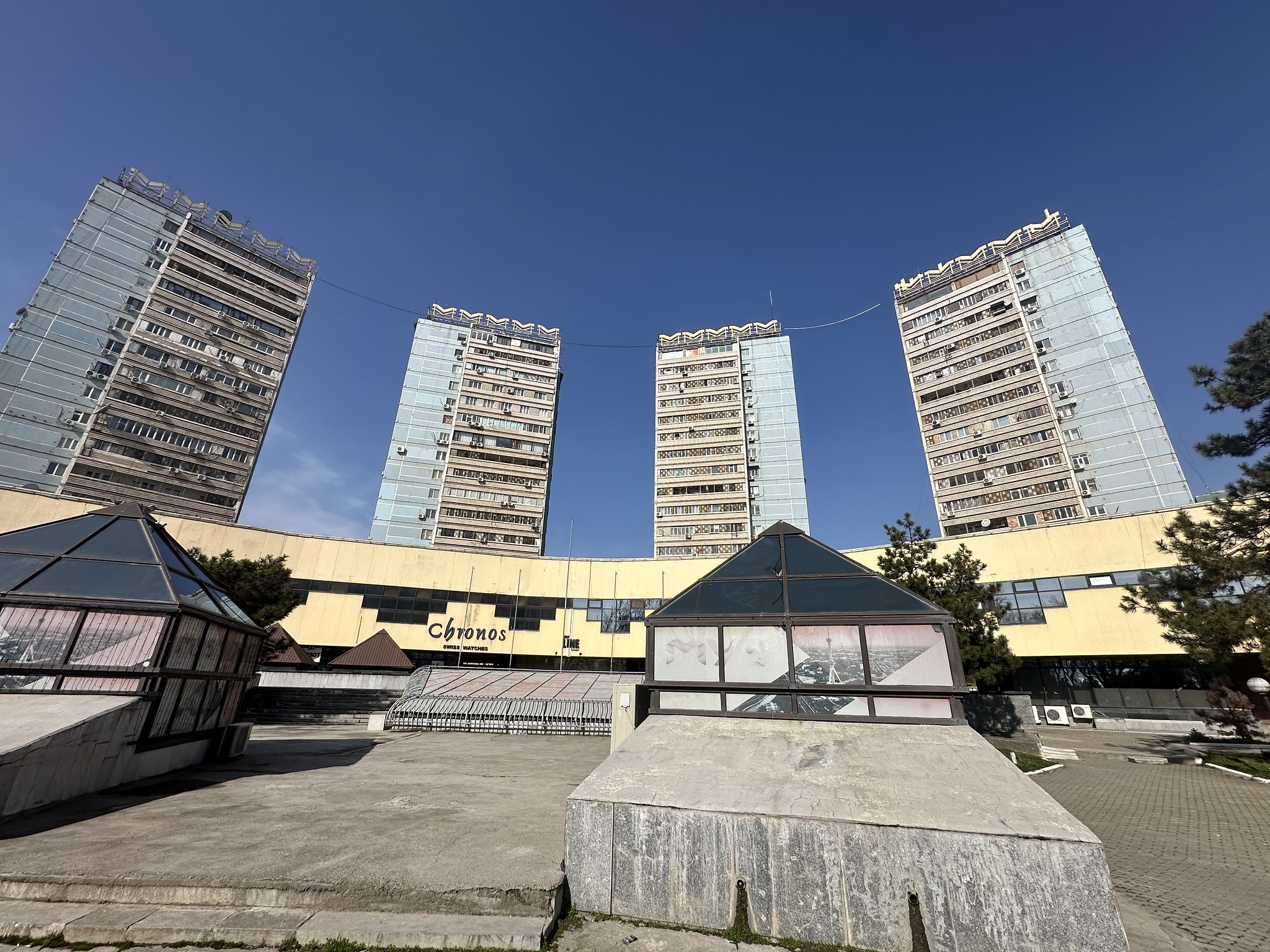
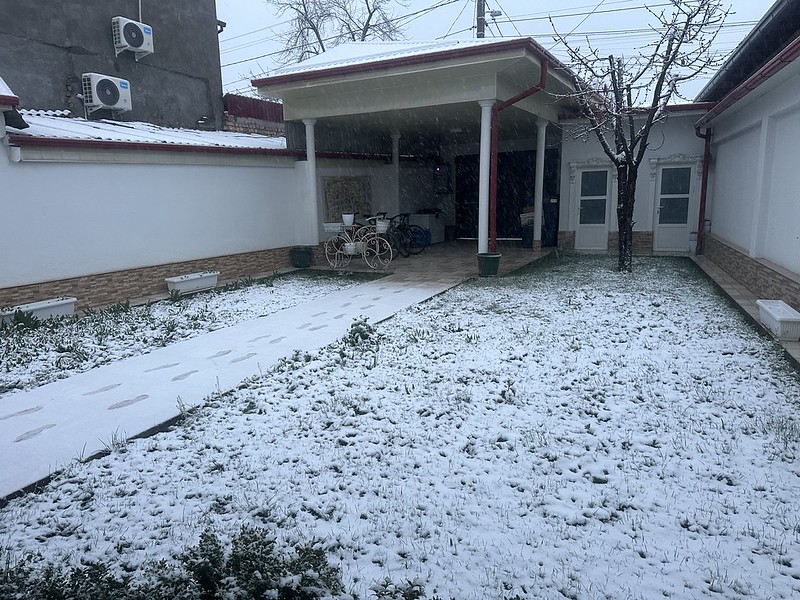
We had a quiet New Year’s Eve this year by celebrating at home, watching television with Oliver and Ocean. I didn’t make it to midnight, falling asleep around 11:00 PM. Nadia and I had a nice day together, working out together in the TIS gym with her trainer Svetlana and hanging out at home. The weather was miserable all day with rain, sleet, and snow from 7:00 AM to 5:00 PM. I went for a 6-kilometer walk after doing yoga in the evening and snapped the photo below in front of the Piramit Tower and Mall. It is not open to the public yet. Central Asians love lighting their buildings, trees, and light posts in the evenings. The building to the right is adjacent to the Piramit Tower and I think it is a business center.

Family Journal: December 29, 2025

Oliver and Dad Bike Ride – Tashkent, Uzbekistan

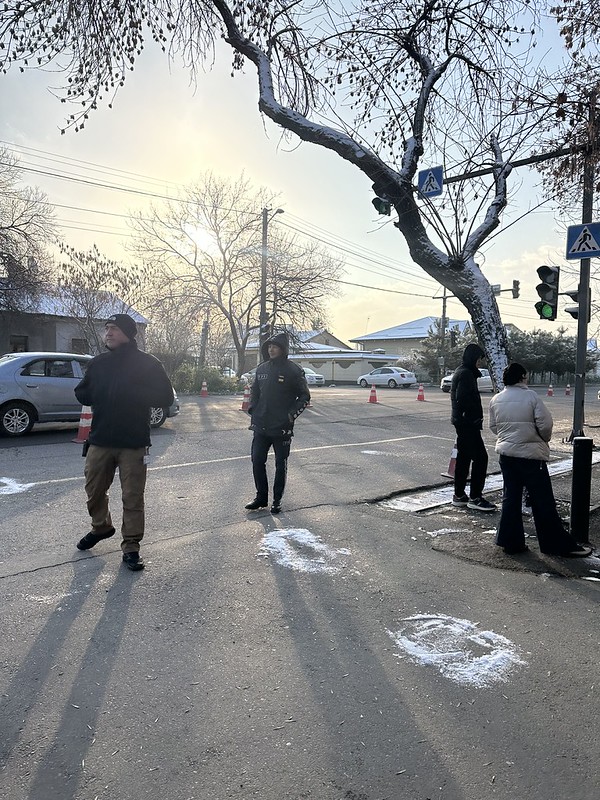
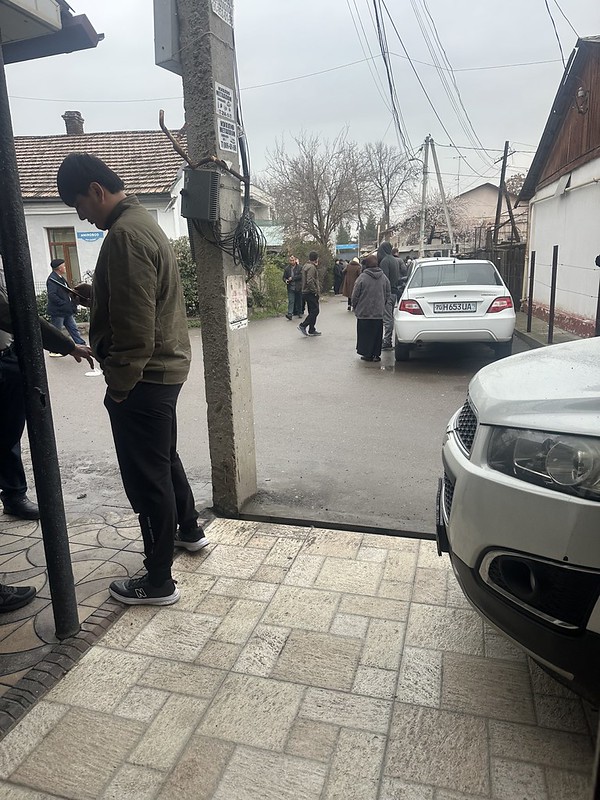
We are loving relaxed family time together here in Tashkent for our Winter Break. Oliver and I went for another bike ride yesterday as temperatures got into the high 60s F. Quite a change from the snow and cold last week. The New Years holiday started today in Tashkent with local schools not in session until next Monday. The Mirobod Bazaar market was full of holiday shoppers and New Year’s Baskets for sale. The middle photo below is an all too common sight on the streets of Tashkent. Many Uzbeks drive at reckless speeds and there are many accidents like this one you come across in the city. The warm weather is much appreciated!

We visited the viewing deck of the Tashkent Television Tower. I don’t recommend it. The $8 admission price only gets you about midway up the tower. All the rooms smell moldy, and the observation windows could be better designed. We stopped at the Ukrainian Butcher shop to get pork shoulder for pulled pork sandwiches Nadia is making today for us.

We are looking forward to New Years Eve and our trip next week to Georgia!

Visit to Suwon, South Korea – September, 2025

Bill and Nadia – Hwaseong Haenggung Palace (화성행궁)

Nadia and visiting Pangyo, South Korea, in September was my fifth visit to South Korea. When we lived in Japan, I attended twice for head of school meetings (Busan, Pangyo) and twice as a family while we were in transit, leaving Japan.

Our hosts took us to visit the city of Suwon (수원), 30 kilometers south of Seoul, to see both the modern and ancient sites of the famous city. As you can see in the photo above, the Hwaseong Haenggung Palace (화성행궁) is a UNESCO World Heritage Site built in the late 1790s by King Jeongjo of the Joseon Dynasty. It was a temporary palace used when he visited Suwon to pay respects to his father’s tomb. He planned to move the capital to Suwon, but did not accomplish it. The Japanese destroyed the site when they occupied Korea. Local officials painstakingly reconstructed the site to its original glory. It reminded us of a smaller version of the Forbidden City in Beijing. That makes sense since the Joseon Dynasty (1392-1897) governance was based on Neo-Confucion principles, including “rigourous civil service examinations”. I guess over 500 years of this shaped the exam and competitive academic environment of South Korea today.

We watched actors in traditional Korean clothing perform a martial arts dance for tourists. I also played the traditional game of Yut Nori (윷놀이) as an homage to Squid Games. As you can see from the video below, I would have been eliminated. Today, the city of Suwon is home to the Samsung Headquarters and 1.2 million people. We went for lunch and a coffee in the artsy and cute city streets near the fortress. Again, it felt similar to Japan in tourist area and we didn’t see many foreign visitors. I wish we had more time to explore some of the hiking trails to the nearby mountain peaks.

I am not sure when the next time I’ll get to visit the country. With so many Koreans in Tashkent, I follow the country closely due to my friends and school community members.