My Visit to Borneo

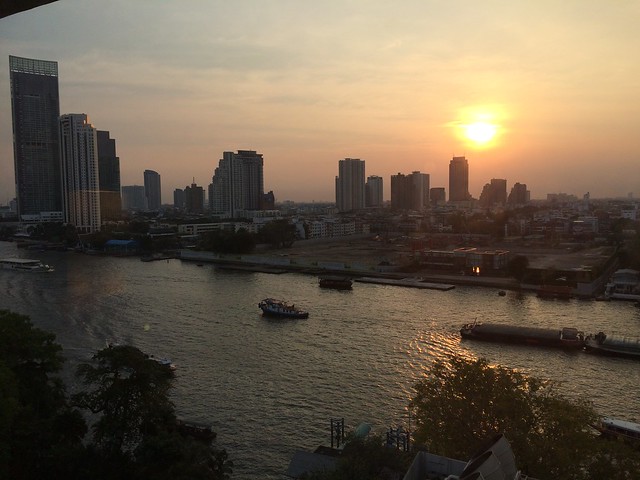
Sunset View from the Kota Kinabalu City Waterfront

I just returned from 5 days in Kota Kinabalu, Malaysia, located on the island of Borneo. The purpose of the visit was to attend our regional education administrators conference, so most of my time was spent in workshops and meetings. We stayed at the Sutera Harbor Resort, which was really nice. Unfortunately, I didn’t get much time to visit the city and get out into the incredible nature the region has to offer. We did manage to leave the resort a couple times and get into the city and I talked to a bunch of locals.

Malaysia is split into two regions, east peninsula Malaysia, with 24 million people, and in the west, it takes up the northern part of Borneo, with around 6 million people. Kota Kinabalu, in the state of Sabah, is the capital and the largest Malaysian city on Borneo. Unlike the main peninsula, the local indigenous people are not Malays or Islamic. There are 32 different ethnic groups and I met a few of them. You can see variations in the dress and facial features of the locals. Most of the women wore headdresses, but a significant portion did not. I asked taxi drivers, waitresses, hotel employees what ethnic group they belonged to. That resulted in me meeting Kadazan-Dusun, Brunei-Malay, Bajau, Chinese, Malay, and a mix of the above. They were not offended by my questions and seemed pleased to explain to me a bit about their group. All of them were happy to be part of Malaysia and everyone was quick to give us a smile, a laugh, and easy conversation. I felt very welcomed to the city.

The View Towards Mount Kinabalu from my Hotel Room

I did speak with the head pool guy at the hotel and he mentioned the issue of Philippine immigrants. They have come to Sabah in recent years, seeking economic opportunity mostly, but also because Malaysia is an Islamic country, and that region of the Philippines is Muslim. I read an article, blaming water quality on these immigrants, many illegal or unsupported. There was garbage floating in the ocean and the harbor and canals in the city stunk of raw sewage. The city desperately needs a waste water treatment system. It reminded me of Latin America a bit, and all that comes from a poorer country in the tropics.

It was nice to be back in the tropics. It was my first time to swim in the South China Sea and the water was very warm. Diving and beach holidays are popular in the nearby islands.

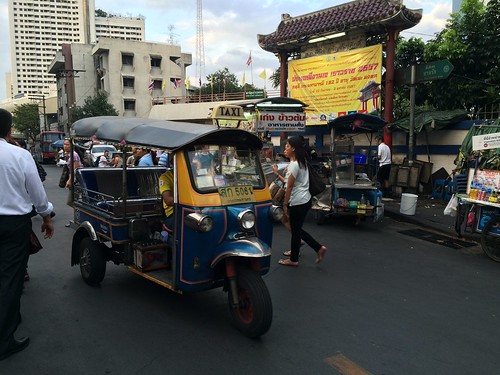
Typical Street View of Kota Kinabalu

I really want to go back with my family and go back as a tourist. The island of Borneo is one of my dream destinations as a biologist and lover of nature. I really want to go hiking in the Kinabalu National Park to see the Titan Arum, the worlds largest flower, the thousands of orchids and birds, and to climb Mount Kinabalu. There are also preserves for orangutans and the proboscis monkey. Maybe in the future.

Shinto: The Religion of Japan

The torii of a shinto temple near our house – looking outwards.

This is my first time living in a non Christian culture. I am curious to learn more about the religion of Japan, which is mostly Buddhist mixed with elements of Shinto. I see many temples around here and want to understand them. I started reading on the subject and during my stay here, I am sure I will learn more. Note that I am not religious and being raised Catholic, I am now a secular humanist. I don’t believe in the supernatural, although I want to, and I am undertaking this study from intellectual curiosity, not a search for the meaning of life or other higher calling. I do think that religions are full of wisdom and my life can benefit from their teachings.

I started with Shinto because it would be like if Europeans still practiced pagan rituals. In a way they do I guess, because Christianity did incorporate some pre-Christian festivals like the winter solstice become Christmas, but most of beliefs have been lost to time and the power of Christianity. Shinto not so and it is the original religion of the first settlers of the island. It gives a window into what they thought was important and how they answered those big questions of why are we here and what happens to me when I die.

The central focus of Shinto is the kami or spirits. The kami can be of ancestors, great historical figures, or of natural phenomena like the sun, trees, wind, etc. Shinto started as honoring ancestors and family lineages, but as the population grew and time went on, the kami became more general. I think that is one way the early Japanese found immortality, by keeping the memory of their forebears alive.

warding off evil spirits

Besides the kami, the religion centers on rituals performed at shrines. There is no sacred scripture or teachings, no belief in a god or heaven. It has been passed down through the generations by repeating of group ceremonies or personal rituals. I enjoy going to the shrines, mostly because they are always surrounded by trees, plants, and peaceful surroundings. This is much like the monasteries of Serbia, they were placed in wilderness, away from attack from the Turks. Visiting them usually involves a hike in the surround hillsides and forests. Shinto shrines are surrounded by not so much forests because Japan is a crowded island, but they all have at least a small grove of trees. You can see it very easily in any view of Osaka from above. Where there are a bunch of trees, there is usually a shrine or temple in the center. Nature not only gives the worshipper peaceful surroundings, but also the kami are found in nature. That might be the thing I like best about Shinto, the reverence for big trees. I respect and cherish old trees.

All shrines have a gate, called a torii. This helps people move from their busy, daily lives to a peaceful spiritual time. The gates are guarded by fierce looking statues of dogs or lions. These ward off evil spirits and the bad things that plague humanity. There is usually a water fountain to ceremonially wash away pollution and negative spirits. It also involves a walk to a temple that holds a sacred object that symbolizes that particular kami, whether it be a former emperor, war hero, or the spirits from that local area. People leave offerings at the shrines.

I don’t think foreigners can become Shintoists. It is a religion that is really tied to the DNA and culture of Japan. During the Meiji Restoration through to World War II, the Japanese government tried to make Shinto the official religion and rid it of Buddhism. They were unsuccessful and today, Shinto is practiced by regular citizens. They form neighborhood networks to take care of shrines and some even become priests for the shrines.

Last week I watched a Shinto procession through our neighborhood here in Onohara (neighborhood of Minoh) consisting of a palanquin being carried by men in costumes. Inside the palanquin were drum players and it was followed by about 100 people in colorful robes.

I have a lot to learn, but hopefully I have given my readers an introduction to Shinto and one outsider’s cursory view of it. I hope to understand Japan better through a better understanding of Shinto and Buddhism.

Source:

Shinto: The Kami Way by Sokyo Ono (Ono is a professor at the Shinto university of Kokugakuin Daigaku) with help from William Woodward – Charles E. Tuttle Company publishers, Tokyo 1962

My First Ride on the “Bullet Train”

On Sunday I took my first ride on the Shinkansen or in English it is known as the bullet train, from Osaka to Tokyo and back. Shin means new in Japanese, although the high speed train is celebrating 50 years of service in Japan. It was very easy to get a ticket and get on the train. The train left from one of the major stations on the daily commuter train line, Shin-Osaka, and with 16-car trains leaving every 10 minutes, it was easy to buy a ticket moments before getting on the train. The return ticket was a bit expensive, around $250, but getting to Tokyo, a 5 and 1/2 hour car ride in 2 and 1/2 hours, is worth it. Especially with Tokyo traffic! The 3-hour mark is the cut-off for convenience over flights, and considering getting taxis, baggage, check-in, etc. it is the easiest method of going between Osaka and Tokyo.

The ride was comfortable, with much more leg room than a plane and my seat had a pull down table and electric charger. I struggled with reading or getting work done however, as the train did shake a bit and it made me a little motion sick. The outside scenes whir by and you can tell how fast the train is going. They can reach speeds of up to 150-200 miles per hour (320 km/hr).

The shinkansen has lines connecting the big cities on the two central islands of the Japan archipelago.  They had planned to expand it to Hokkaido and further south, but those have been postponed. Around 150 million passengers per year take the line between Osaka and Tokyo. The train uses only 16% of the carbon of a car, so it is good for the environment.

Noh Theatre: Ancient Japanese Opera

Last weekend I got to see a short Noh play during the 125th celebration ceremony at Kwansei Gakuin University. They were opening the new auditorium and they had an Oscars like ceremony, with lots of music and lights between speeches.

The most unusual aspect of the ceremony was the ancient Japanese theatre form called Noh. This started over 800 years ago and is very traditional without innovation so it was like going back in time. It was strange to watch! The chorus sang in few tones and in character. The two women in the front row had solo parts and they sang in a deep voice, but forced. The music ensemble consisted of a primitive flute and these drummers making the oddest noises with their voices while occasionally beating on the drum.

This group wrote an original play, which is rare in the Noh art form as they have a traditional list of around 250 plays. The play was based on the founding of the university by American Methodist missionary, Charles Lambuth. 125 years ago he started a school in Kobe and it has now grown to over 24,000 students from K-12 schools to graduate university programs.

I am glad the university put Noh into the ceremony. It is a distinctly Japanese art form and those isolationists, the Tokugawas, had it be the official theatre form of the their court. I can’t say it was entertaining, but it was fascinating. I couldn’t understand the weird vocal grunts and what appeared to be random beats of the drum.

There must be something to it because it is still performed today and there are theatres in Tokyo and Osaka dedicated to Noh. I am not sure if I will give it another try, but it was an experience and gave me a better understanding of Japan.

Pocono Mountain Beauty

We went for a hike today in the Hickory Run State Park, located in Pocono Mountains of north eastern Pennsylvania. We walked the Shades of Death trail, which meandered along the Sand Spring Run (a run is what the Pennsylvanians call a creek). The Pocono Mountains are part of the Appalachian Mountain chain here in the Mid Atlantic region of the United States. Early pioneers called the area Shades of Death because it was full of swamps, hills, rocks, and thick, Laurel bushes that made travel through the area difficult.

The Hickory Run park was started by the late Allentown millionaire, General Henry C. Trexler, who bought the land and wanted to see it be a park where families could come and enjoy wholesome recreation, which we certainly did today. No one knows where the term “Hickory” came from as there are no Hickory trees in the area. The kids and Nadia and I were enchanted with the dark, misty, and green forests alongside the creek. It was prime time for the Mountain Laurel flower, the state flower of West Virginia and an icon of the Appalachians. The run had a couple of damns on it and in hotter weather, would make for a perfect swimming hole. I did go swimming at Hawk Falls, in another part of the park later on in the day. We had a nice picnic lunch and walked back to the park headquarters, which was a Manor House in the old town of Hickory Run.

The kids loved running along up and down the rocky trails. Ocean was thinking that a gnome or fairy would be seen in the misty, dark woods. Later on we drove to another part of the park to see Hawk Falls. It was pouring rain by the time we got there but that did not stop us. We ran back after swimming in the ice cold water. It brought back memories of the Bolivian jungle for Nadia and I! We hope to explore another park tomorrow in the Poconos.

The Metropolitan Museum of Art – New York City


The Boxer, originally uploaded by bill kralovec.

What an amazing place! I visited the Metropolitan Museum of Art, located next to Central Park in Manhattan. It is the third largest art museum in the world and one could spend literally months there, studying and appreciating all styles of art from around the world. It is an impressive collection of statues, paintings, rugs, weapons, etc. from ancient history to the modern era. I could have spent a lot longer there. I would like to go back.

Above is one of the featured temporary exhibition called “The Boxer“. It is a statue from ancient Rome and is over 2000 years old. The realistic quality of the bronze statue is breathtaking and awesome to realize that it is that old. In a world before photos or videos, this may be as close as one gets to seeing how it was back then. The life size statue even has inlaid copper to represent blood. It is also interesting to think about how long boxing has been around and the scars and equipment on the statue, show how brutal the sport was, and to some extent, still is. The statue was found in the late 1800’s in Rome, and the experts suspect it was buried to hide it from the barbarian hordes that we overrunning the city. I wonder how many other works are buried?

Claude Monet’s The Manneporte (1883)

Above is a Monet painting that caught my attention. Monet led the Impressionist movement in art which featured thin brush strokes, emphasis on the changing light, ordinary landscapes, and a sense of movement. The painting above is of a rock formation on the Normandy coast. It is amazing to be that close to a world masterpiece.

Finally for my Serbian readers, I was really fascinated with the Ottoman gallery. Below is a helmet from the 16th century workshop of Sultan Suleiman The Magnificent, who personally led the Ottoman Empires to conquer Belgrade in August of 1521. The inscription on the helmut reads “Help From Allah, and a Speedy Victory”. That style of helmet probably inspired fear and loathing for generations of Serbs.

I also wondered how many times nations have asked for these historical pieces to be returned to the home country. I guess this would be often. Judging on the amount and variety of people at the museum, they probably get more exposure here than anywhere else. What a magnificent collection of history!


Summer at Lehigh University


For my blog readers, I just want to announce that I will be in Bethlehem, Pennsylvania starting work on my Doctorate in Educational Leadership. It is a program geared towards international school leaders and it allows me to continue working full time while studying in the summer and on line during the school year.

I am really enjoying the program so far and feel I made the right decision to start further study. As you can see in the picture above, the campus is really beautiful and inspiring, not only the buildings, but also the setting. The university is set on a hillside overlooking the city of Bethlehem. There are approximately 75,000 people in the city and it is your typical quaint, Mid-Atlantic region small town. The two universities gives it a cultural boost. What sets the city apart from others is the huge complex of steel stacks in the middle of the town, a memory of the once powerful, Bethlehem Steel Company. It used to be the second largest steel company in the world after US Steel, but it folded in the 1990’s. The city has redeveloped the former factory grounds and turned it into a very cool community center.

I will be blogging about my experiences in the area (including New York City) which is a 1-hour drive away. I snapped the photo above last week of the Office of Admissions.

Lehigh Valley Iron Pigs Baseball


I am spending the summer at Lehigh University in Bethlehem, Pennsylvania. I am working on my EdD. in Educational Leadership. Last night I had a lot of reading to do so I went to the baseball game to get it done. Baseball (and cricket) are the perfect sports for reading while at the park.

The “Iron Pigs” are a minor league baseball team. The minor leagues are the developmental teams for Major League Baseball (MLB). Every MLB team has several levels, leading up to their big league team. The Iron Pigs are the top level (AAA) affiliate for the Philadelphia Phillies. They were playing last night against the Tampa Rays top affiliate in the “International” League. I don’t know why they call it the international league because all of the teams are located in the eastern and central part of the US. All of the players are just one step from MLB and so the level is quite high, but most of them will not make it to the top team. There are about 800-1000 players in the MLB and about 5,000 minor league players. I would estimate about a third of the players at AAA get at least a game or two with the MLB club.

I was very impressed with the stadium and the large crowd (approx 10,000) people on a beautiful summer evening at the ball park. Americans do know how to make money from professional sports and I wish Red Star and Partizan could come and see what a stadium experience should be like. They were super organized with parking attendants, ushers, and security guards who were friendly and efficient. The experience is designed for families and for extracting money from the patrons. There are restaurants, fast food, really nice beer gardens, BBQ areas, and even a bouncy castle park for kids. In the outfield they have a grassy hill for picnicking. The souvenir shop was also first class and making a brisk business. In between innings they kept the fans entertained by giving away free t-shirts, a bunch of audience participation games, even a mascot running race.

Unfortunately, the home team lost 3-1, but more importantly for me, I got three chapters read of my homework and I enjoyed working in the relaxing environment of the baseball park. I am interested in the finances of the team. I wonder if it is a profitable business?

Ironton Rail Trail


The past couple of days I’ve been taking the kids out to a very cool area called the Ironton Rail Trail. It is a 9 mile trail that was adapted from an old railway. Along the trail there are the remnants of an old cement company including the building above. Trail management has also a bird feeding station that was quite active with birds, even in winter.

Beyond the old buildings there is an old quarry that is filled with water. Yesterday there was a thin layer of ice on the pit and the kids had a great time breaking the ice and throwing broken ice chunks on the surface.

We played army and they really enjoyed themselves. It is nice that local authorities and concerned citizens have gotten together to make such nature preserve possible. With the onslaught of highways and housing developments in the area, it is a welcome relief to the malls, chains of box stores, and suburbs.

Snowstorm of Dec 2012


Snowstorm of Dec 2012, originally uploaded by bill kralovec.

We had a crazy amount of snow this week in Belgrade. It snowed last weekend and a couple of times earlier this week. The temperatures have stayed below zero all week so it stayed around.

The picture above is what I faced for several mornings. Sweeping the car, scraping the ice off the windows, and shoveling the drive. I don’t mind it at all! The city does not plow the side streets so parking and navigating is a mess. It is also a hassle to put on and take off the snow clothes of the kids.

In speaking with the kids however, and watching the joy they found in playing in the snow, I am so happy that Serbia gets so much snow. Owen’s class at school built a really cool snow cave and all three of my kids play out in the snow every day.

Volim sneg! Hoću još snega!