Visit to Sendai, Japan

36845156713_c9c418d8b4_z
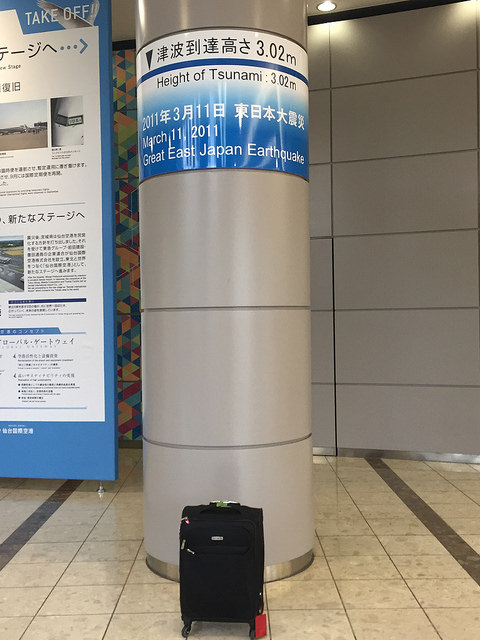
A memorial to the height of the tsunami at the Sendai airport

I spent two days in Sendai, the largest city in the northern part of Honshu, the main island of Japan. I was attending a school meeting so really didn’t get a chance to explore much of the city. The region is known as Tohoku and is famous for the earthquake and tsunami of March 11, 2011. As you can see in the photo above, the city airport, located near the coast, had a 3-meter wall of water sweep through it. The central part of the city is much further inland and at a higher elevation, so people were safe there and the tsunami only reached about 5 kilometers inland from the airport.

After living in Osaka, Sendai, despite being a city of a million people, felt small. It had a nice vibe to it with a compact downtown. We went to dinner at a trendy restaurant in the city center. The hotel was connected to a golf club (Joytel Hotel) and right next to it was this massive statue of a Buddhist goddess. It was the biggest statue I have ever seen, dwarfing the Cristo statues in Bolivia that are similar to the more famous Jesus statue in Rio de janeiro. It depicts the Buddhist goddess Guanyin, who is known for her compassion and mercy. When it was completed in 1991, it was the largest statue in the world, but today it ranks #6.


36845164643_d6d4928a89_z
Guanyin dwarfs our 12-floor hotel 


There is a small international school near the hotel and it had some nice forested hills surrounding it. The hiking and beaches must be really nice, so for an outdoors person, it would be a nice place to live.

I watched videos of the tsunami here in Sendai and in Tohoku and am still awed by the power of the earth. What a tragedy and incredible natural phenomenon. My heart goes out to the people who died or lost loved ones.

There is a lot to see in Japan so I am not sure if I will ever be back here, but it is a very pleasant place.

Ocean Turns 10 Years Old

Last week Ocean we celebrated Ocean’s tenth birthday. She invited some of her friends to a sleepover. The girls slept in a tent in our tatami room, watched movies, played hide and seek in the house, did their nails, etc. All had a lot of fun, even Oliver, who joined in most of the activities.

She is such a sweetheart and it was special to see her so happy. My wife Nadia did a really nice job in making the event special for her daughter. Thank you!

I can’t believe ten years have passed since her birth. Happy birthday, Ocean, we love you!

Rails to Trails in Japan? The old Fukuchiyama line hike


37141781740_d1696c1bff_z
Owen & Oliver with Mukogawa in the background


The “rails-to-trails” movement in the USA has seen thousands of miles of former railroad tracks become trails for hikers and bikers. Here in Japan, however, railways are still being used, especially for human transport, so it is rare to come upon hiking trails that were once a railway.

Yesterday we hiked the abandoned JR (Japan Railways) Fukuchiyama line, which is now a public walking path and this is unusual for Japan. The line used to connect the Osaka suburb of Takarazuka, a bedroom community for Osaka and Kobe, to Sanda, a city 25 kilometers to the north of Kobe and 35 kilometers north of Osaka.

The trail follows the Muko River through an impressive gorge created by the river. The water was pretty clean, with areas of rapids and idyllic swimming holes. We didn’t get a chance to stop because of our afternoon arrival, but it sure looked inviting.

 The great novelty of the hike are the six tunnels, some of which are so long that you need to bring a flashlight due to the utter darkness. The kids loved it! The trail also has some interesting relics from the railway, like rusty signs, little side tunnels etc. The trail in total is between 5-7 kilometers and takes roughly an 1 and 1/2 hours straight through. It is perfect for younger children and with the river and some side trails, it would be a nice full day with a picnic lunch on the rocks near the river.

You can access the trail by either getting off the functioning JR Namaze station or JR Takedao station and from our suburb of Minoh, it takes about 50 minutes by public transport and costs about 450 yen.

Family Journal: Arrival of Fall in Japan

37243350402_81042418cd_c
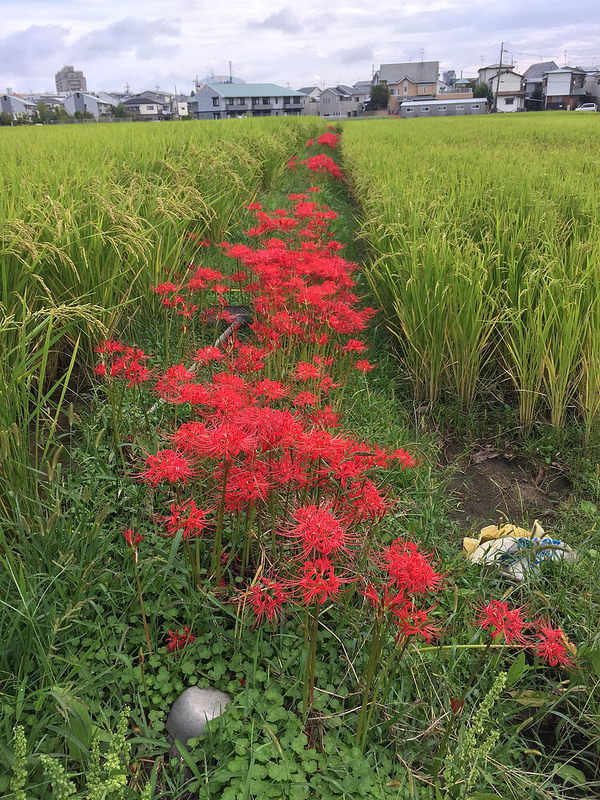
Red Spider Lilies Protect the Rice Paddy Field

Despite temperatures being in the mid-80s F during the day, the calendar and other signs say autumn has arrived. Above are red spider lilies which bloom in September after heavy rains, often brought by typhoon systems. We had some heavy rain last weekend and on my bike ride Saturday, they were out everywhere. The bulbs are very poisonous and farmers plant them to keep pests away from their crops. In Japan, they are called 彼岸花 Higan bana, and are a common funeral flower and symbolize the afterlife.

One of the nicest things about Japan is their celebration and detailing of the seasons.  Not only fall, winter, spring and summer, but they further delineate the seasons by natural phenomena such as flowers, colors of leaves and arrival of certain types of fish to the market. September means Samna or Mackerel Pike or Pacific Saury are served often in restaurants and can be found in grocery stores. The name in Japanese refers to their appearance of like a knife. I think I will try to prepare it home.


36602976923_00b99e238a_c
Delicious Samna sushi!

I am loving my “new” road cycle. I inherited a bike from a departing teacher and took it to the local bike shop to put on new tires and tighten the brakes, gears, etc. The road cycle allows me to go much faster and get a better workout. The nearby Minoh forest national park is perfect for riding. Owen was riding the bike yesterday and loved it, so we may have to get into more road cycling.


36602968243_2fa7a3d92c_c
Near the Minoh Waterfall

I am a single dad this weekend because Nadia is at a PYP workshop in Hong Kong this weekend. It is much easier than before because the kids are growing up and are much more independent. We had a blast playing with the frisbee yesterday and going to the local sushi restaurant with two other families.


Family Journal: September 16, 2017


37274308835_3d7668cfa1_z
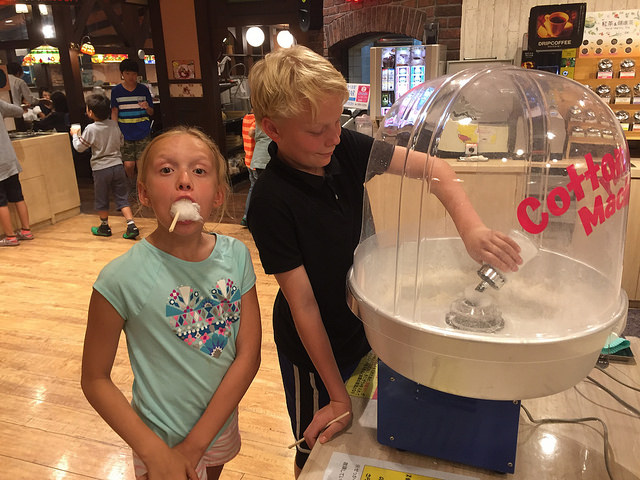
Ocean and Oliver take advantage of free cotton candy! 

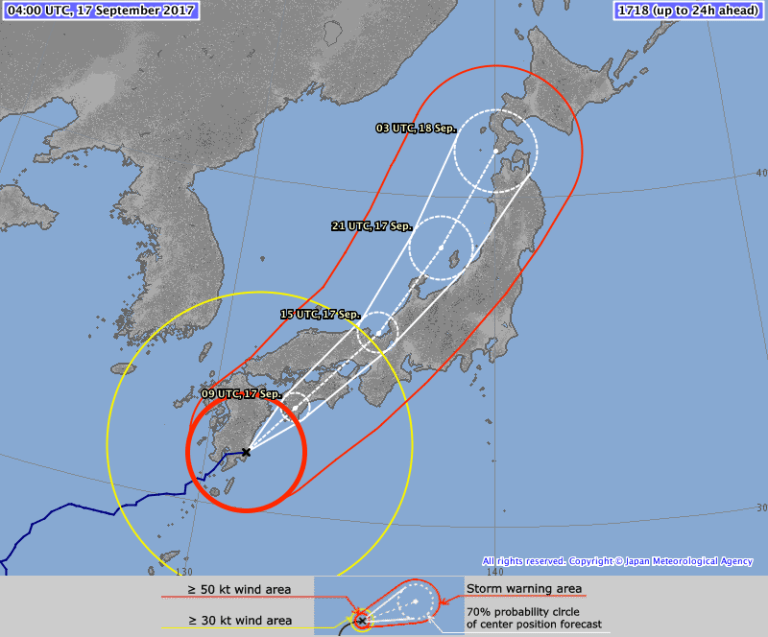
We are having a relaxing long weekend at home. Typhoon number 18 (Japan naming system) or typhoon Liam (see below). Autumn in Japan is typhoon season and like Florida and the southeast US, we do get some wild weather during this time. Fortunately, Osaka is in central Japan and usually by the time they get here, the winds are strong but not destructive. We have called off school at least once a year for typhoons due to high winds. They usually come up through the tropics to the north east.

1718-00


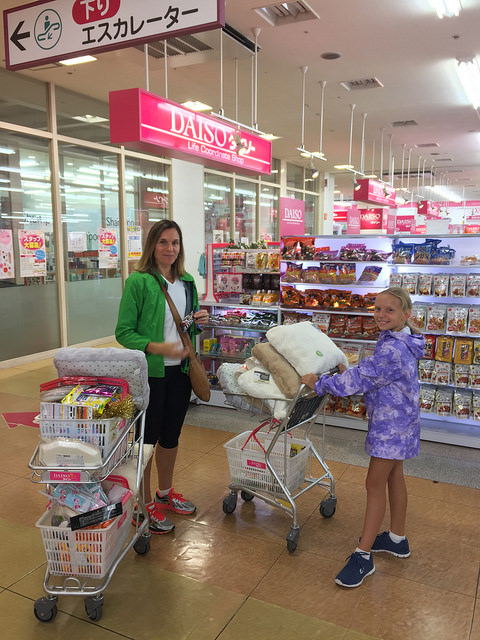
It lightly rained all day so most of my day was driving around Ocean and Nadia as they shopped for items for her upcoming birthday party. Ocean’s favorite store is Daiso, the famous 100-yen shops of Japan. 40% of their products are cheaply made in China, although I think the quality of the products is a bit higher than the dollar stores in the USA. We went to dinner at Tomato & Onion, a family-style restaurant similar to Denny’s or Perkins. The kids love the do-it-yourself cotton candy machine.


37083593566_fab5bf7f0c_z
Nadia and Ocean at Daiso 


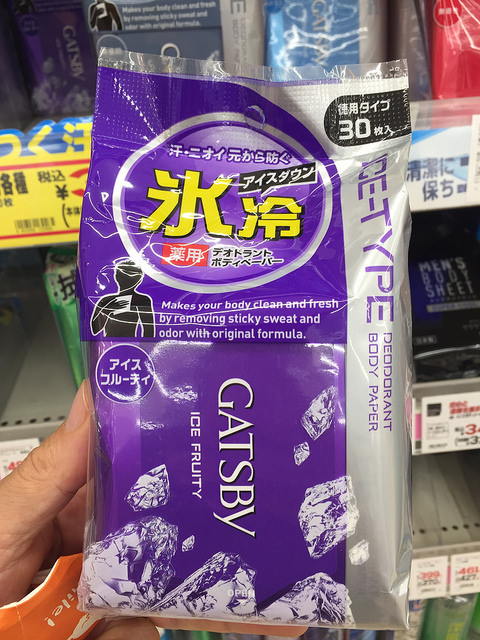
Japan has all sorts of distinctive products that can only be found here. One I discovered this summer are the Gatsby “deodorant body papers”.  They are made by the Mandom Corporation and Gatsby is their line of men’s hair and skin products. The summer and early autumn in Japan is very hot and humid and I sweat profusely here, more so than any place I’ve ever been. The Gatsby wipes are perfect to cool down and wipe away the sweat.

37274309265_2171c225a6_z

They have different scents, I tried “citrus ice” and the photo above is “ice fruity”. They have another type of wipes for the head and face. I am not sure about the health of wiping chemicals on your skin, but when I am biking or walking to a meeting and sweating profusely, they sure work and cool me down so I am almost presentable.

We’ll see what typhoon #18 brings us on Sunday and Monday…It is not expected to be as harsh as Irma.


Day at the Beach


We had such a relaxing and delightful day at the beach yesterday. Temperatures continue to be in the 80s in Osaka. 白浜 Shirahama (White Sand) Beach is south of the airport near the tip of the Kii peninsula. It is nice to get away from the city for the day. We also made a stop at Costco on the way home, so a double bonus for Nadia.


Sunday Morning Cycle


36675300810_07fd329dba_z
Not exactly Team US Postal Service

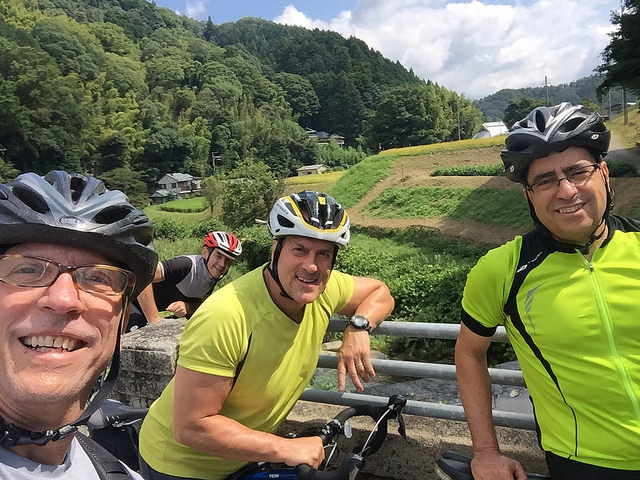
Despite living in a metropolitan area of close to 20 million people, my suburb of Osaka is minutes away from the Minoh National Park and the opportunity to get in the countryside is close at hand. I went on a 50-kilometer ride through the forests, farms and rice paddies with friends Sunday morning. We did the Tamno loop and in the mornings, the roads are popular with cyclists, although not crowded. There are some tough climbs, but once you get over the first major ridge up from the city, the rest of the day is fine.

I am enjoying cycling more and more. It is a great alternative to running as it is easier on the knees, but I still get to move through nature. It is a great way to spend a couple of hours. You can see a bit of the ride in the video below. We crossed the border between the Osaka and Kyoto prefectures several times. My next ride will be all the way to Kameoka, a city on the outskirts of Kyoto.

I would like to thank Steve for organizing the ride and for my friends for waiting for me to catch up!


Camping on the Kanzaki River

Last weekend we got away from the city and work and headed up to the Kanzaki River in the mountains of Shiga Prefecture for some “shower climbing”. Shower climbing is what the Japanese call canyoning or river hiking. The Kanzaki River starts in the mountains between Lake Biwa and Nagoya Bay. We set up camp on a quiet part of the river and spent two days relaxing and enjoy nature.

August weather in Japan is oppressively hot and humid, so it was such a relief to swim in the cool, clear waters of the river. The water was not as high as in previous times we’ve gone up there, but we enjoyed it just the same. The kids are so much more confident in the water now than they were two years ago. Our two hikes consisted of scrambling over rocks and stopping at water holes to jump from the cliffs and swim. As you can see below, I am not quite as brave as the boys regarding jumping heights.

I really enjoyed the camping. Nadia had an air mattress for us in the tent and it was a perfect sleeping temperature. We ate well, with Naoki on the super deluxe Coleman camping stove! Between the views of the white rocks, green trees and blue skies and the refreshing water, it really recharged my spirit. It also reminded me of the importance of wilderness and I plan to take the family out more often this year.


36111912113_835c33d418_z
Ollie, Ocean and Sam hop between rocks

It was also nice to pleasant to connect with friends sitting around the campfire.


Home & Family

36426288382_8541c67944_z

My family and I have enjoyed a week in my hometown of Caspian, Michigan and getting back in touch with family, friends and my roots in my beloved Upper Peninsula of Michigan. I wish my mom and dad were alive to see their grandchildren and us. Jimmer, Andy and I took a photo in the doorway of our house, the first time all three of us have been together in a long time.

This is the first time we’ve been back in over 5 years and the visit reminded me how beautiful, quiet and remote the region is. For those non-Michiganders reading this post, the state is divided into two peninsulas, with most of almost 10 million people located in the southern, mitten-shaped peninsula. The northern or Upper Peninsula is the size of the states of Massachusetts and New Hampshire combined. The population of the entire peninsula is 303,181. That is a lot of land for few people, which, after living in Osaka, Japan, is a welcome change.

I am concerned with the declining economy and population of the Upper Peninsula, especially the six western counties. The “boom time” for the region was from 1870 to 1920 when iron ore and copper mining were at its peak. It has been a slow decline since then. The 2010 census population of 82,668 is almost 50% less than the peak of 153,674 in 1920 of the six western counties. Overall, the UP has gone from 332,556 in 1920 to an estimated 303,181 in 2016, a 9% decrease. Only the city of Marquette has seen significant increases and has a population of over 20,000 people today. You can really see and feel it in many of the smaller towns, with main streets mostly shuttered buildings or vacant lots and abandoned houses dotting neighborhoods. With not much economic opportunities, young people move to more populated areas of Chicago, Milwaukee, Minneapolis, Detroit, etc. and do not come back. The death rate is also higher than the birth rate, with many retirees coming back due to the outdoor beauty, scenic outdoors and low cost of living, but not young families coming in. I see a continued slow, steady decline in the short and long term future. A few small towns will be fine. Marquette, Sault Ste. Marie and Houghton will thrive due to universities and hospitals being located in them. Menominee will also be OK due to its proximity to Green Bay, Wisconsin and the Fox River Valley.

However, I am still optimistic about the Upper Peninsula. Because there are so many forests, lakes and snow to support outdoor activities, tourism will grow. I also think that technology will keep getting better and allow people to be more flexible in where they live. Although there are places with more dramatic wilderness areas in the American west, the outdoors of UP is just as refreshing to the soul for me and I guess many others. I am concerned about the role of climate change. What will the great lakes and the many smaller lakes and rivers become with increased temperatures?

I am glad to have been born and raised in a place so distant from major metropolitan areas. Thinking back to the pre-internet and pre-cable television area, it was even more distant culturally, from the rest of the USA. Hopefully, I will always maintain a connection to the Upper Peninsula.


Porcupine State Park

35658346474_e2fe2d474c_c
My brother Jim and I and our children with the Lake of the Clouds in the background.

The Porcupine State Park, with 93 square miles of protected forests, small mountains and a big piece of Lake Superior lake shore is one of the nicest places in the Upper Peninsula (UP). We spent the afternoon and early evening exploring the park and had a delightful day. It was a bit sad to drive through Ontonagon, White Pine, Bruce Crossing and other small towns to see how the area is economically depressed and depopulating. With so much scenic beauty, I am surprised that there are not enough ways to make a living in this part of the UP. However, for those people who do get up there, they have the place to themselves and after living in Japan and spending summers on the east coast of the USA, it is nice to have so much quiet and room to breathe.

36447176606_9639e488e1_z
Ocean does her best Matthew Stafford impression.

After a few bouts of rainstorms on the drive up near Lake Gogebic, the skies cleared as we parked the car just inside the park border for an afternoon swim. The water was clear and relatively warm and the long beach almost empty. We tossed around the football and buried Owen in the sand. It was so nice even Nadia got in. She only does the turquoise, sandy bottom warm water if it is not a pool, so it must have been good conditions.

We followed that with a hike down to the Lake of the Clouds. The mosquitoes were formidable, but it was a pleasing walk down to the lake through some old growth forests. The porcupine mountain state park protects a pretty large forest of old growth trees, especially the hemlock-maple type forest. Absolutely beautiful! I think on our next visit we’ll spend the night and maybe do a Porcupine / Apostle Islands / Duluth – Lake Superior Super Tour!

We finished the day by hitting the buffet at the Lac Vieux Desert Casino on the Ojibwa Indian reservation just north of Watersmeet.