Seoul Food (and sightseeing)

28001756116_c32300e372_z
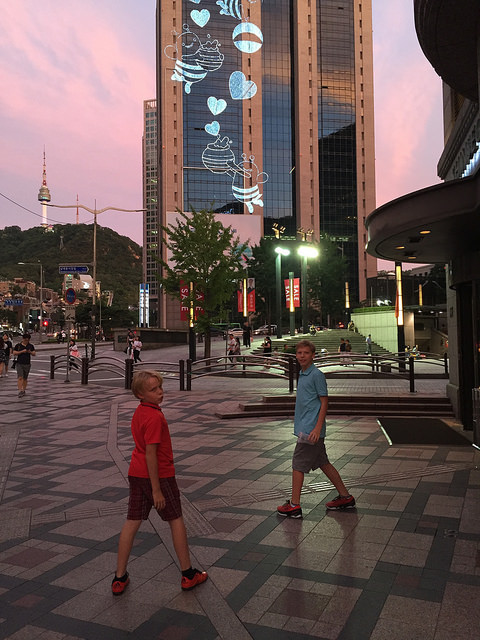
Oliver & Owen in Myeong-dong with the Seoul Tower in the background. 

On our way to the USA for summer vacation, we stopped in Seoul, South Korea to soak up the atmosphere and some of the sights of the largest city in Korea and fourth largest metro area in the world.

I was really curious how Korea compares to Japan and found that they are different. Japan is unique in Asia in that it is singularly refined, quiet, orderly compared to the other cultures I experienced in my two years in the region. Korea had lots of street vendors, some litter, people were louder and more direct, etc. They are neighbors and hosted a World Cup together and there are many similarities, but I was surprised at how more “in your face” our interactions were with locals. I guess every time we leave Japan we will experience a bit of a shock at cultures that are more expressive and places that are not as neat and orderly.

27958417151_49aba01e90_z

We stayed at Days Inn near Myeong-dong station, one of the big shopping areas in the center of Seoul. Immediately we noticed the hustle and bustle of street vendors. We had a pretty good BBQ and some traditional Korean dishes. I especially liked the roasted octopus sticks. Nadia and Ocean enjoyed a day of shopping. Ocean was especially happy with her hand sanitizer holders and bracelets. She was acting so grown up.

 27933884562_1797471a28_z

The boys and I hiked up the hills of Namsan Park to the Seoul Tower, one of the iconic buildings of the capital. The views, as you can see above, were worth the effort. There was a pretty extensive outdoor weight/exercise area about halfway up to the summit, where we had a good workout. The hill was always a fortress to protect the city from attack and we walked along the protective wall (a mini-Great Wall of China) down to the Sungnyeum Gate. I had to bribe them with $6 drinks from Starbucks to get them to take a longer loop back to the hotel. As readers of my blog know, I gravitate to green areas when I am visiting big cities. I highly recommend Namsan Park if you are in the city center.

It was a beautiful summer evening and good people watching. We noticed many US military personnel and were reminded that crazy, nuclear weapon-capable North Korea was only a couple hours drive away. I hope on my next visit to see the DMZ (de-militarized zone) and learn a bit more about World War II/Korean War. It is amazing the economic and infrastructure growth the country underwent after being heavily destroyed and very poor in the mid-1950s.
28001777946_d3bd9f7e39_z
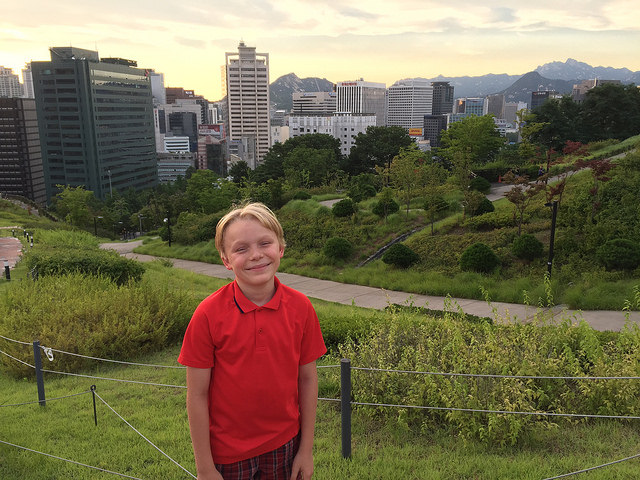
Oliver standing along the Seoul City Wall

Koreans are obsessed with their skin! We saw hundreds of stores dedicated to creams, moisturizers, whiteners, etc. for both men and women. Korean women spend more on cosmetics per capita than any other country in the world. We bought many of the famous face masks and other products as gifts. This BBC article was right, they are world leaders in skin products. I was surprised that men also are into both cosmetics and fashion and with their slight builds and the tendency to dress in the same patterns as their girlfriends, they are a bit androgynous. Many women do have nice skin and like Japanese women, they dress well and are well kempt. I bought a nice night cream to help my aging skin. I have spent way too many hours in the great outdoors unprotected to have silky smooth skin. I was looking for a special cream for the sunspots on the top of my head, but not many Koreans are bald.

27933832962_5e5f7c834e_z
Another satisfied customer and an uncomfortable salesperson!

 I am looking forward to exploring more of this interesting country. As with many places in Asia, my only complaint is there are too many people and Seoul has one of the highest population densities, 14x greater than New York. There are plenty of inexpensive and convenient flights between Osaka and various destinations in Korea, so I am sure I’ll be back. I’ll finish this post with a video from the Myeong-dong shopping street.
Quirky Japan: Eating Daggertooth Pike Conger

27787149301_553bb41658_z

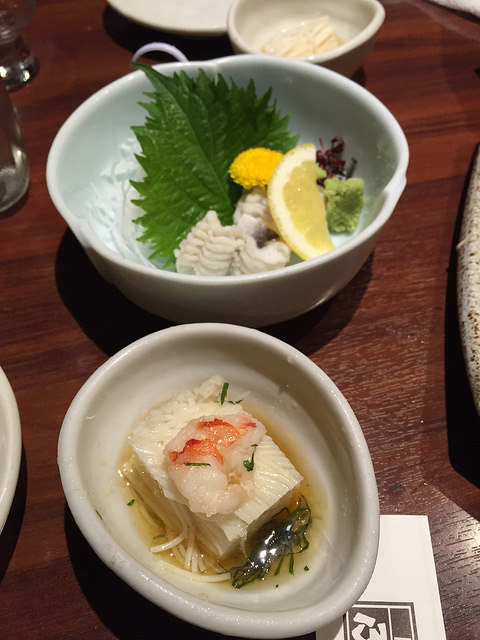
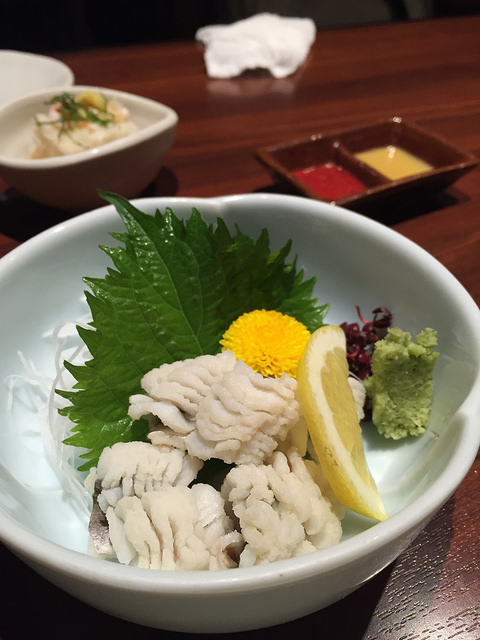
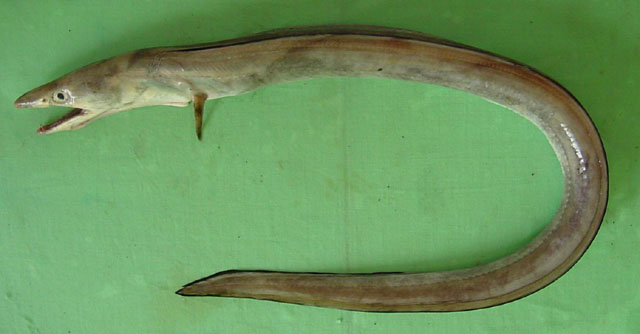
Japan has a “foodie” culture and presentation and delicate tastes are very important at restaurants. They also eat everything that comes from the sea including the summertime Kansai (name for the western region of Japan where we live in Osaka) dish, hamo. It is in the foreground in the photo above and served with beefsteak leaf, wasabi paste and either a spicy red sauce or mustard. It was delicious but when I looked up the English name for hamo, I found it was dagger-tooth pike conger (Muraenesox cinereus) a type of eel. It lives on the sandy bottoms of oceans up to 100 meters deep.

mubag_u2

Hamo is best in the summer and I love the seasonality of seafood. Fish are best to eat at certain times of the year and each season brings with it new fish and other creatures to try. I am trying to learn all of the different seasonal fish and also learning how to prepare them. I never grew up eating much seafood, but really like it and I know that it is very healthy for me. One of the starters was the summer noodle, somen, which is in the foreground in the photo below. It is served cold. I had these dishes at Fujiya a restaurant close to the kitaguchi-nishinomiya station.

27251103664_f431ac1ab4_z

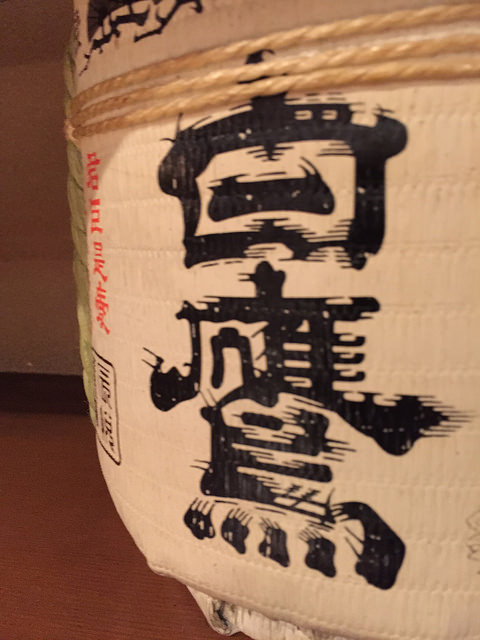
People like to socialize and drink over meals in Japan. Restaurants rather than bars and dance clubs are less popular than restaurants. Meals last a long time and are many courses. It must be the Japanese metabolism that keeps people thin here because when they go out, they eat a lot. Below was my kanji lesson for the night. The top part is the kanji for white and the bottom has a portion for bird and go forward, which signifies “white hawk” and it is a type of sake. I would like to learn more about how sake is made and the different types of sake.

27251103954_2f5751e237_z


Family Journal: June 8, 2016

26892322653_6c64af00e3_z

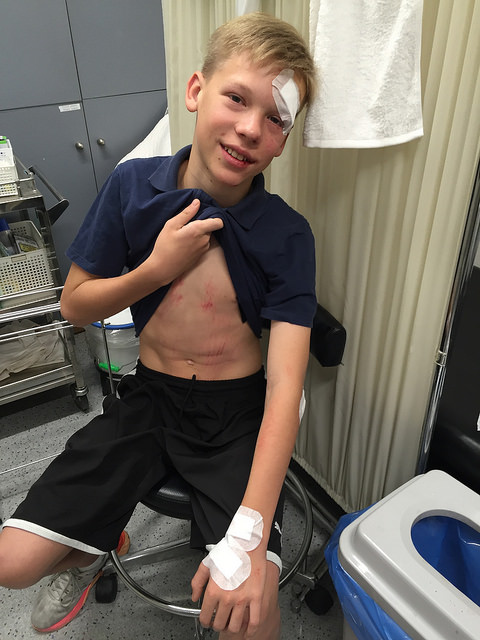
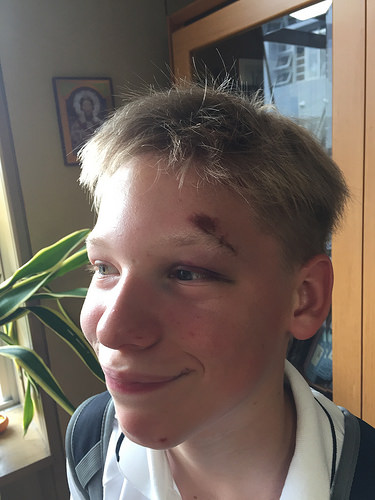
We had a bit of a scare on Monday when Owen went over his handlebars on his bike ride to school this morning. We was going over a bump and came down awkwardly and hit his front brake too tightly. He broke his fall with his wrist. Thankfully he just had scrapes and bruises and we not seriously injured. He is pictured above in the school health center. The dormitory students were quite nice in helping up and get to the nurse. As you can see, by Wednesday he was back to his normal, smiling self.

27507365086_d22085203a

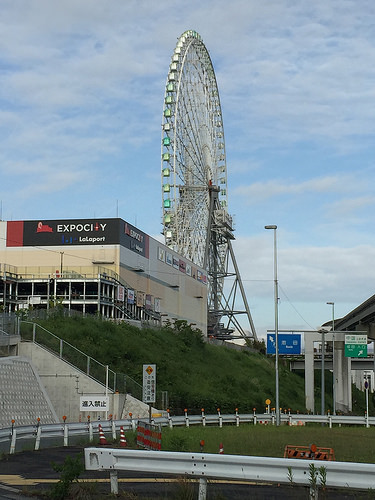
On my own bike ride this morning, I noticed that the ferris wheel at the Expo City Mall is almost complete. There is a very wide bike/running lane around the entire park and it is one of my regular bike routes. It is about 13 kilometers and can be completed in less than an hour, so it is ideal for before school or in the evening because it is safe from cars. The mall is another development that has taken part of the park away. It is hugely popular based on the weekend crowds. Combined with the new Suita City soccer stadium across the street, it is a hub of activity. Ferris wheels are quite popular in Japan and there seems to be one in every city. I don’t see the appeal to them, but maybe I am a just a grumpy, old man.

26933253483_2a8972fd87

Family Journal: June 6, 2016

27452119186_79a7bf16f0_z

Unlike non-educators, I go to prom every year. It is much different of course as an adult chaperone rather than a teenager, but it is still fun. Nadia loves to dress up and go out, it is part of her Latin America heritage where social outings are almost mandatory. We had a nice time dancing to a few songs and trying to take pictures of friends’ children.

27209657050_08d969f462_z

Our school is owned by the Kwansei Gakuin Educational Foundation which has besides us and several K-12 schools, they also run a 24,000-student university. Above is a photo I snapped before a meeting with the board of trustees. The campus looks like Stanford with the Spanish style buildings and palm trees. I enjoy cycling to the university from our campus (approx 20 kilometers) and because of traffic, it is not much longer on bike than car.

27486551175_16f1cb3acb_z

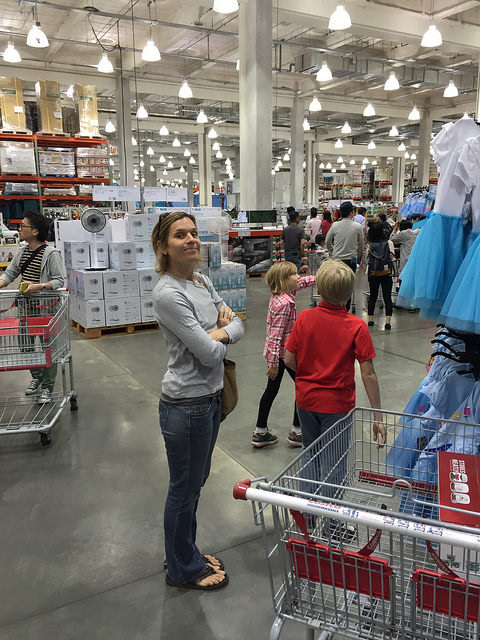
On Sunday we drove over to the Kyoto Costco for supplies. With the kids getting older and eating more, the bulk purchases make sense for our family. It is nice to have the American warehouse retail chain in Japan. We get items not usually found in Japan and there are some pretty good deals.


“The Thousand Autumns of Jacob de Zoet”

thousand-autumns-of-jacob-de-zoet

I just finished reading the 2010 novel by David Mitchell. He is famous for writing the book that later was a movie, Cloud Atlas. In reading a bit about Mitchell, I didn’t know that he lived in Hiroshima for 9 years and is married to a Japanese woman. The work of historical fiction is set around the turn of the 18th century in the Nagasaki Bay. This was during the time that Japan was closed to the world and the only contact with the west for 200 years, was a small, artificial island trading post managed by Dutch traders. The story’s main character Jacob, is a young clerk who falls in love with a Japanese medical student. As with Cloud Atlas, there are several plot lines that come together in the end.

As with all good historical fiction, the book gave me a strong sense of what it was like back then. Mitchell writes in the final pages that “Obscurity is Japan’s outermost defense. The country does not want to be understood.” Japan was for over 200 years blocked to the rest of world and leaving the islands or visiting the islands was punishable by death. Mitchell is right in that during a time of colonialism, Japan was not taken over by the Portuguese, Spanish, Dutch, English or other maritime powers when neighboring nations fell. Mitchell’s years in Japan served him well for this book in that he understands Japanese culture intimately. It is a decent story and I enjoyed being taken away in the evenings before falling asleep. One takeaway from that period is how slow news travelled. The Dutch traders only learned of the bankruptcy of their company a year later and with news only coming with incoming ships, they were even more isolated that other places. Today with the internet, an information-rich environment and instant transmission of news, it is hard to think how it would be to live like that. I also liked that Mitchell told the whole story in a realistic manner and we get to see what happens to each character years later.

Hopefully I’ll get the opportunity to visit the island which is now a museum and see the city where the second atomic bomb was dropped, ending World War II.

Family Journal: May 4, 2016

26601229112_890cea89ac_z

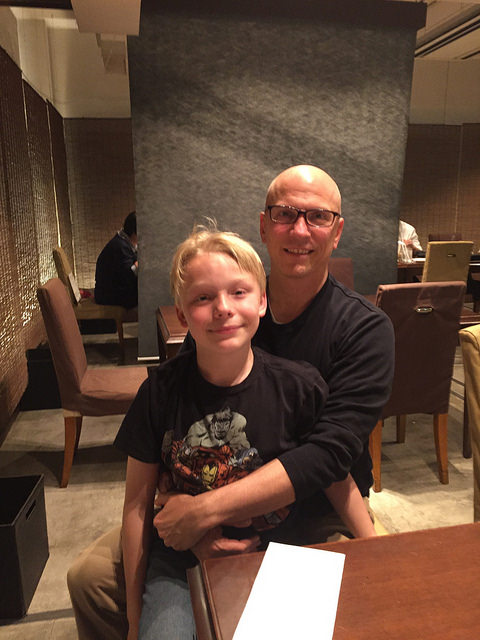
The big focus for last weekend was Oliver’s 11th birthday! The little guy, well as you can see in the photo, not so little anymore, turned 11 last Saturday. I can’t believe how fast time goes by, (typical parent cliche, but oh, so true) and it is such a gift to be a father. We love his heart of gold, charismatic personality and creative imagination. We celebrated by having dinner at the Hard Rock Cafe downtown and then taking him to the Pokemon store at the Expo City mall. He is currently totally into Pokemon and he spends a lot of time looking at the cards, watching the program and fighting imaginary battles while walking to school.

26183518913_23fd48cc8f_z

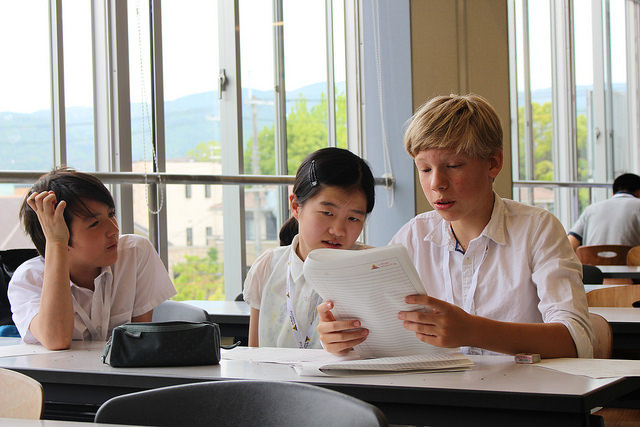
Owen qualified for the Global Round in the Kansai round of the World Scholar’s Cup. The debates and knowledge bowl events were very good for him. Nadia and I are encouraging him to be a well-rounded person and we like him showing enthusiasm for something other than sports.

26667404206_a5095c7911_z

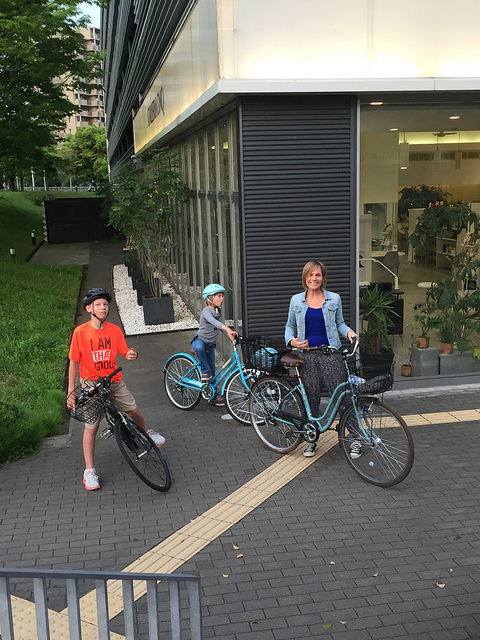
Nadia and Ocean got their hair cut and styled and we rode our bikes with them to the salon. The weather is absolutely perfect lately and we have been riding our bikes everywhere. I love April/May in Japan before the humidity and rains of June come.

We are staying home for our Golden Week holiday. Japan is an overcrowded country and with this being one of the few holidays workers get, the highways, airports and tourist spots are really full. I am taking advantage of the week to catch up on my research for my doctorate program.

Will try to post more this spring. Here is a video of us riding to the train station with our friends to catch the train for Oliver’s birthday dinner.

Initial Impressions of Guam

25373232494_5756b10262_z
Owen and I out on the kayaks. 

I have been on the island for only a few days and mostly spent in the far south of the island. Purposely I chose to stay away from the urban area Agana with its resorts and hotels.

Driving through the villages of the south, it reminds me of Venezuela. The quality of most of the homes is substandard to mainland American homes. Definitely a poorer economy for most of the islanders. This is in contrast to the military housing facilities which are suburbia USA. You can’t beat the weather however, with sunny skies, warm nights and the Pacific ocean always near by, it makes me long for living again in the tropics. I spent 13 years living in Latin America and was ready for temperate climes and the change of seasons, but there is something to be said for tropical living.

25849054092_19f4c9d318_z
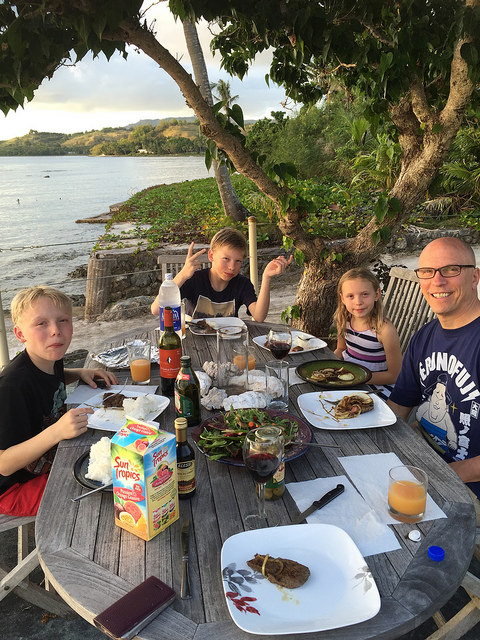
Another delicious dinner by Nadia!

I basically see Guam as a roadside park. The Pacific Ocean is huge and refueling/rest stops are needed for America as they try to control shipping and air of the whole world with their military. Hence, the naval and air force bases on Guam and it is an American territory. I can see why Guam and Saipan were fought over so fiercely in World War II. Using airstrips and facilities on these islands put the USA within striking distance of mainland Japan. With China building islands in the south China Sea and apparently trying to make a sphere of influence similar to what America did in the Caribbean (read Robert Kaplan’s book, Asia’s Cauldron: The South China Sea and the End of a Stable Pacific), I don’t see the USA leaving anytime soon. Outside of the city, it doesn’t feel like America until you get in the supermarket or watch TV. Most of the people I see are dark-skinned Polynesians, who look a bit like Venezuelans. It is ironic that besides military bases, Guam relies on Japanese tourism to boost their economy. Over 1 million Japanese visit yearly. It is only an inexpensive, 3-hour direct flight from Osaka.

We are enjoying quiet family time together and soaking up the south Pacific land and sea natural beauty.

25910982261_0cc715e2c4_z
It is nice to have time to watch the sunset. 

Sella Bay Hike

25354819063_7b7223a68d_z
A view to Sella Bay from the top of the trail. 

A wonderful and challenging hike today from the Sella Bay trailhead, 500 meters above the beach. The trail led us across two small creeks and into an old coconut palm grove. The views were spectacular all the way down with some varied vegetation. When we got to the beach, we were rewarded with crossing this old Spanish bridge, over 300 years old. Amazing it has stood the test of time with erosion and typhoons, you think it would not still be standing.

25351020554_23cf8a7da3_z

The highlight of the beach time was the superb snorkeling. Owen and I went out past the reef and looked down into the abyss. Thousands of multicolored fish, coral and other creatures. Ocean and I had a great time snorkeling in the tidal pools.

25889511241_e1822aef58_z

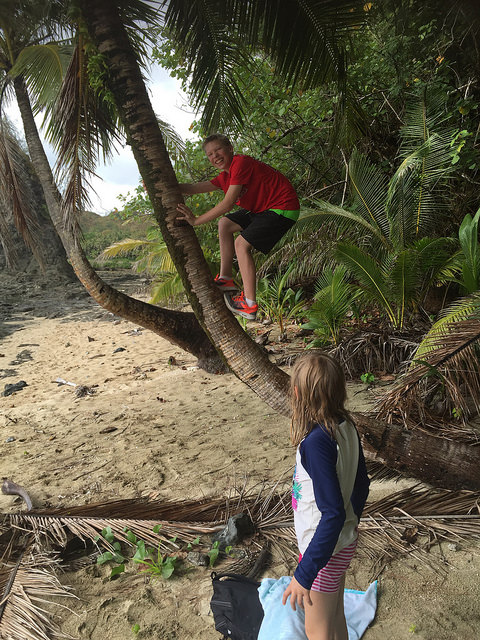
Oliver and Ocean were troopers! Ocean is so calm and methodical in her hiking. Oliver is really in his element in wilderness. It rained a couple of times, making the trail quite slippery in many places. We made it back safe and sound.

25355775783_5c8ae27615_z

We didn’t see anyone the whole afternoon and had the beach to ourselves. I love the tropics and the smell of the sea, high humidity and tropical foliage, made for a day I won’t soon forget! My highlight was Owen’s reaction when we passed the high point of the reef. “It was like a documentary!” The snorkeling was really great and I recommend anyone doing the hike. It is located on the south side of the island, not far from where we are staying.


Sumo!

25769042202_7f581ce258_z
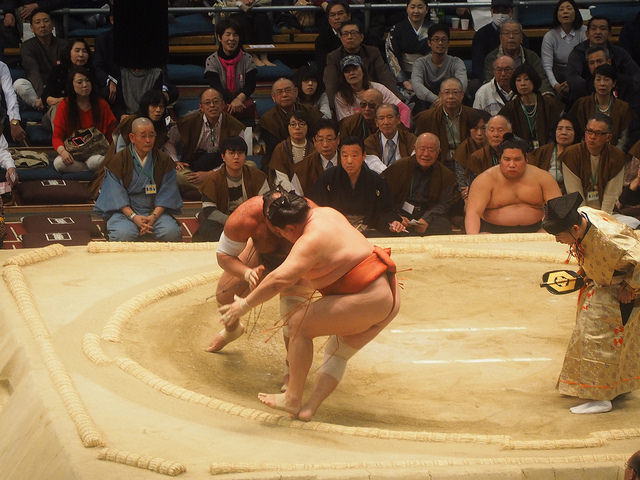
Osunaarashi tosses Asasekiryu out of the ring.

Spectacle. Bizarre. Fascinating. Wierd. Ancient. Cult. Sport. Thrill.

I absolutely loved my experience attending the 2016 Osaka Grand Sumo Tournament on Thursday. I won’t bore you with all the details of the sport. If you want to know more about sumo wrestling, check out this English guide here. There are six “grand tournies” per year, 3 in Tokyo, 1 in Nagoya, 1 in Fukuoka and in March, they come to Osaka.

It is such an unusual sport. They maintain many of the traditions and religious aspects that surrounded the sport 1,500 years ago. For example, after each tournament, they publish a banzuke, which is a ranking of all 800 professional sumo wrestlers. Instead of a straightforward list, it is printed in an ancient format. It is like the top 10 college football rankings to be written like the Declaration of Independence, with cursive letters from a quill pen. The ancient customs mean the wrestlers go through the all the rituals like throwing rice to “purify the ring”, the referees where traditional folkloric costumes, etc. The wrestlers choose ring names, like  Egyptian wrestler Abdelraham Salel’s “osunaarashi” which means sandstorm in English. He won his match against a Mongolian.

25589243790_78abf4675e_z

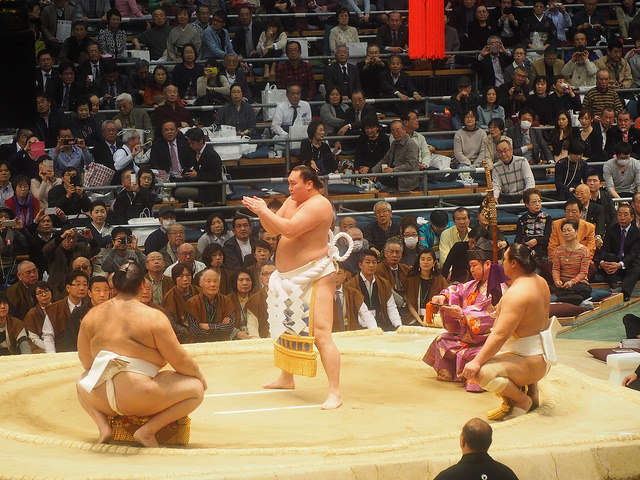
Above is the greatest wrestler in the history of sumo, Hakuho Sho, the winner of 33 grand tournaments, the most ever. He went 86-4 in two consecutive seasons. He is performing another shinto ritual before the matches begin in the final round.

I can see why the guys are so fat. The object of the sport is to push your opponent out of the ring or have a body part other than the soles of the feet touch the floor of the ring. The heavier one is, the harder it will be to move them. I wonder how professional American football players would do in this sport. The sumo guys are big and they must train really hard, but I wonder if one applied the latest techniques in strength training, nutrition, advanced statistics, film analysis, etc. I would like to know more about the different techniques used by the wrestlers.

25794944301_f0a081b1b4_z
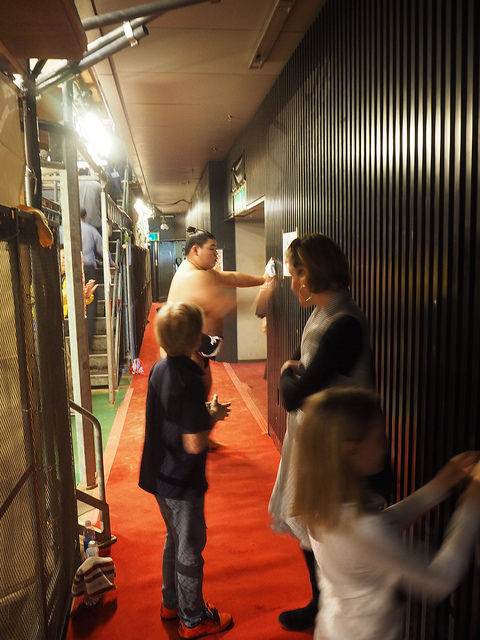
Oliver gets “up close and personal” with a sumo wrestler

The stadium in Osaka is unique in that you can get up close and personal to the wrestlers. You can stand in the hallways as they enter and leave the ring. We also saw many outside the arena, getting lunch at Family Mart or taking a taxi. Hilarious to see these big guys wearing robes and sandals walking through the streets. Their hair smells like chamomile which is another ancient ritual. I wonder if the guys really believe in shinto rituals or they do it because they have to and it is part of the sport. I think it makes the sport more appealing. The top wrestlers make a lot of money and have beautiful wives, which should not have surprised me. Beautiful women seem to come with money.

I will definitely go again, just not with the kids as they didn’t have the patience to sit through so many matches. There are bouts occurring all day, with the lower rounds starting in the morning, culminating with the masters in the late afternoon. It is a 15-day tourney and the wrestlers fight daily in round-robin style. The best record wins.

I will end this post with a portion of Hakuho’s pre-match ritual. He is the greatest off all time!


Mazda Tour

25817711266_ba1787e023_z
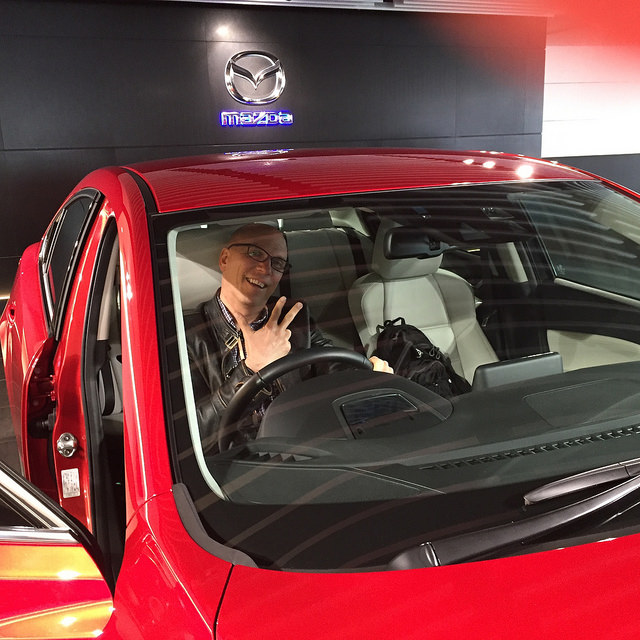
Checking out the Aventa model in the showroom. 

I visited the Mazda Motor Corporation yesterday as its world headquarters are in Hiroshima. Hiroshima is most well known for the atomic bomb blast. Without that, it would be known for being the home of Mazda. Car manufacturing is big in Japan with the world’s largest producer of cars, Toyota, being based in Nagoya and four of the top 10 largest automobile manufacturers in the world being located in Japan. Mazda is number 15 in the world. They had a long relationship with Ford, but recently Ford has divested itself from Mazda and only owns 3%.

Hiroshima is almost a company town, with the Mazda complex taking up 7 kilometers of the city. We toured “Mazda-landia” and it is huge. They have the world’s longest privately owned bridge, two fire stations, a hospital, a coal burning power plant and even their own port! They have a large test track in another part of the city.  Mazda also owns the professional baseball team, the Hiroshima Carp and professional soccer team. I can imagine how big the larger car companies must be! I am embarrassed to have grown up in Michigan and never visited Ford or GM.

25543063190_2e2c49329f
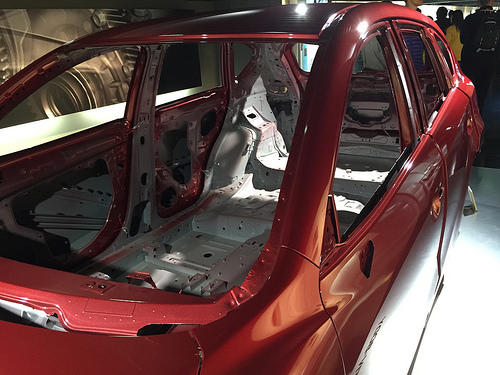
The metal frame before it hits the assembly line.

The most interesting part of the tour was watching the 1000 meter long assembly line. I could have stayed for a couple of hours. There were not too many assembly workers as much of it is controlled by robots and machines. The guys on the floor were all young and nimble, crawling in and out of cars. They assemble a car in 15 hours and they produce about 400 cars per day. Watching the frames getting parts stuck on with rivets and the incredible amount of engineering and logistics that goes into assembling an entire car in a day is amazing! We were not allowed to film or take pictures on that part of the tour.

I am not into cars, as I only see cars as a way to get me from point A to point B. I would never buy a new car, preferring to spend my money on other things. In fact I don’t even own a car and we just occasionally rent a car when we need it. I understand guys who are passionate about cars, but it is just not for me. The tour was interesting however and I learned a lot.

25543061900_c09a74534b_z
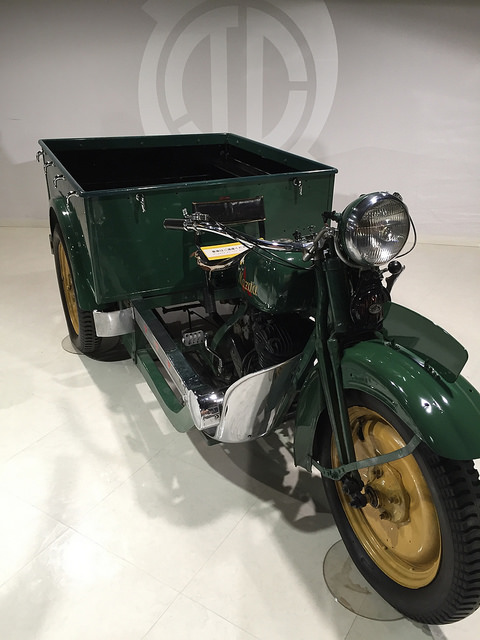
The three-wheeled truck that helped the city recover after the bomb. 

Mazda’s speciality is the rotary motor, which is different from the common piston-driven engine. It has more power and a smoother ride, but is not very fuel efficient. This almost bankrupted the company in the 1970s, but they survived and have done well with the “roadster” or “miata” rotary engine car. They switched to the more fuel efficient piston engine for most of their models. The company survived the atomic bomb and were producing a 3-wheeled mini-truck only 4 months after the devastation. They were also the only Japanese car company to win the 24 Hours of Le Mans, accomplishing the feat in 1991.