Reflections of Valencia, Spain

The View from the Micalet Tower – Valencia Cathedral


I just completed five days in Valencia, Spain. I have been to Spain many times, but only the island of Mallorca, where I did my Master’s degree and a family holiday two years ago. This was the first time on mainland Spain and in a large city. I was very impressed with Valencia, it reminded me somewhat of California. It has the same climate, located on the coast, with palms and orange trees everywhere. I didn’t know that Valencia was such a large city (the third biggest in Spain after Madrid and  Barcelona) and that it was part of the Catalan region. This makes sense geographically, because it is located directly due west of Mallorca.

The best thing about the city besides the obvious Mediterranean Sea and sunshine, is what city officials did with the Turia River. It used to flow through the city and in 1957, a major flood made city officials reconsider it. They decided to re-route the river, bypassing the city to the south. They then took the river bed which meandered through the city and converted into a long green belt of parks and sports facilities. There are soccer fields, a gorgeous baseball field, athletics stadium, and hundreds of playgrounds and picnic areas. There are bike and running paths running its length on both sides. Yesterday, I rented  a bicycle from Passion Bike (highly recommended) and took the kids from the historic city center, all the way to the beaches and back. It was a glorious, cool, grey day of exercise! Having lived in Venezuela and visited city named, Valencia there, they also have a narrow park in the city, but it is much smaller and smells of sewage. I have to commend the Valencia city officials for this idea. They are also maintaining the park very well and the landscaping and condition of the playgrounds and paths were excellent. Between the beach and Turia park is an industrial area that is really run down. I noticed some of the Formula One race track used to be here. I guess they ran out of money after developing the City of Arts and Sciences, but it is area which could be made nicer.

Bike Ride on Malvarrosa Beach

Near the former mouth of the river is a complex of museums and civic attractions called The City of Arts and Sciences. The futuristic architecture makes it look like the set of a science fiction movie, and it brought back memories of the 1970’s movie, Logan’s Run. We took the kids to the aquarium, the largest in Europe. It costs 27 Euros to enter and featured a dolphin show (lame in my opinion) and large and small tanks of sea life from a range of habitats and oceans. As with all zoos and aquariums, they give me mixed feelings. It is fascinating to see the wonders of nature, but I feel for the large, higher intelligent animals that live in such small spaces. I also prefer to see specimens in the wild to zoos, but it does give access to elderly and the less adventurous.

As with most cities in the Mediterranean, the architecture reflects the long history of different civilization that have called the place home. The old city is quite compact and well-preserved, with a good mix of the old and modern. The Valencianos enjoy socializing and it showed with the numerous cafes, restaurants, bars, located outdoors in the narrow streets. There were many gorgeous plazas and we walked through them daily. There were many tourists, but not an overwhelming number due to it being off season. The beach was very quiet and on the two days we visited, it was overcast. I did manage to get in the water, despite the cool breeze. There is something soothing and invigorating about swimming in the sea.

Soccer is the big sport here and the sports pages and televisions were full of highlights from the Spanish and Champions Leagues. I still don’t understand the appeal of the league without salary caps for teams. Year after year, it is dominated by the big two, Barcelona and Madrid, with only a handful of teams having a realistic shot of breaking through. Valencia is one of those teams, but they are down in the standings this year. (Look up why the theme of the bat). I also heard and saw less Catalan than in Mallorca. I was complemented on my Spanish several times and it is always nice to understand the locals in their native tongue. It made me enthusiastic for keeping my Spanish sharp. I need to look for an advanced Spanish book with tips and pointers to polish my level. I will be spending a couple of weeks in Bolivia and it will be a good opportunity to practice this June.

Ayuntamiento of Valencia

Overall, I had an enjoyable visit to Valencia and I would definitely come back with my family. The Turia River Green Belt, great weather, beaches, and old city, makes Valencia a premier tourist attraction. I would like to thank my co-chaperone on the trip, Milica Rkulovic, our school’s Spanish teacher, for inviting me to go with the class. She was delightful and I had fun with her and the students.


My Visit to the island of Malta


The Grand Harbor of Valletta

I had five pleasant days on the island of Malta this week. Our school participated in a  theatre festival and I was one of the chaperones.

I didn’t realize how small the island of Malta is. It is one of the smallest countries in the world by area, and with 400,000 Maltese, it is the third most densely populated nation in the world. As with most places in the Mediterranean, it has stunning scenery and a long history. Malta particularly has such a strategic position historically, that many different people fought over the island for thousands of years. The Mediterranean is very narrow south of Sicily and north of Tunis (formerly Carthage) and Malta lies in the center of this strait. It was fought over by the Phoenicians, Arabs, Ottomans, English Knights, Napoleon, etc. all the way up to World War II. Malta received more bombs than most cities in World War II except for London and Berlin. All of these different people had an influence on the Maltese and it can be seen in their faces and their language and architecture.

Marsaxlokk Village – Malta

We got to meet a lot of Maltese because we were hosted by the Verdala International School. The language is strange in that it is Semitic (Sicilian Arabic) but mixed with a bit of Italian and they use a Latin alphabet, with a few extra letters. It is really hard to understand and sounds very Arabic. I learned that Sa-ha means “to health” and it is the “cheers” greeting. Some Maltese look Italian and some look Arabic. They take pride in eating excellent food and having a hearty appetite and it showed with many having stocky or portly builds. The architecture was similar to Bahrain and the Gulf Region, and there were also many beautiful, old, palaces and buildings. There are no wilderness areas as the entire island is pretty much either urban or farmland. There are many walled cities and fortresses, and this reflects the many sieges that took place here. The most recent outsiders to rule the island, the British, left in 1964, but their influence is still seen. It reminded me of Cyprus in that respect.

Walking the Streets of Mdina, Malta

It was the perfect time to be there for the spring wildflowers. In a few weeks, they will wither away and the hot, intense, summer sun will turn the island from green to brown. Everywhere one went, thousands of bushes, trees, and plants were in bloom. I did get a chance to do some sight seeing. The festival organizers took us to the “silent city” of Mdina, a walled fortress in the middle of the island. The narrow streets, high walls, and views to the Mediterranean were an impressive site. Malta, like, Poland, is very Catholic. 500 years ago, the Crusader Knights were sent to the island to defend it from the Ottomans. There were churches everywhere, and the tourist brochures say there are 365 of them on the island. We also saw a site of ruins that looked like a bigger Stone Henge. They were built 3,500 years ago and were located on the cliffs on the north side of the island. We went for a hike through the wildflower-filled cliffs and stopped for delicious fish lunch. On our final day we toured a small picturesque fishing village and walked around the magnificent harbor of Valletta. Absolutely breath-taking is the only way I can describe it. You can see for yourself with the photos.

We stayed the Marina Hotel, in the posh suburb of St. Julian’s. The school’s campus is close by and is an old British fort from the late 19th century. An unique setting for a school, with a large moat surrounding the school and gun turrets in the corners. Probably the coolest part of the old fort are the long tunnels under the fort. The British built 5 forts on the island during this time, and this particular fort, Pembrooke, was never used as a fort because military experts thought it was too exposed. It served as a barracks and supply storage for them. With the advent of modern warfare and the airplane, the fort was made quickly obsolete. The tunnels did come in handy in World War II, where British soldiers and others there took refuge in them. You can still see the names of the families painted on the walls to assign spaces for them. There were still some metal frames of the bunk beds attached to the walls and even graffiti of Hitler.

It is a really nice place to visit. The harbor in the capital city of Valletta is absolutely breathtaking. The narrow streets, limestone walls, the turquoise blue waters, and that Mediterranean sunshine combine for spectacular setting. I would like to thank Daphne and the other faculty members of the Verdala International School for being such fine hosts and showing us the best of Malta.


Spring Weather and Serbian Elections

Last weekend we enjoyed the fresh spring weather and went for a picnic and hike in the Fruška Gora (Frankish Hill) National Park. The park is the hilly area in the northern part of Serbia in the center of the Panonian Plain. We first had a nice picnic on the grounds of the Stari Hopovo Monastery. After lunch, we went for a walk up into the forest. The boys brought their nerf guns and played hide and seek with Ocean. There are no leaves on the trees yet, so one could see a long way. A few spring wildflowers were out.

Serbian National Elections were on Sunday and as expected the Serbian Progressive Party won an absolute majority (48%) and do not have to form a coalition with any other party. They will name Aleksandar Vučić as the Prime Minister on May 1. This is the first single-party majority this century since the fall of Slobodan Milosević. He is from New Belgrade (Blok 45) and when a young man, he was a vocal member of the Serbian Radical Party, a far right, ultranationalist party. He called for the killing of muslims and protecting war criminal Ratko Mladić. He is now pro-Europe and much calmer as an older man. He is quite popular because of his anti-corruption stance and fighting organized crime. I am not sure how much is rhetoric and how much he is really doing because I don’t follow politics and the news enough. He is shown below saving the lives of school children trapped in a bus during a bad snow storm this winter in Vojvodina. The Serbs have a sarcastic sense of humor and they saw a political photo opportunity. Very funny!

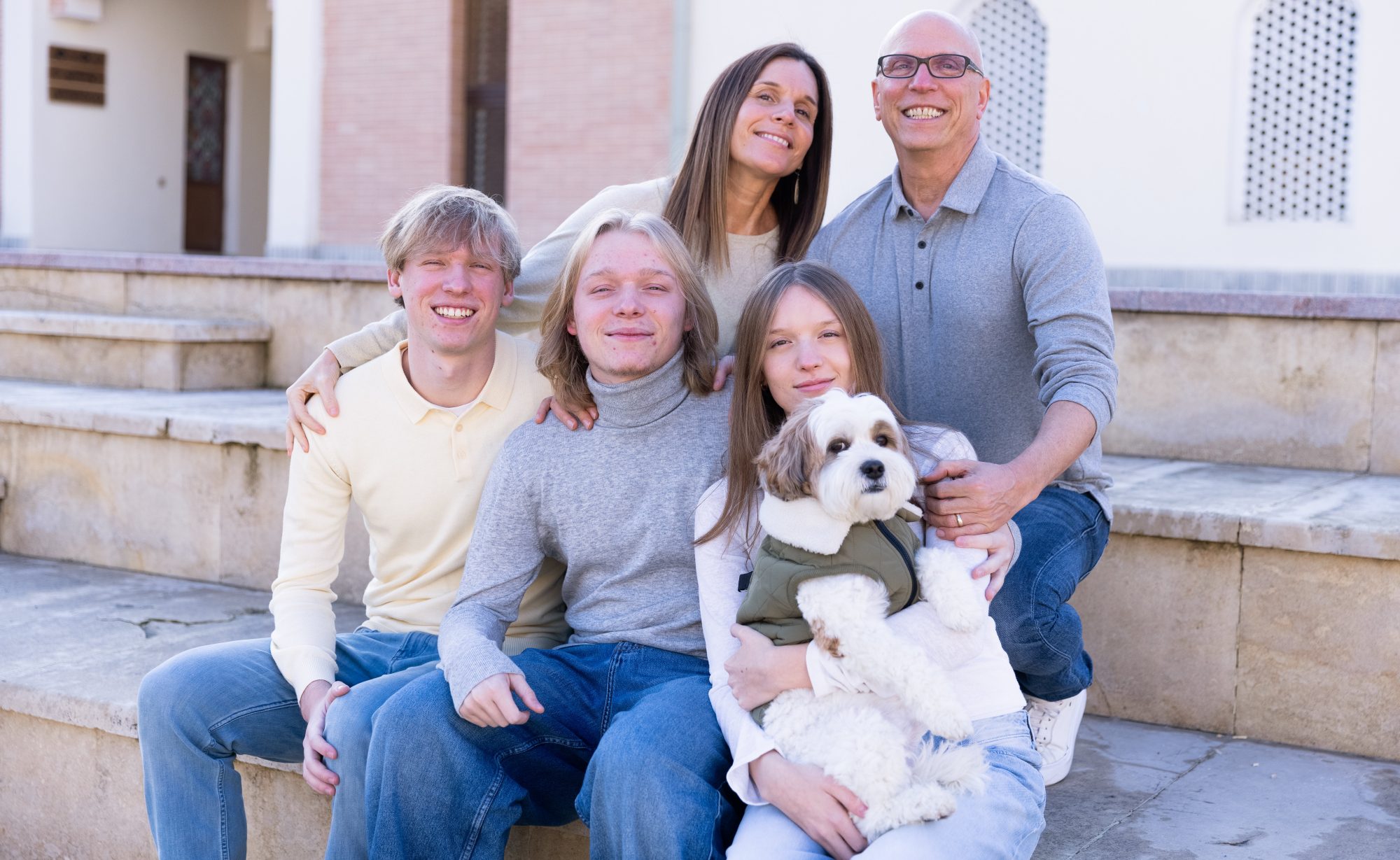
Father and Sons

It is such a privilege to be a father! I can’t put adequately into words how I feel about the truly awesome responsibility of fatherhood. I am a very lucky man to have two sons. As they are getting older, our relationship is getting more interesting as they are developing their own opinions and personalities. I wish I had more time and patience for them! As my mother says, we do the best we can.

Last week we noticed that we were wearing the same outfits. The dark blue, long-sleeved shirt and black sweat pants are “my uniform” according to Nadia. They are comfortable and on weekends I am usually playing sport, so I wear them often. The boys love wearing their black sweat pants and were fighting over them last week. It dawned on me it is probably because they see me wearing them all the time. It made me realize they are always watching me, and taking cues on how to be a man. That is a big responsibility.

We wanted to give mom a hard time, so we took the photo above. 🙂

Below is a photo from last week’s basketball game. It is one of the best parts of my week- the practices and games I have with the Junior Dragon basketball team. I love coaching Owen, Oliver and their friends. What an honor it is to coach them!

Visit To Skopje, Macedonia

This is my second visit to Skopje, as I was here in September 2012, about 1 and 1/2 years ago, which I blogged about here. I am here this week for a basketball tourney so haven’t had much time to see the city.

We did a walking tour of downtown last night, and you can see above the Palace of Justice behind one of the many statues along the Vardar River. That is one thing I will miss about living in Europe is being able to see so many different countries in such a short time. The drive from Belgrade to Skopje is about 5 hours. Skopje was once part of Yugoslavia and one can still see the distinctive Socialist architecture here and there. The Macedonians are trying to re-do the city in their own image with many new buildings. There is also a Turkish/Albanian influence, as the country is about 25% ethnic Albanian. Our host Aleksandar said that the fortress is closed to the public due to a dispute between the muslim community and the Macedonian Orthodox community. City officials were to build or open an Orthodox Church there and the Albanian community opposed it.

Macedonia was a smaller part of the ex-Yugoslavia, with only about 2 million inhabitants. Beside Tito’s Partisans wanting the area, the Macedonians have also been sought after by the Greeks, Bulgarians, Serbians, Ottomans, etc. I am happy they have their independence, but feel if they wanted a larger country, they would best fit with the Bulgarians.

Boris Trajkovski Sports Center – Skopje, Macedonia

I am here for a basketball tournament with our High School Boys’ team. We are playing games at the Boris Trajkovski Sports Center, which is named after the former President of Macedonia. He died in an airplane crash while visiting Bosnia 10 years ago. He was a Methodist Minister and was known as a moderate who promoted inclusion of all ethnic groups in Macedonia. This is a quality still much needed today in the Balkans. He is regarded as a hero by the Macedonians and the government has built a beautiful center with a hockey rink, pool, arena, gymnasium, etc.

Reflections of Turkey

Nadia and Owen share a dunja on our bike ride

We really had a nice holiday this week in Istanbul. I had wanted to visit the city for a long time because of the Ottoman Empire’s long domination of Belgrade. It was interesting to see what the Serbs took from the Turks that can still be seen today. There are many Turkish words that were adopted by the Serbs and customs as well. Istanbul is also one of the world cities that everyone should visit and the Turks are the classic, East meets West regarding its history and culture. I am fascinated with contrasting the liberal, European-type aspects of the city with the conservative, Islamic side of the society. The contrast could be seen in the dress of the people in the streets, with head scarves on some women and tight mini-skirts and flowing hair on others. There also seemed to be a lot of tourism from both European countries and Middle Eastern nations. For example, we met three people from Saudi Arabia on the ferry and there were lots of “ninjas” as the expats call them in the Arabian Gulf region, or women wearing full, black covering seen in the city.

Seagulls chase the ferry with Maiden’s Tower in the background

We saw the secular side of the city in talking with the manager of the Asitane Restaurant. He was complaining about the high taxes the conservative Islamic government puts on wine, making it very expensive and hard for vineyards to make a living. I highly recommend the restaurant, by the way! It specializes in old Ottoman recipes. His team was testing wines to put on the menu. We also met our former colleague Alison, who teaches at Robert College, for lunch, and she told us some stories that illustrated both sides of Turkey. The Turkish faculty working at the school are very secular, with few going to mosque on Fridays. Robert College is one of the oldest and largest American International schools in the world. However, she also said that Islam was put on her children’s birth certificates automatically. Another example is the many beer advertisements, bars, and transvestites in Taksim, the neighborhood where we stayed, while hearing the call to prayer several times per day. The call to prayer is a reminder to all muslims of the main tenets of Islam. It sounds so foreign and exotic to me, and you really get the sense of being someplace different. I don’t know about the 5:44 AM call to prayer that we heard in the mornings. I am sure a mosque in a Christian country would not do this as they would receive complaints from the neighbors. 

Ollie contributes to Istanbul’s daily tea total – Kabatas

I wanted to reflect on the final few days here. On Thursday the weather cooperated and we took advantage of the blue skies and took the ferry to the nearby Andalar (Prince’s Islands) in the Sea of Marmara. The kids were thrilled to feed the seagulls that followed the boat the entire journey. We rented bikes and rode around and stopped at a beautiful park. The beaches off season were not maintained, but we also collected some shells. There are no cars on the island, but plenty of horse-drawn carriages, which were fascinating to the kids. It was a lovely day and I see why the islands are a popular day trip from the city.

Meeting With Friends at the Spice Bazaar

There is so much history to the city! We visited the Basilica Cisterns, which the Byzantines constructed 1,500 years ago. Oliver and Ocean turned temporarily to stone after seeing Medusa’s head, which was used as a base of one of the pillars to hold up a column. We also enjoyed the Spice Bazaar and learned all about Iranian saffron. I was joking with the shop attendants about the Turks’ obsession with tea. One said 99% of Turks drink tea and probably about a billion cups are drank on a daily basis. I would estimate it would be more like 50 million per day, if one assumes 3 cups per day for most inhabitants.

Columns supporting the Basilica Cistern

We finished our shopping with another carpet. Nadia loves Turkish carpets and I like the stories behind them. They will look great in our apartment. The shop owner said the Prime Minister urged Turkish women to have 3-5 children and I was faithful to his wishes. The shop was owned by Kurds, and we got to know them quite well. One brother married a Bosnian from Mostar and the other a French woman who was shopping for carpets at one of their stores. The younger brother is moving to Houston later this month, because their father died a couple of months ago and he wanted his son to continue their business in the US. They have great sales of Turkish carpets there. I can see why people get into carpets, it is a lot like art collecting.

We head back to Belgrade today.  As I write this, I am sitting in Starbucks…Thanks Istanbul for a relaxing and fascinating visit!

Latest Reading: Norman Davies “No Simple Victory: WW II in Europe 1939-1945

fter our Christmas holiday trip to Poland, I wanted to learn a bit more about World War II. In Krakow we saw Schindler’s factory and the Jewish Ghetto, and this piqued the curiosity of our children. We explained the war and the Holocaust to them in the long car rides and watched Saving Private Ryan and Schindler’s List to reinforce their learning.

I chose the Davies book because it concentrated on Europe and it gave an outsider’s view to the war. I grew up with stories from my Dad, who was a boy during World War II and was fascinated with the war and what we were taught in school. I had an American-centric view of the war. Living in Eastern Europe has opened my eyes to a broader view of events.

Most of the war took place in Eastern Europe, specifically Poland, Belarus, and Ukraine. The two major combatants were the Fascist, Nazi Germans against the Communist Red Army of the Bolsheviks. It was a conflict of two great armies led by evil men, Hitler and Stalin, and the results were the deaths of millions of people, both soldiers and civilians, and the loss of opportunities for a good life for several generations of people.

I always thought that it was the Americans who came in and saved the day! I understood that the USA arrived to Europe to save the UK and France and landed on the beaches of Normandy and fought their way to Berlin. And then went on and defeated Japan as well. Davies however, shows with facts and his research and the research of others, that America only played a minor role in Europe. The Soviet Army did the hard work and won the war, not the USA. Most of the 16 million soldier deaths were suffered by the Soviets (9 million) and Germans (4 million). The biggest casualties were on the Eastern Front of the war with Barbarossa, Stalingrad, Leningrad, having over 10 times more deaths than say the Battle of the Bulge, the largest battle the Americans were involved in. The turning point of the war was not D-Day, but the huge tank battle at Kursk in the Ukraine. From that point on, the Germans were on a retreat that would not end until the Russians reached Hitler’s bunker in Berlin. America only contributed to 15 percent of Germany’s war deaths.

The reason most of the war was fought in Eastern Europe, is that the Germans wanted “room to live” and felt that the area east of Germany was meant for them and was filled with a “mix of subhuman and filthy” Slavs and Jews. Being of Slavic origin, I am glad Hitler and the Nazis got what they deserved. The Bolsheviks, the “74-year experiment that wasted tens of millions of lives” also wanted to expand into the area to take Communism to the world. The result were Poland being split into two by the Germans and Soviets, and Belarus suffering the most civilian deaths per capita and Ukraine most civilian deaths total of any country in the war. One example of the cruelty Poland faced was when the Nazis occupied Krakow, they immediately went in and executed the entire faculty of Jagiellonian University, because they felt Poles didn’t require universities, secondary schools, or educated leaders.

Stalin in my opinion was worse than Hitler. His internal purges and war tactics killed many more people than Hitler and the Nazis, even including the 6 million Jews in the Holocaust. In fact, the Stalinist Terror in the 1930s had roughly the same death toll rate (18 million estimated non-military deaths) as during the war in 1939-1945 (6 million non-military deaths). The Red Army used its numbers to win many battles, sacrificing millions of soldiers. Soldiers actually felt freer on the front lines in many cases, facing executions if caught of desertion or cowardice, or just being in the wrong place at the wrong time. Davies describes many atrocities and the disgusting conditions of the Red Army and Soviet policies with civilians. The GULag concentration camps in Russia and Siberia were much larger than Auschwitz or the other big Nazi camps.

I don’t want to downplay America’s contributions to the war too much however. They supply both Great Britain, the Western Allies and the Soviets. They also did keep Germany occupied on two fronts, although I think Russia could have defeated Germany on their own. The USA also defeated Japan in the Pacific theater, which had much less deaths than Europe, and used their superiority in the air and water. However, the US before 1941 did not have much of a military and it took a long time to build up their armed forces to match the Soviets or the Germans. It is ironic today that the US has the largest military in the world. It would be nice to spend the American GDP on something rather than maintaining the military.

I highly recommend No Small Effort. It gave me a better understanding of World War II and the impact of the war on Eastern Europe. I would like to read a similar book (s) on the Pacific Theatre of the war as well.

Istanbul: The Grand Bazaar


It was with mixed emotions that I ventured with my family to Istanbul’s famous Grand Bazaar. I really wanted to see one of the world’s famous places and learn about how it worked, but on the other hand, I detest shopping and I loathed the idea of a few hours of browsing and purchasing items. Would it be a glorified mall trip?

Upon reflecting the day, it was a mixed experience. The most positive aspect were the joy it brought to my wife and daughter, purchasing pillows (Nadia) and belly dancing outfit (Ocean). Ocean especially reminded me that I have a daughter and she loves shopping! She even came home and we watched belly dancing videos together for her to pick up some moves and then she performed for the family! I hope to post the video soon.

Taksim Square – Istanbul

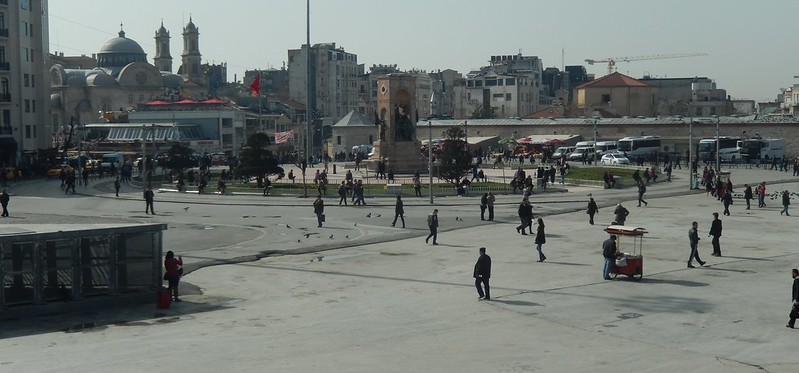
The negative was the hassling we received as a family from vendors. I guess walking through the bazaar with an Indiana T-shirt on, three blond children, and carrying several large bags of stuff, would be a signal to vendors that they can make some money off of us! It is so foreign to me however, to sell and use a variety of offers to try to maximize the profits from an interaction with a visitor to my country, or anyone for that matter. For example on the way to the bazaar, we stopped at Taksim Square. The shoe shine men used a ploy on me to drop their brush and so I would pick it up and that would give them an opportunity to quickly start shining my shoes and asking for money. I did give him some Serbian money, but he was asking for 100 Lira $45. Another example was the taxi driver, wanting 50 Lira for a 20 Lira metered taxi ride. It gave me a very negative view of my trip because they try to get as much money from tourists as possible.

It was fascinating to watch the salesmen and their support people. I think it would be very boring to own a shop in the bazaar, attempting daily to sell the same wares to tourists. The vendors looked bored, playing solitaire on their phones, drinking tea, and talking with each other. This is the winter and off season, so business was slow, so I assume in the summer they are busier with sales. I wonder how much vacation time they get and how much do they make a year? Do they get insurance, pregnancy leave, and other benefits? Many were trying to avoid paying government and credit card fees and asked for cash so they don’t need to report their sales to the Turkish IRS. I wonder how many generations they have been working in the bazaar?


Istanbul: The Blue Mosque and Carpet Shopping


We are staying in Istanbul this week for our February Break. Our first day in the city yesterday was exciting, with a visit to the famous “Blue Mosque” and shopping for carpet. This is our third Islamic country for our family and it is nice to hear the call to prayer and the warm responses children receive from the locals.

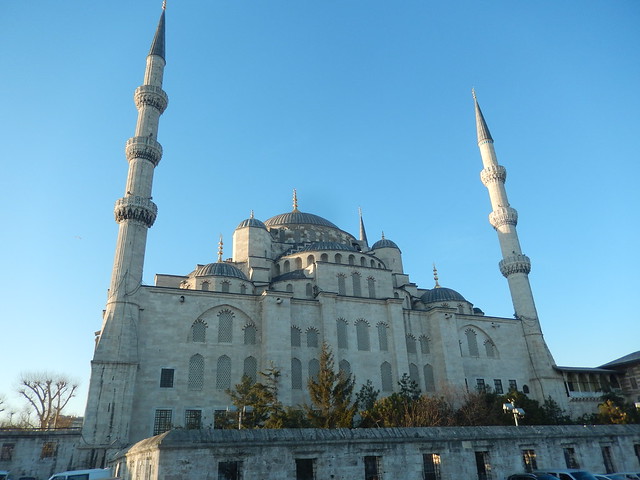
The back view of Sultan Ahmed’s Mosque

The city is breathtakingly huge and beautiful, with the minarets of mosques rising up from the hills and dramatic views to the blue Bosphorus. I can see why it is one of the world cities!

The Blue Mosque, was built by the Ottoman Sultan Ahmed 400 years ago. It is a huge example of classic Ottoman architecture. We had to remove our shoes and the girls put on head scarves. After touring the mosque, we went over to the Arasta Bazaar and bought a beautiful carpet from Murat Metin, in the Er Ne Hali Gallery. He was very helpful and we purchased a rug from his part of Turkey, the eastern Kurdish part.

Enjoying Tea While Contemplating Carpets

I will try to do a few more blog posts from Istanbul this week.

Oliver and Owen Star in Indoor Baseball Tournament

The Head of Serbian Little League Baseball, Nikola Vučević invited the International School of Belgrade to form a Team USA and participate in an Indoor Baseball Tourney yesterday. We headed up to the beautiful facilities of the Serbian Institute of Sport located in the Belgrade suburb of Banavo Brdo. There were six teams from Belgrade and Novi Sad participating. I never saw this type of baseball before, the rules are described here in Serbian. The ball is hit off a tee and there field is a triangle, with two bases and a home plate. Runs are scored by the team in the field by recording an out and by the offense by the batter going around the triangle to score. We played with seven people, one catcher and six in the field. All defensive players must be beyond the triangle. All seven batters bat every inning. The games were 25 minutes long and scores were in the high teens or low twenties. It took the team awhile to get going because we haven’t played in such a long time, and these were new rules to us. It seemed like a game we would make up as kids! It was especially exciting when a ball was hit off the wall and came bouncing back towards the bases. Owen played excellent at first base and Oliver played some outfield and some catcher. The team made it out of the group stage and finished fourth out of six teams. They were excited about the medals. Most importantly, the boys really enjoyed themselves.


I would like to thank Nikola for inviting us and my colleague, Brian Lettinga for organizing and coaching the team. It was my first time inside the Institute. Here is a video on Vimeo that describes their mission and it will give you a good idea of how the Serbian language sounds.