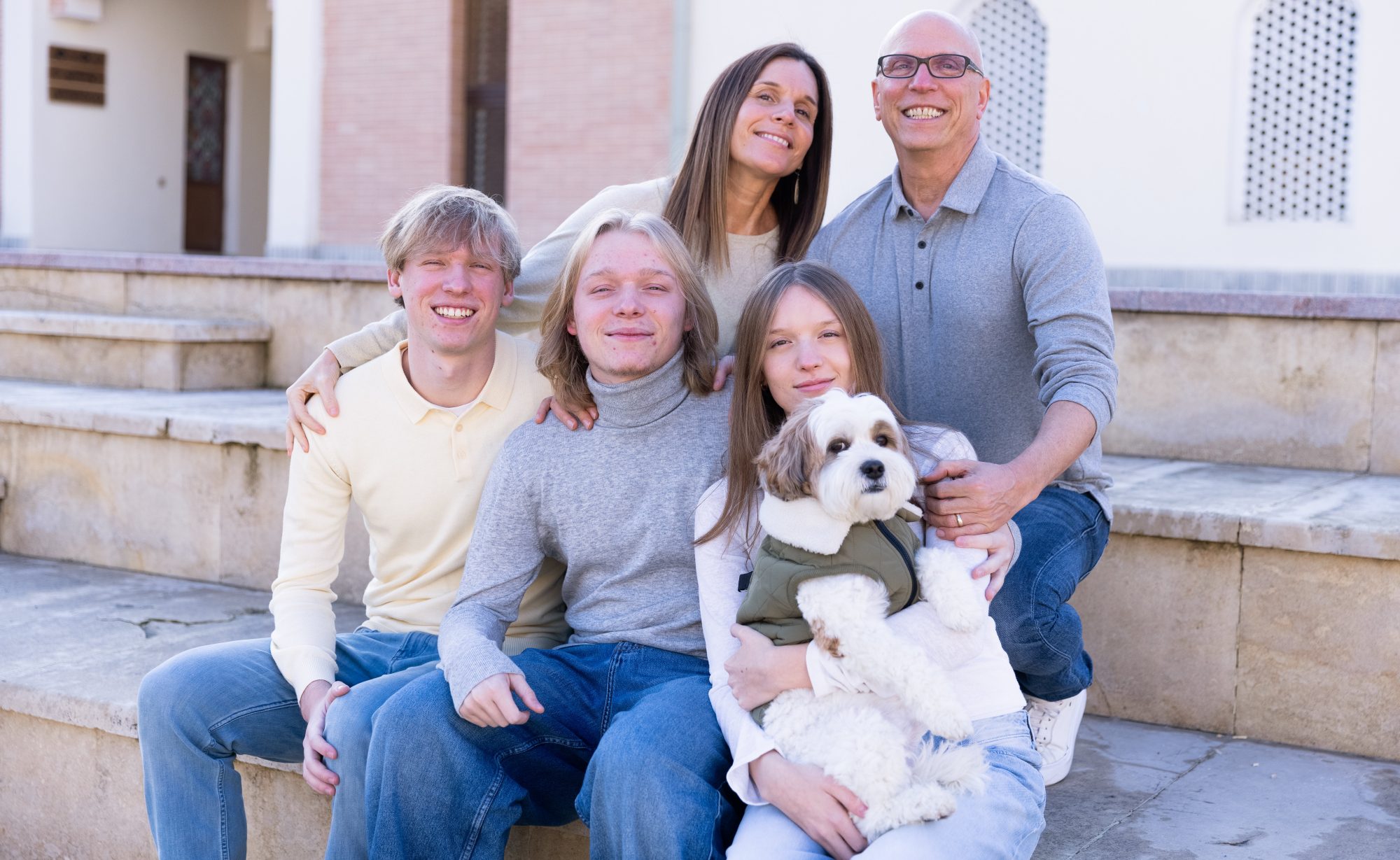
One of the nice traditions of school is the annual student photo day. It gives us a chance to reflect on how fast they grow. Owen above, is starting to look like a teenager, and in many ways is starting to act like one.
Oliver Grade 3
Oliver thankfully is still looking like a boy, although he is maturing rapidly. Ocean has been obsessed with reading and writing as she is learning how to do both in school. I loved the Things To Do List she made to assist her in the mornings. She is such a little busybody and has an incredible work output, whether is be planning a Spanish lesson for her classmates or sending Christmas cards. She was even putting money in the cards to give to her friend.
Last weekend we observed Armistice or Remembrance Day with a ceremony at the Commonwealth War Cemetery in Belgrade. Nadia participated in the ceremony as part of the International Choir of Belgrade. It was a good educational experience for the kids. It was sad thinking of the 453 lives lost when looking at the graves. Many of them young men in their 20s, killed in World War II. The Commonwealth War Graves Commission had a short history of the cemetery.
The cemetery was created to receive the remains of British and Commonwealth casualties brought in from more than sixty small burial grounds and from isolated sites all over Yugoslavia. The largest number from any one place came from Milna Military Cemetery and the Royal Naval and Harbour Cemeteries on the island of Vis (Lissa) which was our base.
The burials in the War Cemetery include escaped prisoners of war from Italy and Greece. The civilians buried here include a mining technician, a teacher of English, a newspaper correspondent, a member of the Embassy staff and the child of another member of Embassy staff. They were buried or re-buried in the cemetery by permission of the Army Graves Service.
The kids are shown above with a British military office in front of the memorial. Several Embassies were represented at the ceremony and laid wreaths at the foot of the memorial statue.
Also last weekend we attended the Marine’s Ball. It marks the 238th anniversary of the founding of the US Marines. It was held at the Metropol Hotel in downtown Belgrade. There is a small marine contingent that guards the embassy stationed in Belgrade. There were speeches and military ceremonies, and then our favorite Belgrade band, Makao, entertained everyone, military and civilians alike. We are pictured below with our friends, Kevin and Laura.
I have not been blogging much lately due to be very busy at work and other things.
Recently I saw the new desk at the Nikola Tesla Airport of Air Serbia. JAT (Jugoslav Airlines Transport) recently sold 49% of the airlines to Etihad Airlines, the national carrier of the United Arab Emirates. JAT was 100% owned by the Serbian government and had debts of 170 million Euros.
Considering how hard it is to make money on any airlines, it is a big risk for Etihad. I understand why the government owns the airlines, but it is not a good idea to own one, and it is a drain on the Serbian taxpayer and government. Hopefully the expertise of Etihad and the extra resources will make the airlines profitable. The JAT planes were very old and in dire need of investment. In my opinion, they should sell it all off and get out of the business entirely, although that might be against EU law to have a foreign, non-EU company own a major airlines in Europe. Serbia has many state-owned enterprises and properties that need to be privatized and hopefully this is a trend that will continue.The sports clubs Red Star and Partizan are two that come to mind…
Another problem is market size. There are too many regional airlines in the Balkans as each small country has their own carrier. The market is just not big enough to support so many different airlines.
I like the new logo. The double eagle is homage to the Serbian Orthodox crest, and the lines below look somewhat like Arabic script. I am looking forward to flying on the new Airbus A 319, “Novak Đoković” and wish Etihad and the Serbian Government best wishes for profitability!
Last week we visited friends in Sweden and Denmark for our October Break. We stayed in Helsingborg, a small city on the southern coast of Sweden. Denmark and the beautiful city of Copenhagen was just a ferry ride away, so we also spent a day there.
It was a relaxing and interesting trip. Our hosts, Per and Maria Akkeson were beyond great, and they showed us a wonderful time. We got to feel how Swedes live and they showed us all the spots as only locals do. Ollie is shown above on the windswept cliffs of the Kullaberg Peninsula.
The area reminded me much of my native Michigan, especially the coast of Lake Superior. The only difference was a bit older buildings and many city buses. The socialized system of Sweden and Denmark have resulted in a clean and prosperous region.
Ocean at the canals of Copenhagen
We had an enriching afternoon at the Luisana Museum of Contemporary Art in Denmark. Other highlights included fine dining, bike rides and hikes in the fresh Scandinavian air, and many laughs with the Akkesons.
Owen in a Modern Art Room
I hope someday to return the favor and host them. We all enjoyed our visit to the north of Europe and want to return to explore more, especially further north towards the arctic regions.
Belgrade is so lovely this time of year. When the sun is shining in mid-October, with many of the leaves turning yellow,blue skies, and a cool breeze, it really doesn’t get any better than this for weather.
We have been taking advantage of this by getting out with the bicycles and going around the city. We are pictured above at Ada Ciganlija where we went for an 8 kilometer run/bike ride and then had a delicious late lunch at the Oaza Restaurant.
Owen and Ollie on the Zemun Quay
On Saturday we rode up from New Belgrade to Zemun along the bike path and had a wonderful day along the river. The kids complain a bit at first, but then they too get caught up with exercise in the gorgeous weather.
October is harvest time in the Balkans and last weekend I had a special experience of learning how the national drink of Serbia, Rakija is made. Rakija is fermented and distilled from a variety of fruits, the most common and classic rakija being the šliva, or plum. It can also be made from walnuts, quince, pears, apricots, etc. Friends from the school took us to the small town of Obrenovac, which is about 30 kilometers from Belgrade, on the Sava River to see it being made first hand.
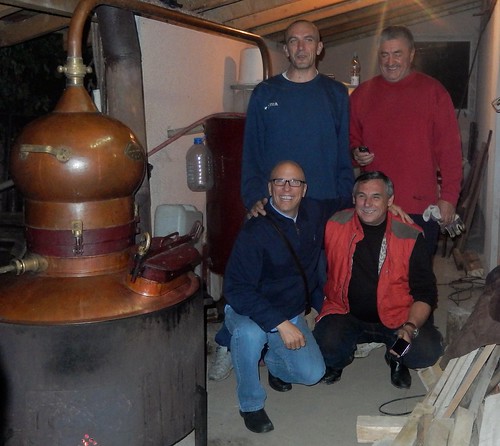
With typical Serbian hospitality, we got the royal treatment with a hearty BBQ meal of lamb, sausages, cabbage, and homemade bread, which was absolutely delicious. We were hosted by the Master Šliva (plum rakija) Distiller and restaurant owner, Ljubo Pljevaljčić. We also toured his restaurant, Pećina (The Cave) which is considered the best in the town. He is pictured in the front row next to me.
They had quite an operation going! In the foreground of the photo is the stove, where the fermented plum juice is heated. The fire needs to be consistent temperature, not too hot, which will burn the juice, or not too cold so it does not evaporate. The guys were adding wood when needed, mixing air and waiting for the moment to release the valve which brought the gas through the pipe where it is cooled in the water tank and condenses. They do the process twice, and after this first distillation, the percentage of alcohol is around 25%. They will do it again and will get the percentage up to around 40-45%. This is where a lot of šliva can be made with a poorer quality. Some people in order to produce more, add sugar to the left over mash and do the process again. This lowers the quality of the final product. Ljubo is a professional and never adds sugar.
They take the left over mash and dump it in a big pit in the yard and later bury it. They had several huge tanks of fermented plums. There is an incredible amount of juice that comes out of the plums, so much so that I thought they added water. The homemade rakija is quite smooth for having such a high alcohol content. It is much better than the cheaper rakija one finds in the supermarkets. Ljubo sells it in his restaurant and he gave us complimentary bottles. I do not drink alcohol often and find šliva a bit too strong for my taste, but it was fascinating to see how it is produced and it gave me an appreciation of the craft and this part of Serbian culture.
The leftover fermented plum juice
It was truly a Serbian evening and I was touched to be treated so nicely. It was a privilege to learn how authentic rakija is made. This is illegal in the USA, but here in Serbia it is quite common, with many people distilling their own “moonshine” in their back yard. Of course, it is not on the scale of Ljubo’s operation. When I asked about safety and did they know of distillation operations going wrong, and I always thought it was quite dangerous.
I would like to thank Ljubo, Hido, Goran, and the rest of the guys for a wonderful night. I will never forget it! Živili!
Yesterday we hosted seven of Ocean’s friends to celebrate her birthday. She turned six on Thursday. We hosted the girls at our apartment and the theme was “Pinkilicious” and the girls played games, had a tea party, and it culminated with a fashion show and dance.
They were all so cute and most importantly, Ocean had a lot of fun. A special thanks to Nadia for her work and preparation for the party. It was a perfect afternoon full of laughter and song.
As most parents say, I can’t believe it has been six years since Ocean’s birth. She is such an vivacious, caring, smart, articulate, and busy little girl. It is such a privilege to experiencing raising a daughter. We love you Ocean!
We really had a fabulous time at the Davis Cup Semifinals this weekend here in Belgrade. The Serbs defeated the Canadians, 3-2 with two thrilling singles victories on Sunday. Serbia now hosts the Czech Republic in November for the championship, going for their second Davis Cup title. They last won in 2011.
The amount of great tennis players this small nation of Serbia produces is extraordinary. Besides having arguably the best player in the world, Novak Djokovic (photo above) they also have on the men’s side, Janko Tipsarevic, ranked number 18 in the world and Viktor Troiki, before he was suspended for missing a drug test, was ranked as high as #12. Serbia also has a top doubles, player, Nenad Zimojnic, who is a former number 1. Playing for Canada was Milos Raonic, who was born in Montenegro and Daniel Nestor, born in Belgrade.
On the women’s side, they have two former number ones, Ana Ivanovic (#15) and Jelena Jankovic (#10) and Bojana Jovanowski, coming up the rankings at #39. Another ethnic Serb, Tuzla native Andrea Petkovic was #9 playing for Germany before her injury.
Why so successful? First the Serbian people have many tall, strong, and athletic genes flowing through the population. The Serbians are good at all sports and despite a poor infrastructure for sport compared to richer nations, they do extremely well on the world stage in most ball sports, especially water polo, basketball and volleyball.
Friday night’s match between Raonic (foreground) and Tipsarevic (background)
The atmosphere in the Belgrade Combank Arena was thrilling and it is a different experience watching live as opposed to on television. The crowd was totally into it and I am excited for the finals. The Serbs should win if Nole (Djokovic’s nickname) wins his two matches and Tipsarevic can beat the number 51 ranked Radek Stepanek or 46th ranked Lukas Rosol. With the home crowd behind them, Serbia should defeat the defending champions. It may come down to Berdych versus Nole if all goes according to plan. It will be a fantastic match.
A special thank you to Kevin and Lara from the Canadian Embassy for inviting us to the final day. It was fun to be a part of the Canadian fan delegation. They were almost more enthusiastic than the Serbian fans.
Owen and Me at the ISB Tennis Courts
Probably the best tennis of the weekend came from the ISB Tennis Courts however, with Dad (me) playing against Owen, Ollie, and Nadia. It is great to have nice courts at the school that we can use anytime.
This week I visited the church in the Krušedol Monestary in the Fruška Gora National Park. A kind priest showed our group the relics of the saints that founded the monastery, over 500 years ago. Krušedol, after Studenica and Hilander, is the third most important monastery of the Serbian Orthodox Church. Above are the remains of Mother Angelina and her sons, Maksim and Jovan. Relics in Eastern Orthodox Churches are often displayed on Sundays and the priest nice to show us the relics on a Thursday.
It is very interesting this concept of having relics and all of the major religions have this tradition. I would like to see a DNA test of these to trace the genetic heritage of the Serbian people.
The Church at the Novo Hopovo Monastery
I visited three monasteries of Fruška Gora and they always give me a sense of calm and awe. The combination of the ancient and dark mosaics, the beards and black dresses of the monks, and the beautiful natural surroundings of them make for a good visit. It is one of the things people do in Serbia.
I will have to visit Studenica sometime this year.
Last weekend we traveled to the Srem part of Serbia and had a delicious goulash made with the rare Hungarian breed of pig, the Mangalica. Srem is a flat, agricultural area next to the Croatian and Bosnian borders. We spent a glorious late summer day at the Zasavica Nature Reserve, a farm and ecological area located outside the town of Sremska Mitrovica.
Pictured above is a Mangalica breed of pig. They have thick, curly hair and used to be quite common before World War II. They were a favorite breed of Franz Josef, the Austro-Hungarian Emporer, who kept them for their lard. They are a fatty pig and have been replaced by leaner breeds. The Mangalica has made a comeback in Hungary however, and in this region of Serbia that has Hungarian influences. They are used mostly for sausages and the Hungarians regard them as a traditional food. They are also catching on in the USA, as this New York Times article featured. They are also known to have less cholesterol than other pigs.
The farm borders on one of the rare wetlands areas in Serbia. It has been somewhat preserved as a park and is a great spot for bird watching, fishing, and boating. The nearby Sava River provides water for the lowland ground.
We had a nice meal and lounged around and played football in the sun. Owen and I also went for a walk through the Podolian Cattle herds, another rare breed of livestock.
I recommend spending the day and the next time we go out, we will certainly rent a boat to explore the wetlands.




 Bill's Blog