I am finally back from my trip to the USA. It was great to see my family (Dad, brothers, aunts, uncles, and nephews) and get a chance to help around the house a bit. But 10 days away from my nuclear family was a bit too much. I learned a lot in the Vermont course and it will make me a better school leader.
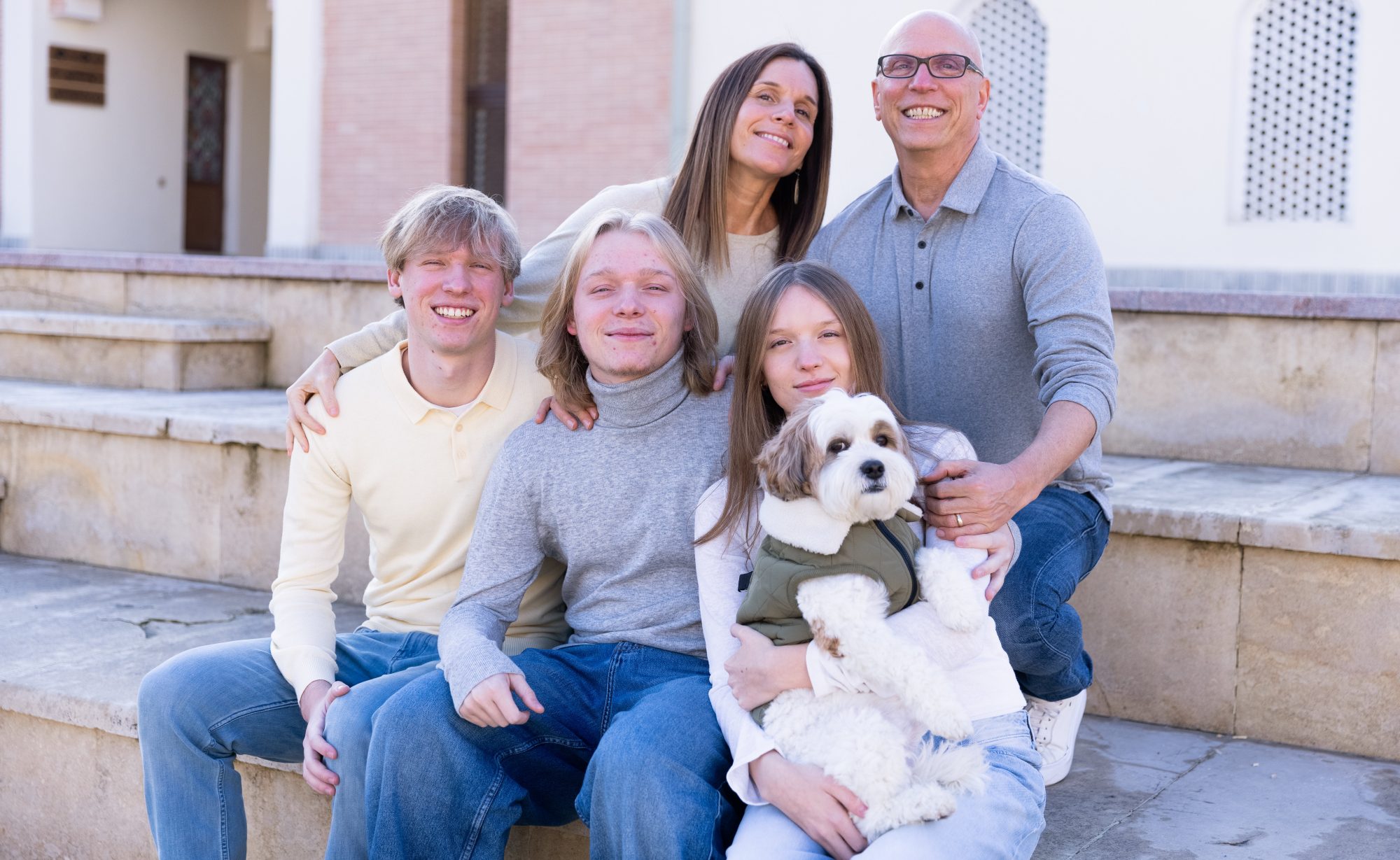
Above is a photo of Owen. We spent my last day before I left at the BioCenter Guembe. It was a perfect day and I just can’t get over how fast the kids are growing. Owen looks like a “dude” now.
On a side note, while I was waiting in Miami for the night flight to Bolivia, across the street from the hotel was a Venezuelan restaurant/bar. I went over for the afternoon to enjoy an arepa and a chicha. Best of all, I met the Polar Beer Distributor who was there preparing for the big Venezuela versus Paraguay Copa America semifinal game. We drank a few beers and he gave me some Polar soccer souvenirs to give to my kids. I lived a long time in Venezuela and have fond memories of my time there. It was good to reconnect with the country.
I end this post with a photo of the incredible sunset I experienced in Michigan. It was just after a thunderstorm and it was the brightest orange I’ve ever seen. Absolutely breath-taking and this photo is untouched by photoshop!
I will be posting some of my learning from the Institute for Global Sustainability at the University of Vermont. I earned a Professional Certificate in Campus Sustainability Leadership. The posts on this blog will be about aspects of the course not related to education directly.
Vermont, and the city of Burlington really impressed me. It is a great university town and they are on the cutting edge of global society with their commitment to sustainabilty. It reminded me of Portland and Seattle, in this regard. The city is an ultra-liberal, “green” state that resonated with my own political and social philosophy. They are way ahead of the game and like California, I feel that they are one of the drivers of where our society is headed. It is much like my favorite university town, Marquette, Michigan, but with a bit more money and New England influence. Many people making political statements all over place and plenty of Volvos and Subarus.
Burlington’s Environmental Specialist, Jennifer Green, came and presented the projects the city is doing. My notes are below. If you don’t want to read the whole post, I will summarize. I was impressed with all of the projects the city does to promote sustainability. Not only regarding fossil fuels reduction, recycling, etc., but what they have done in the human part of sustainability.
Lake Champlain - City Beach
Jennifer Green’s Bio:
Jennifer Green is Burlington’s environmental specialist. She has over 20 years of community development experience, including work on gender equity, national planning, and environmental management with the Peace Corps, CARE International, Chemonics, and the World Resources Institute. Shortly after moving to Burlington in 1999, she consulted with the Vermont Energy Investment Corporation and later Efficiency Vermont. In addition to working for the City, Jennifer has taught several environmental and sustainable development courses at the University of Vermont. She has a masters in public adminstration from Columbia University and earned her PhD in environmental sociology from American University in 2005.
My notes from her presentation.
Cities and municipalities now have Sustainability Directors which is just behind the university sector in leading society’s charge towards sustainability. The Sustainability Director for the city of Burlington, Jennifer Greene, came and spoke to us. The first city (over 20 years ago) to have a Director was Portland, and they were way ahead of other cities. This is a growing field and she has 70 colleagues in her network. She is also has strong ties to the economic development office. Burlington is unique in that they have a strong Progressive Party that in the 1980’s, made the Church Street a walking street. The mayor, Peter Clavelle, was a visionary and he is the one responsible for the walking street. He also started the Burlington Legacy Project in 1999. This was the first comprehensive sustainability legacy plan. The key to the success was that he called in many different sectors like the business community, city government, and the universities.
When the plan was formed, they were concerned about the “big box” stores in Williston as well as trying to keep housing affordable. The city is divided into 7 wards and they have monthly meetings. For example, the big issue in the ward 1 meeting last night, Ms. Greene said, was noise. There is a $500 noise ordinance that now the students collect money at the door for the fine to get around it. The Steering Committee consists of reps from all of the organizations. UVM, K-12 local school district, Fletcher Health (hospital), Main Street Landing (developer), United Way (NGO), etc. with 24 members.
The housing issue is huge. With a 1% vacancy rate, and a median house price of $260,000. There is a high poverty rate and they are a refugee center. The city embraces this because they appreciate diversity but there are challenges in the schools and social services. The idea is to get the anchor institutions to fund the process of getting citizens into planning. One of the nicest things the city has done is to put affordable housing on prime lake view property. They view the lake views and beach access as a public good and so poor people should have the right for this because they are a “public good.”
When they lost the Price Shopper grocery store, there was a lot of angst because people would have to go on the highway to a big chain grocery store and this would also mean that the dollars going out of town. They decided to move a community-owned Cooperative with locally purchased food and it is now the largest and most profitable coop in the USA. The population of Burlington is steady at 42,000, which is about a gain of 2,000 people in 50 years. There is a debate on growth and some want to keep it as it is and others feel they need to grow to keep the economy vital.
When using student interns, it is important to tie it to a grade. Also, the ones that come in with a complaint are a great source of work. They also have a town meeting each year, the big takeaway was the poor quality food in local schools. It went to 50,000 pounds of local food, salads bars, composts in all schools and the food director is a nationally wanted speaker. The city has remained steady in electricity use from the 1980’s despite computers, microwaves, televisions in every room, etc.
The city also has a Climate Action Plan. With the severe flooding this year, the bike path and 700 homes were lost. This is part of the “climate adaptation” plan they are doing.
It was great to see my family in the Upper Peninsula of Michigan last weekend. It was a short trip. I joked that I was “relatively” close to Michigan while taking a summer course at the University of Vermont. I decided to fly to Michigan for the weekend. Above is the ceiling tile that my brother Andy arranged to get painted. My Dad belongs to the American Legion Post in Stambaugh, Michigan. The American Legion is an organization that supports veterans who served in the US Military.
My Dad was a member of the 9,000 troop strong Ninth Infantry Division. He was in the army of occupation in Germany in 1956-57. He was stationed at a base outside of Stuttgart. He was part of the forces that they were defending West Germany from the Soviet Red Army stationed just across the border in East Germany. The Soviets has many more troops and weapons and so he joked that in case of an invasion, their instructions were to get in trucks and head to the Rhine!
My Dad enjoyed his time in Germany. By that time, Germany was on the road to recovery with the Marshall Plan. Next time I’m in Caspian I’ll post some photos of him in his army uniform from that time.
I would like to thank my brother Andy and the American Legion for honoring his service to our country.
During the Sustainability Course we visited the the Intervale Center here in Burlington. Pictured above is Dr. Tom Hudspeth, a professor of Environmental Studies at the University of Vermont. The university is supporting the work of the Intervale Center. Intervale basically trains and financially helps people get into organic farming. Many UVM students have moved into organic farming as a career. They also are into river habitat restoration and they also have a community gardening.
Nadia and I were very influenced by Michael Pollan’s book, The Omnivore’s Dilemma and he featured the farm and farms like that in his book. It is part of a larger movement to bring back small farms and move away from the large agro-business model of fruits and veggies that supply the big supermarket chains. When Burlington’s big supermarket left a few years ago, they were able to form a cooperative market that is now the envy of the high-end supermarkets, all Burlington-owned and operated.
Menu for the Community Farmers' Market
I loved the idea of the community garden where people can buy shares or rent plots to use. They then have access to the weekly market. It is a slow food movement which of knowing where your food comes from. We had some long discussions on the viability of farming as a career. I like to see small farming coming back.
I forgot how delicious the food is in Bolivia. The housekeeper for the family Modesta, is from a small town on the shores of Lake Titicaca. She is an excellent chef and has been providing us with excellent and exotic meals daily during our holidays.
Mo’s specialty are dishes from the Altiplano, or Andean region. Pictured above is “Tunta.” It is prepared by harvesting a type of potato known as a Papa Nuki. There are over 8,000 different species of potato, and close to 3,000 in the Andes. Because they can grow in such a harsh climate of the Andes Mountains, Modesta’s ancestors domesticated potatoes thousands of years ago.
The tunta is prepared by first setting the potatoes outside in freezing temperatures overnight. The next day, they are peeled and place in a bag and dropped in a cold, mountain stream. They are left there for several months.
Modesta served them with chicken and they were absolutely delicious. I heard of the more popular freeze-dried potato, the “chuno” which is not place a river but in a freezer instead. For more on Andean potatoes, this pdf document is an excellent survey.
Also pictured below is a lowland Bolivian dish called “majao” which is ice and pork. I like the fried egg on top especially. It is served also with fried plantain, which is a good sweet contrast to the salty dish. .
On my first evening in Burlington, Vermont, I decided go for a walk on Church Street. This is the “walking street” of the city and has many shops, restaurants, etc. and besides the waterfront, it is the most popular tourist area. While ambling down the street, I swore I heard people speaking Serbian. It turned out to be a group of Bosnians and University of Vermont students and employees who were putting together the monument you see above.
The coffee cups are filled with Bosnian coffee and are placed on the ground. Each cup represents one of the victims of the Srebenica, Bosnia, massacre which took place on July 11, 1994. The cups are collected by Bosnian women organizations as well as the artist herself who originally conceived the project.
I arrived while they were just starting to pick up. They didn’t notice my Red Star t-shirt in Cyrillic script. Monday marked the 17th anniversary of the sad event. I snapped a few photos and continued my walk. The massacre has been in the news a lot recently with the arrest of General Mladic.
While I am on holiday in Santa Cruz, I’ve asked Hermes about his father and found some old photographs. Severiano is the great grandfather of my children and I am doing a series of posts on our family’s geneology. It will be good to capture these stories for future generations of my family.
Severiano Chavez Justiniano was born in 1884 and died in 1968. He was born in Santa Cruz, Boliva. He inherited from his father, a land holding of 2,500 hectares (over 6,000 acres) located north of the city in the province of Warnes. He owned 300 head of cattle, and also produced sugar and molasses for the city.
He was not the simple farmer that many immigrants were in America. Severiano belonged to the high society of Santa Cruz and was the governor of the province. He also belonged to the 24 of September Club.The club is named after the date of Santa Cruz’s founding. This is the oldest association of Crucenos dedicated to running of the city and socializing.
Severiano, like many “patrons” of the age, had a rich family life. He was married four times and fathered 9 children.
His first wife was Ester Cronenbold, who died while giving birth to their daughter, Ester Chavez Cronenbold. His next wife was Castulia Zabala and he had three children with her. They were Meri, Mari, and Saul Chavez Zabala. His third wife was my children’s maternal grandmother, Leocadia Chavez. She was very young (born 1926) and despite the same last name, they were NOT related. She had four children, Graciela, Silvia, Hermes, and Ever.
Leocadia sadly fled the ranch when Nadia’s father, Hermes was only 2 and 1/2 years old. She left in the middle of the night with the baby son, Ever. Leocadia ended up in Brazil and it was not until many years later that she came back and saw Hermes again. In recent years, Herme’s brother Ever, came to Santa Cruz from Brazil to stay with Hermes on occasion. He recently died of cancer. I’ll write more about Leocadia and the others in later posts. I wrote previously on Silvia Chavez Chavez.
Severiano at 70 years old married a fourth woman, Sara Pizarro and they lived together for 12 years before Severiano died of pneumonia. Severiano sired a ninth child, Ana Maria Chavez Pizarro.
Because Severiano was so old when he fathered Hermes (age 56), Hermes didn’t really have much to say about his father, although he loved him dearly. Things obviously were much different back then. I wonder what it would have been like here in Bolivia at that time. I’ll try to find out more about him when I come back to Bolivia. I imagine being a rich, land-owning, Creole in the former Spanish colonies had its advantages. Below is a photo of Severiano with some other 20th century gentlemen, most likely the 24 of September Club.
Ocean and Ollie are shown above during their swimming lessons. The kids are taking lessons at Acqa Fit, a new pool here in Santa Cruz. Every morning, we pack up and take them over to the pool. They are feeling better about being in the water and both Oliver and Ocean are on the verge of swimming. It has been one of the best things we have done this holiday. The biggest risk of death for children is by accident, and we feel it is important that they can swim. I also love swimming, or at least cooling off in the water, and so this will give them a lifetime of pleasure derived from water.
The boys are also getting more and more into soccer. Owen actually wants to go to practice, instead of us having to convince him like at the start of the practices. It has been good for both to be in a smaller group so they get to handle the ball a lot and take a leadership position on the field.
Ollie Leaps High For the Ball
The holidays have been passing quickly. I am off he USA tonight for a week-long course at the University of Vermont.
I forgot how delicious Bolivian Cuisine is. Everyday we are feasting like kings thanks to Modesta, the long-time family domestic help. Dishes like majao, tunta, cunape, etc. My waistline has expanded a bit due to all of the great food. Nadia is shown below enjoying a ceviche, the famous Peruvian seafood dish. It is fish marinated in lemon, served with spices and sweet potatoes.
Last week we spent the day at the El Guembe BioCenter. It is a 24-hectare environmental complex located across the Pirai River just outside of Santa Cruz.. They have a nice little reserve of tropical lowland forest and we spotted this sloth, high up in the trees. The sloths used to be in the plaza downtown, but as the city is growing, it was best to put them in a nicer place.
The owner has a really nice place and I recommend a visit! I appreciate their committment to environmental education. They have several museums, and their aviary / butterfly dome / orchid garden are the best I’ve ever seen! They combined it the standard tourist facilities and there is a nice hotel, restaurant, and swimming pool. It is a great day out for the kids and they keep wanting to go back. The nice thing about the winter season is we have the place basically to ourselves.
The center is the closest to what I would have if I was a multimillionaire. It really adds something different to Santa Cruz.
An Andean Indigenous Immigrant Walking Through the Upper Class Suburb of Las Palmas in Santa Cruz
I just finished reading “From Rebellion to Reform in Bolivia: Class Struggle, Indigenous Liberation, and the Politics of Evo Morales by London professor, Jeffrey Webber. The book gave me the opportunity to catch up on Bolivia since I last lived here (1999) and put some of my thoughts together in a coherent manner about life here in Santa Cruz. Although the book is geared towards academics, there is enough “real life” anecdotes and background to interest the non-academic who is already familiar with Bolivia. I recommend Webber’s book.
I also spent a lot of time with the book and thinking about Bolivia because Nadia and I are considering places for retirement. Bolivia is nice because it has much cheaper cost of living than the US and if we are on a retirement income, it will go further. The life is pretty comfortable here as well with tropical weather, low cost domestic help, and both Nadia and I love playing tennis and gardening. We do have friends and relatives down here as well as citizenship for her and our kids. There is a great private hospital here where both Owen and Ocean were born. I also have a big interest in neotropical biology and with Santa Cruz being on the frontier of the Andes and Amazon, it is a paradise in that respect. The cons would be the crime, and the lack of intellectual and cultural stimulation and the question of the cocaine industry, and finally, an indigenous, socialist government in power for the foreseeable future.
Bolivia is really two countries. There is the more internationally famous part – the Andes, and the lesser known eastern lowlands. My wife’s family is from Santa Cruz, the economic capital of the country and the unofficial capital of the eastern lowlands.
Bolivia overall is a very poor country. Close to 70% of the people live in poverty and with a GDP of $974 per person, makes it one of the poorest nations in the western hemisphere. It is a land-locked country in the center of South America and is one of the few indigenous nations, with almost 2/3 of the population declaring themselves as indigenous. Bolivia also has one of the biggest income differences between rich and poor, especially in land distribution. For example, 400 individuals own 70% of the productive land while there are 2.5 million landless peasants. There are also no labor laws and the underclass is exploited with long working hours and little social benefits.
Those statistics do not show the differences, however between the two Bolivias. The Andean region consists of the western half of the country and is divided into 5 departmentos (states) which make up 2/3 of the population of Bolivia (6 of the 9 million total). The average indigenous population of the Andean region is 75%. The western Amazonian part consists of 4 departmentos, including Santa Cruz, which is the name of the state as well as the city. The 4 eastern states roughly form the shape of a half moon, hence they are sometimes referred the media luna. These four states have roughly a 25% indigenous population, with the majority being a mestizo (mix of Indigenous/Spanish).
The Media Luna states have been protesting and calling for more autonomy from the centralized Bolivia government headquartered in the Andean capital of La Paz. Hundreds of thousands of Crucenos the past few years have been gathering in the streets in the cause of this eastern lowland state autonomy. One of the biggest organizations in the autonomy movement is the Nacion Camba. The term “camba” was once a derogatory term for the eastern lowland indigenous tribes, but has changed to a self-appelation referring to the special racial mix of Spanish and indigenous blood. The people of the Media Luna Statesare known as “cambas.” Precisely, the Camba Nation sees autonomy as follows:
(1) the state control of 2/3 of tax revenues generated by the state
(2) the state control over natural resources and
(3) the authority to set all polices except defense, currency, tariffs, and foreign relations
This has been a growing concern since Evo Morales was elected president. Amazingly, he is the first indigenous president in Bolivian history. It is amazing because 2/3 of the country is indigenous. This shows the historical dominance of the mestizo/business community control of the country. When I was here in 1997-1999, Hugo Banzer, a Cruceno former military dictator, was the president. Morales is an Aymara Indian originally from the Oruro Department. He grew up in extreme poverty and four of his six siblings died due to lack of access to proper health care. He ended up moving to the coca growing region in the Cochabomba Department and showed leadership skills to eventually lead the coca growers (cocaleros) union. With the election of Morales, and his political party, M.A.S. (Moviemento Al Socialismo) , there was a lot of concern that he would push the government in the Venezuelan model of Hugo Chavez.
Evo Morales has made many radical speeches in the international realm as well as speaking to indigenous crowds. However, his actions have not matched his words. Although he has political power, he has not taken on the business establishment of media luna, and has in fact, been very conservative in his presidency. He did strike a much better bargain with the international petroleum companies and increased revenue to the state up to 4 billion per year, by giving them a 50% royalty tax. This compares to the 18% “giveaway” negotiated by the preceding president, Gonzalo Lozado. Who by the way, was run out of country by protesting Indians in La Paz and he had to escape to Santa Cruz to avoid prison or lynching. A lot of presidents in Bolivia have been killed by indian mobs. He is exiled in the US and is wanted for corruption in Bolivia. Morales has not taken the extra revenue and put them towards social spending, and actually the percent of the government budget going towards health and education has dropped. He has invested in infrastructure and eliminated the budget. He is a darling of the IMF and World Bank! For someone with his background and the fiery speeches, I would have thought he would have tried to nationalize everything and route most of the GDP to the extreme poor like Chavez. But, he has taken a very moderate approach and with his upper class Vice President, is talking about putting socialism in place in 50 – 100 years. They also talk about an Andean-Amazonian Capitalism model, whatever that means. Morales won re-election in 2009, this was also a first in the history of Bolivia. He won with a 62% majority, the biggest in history for a presidential election. MAS also gained a majority in both the houses of congress and they have 6 of the 9 governorships. I guess he found the right mix of pleasing the capitalists with his policies and the indigenous masses with his speeches.
He should really take this majority mandate to do more for the poor. It pains me to see how good, working class citizens eke out a living. I am not only talking about subsistence agricultural peasants, but policemen, nurses, teachers, etc. Especially Evo’s strike busting stance with the teachers really disappointed me. The schools and hospitals are in a horrible state and average people, can’t make a decent living.
The big issue underneath all of this is the horrible economy of the Andean states. The mass immigration has caused problems for the media luna states, in addition to Argentina, Chile, USA and Spain. The Crucenos are characterized by many as being extreme racists. It almost feels like they are like the Boers of South Africa. They were identified with the Aparthied policies and were international martyrs. It is not quite as extreme here in Santa Cruz, but there are similarities. I’ve noticed that every time I come back, there are more Andean indigenous immigrants seeking jobs in Santa Cruz. This has generated resentment from the Crucenos. Since the 1950’s, the influx of Andean immigrants has slowly changed the character of the city.
The Crucenos are very different from the Andeans. They have an ethos of “ wealth, competition, fame, ostentatious living, with agro-industrial/petro at the top of social pyramid” according to Mr. Webber and that is in big contrast to the immigrants. These differences and the resentment it generates are manifested in many ways. The international media and the book portray the Crucenos as racist, but I don’t see them being any more racist than the Spaniards, Italians, or any other upper class Latin Americans.
The Andean immigrants are referred to as “shitty collas.” The term “colla” is traced to Kollasuyo, one of the five departments of the Inca Empire. Along with cholos and indios, all of these derogatory terms are common language with Crucenos. One anonymous elderly Crucena the other day thought that the Andean government was poisoning the fruits and vegetables to make the Crucenos sick. She said that the “indios” are not affected by the poison because they are so tough that nothing could kill them. Another example of this racism is back in the 1980’s, it was common for the upper class teenagers to get their thrills, they would go out and “patear cholos” which means to beat or kick poor indigenous immigrants. There is also some strong right wing groups, similar to soccer hooligans that formed in Santa Cruz to defend the rights of Santa Cruz and harass Andeans moving to Santa Cruz. Another joke is the statue of Christ that is located in the north of the city in the center of one of the big roundabouts. It was facing the west and it was basically saying, with his arms spread out forward, “no more cholos.”
I also think it is the same problem that affected Yugoslavia. Slovenia and Croatia were the richer parts of the federation and much of the tax revenue went to the poorer republics like Kosovo and Macedonia. Basically, Santa Cruz and Tarija are supporting the country. Living in Serbia, I know it is possible to have very small countries, but is it ideal? I don’t know what the answer is, but it should be concentrating on figuring out why the Andean Departments are so poor and what can be done to reverse the migration trend.
UPDATE – In speaking with friends, one who works in the Cruceno government, he is quite pessimistic about the future of Santa Cruz. He sees the huge effect the narcotraffikers are having with many laboratories and fields in the department. He also hinted at the army controlling the cocaine trade and also he sees a stepping up of land reform to a Venezuelan level.
I would like to see the Media Luna states go independent and be called “Cambalandia.” This is a step further than the Autonomia movement has stated, but I don’t see a drastic change in the Andean states. Is there an organization here that promotes a break from Bolivia?


 Bill's Blog