Free Throws

There is a great article in today’s New York Times regarding free throw percentages throughout the history of basketball. They haven’t changed!

Since the mid-1960s, college men’s players have made about 69 percent of free throws, the unguarded 15-foot, 1-point shot awarded after a foul. In 1965, the rate was 69 percent. This season, as teams scramble for bids to the N.C.A.A. tournament, it was 68.8. It has dropped as low as 67.1 but never topped 70.

In the National Basketball Association, the average has been roughly 75 percent for more than 50 years. Players in college women’s basketball and the W.N.B.A. reached similar plateaus — about equal to the men — and stuck there…

The consistency of free-throw percentages stands out when contrasted with field-goal shooting over all. In men’s college basketball, field-goal percentage was below 40 percent until 1960, then climbed steadily to 48.1 in 1984, still the highest on record. The long-range 3-point shot was introduced in 1986, and the overall shooting percentage has settled in at about 44 percent.

The entire article is excellent with insight from university professors who analyze long term statistics in sports.

Family Journal: Sunday March 1, 2009

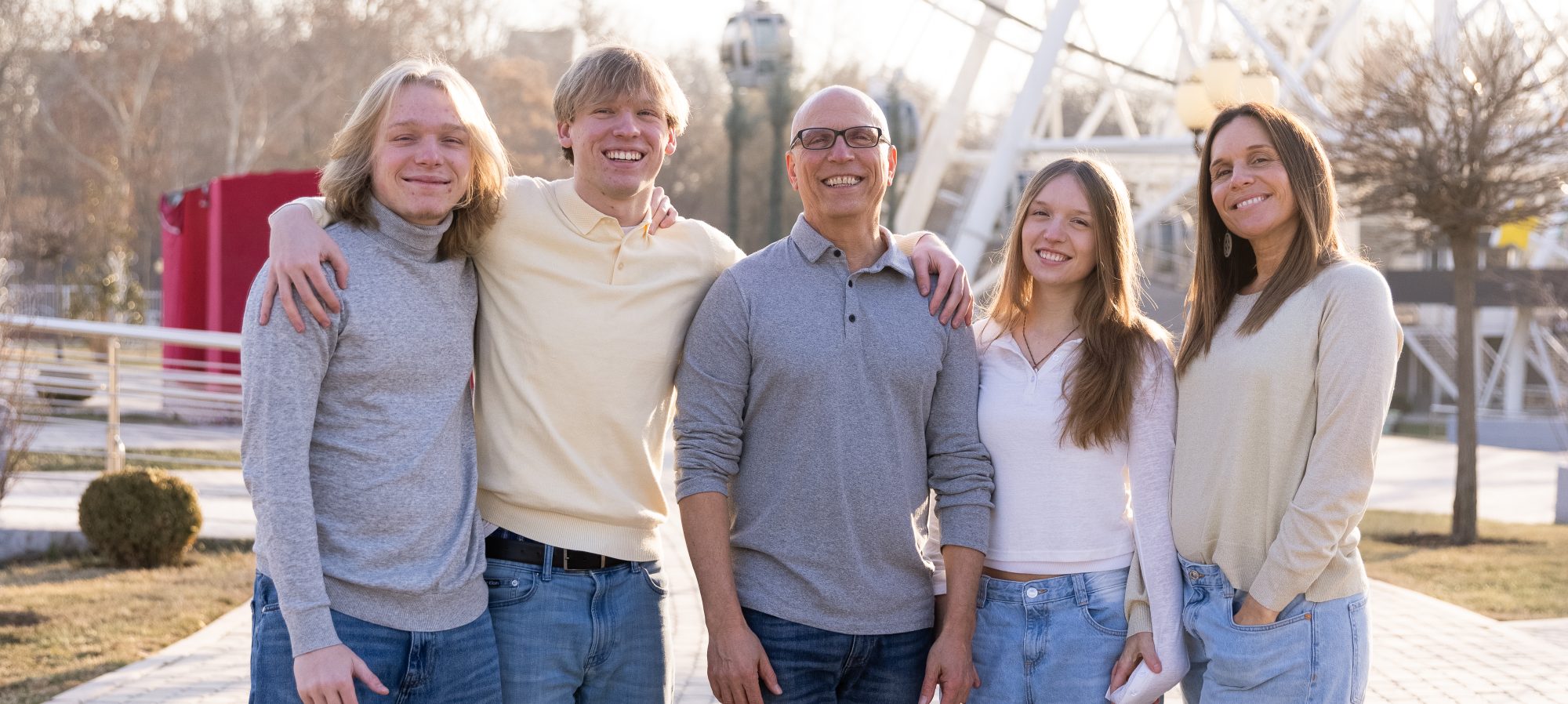
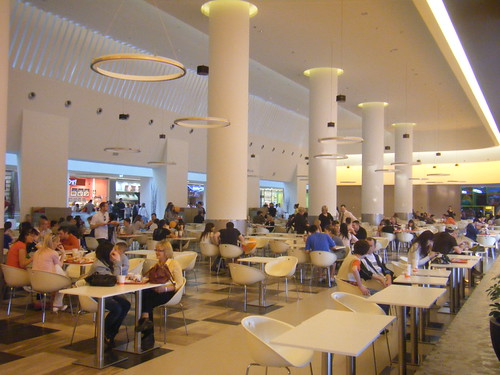
We had a fantastic day yesterday. The weather was in the high 50’s and the snow was melting fast. It was the end of the Ski Week holiday. Reflecting on the break, the best thing about it is reconnecting with my children and wife. I really noticed today as I came home from school, how excited the kids were to see me. I missed them today as I was working at the high school. They are shown above playing on a car in the shopping mall of the supermarket, Super Vero. We did grocery shopping Saturday morning.

Below, Owen is seen looking over the park of Kalemegdan. Kalemegdan is a Turkish word for “battle ground – fortress” and it is one of my favorite placeds in Belgrade. The city began here, within the walls of the fort and the history just oozes out of every brick and turret. The fort was originally built by the Romans and throughout history, has changed hands from the Byzantines, Hungarians, Turks, Serbs, etc. As you can see in the photo, the fort is strategically placed overlooking the confluence of the Sava and Danube (Dunav in Serbian) rivers. Legend has it that Attila the Hun is buried at this meeting of the two rivers. Belgrade has always been at the border between various empires and the fort holds the memories of these conflicts between competitors.

Owen looks to the outline of the wall leading to the Sava and Danube Rivers

Today there is also a huge park surrounding the fort. Many Belgraders hang out there, playing chess, walking, talking, and many children are running around the playgrounds. The fort also has tennis courts, basketball courts, and a cool military museum display with about 10 tanks and cannons kids can climb on. Owen and Oliver below are shown on a battering ram with the fort in the background. The kids love eating “kokice” (popcorn in Serbian).

I read of the catacombs, canals, and tunnels that are largely unexplored under the fort. The Serbs really have not restored the fort or done enough excavation and research on the place which is unusual. It is part of the charm I guess, that it is not totally done up for tourists, although it is a must see for anyone coming to the city for the views. I also like the fact that the locals uses the place and it is still a vital part of the daily life of many Belgraders and not just a museum.

Family Journal: Salzburg, Austria

After leaving the little town of Feld am See, we drove across the Austria, and the Alps, and spent a night in Salzburg, Austria. The city is known for its Baroque Architecture in the old town, Mozart’s birthplace, and the Sound of Music was filmed there. We enjoyed all three.

Above we are outside the former Mozart family home, now museum. The boys knew about Mozart through their music teacher at school and we all enjoyed learning about his life. The big impression I got was life was tough in the 1700’s. Five of Mozart’s siblings died in infancy, only him and his sister surviving. Mozart also caught tuberculosis while traveling around Europe with his father as a child. He survived, but it would eventually cut his life short. The wonders of modern medicine have really extended our lives and we don’t even have to think of these risks anymore. For more about Mozart, check out the Mozart Project website.

1763 - Young Mozart in Gala Costume

It was absolutely horrible weather but we managed to walk around for a few hours. Salzburg was a city state and the archbishop who ran it loved music. It avoided the damages of WWII and the architecture of the old part of the city is stunning! There was a gypsy work camp located near the city, where they were used a slave labor. I didn’t see any gypsies in my day in the city. American troops entered Salzburg to end WWII on May 5, 1945 and it was the center of US-occupied Austria.My father was stationed to the north, in Stuttgart during the American occupation of Germany after the war.

The Walking Street of Salzburg
The "Walking Street" of Salzburg

We stayed at a small, family run hotel which had the Sound of Music playing 24/7. It is one of Nadia’s favorite movies, so it was nice to see a 1960’s Hollywood Salzburg, while being in the city 40 years later. I finally watched the end of the film. A very cheesy movie, but it is the impression of Austria many Americans have, of mountains, blond children, etc. The movie features the song, Edelweiss, the emblematic flower of the Alps. We named our car Edelweiss, because the previous owner was Swiss and there is a sticker on the car of the flower. We watched the movie that night.

Julia Andrews Climbs Every Mountain

I would like to go back again in nice weather and ride our bikes around the city. There are plenty of trails and with three universities, we saw many students riding around, even in the winter.

Family Holiday Journal: February “Ski Week” 2009


I have not been able to update my blog this week. We travelled to Austria for a family holiday and access to the internet was sporadic and slow. I did manage to upload some photos and do one blog post which is below. I will be catching up and posting photos and stories from our week away today and tomorrow. Below is a post from earlier in the week.

We are in Feld am See, Austria for a few days of rest and relaxation. ISB is on their annual “ski week” which is a Serbian tradition as all schools get time off in winter to head to the slopes.

Feld am See is a village (in the USA we call them towns, but the European village sounds more picturesque) of around 1,500 inhabitants located on a small lake in the Knockenburg Alps, which are in the south-eastern part of Austria. We chose to stay at the Brenneshoff Family Sports Hotel because it caters to families who want to do sports. 

We drove 6 hours on Saturday to reach the hotel from Belgrade. That is a strange thing about Europe is that in six hours, we crossed 3 international borders and three different languages. The kids were well behaved in the car as Owen is feverish and slept most of the way, Ollie had his Gameboy, and Ocean slept and watched the scenery. We stopped in Slovenia for gasoline at on of our favorite restaurant chains. “LeMarche” is a gourmet deli attached to some gas stations in Slovenia. It is a strange concept as most US gas stations have either a fast food chain or their own “party store” full of cheap and low nutritious food. Le March on the other hand, has an amazing salad bar, freshly squeezed juices, sandwiches, and hot meals. 

Upon arrival we immediately hit the pools with Oliver and Ocean. Ocean learned to stay on her feet in the baby pool. She loves water and I only had to save her life 4 times. There was a ramp near the slide that she had difficulty managing and she fell on her back and couldn’t get back up.

Yesterday we enjoyed a relaxing day at the hotel. The highlight for me was Owen and I skating around the lake. Owen was getting quite good at ice skating and I hope to do some more with him. I also want him to practice skiing and we set up lessons for the boys today. It is a nice setting with the towering mountains on both sides of us. The village must have a zamboni, as they ploughed a hockey area and a loop around the lake. Nice idea. I didn’t see any ice fishermen however, which would be standard in any Upper Peninsula lake.  Nadia went to the spa for a massage. We are loving the European spa concept. I like it because everyone is walking around in hotel issued robes and sandals.


Feld am See Austria
Feld am See Austria


This hotel greatest service for kids however, is a kinderhaus. They have a room with toys, books, arts & crafts, and a couple of teachers to watch the kids while the parents enjoy themselves. Owen and Oliver are fine with this as they go to school, but Ocean can only stay a short time until she begins to cry inconsolably. We hope she improves. 

Ocean and Oliver were excited to leave Belgrade


Vlade’s Second Trick Shot


I uploaded the other shot I discussed in the previous blog post. Above, Vlade makes a shot lying down at half court. He makes the shot in four attempts. I believe he did this shot in a television commercial and one of the students asked if it was a trick shot. He promised us that he would make on in five attempts or less. I tried to do it and couldn’t make it to the rim. He makes it look much easier than it is.

Vlade Divac Half Court Shot


We had a special visit to our high school boys’ basketball practice. Former NBA All-Star Vlade Divac stopped by to help the student athletes with aspects of their game. He talked about doing the little things right, like crisp passing, wide elbows on rebounds, boxing out, have a repetitive free throw ritual, etc. The students were truly inspired.

At the end of practice he had a little fun with us. In the video above, he is telling a story of a trip to China. He demonstrates the one-handed, back-to-the-basket, half court shot. All net in one attempt. Truly amazing. He also laid down at half court and made the basket from the floor in three attempts.

I can see why he is a basketball legend. Great size combined with attention to detail, athleticism, and lots of hard work. Thanks to Mik J. for the video above. The start shows his hand as he was taking his camera out of the bag. Vlade appears shortly after the start.

Snow Continues to Fall


ISB Campus

It has been wonderful this week with so much snow falling. With 9 inches on the ground, more of the white stuff came down! Many students and teachers at our school have been wanting a school cancellation or delay. Being from the Upper Midwest, the current snow is actually fun and a nuisance, but not a impediment for arriving at school. Temperatures are around the freezing mark, so the major roads are wet and clear, while side roads have slushy snow. It has taken me back to my youth and learning to drive in Michigan.

The view above is looking towards the east wall of our high school campus.

ISB & Facebook

The popularity of the social networking web site Facebook (FB) has got me thinking about its role in the learning of students at ISB. I am also pondering our use of technology tools (software / websites) at the school.

I see that I was thinking the same as Stanford University. They are offering a Facebook for Parents course .

This is another good website to get you thinking about the subject. It is my goal to produce guidelines for teachers, students, and parents on using these tools.

Family Journal: February 15, 2009

We had a nice Sunday as we are in a long weekend. There is no school today due to the National Day of Serbia. Sunday we started the day with playing football and making a snow fort in the yard. We then went to Oliver’s classmate’s birthday party at the Grand Hyatt. Wonderful location as they have a gourmet all-you-can-eat buffet and they turn the bar into a children’s playroom. The kids and adults both had a nice time.

Ollie with Jack and Sam at the Hyatt

We then went over to the Moynihan’s for a dinner party. Tim wanted to celebrate the newcomers to Serbia making it 6 months! I came home exhausted after chasing around the kids and eating and drinking well. Some people joked that in my black shirt and shaved pate, I looked like the typical Serbian gangster. Nadia and I are pictured above enjoying a little peace and quiet while the kids sleep in the car.

Heading off the basketball practice this morning.

Gypsies in Belgrade

Above is a photo I took last weekend. We were on the way to an open market in New Belgrade. We stopped at the traffic light, and these three gypsies were asking for handouts from cars waiting in line. At the major intersections downtown and in New Belgrade, it is common to have gypsy beggars or window washers. It has been a source of fascination for our family since our arrival. This is my second post (for my first post, click here) on the gypsies and I intend to do more while I am living here.

I recently finished reading Isabel Fonseca’s excellent book, “Bury Me Standing: The Gypsies and Their Journey” in which she writes of her experiences of living with the Romany people of several Eastern European countries for 4 years.

There are over 100,000 gypsies living in Belgrade. They are an on-going social problem in the city. They get little support from the government and have difficulty integrating themselves into modern, Serbian society. The latest news was the government moving (bulldozing) of a settlement in New Belgrade. It seems that no one wants them to live in their neighborhood. There are gypsies that are successful, but most are extremely poor and outside of normal society. Beside hustling for money at intersections, they are also seen collecting cardboard and other recyclable materials or selling junk at markets in New Belgrade.

They remind me of the Aboriginal people of Australia. They have their completely separate culture and lifestyle living right next to a majority “Western” culture. They are closer to the North American Indians, and are more integrated than the Aboriginals, but the same view applies. Like the Slavs, the migrated to Serbia from the east. Researchers discovered they originally came from India, leaving about 16-20 generations ago (approximately 12th century). They stopped in central Asia (Armenia) and reached Serbia and eastern Europe in the 14th and 15th centuries. Their official name possibly dates back to their original caste in India. Fragments of their Indian origin are maintained today in many words in their language and their Hindu-like customs of cleanliness and superstition.

Their original nomadic lifestyle has ended in modern times.  Today they are mostly poor, illiterate, living on the edges of cities and towns. There are an estimated 6 -11 million gypsies world wide with most in Eastern Europe. The biggest population is in Romania. Fonseca reasons they were used as slaves in historical Romania and that explains the high numbers there. They have been persecuted since their arrival to Europe. They are the forgotten part of the Holocaust.

The girl above is probably the mother of the baby in her arms. Gypsies have their own cultural norms and one of them is to become a mother as soon as physically possible. What is amazing is many are illiterate with no concept of history, time, and Western cultural literacy.

Ocean is up and I need to attend to her. I’ll be writing more in the near future…

Below are some excerpts from the Rom News Network a website based in Germany that produces news items about the Romany people. I took the excerpts from an article by Olga Nikolic, called, “Life on the Margins of Society” from 2001.

“Romanies form the youngest portion of the population in Serbia – over a half, 62 per cent of them, are under the age of 25, while only 4,1 per cent of them are over 60 years-old. The said age structure is accounted for by experts as the result of high birth and death rates and a low average life expectancy. According to some statistics, the average Romany life span is 10 per cent shorter than is the case when all other citizens of Serbia

Dragoljub Atanackovic, the president of the Romany Congressional Party, claims that 90 per cent of Romanies live in extremely insanitary conditions and that in Belgrade itself there are 60 enclaves with over 90 thousand Romanies living in wretched circumstances. “The social position of Romanies is exceptionally difficult. But three per cent of the population of working age are employed, only 31 per cent have primary school education, the rest are half-illiterate or illiterate. We do not have a single newspaper in our mother tongue or a radio and TV program financed by the government.

According to statistics, the rate of unemployment among Romanies is four times higher than is the case with the country’s majority nation and in the past ten years the negative ratio has doubled. Every fifth Romany of working age is illiterate and every third has merely primary education. A fifth of all Romany families have no earnings whatsoever, while the majority barely survive by doing odd jobs in the black market sector, such as selling contraband cigarettes and similar smuggled goods or by collecting secondary materials.”