Latest Reading: Red Roulette & Killing Floor

I think China is a fascinating country and culture. With 1 billion people and going back centuries, Chinese culture has shaped Asia and the world. I have visited Macao, Hong Kong, Beijing and Xian on three trips to the country. Earlier this month I finished reading Red Roulette: An Insider’s Story of Wealth, Power, Corruption and Vengeance in Today’s China by Desmond Shum. It was recommended by The Economist as one of its top books of 2021.

I had two big takeaways from the book. The first is it is staggering to think of the amount of money that was made when China moved from a socialist, government-owned economy to a capitalist one. Shum became wildly rich during this era. This is similar to what happened in Serbia and Russia when state-owned assets were privatized. There is a lot of opportunity for corruption and nepotism in these situations. The second takeaway is the American government experts, led by Bill Clinton at the time thought that facilitating China’s entry into the World Trade Organization and capitalism would lead to a more pluralistic, free-market and eventually even a democracy. They were dead wrong and instead, it was a way for an almost bankrupt Communist Party to strengthen its grip on power and the lives of its citizens.

The author Shum was born in Shanghai and grew up in Hong Kong. He graduated from the University of Wisconsin, so has a good understanding of both Chinese and Western cultures. He walks us through his education and through his wife, of the aristocracy the party. The aristocracy are the descendants of the founding fathers of the Chinese Communist party and current high-ranking party officials. They live a separate life from ordinary Chinese and it was amazing to read of the money they made through their government connections.

I always thought the Chinese were ruthless and Shum thinks that comes from the Communist system. “Chinese are pitted against one another in a rat race and told that only the strong survive. We’re not taught to cooperate.” He also describes the rise of Xi Jinping, who cleared a path to the top by launching thousands of corruption investigations and jailing or firing rivals. I never understand how one man can accumulate so much power. They need everyone around him to believe he is powerful, including the police and military.

Despite becoming fabulously wealthy, Shum’s story is a tragic and sad one. The book opened my eyes to the inner workings of the Chinese Communist Party and how much the West, misunderstands China.

Some of the useful Chinese terms I learned from the book are as follows:

  • moutai – The national drink of China, fermented from sorghum and then distilled.
  • mishu – powerful personal assistants that control access to their bosses, shape agendas and sway decisions
  • guanxi – relationships built over time that people use to increase their business

I also read Lee Child’s first Jack Reacher detective novel, Killing Floor (1997). I often like to read a murder-mystery light book in the evenings to take my mind off of issues at school. It soothes me to read a chapter or two and then think through what happened and speculate on what is coming up in the plot. This was a pretty good book, but nothing spectacular. One of the streaming services made a television series on Jack Reacher, the 6’5″, ex-military policeman, a drifter that in this book, is a freelance detective trying to avenge the death of his brother. It is set in the fictional town south of Atlanta called Margrave, Georgia and by an unbelievable coincidence, Reacher is accused of murder. I don’t want to give too much of the plot but I will tell you it is set around a counterfeit ring. I did learn a bit about how mints print currency.

There was one good quote, “Then we’d grown up together all over the world inside that tight isolated transience that service families create for themselves.” Reacher is describing his army brat childhood where the family moved all over the world. I experience this with my global nomad family. The nuclear family grows tighter when the extended family is far away.

There are 20+ Jack Reacher detective novels that I probably won’t read. They would be a good airplane read, simple, lots of action and a mystery to solve. For this particular one, I got a little tired towards the end.

Family Journal: February 20, 2022

Liz and Nadia as we embark on the hike.

I am really starting to fall in love with the Amirsoy Resort. Well, maybe not in love, but at least a warm fondness. They now offer snowshoeing and that was my opportunity to get Nadia out in the fresh mountain air. Yesterday, we hired a guide from the resort to show us the best trails and it was a glorious day. Our friend Liz who is a strong hiker helped Nadia through the steep parts. That is one aspect of mountain hiking, there are a lot of inclines and declines. This is much different from my home in Michigan, with its relatively flat landscapes, thick forests with the occasional hill. We walked up to over 1700 meters above sea level while the highest point in Michigan is just over 500 meters. We stayed on the resort’s property which extends several kilometers to the west of the groomed ski runs. It is an area free of livestock grazing so there are more trees than in other sections of the mountain range. After watching the Olympic Nordic skiing star Ivo Niskenan and the rest of the field go all out in the races, I was inspired to push through the snow. I miss cross country skiing and snowshoeing is the closest thing I’ve found. I would definitely do this again and might even buy a pair of shoes for next winter. We had a nice hot tea after the 4-hour, 8-kilometer walk while waiting for the kids to get off the slopes. It was an ideal day with the family and going to Amirsoy feels like you are on holiday.

Relaxing after a day of winter sport!

Sunday was shopping day and Nadia and I went to the various markets and supermarkets around the city. I also had to take Oliver to his dentist appointment and then cook and tidy up the house. A highlight was making breakfast for Oliver and his friends after they slept over on Saturday night.

Badger Fat

I love the Russian influence on Tashkent and spotted bottles of European Badger fat/oil in the Olay market. It is an old Siberian tradition to massage the oil to heal aching muscles, etc. On the box, it claimed to cure bronchitis, pulmonary tuberculosis, lung inflammation, atherosclerosis, colds, some types of asthma , gastric and duodenal ulcers, and total exhaustion of the body. Wow! I am surprised it didn’t mention COVID. I didn’t buy any but am curious about the smell.

Soviet-era Apartment

I end this blog post with a of an apartment building of the Soviet-era architecture you find in Tashkent. This one is quite nice, much better than the pre-fabricated Khrushchyovka blocks you often see. You don’t often see cylindrical-shaped apartment buildings in the west. I would love to go inside these apartments to see what it is like to live in them.

Family Journal: February 13, 2022

The highlight of the weekend was Oliver and I going skiing on Saturday. Rain was in the forecast for Tashkent so I thought it would be snowing up at the resort. It certainly was and as we pulled out of our driveway at 6:45 AM, a light rain was coming down. When we started the climb to Amirsoy, it turned to snow and it was a challenge to make it to the resort. I grew up in Michigan’s Upper Peninsula and am used to winter driving so we made it with no problems. There was sand from a truck the night before and it kept patches of the road clear, especially on the steep inclines. We were the first day visitors to the resorts and at that time in the morning, it probably had snowed about 4 inches. The snow continued until about 11:00 AM. I would guess between 6 and 8 inches fell. It was wet, dense snow and not the dry powder that skiers dream of. It made it difficult, technical skiing. Each run felt like moguls with piles of thick snow interspersed with trails of skiers and snowboarders.

Oliver was ready for his last run as the fog lifted in the late afternoon.

It got better as more people panked down the snow and I actually got to practice my form and turns instead of just trying to stay up. I stayed on the lower runs, only going up to the middle station of the gondola. The combination of steepness and bumps would have risked injury for me. It was also a thick fog that cut down vision which further complicated things. I made it through the day with only falling three times. Oliver is a much better skier than me, but the fog and deep snow slowed him and his friends down enough so we could spend most of the day together! He is turning into a mature young man and I am very proud of him. We had a good laugh on the way up with the snowy roads. It was also good to have lunch with friends Simon and Luc.

On Sunday morning I played doubles tennis with the usual gang. I then played Kralovec family Yandex taxi taking Oliver to the dentist and then to a friend’s party. I had to do some chores around the house and then started preparing for a busy week of school in the evening.

Olympic gold medalist Nick Baumgartner speaking with his family

Saturday was also an exciting day for my hometown of Iron River, Michigan. Nick Baumgartner and his partner won Olympic gold in the Snowboard Cross Mixed Doubles. The race was so exciting as he surprisingly won the finals for the men and then Lindsey Jacobellis came through and won the women’s final. It is so nice for him to win his first gold at age 40 after a long, successful career. We were screaming as snowboard cross is such a crazy sport! I loved the conversation with his family back in Iron River after the victory. He is “bringing gold back to Iron River and the Upper Peninsula” and he gave a shout-out to our high school, West Iron County Wykons! NBC Olympic host Mike Tirico had to explain that the Wykon is our school mascot.

Paltua Canyon Hike

Paltua Waterfall – January 2022

On Sunday I went on a Boris-led hike up to the Paltua waterfall in the Chatkal Mountains. The bright, blue skies and the massive walls of snow and rock were so awesome and the day outdoors lifted my spirits. The hike begins from the far end of the road that circumnavigates Charvak Reservoir. We took a dirt road (covered in ice and snow) to an Uzbek military checkpoint and guard post to present our passports to the soldiers. The source of the Paltua River is near the border with Kyrgyzstan and so everyone who visits the waterfall and the valley must get approval from authorities. The waterfall is 4 kilometers from Kyrgyzstan. Stalin created odd borders and the line goes along the top of the Koksuy range. It would have made more sense geographically to put the border on flat ground.

The mountains resemble “The Wall” from the HBO series Game of Thrones

There was a strong wind blowing when we pulled up to the guard post early Sunday. There is a gap in the mountain range that winds howl through where the guard post is located. I felt bad for those soldiers and we were all a bit worried that it was going to be a long, cold walk. However, as soon as we got up the side of the first hillside and into the protected valley, the wind died down and the warm sun made it a delightful day. There were two small buses of local hikers, which is rare in the Ugam-Chatkal National Park. We had a pleasant conversation with them at the waterfall where we had lunch. Our guide Boris Kasimov is a legendary mountain hiker and they were taking selfies with the grand old man of Chimgan!
The view from the Obi Rakhmat Grotto

There are two interesting sites before reaching the falls. “Pulat-tau” means Iron Mountain as the area was historically an iron mine. There is an abandoned horizontal shaft into the side of one of the canyons along the river. You can walk safely to the end of the tunnel, about 20 meters inside the rock. Another highlight of the hike is the Obi Rakhmat grotto which is an archaeological site and was the home to people 50,000 years ago. About 500 stone items and human remains have been found in the cave. It is a natural shelter and I see why humans long ago sought protection there. From the back of the cave, looking out at the mountains I thought about what the landscape must have looked like for them and what type of flora and fauna was there.

Liz and Boris on top of the Paltua Valley

The 38-meter high waterfall was the goal of the hike. It was mostly ice but there was still liquid water coming down and the stream was flowing under a layer of ice and snow. There were beautiful icicles along the rock walls lining the waterfall. After lunch, we hiked back down to the guard post alongside the river.

Family Journal: January 28, 2022

No stoplights at the intersection near the school

It was quite the eventful week with a nation-wide blackout on Wednesday, January 26. This article from Eurasia.net “How are Power Outage Sent a Country into Meltdown” gives a good overview of what happened. I was at school when the power went out in the entire country and in most of Central Asia. It started around 11:00 AM and I was in the bathroom washing my hands. All of a sudden, the lights flickered like an intense, rhythmic strobe light for about 15 seconds and then went out. It didn’t seem like a “natural” power outage. I met with our crisis team immediately and we decided to keep the students in school for the rest of the day, despite not having electricity. The students on Virtual Learning were probably celebrating they could miss their afternoon classes. A few families came to pick up their children early, but the day went as normal.

Rumors were going around Telegram, the WhatsApp/WeChat super app of the Russian-speaking world. First I heard about multiple explosions in the nearby city of Angren caused the blackout. Then I heard the explosion occurred in Kazakhstan. I also heard that it could last two to three days. Temperatures were around OC (32F) and that would have made for some cold nights. Fortunately, power was restored to some sections of the city as early at 5:00 PM. The power at the school and our house didn’t come back for good until around 11:00 PM. Gas pressure was low so many of us did not have hot water the next day. As I write this on Saturday, power and gas are back up and running as usual and a crisis was averted.

From what I am reading, it sounded like the failure originated in Kazakhstan and the power grid shut down automatically in neighboring countries to avoid damage to the system. Central Asian countries do not do a good job of investing in the infrastructure of the power grid. The system is dilapidated, partly due to low level corruption like customers bribing electrical company employees not to pay the full metered bill. Like in the USA, an investment in infrastructure is needed in the region.

Nadia at School

Because of the electricity and water problems we did not have school on January 26. That is a special day in our family as it is the birthday of my wife Nadia! She had a nice day at home with the kids while I sorted out problems at school. She is aging gracefully and she still is beautiful and the mujerona I fell in love with all those years ago. I am a lucky man! We ordered sushi instead of going to dinner because of COVID concerns. Happy Birthday Nadia!

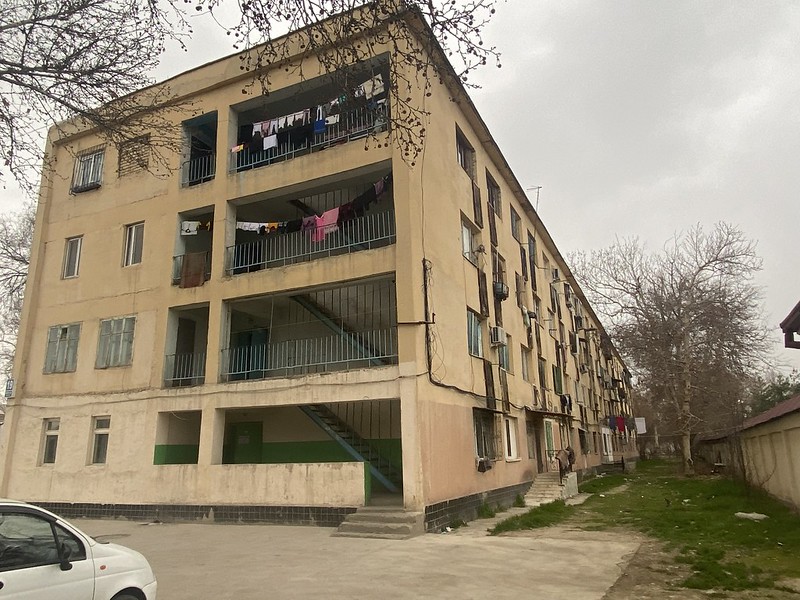
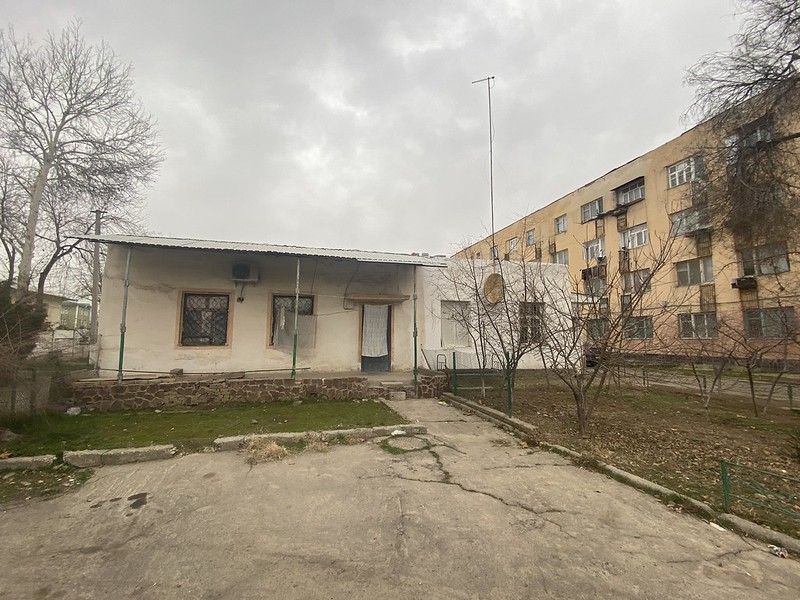
Construction will soon start on a new elementary building at our school. Yesterday I went behind the school with our Project Manager to look at where a crane could access the site. Adjacent to our school is a large, low-income / no-income housing project. The building used to be a dormitory for railway workers and is now owned by the city. There are 137 families living in the building rent-free. Each apartment has a small bathroom and efficiency kitchen. There are large communal kitchens on each floor that everyone uses for larger meals. Next to the dormitory is a smaller building with additional families. You do not see homeless people in Tashkent and I would guess that there are other facilities like this around the city. It seems like a good opportunity to make a difference and as the IB states, “create a better world”. Perhaps the international school community could do something to make their lives better.

Mosque Construction Continues

I end with a photo of the mosque behind our school. As I wrote this summer, the old mosque was torn down. The billboard in front was showing a magnificent mosque in the white/blue style common in Uzbekistan. I had not looked at the site in a while and was surprised at how much progress they have made since August. We should soon be hearing the call to prayer at school again from the towers. One nice thing is that for our practicing employees, it will be a short commute to Friday prayer services.

Family Journal: January 16, 2022

Nadia, Shokur, Ocean

We had a nice relaxing weekend in Tashkent. One of the highlights was finding Rakhimov’s Ceramic Studio, located on the east side of the city. Nadia and Ocean are starting to take a ceramics class and they really enjoyed it. Both of them have an artistic bent and I loved watching them have so much fun. Ceramics and pottery are a big deal in Uzbekistan and Ocean felt a connection to Uzbek culture through pottery. They will be going every Saturday. The owner, Alisher Rakhimov, beside the workshop, has a nice gallery and courtyard on the premises. Shokur is the grandson of the founder of the studio. He is studying applied arts here in Tashkent and was a good teacher. The father, Alisher, gave me a tour of the gallery and explained a bit of the history of ceramics in Uzbekistan and the region.

I went for a bike ride on Saturday morning along the Ankhor Canal. As you can see on the left, there is a nice forested area along the canal between the Tashkent Tower and the Zoo. The weather was cool (11C) and overcast with intermittent rain both days. Tashkent gets most of its precipitation in the winter and unfortunately, it is not cold enough for snow in the city. Hopefully, it is snowing in the mountains while it rains here because I want to take the kids skiing during our next break in two weeks.

It was a strange week because last Saturday, a dinner guest we hosted came down with COVID, making us primary contacts. Unlike the USA, it is very easy to get a PCR test and the results back on the same day. Each test cost $21 and the results come back by 6:00 PM the same day. All of us tested negative on Tuesday and again on Thursday. The Omicron variant has reached Tashkent and I sense we are on the verge of a big surge of cases. Over the weekend, the school COVID Response Team got a lot of reports of positive cases. All schools in Uzbekistan are ordered closed by the government so we had to move to Virtual Learning on Friday for grades 2-12. The early years classes can be on campus. As in other parts of the world, all of the cases we are hearing about do not require hospitalization. I am concerned that there is a low vaccination rate in the country. Uzbeks are vaccine skeptics and I would guess the vaccination rate here is between 20-40%.

Bill, Steve, Jason

I played tennis this morning at the Olympic Tennis School with friends. The big news from the world of tennis today was from the Novak Djokovic saga at the Australian Open. He is my favorite tennis player and I am disappointed that he is not vaccinated. He lost a lot of money this weekend by not being able to play in what could have been his 10th Aussie Open title. He would have at least won several rounds. When someone is deported from Australia they are also banned from returning to the country for 3 years. That would effectively take him out of his favorite grand slam until he is 37 years old. The public sentiment against him I think will also hurt his future endorsements and perhaps his legacy. All because of his belief that a vaccine that literally billions of people around the world have received would harm him. What does he know that global science doesn’t?

Everyone knows that if you want to travel internationally, PCR tests and vaccinations are mandatory. Djokovic is a supreme health specimen, spending millions on a team of experts fine-tuning his body through flexibility e, diet, strength, speed, reaction time, etc. I understand why he believes that he does not need a COVID vaccine and is skeptical of mainstream health and medicine. However, someone in his team must let him know that by being stubborn about getting a vaccine, he is costing himself a lot of money and ultimately, hurting his legacy internationally. It won’t get much better for him. Tennis is a global sport that requires global travel. He may run into similar situations in other tournaments. The Australian Open and Australian Government didn’t handle the situation well either. In hindsight, there should have been no vaccine exceptions granted for players. These are young people and I would guess none would have risk against taking a vaccine. The Australian government has a “zero Covid” policy so granting exceptions would not work.

Family Journal: January 9, 2022

Owen & Ocean outside of the Tashkent Airport – January 8, 2022

It was a bittersweet weekend for me. Bitter in that our eldest son Owen returned to university in the USA. Sweet in that we did get to spend a lot of time with him and it was so nice to have our family whole again. It was so nice to have family meals again and with 24 consecutive days of break, it gave us a chance to bond with each other and reconnect after our busy first semester of school. Owen flight’s were smooth and he landed in Chicago and stayed with my brother Andy and his wife until his flight the next day. However, Northern Michigan University announced over the weekend they are delaying the start of the semester by 2 days and going virtual the rest of the week. I wish they could have made the announcement earlier so Owen could have stayed with us a bit longer. 😦

Family dinner – January 7, 2022

I drove around the Charvak Resavour on Sunday and went for a couple of walks with Obi in the surrounding mountains. I am always refreshed with the mountain scenery and fresh air. A strong, cold wind was bracing and made it difficult to walk on top of ridges. I noticed much less snowfall than in previous winters. I think that is definitely a concern in Central Asia that climate change is making it an even drier climate. The slow snowmelt in the spring and summer feeds freshwater to this dry climate.

Holiday Reading

I finished three books over the Winter Break. I like to review and post about what I learned from all books I read.

I first encountered Carl Hiaasen in the 1990s while living in Colombia. This was pre-internet and the only US newspaper we could get was the Miami Herald. He was a long-time journalist and columnist for the paper. I used to visit Miami a lot when I was living in Latin America, off-and-on from 1992 to 2008. Nadia and I got married there in the autumn of 1999 in Coral Gables and the state holds a special place in my heart.

September 17, 1999 – Our wedding night!

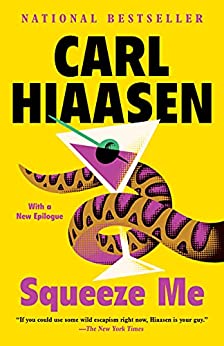
Many of Hiassen’s novels are set in Florida. Squeeze Me (2020) is centered on rich, elderly Trump (Secret Service codename “Mastadon”) supporters living in Palm Beach and the “Winter White House”, Mar Largo. Although Hiaasen never mentions Trump’s name or Melania (Secret Service codename, “Mockingbird”), you can easily see the likeness. The protagonist of the novel is a pest control specialist named Angela Armstrong. She is called over to the resort to take care of Burmese Pythons, which are an extensive invasive species problem in south Florida. Hiassen is inspired by his many years of covering Florida characters involved in crazy crime stories, corrupt politicians, rich retirees and the many different kinds of people that are attracted to Florida. I ponder his plot twists and think about what will happen next and it helps me go to sleep at night by taking my mind off my busy work and personal life. It was a light read and a page-turner and I recommend it for those who like humorous, crime fiction.

I like thrillers and crime novels to put me to sleep and I also love historical fiction and Adrian McKinty’s “The Sun is God” (2014) checked those two categories for me. When I think of Germany’s empire or colonies, I think of World War II and Hitler’s march through Europe. However, they did get into the colonies game at the end of the 19th century and the beginning of the 20th century. I didn’t know that they laid claim to parts of what is now Papua New Guinea. They held it until the Japanese came during World War II. McKinty focuses on a nudist colony/cult of Germans that eat only coconuts and bananas and take a lot of heroin. An ex-British soldier that fought in the Boer War, Will Prior, moves to German New Guinea to get over his PTSD. When an autopsy of a recently dead cult member shows that he drowned, Will is called in to investigate the cult. It was a pretty good book which I read through to find out who did it. McKinty is from Northern Ireland and is known for his Sean Duffy Detective series which I have not read.

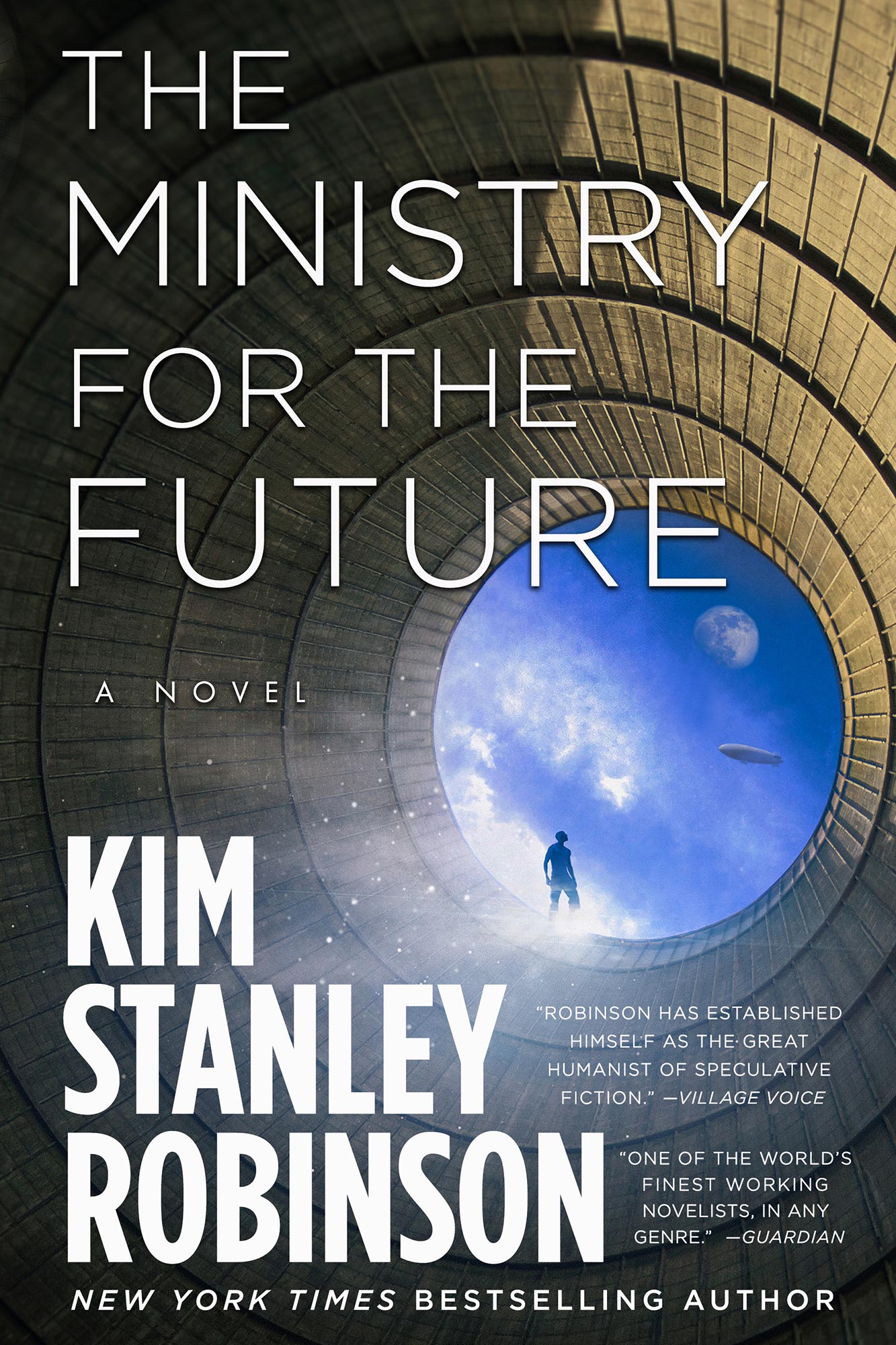
The last book I finished was Kim Stanley Robinson’s “science-fiction nonfiction novel” The Ministry for the Future”. The book is set in the near future and is all about humanity dealing with climate change. The story is centered around Mary Murphy who heads the United Nations Ministry of the Future. The organization represents future generations and lobbies central banks, governments and multinational corporations to reduce their carbon footprint and lessen the impact of climate change. There is also an unbelievably successful shadow eco-terrorist group that murders oil executives, takes out commercial jets and attacks anyone or anything that is adding carbon to the atmosphere. The book starts with an intense heat wave in India that kills millions.

Robinson puts in a lot of factual essays and information between scenes from the main narrative. There is a lot to chew on in the book and I thoroughly enjoyed it and learned a lot.

  • Humanity soon realizes that “the planet is incapable of sustaining everyone alive at Western levels, and at that point the riches pulled away into their fortress-mansions, bought governments or disabled them from action, and bolted their doors to wait it out until some poorly theorized better time, which really came down to their lives, and perhaps the lives of their children if they were feeling optimistic.”
  • The UN measures inequality, which is a big driver of climate change, through their Human Development Index. The Happy Planet Index created by the New Economic Forum, measures reported well-being, life expectancy and inequality incomes, divided by econlogical footprint. The US scores 20.1 out of 100, ranking 108 of 140 countries. Gini Coefficients,devised by Italian sociologist Corrado Gini in 1912, is a measure of income and wealth disparity in a population. It is expressed as a fraction between 0 (everyone is equal) to 1 (one person owns everything). In the mid twenty first century, social democracies like Norway are a bit below 0.3. USA and China have risen from 0.3-0.4 to 0.5-0.6. Cumulatively, globally the number rises to 0.7 because of so many poor people around the world. Disparities in wealth have been rapidly increasing since 1980 and we are nearing the Gilded Age of the 1890s and perhaps even the feudal ear.
  • “The assumption is that future people will be richer and more powerful than we are, so they’ll deal with any problems we create for them.”
  • Since there will be so many more future people, estimates of 800 billion, then the current 7 billion humans should be doing more for them.
  • India features prominently in the novel as one of the leading countries in the battle against climate change.
  • Jevon’s Paradox proposes that increases in efficiency in the use of a resource lead to an overall increase in the use of the resource, not a decrease. William Stanley Jevons wrote this about coal in 1865. Other examples are better gas mileage results in more miles driven; faster computer processing time results in more time spent on computers.
  • Leopoldian land ethic, often summarized as “what’s good is what’s good for the land”.
  • “Humans evolved in ice ages, and properly dressed are good in the cold. Just deal!”
  • Worker owned enterprises in Basque country are the way of the future. 1/3 of profits go to employee/owners, 1/3 to capital improvements and 1/3 given to charities chosen by the employees. The wage ratio between management’s top salary and the minimum level of pay is set at 3:1, 5:1 or at the most 9:1.
  • Los Angeles after WWII changed dramatically because developers were getting rich making ticky-tack suburban neighborhoods – that an putting in freeways, which cut the coastal plain into a hundred giant squares with no plans, no parks, no organization.
  • If all central banks went block-chain and digital currency, that would put an end to tax havens and hiding money.
  • Edgar Allan Poe’s The Masque of the Red Death tells the story of the elites having a masquerade ball on a castle on a peak above a plague-wrought populace. The syndrome is an assertion that the end is imminent and inevitable so you might as well party while you can.
  • Some of the solutions for climate change include rewilding 50% of every country and/or continent and creating wildlife corridors between huge areas of wilderness. People are diurnal and animals nocturnal so lots of motion on the corridors at night. This was called the Half Earth Movement.
  • Navy admirals’s salaries top out at $200,000 which is a ratio of 8:1 to the lowest sailor. Admirals are “normal” and there is a great espirit de corps. In the corporate world, the median is 1,500:1. Some executives make in 10 minutes what starting employees earn in a year. If the lowest level of salary of any company is enough to live a decent life, the CEO should be limited to a 10:1 ratio.
  • Public goods (food, water, shelter, clothing, electricity, health care and education) should all be public goods and never subjected to appropriation, exploitation and profit.
  • Save the earth through a new earth religion.
  • Housing coops are common, single people sharing kitchens and yards.
  • When Mary Murphy retires and settles in Switzerland, before she felt “an international person living an international life. Now she was a foreign-born Zurcher, living in Zurich. “Their culture doesn’t matter so much just language. That I find is the great connector.”

Vocabulary

  • Earth’s “albedo” – proportion of the planet’s light that is reflected back into space
  • India’s way has always been “syncretic” – merging of different religions and cultures
  • “lacuna” – gap
  • tautology – saying the same thing twice in different words
  • fiat – a decree
  • Gordian Knot – a difficult problem

Family Journal: January 5, 2022

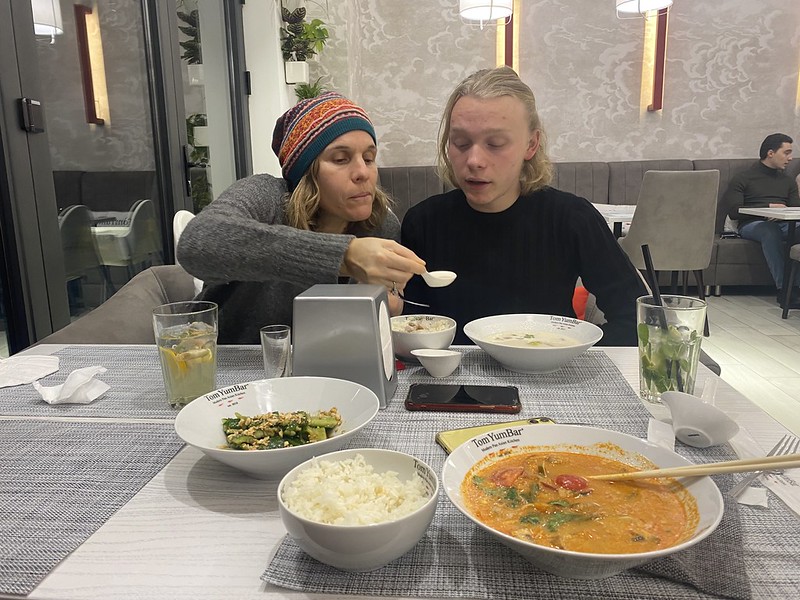
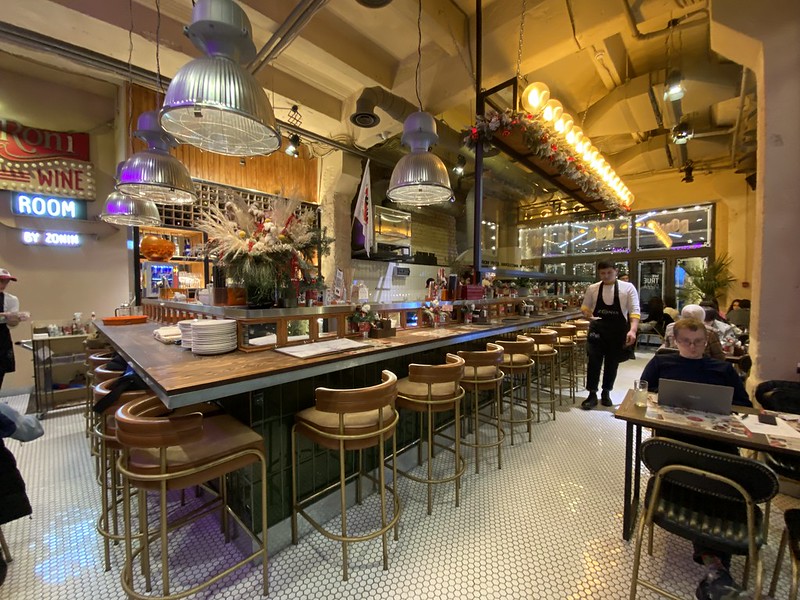
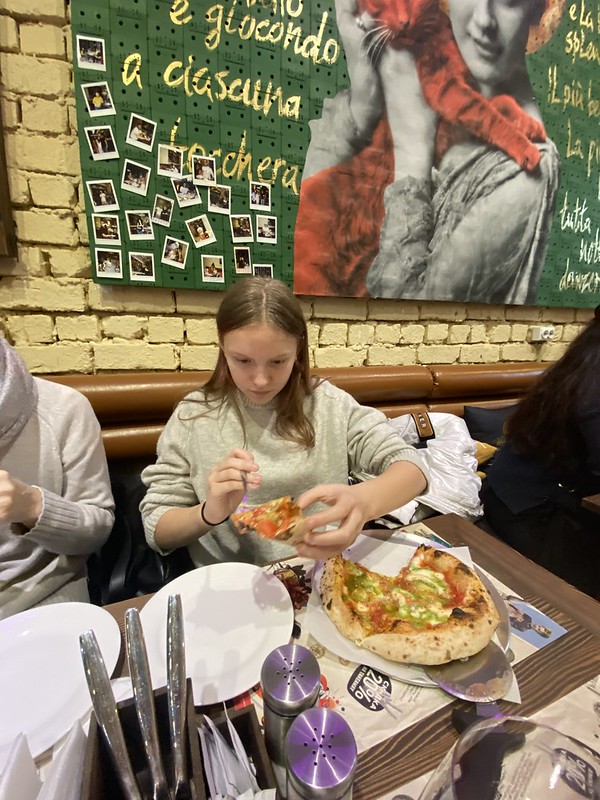
We have been exploring some new restaurants in Tashkent this week during the Winter Break. Most of my family are “foodies” and they enjoy going out and trying new places. There are a couple of new places in the Tarasa Shevchenko area that I thought were excellent. There is a new pan-Asian restaurant called Tom Yum and their eponymous dish was delicious. The kids had Pad Thai and another coconut milk-based soup. Overall, I give it a 7.5 of 10. We also went to Roni, an Italian restaurant nearby. Authentic and tasty pizza and salads. It was definitely a step-up from your standard Italian restaurant and with the cool music and atmosphere, it received a 9 of 10 from me. There are so many new restaurants opening in the city that it is difficult to keep up. These two were a little expensive ($15 per person with drinks) but very good.

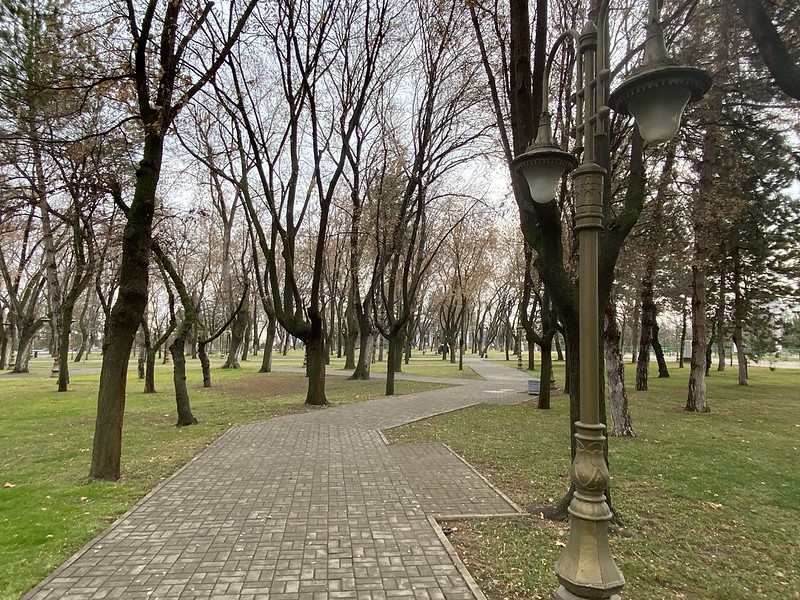
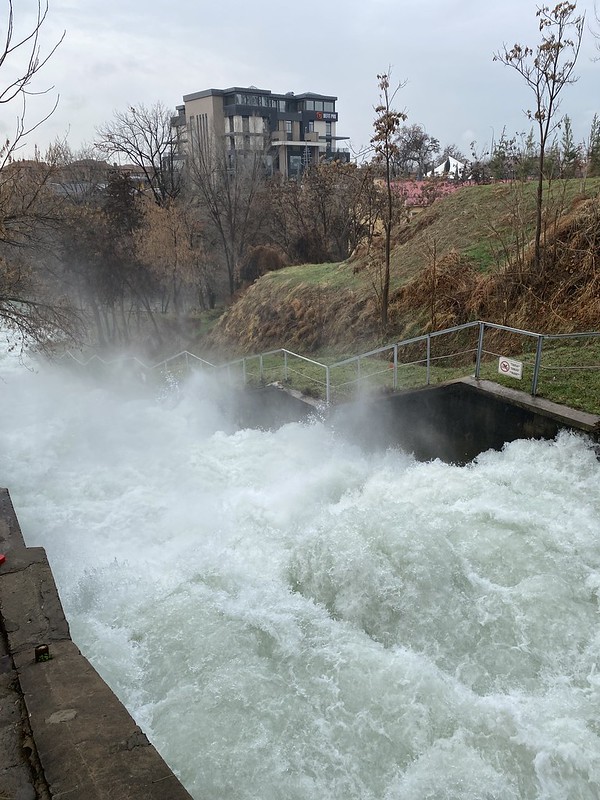
I went for a long run yesterday and I always encounter interesting sites along the way. We’ve had quite a bit of rain the past couple of days and the Ankhor Canal was full and the hydroelectric dam looked like Niagara Falls. Despite the rain, I’ve been able to get out walking with Obi and getting some exercise. Memorial Park was beautiful in the trees with the sun just coming through the clouds for a few moments. I also saw this hearse in front of the cemetery.

Yangiabad Bazaar

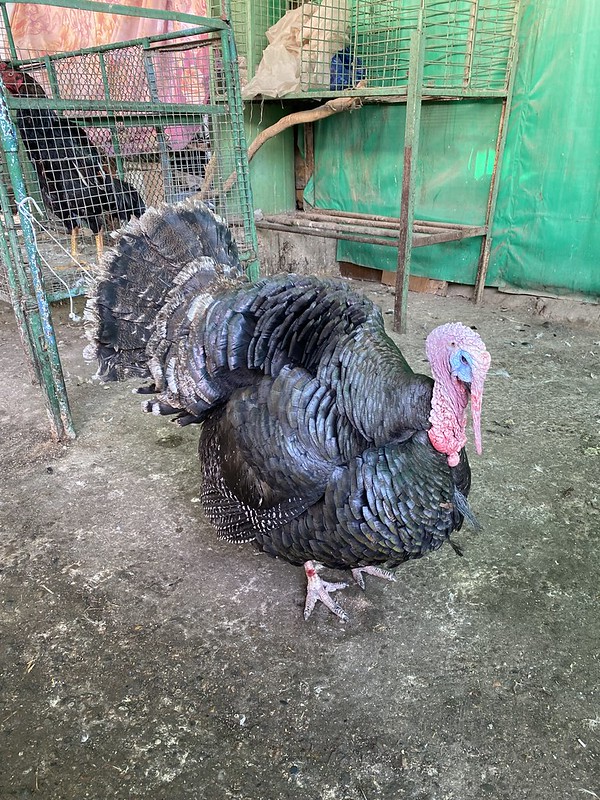
I spent Sunday taking Nadia around to the Yangiabad Bazaar, a massive weekend flea market located on the abandoned railroad yards and factory. She loves looking for antique glass and kitchenware and I like the Soviet-era stuff. It has been 30 years since the Soviets left and I wonder how much longer you will be able to find this stuff. I am always amazed at the vast range of items for sale and what has value. As you can see from the table above, this guy has everything from old SLR cameras, light sockets, a spatula, door hinges, handles, wire and other bric-a-brac. There is a Wuhan-like animal section, thankfully they are not slaughtering the animals at the market, but they are closely packed and the cages are not exactly the example of hygiene. I was tempted to buy a live turkey and hedgehog. I also loved the 1960s Soviet Zil “Moscow” refrigerator. It would look great in our basement bar in the US. The Zil company based in Moscow, built cars and trucks for almost 100 years (1916-2012). I did not know they also built appliances.

I purchased some unique gifts for family and friends. My son Owen is a big history buff so I got him a metal bust of Lenin and I got gas masks for Oliver and my brother. I also bought a cool metal nutcracker and bottle opener in the shape of a dragon. This sells as a vintage piece on eBay for much more than the $3 I paid for it.

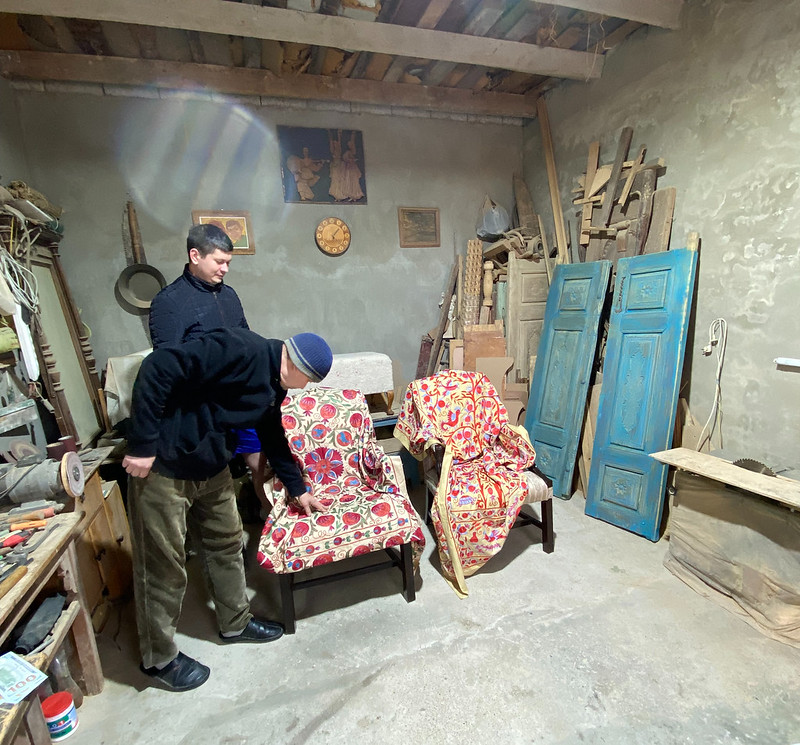
Nadia loves unique furniture pieces and with inexpensive labor, she can get wood refurbished and chairs reupholstered for reasonable prices. She is getting two chairs for our new movie room redone with suzanis, the traditional embroidered needlework tapestries common in CentraL Asia. I joke that suzanis are “catnip” for female expats in Tashkent. We are also looking at doing something with this beautiful Bukhara door. Woodcarving is an old Central Asian tradition and the door below would be a beautiful display piece in a home. It could also be fashioned into a headboard or coffee table. We visited the workshop of one of the best wood craftsmen in the city to discuss the chairs and door.