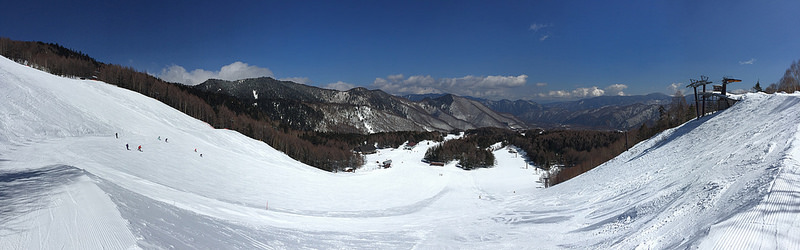
Final Days in Japan

Winter Break is coming to an end as we head back to Tashkent and school starts on Monday. We finished our time in Japan visiting a few more friends (Mike and Ana), tidying up the house, packing, shopping, and eating. While the girls were shopping in Daiso, the dollar store of Japan, I went for a walk in Kita Senri Park. There is a nice trail that winds through a bamboo forest, similar to the famous UNESCO World Heritage site in Kyoto. It is right behind our former school and the path leads to our neighborhood in Onohara-Nishi. We also had so much shopping that we needed to go to a second hand store and buy three carry-ons to make sure we could take everything back with us to Tashkent.

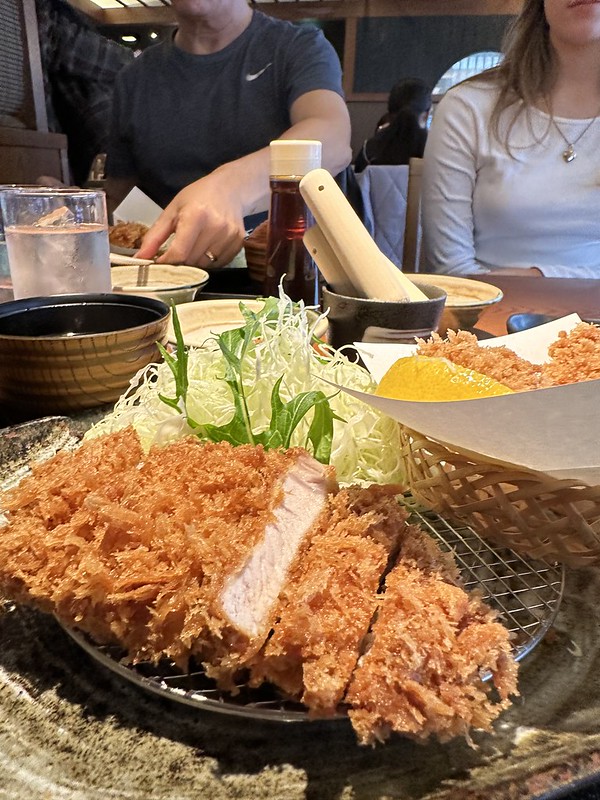
Nadia, Ocean, and I then ate tonkatsu (breaded pork cutlets, cabbage, rice, and miso soup) which on this visit was my favorite meal. Of course I had the deep-fried oysters as well because they are in season. Hiroshima is famous for its oysters and I saw them on menus all over the city. Ocean needed to do some last-minute clothes shopping. We discovered Gu the sister brand of Uniqlo. It is a cheaper version and I really couldn’t tell the difference between the clothes.

We then went on the La La Port Expo City Mall Ferris wheel. These are big in Japan and other East Asian countries. The symbol of the 1970 Expo, the iconic Tower of the Sun was lit up. It was created by Japanese artist Tako Okamoto and it is such an unusual building. I don’t know if the tower gets built in 2023, but in 1970, it was a centerpiece of the Expo and today it is a museum and still visited. We used to take students to Expo Park on field trips. The Osaka metropolitan area has a population of just under 20 million people and you could see the long spread of lights leading to the city center.
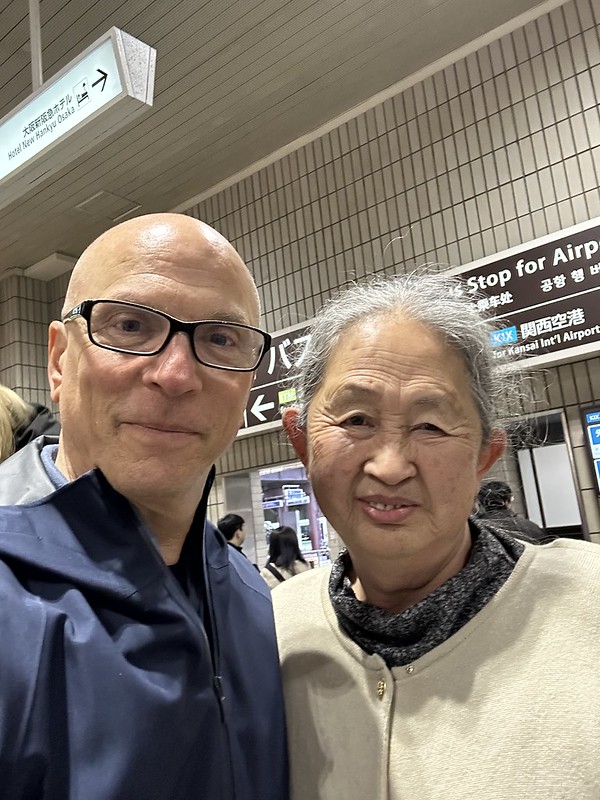
Bill and Yumiko

Our good friends Yumiko and Wakaba helped us get to the train station and on the limousine bus to the airport. The Osaka International School community always treated us with so much kindness! It is a process to get to Kansai International Airport as it is an artificial island in the south of Osaka Bay. We first traveled from the end of the Hankyu train line into the city center. From the Hankyu Umeda station, we then took an airport shuttle bus to the airport. The airport has been renovated since we lived here.

Chinese tourists were spending money like crazy not only at the airport duty-free shops but downtown as well. With a weak Yen, goods are very affordable. My friend reports that 30% of admissions at the international school are from Chinese applicants. Families are investing in Japan and receiving 10-year visas from the Japanese government. This includes buying hotels, apartment blocks, etc., and raising their children in Japan. I think this is a sign that upper-class Chinese people are hedging their bets on the future of the country. I would guess the Japanese government appreciates the influx of capital into their economy but does not want to be overwhelmed by a much louder and brash Chinese culture.

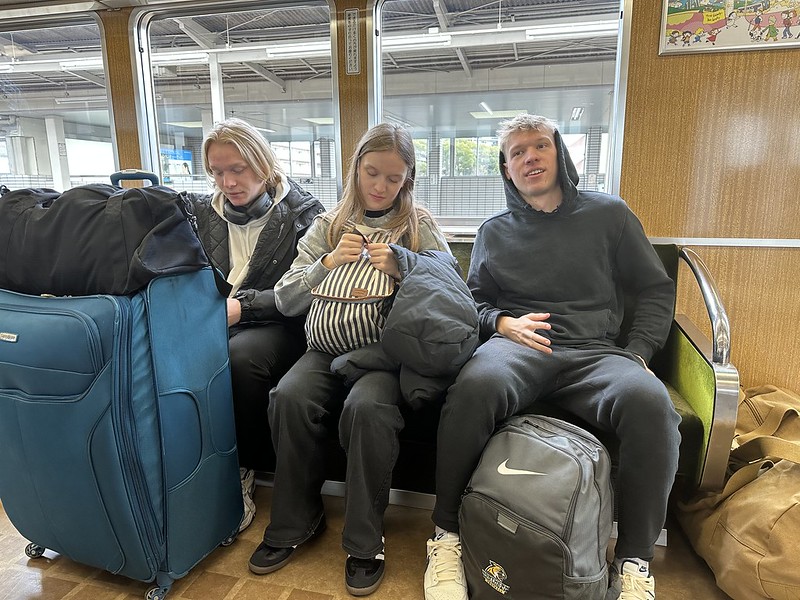
I love travel days because our adolescent kids are trapped with us and have to talk to us! I had a great day with them and we laughed a lot! I don’t know how many more full family travel days we will have as Owen is already in his third year of university, Oliver is off to college in August, and Ocean will be graduating in two years. As I wrote earlier in the school year, I am savoring my time with the kids!

The sun was setting in the Land of the Rising Sun as we hopped on the shuttle train to our departure gate. I hope Japan stays strong and preserves its unique culture as it struggles economically with a rapidly aging population. I think the social cohesion and trust will get them through the next 20 to 50 years and they will come out the other side in good shape.

Family Journal: January 1, 2024 – Hike to Katsuoji Temple

The Kralovec Family Daruma

We kicked off the New Year with a hike to Katsuoji Temple. It is our favorite temple in Japan! The temple is located in the hills of Minoh Park, a huge forested set of hills and valleys just on the outskirts of the urban sprawl of Osaka. We all spent a lot of time in Minoh Park, cycling and hiking through the beautiful Sugi forests. In certain areas in the park, one can see deer and monkeys and it is nice to have nature so close to the metropolis of Osaka. It is a perfect hike starting from our old house, it is about a 4-kilometer walk (2.5 miles) up the mountain on a clearly marked trail. Japanese people in the early days of the New Year, visit their local temple to pray for good fortune in the upcoming year and pay respects to their ancestors. This is called hatsumode. It is a befitting way to start a year. I loved getting the family together to exercise and to reflect on what is coming up in 2024.

Nadia and Ocean with their luck charms

We purchased lucky charms to bring us money, safety while driving, luck on school exams, and one lucky wish. We attached the charms to the complimentary bamboo branch we received upon entrance to the temple. We lit a candle and incense for our ancestors, both dead and alive. We skipped the prayers at the shrines because the lines were too long. Rain interspersed stretches of sunshine throughout the day but it was not heavy and the walking warmed us up.

I love Katsuoji because, unlike many temples in Japan, it is located in a wilderness area and not overcrowded like many temples during New Year’s celebrations. The Emperor Seiwa erected the Buddhist temple 1,260 years ago and named it katsu, which means “winning” in Japanese. For centuries, warlords and common people have come to Katsuoji to buy the famous Daruma dolls to see if they get the winner’s luck. If the wish is fulfilled, the daruma dolls are supposed to be left on the grounds. We bought six Daruma dolls to represent our five family members and our dog Obi.

It was a perfect way to start the new year. I love exercising in the wilderness followed by a cultural experience. We don’t know what 2024 will bring us but we will do our best and stick together as a family. Happy New Year and best wishes for health, happiness, success, and fulfillment in the upcoming year.

Family Journal: December 31, 2023 – Happy New Year!

We spent New Year’s Eve in downtown Osaka to celebrate the end of 2023. Our eldest son Owen went with his friends so it was Oliver, Ocean, Nadia, and me who left our house around 6:00 PM. We ate at One Karubi, a Korean Barbeque Beef restaurant. They only offer a 2-hour, all-you-can-eat menu option. We were pretty much done after the first hour but continued to order drinks and some desserts in the second hour. We used to go to the restaurant for special occasions when we lived here and it was nice to go back.

After dinner, we drove 30 minutes to one of the most popular tourist areas of Osaka, Dotonbori. “Bori” means canal and “Doton” refers to Nariyasu Doton, an entrepreneur who built the canal way back in 1612. Doton built it to increase trade in Osaka, but in 1621, the Tokugawa Shogunate designated it an entertainment district. 403 years later, it is still an entertainment district with lots of bars, restaurants, karaoke, pachinko, etc. Sadly, there is only one theatre left, as originally it was full of kabuki and bunraku theatres. I wonder if a world-class theatre district like Broadway or London’s West End could be built here and survive? Japanese really don’t celebrate New Year’s Eve by going out to places like Times Square. It was mostly tourists. We were surprised by the large numbers of men from the Philippines who were congregating along the canal, drinking and smoking. They must be guest workers here, as they didn’t look like typical tourists. We noticed piles of rubbish everywhere which is rare in Japan. Public garbage bins are not common here and with so many tourists, I can see why this happened.

Kuidaore (食い倒れ) is a Japanese word that means to “ruin oneself financially by extravagant spending on food” or in Western terms, “eat until you drop”. Osaka is the food capital of Japan and prides itself on having the most and best restaurants in the country. Of course, we needed to stop to try some takoyaki or fried balls of a doughy batter with octopus inside. It was nice to watch the preparations of the takoyaki and okonomiyaki (pancakes) in front of the hot grills in the cold weather and slight rain.

Ocean, Oliver, and Nadia in Shinsekai

We left Dotonbori and headed over to ShinSekai district, about 4 kilometers away from Dotonbori. “Shin” means new and “Sekai” means world. The area was first developed in 1912 and being typical of Japanese culture, it was modeled after Coney Island (north side) and Paris (south side). The Japanese often replicate outside cultures and with their attention to detail and hard work, often improve them! 🙂 The amusement park is long gone but the Eifel Tower, Tsūtenkaku (tower reaching heaven) is still there. The tower burned down in 1943 and the steel was used in Japan’s war efforts. Residents lobbied the government to rebuild the tower. The tower reopened in 1956 and featured a Billiken. Art teacher Florence Pretz of Kansas City, Missouri created the Billiken charm doll in the early 1900s. The figure came to her in a dream and she found the name in an 1896 poem. She sold the patent to the Billiken Company of Chicago. To purchase one, or even better, to receive a Billiken doll brings you good luck. The Billiken is also known as the “God of Things as They Ought to Be”. It was a big fad in the early 20th century but faded into obscurity over the past 100 years. Today it is still a symbol of American culture in the shinsekai district and we noticed many billikens around the neighborhood. I am glad they kept the idea alive. We will probably head back to the district once more before we leave to enjoy the cozy kushi-kastsu (deep fried meat on skewers) restaurants and I’ll blog more about one of my favorite districts of the city.

We also paid our respects to the kami inari a Buddhist/Shinto god associated with “with foxes, rice, household wellbeing, business prosperity, and general prosperity”. We all send positive vibes in honor of Oliver so he can pass his IB Diploma in May. You can find the shrines all over Japan, in both cities and the countryside. You wash your hands to leave the secular world and enter the sacred world. You go through a ritual of ringing the bell and clapping to “wake-up” the kami (ancestral spirits) and bow to show respect. We are all hoping it works!

We finished the evening by celebrating the countdown at our house together. My first New Year’s kiss was of course with my beautiful wife Nadia. It was so nice to spend the evening together with Oliver and Ocean. They will soon become adults and leave us, and it felt like a nice way to be together as a family to welcome 2024.

The Sacred Deer of Nara Park

“I’ve had enough…”

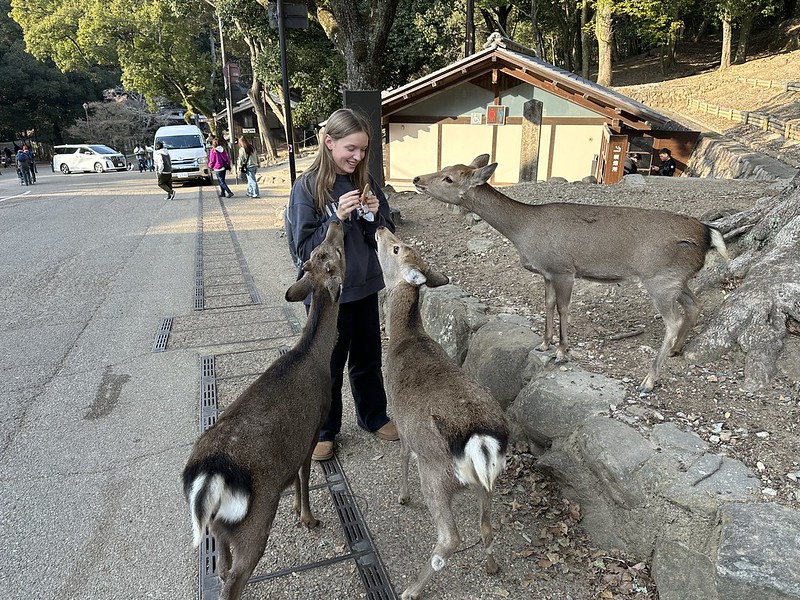
As you can see by this bloated deer, the tourists are back! I was reading that during COVID, the deer were starving without the daily influx of tourists feeding the deer rice cookies. By the time we arrived in the afternoon, the deer looked like they were full and tired of having tourists stick cookies in their faces. We had to walk away from the central park area up to Wakakusayama Hill to find deer that were eager to crunch the cookies.

Hungry Deer

This is the fourth time that I’ve visited Nara Park and the famous Sika or Northern Spotted or Japanese Deer (Cervus nippon). My daughter Ocean wanted to post photographs of feeding the deer on her Instagram so we drove from Osaka to Nara (55 minutes). Besides the deer, there are some beautiful Buddhist Temples including one of the world’s largest wooden temples housing a huge statue of Buddha. The manicured grounds are full of trees, ponds, and open grass areas.

Oliver feeds the deer

The deer are considered to be sacred messengers of the gods and have been protected for over a thousand years. They have been isolated for so long from other deer herds in Japan that they are genetically different and they behave differently. The Nara Deer are famous for bowing while approaching tourists for rice. This is not a behavior Sika Deer exhibits in nature and they think it may have developed as a form of communication between the deer and the humans.

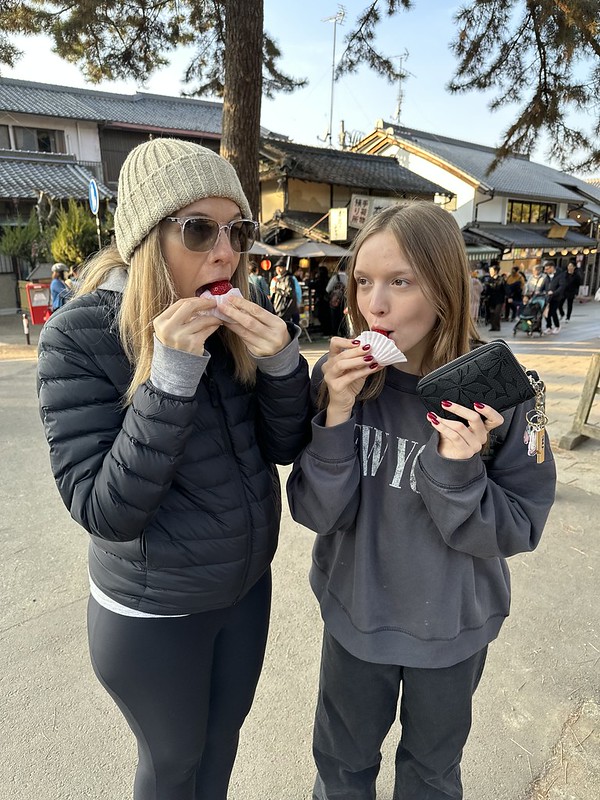
Red Bean Paste and Strawberry Mochi

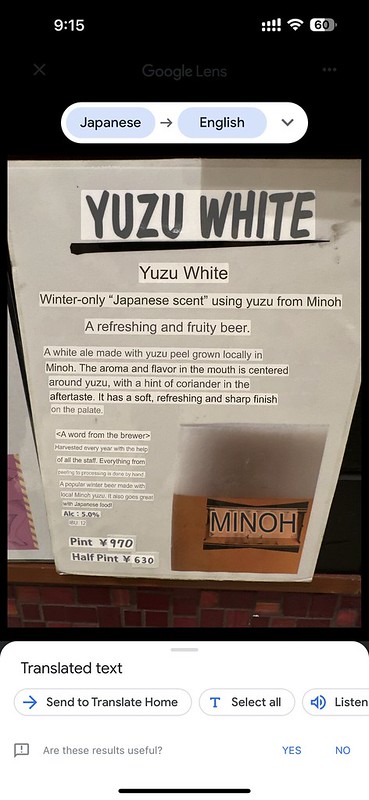
In the evening, Nadia and I rode our bicycles to meet with my friend Kurt at the Minoh Brewery. They make in my opinion, the world’s finest craft beers. I tried the Yuzu White one of their winter beers. I love seasonal things and like all of their beers, absolutely delicious. I don’t drink a lot of beer or alcohol in general for health reasons especially now I am in my 50s, but I do love an occasional good craft beer. I also keep being impressed with Google Translate. It is so much faster and more accurate than 5 years ago and makes travel in Japan easier. I also sense the Japanese are opening to the English-speaking world. With such a weak yen, the island is receiving many more tourists who are coming specifically for shopping.

Technology, Ecology & Art: Garbage Incineration in Japan

Our group in the Hundertwasser Lobby

Yesterday our family visited the Maishima Incineration Plant located near the port of Osaka. Japan is the world leader in burning garbage to produce electricity. Land is precious in this crowded island nation, and landfills are not a good option.

The plant deals with garbage in three ways. Most waste is burned at extremely hot temperatures. The heat is converted to electricity through steam and turbines. Most of the electricity goes to power the plant itself, but the excess electricity is sold back to the municipal electrical grid. The leftover ash is used in land reclamation projects or converted to bricks to pave roads and sidewalks. Japan and in many other countries in Asia, artificial islands are quite common near the coasts of cities. In fact, the main international airport, Kansai International Airport (KIX) is an artificial island.

Large items, such as furniture, bicycles, etc. goes through a different process. The recyclable metals, iron and aluminum are converted to pellets and sent to recycling plants. The leftovers are either crushed into small blocks or burned. The 15 cm – 40 cm blocks are used with ash in land reclamation projects.

Mom and Owen

Incineration plants started in the 1990s and were found to emit toxins into the environment. Today, much of the plants are devoted to cleaning by-products before they are released.

Incineration plants are common in Japan. The Maishima plant is one of six in the Osaka metropolitan area. It handles around 900 tonnes of waste per day. The guide estimated that Osaka disposes approximately 36,000 tonnes per day. With a growing world population living at a higher standard of living than ever before, protecting the planet is an increased concern of mine. I am worried about climate change and the quality of life on earth being lessened by our wasteful lifestyles. I agree it is good to burn garbage instead of just burying it, but it would be better to reduce the amount of waste generated in our lives.

Control Room

On a small level, I have been tracking the waste generation of our family. We recycle glass, metal and paper through the excellent Minoh city recycling program. I’ve started to compost our vegetable matter at school. This has reduced our waste significantly. However, a big problem is packaging. The amount of plastic used to protect, transport and display products is crazy. As a consumer, it is impossible to escape!

View of facade from rooftop garden

What make the Maishima unique is the architecture of the plant. City officials commissions the Austrian/New Zealand artist and architect, Friednesreich Hundertwasser to improve the facade of the plant. Hundertwasser was a fascinating artist and a man ahead of his time. His mother was Jewish and father German, and he escaped death by hidingbill his maternal origins. He became quite a famous architect and applied artist after World War II. Hundertwasser detested straight lines and the grey monotony of city buildings. He was also one of the first architects to incorporate nature in his buildings and believed that planting trees in cities, helped well-being. We visited his famous apartment block in Vienna years ago. Hundertwasser was married to a Japanese women in the 1960s which may be the connection to Japan.

Compared to most of the boring, industrial design of buildings in Japan, I am happy that they invested in making it beautiful. It was uplifting to walk around the roof top garden and it has become of tourist destination and raised awareness of sustainability. Hundertwasser thought the project brought “technology, ecology and art in harmony” and I have to agree!

Cycling Between Osaka and Kyoto

32065691218_d775ed7b04_c
Owen and Ocean pose for a photo. There are hundreds of small side roads going through farmers’ fields and forests in the hills north of Minoh.

I just love cycling, especially with my children. It is so nice to get them out of the house, off personal digital devices and into the countryside. When you are out cycling, you always see interesting things. We saw a small field of the famous “cosmos” flowers, the autumn “cherry blossoms” of Japan. We also found the British restaurant that is a replica of an old village in England that serves a decent fish’n’chips. Nadia and I went there a couple of years ago but could not find it again. The splashes of orange, yellow and red gave some color to the autumn scenes of rice fields already harvested and gray skies. 

Riding with Ocean 

I took Owen and Ocean with me on a bike ride this afternoon. We started in the small town of Toyono and did a decent sized loop through the forests and fields straddling the border of Osaka and Kyoto prefectures. Ocean’s biking ability and stamina impressed me and she did not complain during the ride. 

Hiking with Ocean

Ocean and I had a delightful afternoon hike around the Minogawa Reservoir yesterday. With the boys out of the house with friends and Nadia still not feeling well, it gave me the perfect conditions for an afternoon with my daughter.

44433317694_efdf1b3e32_z
Ocean is not happy about hiking with Dad, but the sandwich was good! 

I had to drag her out, but by the end of the walk, I think she was enjoying it. The hike took about 90 minutes and it was not too strenuous. The weather in October in Osaka is ideal for being outside. It is so nice to have such a large wilderness area on our doorstep. Walking and talking while being surrounded by tall trees and lovely ferns is so very peaceful and recharges my batteries and clears my mind.

30216552277_df73993f77_c
A nice trail goes around the Minogawa Reservoir

I now know where to consistently find Japanese macaques in the park. Once again, they were near the reservoir.


Latest reading – Shoe Dog: A memoir by Nike Creator Phil Knight

shoe-dog-9781471146725_hr

Besides getting a lot of exercise this summer, I also found some time to read more. Using the Great Lakes Digital Library and access through the wonderful West Iron County District Library in my hometown of Iron River, Michigan, I can download digital books and audible books. I still like a paper copy, but living abroad, digital gives me access to books I would have to order and ship.

I didn’t realize how long of a struggle it was for  Phil Knight to build Nike into the global behemoth that it is today. He started in 1962 and for many years was on the verge of bankruptcy and fighting legal and financial battles with suppliers, US customs, banks, etc. I took it for granted that people always ran long distances for physical and mental health. However, in the 1960s and most of the 1970s, running was a something very few people did.

Phil ran track at the University of Oregon and many of the early employees of Nike either coached or ran track and field there. The “hippie” or “alternative lifestyle” of Oregon and dedication to track and field carried his company through hard times. For a long time they were a private company and on the verge of bankruptcy many times due to cash flow problems. They went public in 1980 and Knight and the founding employees became super wealthy. The term “shoe dog”, refers to a person who is obsessed with shoes and spend many hours designing and constructing better shoes. Thanks to the University of Oregon and Nike, running shoes today are much better than a generation ago. The recent attempt to run a sub 2: 00-hour marathon shows Nike continues to try to improve human performance and athletic shoes.

Knight has strong ties to Japan. He started the Blue Ribbon Sports company by importing Onitsuka “Tiger” shoes. Today Onitsuka is still based in Kobe and is known as ASICS. ASICS is an acronym for the Latin phrase, “healthy soul in a healthy body”. Onitsuka in the 1960s made some of the best shoes around and combined with the expertise and passion Knight and his friends from University of Oregon athletics program, they pushed ADIDAS and Converse, the two giants in the shoe industry of the 1970s. Knight eventually manufactured his own shoes and clothing, etc. and with powerful marketing, they are almost more of a lifestyle and sports/celebrity agency than just a shoe company.

It was sad to hear his regrets regarding his son and his regret of not spending enough time with his wife and children while building Nike. His eldest son tragically drowned in a diving accident in El Salvador in his 20s while working for an NGO.

I highly recommend the book. It gave me a new appreciation for the athletic shoe market, finding a balance between work and family and it was interesting to hear how long and hard Knight and his early partners worked on building Nike.

Camping on the Kanzaki River

Last weekend we got away from the city and work and headed up to the Kanzaki River in the mountains of Shiga Prefecture for some “shower climbing”. Shower climbing is what the Japanese call canyoning or river hiking. The Kanzaki River starts in the mountains between Lake Biwa and Nagoya Bay. We set up camp on a quiet part of the river and spent two days relaxing and enjoy nature.

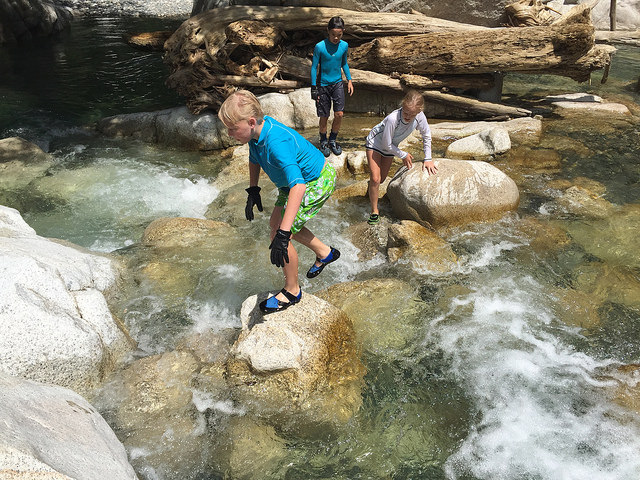
August weather in Japan is oppressively hot and humid, so it was such a relief to swim in the cool, clear waters of the river. The water was not as high as in previous times we’ve gone up there, but we enjoyed it just the same. The kids are so much more confident in the water now than they were two years ago. Our two hikes consisted of scrambling over rocks and stopping at water holes to jump from the cliffs and swim. As you can see below, I am not quite as brave as the boys regarding jumping heights.

I really enjoyed the camping. Nadia had an air mattress for us in the tent and it was a perfect sleeping temperature. We ate well, with Naoki on the super deluxe Coleman camping stove! Between the views of the white rocks, green trees and blue skies and the refreshing water, it really recharged my spirit. It also reminded me of the importance of wilderness and I plan to take the family out more often this year.


36111912113_835c33d418_z
Ollie, Ocean and Sam hop between rocks

It was also nice to pleasant to connect with friends sitting around the campfire.


Ski Japan

33454437045_6d2a791343_z

I just returned from three days of skiing at the Norikura Kogen ski resort in the beautiful “Alps” region of Japan. I was chaperoning a school trip and we used the services of North Star  which specializes in youth groups. The Norikura mountain range is in the Nagano prefecture on the main island of Honshu, pretty close of Tokyo. It is a large state, and it is as far away from the sea one can get in Japan. The 1998 winter olympics were held in Nagano, mostly in another area called Hakuba. 9 of the 12 highest peaks in Japan are found in the prefecture.

Before moving to Japan, I never really thought that Japan would have such great skiing. But it makes sense. The country is mostly mountainous, located far north of the equator and receives plenty of snow thanks to being surrounded by water. Skiing was never a big part of Japanese culture, but in the 1930s, Hannes Schneider introduced lighter skis and bindings to Japan. His family hotel is still running and we are planning to stay there next winter.  After World War II, skiing took off and hundreds of resorts were developed.

schneider-story-collage
Hannes’s panache probably increased skiing’s popularity in Japan

People are skiing less in Japan today and many of the smaller resorts are closing. I think part of the problem is it is an aging population, skiing is expensive and young people have digital diversions. I made it a point to have my children learn how to ski and experience the sport. Hopefully they can enjoy the sport throughout their lifetime. I love being outdoors all day with my family and it is a great way to be active in the winter. It beats watching computer screens.

33516443475_a98a5f694e_c
Beautiful conditions at Norikura Ski Resort

I am returning to Nagano prefecture tomorrow with my family for a week of skiing in Shiga Kogen. However, I injured my knee at Norikura on the last day. I was showing off and skiing off trail when I hit a tree. I tried to abort and crashed my knee into the slope and the tree his my inner thigh. A close call. I skied for another hour, but when I got on the bus heading back to North Star, I noticed my knee had swelled. It didn’t really hurt, but today, Sunday, I am still not as mobile as I want to be and it is starting to bruise. I don’t think I tore any ligaments or tendons, but sustained a bad bruise. Nadia is using her Aunt Silvia’s alcohol and salt compress technique to speed healing. It is starting to bruise and the swelling is going down, but just not as fast I would like for it to go. I really want to be ready to ski with the kids on Tuesday.

33516441825_ed5ddf4e2c_z
OIS Sabers on the Slopes! 

The skiing at Norikura was spectacular! Being mid-week in March, the slopes were almost empty. There were 20 different runs off 8 lifts. There was a mix of groomed and wilder runs and one of the runs had slalom gates which were a blast! It is a drier snow in that part of Nagano, so despite sunshine and warm temperatures, the snow was not icy. It was interested that driving the 40 minutes up the mountain from Matsumoto to the resort, snow appeared only as we neared resort. There was plenty of snow to ski without the need for artificial snow.

I will be looking for one of Japan’s most loved novels, written by Nobel laureate Yasunari Kawabata, “Yukiguni” (snow country), which is set in a snowy town (Yuzawa) in Niigata, which is northeast of Nagano. I’ll be posting from our ski trip in Shiga Kogen.

33479828876_cbdfb8cbd6_o