Farewell to Summer (Part I) – Summer Sonic 2018!

Summer is my favorite time of the year. I experienced long, cold winters and cold wet springs and autumns growing up in pre-global warming northern Michigan. The brief respite of the “tropical trumpet” as ecologist Tim Flannery calls it, during July and August was such a respite from the usually inclement weather. It also coincides with school holidays and as a busy educator, I find summer a time to reconnect with myself and my family. As I am writing this on September 1, I am feeling a bit of melancholy and looking back at the peaceful and sweaty days of July and early August. I’ve been so busy with the start of the school year that I did not write much in August, so I am catching up with the end of our summer family activities.
43486072805_74f8e95462_c

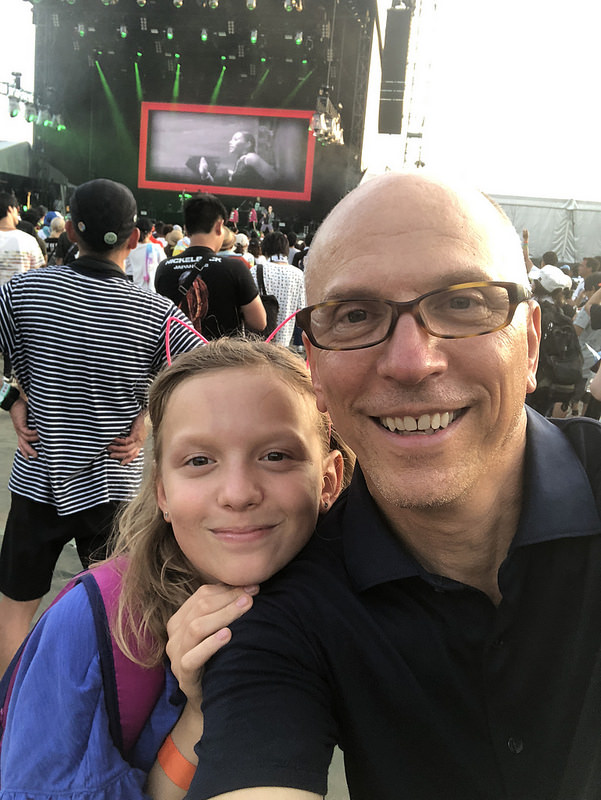
Nadia, Ocean and I attended a big summer music festival called Summer Sonic. The tickets were expensive (14,000 yen – $130 USD) and we were kind of grumbling about being tired and not wanting to go, but what a mistake it would have been to stay home. We all had such a fantastic full day of music, dancing and spending time together! It was well worth the price. It was the first time in years that I’ve attended a summer festival. We went to the first day of the 2-day festival and there were 4 stages with 6-8 bands performing on each one. We walked between venues and the concert times were staggered so we saw an amazing range of music. We caught all or some of the sets of the following major pop music artists:

  • Walk the Moon, Alessia Cara, J Balvin, Beck, Tom Misch, Rex Orange County, Portugal The Man, St. Vincent and Jess Glynne

It was a super hot, humid glorious summer day so the water stations and air conditioning of the Sonic Stage, inside the Osaka Evassa basketball arena helped us keep cool. There were many highlights.

  • Beck – I forgot how much I liked him and he was a true entertainer, providing a good 90 minutes of delightful music. It was the best overall performance.
  • J Balvin is massive on the pop charts for his reggaeton/hip-hop style of music. I had never heard of him, but loved his more traditional Colombian cumbia and salsa-inspired songs.
  • St. Vincent reminded me of Talking Heads and I loved her visual style and dance grooves in her music.
  • Lots of energy from Walk the Moon and Portugal the Man. Both groups had huge pop hits, but I felt both really wanted to play arena rock and Metallica-like hard rock respectively instead.
  • Ocean absolutely loved Alessia Cara, whose target audience I think is teenage girls.


43676917584_4a43f394ae_z2
Ocean and her BFF, Alona enjoy Alessia Cara

In between shows, we went to the food court/village and had some super greasy but delicious hamburgers. The concert was held in Maishima Sports Park, an artificial island in the port area of Osaka Bay. The professional baseball team Orix Buffaloes have a training grounds there and the professional basketball team Osaka Evassa’s arena is also located there. It was a distinctive place to hold a festival and despite the tens of thousands of people, it didn’t feel crowded at all. Japanese culture keeps things orderly and the need for security and seeing young people fighting, vomiting or causing havoc was not happening, thankfully.

43486074455_8b8cb90ca1_z
In the civilized section of the stadium! 

The highlight of the day was bonding with my daughter Ocean, my wife Nadia and our friends! What a great way as a father to spend time with a pre-teen girl! We will definitely go back next year if possible. Having two teenagers in the house keeps us “hip” to pop music and culture and keeps us young!
Miyajima: UNESCO Cultural Heritage Site

30125162988_43e2dbb97e_c
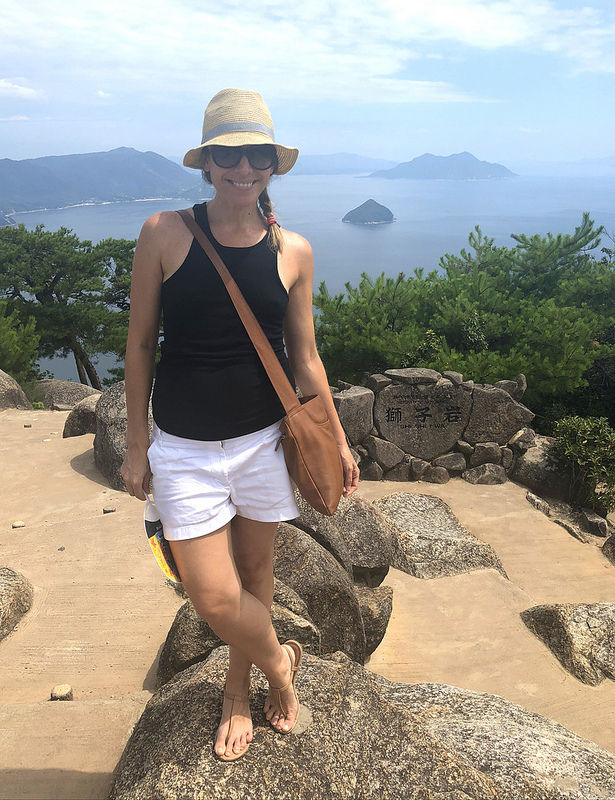
Nadia on the Shishiwa Overlook

The Itsukushima shrine on Miyajima Island is one of 18 United Nations Cultural Heritage sites in Japan. The Shinto shrine has an unusual Torii (gate) in the tidal bay that draws hundreds of tourists daily. Besides the gate and temple, the island is dramatically beautiful with sharply rising green hills and rocky outcrops. There are also breathtaking views of the islands of the Seto Inland Sea. After the Atomic Bomb Dome / Peace Park, it is the attraction to see in Hiroshima.

43993758721_4fd101432e_z
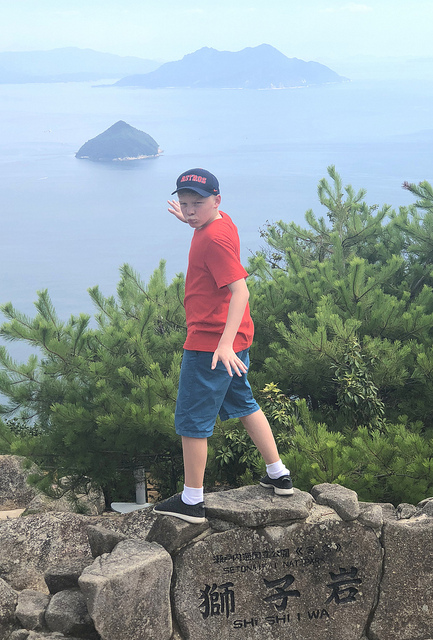
Oliver giving his best “Blue Steel”

It was a super hot day with temperatures close to 100 F. In my previous visits, we usually hike to the summit of Mount Misen, the highest point on the island, but instead took the cable car up to the top. The views did not disappoint, but we were ready to cool down after walking around at the top station.

42184471370_0bb54d9104_c
Ocean under the Torii as the tide is going out

We stopped for ice cold Summer I.P.A. on tap at the Miyajima Brewery and they really hit the spot. Before leaving the island, we had to try the Hiroshima-style okonomiyakiThe four-hour drive back to Osaka went well. We recovered this weekend. It has been nice to have my uncle visit in this last week of summer holidays.

43088040805_5e30de70eb_z
Miyajima Brewery 

Japanese Whisky

42146523930_84abc3471b_z
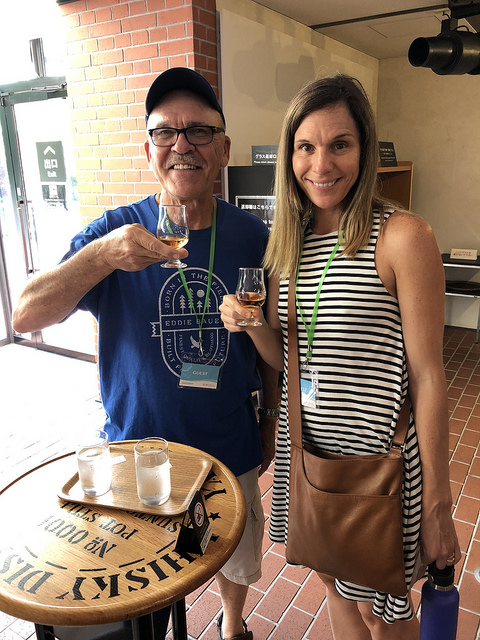
Nadia & Jack sample some of Suntory’s best whiskeys

I am not a big drinker but I do love the science behind fermentation and distillation. We visited the Suntory Yamazaki Whisky distillery in Kyoto on Wednesday. I recommend the tasting tour if you enjoy whiskey. Note that in Scotland and Japan, whisky is spelled without an “e” and in Ireland and America, we add the “e”.

Whiskey comes from barley and after fermentation and distillation, it is a clear liquid. The distinctive color of whiskey comes from tannins in the storage barrels. The longer it stays in the barrel, the darker the color. Turning barley, water and yeast into whiskey only take a week, but aging in barrels can take up to 30 years.

42146520640_d429d034d8_z
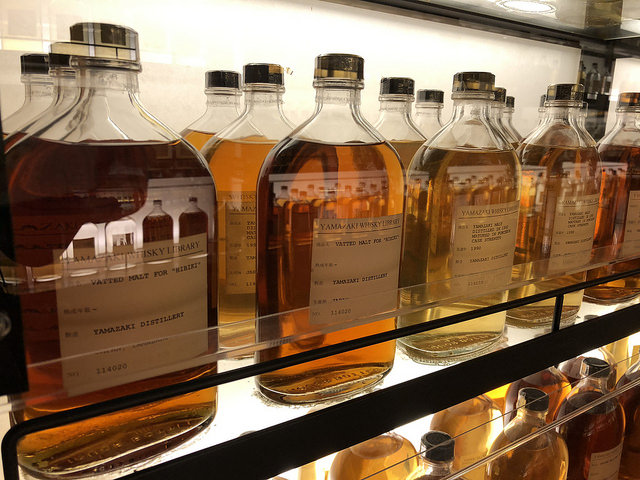
whiskey library

The elusive Yamazaki 18 Whisky was not available for sale. It is the crown jewel whiskey in the Suntory range of whiskeys. We hope to find a bottle for my uncle someday.

I particularly liked the whiskey library on the premises. The researchers at the distillery try different methods and blends to come up with better tasting products. They also sample other whiskeys from around the world. Visitors can buy these test whiskeys and they come in really cool bottles.

29017139927_d2194949df_c
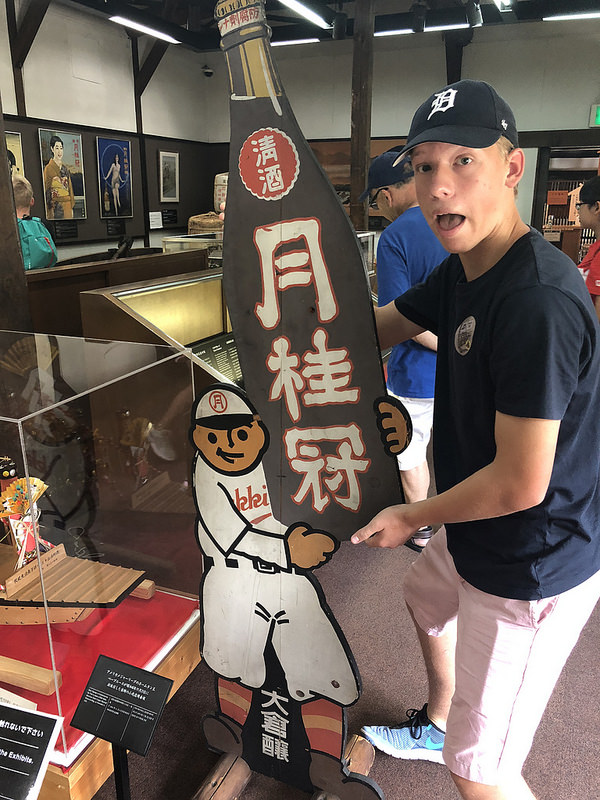
Babe Ruth visited the brewery in 1931

After lunch in a restaurant near the distillery, we went to a sake museum in Kyoto. After navigating the narrow streets of the city, we eventually arrived at the museum. Sake takes more processing than beer and wine and there were informative displays going through each step. The highlight was a sign that commemorated Babe Ruth’s visit to the brewery.

42146516270_8aeb9fbe02_z

Visit to Hiroshima

43049570005_cf5c659ba9_z
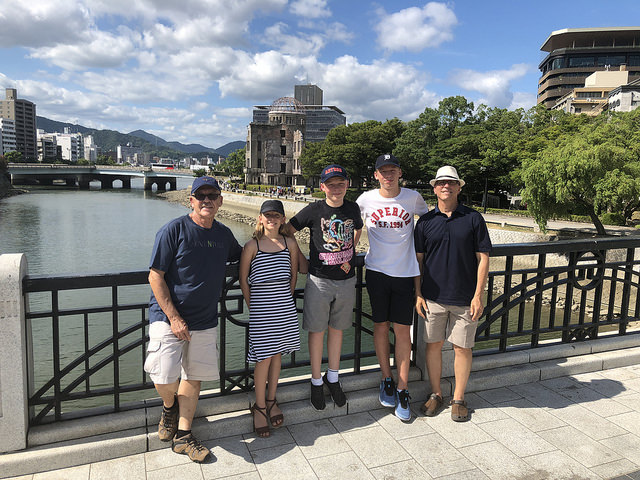
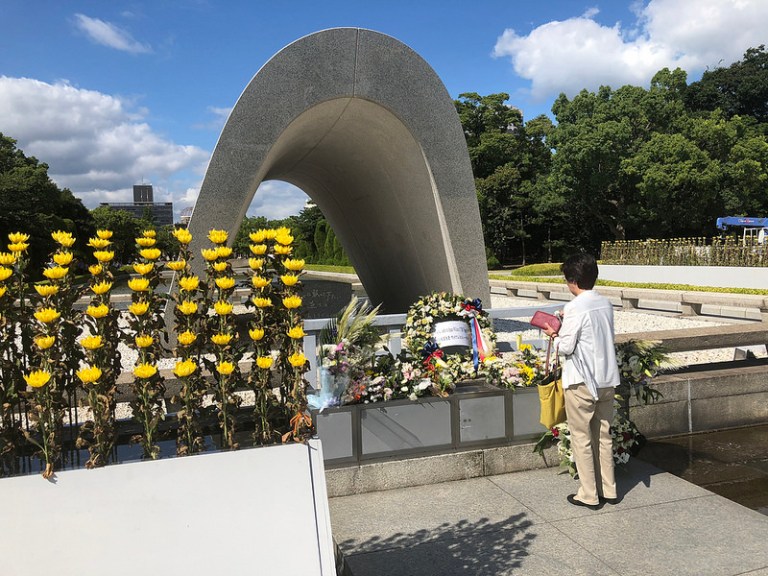
Jack & I with the kids in front of the Atomic Bomb Dome

Hiroshima is one of my favorite cities in Japan. It is the perfect size for a city, about 1 million people. Osaka, the city I live in, is a bit too big, but our suburb of Minoh is really nice. Hiroshima also is beautiful, surrounded by mountains and it has wider streets than most Japanese cities. This is my fourth visit to the city, twice for school business and twice with my family. Because of the history here, the beauty and the proximity to Osaka, it is an easy place to take guests and give them a taste of a different part of Japan. My uncle is visiting this week, our last of summer holidays, so we took drove the 4 hours from Osaka to Hiroshima this morning.

43954715931_42f07b6382_c
Flowers to mark the anniversary August 6, 1945 

71 years ago Monday, US forces dropped “Little Boy” above what is now the Peace Memorial Park. Going through the museum is always emotional for me. Reading the stories and seeing the photos of the children killed by the blast is tough, especially as a father. Not only the 140,000 people dead is a tragedy, but the families of the 140,000 that survived. As I’ve written in the past, every world leader should come and visit the memorial. Hopefully, it will make them consider more the human toll behind ordering bombings. Today is the anniversary of the Nagasaki bombing, a city I hope to visit before leaving Japan and one that does not get recognized enough for what it suffered.

43954713341_5f43cfe096_z

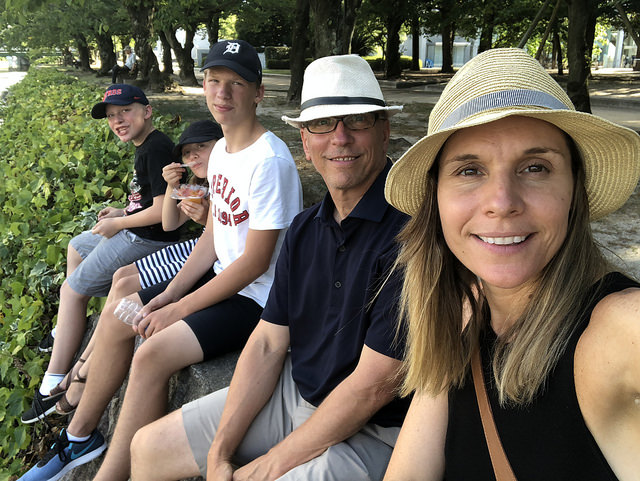
It was so pleasant in the late afternoon sitting along the Motoyasu River that we spent several hours, just watching the river under the trees. That is one good thing to come from the nuclear bomb, a beautiful green park in the center of the city. Our relaxation came to an abrupt end when an unnamed member of our family (perhaps my spouse) dropped my iPhone 8+ into the river. Oliver climbed down the embankment and retrieved it in about a foot of water. We learned that the iPhone 8 is water resistant and when dropped in water for under 30 minutes and less than 1 meter, it should be OK, which so far, my phone has been fine.

43049547625_f9e50b9a3c_z

We are staying in an Air BnB apartment near the park. Nadia and I went for a drink at a local sports bar and watched the extra innings of the first place Hiroshima Carp against the Chunichi Dragons. The patrons were totally into the game and it was fun to watch the outcome of a replay challenge of a close play at first base.


Swimming in the Sea of Japan

43680181361_b752016e9f_c
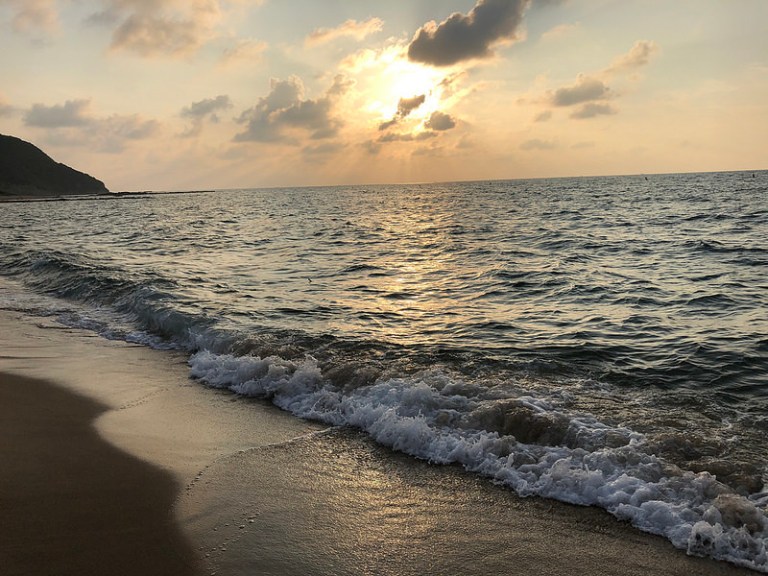
Swimming at Sunset 

With a typhoon coming later this weekend, we took advantage of the final day of sunshine and headed north to Kotohiki Beach on the Tango Peninsula. Spending a day outdoors at the beach is so much better than staying at home in these days of ubiquitous personal digital devices. It was so nice to have the family playing together and the kids enjoying nature. The water was a perfect temperature and 5+ hours at the beach goes by quickly.

The Sea of Japan is an interesting body of water. Like the Mediterranean, it is mostly enclosed by Japan, the Korean peninsula and Russia with narrow straits on the north and south. The Tango Peninsula makes a good place to keep an eye on (radar) North Korea and the Japan Self-Defense force and US military have a “sub-base” there. The dishes are located on the top of a mountain near the tip of the peninsula. We saw some US soldiers swimming at the beach the last time we went.

29810439848_6a3f33d7da_z

Like the Persian/Arabian Gulf, there is a naming dispute. The Japanese call is the Sea of Japan and that is the most accepted name. However, the Koreans call it the East Sea. Biologically, the Sea of Japan has a higher oxygen content that the Pacific Ocean and fisheries are a major piece of the economy.

As you can see by the sign below not everyone approves of the military bases on the peninsula. We saw this sign near the exit of the expressway as we were driving to the beach.

29810302148_b137b5eb84_z

We ignored the geopolitics of the region and had another fantastic day. The coast is so beautiful and the small towns on the peninsula are quaint and laid-back. It is one of Nadia’s favorite places in Japan.

43680183091_500bb8c69c_c


Cooling off at Lake Biwa

42943423604_f3e1f01ec0_b

Climate change has been on my mind this summer here in Japan. Japan is known for hot, humid summers but this year, the government declared a national emergency because of extended temperatures in Tokyo over 40C (104F). 65 people have died, over half being elderly. Typhoon Jongdari or in the Japanese numbering system, 2018-#12 is predicted to pass directly into Osaka this Sunday evening (see map below) ending the heat wave.

41851475170_9067974be1_c
Courtesy of Japan Meteorological Agency (my dates added) 

Weather and climate are complex systems and causes of heat waves are from a variety of factors. However, the frequency, duration and higher temperatures that the earth is experiencing are definitely caused in a large part by climate change. The Economist’s excellent science podcast, Babbage has a short piece with a climate scientist that explains the role climate change is having on world heat waves.

41852065140_e02496870d_c

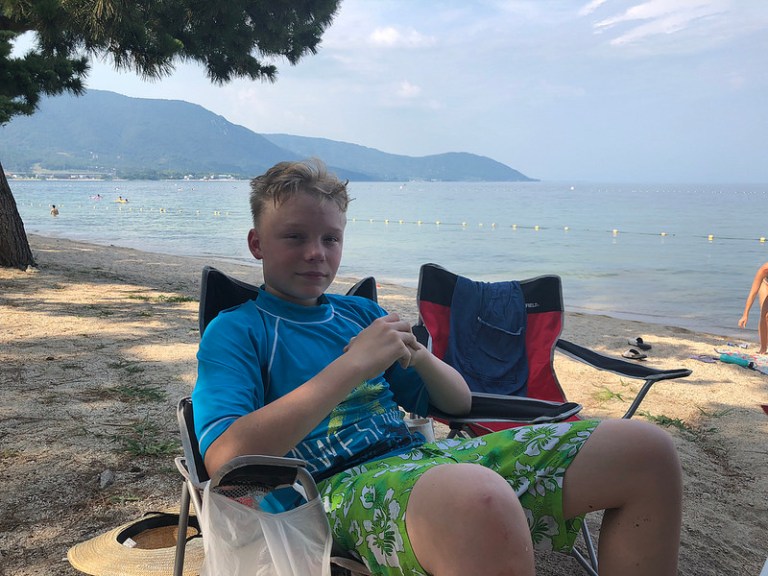
My family did what a lot of people are doing in Japan this summer – head to the beach! That is a nice thing about living on an island, the ocean is never far away. However, yesterday, we visited Lake Biwa, the largest freshwater lake in Japan. It is located in the adjacent prefecture of Shiga. We drove 1 hour and 30 minutes to arrive on Omi-Maiko beach, the most scenic public beach on the lake. Lake Biwa is huge, although not as big as the Great Lakes of my home in Michigan. It has 146 miles (235 km) of shoreline, with a maximum width of 14 miles (23 km) and maximum length of 40 miles (64 km). It is an ancient lake, scientists estimating 4 million years old. It gets its name from the shape, which resembles a biwa, a traditional Japanese instrument. I think it looks like a loon.

We had a delightful, refreshing day at Omi-Maiko beach. Large black pine trees (Pinus thunbergii) provide shade over the beach consisting of a pebble/sand mix. We found a quiet spot on the long beach. We spent the day snorkeling for “treasure” and found a pair of swim goggles, a fake gold watch among mostly glass, plastic and old fishing lures. We had a home run competition, using rocks and a plastic bat. This time we packed tables and chairs which was much more comfortable than our last visit to the beach.

It was our first time swimming in the lake. We did several snow-hiking and ski trips in the Hira Mountains that overlook Omi-Maiko beach last winter, so it was nice to see them in the summer. An interesting observation about Japanese culture. They do not value waterfront the same as Americans and so the lake is not surrounded by private property, which is nice for a change. We will be heading back to the Kotohiki beach today for one more day of water before the typhoon arrives this weekend.


The Beauty of the Tango Peninsula

43565623571_ed96f44cc2_c
Kotohiki Beach, Kyoto Prefecture

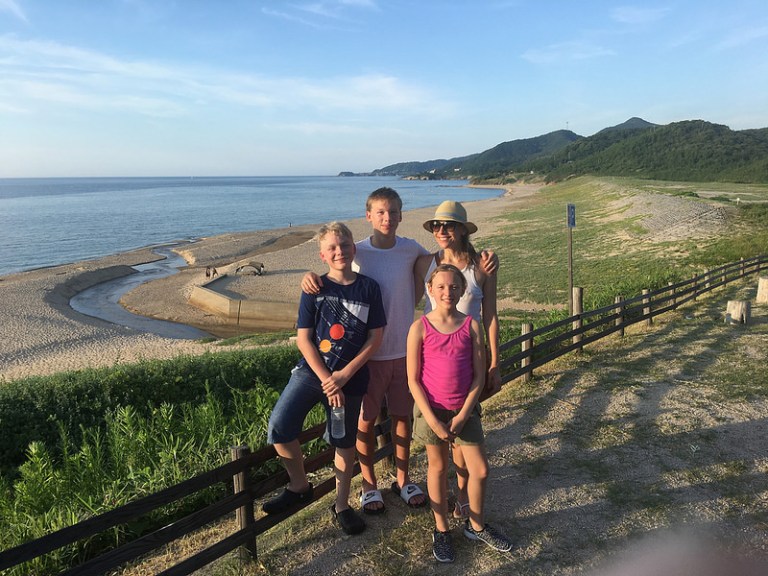
Although it is not promoted with international tourists, the Tango Peninsula is one of the most beautiful places I’ve seen in Japan. It juts out like a thumb into the Sea of Japan. It is 146 kilometers by car (2-hour drive) from our suburb of Minoh. We spent an idyllic summer day at Kotohiki Beach on Saturday. With some beaches in Japan, especially during the “swim season” it can get crowded, but Kotohiki had relatively little people and lots of golden sand and turquoise water for everyone to enjoy. We rented a tent, brought the cooler, blanket and books and had a delightful afternoon of swimming, playing Uno, snacking and exploring the tidal pools formed on some of the rocky sections of the shore. As you can see by the pictures, it compares favorably to any beach I have been to.


42653111855_071305f97b_z
Lots of dramatic views along the highway 178

I love spending the day outdoors. Being close to nature recharges my soul and being able to share the experience with my family is pure bliss for me. It took some nudging to get the kids out of the house in the morning of course, but as usual, once they are there they have a great day.

41750260700_8c59425d7f_c
Camp Kralovec

We are experiencing a heat wave with temperatures in the 90s daily and humidity over 50%. I love the hot weather and am not really bothered by it. I feel worse in the winter in cold weather. I love summer!

42653114925_477dcc88dc_z

My Fervour for Cycling

43428938772_11f5f07270_c
Terraced rice paddies in Toyono, Osaka 

My favorite aspect of living in Japan is being able to road cycle relatively safely. Because there are a lot of pedestrians and cyclists, they have the right-of-way, which is opposite in my home country of the USA  where cars rule. I think it is part of the reason people are healthier here than in the USA because everyone walks and rides to do their daily errands. I think it was a mistake for American society to make the car “king” and make it almost impossible in many places, to walk or ride to get your daily activities. Things such as zoning laws, lack of bike lanes and sidewalks, low-density housing, etc. have all contributed to this. These topics have been addressed by many before and there is some progress, but America has a long way to go to reach a level citizens being able to move daily for health and reduction of reliance on fossil fuels.

I have a long glorious summer to cycle every day and I absolutely love it. It is pure pleasure to ride up and down the rolling hills in the northern Osaka and Kyoto prefectures just outside of our suburb of Minoh. I feel myself getting stronger.

43428940082_efc51b07cd_c
View from the Osaka Hokusetsu Cemetery 

Watching the Tour de France also helps get me motivated to get out daily. Using a VPN, we are able to watch the SBS (Special Broadcasting System) coverage. SBS is similar to National Public Radio in the USA except that it is specifically geared to multiculturalism. Their sports programming included the World Cup and Tour de France.

There are risks to cycling and I try to be as safe as possible. I try to obey traffic signals, am cautious around intersections and high-traffic areas. I also go much slower than I possibly could downhill and always wear a helmet. Cycling has prolonged by exercise by giving my knees a break. My knees have a lot of running miles on them as I have been active in distance running since my early teens. I can only now run a couple of times a week and cycling has taken the place of running.

29606194588_ab649c2d5e_c
Sugi (Cryptomeria japonica) trees line many of the roads in northern Osaka Prefecture

I ride a Merida road cycle which was a hand-me-down from a departed faculty member. He left it and it sat unused in the parking lot until I took it into a shop to refurbish it and get it road worthy. It may be time to buy a proper cycle with biking shoes and pedals. I am still resisting wearing Lycra shorts and top and going all in on the gear and equipment, but I see the appeal. I read some articles about the MAMIL (Middle-Aged Man in Lycra).

The other part of cycling I like is the stress relief it gives me. Going for a ride first thing in the morning or after a day at school is such an uplifting mood-boosting activity.  The camaraderie with friends is also  great. Kids are back from running with mom. I’ll blog a bit more about cycling later this summer.


Naoshima: The Island of Art

41563908250_6e80bb0c76_c
Ocean and Nadia allowing Naoshima’s charms to work on them – Gotanji Beach

Naoshima is an example of the power of the arts to transform a community. It helped to have an art-loving billionaire invest in the island. His vision is reviving this small island.

42655480624_ec3d805db1_c
Kusuma’s red pumpkin greets visitors at the port on Naoshima. 

Soichiro Fukutake is the son of the founder of Benesse, a huge publishing and education company headquartered in Okayama, a city 2 and 1/2 hours’ drive from Osaka. His father, Tetsuhiko, used to lead summer camps on a small island (3 miles square) just off the coast of Okayama called Naoshima. Soichiro had fond childhood memories of the island and wanted to help revive the economy. Naoshima is one of the thousands of islands in the Seto Inland Sea (瀬戸内海) the 400 kilometer part of the Pacific Ocean between the main Japanese islands of Honshu and Shikoku and Kyushu (see map below). It is an important shipping route and more importantly for me, it looks and feels like the Mediterranean. We visited the island of Miyajima, just off the coast from Hiroshima this past Christmas.

5445_map_setonaikai_01

Naoshima’s fishing industry was dying and young people were leaving for economic opportunities on the mainland. Fukutake decided to build several contemporary art and architecture museums on the island and commission works all around the island. The Chichu Art Museum displays 5 original works from Monet’s series “Water Lillies”. When sold at art auctions, they go for $15-20 million dollars each! Publishing and education are big industries in Japan, a society that values education where families pay billions for out-of-school classes in language, mathematics, test preparation, etc.

29502469548_eea6d5ec77_z
Oliver on Gotanji Beach at sunset

There were some powerful pieces in the museums. I best liked the Benesse House Museum with the large art/architecture works. “Spirit of the Sky” was super cool and we spent a lot of time just looking up at the sky. I am ambivalent towards contemporary art. Some of the works inspire me and recharge my soul, but others, like Lee Ufan’s minimalist “Mono-ha” style, which consists of huge canvases with a single stroke of a paintbrush, felt like a practical joke on the patrons, paying 1,060 yen to enter the museum devoted to his work.

42655481524_3db2da623c_c
Nadia and Ocean contemplating the changing sky “Spirit of the Sky”

For example, Yayoi Kusuma’s pumpkin at Gotanji Swimming Beach brings hundreds of tourists to photograph. It turned a regular pleasant beach into something special, with just that addition of one, large yellow polka-dotted pumpkin at the end of a pier.

42655489674_f473c2ed1d_c
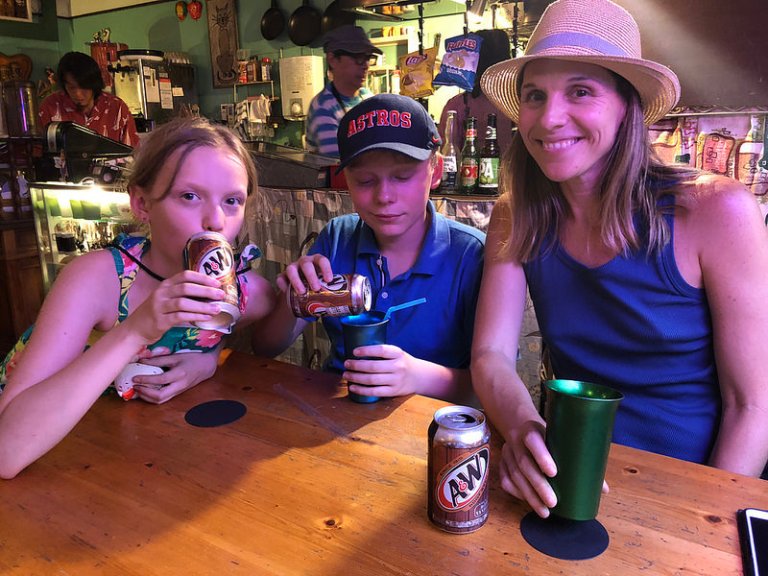
Root beer! Shioya Diner

In between viewing art, we swam at the beach, ate some good meals and relaxed at our cute/clean/cozy hostel. I especially recommend the Shioya Diner, with its retro American diner decor and delicious cajun chicken dish.

43323582052_f19061f70e_c
Oliver at the top of the Benesse House Museum

I managed to go for a hike one morning to a secluded beach near the fishing pier. I saw a trail on Google Maps and thought there might be some birds. I did get some excellent insects photos, but the birds were the same kinds found in suburban neighborhoods. The tourist commission of Naoshima should develop the trail and clean the beach where it ends. It could be another nice activity to do and promote the preservation of forests on the island. We did not get to see some of the abandoned homes that were transformed into art pieces or see many of the large works spread around the island.

Without Benesse, Naoshima would be just another small town of elderly in rural Japan. Instead, international tourists visit the museums and residents are able to make a living catering to them.I find it interesting when megacorporations invest in the small town of their founders like Walmart or Lego. It does have a relaxed rhythm and is a perfect get-away from Osaka/Kobe/Kyoto city. Because Nadia and Ocean love art so much, we’ll probably go back to visit. I highly recommend staying on the island.

41563907970_e5915aa301_c
Yayoi Kusuma – “Yellow Pumpkin” 

Family Journal July 8, 2018: Here Comes the Sun

43285314931_620800cb36_z
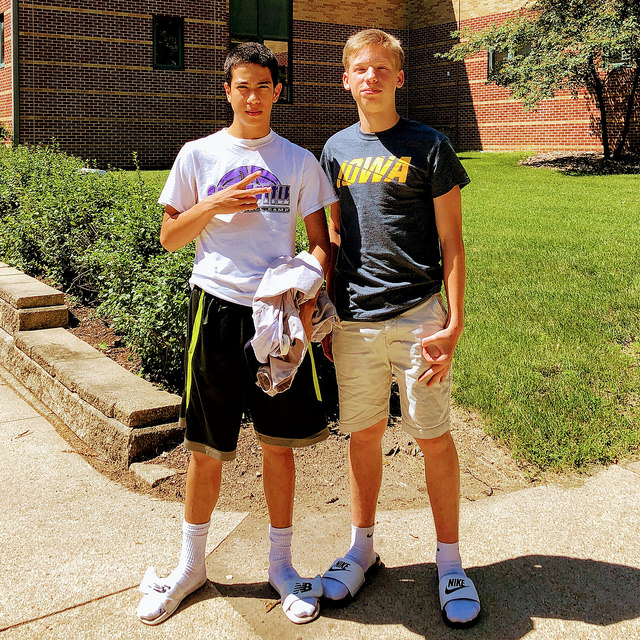
Owen & Ren at Wartburg College (IA) Basketball Camp

The rains have finally come to an end and there is glorious sunshine and blue skies today. After almost 4 days of continuous rain, the nicer weather has come. Flooding in many parts of Western Japan caused deaths, evacuations and lots of repairs and cleaning. Our neighborhood was spared except for an embankment of a reservoir as you can see in the photo below. City employees quickly laid the tarp to hold the land and prevent more sliding.

42381846265_2cb833baa7_z

Yesterday I took care of errands, helping friends and us haul more unwanted items up to the Minoh Clean Recycling Center. They were not charging for dumping until yesterday due to the recent earthquake. I was happy to clear out the garage and back garden.

It felt good to get outside on my bicycle. My friend Ilan and I went 36 kilometers along the Yodo River and through Takatski, 10 kilometers west of Minoh where the epicenter of last month’s earthquake took place. We didn’t see any major damage. In the afternoon I made zucchini lasagna which you can see on my YouTube channel.  In the evening, we took Ocean out for ice cream and suica (watermelon). Oliver spent the afternoon with his friend from school and Owen is still in Iowa, so it was quiet in the house.

42381842645_861ccb172c_z

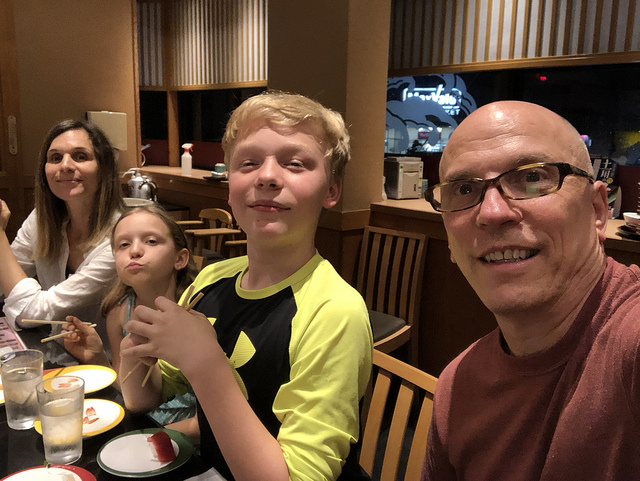
We went for sushi on Saturday evening at the Nigiri Chojiro restaurant in our suburb of Minoh. It is really good sushi and nice atmosphere on a rainy evening.

Today is my last day in the office and I am looking forward to getting a much-needed break from school.