It was a dreary, rainy day today but it was lightened by the “only in Japan” umbrella sheath. It is quite common in the entrance of buildings to find plastic wraps for umbrellas. Japanese love umbrellas and it is rare on a rainy day to see anyone without an umbrella. Women use umbrellas on sunny days as well to avoid getting a tan. As you can see in the photo above, I was surprised at how much water was on captured on the bottom of the sheath. I have a large umbrella and it was difficult to slip on the tight-fitting sheath, but I was happy not to have any leakage and keep the floor of the meeting room dry.
My only complaint would be the plastic use. More plastic bags to end up in landfills…
One forgets that Tokyo is on the water. The metropolitan area is massive and every trip I make I get to know a different part of it. This time I explored the area around Shinagawa station. Shinagawa is one of the major train stops in the huge spider web of train lines that makes up the network. We had dinner on one of the canals that comes in from Tokyo bay. It was odd to see big fishing boats close to big buildings. It reminded me a bit of London and the Thames River.
My morning run
Most of Shinagawa is reclaimed land and has been occupied since the Edo period. Today it is the home of hotels, embassies, office buildings and home to close to 400,000 people. You can feel the density with the many apartment buildings. It is very pleasant along the water and the best example I have seen in Japan about developing the waterfront. In the US and Europe, property along the water is looked at as desirable they are often packed with expensive housing, restaurants, bars, and usually have a walking/biking trail. Japan on the other hand, does not view waterfront property like that. Most coastline real estate is not residential. It is just not in their culture to desire living or being on the water as much as in other countries. That is odd for an island. I think it that it dates back to the Shikoku period, when for over 200 years, citizens were not allowed to leave Japan.
Shinagawa has a nice paved path that made for a pleasant run this morning. I spotted black-headed gulls, cormorants and spot-billed ducks in the pretty clean water. At least it didn’t smell or look polluted.
The view from the TY Harbor restaurant
Alas, I didn’t have enough time to explore the area more because of work, but it did give me a glimpse of another part of the biggest city in the world. I recommend a night out on the water. We had the head of school dinner at TY Harbor restaurant. The food was decent and the craft beers delicious. It also had a bustling atmosphere and different from Osaka, lots of foreigners. I hope to get back again.
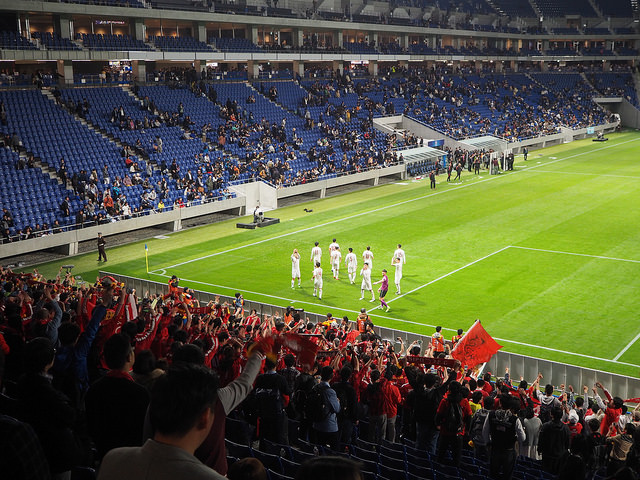
Last night my friend Josep and I took our boys to the Asian Football Confederation Champions League game between our home Gamba Osaka and Shanghai SIPG Football Club. It was our first time to the new Suita City Stadium, which is absolutely gorgeous and a great place to watch soccer. The visitors won 2-0 virtually eliminated Gamba from the competition, but we had a great time anyway.
Shanghai players acknowledge their fans after the game
The Suita Stadium is conveniently located only about a 15-minute bike ride from our house as Suita is a suburb of Osaka that borders on Minoh. The 40,000 seat stadium opened this winter and it was our initial visit. I loved the rectangular shape of the stadium, without an athletic track that puts spectators really close to the field like in many English Premier League stadiums. I was not sure about the seat location when I purchased them online. We were in the “family” section and the reasonably priced tickets (1,500 Yen for children and 2,500 Yen for adults) gave us seats a few rows from the field behind one of the goals. On the opposite side of the stadium were the fervent Gamba supporters and they provided a nice backdrop with their singing and chanting through the game, similar to the European professional leagues.
Conca with a free kick
Shanghai International Port Group FC had a much better team and game and deserved the victory. The coach is the famous ex-England coach Sven Goran Eriksson and they had a couple of high-priced stars in Conca (Argentina) and Elkeson (Brazil). They dominated play and fortunately, the two goals in the second half came on our side of the field.
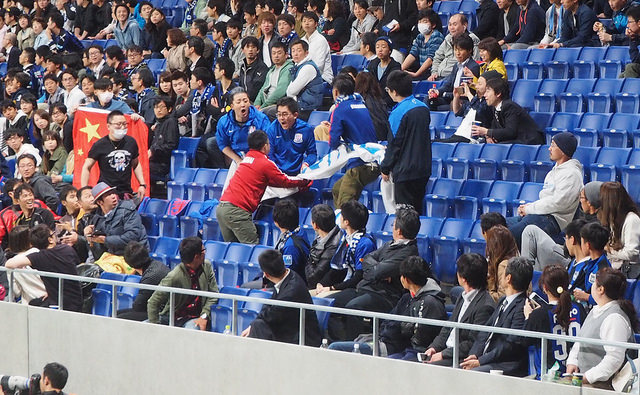
Fight between supporters of the teams
It was interesting to watch the China versus Japan dynamic played out in the stands. We were near the visiting fan section. Several Gamba supporters tried to raise a sign that I couldn’t read but it had something about Shanghai. A Chinese fan grabbed the sign and eventually threw it on the field before being escorted out by security. There is a lot of tension between the two countries, stemming back from Japanese takeover and occupation of China last century. I felt like watching the future conflict between the two countries as China is growing economically. It is the first time in a long time that both Japan and China are doing well economically and I wonder what the repercussions will be for the Asia Pacific region. I hope they can cooperate for the benefit of citizens from both countries.
Go Gamba!
We had a great night as fathers and sons bonding over sport and it was a thoroughly entertaining night. We might head to another game in the regular J1 professional league this season, although Gamba is currently in 12th place in an 18-team league after 5 games.
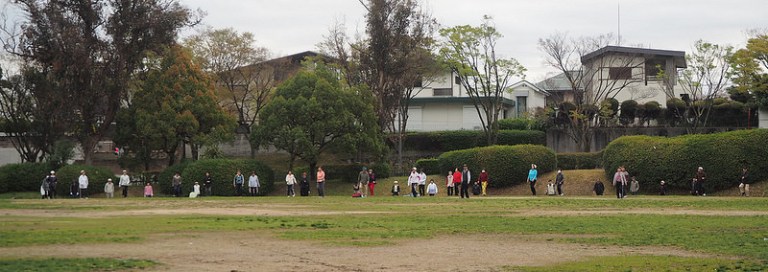
This is a common sight in morning parks throughout Japan. Groups of senior citizens perform synchronized stretching exercises. I photographed them yesterday morning during my bike ride in Senri Chuo central park. 1/3 of Japan is age 60+ and 1/4 is 65+ and this reflects a trend in people living longer and young people having less children. If it continues, in 40 years, 2060, 40% of Japan will be over 60 and the population will drop from 128 million in 2010 down to 87 million. A professor at Tohuko University continued the calculations, stating in the year 3776, Japan will be down to 1 remaining child.
In some ways this is good for Japan in that Tokyo, Osaka and other cities are overcrowded. One needs to be selective when going for holidays or excursions during breaks. Traffic and crowds are something always to be aware of. In many ways it is bad however, to have a dearth of young people, especially regarding taxes and pensions. It will force Japan to consider immigration to get more working age people here.
The exercise group is an example of the healthy living here in Japan and why people live long, productive lives. Older people eat a lot of fish and vegetables, don’t eat big portions and do a lot of walking and biking. That compares to the sedentary lifestyles and highly processed unhealthy diets of many Western cultures.
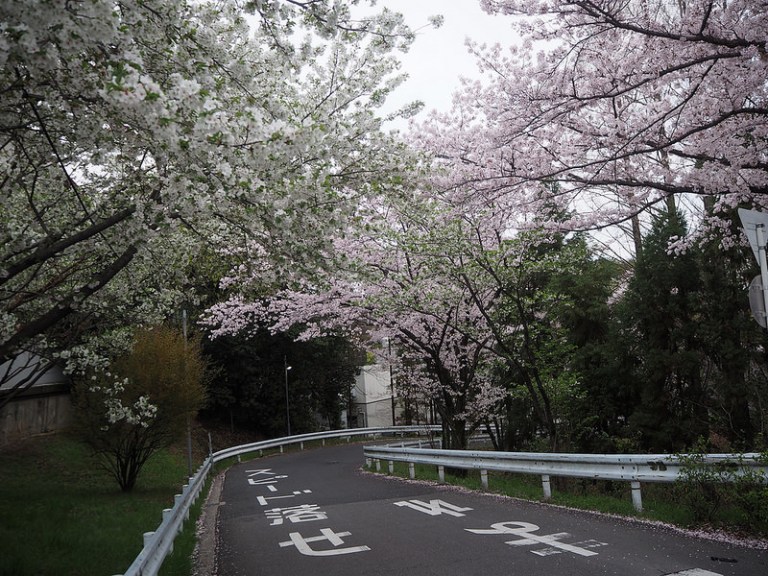
Taking my mind off Japan’s demographics, we are in the middle of sakura (cherry blossom) season and it is really stunning! There are lots of cherry trees in the city and as you can see, they are shining in color. The culture appreciates this explosion of life and the ephemeral nature of the bloom. Hanami (viewing parties and picnics) are common at this time of year.
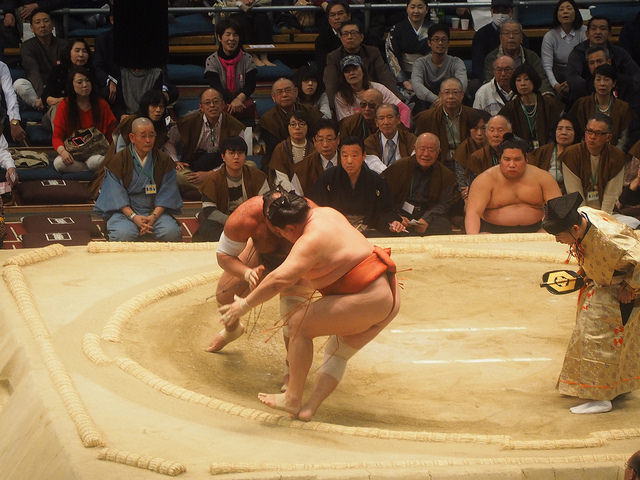
I absolutely loved my experience attending the 2016 Osaka Grand Sumo Tournament on Thursday. I won’t bore you with all the details of the sport. If you want to know more about sumo wrestling, check out this English guide here. There are six “grand tournies” per year, 3 in Tokyo, 1 in Nagoya, 1 in Fukuoka and in March, they come to Osaka.
It is such an unusual sport. They maintain many of the traditions and religious aspects that surrounded the sport 1,500 years ago. For example, after each tournament, they publish a banzuke, which is a ranking of all 800 professional sumo wrestlers. Instead of a straightforward list, it is printed in an ancient format. It is like the top 10 college football rankings to be written like the Declaration of Independence, with cursive letters from a quill pen. The ancient customs mean the wrestlers go through the all the rituals like throwing rice to “purify the ring”, the referees where traditional folkloric costumes, etc. The wrestlers choose ring names, like Egyptian wrestler Abdelraham Salel’s “osunaarashi” which means sandstorm in English. He won his match against a Mongolian.
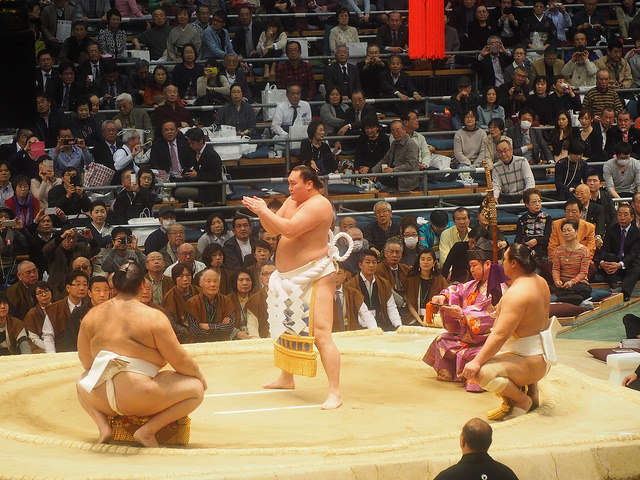
Above is the greatest wrestler in the history of sumo, Hakuho Sho, the winner of 33 grand tournaments, the most ever. He went 86-4 in two consecutive seasons. He is performing another shinto ritual before the matches begin in the final round.
I can see why the guys are so fat. The object of the sport is to push your opponent out of the ring or have a body part other than the soles of the feet touch the floor of the ring. The heavier one is, the harder it will be to move them. I wonder how professional American football players would do in this sport. The sumo guys are big and they must train really hard, but I wonder if one applied the latest techniques in strength training, nutrition, advanced statistics, film analysis, etc. I would like to know more about the different techniques used by the wrestlers.
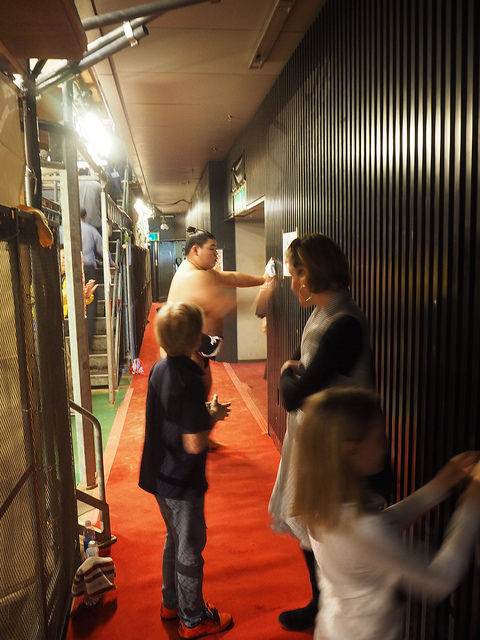
Oliver gets “up close and personal” with a sumo wrestler
The stadium in Osaka is unique in that you can get up close and personal to the wrestlers. You can stand in the hallways as they enter and leave the ring. We also saw many outside the arena, getting lunch at Family Mart or taking a taxi. Hilarious to see these big guys wearing robes and sandals walking through the streets. Their hair smells like chamomile which is another ancient ritual. I wonder if the guys really believe in shinto rituals or they do it because they have to and it is part of the sport. I think it makes the sport more appealing. The top wrestlers make a lot of money and have beautiful wives, which should not have surprised me. Beautiful women seem to come with money.
I will definitely go again, just not with the kids as they didn’t have the patience to sit through so many matches. There are bouts occurring all day, with the lower rounds starting in the morning, culminating with the masters in the late afternoon. It is a 15-day tourney and the wrestlers fight daily in round-robin style. The best record wins.
I will end this post with a portion of Hakuho’s pre-match ritual. He is the greatest off all time!
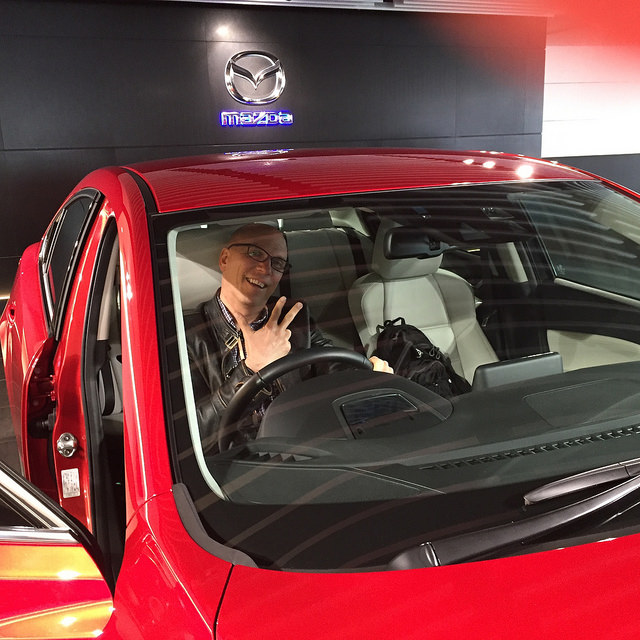
I visited the Mazda Motor Corporation yesterday as its world headquarters are in Hiroshima. Hiroshima is most well known for the atomic bomb blast. Without that, it would be known for being the home of Mazda. Car manufacturing is big in Japan with the world’s largest producer of cars, Toyota, being based in Nagoya and four of the top 10 largest automobile manufacturers in the world being located in Japan. Mazda is number 15 in the world. They had a long relationship with Ford, but recently Ford has divested itself from Mazda and only owns 3%.
Hiroshima is almost a company town, with the Mazda complex taking up 7 kilometers of the city. We toured “Mazda-landia” and it is huge. They have the world’s longest privately owned bridge, two fire stations, a hospital, a coal burning power plant and even their own port! They have a large test track in another part of the city.Mazda also owns the professional baseball team, the Hiroshima Carp and professional soccer team. I can imagine how big the larger car companies must be! I am embarrassed to have grown up in Michigan and never visited Ford or GM.
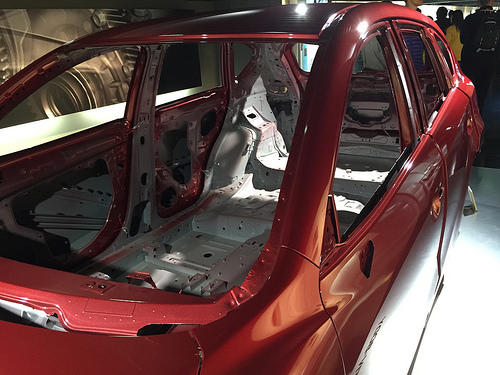
The metal frame before it hits the assembly line.
The most interesting part of the tour was watching the 1000 meter long assembly line. I could have stayed for a couple of hours. There were not too many assembly workers as much of it is controlled by robots and machines. The guys on the floor were all young and nimble, crawling in and out of cars. They assemble a car in 15 hours and they produce about 400 cars per day. Watching the frames getting parts stuck on with rivets and the incredible amount of engineering and logistics that goes into assembling an entire car in a day is amazing! We were not allowed to film or take pictures on that part of the tour.
I am not into cars, as I only see cars as a way to get me from point A to point B. I would never buy a new car, preferring to spend my money on other things. In fact I don’t even own a car and we just occasionally rent a car when we need it. I understand guys who are passionate about cars, but it is just not for me. The tour was interesting however and I learned a lot.
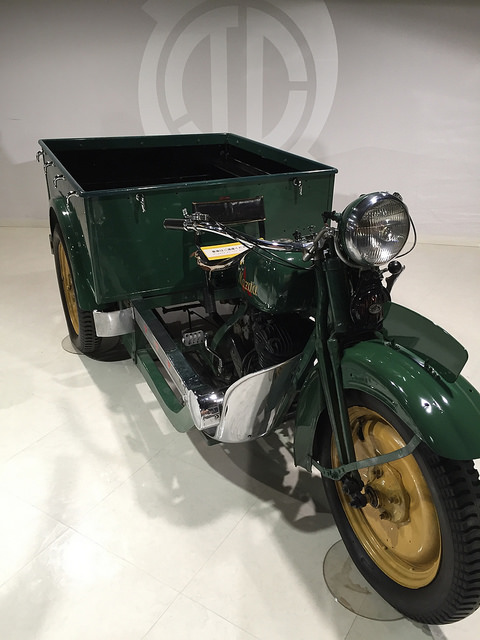
The three-wheeled truck that helped the city recover after the bomb.
Mazda’s speciality is the rotary motor, which is different from the common piston-driven engine. It has more power and a smoother ride, but is not very fuel efficient. This almost bankrupted the company in the 1970s, but they survived and have done well with the “roadster” or “miata” rotary engine car. They switched to the more fuel efficient piston engine for most of their models. The company survived the atomic bomb and were producing a 3-wheeled mini-truck only 4 months after the devastation. They were also the only Japanese car company to win the 24 Hours of Le Mans, accomplishing the feat in 1991.
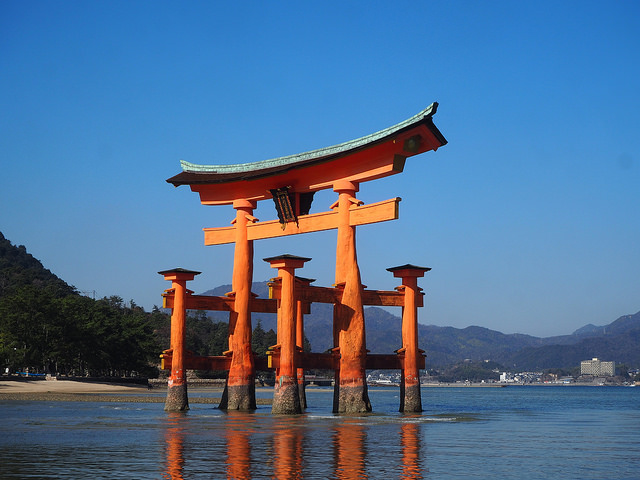
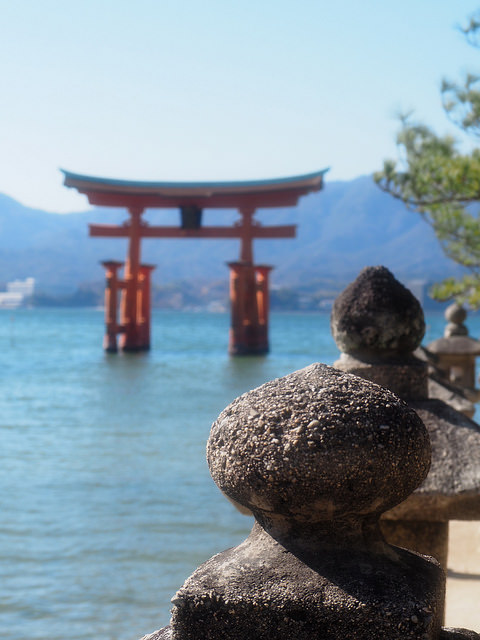
I can see why the shrine on Miyajima (shrine island) is an UNESCO World Heritage site. Besides the really cool looking shinto gate (torii in Japanese), the green, mountainous island in Hiroshima bay is a stunning backdrop. It reminded me a bit of the Mediterranean coast. I highly recommend staying at a hotel on the island and spending 1-2 days exploring. Besides being recognized by the UN, it is also one of the “three views of Japan” cited by 17th century scholar Hayashi Gahoo. This is the second of the three that I have visited.
The view from Mount Misen
My favorite part of the island is the hike to Mount Misen (535 meters – 1,755 feet). The views are spectacular, especially on a bright, sunny day like we had yesterday. It takes about 1 and 1/2 hours of pretty steep climbing, but well worth the effort. There is the typical tourist alley of shops and restaurants. We tried the Hiroshima style okonomiyaki, the savory pancakes. In Hiroshima they use more cabbage than in Osaka. I also had a bowl of the abundant grilled oysters that are caught in the bay. There are also loads of tame deer making a nuisance of themselves with tourists.
The torii at high tide.
It was a great day for me. Walking in nature, cool sea breezes, delicious food and lots of laughs with the students and fellow chaperones. Also being a weekday, there were not the usual holiday crowds. I can’t recommend enough, a visit to this special place.
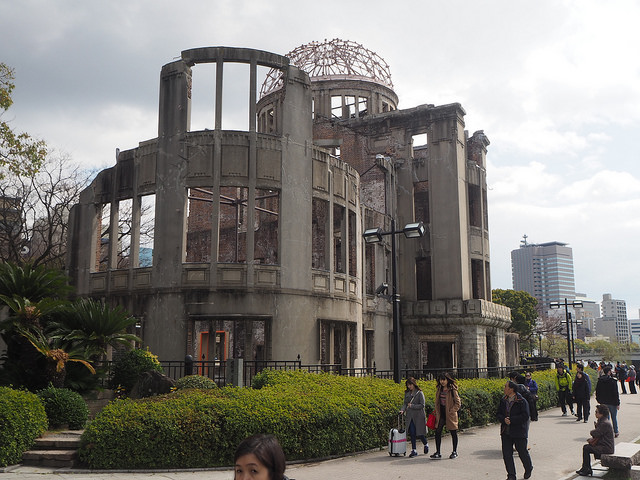
The Atomic Bomb Dome Monument – Hiroshima Peace Park
This is ground zero of the first atomic bomb detonation aimed at killing humans. The “atomic bomb dome” in Hiroshima is now a monument visited by thousands of people weekly in the Hiroshima Peace Park. On August 6, 1945, an uranium bomb exploded 600 meters almost directly over this building, a former exhibition hall. Because the angle of impact was directly above, the building’s columns and dome survived the blast while a kilometer in every direction was leveled. Almost half of the city (140,000 people) were killed and combined with a second atomic bomb in Nagasaki August 9, 1945, the Japanese surrendered on August 15, 1945, known as VJ Day (Victory over Japan) in the USA. The Americans were aiming for a nearby bridge as the target, but missed by about 300 meters.
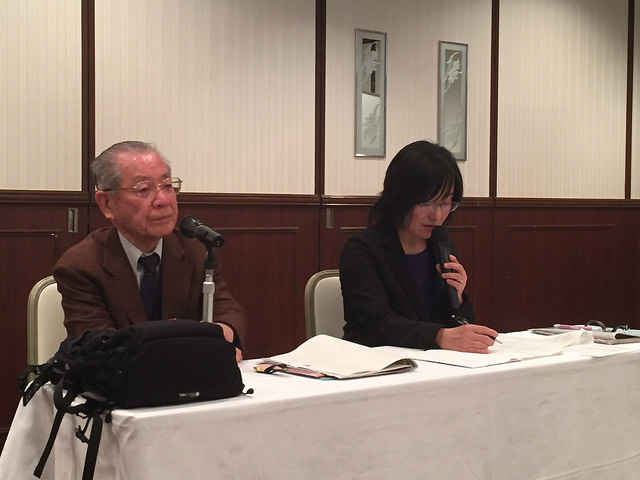
Hara-san gives his story with a translator.
I am in Hiroshima as a chaperone with students from our school. Last night at the hotel Garden Palace, we arranged a survivor of the bomb to come and speak with us. Hara-san is 77 years old and the former director of the Hiroshima Peace Museum. He was waiting for a train on that fateful morning at the Hiroshima station with his parents and older sister. Fortunate for him, they were on the backside of the building and luckily survived the walls crashing on them. The debris protected them from the fire and they were able to crawl out. They also fled the city in an eastward direction, which was away from the epicenter. They had no idea which direction the blast came from and by leaving to the east, avoided more radiation poisoning. He spoke of stepping over dead bodies for hundreds of meters and listening to the cries of people with burned flesh. Absolutely horrible. His message to us was one of peace and futility of nuclear weapons. Walking through the museum and seeing the charred school lunch boxes and school uniforms emphasized the fact that many children died.
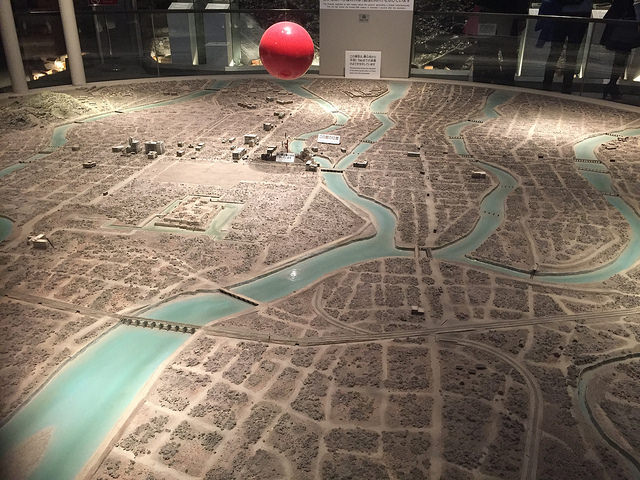
A scale model of the city after the blast – the red ball is bomb explosion.
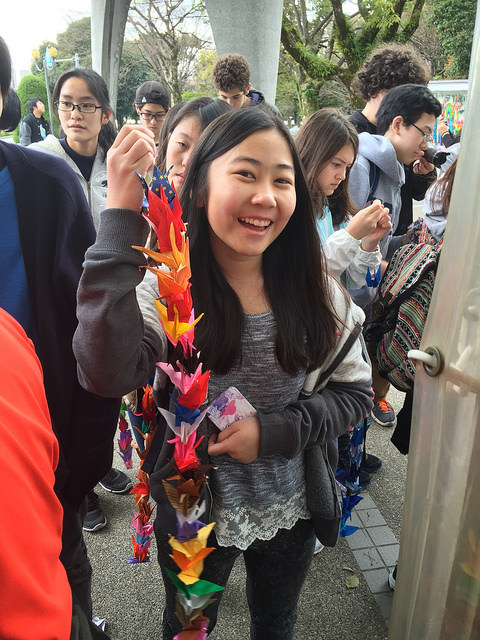
The grade 4 students made 1000 paper cranes, a symbol of healing and long life in Japan in honor of the children who died in the blast, and like the famous Sadako, died from cancer several years later, and the students placed the cranes at the children’s peace memorial.
On Thursday evening we attended a reception aboard the USS Blue Ridge. The communications and command flagship of 7th Fleet is making a friendly visit to the port of Osaka. The 900 sailors aboard will be enjoying a bit of R & R here in Kansai and doing a community service project with a local orphanage. The ship when not on patrol in the Asia Pacific region, is docked on a naval base near Yokohama. Nadia is shown above with a couple “cryptographers”, the communications specialists.
The heads of international schools in Kansai with US consulate students were invited to attend the reception hosted by US Consul General Greenburg. It was a crisp evening down at the port of Osaka where the Blue Ridge was docked, but the friendliness of the sailors and guests, live music and food and drinks kept us warm. It was my first time on a navy ship and it is incredible the logistics that goes into maintaining a vessel at sea carrying so many people. The Blue Ridge is quite old (since 1967) but it is well kept after and serves as a communications hub for the seventh fleet. We met the commander of the 7th fleet, Joseph Aucoin, and we discussed our memories of the Balkans, where Vice Admiral Aucoin also spent some time.
It is amazing and incredibly expensive the work of the US Navy. They have basically mapped out zones of the entire world that the various fleets cover. Thanks to the US navy, world trade and commerce can take place without disruption. Times are a bit tense in the Asia Pacific region with the always crazy North Korea and the rise of militarism of China in the South China Sea.
I would like to thank the personnel of the USS Blue Ridge and the US Consulate in Osaka for the pleasant evening! I also want to thank the men and women of the Blue Ridge and the entire seventh fleet for their service to our country and to the idea of democracy and free trade.
Sunday afternoon we took the kids down to the Yodo River, one of the big rivers running through Osaka into the bay. There are over 300 geocaches along the shores of the river and people come from all over to see how many they can get in a day. We did a loop around both banks of the river and got a bunch, but not close to 300. The sun was out and despite the cold winds, it was quite pleasant to be outside. The Japanese love baseball and play all year round as you can see by the photo above. I also like to see the large number of bikes at the park. That is one of the reasons the Japanese are so healthy is that they get a lot of exercise, which is a suggestion for Americans to improve their health.
As I have previously written, geocaching is a great excuse to get outdoors, spend time together as a family and explore new areas. The river banks are for public use in Japan and one finds sports fields, golf courses, bike paths, fishing spots, etc. We are passing over the Nagara bridge, just outside the central business district (photo above)
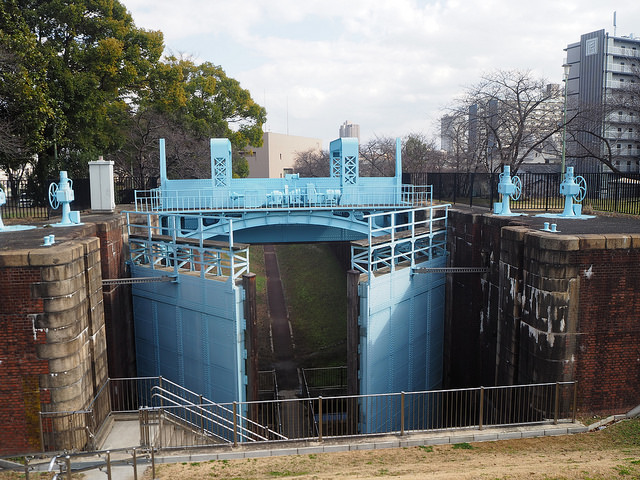
Above are the old locks that carried boats between the Okawa and Yodo rivers. Because of dams and levees to prevent flooding, the two rivers had a large difference in elevation. They are no longer used and city officials have turned them into a sort of outdoor museum.
A highlight for me was crossing this train bridge. The tracks are under construction so no trains are crossing, but Oliver was really frightened to cross, thinking a train would come. There is space on the side and it is safe, so it was a managed risk situation. We made it across with no problems.
Thanks to Josep for driving and Pico and Bernie for helping us find so many geocaches!










 Bill's Blog