Usce Mall Opens in Belgrade

With great fanfare, a new shopping mall opened in New Belgrade last week. It is called the Usce (oosh-chay) Mall and it is the largest in the Balkans. Usce means confluence, and it refers to the confluence, or meeting of the Sava and Danube (Dunav is Serbian) Rivers. The mall is on the northern New Belgrade side of the city, near the confluence.

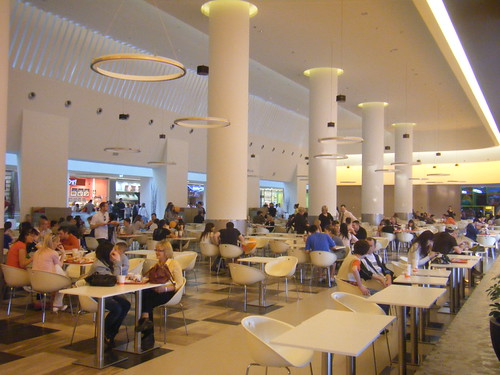
Food Court of Usce Mall

The mall is the largest in the Balkans and it may be a victim of bad timing.Despite the global recession, there were big crowds. I am not a big shopper, but women are pleased with the quality of the clothing stores. New Belgrade has two large shopping malls (Delta City & Mercator) but this one is more conveniently located, being closer to the river and the older part of the city. The other two malls are always busy so it seems like this will relieve the pressure, but I don’t see how the average Belgrader can afford most of the products. Generally, prices for clothes, electronics, etc. are more expensive than the USA and of lower quality.

You can see the Usce Tower in the left side of the photo. This is the former headquarters of the Communist Central Committee of the ex-Yugoslavia. It was constructed in 1964 and partially destroyed on April 21, 1999 by the NATO bombing. Today it is used as office space.

The View From the Food Court of the Usce Mall

Serbia Defeats Sweden

Last night a bunch of us from school went to the national soccer team of Serbia play an exhibition match with Sweden. The game was held in Partizan Stadium, which is close to the school. Serbia is doing well lately in it World Cup Qualifying Group and continued to play top flight soccer with a 2 – 0 victory.
The “White Eagles” got off to a fast start with a goal in the first minute of play by the 6 foot 8 striker, Nikola Zigic. He plays in the Spanish league (Racing Santander) and used his height to head in a crossing pass into the back of the net.

Boys from ISB Enjoy the Game

Sweden dominated play in the first half but did not get a goal. I had to go home to take care of the kids as Nadia has the flu and needed help. Fortunately, I didn’t miss much of a half and got back in time to see Serbia get back control of play. They scored a second goal in the 82nd minute by Bosko Jankovic, who plays for Serie A team Genoa.
Serbia is currently first in its group in qualifying for the World Cup 2010 in South Africa. They are at the midway point of the games. The top team in this European Group 7 qualifies automatically for the World Cup. In the remaining five games, Serbia will host Austria on June 6, travel to the Faroe Islands on June 10. When I get back from summer holidays, they have a huge game against soccer powerhouse France on September 9 at Red Star Stadium. They then host Romania on October 10, and finish the qualifying round by traveling to Lithuania October 14.
Serbia’s main rival in the group, France, defeated Serbia, but they lost to Austria and tied Romania, to end up 2 points behind Serbia. Lithuania is third, 3 points behind Serbia and Austria is five points behind.

Kosovo-born, CSKA Moscow Player Milos Krasic Heads Towards the Net

Serbia features several European professional soccer superstars. The captain of the national team, Nemanja Vidic is considered one of the top defenders in Europe and plays for Manchester United. They have many young stars and this is a team that has a shot, as its toughest games in the second half of the qualifying round are at home. Regardless of the outcome, it will be exciting to follow.

Sad Anniversary in Belgrade Today

UPDATE: The Serbian government asked everyone to observe a minute of silence at 12:00 noon yesterday. At the school, we paused before starting our afternoon classes and listened to the air raid sirens throughout the city. In Senjak, where the school was located, we heard at least three different sirens, although they were not that loud.

I also want to note that the Serbs separate governments from citizens and I have never felt any animosity towards me or my family. They are extremely kind towards foreigners and we feel very much at home in Belgrade!

Several long time expatriate teachers and Serb colleagues were meeting last night to commemorate the anniversary. They lived through the 78 days of the bombing and wanted to share their memories of that time. I might interview one of them to get their story of the school during the bombing.

Serbians will be recognizing the 1o year anniversary of the 1999 NATO bombing today. NATO (North Atlantic Treaty Organization) began a bombing campaign of 38,000 missions in Serbia in the spring of 1999, from March 24th to June 11th. The bombing campaign was in response to the Serbian government’s involvement in the then Serbian province of Kosovo.

The Former Yugoslav Ministry of Defense (B. Woodruff Photo December 2008)

Reminders of the bombing are present still today in Belgrade. On one of its busiest streets, the Knez Miloševa are two buildings that have not been repaired or replaced since the bombing. It is quite a shock to newcomers to the city. I remember seeing these on my first taxi ride downtown upon my arrival to Belgrade. It is a sad and tragic reminder of the Yugoslav Wars of the 1990’s. I am not sure why nothing has been done to these buildings. Perhaps it is lack of money, or perhaps Belgraders don’t want to forget. If any of my blog readers can enlighten me on this, please do so. The photo above was taken by a friend visiting us over the Christmas holidays. I took the photo below in April of 2009.

Different View of the Building - B. Kralovec Photo April 2009

The building above is the former Yugoslav Ministry of Defense which was bombed on May 7th, 1999. It was built in 1963 and it was designed by Serbian architect, Nikola Dobrovic. The building is divided by Nemajina Street and the design of the building is meant to resemble a canyon with the street as a river divided the two sides. There is an excellent blog by a Swiss architect married to a Serb which discusses many of the buildings in Belgrade and it also has an indepth description of the NATO bombing campaign.

The Yugoslav Ministry of Defense Building In Its Prime

The anniversary will be marked by air raid sirens, church bells, and ceremonial gatherings. Around 500 civilians were killed in the bombings and many Belgraders are resentful at the NATO bombing. The BBC has an article about the anniversary here.

Serbian Birthday Parties

We get invited to many birthday parties from the classmates of our children. We rarely go because with our hectic schedules, when we get some time away from school, we prefer to be alone as a family.

We made an exception Sunday as you can see above. The Serbs really know how to throw a party! Serbia is a south Slavic nation and has more in common with southern Europe lifestyles, than northern Europe lifestyles. They emphasize good times and family and there is more disorganization like Spain and Italy, than say Austria or Switzerland. That is a big generalization and it is not a comment on the entire population, but that is the trend I have observed.

The party was at a place called “The Jungle” and there are many childrens’ birthday party places in Belgrade. The children above are watching a magician on stage. See if you can spot Owen!

The hosts care as much as the comfort of the adults as children. There were probably 60 adults at the party and about 50 children. As you can see above, there is a nice cafe/banquet style seating for adults behind the children. The hosts had a really nice buffet and an open bar. The building was large, with separate rooms for a disco and play land.

Jungle Employees Entertain the Children in the Disco

The Jungle provided supervision for the children in the playland and did music activities with them in the disco. Quite an operation, that makes it easy for parents to hold a party. The downside I imagine would be cost, as I saw plenty of bottles of wine and food being consumed. Overall we had a nice time. We have a lot in common with the other school families with young children.

Belgrade is known for its night life. This is about as close as I get to the partying scene!

Team Photo With Cheerleaders

Yesterday the boys’ high school basketball team traveled to the outer suburbs of Belgrade to play The First Basketball School of Belgrade. The game was played in the beautiful arena used by the FMP – Belgrade professional basketball club. We specialize in producing global citizens, they specialize in producing basketball players, so you can probably tell how the game turned out. Our student athletes played well and improved quite a bit as the game went on. We even had the support of the cheerleading squad and mascot and both teams appreciated their enthusiasm.

The Principal of the school gave Dr. Sands and I a tour of the facilities after the game. The First Basketball School is for boys ages 14 – 18. The students mostly come from Serbia but they also have international students. The boys want to focus on basketball and two practices per day are an integral part of the curriculum. They have several levels of teams and they play an NBA – type schedule of games. The school is affiliated with the FMP – Belgrade professional team. FMP plays in the NBL Adriatic Basketball Leage. FMP is a steel product factory that sponsors the team. Many of the students are boarding residents and the Principal showed us their rooms. Students from the school after graduation in 11th grade, often complete the final year of their high school in the USA or home countries. Several earned USA university scholarships and some go on to play professionally. Many with the FMP club or other Serbian professional club.
Lajos looks inside.
Lajos looks inside.
The Serbs know how to do sports and this is an example of it. They take sports to the highest level. Most Serbian youngsters specialize in a sport and they are provided with the best in coaching and time. It is the reason why such a small country has so many successes in sports. They have three players ranked in the top 10 tennis players in the world, the Partizan team is one of the best in Europe, and the national soccer team is leading their group in World Cup qualifying.
Their team was spectacular with height, speed, fundamentals, etc. Our team improved in the second half and raised their game. The team scored 1o more points in the second half than the first and reduced the number of turnovers by 6. It was a good lesson for them. The ISB cheerleaders also performed several dance routines during time outs and cheered on the team during the game.
Nikola Sets Up the Next Play

Family Journal: Sunday March 1, 2009

We had a fantastic day yesterday. The weather was in the high 50’s and the snow was melting fast. It was the end of the Ski Week holiday. Reflecting on the break, the best thing about it is reconnecting with my children and wife. I really noticed today as I came home from school, how excited the kids were to see me. I missed them today as I was working at the high school. They are shown above playing on a car in the shopping mall of the supermarket, Super Vero. We did grocery shopping Saturday morning.

Below, Owen is seen looking over the park of Kalemegdan. Kalemegdan is a Turkish word for “battle ground – fortress” and it is one of my favorite placeds in Belgrade. The city began here, within the walls of the fort and the history just oozes out of every brick and turret. The fort was originally built by the Romans and throughout history, has changed hands from the Byzantines, Hungarians, Turks, Serbs, etc. As you can see in the photo, the fort is strategically placed overlooking the confluence of the Sava and Danube (Dunav in Serbian) rivers. Legend has it that Attila the Hun is buried at this meeting of the two rivers. Belgrade has always been at the border between various empires and the fort holds the memories of these conflicts between competitors.

Owen looks to the outline of the wall leading to the Sava and Danube Rivers

Today there is also a huge park surrounding the fort. Many Belgraders hang out there, playing chess, walking, talking, and many children are running around the playgrounds. The fort also has tennis courts, basketball courts, and a cool military museum display with about 10 tanks and cannons kids can climb on. Owen and Oliver below are shown on a battering ram with the fort in the background. The kids love eating “kokice” (popcorn in Serbian).

I read of the catacombs, canals, and tunnels that are largely unexplored under the fort. The Serbs really have not restored the fort or done enough excavation and research on the place which is unusual. It is part of the charm I guess, that it is not totally done up for tourists, although it is a must see for anyone coming to the city for the views. I also like the fact that the locals uses the place and it is still a vital part of the daily life of many Belgraders and not just a museum.

Vlade’s Second Trick Shot


I uploaded the other shot I discussed in the previous blog post. Above, Vlade makes a shot lying down at half court. He makes the shot in four attempts. I believe he did this shot in a television commercial and one of the students asked if it was a trick shot. He promised us that he would make on in five attempts or less. I tried to do it and couldn’t make it to the rim. He makes it look much easier than it is.

Gypsies in Belgrade

Above is a photo I took last weekend. We were on the way to an open market in New Belgrade. We stopped at the traffic light, and these three gypsies were asking for handouts from cars waiting in line. At the major intersections downtown and in New Belgrade, it is common to have gypsy beggars or window washers. It has been a source of fascination for our family since our arrival. This is my second post (for my first post, click here) on the gypsies and I intend to do more while I am living here.

I recently finished reading Isabel Fonseca’s excellent book, “Bury Me Standing: The Gypsies and Their Journey” in which she writes of her experiences of living with the Romany people of several Eastern European countries for 4 years.

There are over 100,000 gypsies living in Belgrade. They are an on-going social problem in the city. They get little support from the government and have difficulty integrating themselves into modern, Serbian society. The latest news was the government moving (bulldozing) of a settlement in New Belgrade. It seems that no one wants them to live in their neighborhood. There are gypsies that are successful, but most are extremely poor and outside of normal society. Beside hustling for money at intersections, they are also seen collecting cardboard and other recyclable materials or selling junk at markets in New Belgrade.

They remind me of the Aboriginal people of Australia. They have their completely separate culture and lifestyle living right next to a majority “Western” culture. They are closer to the North American Indians, and are more integrated than the Aboriginals, but the same view applies. Like the Slavs, the migrated to Serbia from the east. Researchers discovered they originally came from India, leaving about 16-20 generations ago (approximately 12th century). They stopped in central Asia (Armenia) and reached Serbia and eastern Europe in the 14th and 15th centuries. Their official name possibly dates back to their original caste in India. Fragments of their Indian origin are maintained today in many words in their language and their Hindu-like customs of cleanliness and superstition.

Their original nomadic lifestyle has ended in modern times.  Today they are mostly poor, illiterate, living on the edges of cities and towns. There are an estimated 6 -11 million gypsies world wide with most in Eastern Europe. The biggest population is in Romania. Fonseca reasons they were used as slaves in historical Romania and that explains the high numbers there. They have been persecuted since their arrival to Europe. They are the forgotten part of the Holocaust.

The girl above is probably the mother of the baby in her arms. Gypsies have their own cultural norms and one of them is to become a mother as soon as physically possible. What is amazing is many are illiterate with no concept of history, time, and Western cultural literacy.

Ocean is up and I need to attend to her. I’ll be writing more in the near future…

Below are some excerpts from the Rom News Network a website based in Germany that produces news items about the Romany people. I took the excerpts from an article by Olga Nikolic, called, “Life on the Margins of Society” from 2001.

“Romanies form the youngest portion of the population in Serbia – over a half, 62 per cent of them, are under the age of 25, while only 4,1 per cent of them are over 60 years-old. The said age structure is accounted for by experts as the result of high birth and death rates and a low average life expectancy. According to some statistics, the average Romany life span is 10 per cent shorter than is the case when all other citizens of Serbia

Dragoljub Atanackovic, the president of the Romany Congressional Party, claims that 90 per cent of Romanies live in extremely insanitary conditions and that in Belgrade itself there are 60 enclaves with over 90 thousand Romanies living in wretched circumstances. “The social position of Romanies is exceptionally difficult. But three per cent of the population of working age are employed, only 31 per cent have primary school education, the rest are half-illiterate or illiterate. We do not have a single newspaper in our mother tongue or a radio and TV program financed by the government.

According to statistics, the rate of unemployment among Romanies is four times higher than is the case with the country’s majority nation and in the past ten years the negative ratio has doubled. Every fifth Romany of working age is illiterate and every third has merely primary education. A fifth of all Romany families have no earnings whatsoever, while the majority barely survive by doing odd jobs in the black market sector, such as selling contraband cigarettes and similar smuggled goods or by collecting secondary materials.”
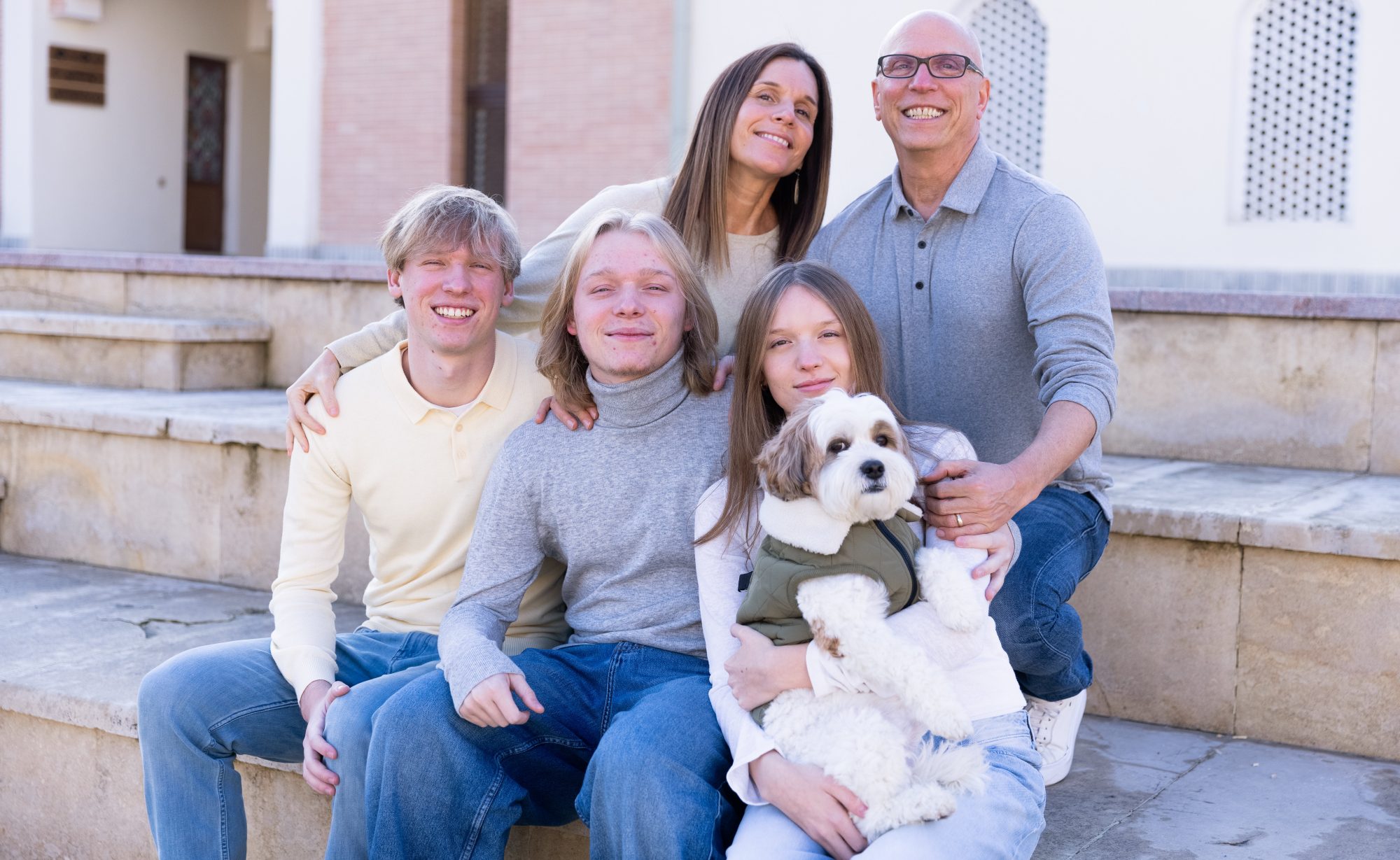
Princess Katherine

It is not everyday that I find a message from my administrative assistant like the one above. “Oh, Mr. Kralovec, by the way, the Princess called you twice this morning and wants you to call her.”

Serbia does have a royal family. Princess Katherine married into the Serbian royal family and is from Greece. The crown prince of Serbia, Alexander Karađorđević, married Katherine in 1985 in London. It was the second marriage for both. Alexander’s family goes back to the first Serbian uprising against the Ottomans in 1804. His ancestor was the famous, Black George, who established an autonomous Serbia within the Ottoman Empire. George, like most Serbians at the time, came from typical peasant stock, growing up on a pig farm. Very nice to see that Serbia didn’t import their royals like many European countries did.

Alexander is the “crown prince” and the official heir to the vacant throne. His father, Peter, was the last king of Serbia before Tito and the communists came in 1945 and got rid of the monarchy. Alexander is a good guy, having come back to Serbia permanently in 2001. He says that Serbia must first establish a democracy before they can establish a monarch again. He lives close by in the Royal Palace. Katherine invited the school to come anytime to take tour.

Alexander and Katherine do much charitable work here in Seriba. Katherine heads the HRH Crown Princess Katherine Humanitarian Foundation
and she is working with the ministry of health to improve the health care system of the country. Her current focus is cervical and breast cancer. She had a charity fashion show last night to raise funds for a cervical cancer center. Serbia’s health care needs improvement and it is nice to see her taking a role in improving it.

Princess Katherine called asking if the school would promote the charity show with our families. I was hesitant to do this, because we often receive requests from organizations seeking access to our community. In this case, I allowed it because it was for a non-profit organization dedicated to helping Serbia. It is a chance for ISB to give back to our wonderful host country. I hope to visit the palace someday and meet the Princess in person.

That is a cool thing about living in a small country and working at an international school. I get to meet and work with the leaders of Serbia. If I was working in a school in the USA, that would not be possible. I feel honored and grateful to be a part of ISB.

Edin Karamozov & Sting in Concert

One of the nice things about living in Belgrade after so many years in the “outback” of Venezuela, is the opportunity to attend cultural events. There are many concerts, plays, exhibitions held in Belgrade. This month Belgrade is hosting the 10th annual Guitar Art Festival. Sunday evening Sting and Bosnian Lutenist Edin Karamozov performed at the Sava Center in New Belgrade. Sting is one of my all-time favorite musical artists. (He ranks in my top 5  with U2, AC/DC, Seal and David Bowie) and I was thrilled to finally see him live in concert. The first half of the concert was devoted to his album, Songs From the Labryinth. This was like attending a lecture on the 16th century music. Sting learned to play the lute and brought back to life, the music of English composer John Dowland. The lute has many more strings than a guitar and the music is much more complex. Sting at his mature stage, is a bit bored with rock music and I am enjoying his growth and changes. The second half of the concert they played some old police songs and some other tunes, like the short snippet of video above, “Fields of Gold.” Sting’s voice was better live than the studio version! He is truly a great musician.

He said that he was going back into the studio to record a new album and I can’t wait to see what he comes up with.