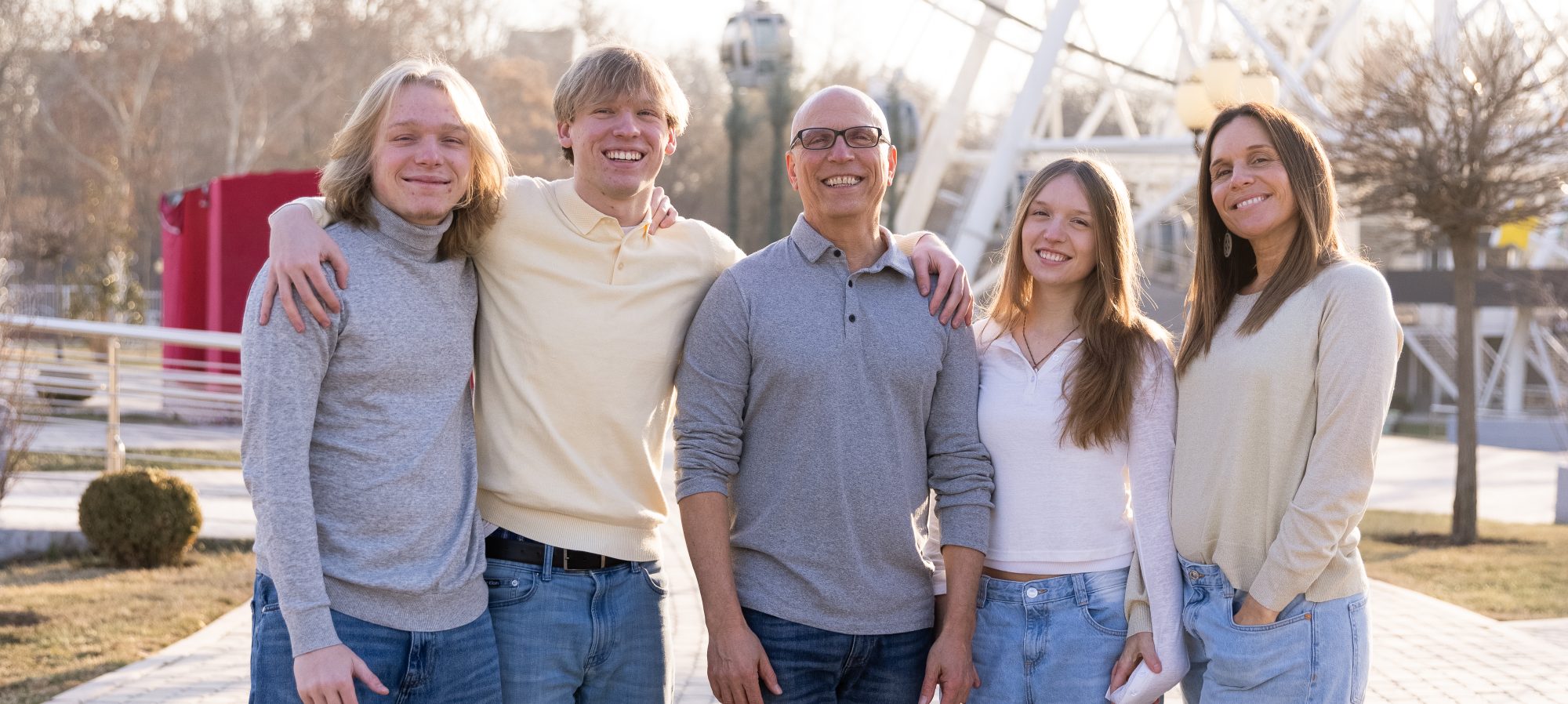
Nadia and Kim reunited with their families visit the Pentagon
On our final weekend in the USA before our return to Japan we visited our dear friend Kim in Washington DC. The nation’s capital is a 3 and 1/2 hour drive from the Lehigh Valley. We saw some of the iconic sites like the White House and the Pentagon, toured the National Geographic museum and just spent time with Kim and her daughter. It is always a thrill to see the center of the US government, driving by the Federal Reserve, the Capitol building, etc. Despite the heat, we managed to see a lot. We even got a taste of Bolivia, stopping by a restaurant for saltenas. Around 250,000 Bolivians live in the Virginia side of the DC area and it felt like we were in Cochabamba!
Ocean and I check the bees
Kim allowed us to check on her bees. She is a conservationist and works for the US Forest Service and is an avid beekeeper. It was quite an experience for the kids and me! It is sad the plight of bees worldwide and through the efforts of people like Kim, hopefully they will continue to pollinate and keep our planet’s environment healthy. The bees were doing OK, but we didn’t find much honey. We have been friends for a long time and it was such a pleasant visit. Thanks to Kim for her hospitality!
We are packing in preparation for heading back. I am refreshed and ready to go for 2016-2017!
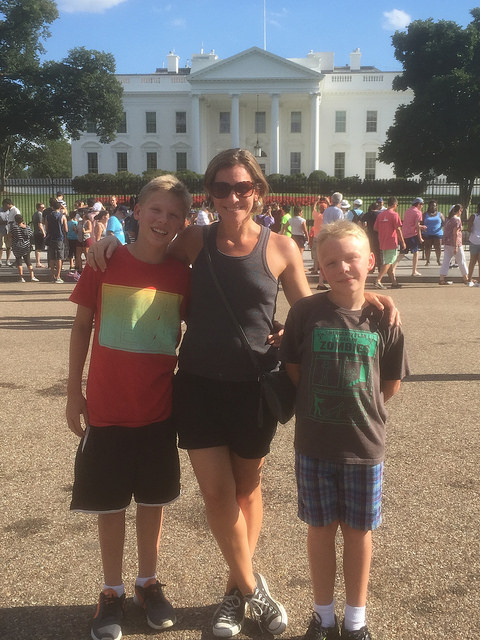
Nadia poses with the boys in front of the White House
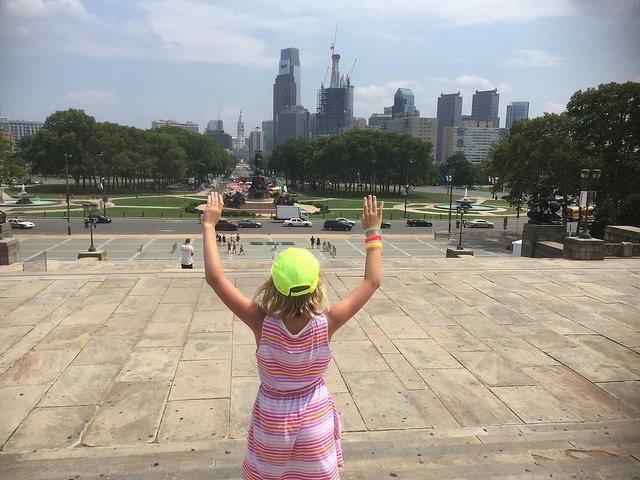
Ocean as “Rocky” overlooking the Benjamin Franklin parkway.
We could certainly feel the excitement in the city caused by Democratic National Convention. The ubiquitous police, Bernie Sanders protesters, delegates dressed in red, white and blue and extremely hot temperatures created a frenzied atmosphere. We spent the morning in our hotel near the airport because the kids wanted to swim in the pool. With my Bernie Sanders t-shirt, I was mistaken for a Connecticut delegate by the Georgia delegates, both delegations were staying in the hotel. An odd pairing with Georgia being heavily Clinton and African-American and Connecticut being a majority Sanders and white. I entered many conversations with delegates and others because of my shirt. Everyone we met in the hotel and city were super friendly, reminding me how nice Americans are and how nice it is to speak the language fluently. In Japan I am handicapped with my limited Japanese. We didn’t see the reputation of the Philly sports fans as being rude. Most locals took pride in the city and enjoyed living there.
I loved Sanders’s convention speech last night. He rose above the egos and name calling of the campaign to bring out the important issues of rising poverty, income inequality and the plight of the middle class. I hate to see good, hard-working people struggle in our society. Sanders is the only candidate that is not a multi-millionaire/billionaire who I believe really cares about people like me. After seeing the stark contrast between rich and poor in the Lehigh Valley, New York City and Philadelphia this month, I feel the government needs to get them closer to the well-off for a healthy America for everyone. We saw the rich/poor divide manifest itself in the city yesterday. The only people out in the intense afternoon heat yesterday were European tourists, the homeless and us!
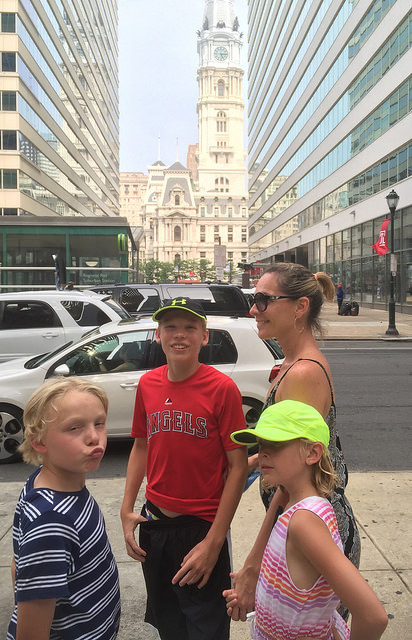
Feelin’ the heat with City Hall in the background
“Philadelphia is a nicer New York City” was a quote by Owen as we explored more parts of the city in the afternoon. Flanked by the Delaware and Schuylkill rivers, the spacious Benjamin Franklin Parkway green area, combined with the classic architecture of the museums and colonial buildings, makes for an impressive and relaxing big city. We managed to complete the “Rocky” training run up the steps of the art museum. The heat limited more exploring. To and from the central business district, we took the train, which was in sharp contrast to Japan. Many trains were late, tickets were sold by hand and it was generally disorganized. They have a long way to go to make public transport a viable alternative to private transport in the USA in my opinion. I was also disappointed in my morning run around the hotel. Despite the presence of a bike lane on the four-lane road outside the hotel, the intersections are not designed for pedestrians or bikers for that matter. With all of the space in America, it would be so easy to make the city walker/biker- friendly.
Home of the DNC-2016 – view from the freeway
A summer thunderstorm delayed our flights to Las Vegas, but we made it out safe and sound. It was a strange morning drive on the strip this morning in the rising light of the desert. More posts to come on Nevada/Utah.
I took Nadia to the ColdPlay concert last week at MetLife Stadium in East Rutherford, New Jersey. It was the band’s first stop on their North American leg of their summer world tour. We both danced the night away and were thrilled with seeing the band, the pyrotechnic show and the excellent musicianship live and in person. Even me, approaching 50 years old, was highly entertained! ColdPlay is one of the few bands that appeals to a wide range of ages and it was reflected in the crowd. The weather was perfect, with a breeze coming in to cool a warm summer evening.
Great seats on the field!
It is refreshing that lead singer Chris Martin and the band are such good guys. Many big stars are weird or arrogant. They were gentlemen throughout the concert and thanked the crowd for putting up with the hassle of parking, getting to and from the stadium and all the rest that comes with attending a live concert in a huge stadium. He was also grateful to have so many followers. It must be so exhilarating to perform like that in front of 50,000+ screaming fans. They played all of the hits and much from their latest album. If they continue producing great music, they will be ranked with some of the best pop musicians of all time. They already have been churning out hits since the start of the decade and they don’t seem to be stopping anytime soon.
Everyone received a lighted wristband that lit up in different colors throughout the concert. The set was amazing and the rainbow colors theme was in full force with lighting, fireworks and the wrist bands. We smelled marijuana several times during the concert and I imagine that would have enhanced the lights and musics.
The positive vibes and feeling of a global community could definitely be felt at the concert. The band was introduced via video screen by concert goers from all over the world, speaking in their native languages. It reminded me that most people in the world are good and 99.9999% of gatherings of large people do not end up in terrorist attack. It gave me renewed hope that the internet and increased contact among citizens of earth will continue to bring everyone together instead of driving us apart.
Getting ready to enter the stadium
I am looking forward to hear their next release. I hope they continue with the dance groove.
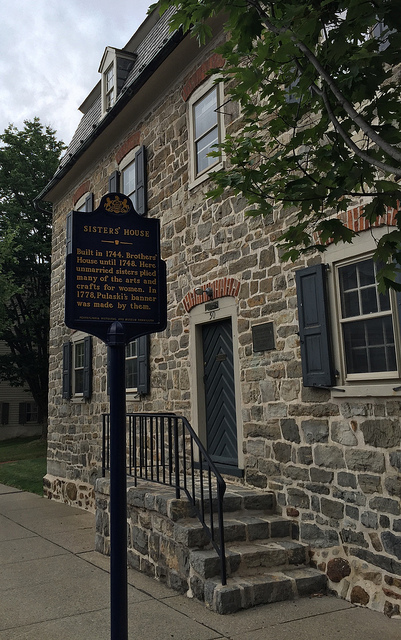
Bethlehem Pennsylvania is most famous for the Bethlehem Steel Company, which was at its peak, the second largest steel company in America. But before big company put its imprint on the city, the origins of the settlement go back to an obscure group called the Moravians. The name Moravian comes from Moravia, which was one of three (Bohemia, Silesia) historic regions that today make up modern Czech Republic. I take special interest in the region because my name Kralovec, is Bohemian, and my ancestor Andreas Kralovec, came to Wisconsin in the late 1800s from what was then Bohemia.
Bethlehem was exclusively Moravian for the first 100 years of its founding on 500 acres of fertile farm land near the intersection of Monocacy creek and the Lehigh River in 1741. The Moravians were a bit cultish, living in communal groups by age, marital status and gender. They also had a communal socialist economic system which served them well in the early days. It must have been so difficult to clear land and produce food, avoid disease and native American attacks and thrive in the new world. The colony was opened up to others in 1844 and the communal, socialist system was also abandoned.
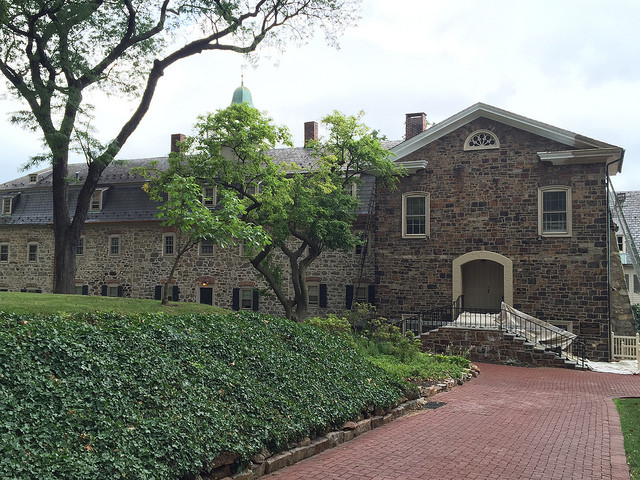
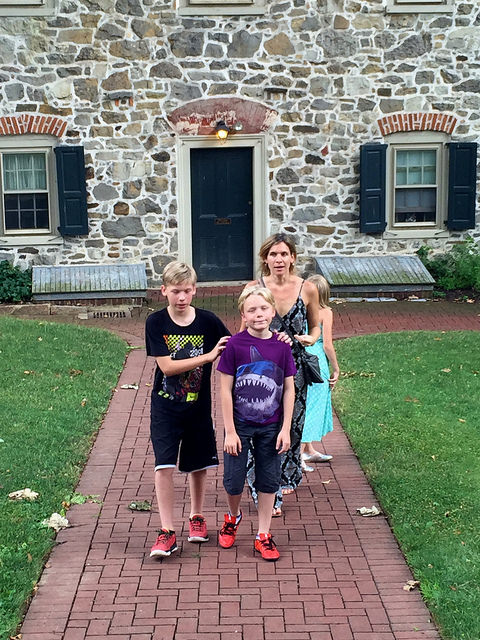
My children are fascinated by my historical tour of the communal buildings of the Moravians
The Moravians go back to a Bohemian man named Jan Hus. He is considered the first Protestant reformer, predating the more famous Martin Luther by 60 years. In reading Hus’s complaints against the Catholic church at the time, I pretty much agree with him wanting priests to marry, stop the selling of indulgences (basically bribes to get into heaven), eliminating the idea of purgatory, the mass to be said in Czech instead of Latin and laypersons to receive both bread and wine at communion. He was burned at the stake as a heretic 600 years ago this month (July 6, 1415). John Paul II, the Polish Pope, expressed “deep regret” for the act in 1999.
The Moravians, or United Brethren formed much after the death of Hus in Bohemia. They were persecuted in Catholic Hapsburg Europe but found refuge on the German estates of Nikolaus Ludwig von Zinzendorf in 1722. He greatly influenced the group, setting up a 100-years continuous prayer relay, starting the tradition of the daily watchword Bible study and most importantly for Bethlehem, Pennsylvania, sending out groups of missionaries around the world to start colonies. He visited Bethlehem and after a prayer service along the river, the citizens named the colony after the famous Biblical star.
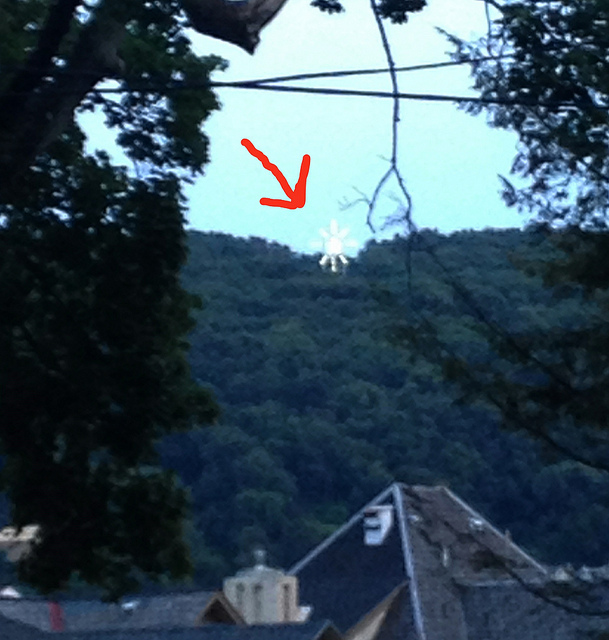
Today one can visit the preserved early buildings of the Moravians, including the old cemetery. There is a Moravian College and a Moravian Academy still in Bethlehem today and the Moravian church in America has about 750,000 members. The Moravians are also known for the Moravian star, the multi-pointed lighted star that adorns all Moravian homes. The city of Bethlehem in the 1930s as marketing campaign for tourists, created the lighted Christmas star on the hill of south mountain overlooking the city and named Bethlehem the “Christmas City”.
I will be learning more about Moravians during my stay here in Bethlehem this summer.
The illuminated Moravian Star on South mountain overlooking Bethlehem.
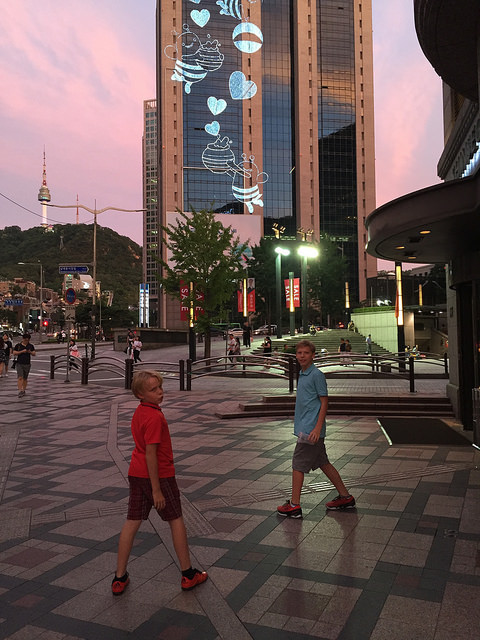
Oliver & Owen in Myeong-dong with the Seoul Tower in the background.
On our way to the USA for summer vacation, we stopped in Seoul, South Korea to soak up the atmosphere and some of the sights of the largest city in Korea and fourth largest metro area in the world.
I was really curious how Korea compares to Japan and found that they are different. Japan is unique in Asia in that it is singularly refined, quiet, orderly compared to the other cultures I experienced in my two years in the region. Korea had lots of street vendors, some litter, people were louder and more direct, etc. They are neighbors and hosted a World Cup together and there are many similarities, but I was surprised at how more “in your face” our interactions were with locals. I guess every time we leave Japan we will experience a bit of a shock at cultures that are more expressive and places that are not as neat and orderly.
We stayed at Days Inn near Myeong-dong station, one of the big shopping areas in the center of Seoul. Immediately we noticed the hustle and bustle of street vendors. We had a pretty good BBQ and some traditional Korean dishes. I especially liked the roasted octopus sticks. Nadia and Ocean enjoyed a day of shopping. Ocean was especially happy with her hand sanitizer holders and bracelets. She was acting so grown up.
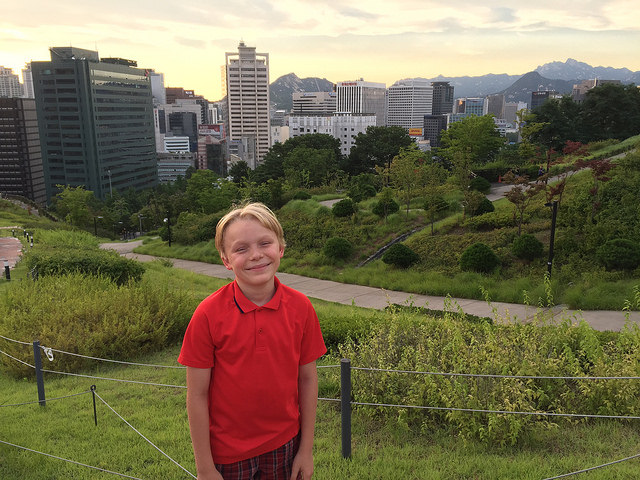
The boys and I hiked up the hills of Namsan Park to the Seoul Tower, one of the iconic buildings of the capital. The views, as you can see above, were worth the effort. There was a pretty extensive outdoor weight/exercise area about halfway up to the summit, where we had a good workout. The hill was always a fortress to protect the city from attack and we walked along the protective wall (a mini-Great Wall of China) down to the Sungnyeum Gate. I had to bribe them with $6 drinks from Starbucks to get them to take a longer loop back to the hotel. As readers of my blog know, I gravitate to green areas when I am visiting big cities. I highly recommend Namsan Park if you are in the city center.
It was a beautiful summer evening and good people watching. We noticed many US military personnel and were reminded that crazy, nuclear weapon-capable North Korea was only a couple hours drive away. I hope on my next visit to see the DMZ (de-militarized zone) and learn a bit more about World War II/Korean War. It is amazing the economic and infrastructure growth the country underwent after being heavily destroyed and very poor in the mid-1950s.
Oliver standing along the Seoul City Wall
Koreans are obsessed with their skin! We saw hundreds of stores dedicated to creams, moisturizers, whiteners, etc. for both men and women. Korean women spend more on cosmetics per capita than any other country in the world. We bought many of the famous face masks and other products as gifts. This BBC article was right, they are world leaders in skin products. I was surprised that men also are into both cosmetics and fashion and with their slight builds and the tendency to dress in the same patterns as their girlfriends, they are a bit androgynous. Many women do have nice skin and like Japanese women, they dress well and are well kempt. I bought a nice night cream to help my aging skin. I have spent way too many hours in the great outdoors unprotected to have silky smooth skin. I was looking for a special cream for the sunspots on the top of my head, but not many Koreans are bald.
Another satisfied customer and an uncomfortable salesperson!
I am looking forward to exploring more of this interesting country. As with many places in Asia, my only complaint is there are too many people and Seoul has one of the highest population densities, 14x greater than New York. There are plenty of inexpensive and convenient flights between Osaka and various destinations in Korea, so I am sure I’ll be back. I’ll finish this post with a video from the Myeong-dong shopping street.
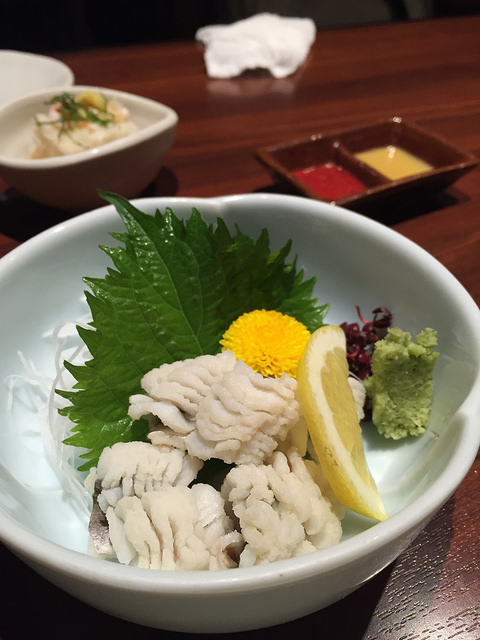
Japan has a “foodie” culture and presentation and delicate tastes are very important at restaurants. They also eat everything that comes from the sea including the summertime Kansai (name for the western region of Japan where we live in Osaka) dish, hamo. It is in the foreground in the photo above and served with beefsteak leaf, wasabi paste and either a spicy red sauce or mustard. It was delicious but when I looked up the English name for hamo, I found it was dagger-tooth pike conger (Muraenesox cinereus) a type of eel. It lives on the sandy bottoms of oceans up to 100 meters deep.
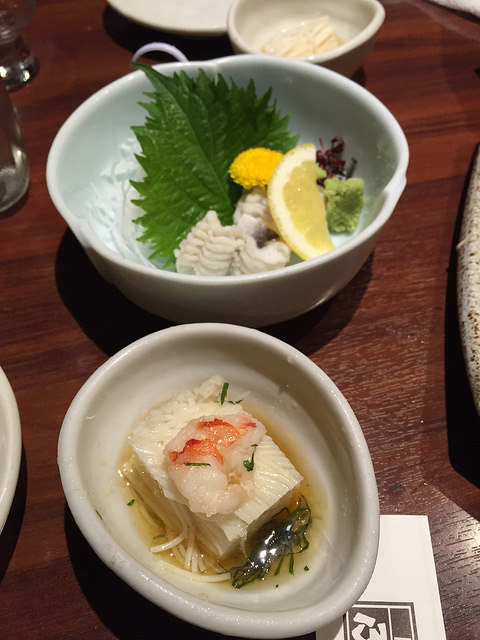
Hamo is best in the summer and I love the seasonality of seafood. Fish are best to eat at certain times of the year and each season brings with it new fish and other creatures to try. I am trying to learn all of the different seasonal fish and also learning how to prepare them. I never grew up eating much seafood, but really like it and I know that it is very healthy for me. One of the starters was the summer noodle, somen, which is in the foreground in the photo below. It is served cold. I had these dishes at Fujiya a restaurant close to the kitaguchi-nishinomiya station.
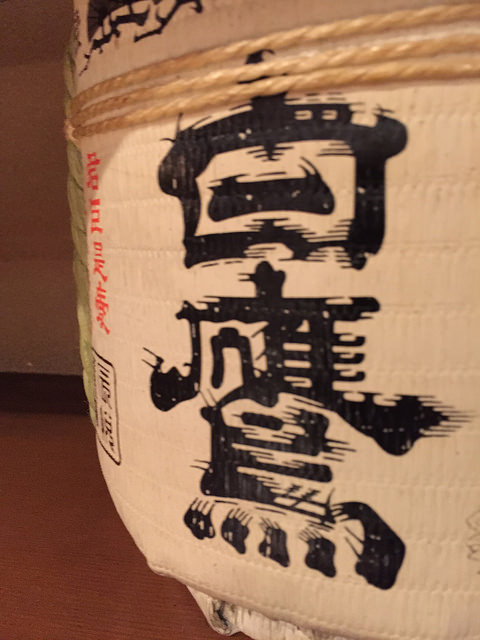
People like to socialize and drink over meals in Japan. Restaurants rather than bars and dance clubs are less popular than restaurants. Meals last a long time and are many courses. It must be the Japanese metabolism that keeps people thin here because when they go out, they eat a lot. Below was my kanji lesson for the night. The top part is the kanji for white and the bottom has a portion for bird and go forward, which signifies “white hawk” and it is a type of sake. I would like to learn more about how sake is made and the different types of sake.
We had a bit of a scare on Monday when Owen went over his handlebars on his bike ride to school this morning. We was going over a bump and came down awkwardly and hit his front brake too tightly. He broke his fall with his wrist. Thankfully he just had scrapes and bruises and we not seriously injured. He is pictured above in the school health center. The dormitory students were quite nice in helping up and get to the nurse. As you can see, by Wednesday he was back to his normal, smiling self.
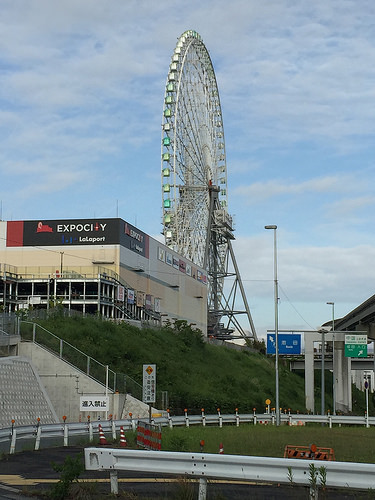
On my own bike ride this morning, I noticed that the ferris wheel at the Expo City Mall is almost complete. There is a very wide bike/running lane around the entire park and it is one of my regular bike routes. It is about 13 kilometers and can be completed in less than an hour, so it is ideal for before school or in the evening because it is safe from cars. The mall is another development that has taken part of the park away. It is hugely popular based on the weekend crowds. Combined with the new Suita City soccer stadium across the street, it is a hub of activity. Ferris wheels are quite popular in Japan and there seems to be one in every city. I don’t see the appeal to them, but maybe I am a just a grumpy, old man.
Unlike non-educators, I go to prom every year. It is much different of course as an adult chaperone rather than a teenager, but it is still fun. Nadia loves to dress up and go out, it is part of her Latin America heritage where social outings are almost mandatory. We had a nice time dancing to a few songs and trying to take pictures of friends’ children.
Our school is owned by the Kwansei Gakuin Educational Foundation which has besides us and several K-12 schools, they also run a 24,000-student university. Above is a photo I snapped before a meeting with the board of trustees. The campus looks like Stanford with the Spanish style buildings and palm trees. I enjoy cycling to the university from our campus (approx 20 kilometers) and because of traffic, it is not much longer on bike than car.
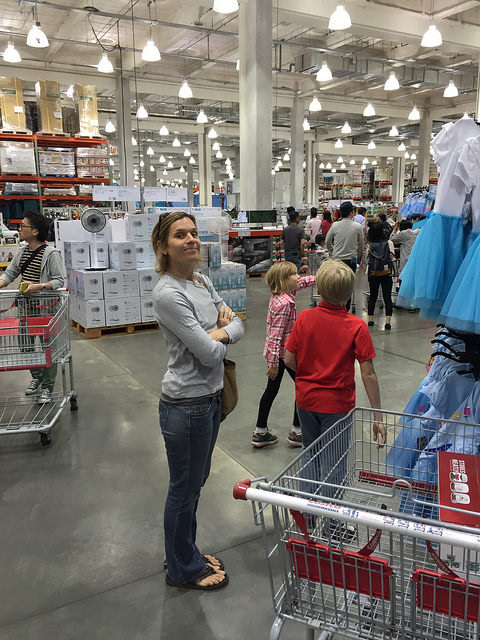
On Sunday we drove over to the Kyoto Costco for supplies. With the kids getting older and eating more, the bulk purchases make sense for our family. It is nice to have the American warehouse retail chain in Japan. We get items not usually found in Japan and there are some pretty good deals.
I just finished reading the 2010 novel by David Mitchell. He is famous for writing the book that later was a movie, Cloud Atlas. In reading a bit about Mitchell, I didn’t know that he lived in Hiroshima for 9 years and is married to a Japanese woman. The work of historical fiction is set around the turn of the 18th century in the Nagasaki Bay. This was during the time that Japan was closed to the world and the only contact with the west for 200 years, was a small, artificial island trading post managed by Dutch traders. The story’s main character Jacob, is a young clerk who falls in love with a Japanese medical student. As with Cloud Atlas, there are several plot lines that come together in the end.
As with all good historical fiction, the book gave me a strong sense of what it was like back then. Mitchell writes in the final pages that “Obscurity is Japan’s outermost defense. The country does not want to be understood.” Japan was for over 200 years blocked to the rest of world and leaving the islands or visiting the islands was punishable by death. Mitchell is right in that during a time of colonialism, Japan was not taken over by the Portuguese, Spanish, Dutch, English or other maritime powers when neighboring nations fell. Mitchell’s years in Japan served him well for this book in that he understands Japanese culture intimately. It is a decent story and I enjoyed being taken away in the evenings before falling asleep. One takeaway from that period is how slow news travelled. The Dutch traders only learned of the bankruptcy of their company a year later and with news only coming with incoming ships, they were even more isolated that other places. Today with the internet, an information-rich environment and instant transmission of news, it is hard to think how it would be to live like that. I also liked that Mitchell told the whole story in a realistic manner and we get to see what happens to each character years later.
Hopefully I’ll get the opportunity to visit the island which is now a museum and see the city where the second atomic bomb was dropped, ending World War II.
The big focus for last weekend was Oliver’s 11th birthday! The little guy, well as you can see in the photo, not so little anymore, turned 11 last Saturday. I can’t believe how fast time goes by, (typical parent cliche, but oh, so true) and it is such a gift to be a father. We love his heart of gold, charismatic personality and creative imagination. We celebrated by having dinner at the Hard Rock Cafe downtown and then taking him to the Pokemon store at the Expo City mall. He is currently totally into Pokemon and he spends a lot of time looking at the cards, watching the program and fighting imaginary battles while walking to school.
Owen qualified for the Global Round in the Kansai round of the World Scholar’s Cup. The debates and knowledge bowl events were very good for him. Nadia and I are encouraging him to be a well-rounded person and we like him showing enthusiasm for something other than sports.
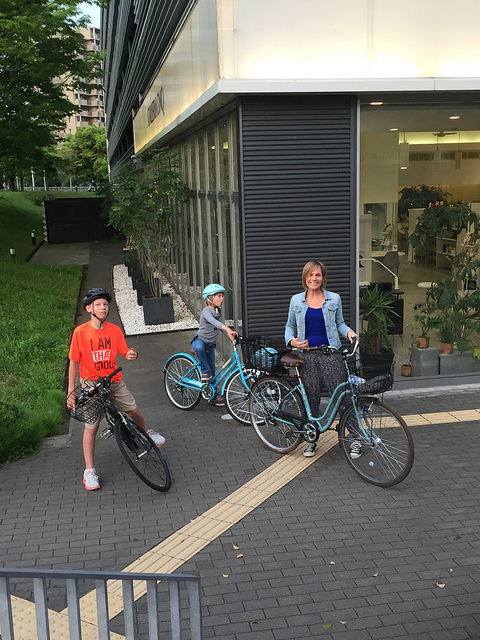
Nadia and Ocean got their hair cut and styled and we rode our bikes with them to the salon. The weather is absolutely perfect lately and we have been riding our bikes everywhere. I love April/May in Japan before the humidity and rains of June come.
We are staying home for our Golden Week holiday. Japan is an overcrowded country and with this being one of the few holidays workers get, the highways, airports and tourist spots are really full. I am taking advantage of the week to catch up on my research for my doctorate program.
Will try to post more this spring. Here is a video of us riding to the train station with our friends to catch the train for Oliver’s birthday dinner.