Owen and Bill Go to the Belgrade Philharmonic

With Nadia at an Educational Conference in Dubai until Monday, I have a full weekend with the kids. We are starting the Ski Week Holiday also on Monday so I’ll have more time to blog.

We started the holiday last night by playing some pick up basketball at the school with the teachers. Owen and I then went to Kolorac Hall in downtown Belgrade to watch the Belgrade Philharmonic Orchestra. We have season tickets for the “New Years Cycle” which is a series of six concerts having the theme of New Year. Last night it was the theme was Chinese New Year, which the actual date happened earlier this month. It is the year of the Rabbit.

The concert last night featured a Chinese pianist named Haochen Zhang. The first piece was aptly a piano concerto and the big Steinway was in the center of the stage. Zhang came out and played Tchaikovsky’s Piano Concerto Number 1. Zhang made it look easy. The highlight for me was introducing Owen to the orchestra and the different instruments and Tchaikovsky. He did fall asleep in the second movement, but did get to get the feeling of it. The theater was warm (In Serbia in the winter, everyone cranks the heat because they are afraid of cold drafts causing sicknesses.) and cozy.

The video above is Zhang playing a Chinese folk song which I’ve heard before in some movie. I really like the song and if any reader of my blog knows the name of it, please send it my way.

If I Were King of Serbia

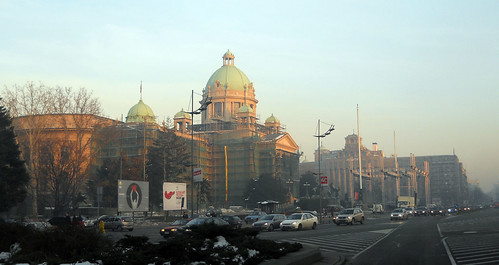
The Party is Over (4:00 PM - Serbian Parliament Building)

The Serbian Progressive Party rally yesterday in Belgrade was really a non-event for me. I was busy reading questions for the Knowledge Bowl (see our school’s blog for more information on that event) at the school during the rally. I did get down around 4:00 PM and snapped a few photos, but by that time, everyone was gone and the moving trucks were taking down the stage. Estimates from the B92 put the number at around 55, 00o.  As this commentator put it on the B92 website,

The usual blabla from these two guys. 55 thds people that mostly came from south and central Serbia in buses! As always these people most probably received some daily allowance to participate!
It is certainly important to have a good opposition but when it comes to these two, apart from critics I have never heard, read any mention of a program that make sense or could change the situation in Serbia. So waste of time and money.

I would have to agree with this. The purpose of the rally was to complain about the performance of the current government and a call for early elections. People around the world want good government (ex- Egypt) but they don’t want ideals, or platitudes, which most politicians give.What they want are the basics like tax money being spent well, roads without pot holes, decent schools, clean hospitals, a dignified retirement for senior citizens, job opportunities, feel secure in their neighborhood, etc.  I don’t see Nikolic (the Progressive Party leader) and others in his party being able to do this. They don’t see smart enough, or empathetic enough to manage an economy and a nation.

But instead of just criticizing them, I will give my ideas on how Serbia should be run. I see a nation with great potential, but it is being wasted, as young people who are innovative and ready to make their mark in the world, being disillusioned because the economy is horrible. I haven’t given it enough thought, but if I were president of Serbia, I would have the following platform:

1) Foreign Policy

  • I would eliminate the military. It is a big expense for the Serbian government. This would free up the large amount of military land for the good of the public. This could be used for parks, schools, green housing projects, hospitals, etc. There should also be money to train ex-soldiers for civilian life. The ending of the military would also say a lot to our neighbors and the world that Serbia is past violence and open for tourism and business investment.
  • The end of the military would also mean the end of military service. I would make a Peace Corps for the Balkans and send young people for 1-year missions around the ex-Yugoslavia and the poorer parts of Serbia. They could be intern teachers, nurses, security guards, construction workers, engineers, etc.
  • Invite Montenegro and Republika Srpska (the Serbian part of Bosnia) to join Serbia. I would also negotiate with Kosovo and get the northern part to join Serbia.  The majority Kosovar Albanians will never want to stay in Serbia. With a recognized government, Serbians will eventually be able visit whenever they want anyway. The dream of multi ethnic societies should be dropped for now.

2) Domestic Stuff

  • Ban the Serbian Latinica alphabet. The Cyrillic script looks cool and this is a part of Serbian culture that should be protected and promoted.
  • Eliminate the antiquated and Byzantine (appropriate for this place) laws on the books that make it impossible to do business. The amount of paper work for building permits, starting and ending businesses, hiring and firing workers, etc. is a huge impediment for companies. Belgrade is a natural business hub for the Balkans and with a business-friendly environment, it would entice more companies to move in and we would see more start-ups.
  • Fight corruption and organized crime. These elements hurt society in the long-term.
  • Collect income tax from everyone, including the rich.
  • Pump huge amounts of money into schools and build a cutting edge, “green” curriculum that targets entrepreneurship, technology, and problem solving. (you can tell I am a teacher)
  • Clean up graffiti and garbage around the city. Help neighborhoods to form cooperatives to beautify their apartment buildings and parks. Give matching grants to apartment associations for renovating of their buildings.
  • Continue moving towards Europe because this would give young Serbs the opportunity to work in other countries in the EU as well as Serbian companies possibly expanding their markets.
  • Adapt the ex-Yugoslavian slogan of  “Unity and Brotherhood” to “Tolerance and Pursuit of Happiness.”

Those are my initial, undeveloped thoughts. If any bilingual Serbian wants to be my running mate, I would like to run for President. I don’t speak Serbian well and that would probably hurt me in government.

Cold Weather Continues in Belgrade

The View of the ISB High School Campus from the Roof

It continues to be very cold and “wintery” in Belgrade this week. Temperatures are down to -9 C (16 F) and we have light snow and fog daily. It is a bit depressing for many, but I like it. As long as one is dressed appropriately, it is quite comfortable outside.  Nadia was sick yesterday with the flu, so I took the boys home from school. We went shopping and then went to Pizza Hut for dinner. It was so nice to spend time with the little guys. With my job, I am usually working until 6:00 PM, so it was a treat to spend an extra 3 hours with them. I should try to do that more often.

I’ve been quite busy at school, especially with basketball. My team won on Tuesday, so that puts us at 4 wins and 4 losses for the season. We are coming together in anticipation for the CEESA tourney next month. I also am putting in what little spare time I have in settling in our new apartment. We still have some things in boxes that need to be rearranged.

Remembering the Holocaust in Belgrade


Last week we recognized Holocaust Memorial Day (January 27) at my school, the International School of Belgrade. The Israeli Ambassador to Serbia, Arthur Koll spoke to the student body about the Holocaust and mentioned the atrocities that occurred here in Belgrade. He refered to the first systematic use of a “gas van” to kill the Jews of Belgrade. I did a bit research and found a website put together by UK professor Jovan Byford and funded by the British Academy. Professor Byford, with the help of Serbian researchers, has put together an informative web site about the Nazi concentration camp in Belgrade.

The camp, called Semlin Judenlager (German for Zemun Camp for Jews), is located in New Belgrade, right on the banks of the Sava River. In the 1930’s, the Belgrade government drained a swampy area on the other side of the Sava, and established a fair and exhibition grounds. It was a popular place for theater, cinema, etc. and one of the first areas developed on the north side of the river. Today, much of New Belgrade, as the north side is referred to, is developed out to the airport, several kilometers away from the river.

The Nazis took over Yugoslavia in 1941 and occupied the city. Semlin was technically in the part of Yugoslavia administered by the fascist Croatian movement, the Ustase. Belgrade itself was officially in German-occupied Serbia. The fairgrounds were used to round-up all of the Jewish people of the city (around 15,000) as part of the genocide campaign of the Nazis. It was supposed to be a temporary camp, but when a permanent facility couldn’t be found, it became one. It differed from the more famous concentration camps like Auschwitz, in that it was very close to the city. A photo of the camp in 1941 is below. Yesterday, I stopped at the site and photographed the original tower as it looks today (above).  The camp is significant in that it marks an escalation of the systematic elimination of the Jewish people in Europe. Ustase officials were proud to report to Hitler that Serbia was the first area to be “Jewish-Free” in WW II. Today I am not aware of a Jewish community in Belgrade.

The Semlin Camp - Circa 1941

After the elimination of the Jews, the camp also processed Partisan and Chetnik prisoners, Communist sympathizers, political opponents, Romas, etc. Most were used as force labor and many died in the camp because of inhumane conditions and disease. The camp was kept open for several years, eventually being the target of Allied bombing in 1944 during the liberation of the city.

It is sad that it is not a protected landmark. Thousands of people perished at the site and the camp is a very important part of World War II history. I was surprised to see people living in the tower. It has been converted to apartments. The other former pavilions are also now apartment buildings. I wonder if the people living in them know about the atrocities and terror that occurred here. I recommend the web site about the camp. It is gripping reading, especially the letters from a Serbian-Jewish nurse who perished in the camp.

The Fairgrounds Today - February 2

There are a couple of monuments in the area, which I visited when we held an art exhibition in  a hall near former fairgrounds. If I had the resources, I would buy out the current tenants and restore the grounds to its original state and make a museum and educational center. Serbia and the rest of the Balkans would benefit from the tourist attraction in addition to being a center of tolerance, which will always be needed in the ex-Yugoslavia.

I can’t imagine the horror that took place here. Entire families murdered. Tragic. There are several other Holocaust sites in Serbia that I plan to visit before I leave the country. There is an excellent museum in Banjica about the prisoner camp there.

Small Country

Nadia and i after shortly after we got married, moved to Australia. I began teaching and the Aussie students loved to hear my American accent and asked if I knew the various Hollywood celebrities they saw on TV and movies. I laughed because I didn’t think they realized that the USA had over 300 million people and I was from Michigan, a long way from Los Angeles. Australia has a population of 18 miillion, and I guess an ordinary citizen’s chances of meeting or getting to know a celebrity like Nicole Kidman, was higher than mine. By the way, one of my first substitute teaching jobs when I moved to Australia, was at the actor Heath Ledger’s old school, the Guildford Grammar School.

Serbia is even smaller than Australia, and the capital city, Belgrade, has a population of 1.5 million in the metro area. Working in the richest private school in the city and living in the most expensive neighborhood, it is easy to meet the “celebrities” of Serbia. Last weekend, our middle school girls’ basketball team hosted a local basketball club. On the visiting club team was the daugher to Serbian President, Boris Tadic. He can be seen in the crowd in the photo above. He is the grey-haired gentleman with the white-striped jacket. He also lives just a few houses down from our new apartment. One nice thing about him is that he is a former high school psychology teacher.

In my time here in Serbia, I have met many of “rich and famous” and it is interesting to see their lifestyle up close.

Latest Reading: “Treasure Islands: Tax Havens and the Men Who Stole the World” by Nicholas Shaxson

Nicholas Shaxson is an English economics writer for The Financial Times and The Economist. This book is an excellent introduction to tax havens. He defines tax havens by ”places that seek to attract business by offering politically stable facilities to help people or entities get around the rules, laws, and regulations of jurisdictions elsewhere.” I was aware of these places due to my expatriate lifestyle, as many expats have bank accounts or do business in these types of places. I wasn’t aware of the magnitude of the money found in these tax havens. Shaxson argues that these tax havens were a big cause of the global economic meltdown recently and that they do much damage to countries that are missing out on tax revenue. The book is an excellent introduction to this world, and he is a good storyteller and it is an easy read, not very much financial jargon. I enjoyed the book and recommend it to others who want to know more about this.

As I am typing this book review, I am following the Australian Open Tennis Championship, and I notice how many of the players live in Monaco or Monte Carlo, two tax havens! All three of Serbia’s superstars, Novak Djokovic, Jelena Jankovic, and Ana Ivanovic, live abroad. Imagine how much tax money Serbia is being deprived by these people living outside the country. I also think many high income earners avoid taxes this way. Shaxson describes how the system began historically and how they spread and maintain themselves.

Tax havens offer secrecy, very low or zero taxes, and have a financial service industry that is very large compared to the size of the size of the local economy. I learned that the world contains about sixty secrecy jurisdictions.

The most important is of all places, London. I thought that with the British organization, that this would be the last place where people to hide money from tax authorities, but “The City of London” is private organization within the municipality of London, that is outside of the government laws, not only city, but on par with the British Monarch and Prime Minister. This is historical, and Shaxson devotes an entire chapter to looking at it.

It was his impression that the latest global economic crisis, was caused in a large part, by these financial service companies and investment banks, operating unregulated in these havens. This offshore system is huge, with expert estimates stating that about half of all banking assets, and  a third of foreign investment is found in these havens.

Other European places that are tax havens are the Serbian tennis professional enclave of Monaco, the Netherlands, Luxembourg, Jersey Island, and, the traditional Switzerland. Shaxson debunks the myth that the Swiss bank secrecy began with the Nazis. It started before them, and it came about because Swiss farmers, and the traditional of independence of the isolated, mountain valleys in the country. They keep the country together by having autonomous regions.

Some other places in the world are the Cayman Islands, Bahamas, Hong Kong, (outgrowth of the British Empire and the City of London), and the USA is not exempt, with Florida, the Virgin Islands, etc. Shaxson also points out that much illegal (drugs, arms sales, dictator theft) ends up in accounts in these areas. Also, many multinational corporations, like petroleum companies, use these to avoid taxes.

I can see why rich people and companies do not want to pay taxes and how they justify them. I am sure Novak Djokovic is saying that the Serbian government is corrupt and his money would not be used well. He also gives back much to Serbia through promoting the country, winning the Davis Cup, charity, etc. The author however, is dead set against this and he does have many valid points. He points out how the British media loves Virgin’s Richard Branson, who nonetheless, is a major tax-dodger. It is the “little guy” who can’t get out of paying the bulk of taxes. In the last chapter, he gives a list of reforms that would track down this money distribute it to various nation’s governments.

Last week I met gentleman who worked for the German tax authorities. It was his job to work in London, tracking down Germans that owe taxes. It was funny in the book that the rich Russians refer to it as “Londongrad.” I would have to agree with Shaxson, in that this lost revenue could help countries. The book also got me to think about my retirement accounts and savings. Where do I want to put them…

I recommend the book to anyone who wants to learn more about this topic and it is also good for expatriates to read.
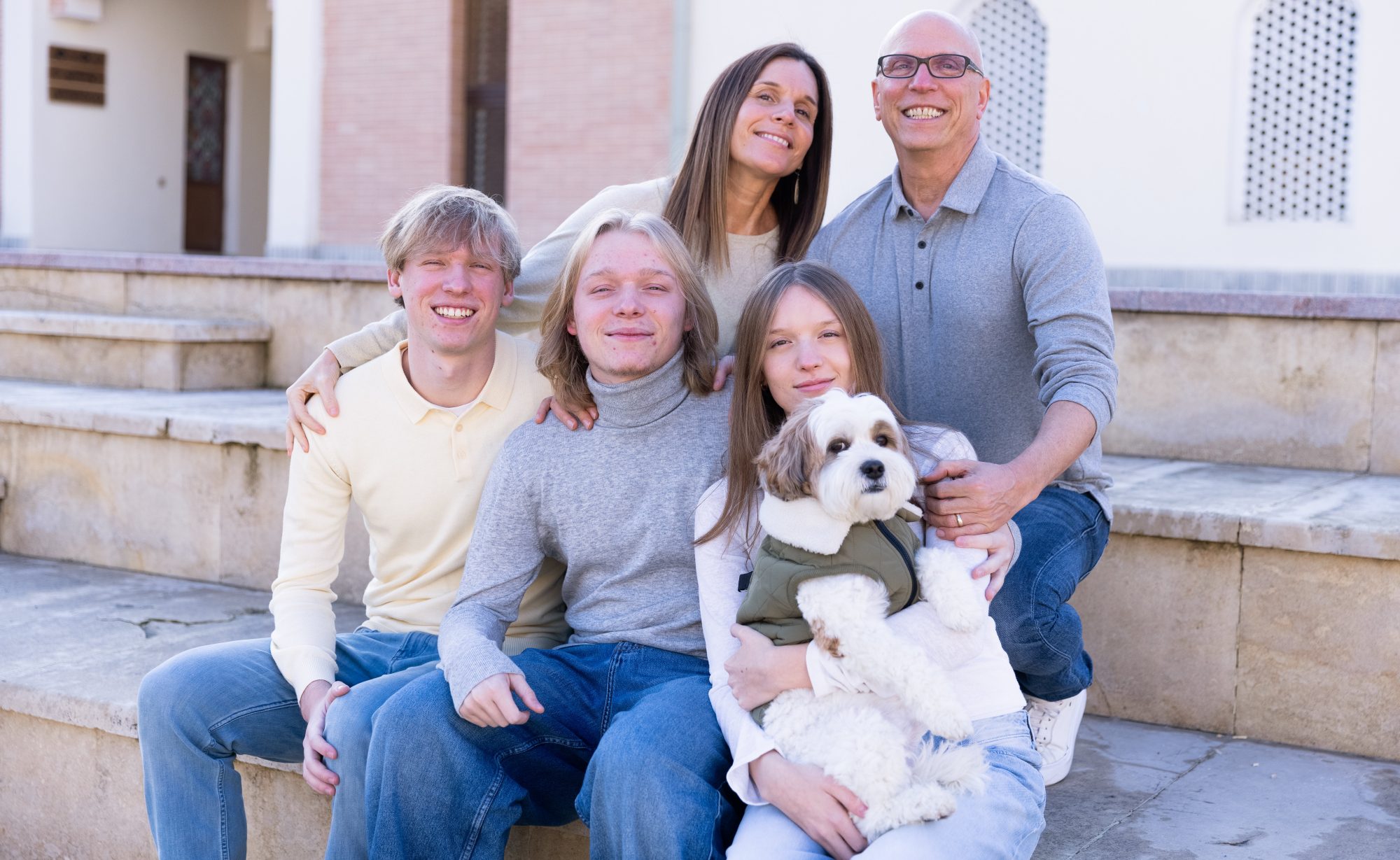
 

The People I Work With Everyday

ISB Administration Team - 2011

I am fortunate to work with outstanding people. I’ve really enjoyed the professional sharing, support, and camaradarie of the administration team at our school.  We’ve all had different experiences in education and are from different parts of the US and the world. This diversity of experiences and backgrounds has really helped me improve and grow as an educator. I appreciate the support, honest feedback, and trust we have.

From left to right are school director Eric Sands, lower school principal Tim Moynihan, IT director “Bane” Nikolic, Business Manager Zhana Hasanovic, yours truly, and MS Coordinator, Mark Noonan.

Ocean’s First Toboggan Run


Oceanćs First Tobaggan Run, originally uploaded by bill kralovec.

I promise not to do too many “kids in the snow” photo and video posts this year. I couldn’t resist however last weekend. We took the kids to Košutnjak Hill for some tobogganning. Ocean went down solo for the first time. She doesn’t like the snow as much as she does the water.

We really enjoyed the big snowfall and hopefully, more snow is on the way.

Family Journal: Saturday January 22, 2011


Ocean is shown above playing in the snow. We had a nice family Saturday yesterday. The snow continues to fall as I write this early Sunday morning and we plan to hit the sledding hill after breakfast. Yesterday I had a nice day with the kids. We had snowball fights, played snow football and enjoyed our new garden. It is a massive play space with many huge trees (I am a big tree lover!). I anticipate many good times in there in the years to come.

I made another moving run, taking a full car of stuff from our old apartment to the new place. Nadia organized a bit in the kitchen and the place is really coming into shape. I reckon in another week, we’ll be finished with the move. I took the boys to our intrasquad basketball scrimmage and afterwards, fellow coach Eric Sands hosted both the boys and girls’ basketball teams for a get-together. The high school students are always great with my children. My kids are exposed to a variety of cultures and interests. Shahaf a grade nine student, shown below, taught the boys a bit on the piano. After basketball season, I plan to take piano lessons, and after seeing Oliver last night, perhaps him too. It would be good to get our family playing music together.

Snow & Introduction to Dedinje: January 21, 2011

Yesterday Belgrade received a decent snow! It was only the second snowfall of the winter, the first being right before we left for Bahrain, on December 18th. I can’t wait to go outside and play with the kids today! I will definitely be posting photos our our family winter fun. Nadia, Oliver, and Owen are shown above walking to the car. Our new apartment building is in the background.

We will be finishing our move this weekend also (hopefully). We moved suburbs, going from Senjak to Dedinje. The suburb of Dedinje, which means “Old Man’s HIll” (note that deda is grandfather or old man in Serbian), is the most exclusive, and in my opinion, the most interesting neighborhood in Belgrade. The area reminds me somewhat of Gross Pointe, in suburban Detroit. That is a nice thing about teaching overseas – educators can live in the nicest neighborhoods in the city. In the US, our middle class salaries put us in more modest areas.

Anyway, Dedinje is interesting because of all the history that has occured here. The suburb is located on the slopes of Topcider Hill, and was home to the city’s rich and elite for many generations. After World War II, Tito and the communists came in and occupied the mansions and villas of the old money families of Belgrade. Later, ex Yugoslav President Slobodan Milosevic, and other shady characters like Arkan, moved in. I’ll be posting about the various aspects of the suburb for the next couple of years. Our apartment is quite modest compared to the diplomatic residences and other mansions around us. It is very comfortable however, and we’re very happy to be in a newer and better constructed apartment. We are just off the main drag of the suburb, ulica Užička. (ulica is street in Serbian, and Užiče is a city in southern Serbia)