The Foreign Enclave of Yokohama – Yamate

The Japanese Akusa 2 Cruiseship in the Port of Yokohama

In most major cities in North America, there are ethnic neighborhoods that reflect the history of immigration. In Japan, it is rare because, for such a long time, the country was completely closed to the outside world. Even in modern times, they take in very few migrants and the amount of foreigners residing in Japan is very small compared to other countries. That is what makes the top of the bluff overlooking Yokohama Bay unusual. Yokohoma was one of the first ports opened to foreigners after Perry’s black ships ended the Tokugawa blockade of Japan. The Western expatriate workers in the port settled in Yamate, the neighborhood atop the bluff. The Chinese immigrants settled in the swampy lowlands. See Thursday’s post on Chinatown.

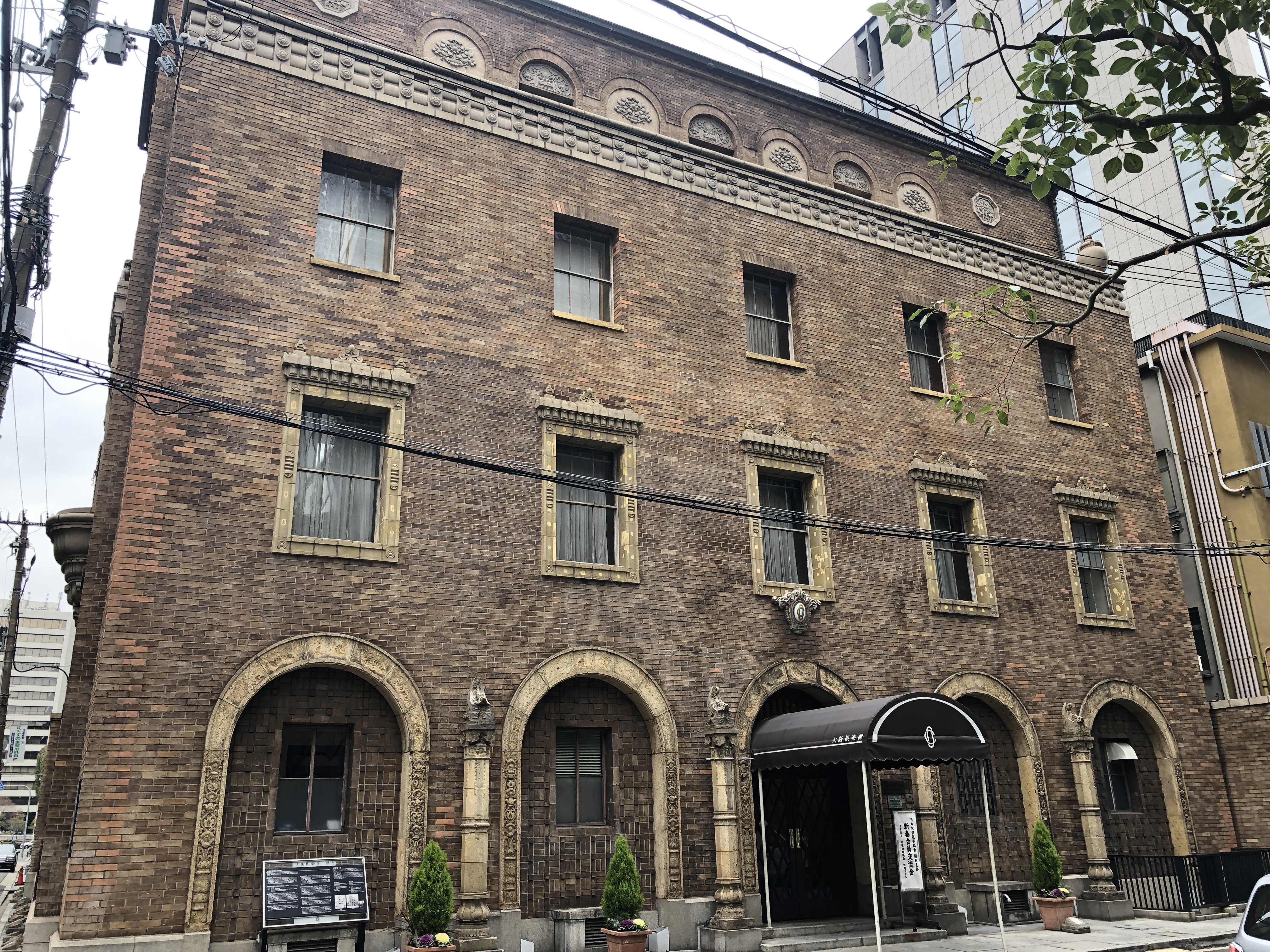
Walking around Yamate is like leaving Japan. The architecture is Western and the big trees and historic buildings, make it feel European. I visited the old British athletic club, where tennis was introduced to Japan. It is now the Tennis Museum of Japan. An appropriate pilgrimage on Australian Open finals weekend. They still have lots of courts.

The Japan Tennis Museum

Erected by the foreign and Japanese subscribers to the honored memory of the pioneers who laid the foundations of Yokohama as a port of trade nearly 70 years ago. Also in sympathetic remembrance of the foreigners, both known and unknown, who lost their lives in the Great Kanto Earthquake of September 1, 1923. and of other foreign residents whose names are not recorded in the surviving archives of the cemetery. May they rest in peace, until the day breaks and the shadows flee away.

Yamate Foreign Cemetary Memorial

The Great Kanto Earthquake of 1923 was horribly destructive. Over 150,000 people died. Many from fire, as it the 4-minute shaking took place at lunchtime, and back in those days, many people cooked over fire. Yokohama was absolutely destroyed. It was horrible to read about the vigilante gangs that murdered Koreans because of unfounded rumors of poisoning wells and looting stores. In the chaos that follows and earthquake and the unstable minds of people who suffer something like that, I can see why things like that happen. Officials eventually restored order. It must have been a powerful quake because even the expensive homes on the bluff were destroyed and many foreigners died.

A former silk merchant residence near the Yamate Cemetery

One good thing to come out of the quake was Yamashita Park. The waterfront was reclaimed with the rubble from the earthquake and a Scottish guy, convinced the government to make it a park. It really is a beautiful spot and one of the few tourist friendly port areas in Japan. I went for my daily exercise in the park to take in the sea views and see the ships. They converted the old warehouses (made obsolete with the invention of the container) into shops and restaurants. The whole area is just a nice place to spend an afternoon!

The view from the end of Osanbashi Pier

I would love to go back in time and be there at the beginnings of the foreigners coming to Yokohama. It must have been even more distinct place than Japan of today. I also was thinking a lot about the Great Kanto Earthquake. I wonder when the next big one will come to Tokyo.

Yokohama Chinatown

Kantebiyo Temple (Chinatown, Yokohama)

When Japan opened to foreigners in 1859, it started with ports and Yokohama was one of the first ports to open. Many Chinese immigrants came at that time to work in the port and many settled nearby. It is the largest “Chinatown” in Japan and one of the largest in Asia, with over 250 Chinese restaurants and between 3,000 – 4,000 Chinese residents. It used to be much bigger, but the Great Kanto Earthquake of 1923 which killed 100,000 people and made almost 2 million homeless, caused many of the Chinese to pack up and go back to China instead of trying to rebuild. The Port of Yokohama is the third largest port in Japan after Tokyo and Kobe. None of the Japan ports compare in size to Busan, Korea, Singapore and several Chinese ports.

Akira and I in the bustling streets of 横浜中華街, 

I am in Yokohama for a basketball tournament and am staying in Motomachi, which is adjacent to Chinatown. My friend Akira and I went for a nice Chinese dinner and sento (hot bath). We walked around the narrow streets and took in the sights, including the extravagant Kantebiyo Temple. It is dedicated to the Chinese god of prosperity and good business. That is appropriate for a port town. It is nice to have some Chinese food for a change. We had a nice evening.

Owen and teammates wait to board the Nozomi shinkansen to Shin Yokohama

Winter Fun in Nagano!

I put together a short video of our Christmas and New Year’s holidays. My brother Andy and his wife Chantal visited us from Chicago. Nadia’s sister Alejandra and our nephew Sebastian from Singapore also came. We spent a few days in the village of Ochima in the Nagano prefecture, the “Alps” of Japan. It was great to have a bit of snow!

The video shows our snowshoe hike and our visit to the famous “snow monkeys” of Japan. Enjoy!

Scenes of Osaka and Kansai

I am realizing my time in Osaka is limited so I am getting around the city and taking photos/videos so I remember it. The Keishin (Kyoto-Osaka-Kobe) metropolitan area of 20 million people is vast and I discover new buildings, neighborhoods, parks, etc. all the time. Below are some photos of my recent travels on bike, foot, car and train.

Osaka is diverse and it is reflected in the photographs above. The 580-meter long ShinSaiBashi Suji shopping street gets up to a quarter of a million visitors on an average weekend. Osaka is a city of rivers and canals which flow through the city, going from the mountains in the hinterlands of Kansai, eventually pouring out into Osaka Bay. Photos above show the Yodo River downtown and the Muko River near the mouth, which is an industrial port zone. Speaking of ports, a couple of the photos are from the artificial island, Rokko. Japanese construction projects are amazing and for 20 years, from 1972-1993, they moved mountaintops behind Kobe on giant conveyor belts to the sea. They created a 3.4 kilometer by 2-kilometer wide artificial island, built from the Rokko Mountain range. The sunset photo is from my morning bike ride. The sun is coming up over Senri New Town, which is really not “new” anymore, being developed in the 1960s and 1970s.

A meal of Death (well, possibly)

A Deadly (possibly) Plate of Fugu

I survived my first big meal of fugu (blowfish) earlier this week. The school had a consultant visiting and so we showed him some of Osaka. Ganko restaurant in Senri Chuo was serving the winter special, fugu. The liver and some other parts contain poison and if not prepared and served correctly, diners could die. The poison of the blowfish is stronger than cyanide. A possibly poisonous fish was sold last week here.

A hotpot of Fugu

We ate it served in a “hotpot” served right on our table. The mix of vegetables, glass noodles and fugu cost 1,980 yen ($18) and it was enough for three of us. I love in Japan when you can cook at your table. I will definitely have it again if I come across it this winter.

Winter Holidays Begin!

We finished classes this week on Tuesday and the first week of our Christmas and New Year’s holidays has flown by. I am teaching myself video editing with Mac’s Final Cut Pro. I am trying everyday to learn a new technique or part of the program. The best way to get better at something is to get a lot of repetitions, hence the series of videos I am making.

Oliver after one month of wearing an elbow to wrist cast, getting it removed is the subject of the first video. Japan culture is risk adverse and so for a small fracture of the radius, they put an elbow-to-wrist cast on Oliver for one month. It was nice to watch his relief at finally having his arm free. It also speaks to the Japan health care system, one of the best in the world in my opinion. They really do take care of its citizens and provide free health care for everyone. Our family is outside of the national system, so we pay and get reimbursed by our international health insurance company. You can see how automated financial transactions are becoming here at the end of the video.

The second video documents the arrival of Alejandra and Sebastian and our Winter Solstice tennis game at the local courts here in Minoh. Despite a day of rain yesterday, the weather has been really nice with temperatures well above zero and blue skies. It is not good for skiing however, and I am disappointed that higher temperatures are delaying the opening of the nearby Biwako Valley Ski Resort for the season.

The tennis in the video is certainly not ATP-level play, but the spirit of competition is. Enjoy!

Creative Ocean

Ocean’s grade 5 class performed in a concert on Friday as part of the Osaka International School music program. I put together this video and included a couple of visual art pieces of Ocean also. She really excels in both the performing and visual arts. It was a bit sad that this is the last year of elementary for her and for us as a family as our children grow. Next year we will have two middle schoolers and one high school and none in the elementary for the first time since 2005. A long time…

Happy Birthday, Owen!

Owen dreaming of Matthew Stafford (Imabari Beach – November 25, 2018)

We celebrated Owen’s 16th birthday on Thursday by going to the Korean BBQ restaurant, One Karubi in our neighborhood. We had a good meal and went through our family blog looking at the entries for his birthday celebrations through the years. 

Outside the restaurant –  December 13, 2018

As you can see in the photo, the kids are standing on their toes to emphasize the fact they are getting taller. Owen has passed Nadia and I. I can also no longer beat him in basketball or sports, as he is faster, stronger and more agile than me. A milestone has been reached! Oliver is quickly getting there as well! 

I am so proud of Owen as he is growing up into a fine young gentleman. It is also so nice to have the kids at these ages (16, 13, 11) because we have such rich family conversations. Happy Birthday Owen, we love you! 

Feeling 17 Again

I was brought back 30 years to my high school basketball playing days in the annual faculty versus students basketball game. On Tuesday, the “Fossils”, a team of teachers, staff, parents and alumni defeated the high school varsity basketball team 55-54. There were quite a few students in attendance and as the game became closer in the second half, the crowd noise was reminiscent of my playing days. It felt good to be part of a team and involved in a tense, closely matched game. 

My mind felt like I was 17 years old again, but my body felt its 51 years. I am still able to shoot, make passes and enjoy the game, but I felt slow and weak compared to the high school players. Our team was helped by the younger staff member Keishi Uenoya, who scored 21 points and a couple of young and new faculty members Nikolic sensei and Okamoto sensei who propelled us to the win. I scored 6 points and was happy to contribute to the team. 

A group of adults play every Wednesday evening at the school, but I do not regularly participate for fear of injury. I can still play, but it is not worth the risk of long-term damage, so I pick my times I participate. I am content to play with my children and the neighborhood kids. 

Okamoto, Morioka, Yamamoto, Kralovec, Nikolic, Mecklem, Honda and Uenoya (left to right)

Summer Cycling

Owen and Oliver – Ready to Go! 

I am teaching myself video editing in Final Cut Pro. I put together some footage of a bike ride the boys and I did this summer. I miss the warm weather!