All during the school year I spend my Wednesday afternoons with the Administration Team of the International School of Belgrade. We get together to discuss school issues, events, initiatives, and programs. The bottom line is student learning, and all of us work together, with the feedback and cooperation of the staff to always be improving.
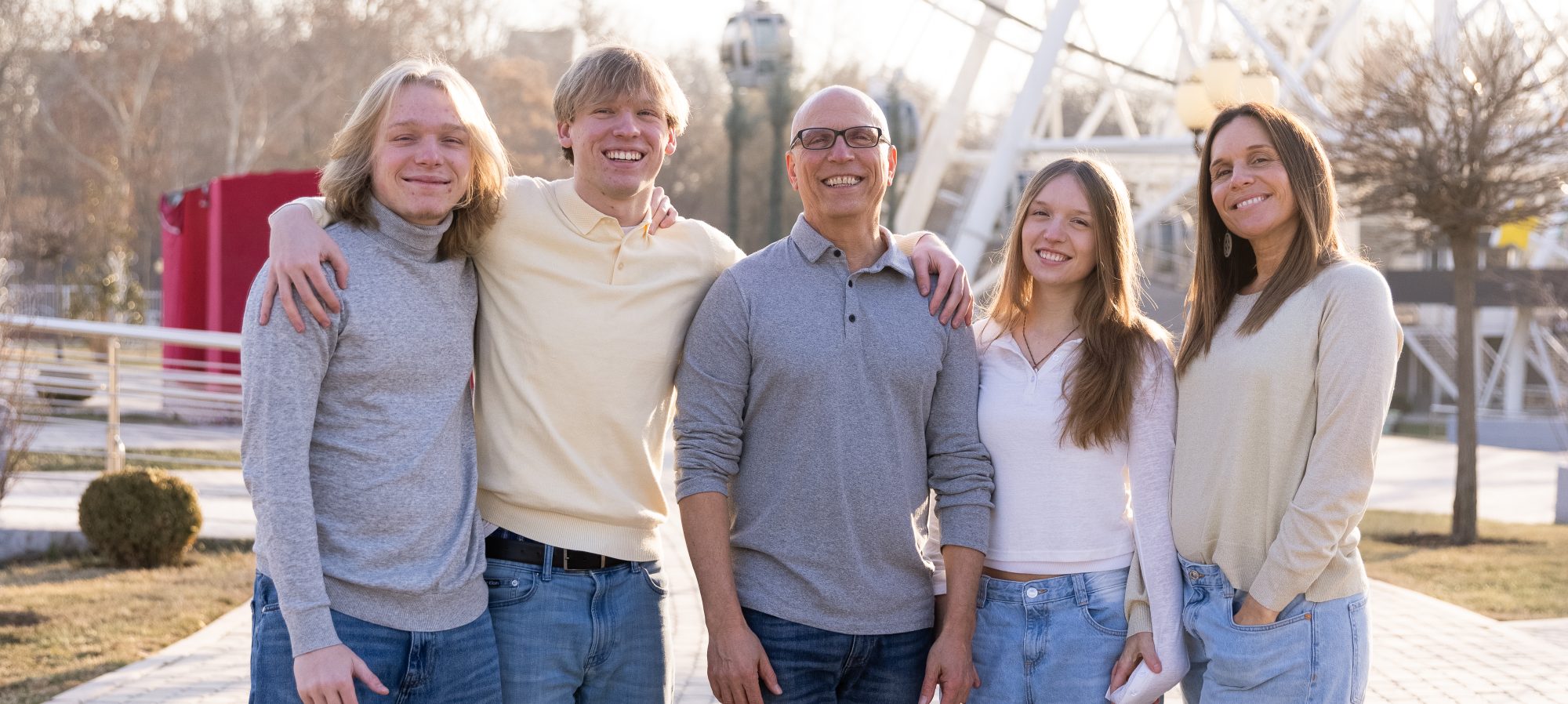
The meetings usually last a couple of hours and since we spend so much time together, we have all grown close. From left to right in the photo are Eric Sands, (Director), Branislav Nikolić (IT Coordinator), myself, Snežana Hasanović (Business Manager), and Tim Moynihan, (Elementary Principal). They are all dedicated professionals and very good people. I have learned much from each of them. Despite differing opinions sometimes, and the occasional stressful situation, we get along very well. I have really enjoyed the camaraderie and professional collaboration and interaction. It has made me a better educator.
We are shown above in Dr. Sand’s office working on the new school web site. The intense efficiency, teamwork, and production was somehow captured in this action photo. Thanks to Neša for the photograph.
This is another sign in our neighborhood. On a street that runs perpendicular to our street in our neighborhood of Senjak, I saw this street sign. Since the street signs in Belgrade are all in the Cyrillic script, this will take some translating to get the message.
Serbia used two types of alphabets. The one above is Cyrillic, which is the Eastern part of Serbian culture. They also use a corresponding Latin alphabet. The first line in the sign is “Ulica” which means “Street” in English. The name of the street is “Ljube Jovanovića” which is a Serbian name.
Some of the letters have been blocked out by spray paint. What is left are the letters, “OBANA” which is very close to “OBAMA.” I noticed this was done in October, just before the elections. US President Barack Obama is very popular here in Serbia as I blogged about in November. There is some Obama supporter here in Senjak. At least the sign will be good for at least four years.
Near our house in Senjak, someone with a sense of humor has changed some street signs. To the left is a photo of sign in front of a school up the block from us. It shows children at play and a speed limit of 40 kilometers per hour. The sign below shows a slight change to a sign on the other side of the street.
This might be appropriate for some US public schools, but certainly not here in Serbia, where violent crime is very rare. It is one of the safest cities in Europe.
You can see where some jokester with a black, permanent marker, drew a gun in the hand of the boy behind the girl.
Oliver’s Early Years teacher, Ms. Mira, sent along this photo of Oliver’s birthday party in his classroom. Oliver had a party last Thursday on the actual day of his birthday.
Nadia reports that it was super cute and the kids were very calm.
(Note – This is an update to my History of Serbia page. You can read my working draft on Bill’s History of Serbia page.)
In the early 1800’s, Serbia was on the edge of the Ottoman Empire, a long way from the capitol of the Ottomans, Istanbul. So far away in fact, that the Sultan Selim III in Istanbul did not have full control of the Belgrade province, or pashalik in Turkish. The province was run by four dahi who brutally repressed the Serbian peasants. The dahi’s soldiers, called janissaries, lived in the Belgrade fortress and periodically patrolled the sparsely populated land of Serbia.
The Serbian Uprising of 1804 began with the execution of Serbian peasant leaders in the town of Ljubenino Polje, about 30 miles south of Belgrade. The dahis had reports that Aleksandar Nenodovic was importing arms from the Hapsburg Empire from across the Danube River, just north of Belgrade. The dahis took a George Bush, proactive approach and wanted to crush a rebellion before it started. The janissaries beheaded many of the Serbian leaders. These be headings sparked, as Misha Glenny writes, “the beginning of modern history on the Balkan peninsula” as the Serbs began to get rid of the Ottoman Turks and their Eastern culture. This was the seća knezova or the massacre of the leaders. The word Knez you see today all over Serbia, and it is translated as “village headman”, “prince, or “duke”.
A French Artist Portraying a Janissary Patrol in Izmir, Turkey (1831)
The janissaries were a sign that the Ottoman Empire was in decline. They originally were an elite guard for the Sultan, but eventually turned into autonomous dictators, and in Serbia, they basically made the Serbs, serfs of the themselves as feudal overlords. This was in direct opposition to the some wealthy Serb pig merchants, who had a rich trade with the Austro-Hungarians in Vojvodina.
They eliminated around 100 knezes, but some escaped to become hajduks (guerilla insurgents) in the forests of Serbia. One in particular, became the leader and eventually would lead the Serbs not only to down the janissaries, but also to take on the entire Ottoman Empire.
Đorđe Petrović was a peasant from central Serbia. In Serb the Đ (đ) is pronounced like the English J, so his name is translated in English as George. He was called Karađorđe, which means Black George. George organized thousands of Serbs and they easily defeated the janissaries. They became so powerful, that they also defeated the Sultan’s army in 1805 in a battle close to the southern Serb city of Niš.
George's Black Hair Gave Him His Nickname
They were close to cutting a deal with the Sultan when greater events intervened. The Russians, French, and Turks were battling for supremacy of the region. Black George aligned with the fellow Christian Orthodox Russians. The Russian army came and occupied Belgrade, which was under siege by the Ottomans. Black George was in trouble when the Russian Tsar Alexander I, withdrew his troops from Belgrade to fight against Napoleon. The Ottomans quickly moved three of their armies to take control of Belgrade, and Black George fled to Austria on October 3rd, 1813.
In 1817, Black George secretly returned to Serbia. The Serb leadership assassinated him, not only because he was a threat to them, but he also during his exile, aligned himself with the Greek revolution. The Serbs wanted an independent Serbia, not one under the more populous Greeks.
In looking at the legacy of George Petrović, he may have been considered a failure. His movement ultimately did not give Serbia independence. He also died a violent death at age 47.
But looking at it from a different perspective, his accomplishments were great. He rose from being an illiterate cattle and pig farmer, to leading the largest Christian army inside the Islamic Ottoman Empire. One of his rivals succeeded a few years later in gaining Serbian autonomy, but learned from the mistakes of George. Black George’s descendants however, became a Serb monarchical dynasty. The House of Karađorđević, or House of Black George ruled Yugoslavia from 1903 – 1941. Today, Crown Prince Aleksandar, a descendant of Black George, is living in the Royal Palace, near my home in suburb of Dedinje. He doesn’t have any formal political power, but is a figurehead and there is some talk of Serbia returning to a constitutional monarchy.
The Crown Prince Alexander’s second wife, Katherine Batis, called me earlier this year to help her with a charity fashion show for breast cancer she was holding at the palace.
Above is the video of us singing happy birthday to Oliver and him blowing out the candles. You can scroll down to read the previous two posts about Oliver’s birthday.
Yesterday we held Oliver’s birthday party because the May Day holiday. We invited some friends of ours and their children to come and celebrate Ollie’s big day. The kids, shown above, had a wonderful time, running around, laughing, and screaming and mostly leaving the adults alone for us to enjoy ourselves too. Our pergola is the perfect place to host parties, where both children and adults can have a good time. The name pergola is a bit pretentious, but it is the proper term to describe our back gazebo/patio set up in our yard. We have the incredible vine that has been trained to grow over the lattice and it really is our summer house. We spend as much time out there as we do inside the house during good weather. That is a nice thing about Belgrade, is that the spring and fall is warm and long. We use the pergola from August – mid-November and then again from mid-March to June. We are on holiday and outside the country in July.
Janko loved the strawberries!
We were concerned in the morning because it was cool and cloudy. I spent most of the day cutting the lawn, trimming the vines on the pergola, sweeping, preparing the grill, and getting the drinks ready for the party. The sun came out later in the day and by the time the party began at 4:00 PM, the day was beautiful. It did cool down later in the evening and we all went in to watch the kids dance party. The main course was of course the Serbian specialty, a BBQ. I prepared “pljekavica” as well as chicken shish kebabs wrapped in bacon. Nadia made a cake for Oliver’s birthday and a dessert for the adults which was a delicious strawberry truffle the kids then enjoyed ice cream cones .
The kids played with sidwalk chalk
Oliver received two toy motorcycles, one from our nanny Vera. He also got a water gun and a nice book, “We’re Going On a Bear Hunt.” He laughed and had a fantastic time, being the complete wildman he is. Right before the party, true to form, Oliver fell when Owen was chasing him with water balloons. Oliver had a big bump right in the middle of his forehead. We used to call him unicorn boy because of this and it was appropriate that he did this on his special day. He is such a little character and talks to everyone.
It was nice to have a Serbian touch to the day and Owen’s teacher Verica sang Srećan Rođendan (Happy Birthday). We were laughing at the kids trilingualism, Spanish-Serbian-English. Nadia and I were exhausted at the end of the evening. The party didn’t end until around 9:00 PM.
It was a good day had by all! Happy Birthday Ollie – We Love You!!!! To see more photos of the evening, please check out my flickr.com account.
Oliver turned four years old yesterday. We are having a party today, May 1, as it is a national holiday in Serbia. I’ll be posting photos later.
The collage shows Ollie in his three significant places. The first, starting from the upper left and going clockwise, shows Nadia holding Oliver outside our home in Venezuela. Oliver is then shown mowing the grass in our former home in Iron Mountain, Michigan. Lower right shows him climbing rocks in the Mesa area of central Anzoategui, Venezuela and finally, it shows him in the swamp at our former family country house in Bolivia.
As you can tell by the title of this post, I am very excited for the first ever Association of Tennis Professionals (ATP) tour event being held in Serbia! The Serbia Open will begin tomorrow, Saturday May 2 with the qualifying rounds. There will be 32 men competing in the singles and 16 doubles teams competing for the title. This is a new ATP tour event.
It is certainly not Wimbledon or the US Open, as it is classified as a “250 series” which means that it is in the lowest tier of tourneys on the ATP tour. The 250 means the winner will get 250 points. The winner will also win 73, 000 Euros, which is almost $100,000. Not bad for a week’s work. Second place earns half of that. Even though it is not a high profile tour event, I am still looking forward to it because it is here. Nadia and I purchased tickets for the finals and are arranging for a babysitter.
It might as well be called the Novak Djokovic Open as he was the driving force behind getting the tourney here in Belgrade. He is also by far, the highest rank player in the tourney. There are two other events the same week, both 250 series, in Munich, Germany and Estoril, Portugal. Novak is currently ranked #3 in the world and the next highest ranked player competing in the open is Radek Stepanek who is ranked #19. Djokovic is 3- 1 against Stepanek in his career .
“Nole” as they call Djokovic here in Serbia is defending his title this week at the Masters Series tourney in Rome. He is a better player on hard courts, but has won three ATP titles on clay. This week he is defending his clay court title at the Rome Open, which is a Masters Series event. He is having a good run lately, destroying Tommy Robredo yesterday, 6-1, 6-1 to move to the quarterfinals in Rome. Things are looking up for him to win his Serbia Open. We shall see.
There are two other ranked Serbians in the singles draw, #40 Victor Troicki and #65 Janko Tipsarevic. I will be posting updates all week as the tourney gets underway.
The increased communication with the internet never ceases to amaze me. Through my flickr.com photo set and blog, my old friend, Bill Mays found me and found that we were living in neighboring countries. He was visiting Belgrade this week for a conference and we got together to catch up and reminisce about old times.
We are both graduates of West Iron County High School and from the small neighboring towns of Caspian and Stambaugh, Michigan. The odds are highly unlikely that the two of us would see each other again, half way around the world. Bill has had a very successful career in international finance and development and I am the Principal of the International School of Belgrade, Serbia. Bill is based out of Sofia, Bulgaria.
It was great to see him and we hope to see each other more often while we are both in Balkans!