Ski Japan

33454437045_6d2a791343_z

I just returned from three days of skiing at the Norikura Kogen ski resort in the beautiful “Alps” region of Japan. I was chaperoning a school trip and we used the services of North Star  which specializes in youth groups. The Norikura mountain range is in the Nagano prefecture on the main island of Honshu, pretty close of Tokyo. It is a large state, and it is as far away from the sea one can get in Japan. The 1998 winter olympics were held in Nagano, mostly in another area called Hakuba. 9 of the 12 highest peaks in Japan are found in the prefecture.

Before moving to Japan, I never really thought that Japan would have such great skiing. But it makes sense. The country is mostly mountainous, located far north of the equator and receives plenty of snow thanks to being surrounded by water. Skiing was never a big part of Japanese culture, but in the 1930s, Hannes Schneider introduced lighter skis and bindings to Japan. His family hotel is still running and we are planning to stay there next winter.  After World War II, skiing took off and hundreds of resorts were developed.

schneider-story-collage
Hannes’s panache probably increased skiing’s popularity in Japan

People are skiing less in Japan today and many of the smaller resorts are closing. I think part of the problem is it is an aging population, skiing is expensive and young people have digital diversions. I made it a point to have my children learn how to ski and experience the sport. Hopefully they can enjoy the sport throughout their lifetime. I love being outdoors all day with my family and it is a great way to be active in the winter. It beats watching computer screens.

33516443475_a98a5f694e_c
Beautiful conditions at Norikura Ski Resort

I am returning to Nagano prefecture tomorrow with my family for a week of skiing in Shiga Kogen. However, I injured my knee at Norikura on the last day. I was showing off and skiing off trail when I hit a tree. I tried to abort and crashed my knee into the slope and the tree his my inner thigh. A close call. I skied for another hour, but when I got on the bus heading back to North Star, I noticed my knee had swelled. It didn’t really hurt, but today, Sunday, I am still not as mobile as I want to be and it is starting to bruise. I don’t think I tore any ligaments or tendons, but sustained a bad bruise. Nadia is using her Aunt Silvia’s alcohol and salt compress technique to speed healing. It is starting to bruise and the swelling is going down, but just not as fast I would like for it to go. I really want to be ready to ski with the kids on Tuesday.

33516441825_ed5ddf4e2c_z
OIS Sabers on the Slopes! 

The skiing at Norikura was spectacular! Being mid-week in March, the slopes were almost empty. There were 20 different runs off 8 lifts. There was a mix of groomed and wilder runs and one of the runs had slalom gates which were a blast! It is a drier snow in that part of Nagano, so despite sunshine and warm temperatures, the snow was not icy. It was interested that driving the 40 minutes up the mountain from Matsumoto to the resort, snow appeared only as we neared resort. There was plenty of snow to ski without the need for artificial snow.

I will be looking for one of Japan’s most loved novels, written by Nobel laureate Yasunari Kawabata, “Yukiguni” (snow country), which is set in a snowy town (Yuzawa) in Niigata, which is northeast of Nagano. I’ll be posting from our ski trip in Shiga Kogen.

33479828876_cbdfb8cbd6_o


Night Patrol in Kamagasaki

33253045316_43cedbc832_c
Ocean and other students approach a homeless man

Our school encourages students to develop their passions and interests. My daughter Ocean is a caring little girl and she chose to help the poor and homeless. Yes, there are homeless and poor in Japan. There are not as many as I saw in Los Angeles or New York, two cities with similar populations in the USA. Japan does do a better job of taking care of the disadvantaged in their society, but of course, no society is perfect.

Ocean organized a group of her friends to collect donations for the Sanoh Children’s Center. The center provides a place to supervise and care for children of low income families. Often the parents are working and the center is a home away from home for them. One of the activities the Sannoh Children’s Center is a monthly night patrol to find homeless men and give them food, blankets, heating pads and other essentials.

Ocean ever since she was little, would want to help poor people she saw on the streets. This is an ideal activity for her. The center is located in an old building in a warren of homes and businesses in the Kamagasaki neighborhood of Osaka. It is one of the poorest areas of the city and is in stark contrast to our upscale suburb of Onohara. It is good for the kids to see lower socioeconomic areas and interact with the people who live in those challenging environments. Japan has a much lower crime rate than other countries, so it is fine to walk with children in those streets on a Saturday evening. Due to language barriers, I wish we could do more. The center is accepting donations.

33165577881_cc302eefaf_c
Ollie and Ocean make rice packets at the center

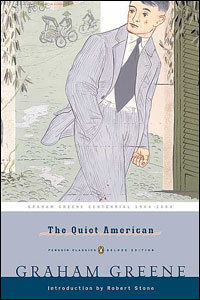
“The Quiet American” – Graham Greene book review

quietamerican_200-dccd3a47213c0fb85328e7babbe9b8196174a403-s400-c85

I read my second consecutive British expatriate novel set in south east Asia. Burmese Days by George Orwell, is set in 1930s Myanmar while the Quiet American is set in 1950s Vietnam. Graham Greene is one of my favorite authors and his writing style flows beautifully. Like Burmese Days, The Quiet American was a controversial book when it was released.

The main character is Thomas Fowler, a middle-aged reporter for a British newspaper. He is covering the conflict between the French and the communist Vietnamese in the first Indochina War after World War II. The novel predicts the entry of the Americans in Vietnam and its failure. Alden Pile is works as an economic attache at the US Embassy. Both men are in love with a young Vietnamese girl, who is living with Fowler. It is a really good story and gives some good background into the time period and war as all good historical fiction does. Greene has many astute observations about aging, retirement, age differences in relationships and the expatriate lifestyle. Fowler is dreading going back to England to take over as the foreign editor of the paper. The characters represent the different viewpoints of the war, with Americans, British, French, Vietnamese and Chinese perspectives explored.

I will not spoil ending, but my only criticism of the book is the depiction of the detective work in a murder investigation. I don’t believe the murderer would get away with the crime. This does not however, take away from my enjoyment of the book and I highly recommend it. It was made into a movie twice and I would like to see the 2002 film.

Pico Iyer from NPR writes more eloquently about the book. Below is an excerpt from his 2008 review:

What touches me in the book, though, is something even deeper and more personal. The novel asks every one of us what we want from a foreign place, and what we are planning to do with it. It points out that innocence and idealism can claim as many lives as the opposite, fearful cynicism. And it reminds me that the world is much larger than our ideas of it, and how the Vietnamese woman at the book’s center, Phuong, will always remain outside a foreigner’s grasp. It even brings all the pieces of my own background — Asian, English, American — into the same puzzle.

You must read The Quiet American, I tell my friends, because it explains our past, in Southeast Asia, trains light on our present in many places, and perhaps foreshadows our future if we don’t take heed. It spins a heartrending romance and tale of friendship against a backdrop of murder, all the while unfolding a scary political parable. And most of all, it refuses the easy answer: The unquiet Englishman isn’t as tough as he seems, and the blundering American not quite so terrible — or so innocent. Both of them are just the people we might be at different stages of our lives. The Quiet American, in fact, becomes most haunting and profound if you think of it just as a dialogue between one side of Greene — or yourself — and the other. The old in their wisdom, as he writes elsewhere, sometimes envy the folly of the young.

The more I read about Vietnam and meet people from there, the more I want to visit.


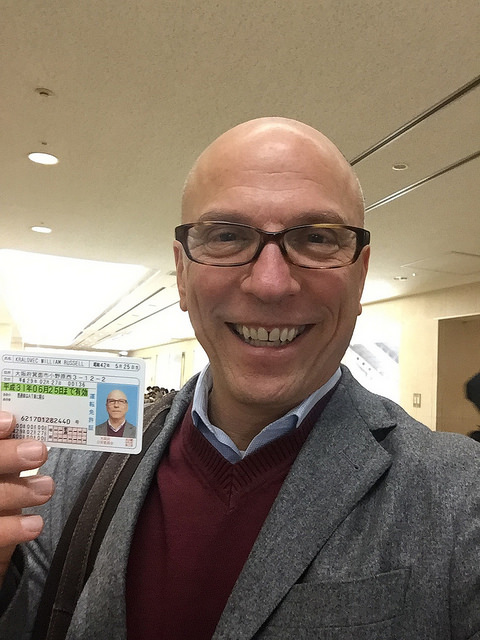
I’m Street Legal!

33055703411_61aeff1b23_z

The size of my smile is in direct correlation to the amount of time and stress that went into obtaining my Japan driver license! It was quite the ordeal. In all the countries I lived in, it was always some simple paperwork or an international driving permit would suffice. In Japan, after one year, residents need to obtain a Japanese license.

My first challenge was paperwork. I renewed my Michigan license 46 days before arriving to Japan. The rule states I need to prove I drove 90 days as a licensed driver in the USA. I had to send for my complete driving record from the State of Michigan Secretary of State, showing I received my first license on June 6, 1983, one week after my 16th birthday. I also needed to supply original diplomas of university as evidence I lived in the USA for at least 90 days after June 6, 1983.

The second challenge was the eye test and written test. This was pretty straight forward process and after reading through the Japan Automobile Association book, I scored 8 of 10 on the quiz, needing 7 of 10 to pass. The forms and all information is kindly translated to English, which is nice of the driving center.

33055701291_391eeb8a5c_c
The course!

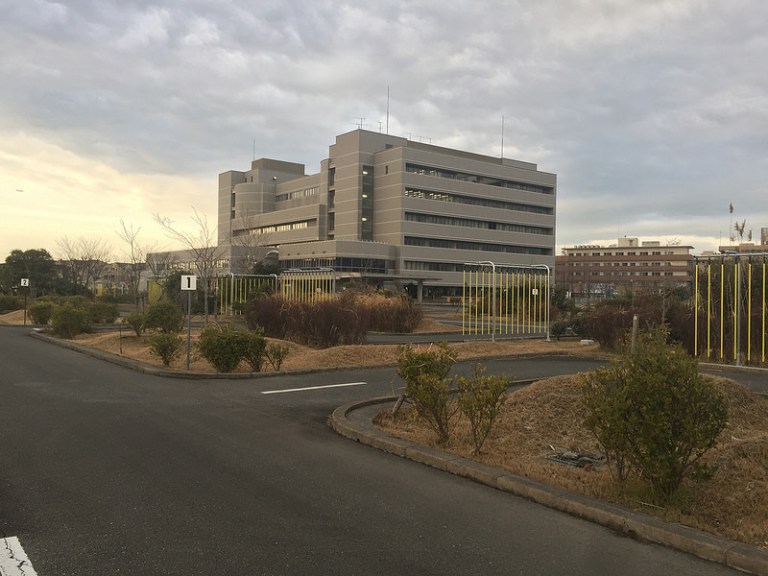
The final part is the driving test. The driving center for northern Osaka is located in the suburb of Kadoma, which is about an hour away by public transport from our part of Osaka. This is an industrial area close to the Panasonic plant and headquarters.  There is a large administrative building and driving course as you can see in the photo above. The test is only about 5 minutes long, but one needs to do everything right. Things like checking under the car before entering the car, checking mirrors, pumping the brakes, looking both ways, etc. One tiny mistake can result in failure. The average amount of attempts it takes to pass the test is 2.7 according to informal research conducted by the English teachers association of Japan. It is hilarious that adults are treated like beginners and actually fail a simple driving test. I rented out the course for an hour on a Saturday to practice so I felt confident, but I was extremely nervous.

I failed the first time. I think the instructor wanted to pass me but the bumper of the car hit one of the yellow poles you see in the photo. It was in the “crank turn” section of the course, almost near the end. The other driver in the car with me also failed by driving over a curb on the “s-curve” portion so I didn’t feel so bad. On the second attempt, I passed! I did have to stop and back up twice in the turning sections. The instructor only criticized my hands while turning, they needed to stay on the wheel more.

In reflecting upon the experience, I think the experience made me more aware of pedestrians and cyclists which is good. There are lots of people in the streets in Japan and as a cyclist myself, want drivers to be aware of us. Still over 400 cyclists/pedestrians are killed by getting hit by cars in Japan. That is a tragedy that people and the media do not talk about much. Self-driving cars can’t come fast enough in my opinion! I was annoyed at the silliness of the paperwork, especially providing evidence that a 49 year old man drove for 90 days in the country of his passport. The Kadoma driving center is such an odd place. It is a doctoral study in sociology waiting to happen. Japanese drivers face the same amount of testing and paperwork as foreigners. The culture here dictates complicated forms and procedures for just about anything, from purchasing a cell phone to exchanging money.

Obtaining a local driving license is a rite of passage for expatriates here. I would like to thank my wife for urging (not nagging) me to get this done. I am also thankful for the support of Ritsu and Art. They spent their time on me and gave me many helpful suggestions. I will be forever grateful! I am proud of my accomplishment and feel so relieved to be a legal driver again! I am looking forward to getting out to the best parts of Kansai and Japan.

Culinary Osaka: Robatayaki

32173521803_dac39bacac_c
Guests sit around the charcoal grill and choose which what they would like eat.

Osaka is known as the culinary center of Japan with its 91 Michelin-starred restaurants and thousands of other places to eat. Osakans are also known to enjoy life through eating and drinking with friends and family and are the most out-going people of any Japanese region.

My moving to Japan has opened my eyes to many different dining experiences, tastes and sensations. I am not a “foodie” but have come to enjoy a good meal and different dining experience. For my wife’s birthday, she wanted Robatayaki. This is a traditional Japanese style of cooking fresh ingredients, mostly seafood and vegetables over simmering charcoals. It originated in northern Japan, I read both Hokkaido, the big northern island of Japan and Sendai, the northern part of Honshu. Fisherman used to put hot charcoal in the stone box before going out to fish so if they caught anything, it could be cooked as soon as they returned. The family sat around the stone box and the food was delivered via a boat paddle.

32947250876_9f9b84c20d_z
The “menu” at a robatayaki restaurant

We chose a restaurant in Umeda called Isaribi It is located down a narrow, but busy street near the train station in the basement of a building. It has a great atmosphere with the chefs and waiters shouting welcome and other things, and a decor that reminds me of a rustic cabin. The food is placed in front of the grill (see photo above) and you can point to what you want to eat. The grill master uses a long-handled platter (see video below) to deliver the food to diners after he has cooked and seasoned the entree. We chose the all-you-can-eat-&-drink option for 2 hours. It cost about $35 US per person.

It was an exotic and delicious dining experience. After two hours however, I was ready for some cool fresh air and a walk around the city. We take new teachers to the school there as part of their orientation to give them a sense of the dining experiences that one can find in the city.

32833626112_8a9ce52741_z

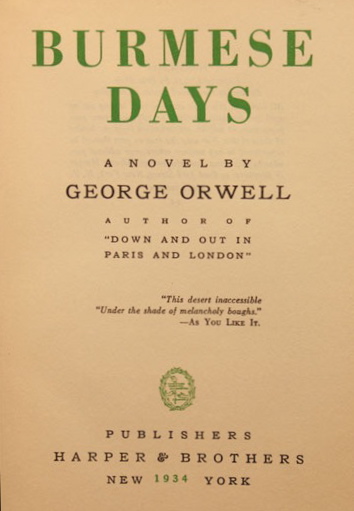
Book Review: Burmese Days – George Orwell

burmese_days

In looking for 1984 for my wife, I found “Burmese Days” the first novel by George Orwell. It is based on his time as a police officer in the Indian Imperial Police force in Burma, now Myanmar from 1920-1927. The British ruled Burma from 1885 – 1947 from their base in India. The book was published in 1934.

Orwell took a lot of heat from the old “Burma Hands” because it portrayed them a petty bigots and it hit a bit too close to home. He said it was fiction, but based on his reporting from seven years in the country. I love books about expatriate communities and glad I found it.

The setting of the novel is a remote “station” in northern Burma. A small community of British expats are working in the timber industry and are often out for weeks at a time in the forests. The social life is centered around the European Club in the center of the village. It reminded me much of my time in eastern Venezuela, working for a school serving the petroleum industry. The main character is Flory, who is a bachelor in his 30s and after 11 years in the country, has learned the language and appreciates Burmese culture, unlike most of the expats there, who are there to make money and keep their British culture and traditions and whose social life revolves around the club. I see this in my various posts throughout my career as an expat, some people get into the local culture while others prefer to keep their own. I am finding it harder to integrate in this age of the internet when you media is from all over the world. It is much different from my first posting in Colombia before the internet when one was truly cut off from America.

Flory is quite critical of the society and is kind of an outsider. When he falls in love with the visiting English niece of one of his colleagues, he is torn apart when she prefers the British culture of European Club and does not appreciate Burma the way he does.

I thought the best quote capturing the spirit of the novel, when describing Flory as he approached middle age.

 “For as his brain developed – you cannot stop your brain developing, and it is one of the tragedies of the half-educated that they develop late, when they are already committed to some wrong way of life – he had grasped the truth about the English and their Empire. The Indian Empire is a despotism – benevolent, no doubt, but still a despotism with theft as its final object.”

I learned a new vocabulary word, pince-nez which are those Teddy Roosevelt glasses without ear pieces, but a nose clip.

I highly recommend the book for people interested in the history of the British empire, Myanmar and the life of expatriates.


Soccer Season for Owen

32660702636_d2420e28cd_z

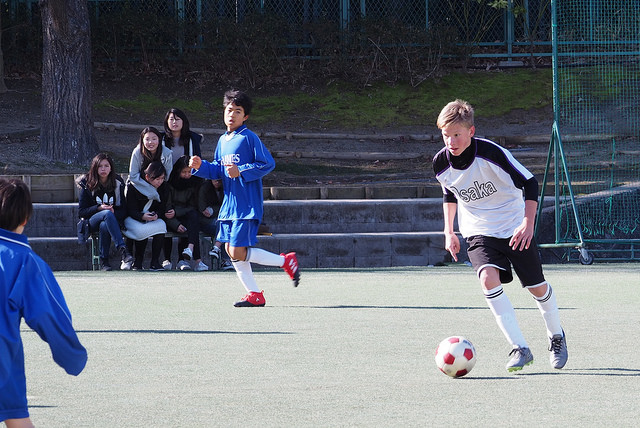
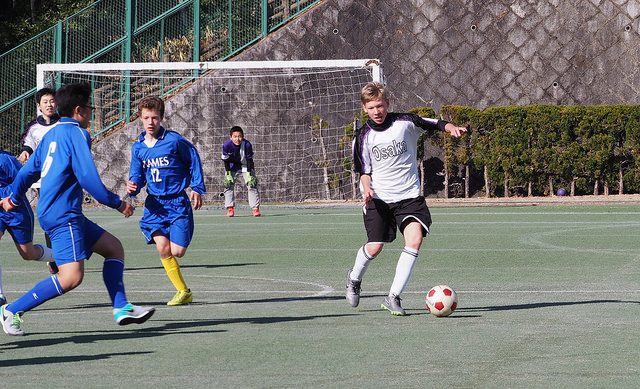
Owen is playing for his middle school soccer team. They defeated the Kyoto International University Academy this morning 7-0. They really dominated the game. Owen played only in the second half and scored a goal (see video below). He scored a second goal but was offsides. He played striker and my biggest impression was that in Japan he is tall, so he really stood out. I hope they can repeat as WJAA champions. The tourney will take place in a month.

32548774272_4a31def9ce_z


Falling in Love with London

32283013541_fae442c788_z
Up close and personal with Big Ben

My appreciation of the sophistication and the pleasures of London grew immensely on this, my second visit to the city. I was mostly working on both occasions so didn’t get a chance to fully enjoy all there was on offer for tourists. I did manage to get out and about a bit, however. I compare London to New York, because it has the same bustling energy with its theatre district, iconic buildings and cosmopolitan populace and visitors. I think London is more refined than New York with much more tradition. I know that is a cliche, but I see why many others have come to same conclusion.

32364267576_27255b9066_z
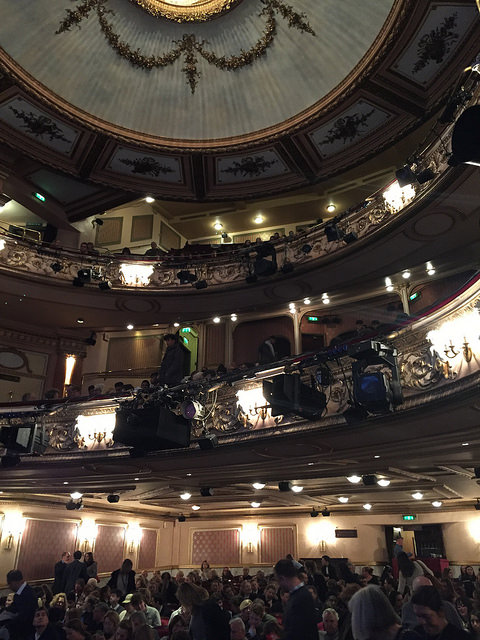
Inside the Gielgud Theatre London

I love theatre and so we went to the West End to see The Curious Incident of the Dog in the Night Time, a play based on the 2003 novel by British author Mark Haddon. I didn’t read the book and my friend did, but we enjoyed the play equally. The 2 and 1/2 hours went by in  flash as I was swept up in the story. It gave me much more empathy for people who suffer from autism, which great theatre is supposed to do, get you into the story. I am always amazed at the sets, choreography and acting. I joke with other educators that seeing plays in London and Broadway has forever ruined high school plays for me. They just don’t compare. 🙂 I was curious which theatre district was bigger, Broadway or the West End. More people attend theatre productions in the West End than on Broadway, despite NYC having more venues and seats. London is the center of the English theatre world. The amount of great actors, and musicians for that matter, that have come out of London is amazing.

32283363511_d2aedcab6c_z
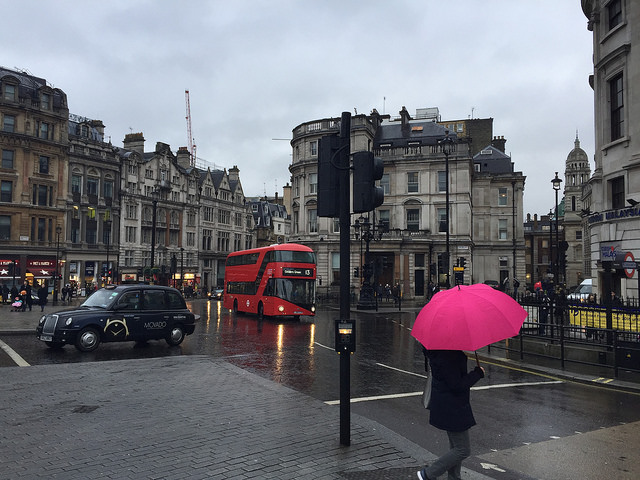
Classic symbols of London – taxis, buses and umbrellas

The hotel was located in the neighborhood of Kensington, which is close to the football club Chelsea’s famous stadium, Stamford Bridge. I made the walk to see it and buy some gifts for my children who are avid soccer players. The apparel and souvenir shop rivaled that of the Green Bay Packers store at Lambeau Field. The Premier League is the most popular sporting league in the world and Chelsea one of the biggest clubs in the league. We didn’t get a chance to see a game because we were working all weekend. I do want to see a match the next time I am here.

On this trip I discovered the pleasure of the British pub. I can see why the concept has been copied the world over. Coming in from a cold wet evening, the atmosphere is very relaxing. I like seeing families in the pub and it has a much different feeling than a bar in the US. I had a fish and chips and sampled local craft beers. I enjoy watching people connecting with each other. It is one of my new year’s resolutions to take time out to sit in cafes or pubs and enjoy other people’s company. I am often too busy to take time out to reflect on life and have a good conversation with family and friends.

32403379795_9d575c9ae7_z
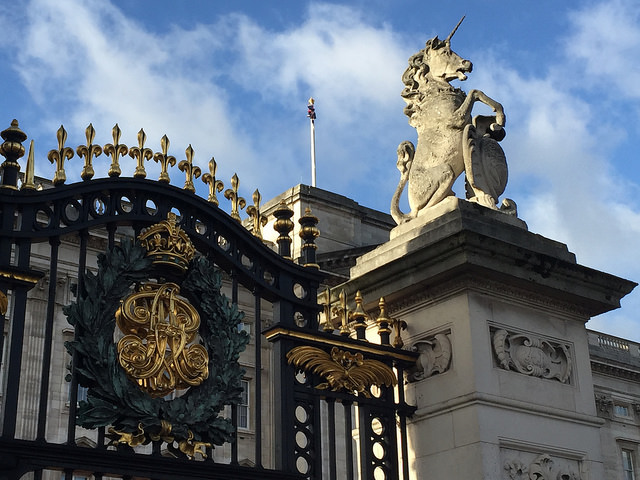
Buckingham Palace Gates

On the morning of our arrival, we were trying to stay up so we took a long walk from the hotel, through Hyde Park and Buckingham Palace, to Westminster Abbey and the Thames. London is a great city for walking, like Manhattan. Walking is so good one’s health, I see why there are less obese people in places where walking is encouraged or convenient. I was so impressed with the Tate Modern Art Museum, which is down river from Big Ben. The architects converted an abandoned power station, maintaining the industrial feel, but turning it into a work of art. There were pieces by Picasso, Dali and others. We spent several hours going through the exhibitions. I like how the city government places an importance on the arts, both theatre and the visual arts. Experiencing the fine arts makes us more human and it is another reason why I love London. Next door to Tate is a replica of Shakespeare’s Globe Theatre, which was not open on a winter, weekday morning.

London has become one of my favorite cities in the world and I hope to come back with my family to see it again.

“When a man is tired of London, he is tired of life; for there is in London all that life can afford” — Samuel Johnson

The King and I: Bangkok

32025845900_0a7133e9be_c
Shrine to King Rama IX

Earlier this month I made my third trip to Bangkok, Thailand, one of the great world cities. My three trips were always work related so I didn’t get much time to experience the city. My hotel had a beautiful view of the Chao Phraya river which runs through the heart of the city. It is mesmerizing to watch the many types of boats going up and down the river, from huge barges being pulled by tugboats, to lighted party cruise ships to tiny private boats. One could just sit and watch the river all day, which I basically did between meetings. I guess with traffic being so bad in the city, it is a fast way to get around.

32253000632_8f70258595_c
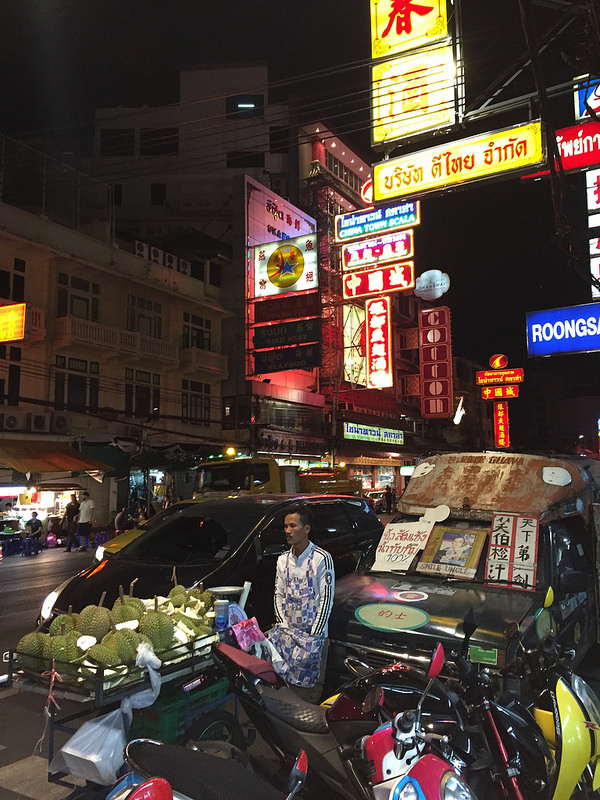
Durian salesman under the neon lights of Bangkok’s Chinatown

We did get away from the hotel one night and we walked down to Bangkok’s Chinatown. There were heaps of restaurants along Yaowarat Road which were started by immigrants from mainland China. They are in the style of classic “shop-house” which are three to four-story row houses with the business on the ground floor and living quarters above. They were not elegant; the restaurants were basically plastic chairs and tables, but judging by the large number of patrons, probably pretty good. Preparations were already underway for the Chinese New Year celebrations taking place on January 28 this year.

One could not help but notice the ubiquitous billboards and shrines for honoring the memory of the recently deceased King Rama IX. He was the world’s longest serving monarch with close to 70 years in power. I remember watching the King and I on television with my dad, so monarchy has played a role in Thailand for a long time. The king featured in the book and play was King Rama IV.  It seemed like the Thais are obsessed with King Rama IX as literally every building has some form of shrine. The pool workers at the hotel wore black ribbons on their uniforms. One said they wear them for the first 100 days after the king’s death, and there are 11 more days to go. The country is officially in a one-year period of mourning and his body will be ceremonially burnt in October. His son is scheduled to succeed him next January.

32025842550_7821e800f1_z
View from my hotel of the Chao Phraya River

In reading about the departed king he seems to have been a good man and good leader. Thailand is somewhat of an economic success story and is growing at a pretty good rate. However, Thailand still has lots of poverty despite a booming tourism industry and I think there must be other reasons why he is so publicly and prolifically mourned. The country is under a military government since 2014 and there are some serious conflict between the upper class elites in Bangkok and the many poor of the rural north. I think King Rama IX was someone everyone liked and he helped keep the country together. I read one expert saying the the business community honors the king so much in order to keep the status quo and avoid a revolution of the majority poor. The king didn’t have much real power, although the family is super rich. The son, the soon to be King Rama X, is not as competent as his father was as royalty and I read where he spends most of his time living a lavish lifestyle abroad.It will be interesting to see if he can grow into the position and use the good will of his father to maintain peace in the country.

I am not sure when the military will be allowing elections again. They stepped in and took over because the opposition “red” party won over the traditionally ruling elite, “yellow” party. Why won’t the same thing happen in the next election? I would like to see the lives of the many poor of Thailand improve and it is my wish for them to maintain the economic growth and include more of the underclass in growth experienced in other areas of the economy.

Hurray for Singapore!

31949776082_78d42d3ce4_z
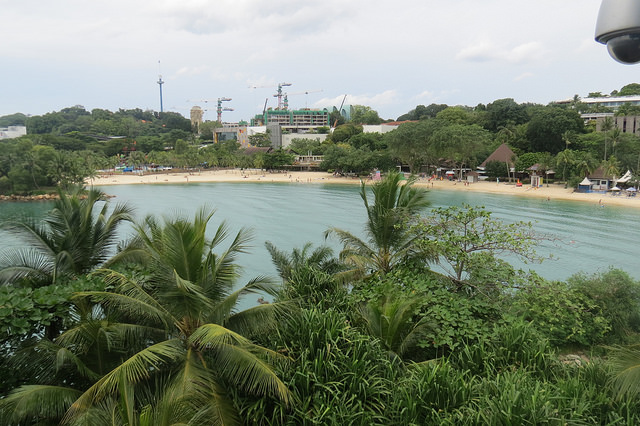
Palawan Beach – Sentosa Island

Our visit to Singapore is ending soon. It was a delightful vacation, as all vacations are when I can spend lots of time with my wife, children and loved ones. It really doesn’t matter where we are! However, there were many things I like about this island nation. We had a great last day, spending the afternoon swimming at Palawan Beach on Sentosa Island.

First, in looking at the world today, the three major ethnics groups of Singapore get along well and live peaceably together. On my run this afternoon, I passed a Chinese Buddhist temple, a Malay Mosque and a Hindu temple, all within a couple blocks of each other. The Singaporeans I talked to our proud of being from here, and can look down upon where their ancestors came from, China/India/Malaysia and say that they have a better life. Many Americans pride themselves on saying the same thing. In a world where tribalism and intolerance is growing, it is refreshing to see cooperation and working together.

31980069361_d848960da9_c
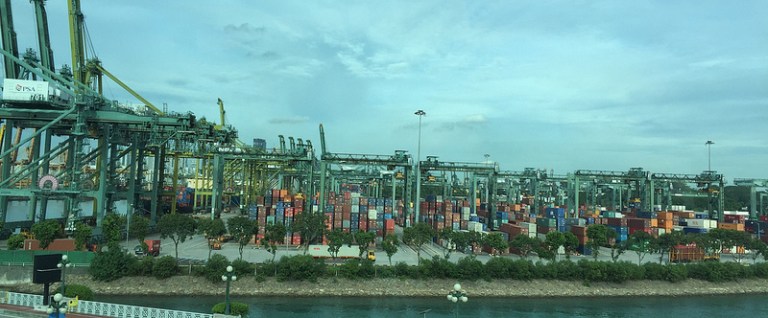
Multitudes of containers waiting to be shipped in the Port of Singapore

Singapore is open for business. The government takes care of everyone here very well, even the disadvantaged, unlike we do sometimes in the USA. They have embraced the global economy and it has become a center of commerce in Asia-Pacific, with a super busy airport and shipping port, an impressive financial district and Western expatriates bringing their global viewpoints here. They are a role model for cities.

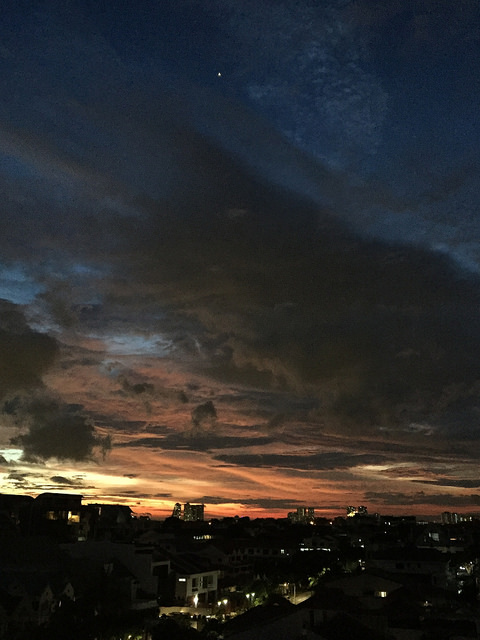
Coming here during the Japanese winter has been fabulous. I love the sounds of the bird, the Asian Koen every sunrise and sunset, the flocks of chattering parakeets soaring around the building and the lush tropical gardens that cover the city. My sister-in-law has a large rooftop terrace with a shower, hammock and comfortable chairs that is so nice to spend time. Watching the incoming monsoon storm clouds, the rapidly descending sunsets and feeling cool breezes is very relaxing.

31977251046_d0386a99e3_z
Sunset from the terrace – Kovan, Singapore

There are some downsides however. I would be concerned about their growth if I lived here. I wonder how many more people can fit on the island while maintaining a high quality of life. There will be more traffic jams, less green spaces, etc. They will eventually have to stop migration or at least slow it down. Immigrants, especially the highly skilled ones, have helped Singapore, but it is an island, and space is the issue.