Reaching the Top of Guam

Reaching the Top of Guam
25985522482_215c89f96f_z
Ocean is leading the way 

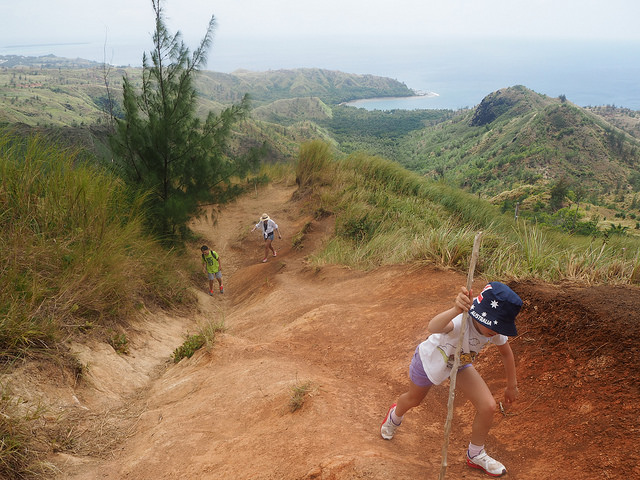
Yesterday we climbed Mount Lamlam (lightning in Chamorro) which is 1,332 feet (406 meters) above sea level. The locals look at it being actually 38,300 feet if you start measuring the elevation from the bottom of the Marianas Trench. However, the trench is 75 miles off the coast of Guam and so cannot really be considered a single geologic feature like Mauna Kea in Hawaii.

We actually did two summits, the first Mount Jumollong Manglo (1,283 feet) is where the annual Good Friday stations of the cross pilgrimage takes place. We saw the white crosses at regular intervals and the big monument cross was a short distance from the fork for Lamlam.
25804530090_0e5126c617_z
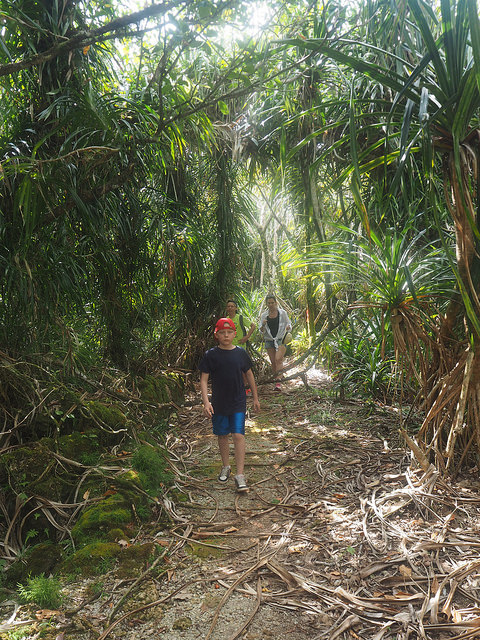
Oliver in the grove of Pandanus trees

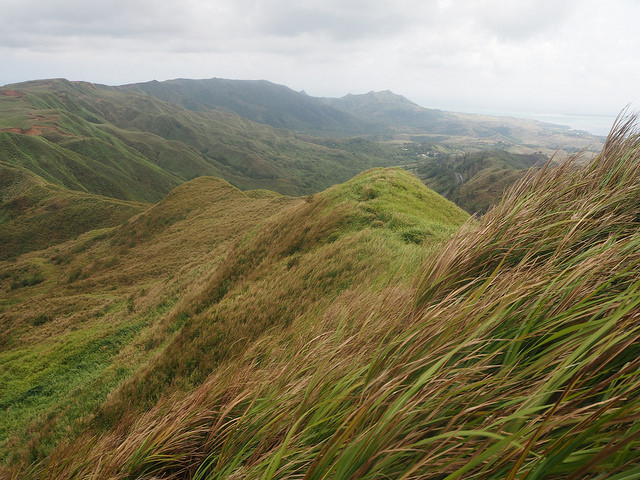
We encountered steep hillsides of sawgrass in the initial portion of the hike. It reminded me of the 1998 movie about the WWII battle for Guadalcanal, The Thin Red Line   . The sign that used to indicate which direction to the two peaks are the fork is missing. For those of you reading this before doing the hike, Jumollong is to the right and Lamlam is to the left on the smaller trail.
26077763215_e53ff880c2_z
Hills of Sawgrass

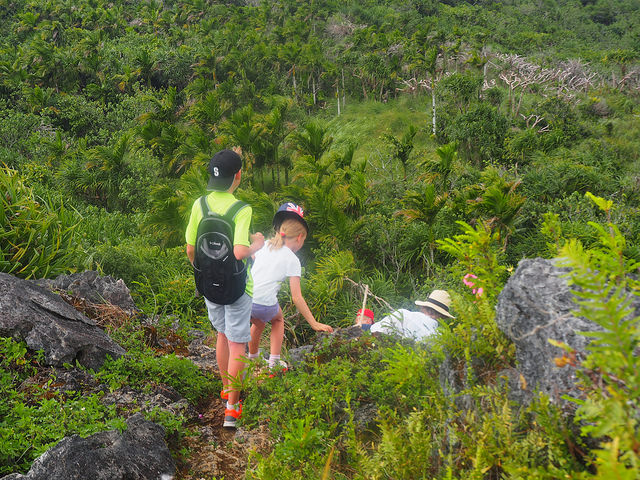
The path to Mount Lamlam goes through some incredibly beautiful Pandanus forest and limestone outcroppings. It is amazing to think that the limestone rock was once coral reef. One needs to be careful climbing on the sharp rock, especially towards the peak. It was the most pandanus trees I have ever seen! It felt like walking on the set of Jurassic Park. I am not sure which species of pandanus of the 750 total, but it is also known as the “screw pine” because the leaves are arranged spirally like a screw and the fruit looks like a massive pine cone. They kind of look like palms, but are not related. I also spotted several cycads, which are endangered in Guam. The forests surrounding Lamlam peak are the only limestone forest tracts except in the Guam National Wildlife Refuge in the far north of the island.
26077822765_30c371a022_z
A careful descent from the peak over sharp limestone

South Pacific Paradise

25441697873_9f28472e46_z

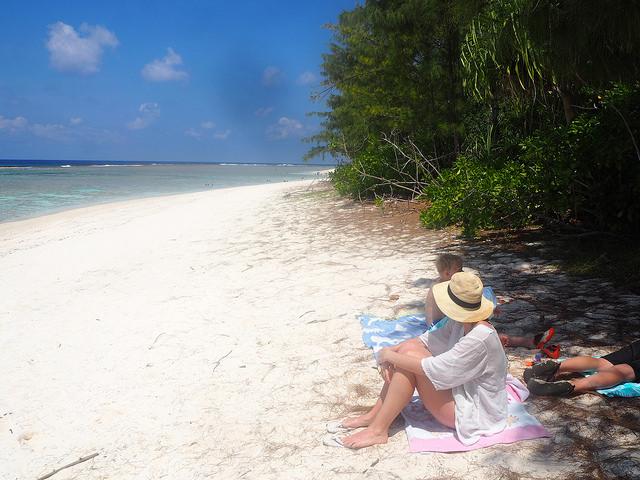
This was our view yesterday afternoon at the Guam National Wildlife Refuge. The refuge is a protected wilderness area that abuts the Anderson Air Force base. They have preserved a stretch of coastline in the far north of the island from hotels, private homes & apartments and other development. If it was up to me, no one would be able to put anything on the a body of water. That is for another blog post…

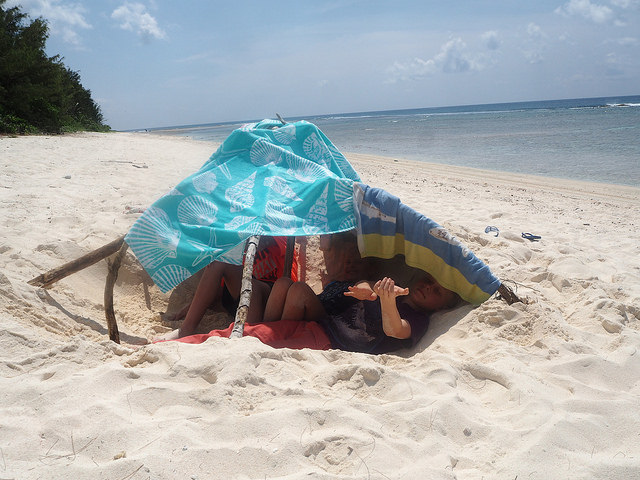
It was a Saturday afternoon and there were probably about 50-100 people in the entire 385-acre park. We had a big section to ourselves. We drove our car down a narrow two-track path to a section of forest with an opening to the beach. It provided a shady, flat area to set up our blankets and gear. There was plenty of coral for the kids to snorkel as you can see Oliver and Ocean below.

25771405640_16c8879532_z

We sadly had to leave at 4:00 PM because government officials close the refuge. We will definitely go back this week and fully explore the trails in the park.

26044210245_52672b3745_z

Initial Impressions of Guam

25373232494_5756b10262_z
Owen and I out on the kayaks. 

I have been on the island for only a few days and mostly spent in the far south of the island. Purposely I chose to stay away from the urban area Agana with its resorts and hotels.
Driving through the villages of the south, it reminds me of Venezuela. The quality of most of the homes is substandard to mainland American homes. Definitely a poorer economy for most of the islanders. This is in contrast to the military housing facilities which are suburbia USA. You can’t beat the weather however, with sunny skies, warm nights and the Pacific ocean always near by, it makes me long for living again in the tropics. I spent 13 years living in Latin America and was ready for temperate climes and the change of seasons, but there is something to be said for tropical living.

25849054092_19f4c9d318_z
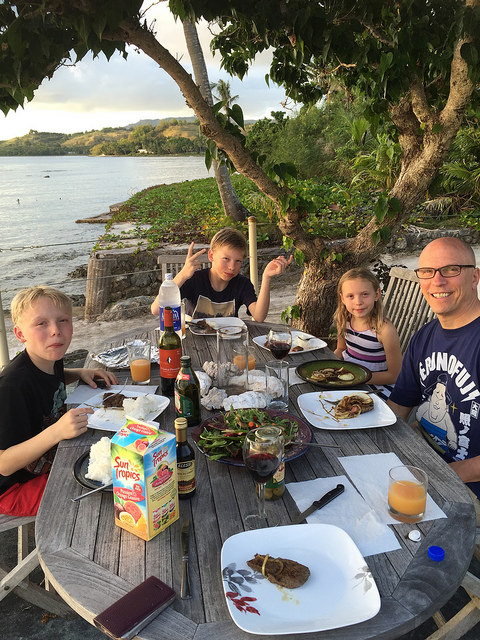
Another delicious dinner by Nadia!

I basically see Guam as a roadside park. The Pacific Ocean is huge and refueling/rest stops are needed for America as they try to control shipping and air of the whole world with their military. Hence, the naval and air force bases on Guam and it is an American territory. I can see why Guam and Saipan were fought over so fiercely in World War II. Using airstrips and facilities on these islands put the USA within striking distance of mainland Japan. With China building islands in the south China Sea and apparently trying to make a sphere of influence similar to what America did in the Caribbean (read Robert Kaplan’s book, Asia’s Cauldron: The South China Sea and the End of a Stable Pacific), I don’t see the USA leaving anytime soon. Outside of the city, it doesn’t feel like America until you get in the supermarket or watch TV. Most of the people I see are dark-skinned Polynesians, who look a bit like Venezuelans. It is ironic that besides military bases, Guam relies on Japanese tourism to boost their economy. Over 1 million Japanese visit yearly. It is only an inexpensive, 3-hour direct flight from Osaka.

We are enjoying quiet family time together and soaking up the south Pacific land and sea natural beauty.

25910982261_0cc715e2c4_z
It is nice to have time to watch the sunset. 

Sella Bay Hike

25354819063_7b7223a68d_z
A view to Sella Bay from the top of the trail. 

A wonderful and challenging hike today from the Sella Bay trailhead, 500 meters above the beach. The trail led us across two small creeks and into an old coconut palm grove. The views were spectacular all the way down with some varied vegetation. When we got to the beach, we were rewarded with crossing this old Spanish bridge, over 300 years old. Amazing it has stood the test of time with erosion and typhoons, you think it would not still be standing.

25351020554_23cf8a7da3_z

The highlight of the beach time was the superb snorkeling. Owen and I went out past the reef and looked down into the abyss. Thousands of multicolored fish, coral and other creatures. Ocean and I had a great time snorkeling in the tidal pools.

25889511241_e1822aef58_z

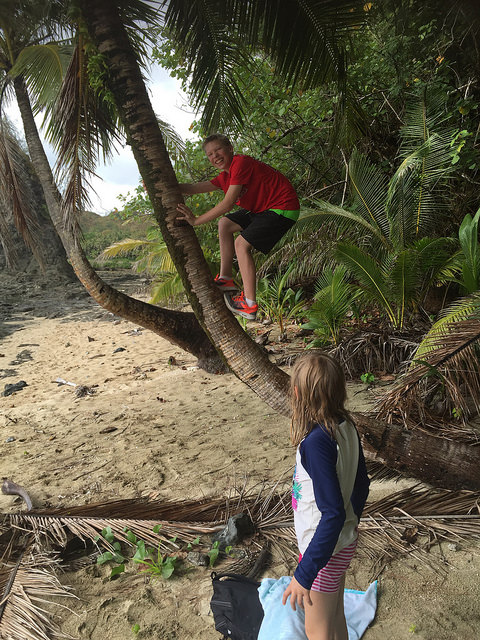
Oliver and Ocean were troopers! Ocean is so calm and methodical in her hiking. Oliver is really in his element in wilderness. It rained a couple of times, making the trail quite slippery in many places. We made it back safe and sound.

25355775783_5c8ae27615_z

We didn’t see anyone the whole afternoon and had the beach to ourselves. I love the tropics and the smell of the sea, high humidity and tropical foliage, made for a day I won’t soon forget! My highlight was Owen’s reaction when we passed the high point of the reef. “It was like a documentary!” The snorkeling was really great and I recommend anyone doing the hike. It is located on the south side of the island, not far from where we are staying.


Sumo!

25769042202_7f581ce258_z
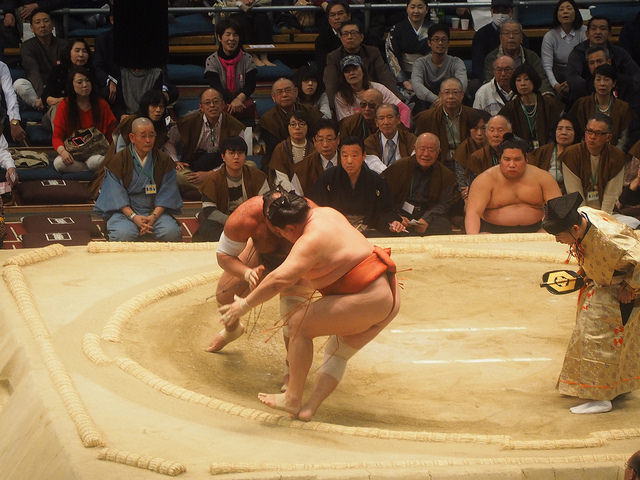
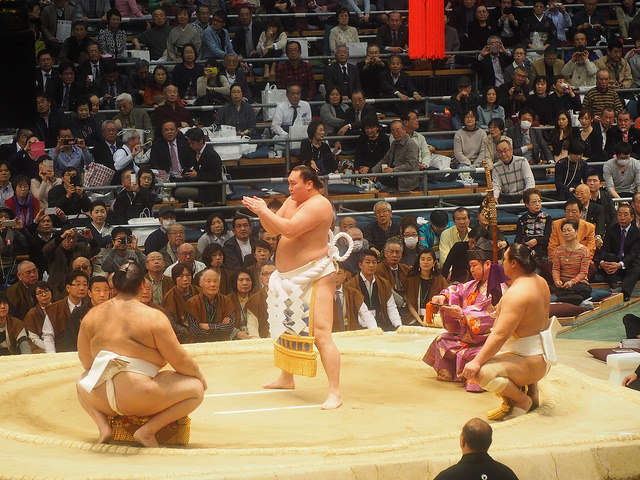
Osunaarashi tosses Asasekiryu out of the ring.

Spectacle. Bizarre. Fascinating. Wierd. Ancient. Cult. Sport. Thrill.

I absolutely loved my experience attending the 2016 Osaka Grand Sumo Tournament on Thursday. I won’t bore you with all the details of the sport. If you want to know more about sumo wrestling, check out this English guide here. There are six “grand tournies” per year, 3 in Tokyo, 1 in Nagoya, 1 in Fukuoka and in March, they come to Osaka.

It is such an unusual sport. They maintain many of the traditions and religious aspects that surrounded the sport 1,500 years ago. For example, after each tournament, they publish a banzuke, which is a ranking of all 800 professional sumo wrestlers. Instead of a straightforward list, it is printed in an ancient format. It is like the top 10 college football rankings to be written like the Declaration of Independence, with cursive letters from a quill pen. The ancient customs mean the wrestlers go through the all the rituals like throwing rice to “purify the ring”, the referees where traditional folkloric costumes, etc. The wrestlers choose ring names, like  Egyptian wrestler Abdelraham Salel’s “osunaarashi” which means sandstorm in English. He won his match against a Mongolian.

25589243790_78abf4675e_z

Above is the greatest wrestler in the history of sumo, Hakuho Sho, the winner of 33 grand tournaments, the most ever. He went 86-4 in two consecutive seasons. He is performing another shinto ritual before the matches begin in the final round.

I can see why the guys are so fat. The object of the sport is to push your opponent out of the ring or have a body part other than the soles of the feet touch the floor of the ring. The heavier one is, the harder it will be to move them. I wonder how professional American football players would do in this sport. The sumo guys are big and they must train really hard, but I wonder if one applied the latest techniques in strength training, nutrition, advanced statistics, film analysis, etc. I would like to know more about the different techniques used by the wrestlers.

25794944301_f0a081b1b4_z
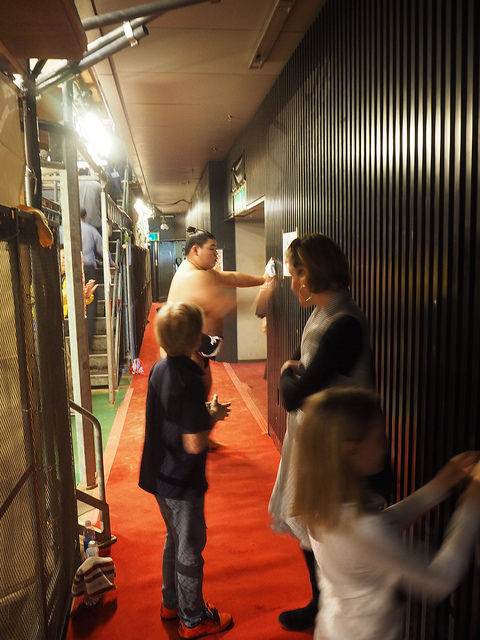
Oliver gets “up close and personal” with a sumo wrestler

The stadium in Osaka is unique in that you can get up close and personal to the wrestlers. You can stand in the hallways as they enter and leave the ring. We also saw many outside the arena, getting lunch at Family Mart or taking a taxi. Hilarious to see these big guys wearing robes and sandals walking through the streets. Their hair smells like chamomile which is another ancient ritual. I wonder if the guys really believe in shinto rituals or they do it because they have to and it is part of the sport. I think it makes the sport more appealing. The top wrestlers make a lot of money and have beautiful wives, which should not have surprised me. Beautiful women seem to come with money.

I will definitely go again, just not with the kids as they didn’t have the patience to sit through so many matches. There are bouts occurring all day, with the lower rounds starting in the morning, culminating with the masters in the late afternoon. It is a 15-day tourney and the wrestlers fight daily in round-robin style. The best record wins.

I will end this post with a portion of Hakuho’s pre-match ritual. He is the greatest off all time!


Mazda Tour

25817711266_ba1787e023_z
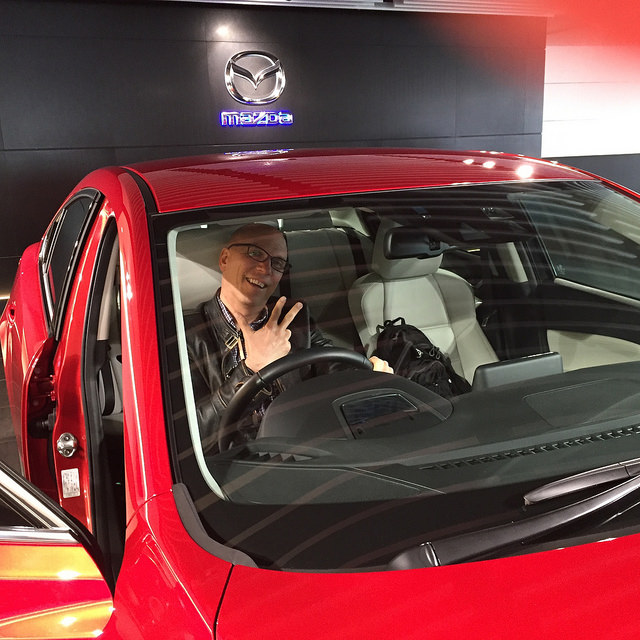
Checking out the Aventa model in the showroom. 

I visited the Mazda Motor Corporation yesterday as its world headquarters are in Hiroshima. Hiroshima is most well known for the atomic bomb blast. Without that, it would be known for being the home of Mazda. Car manufacturing is big in Japan with the world’s largest producer of cars, Toyota, being based in Nagoya and four of the top 10 largest automobile manufacturers in the world being located in Japan. Mazda is number 15 in the world. They had a long relationship with Ford, but recently Ford has divested itself from Mazda and only owns 3%.

Hiroshima is almost a company town, with the Mazda complex taking up 7 kilometers of the city. We toured “Mazda-landia” and it is huge. They have the world’s longest privately owned bridge, two fire stations, a hospital, a coal burning power plant and even their own port! They have a large test track in another part of the city.  Mazda also owns the professional baseball team, the Hiroshima Carp and professional soccer team. I can imagine how big the larger car companies must be! I am embarrassed to have grown up in Michigan and never visited Ford or GM.

25543063190_2e2c49329f
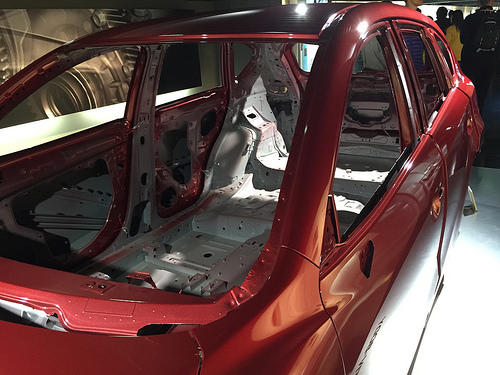
The metal frame before it hits the assembly line.

The most interesting part of the tour was watching the 1000 meter long assembly line. I could have stayed for a couple of hours. There were not too many assembly workers as much of it is controlled by robots and machines. The guys on the floor were all young and nimble, crawling in and out of cars. They assemble a car in 15 hours and they produce about 400 cars per day. Watching the frames getting parts stuck on with rivets and the incredible amount of engineering and logistics that goes into assembling an entire car in a day is amazing! We were not allowed to film or take pictures on that part of the tour.

I am not into cars, as I only see cars as a way to get me from point A to point B. I would never buy a new car, preferring to spend my money on other things. In fact I don’t even own a car and we just occasionally rent a car when we need it. I understand guys who are passionate about cars, but it is just not for me. The tour was interesting however and I learned a lot.

25543061900_c09a74534b_z
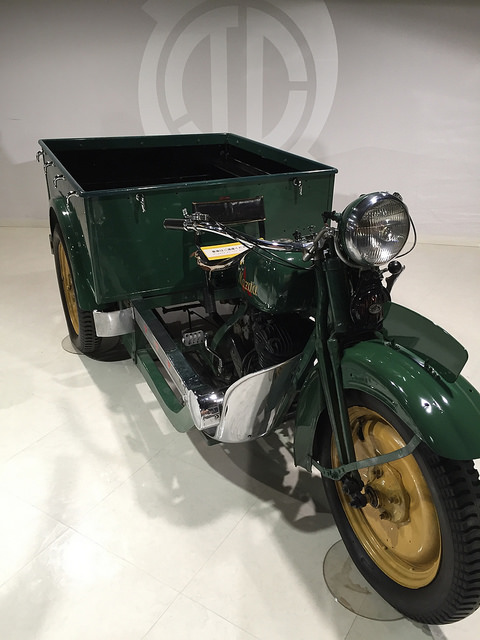
The three-wheeled truck that helped the city recover after the bomb. 

Mazda’s speciality is the rotary motor, which is different from the common piston-driven engine. It has more power and a smoother ride, but is not very fuel efficient. This almost bankrupted the company in the 1970s, but they survived and have done well with the “roadster” or “miata” rotary engine car. They switched to the more fuel efficient piston engine for most of their models. The company survived the atomic bomb and were producing a 3-wheeled mini-truck only 4 months after the devastation. They were also the only Japanese car company to win the 24 Hours of Le Mans, accomplishing the feat in 1991.

Miyajima World Heritage Site

25712170631_50cb9ee88f_z
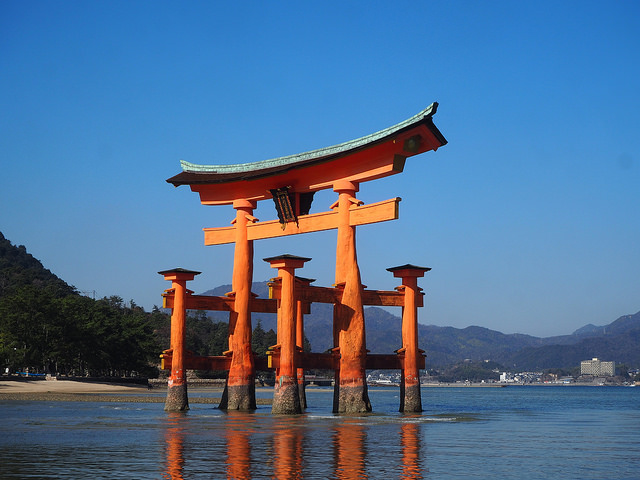
The famous torii at low tide

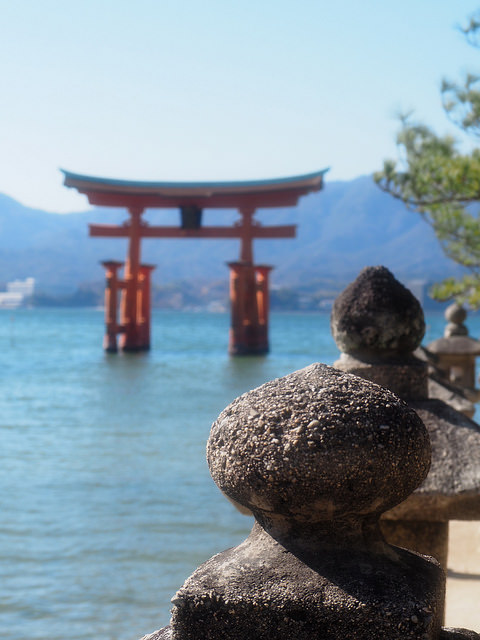
I can see why the shrine on Miyajima (shrine island) is an UNESCO World Heritage site. Besides the really cool looking shinto gate (torii in Japanese), the green, mountainous island in Hiroshima bay is a stunning backdrop.  It reminded me a bit of the Mediterranean coast. I highly recommend staying at a hotel on the island and spending 1-2 days exploring. Besides being recognized by the UN, it is also one of the “three views of Japan” cited by 17th century scholar Hayashi Gahoo. This is the second of the three that I have visited.

25506452140_1283c7c65b_z
The view from Mount Misen

My favorite part of the island is the hike to Mount Misen (535 meters – 1,755 feet). The views are spectacular, especially on a bright, sunny day like we had yesterday. It takes about 1 and 1/2 hours of pretty steep climbing, but well worth the effort. There is the typical tourist alley of shops and restaurants. We tried the Hiroshima style okonomiyaki, the savory pancakes. In Hiroshima they use more cabbage than in Osaka. I also had a bowl of the abundant grilled oysters that are caught in the bay. There are also loads of tame deer making a nuisance of themselves with tourists.

25807113555_dbd18d9ee2_z
The torii at high tide.

It was a great day for me. Walking in nature, cool sea breezes, delicious food and lots of laughs with the students and fellow chaperones. Also being a weekday, there were not the usual holiday crowds. I can’t recommend enough, a visit to this special place.

Hiroshima – August 6, 1945


25153754254_6ebe547101_z
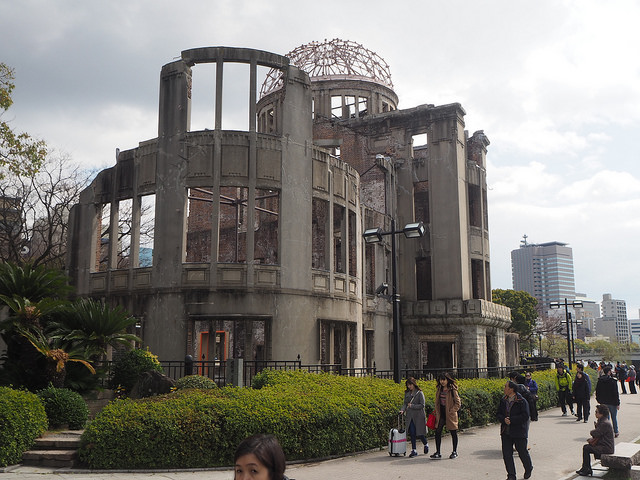
The Atomic Bomb Dome Monument – Hiroshima Peace Park

This is ground zero of the first atomic bomb detonation aimed at killing humans. The “atomic bomb dome” in Hiroshima is now a monument visited by thousands of people weekly in the Hiroshima Peace Park. On August 6, 1945, an uranium bomb exploded 600 meters almost directly over this building, a former exhibition hall. Because the angle of impact was directly above, the building’s columns and dome survived the blast while a kilometer in every direction was leveled. Almost half of the city (140,000 people) were killed and combined with a second atomic bomb in Nagasaki August 9, 1945, the Japanese surrendered on August 15, 1945, known as VJ Day (Victory over Japan) in the USA. The Americans were aiming for a nearby bridge as the target, but missed by about 300 meters.

25168124813_5791fa2ee7_z
Hara-san gives his story with a translator. 

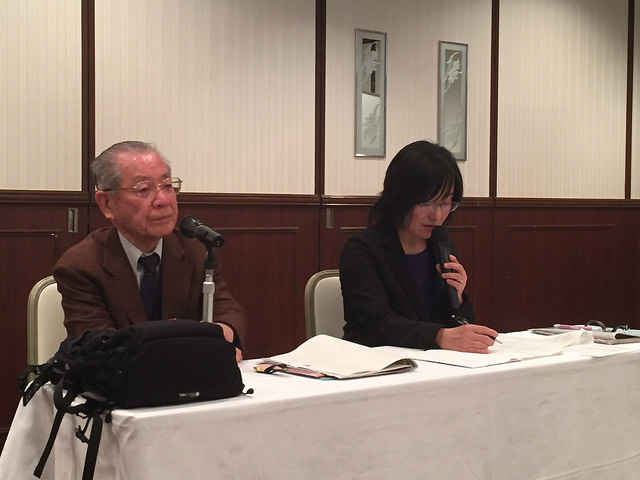
I am in Hiroshima  as a chaperone with students from our school. Last night at the hotel Garden Palace, we arranged a survivor of the bomb to come and speak with us. Hara-san is 77 years old and the former director of the Hiroshima Peace Museum. He was waiting for a train on that fateful morning at the Hiroshima station with his parents and older sister. Fortunate for him, they were on the backside of the building and luckily survived the walls crashing on them. The debris protected them from the fire and they were able to crawl out. They also fled the city in an eastward direction, which was away from the epicenter. They had no idea which direction the blast came from and by leaving to the east, avoided more radiation poisoning. He spoke of stepping over dead bodies for hundreds of meters and listening to the cries of people with burned flesh. Absolutely horrible. His message to us was one of peace and futility of nuclear weapons. Walking through the museum and seeing the charred school lunch boxes and school uniforms emphasized the fact that many children died.

25699685761_40368eed37_z
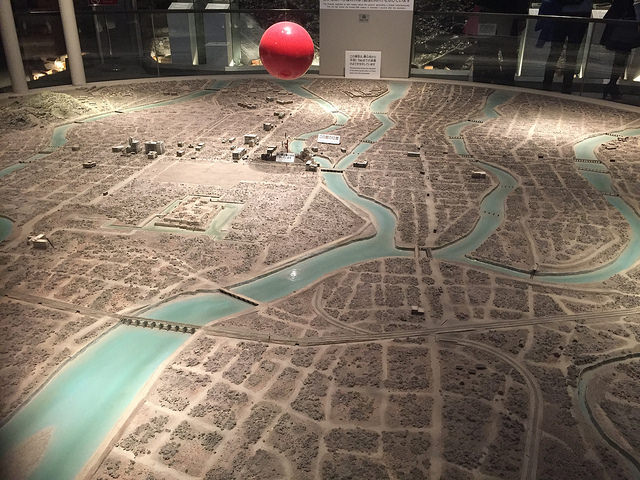
A scale model of the city after the blast – the red ball is bomb explosion.

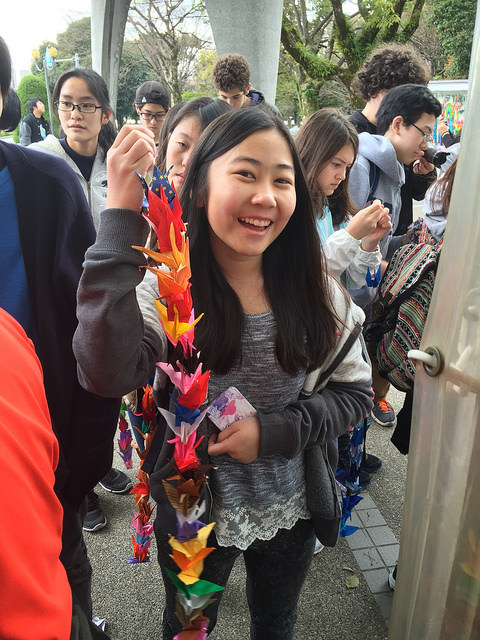
The grade 4 students made 1000 paper cranes, a symbol of healing and long life in Japan in honor of the children who died in the blast, and like the famous Sadako, died from cancer several years later, and the students placed the cranes at the children’s peace memorial.

25699678401_289b20599e_z
Peace Cranes at the Children’s Memorial

Ollie & Owen Sporting Glory

Oliver displaying Saber sportsmanship

Friday I accompanied the “Junior Sabers” basketball team downtown to play basketball at the Osaka YMCA International School (OYIS). The grades 3-5 basketball club at school wanted a culminating game, so we arranged a day of hoops at OYIS. Oliver was a combination of the power of Andre Drummond and the speed of Reggie Jackson. We are big Detroit Pistons fans and the boys model their games after them. The kids on both schools really enjoyed themselves and the purpose of the day was exercise, learning the fundamentals of the sport and experiencing a competitive team sport and all that comes with it.

Owen centers the ball against Marist Brothers I.S.

Owen finished his soccer season last weekend by winning the Western Japan Athletic Association (WJAA) championship. The “Sabers” upset a much older Nagoya I.S. in the semifinals 7-5 and host Canadian Academy 2-1 in the finals. Owen scored 5 goals in the two days.

Ollie is so fun to watch on the court. He is a big boy, especially here in Japan and is quite physical on the court. Playing against your older brother makes him a bit more aggressive than the other students.

Owen played striker this season and enjoyed playing.  The winter seasons are now over for both Owen and Ollie and we are looking forward to more sports this spring.


Aboard the USS Blue Ridge

24977661040_59b3782f11_z

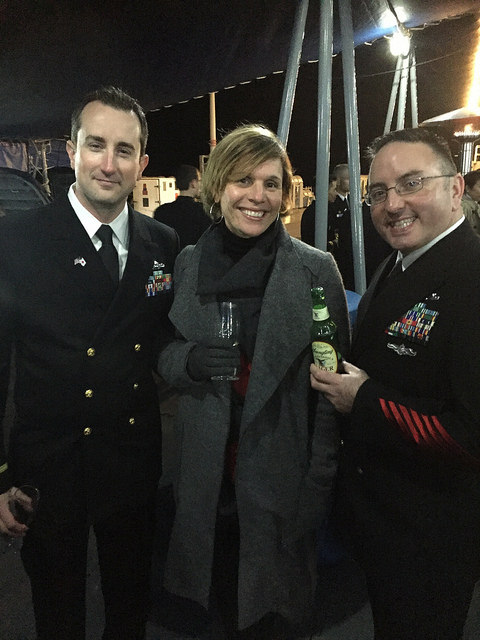
On Thursday evening we attended a reception aboard the USS Blue Ridge. The communications and command flagship of 7th Fleet is making a friendly visit to the port of Osaka. The 900 sailors aboard will be enjoying a bit of R & R here in Kansai and doing a community service project with a local orphanage. The ship when not on patrol in the Asia Pacific region, is docked on a naval base near Yokohama. Nadia is shown above with a couple “cryptographers”, the communications specialists.

25155003702_32fcb7cf90_z

The heads of international schools in Kansai with US consulate students were invited to attend the reception hosted by  US Consul General Greenburg. It was a crisp evening down at the port of Osaka where the Blue Ridge was docked, but the friendliness of the sailors and guests, live music and food and drinks kept us warm. It was my first time on a navy ship and it is incredible the logistics that goes into maintaining a vessel at sea carrying so many people. The Blue Ridge is quite old (since 1967) but it is well kept after and serves as a communications hub for the seventh fleet. We met the commander of the 7th fleet, Joseph Aucoin, and we discussed our memories of the Balkans, where Vice Admiral Aucoin also spent some time.

It is amazing and incredibly expensive the work of the US Navy. They have basically mapped out zones of the entire world that the various fleets cover. Thanks to the US navy, world trade and commerce can take place without disruption. Times are a bit tense in the Asia Pacific region with the always crazy North Korea and the rise of militarism of China in the South China Sea.

24905578499_15b3d11020_z

I would like to thank the personnel of the USS Blue Ridge and the US Consulate in Osaka for the pleasant evening! I also want to thank the men and women of the Blue Ridge and the entire seventh fleet for their service to our country and to the idea of democracy and free trade.

25246996116_60a2fd1447_z