There were some good things that came out of the Stock Market Crash of 1929. One of them was the beautiful Island Beach State Park, here on the Jersey Shore. Henry C. Phipps, a childhood friend of Andrew Carnegie and a big shareholder in Carnegie Steel, bought the southern part of the long barrier island with the intent of making it into a resort. With the crash of the stock market, construction halted and with the interruption of World War II, the land was never developed. The State of New Jersey wisely purchased the land from his heirs in 1953, and hence today, it is the only undeveloped, large, piece of land on the entire New Jersey coast.
We spent the afternoon exploring the park. The kids felt bad for me that we didn’t see any birds in the salt marshes, so they pretended they were birds, in part to make me feel better. It is hard to believe that this is how the island looked before the extensive building of vacation homes and urbanization of the northern part of the island. In looking at real estate magazines, the big homes pictured below sell for over 1 million dollars and the smaller rental properties are also quite expensive. Park managers have done a pretty good job of allowing access to the park and preserving the environment.
View from the Boardwalk of Seaside Park
I wish they would have preserved more of the coast, not only in New Jersey, but everywhere. I understand that everyone wants waterfront property, but I find myself gravitating to coastlines without development, which are few and far between.
We are taking a few days of rest and relaxation to celebrate the end of my classes at Lehigh. We drove 3 hours yesterday from Freeland and are staying at the “Jersey Shore”. More specifically, in Seaside Park, which is a small town on the Barnegat Peninsula, a narrow barrier peninsula, just off the mainland of north-central New Jersey. We chose Seaside Park because it is just outside the Island Beach State Park, the largest undeveloped coastline in the state.
The peninsula is very crowded, as is most of the coast, due to its proximity to the metro areas of New York and Philadelphia. For generations, Americans have come to summer on the “Jersey Shore” (I would call it the Jersey Beaches instead). It is some pretty expensive real estate, and people are attracted here because of the white sands, blue water, and cool breezes coming off the Atlantic. We had a wonderful afternoon and evening, making sand castles, throwing the football around, and diving in the big waves crashing on the sands. The water is a bit cold however, not Lake Superior cold, but extremely refreshing. The beach was not crowded with plenty of space for everyone. We are staying at the Beach Club Hotel a small, family-run hotel near the beach which is perfect. The peninsula is still recovering from Hurricane Sandy, which hit the New York/New Jersey area in October of 2012.
Nadia and I are taking great pleasure in watching the kids play and have fun! That is what raising a family is all about.
We had a nice quiet weekend taking advantage of state parks in the area. On Friday we rode the Delaware & Lehigh Trail from Whitehaven to Glen Summit. Oliver described it as “dreadful” and the 22 miles tested his patience. He loved the ride back as it was all downhill. Biking is one of my favorite things to do with my family and it is very easy on my knees! I want to get into the sport even more this year.
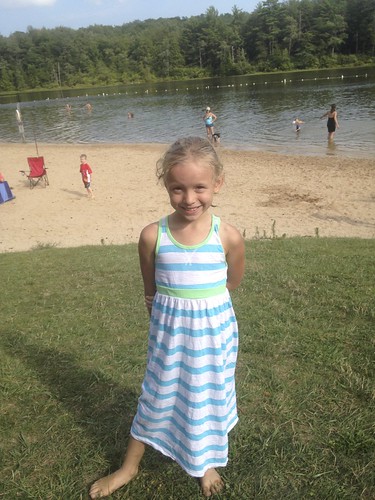
Ocean is shown above at Sand Spring Lake in the Hickory Park State Park. Park officials created a little lake and beach area by damming the creek. It was a pleasant afternoon in the bright sun and cool water. We packed for our trip for Jersey Shore and hung out with family.
It has been nice to have my family with me this summer! Last summer, when I started work on my doctorate, I was here by myself. When the work is done, I certainly look forward to seeing the kids and my wife Nadia.
There is a lot to do here in the Lehigh Valley. The Valley, as the locals call it, consists of three cities, Allentown (75,000), Bethlehem (75,000) and Easton (27,000) and numerous smaller cities and towns. It lies on the eastern edge of Pennsylvania and has a border with New Jersey. With the end of the coal and steel industries, the area has environmentally recovered. There are a lot of businesses and industry still here today, with large hospitals, Penn Power, Mack Trucks, Crayola, Air Products, etc. It also serves as a bedroom community for Philadelphia, which is 97 kilometers south, and New York City, which is 140 kilometers east. Real estate and the cost of living here is much lower for them.
They have the AAA Minor League Baseball affiliate of the Philadelphia Phillies, Lehigh Valley Iron Pigs. The Iron Pigs play in the 10,000-seat Coca Cola Park in Allentown, which is a great night out. They are really set up for families. We got $7 tickets for the outfield grass, and had a nice evening out. The kids could roll around and there was plenty of good food and drink. I think the majority of people were there for all of the extras, and the baseball game was just an excuse to get out. They also have the Philadelphia Flyers minor league hockey team, the Lehigh Valley Phantoms, and a building a new arena in Allentown.
Ocean in the center field grass – L.V. Iron Pigs vs. Buffalo Bison
The Lehigh Valley is also culturally rich, with many universities, including mine (Lehigh), art galleries, theaters, etc. I am learning more about Pennsylvania and really like it here. It is very similar to the midwest and reminds me of where I grew up. There is a bit more going on with a higher population, but it is still easy to get out and away from urban areas. It is a great place to be in the summer.
I am getting in touch with my family roots here in Pennsylvania. Both sides of my biological family are from Pennsylvania’s Coal Region, located in the north east part of the state, in the Appalachian Mountains. The largest cities in this region are Wilkes Barre and Scranton. It is the location of about the only place in the USA where anthracite could be found. Anthracite is the purest form of coal, consisting of 92-98% carbon. From the mid 19th century to the mid 20th century, this was a big industry here, peaking in the 1920s. Today there are a couple of small specialty mines still in operation, but for the most part, the industry is dead, with most of the good coal gone and competition for other countries and other forms of fossil fuels, most notably natural gas making it unprofitable. This triangle of 5 counties helped fuel the industrial revolution in America, propelling steam engines and producing steel in the big foundries in Bethlehem. Waves of immigrants came to work in the mines, most notably Irish, but also my ancestors from Eastern and Central Europe. The Molly Maguiresa 1970 movie starring Sean Connery, portrayed the radical Irish group, the Molly Maguires, who fought for mine workers’ rights in an age of exploitation. The stories of mining accidents, low pay, and the struggles of these immigrants to make a living are sad and often tragic. Although many of their ancestors benefit today from life in America. My son Ollie (photo above) found this piece of anthracite coal in an old strip mine, just outside the town of Freeland last week.
The industrial revolution was an environmental disaster for the region however. First, as in many places in the USA, including my home region in the Upper Peninsula of Michigan, the land was clear cut of the majestic white pines and hemlock trees that covered the mountains here. Canals were dug and railroads put in to transport materials to the cities on the east coast and steel plants in the Lehigh Valley. More than 70 years later however, the Appalachians (this part of the chain is called the Pocono Mountains) are making a comeback. We rode the 25 mile bike path from White Haven to Jim Thorpe in the Lehigh Gorge State Park this weekend. I was proud of the kids of making the whole way. The views were stunning! We took an old tourist train through the valley and rode down. There are also lots of whitewater rafting and hiking in the park. I hope to explore more of it while I am here and glad that an area that was once a denuded, polluted, “super highway” is now going back to nature.
The mountains, although not the size of Rockies or Alps, have their own stunning beauty and it does remind me of the Great Lakes Region of Northern Michigan. In mid-summer, the sheer walls of green, the brown rapids of the Lehigh River, and the bright bloom of Mountain Laurels, makes for a pleasant place to relax and recharge.
The view from the bike path of the Lehigh River.
I will be exploring more of the Pennsylvania Coal Region this summer and exploring my family’s past here as well.
Today we went for an afternoon hike in the Nescopeck State Park, which is very close to Freeland, Pennsylvania, where we are staying this week. The 3,500 acre park is located between Mount Yeager and Nescopeck Mountain in Luzerne County. The valley is special because it is one of the few areas here in Pennsylvanian coal country that was not mined for coal. The park does not have spectacular waterfalls or dramatic rock formations, but it is a just a nice, forested, relaxing area. We hiked along the Nescopeck Creek and it had many beautiful old, Eastern Hemlock trees along the banks. The kids were playing hide and seek. The trees and ferns along the creek, gave it the look of the Dawn of the Planet of the Apes, which we saw last night. We could imagine the monkeys swinging through the trees attacking humans.
It is a newer park and I am glad the state was able to purchase and preserve the valley. So many people have moved out of towns and cities to build their 2 acres of paradise, that there are precious few unbroken forested areas left. Most of the park has a secondary forest feel however, but in about 50-100 years, it will look more impressive. They have a nice environmental education center. There are a couple of small lakes, many wetlands, and the Nescopeck Creek running through the valley. With a wet spring and all that water, the mosquitos and bugs were a bit bothersome, but overall it was another great day. I really love getting out into wilderness and showing my children the beauty and wonder of nature. As Nadia wrote on her Facebook page, I am in heaven!
We went for a hike today in the Hickory Run State Park, located in Pocono Mountains of north eastern Pennsylvania. We walked the Shades of Death trail, which meandered along the Sand Spring Run (a run is what the Pennsylvanians call a creek). The Pocono Mountains are part of the Appalachian Mountain chain here in the Mid Atlantic region of the United States. Early pioneers called the area Shades of Death because it was full of swamps, hills, rocks, and thick, Laurel bushes that made travel through the area difficult.
The Hickory Run park was started by the late Allentown millionaire, General Henry C. Trexler, who bought the land and wanted to see it be a park where families could come and enjoy wholesome recreation, which we certainly did today. No one knows where the term “Hickory” came from as there are no Hickory trees in the area. The kids and Nadia and I were enchanted with the dark, misty, and green forests alongside the creek. It was prime time for the Mountain Laurel flower, the state flower of West Virginia and an icon of the Appalachians. The run had a couple of damns on it and in hotter weather, would make for a perfect swimming hole. I did go swimming at Hawk Falls, in another part of the park later on in the day. We had a nice picnic lunch and walked back to the park headquarters, which was a Manor House in the old town of Hickory Run.
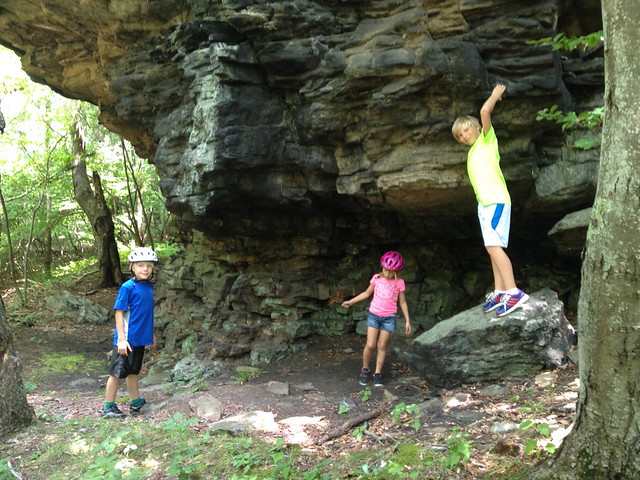
The kids loved running along up and down the rocky trails. Ocean was thinking that a gnome or fairy would be seen in the misty, dark woods. Later on we drove to another part of the park to see Hawk Falls. It was pouring rain by the time we got there but that did not stop us. We ran back after swimming in the ice cold water. It brought back memories of the Bolivian jungle for Nadia and I! We hope to explore another park tomorrow in the Poconos.
For the second consecutive summer I am studying here at Lehigh University in Bethlehem, Pennsylvania, USA. It is better this year to have my family with me! I love seeing Nadia and the kids when I get back from my classes. The class I am taking has been very stimulating and it is nice to spend time with family. I really love the atmosphere of a university town and the Lehigh Valley in particular.
We were here for the 4th of July celebrations although we kept it low key. We did watch the fireworks display in Bethlehem and say Happy 238 Years to the USA. We also went to the Kutztown Folk Festival in Kutztown, Pennsylvania. This is the heart of Pennsylvania Dutch (German settlers to the USA) and Mennonite/Amish country in eastern Pennsylvania. The festival celebrates farm life (agriculture/livestock) and the “olden” days of America settlement. The kids watched a sheep shearing demonstration, saw many old engines for pumping water, sawing wood, husking corn, etc. I read to them a couple of books in Laura Ingalls Wilder series, and we particularly liked Little House in the Big Woods which is set in 1870s Wisconsin. I highly recommend the series for children and to see the stories come alive for them at the festival was really interesting. We also had some old fashioned kettle corn and sasparilla root beer.
One impression of the USA is the amount of space here for everyone compared to Europe. There is a lot of land for not that many people! As you can see below, the sports facilities of Lehigh University, which can be used by the public, are immense. I can just see the sports fanatical Serbs going crazy here with all this room to move. Nadia runs the cross country loop on the grounds while the kids play soccer.
I write this in the Panama City “Tocumen” Airport as we are in transit on our way back to the USA. It was another great visit to Santa Cruz, Bolivia. We were very lucky with the weather, with only 2 days of surazo, the rainy, cold fronts, coming into Santa Cruz from the south. They are common in the southern hemisphere winter, but we had mostly sunny skies and warm weather.
It was great to spend time with family and friends and their warm hospitality was well received by the Kralovec family. Special thanks goes to Nadia’s cousins, Christian, Sabine, Claudia, Patricia, and Gabriela for hosting us. Tia Ge Ge always has great food, and it was nice to see Tia Babi and Tio Mincho. I would also like to thank friends Gabriela and Pablo, Ximena and the “campeon” Leo, Roxana and my sister-in-law Marita, for spending time with us.
The city of Santa Cruz continues its rapid growth. In 1970, the year Nadia’s father, Hermes left for Germany, it had a population of around 100,000. When I lived there from 1997-99, the population was around 1 million. Today, in 2014, it is over 2 million. Most of the growth is coming from migration from the Andean cities of La Paz, Cochabomba and other places in Bolivia to Santa Cruz. It has the strongest economy in the country. Every year we come, there seems to be new buildings, roads, and businesses. This time we had a nice time at the Hard Rock Cafe, which is part of the new Ventura Mall (see photos). There were also new tall apartment and office buildings going up all over the city. This is good for my father-in-law’s scaffolding renting business. While we were there, his entire stock of scaffolds (andamios in Spanish) was rented. Rumor has it that some of this growth is coming from drug production and trafficking, but I don’t see the violence one sees in Colombia and Mexico. I doubt that significant sums are coming in, but I do see more Porsche and Hummers than I did before.
The View from the Ventura Mall (This is Santa Cruz???)
Much of Santa Cruz’s growth is across the River Pirai, the river that runs by the city. A bridge was put in several years ago and the area on the other side of the river, Urubo, has hundreds of new land developments, both big and small. Several of our friends have homes in the area and they are so much nicer than the other side of city. There is much more green space. Sadly, I see this side of river turning into the same, busy, scene as the old Santa Cruz. We spent a nice afternoon (see lead photo) in Urubo, at the Casa Del Camba Restaurant. “Camba” refers to the people of Santa Cruz and the eastern lowland region of Bolivia. As you can see from the photos, it is a beautiful, tropical garden setting and delicious food.
View from Casa del Camba restaurant
I really want to buy some land over there. I would prefer closer to the Amboro National Park as I have always wanted to own an “eco-hotel” bed and breakfast there. Nadia and I would like to have a nice retirement income like my father-in-law Hermes, some small business that brings in living allowance, but does not require a lot of work. The whole of Bolivian lowlands is really off the tourist track and is spectacularly beautiful. We are planning a trip next summer to head east out of Santa Cruz towards the Paraguay and Brazilian borders to visit the forests, savannas, and Christian missionary churches in the land of the Chiquitano Indians. Nadia’s family owns a big ranch outside of San Javier, which we visited when I lived there in 1998. The weather is great, although it is too hot and humid for some people, and easy living with affordable domestic help available. It is also good to be fluent in Spanish. I totally understand Latin American culture and can communicate freely. I forgot how nice it is to greet and say goodbye to friends with a kiss (females), and the Camba shake-bro hug – shake with men.
Cathedral at 24 de Septiembre Plaza
The negative points about Santa Cruz are the poverty, lack of education, and crime. Everyone lives behind large walls and security. Many of our friends have been victims of mugging or theft. It is not as bad as other Latin American countries, but it is a concern. There is a lot of corruption and incompetence in government. Evo Morales, the first indigenous leader of Bolivia, is doing a pretty good job, compared to past Bolivian presidents, but there is still a long way to go. One acquaintance of mine, a building contractor, was telling me of his work constructing government schools and other buildings for the government. He sees a lot of money wasted in corruptive practices. Articles in El Deber, the largest daily newspaper of Santa Cruz this week, had articles about the horrible water quality of Samaipata, a town near Amboro, the wasteful spending of natural gas revenues of the mayor of Villa Montes, the large number of children needing medical attention from attacks from stray dogs, and the sad plight of street children in the city. One evening we were playing soccer in the park in front of my father-in-law’s house, and the children from the local orphanage (hogar) came to play. It broke my heart to see the over 30 children, without sufficient parental care.
I have so much nostalgia for the city as it is where Nadia and I fell in love. Many streets and places bring back so many fond memories, that it will always have a special place in my heart. I hope to spend some more time there next summer. Viva Santa Cruz!




 Bill's Blog