Asian U23 Cup Fever!

Our family is following the biennial AFC U23 Asian Cup “Uzbekistan 2022”! The Asian Football Confederation (AFC) is the governing body of soccer for 47 countries in Asia and Oceania. Uzbekistan is a serendipitous host because China was originally going to host the tournament but due to COVID restrictions there, the Cup was moved to Uzbekistan. It was initially going to be in January, but with the Omicron wave hitting Tashkent about that time, it was moved to June. 

The U23 is an age restriction and this competition develops the future men’s national soccer teams. I spoke with the Australian Public Relations Manager at one of the games and he mentioned that most of the teams selected players they are considering for the 2024 Paris Olympics. Olympic men’s soccer moved to have the Under 23 teams compete so the youth team could play in a global tournament between World Cups. In the Olympics, however, the U23 team can have three players over the age of 23. 

Tickets in the VIP section cost a reasonable 50,000 UZS ($4.75) and other than the Uzbekistan games, the stadiums had few people in them. It was easy to bring the family, and we attended three games.

Australia 1 – Turkmenistan 0 (Quarterfinals – Milly Stadium) 

It was a bit of a surreal experience being the only native English-speaking fans of probably 20 people total in the prime seating section. The tickets were about $4.50 each and I convinced Nadia and Ocean to go. We were behind the benches and could shout and be heard by the Australian team. The Turkmenistan section of approximately 500 people was on the other side of the stadium. Turkmenistan’s strategy of “flopping” and wasting time was frustrating to watch. I think they believed they were over-matched and the goal was to get to penalty kicks. Fortunately, Australia scored in the 70th minute. Turkmenistan started playing aggressively after that and actually had several good chances to score goals. They should have done this from the start! 

My wife Nadia was born and raised in Melbourne and she was excited to cheer for the Australians. There were no Australian fans at the game and many of the supporters were with the senior team. Australia defeated UAE and Peru to qualify for November’s World Cup in Qatar this week.  

Japan 3 – South Korea 0 (Quarterfinals – Pakhtakor Stadium) 

This game was much more entertaining than the first game we attended. There is a large Korean population in Tashkent and their section was full. We sat in the Japan section because we used to follow the team when we lived in Osaka (2014-2019). It was a great atmosphere and we were singing along with the “Nippon” cheers. I felt sorry for the Korean delegation because Japan was much faster than the Koreans. Their counter attacks were difficult to defend and they could have scored more than the 3 goals. Korea put in a good effort and looked good in their pink/red uniforms. 

Saudi Arabia 2 – Australia 0 (Semifinals – Pakhtakor Stadium) 

The only tickets that were on sale were a section of mixed Australian/Saudi fans. Of course, we were the only Aussie fans, surrounded by about 150 Saudi supporters. Saudi Arabia was a much better team. They were faster and more robust and the Aussies couldn’t get much going against the dominant Saudis. Most of the Saudi team were Africans rather than Arabs which was surprising. In researching at the demographics of the country, it is 90% Arab and 10% Afro-Arab which I didn’t know. It makes sense with the kingdom being so close to Africa. The highlights of the game were the two penalty kicks that were saved by both teams. We had a bit of fun with the Saudi fans and despite the dominant performance of the Saudis, we had a good time.

The finals are Sunday with Saudi Arabia taking on the host Uzbekistan who defeated Japan 2-0 in the other semifinal game. Japan and Australia square off today in the consolation game.

If you can’t beat them, join them!

Student-led Conferences

Nadia and I really enjoyed the student-led conferences on Thursday morning. The secondary school scheduled 1-hour sessions for every student with their parents. The teachers set up the framework for them to reflect on their learning and share what projects were most impactful on them. We loved the fact that it forced our teenage children to talk with us for a full hour! Oliver would not let me film his conference, but thankfully Ocean did! It was such a special morning for us! We are so proud of the adults our children are becoming.

Oliver had a really good year overall. He has taken a leadership role in the school’s Model United Nations program, was the captain and a star player on the volleyball team and he designed unique Pokemon cards for his MYP Personal Project exhibition. Nadia has been outstanding as a mother, “guiding” Oliver to spend more time on assessed projects. Oliver’s challenge next year will be entering the IB Diploma Programme. He will need to develop research and writing skills, analytical thinking, time management and organization. I think he is up to it and hopefully,Nadia and I will have enough time and energy to support him.

Ocean is also maturing and she had a stellar academic year. She too played volleyball and basketball and participated in other extracurricular activities. She has an eye for art and design and is very creative.

Uzbek Tennis Professional Dennis Istomin

Wednesday night my son Owen and I played tennis on the outdoor hard courts of the Olympic Tennis School. He of course beat me 6-3 and we had a good time working on different aspects of our games. We were walking to the front gate after playing and we noticed on one of the clay courts a tall player hitting the ball extremely hard. It is easy to spot an elite athlete immediately because we both had that “wow” reaction. ATP professional tennis player Dennis Istomin was getting a workout at the school, just a couple of courts over from us. Istomin was born in Russia but moved to Tashkent when he was 3 years old and plays for Uzbekistan. Seeing professional athletes up close is always a thrill. Watching him for just a few minutes makes you realize how difficult it would be to return a serve from a professional. He is on the tail end of his career, but he still moved well and at 6-1 with long arms, he seemed to be able to cover both sides of the court effortlessly.

It was interesting reading through his career overview as he was a mid-level professional player and that earned him $6 million dollars in prize money over the past 15 years or so. This despite have an overall losing record on the ATP Tour (230-266). He reached a ranking high of #33 (August 2012) in the world and won two ATP tour singles titles and 3 doubles titles. Another career highlight for him was beating Novak Djokovic (2017) in the second round of the Australian Open. He also won 25 Challenger and ITF tournaments earlier in his career. He participated in 251 ATP tour events, winning 2 titles, and losing in finals 3 times. In Grand Slams his career record was 35-45 and he made it to the fourth round three times. He is currently ranked 310 in the world.

Visit to Kazakhstan

Earlier this week I briefly visited Kazakhstan with my son Owen. His 30-day tourist visa was going to expire today and so he needed to leave Uzbekistan and come back in to get a fresh 30 days. It was a strange and interesting experience. We decided to drive to the nearest border from Tashkent, which is the highway 30 kilometers north of Tashkent that leads to the third-largest city in Kazakhstan, Shymkent. Thanks to Stalin and the Soviet map makers, the borders in Central Asia are a bit arbitrary and the capital city of Uzbekistan is very close to the borders of both Kazakhstan and Kyrgyzstan. The entire experience took around 3 hours, but a determined person could do it in 2 hours.

We drove 20 minutes to the border and parked in a lot designated for Uzbek drivers who prefer to walk across the border. Crossing in a car takes much longer than walking across due to extra security and document checks. I was told I could add three hours to the crossing if I did it by car. Hence we parked the car and walked 50 meters to the Uzbek exit gates. We had to show our passports at 3 different points, pass through a metal detector and get the exit stamp. After a short walk across “no man’s land” we did a similar process to enter Kazakhstan.

After leaving the last checkpoint, there were many currency exchanges and taxi vendors. I exchanged Uzbek So’um to Kazakh Tenge in hope of finding a nearby cafe or mall to buy a souvenir. Shymkent is a two-hour drive away from the border and we decided we preferred to get back home earlier. We went in search of a restaurant, but there was not much there. The only cafe had no one inside, including a waiter or barista. We saw a Toilet sign and paid $5 to use a rudimentary bathroom. A rectangular layout of bricks around a hole with a 1-meter drop to a cement floor below was what we got for the bathroom.

The walk back through the border crossing was easier than the first earlier crossing. Nobody asked us why we were returning so quickly after entering. They were more curious about Australia (Owen’s passport) and America (my passport) than the timing of our return. Both sides of the border crossing checked for our vaccine status and I am glad we had recent vaccine boosters. Overall the process was quite easy and a good option for people wanting to extend their stay in Uzbekistan.

Kazakhstan is country #68 for me. It is the first new country since I visited Turkmenistan in November of 2019. COVID really limited international travel and I am happy to be coming back to easy travel.

Family Journal: May 20, 2022

We had a fantastic night out yesterday. It is so nice to have my eldest son Owen back home to complete our family. We dropped off Ocean for a birthday party and sleepover with friends. Then Nadia, Oliver, Owen, and I went to a new driving range in Tashkent. It is a Korean business and modeled after what you see in East Asia. It is a netted range about 200 yards in length and probably about 50 yards wide. There are two levels people can tee off from. There is a Korean BBQ restaurant on the second floor and a little nicer Korean restaurant and garden on the third floor. Lots of cold beer and it makes for a good night out! The Koreans also have an 18-hole golf course in Tashkent, developed by the former president Karimov and the South Korean government years ago. I am not a big golfer, but Owen likes going to driving ranges and it gets us to spend time as a family. Prices are reasonable with 1 hour of unlimited balls for $6.30 USD. It is located out of the city on the way to Parkent. The city is developing out towards that area. It offers views of the mountains, the new airport is being developed out there and lots of flat lands.

After the golf range, we had a really good dinner at Roni’s Pizza Napoletana restaurant. Perfect spring weather and lots of people out! Tashkent is really turning into an exciting, pleasant city to live in as both Roni’s and the driving range were not here when we first arrived.

Nadia took the boys out for haircuts earlier this week.

Oliver Medals at the TIS Owls Track & Field Meet

It was an exciting athletics meet last Saturday at Pakhtakor Stadium. The school was able to hold its first track meet since the spring of 2019. Oliver’s main spring sport is volleyball, but one of the coaches convinced him to participate in the athletics meet. I think he surprised himself with a silver medal in the 800 meters and a bronze medal as part of the 4 x 100 relay. He was a bit reluctant to participate, but Oliver has a can-do attitude and threw himself into the event and did quite well. I think with a bit of training, he can even be a stronger runner. He is good at both the longer distances and sprints, but I think his forte is the middle distance. 

I also forgot how much I love athletics and the rhythm of a meet. I remember my Dad used to be the Public Address Announcer for the meets West Iron County High School hosted at Nelson Field in Stambaugh. The schools had their encampments in different areas of the infield and cheers would go up around the stadium depending on what field event or race was finishing throughout the day. It was special for me to have Oliver participate in the meet and I hope Ocean joins him next year. 

800 meters medal ceremony “Silver for Ollie!”

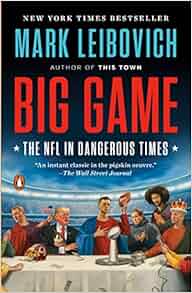
“The Big Game: The NFL in Dangerous Times”

Author and journalist Mark Leibovich writes for the New York Times and often appears on NPR and MSNBC. He usually focuses on politics and is based in Washington DC. He took time out from his usual writing about politics, some of it because of the wildly emotional 2016 Presidential election, to write about his love of professional football and the New England Patriots. The book c0vers the 2017 and 2018 seasons, and the National Football League (NFL) has moved on from some of the controversies that were prominent then. I know a lot about the NFL, having followed it since I was a child starting with the 1974 season.

Leibovich opened my eyes to the life of the owners. Much media attention is devoted to the players and coaches/general managers, so I liked the inside view of the lifestyles and dynamics of the owners. What a life they have! I would certainly try to buy a professional sports franchise if I was a billionaire. I wouldn’t devote my entire life to it, like Jerry Jones, but it would be entertaining to own a team. The NFL owners are predominantly white, Republican, old men, and it shows in the way the NFL runs its business. They treat it like a club that meets several times a year for the Super Bowl, off-season meeting, and the Hall of Fame induction ceremony. Many have the trappings of wealth, including much younger beautiful girlfriends, stadium luxury suites, mega-yachts, etc. The value of professional sports teams has skyrocketed in recent years. Carolina Panthers owner Jerry Richardson started the team with an investment of $193 million in 1993 and sold it for $2.2 billion in 2018.

Oliver, Owen and my Uncle Jack at a Philadelphia Eagles game in 2012.

I forgot how much Donald Trump talked about professional football and politicized Colin Kapernick’s protests for his own gain. Trump was also friends with some owners, especially Patriots owner Robert Kraft. Typical Trump to seize upon an incident for his own political gain. He is loathsome to me, and I am not looking forward to the 2024 elections when he will have a giant platform to spread his negativity and further divide Americans. As Douglas Murray says, Republicans look over inciting the Capital riot, Trump’s false claims of election fraud, and his immorality and corruption because he is a candidate who could win the next election. It frustrates me, but I understand the election game. Below are some other tidbits from the book I noted while reading.

  • “The NFL loves anything that evokes Rome – e.g., Roman numerals for Super Bowls, coliseums, etc.”
  • The NFL is a perfect TV sport, both in productions and ratings…only 7% of NFL fans have ever attended a game live.
  • “…tailgating is one of the truly great remnants of American unity, creativity and appetite…”
  • Leibovich described former NFL commissioner Pete Rozelle “his mix of personal charm, toughness, business foresight, and political touch steered the league through a remarkable period of growth, prosperity, and turmoil in the 1960s, ’70s, and ’80s.”
  • The NFL is a big business with current commissioner Roger Goodell aspiring to $25 billion dollars by 2027. In 2019, the league collected $15.6 billion, an all-time high. COVID brought it down to $12 billion in 2020.
  • 83% of NFL fans are white (Reuters, 2007) while 70% of the players are black.
  • Jim Harbaugh, former coach of San Francisco 49ers and current U of Michigan coach said the game is “the last bastion of hope for toughness in America in men.”
  • I liked the use of the word glib, which means insincere or shallow.

Family Journal: May 1, 2022

Oliver (#9 in center) had teammates from Oman, South Africa, Netherlands, Uzbekistan, USA, and Mexico

Oliver’s team finished in second place in the tournament we hosted this weekend. It was three years since we last hosted a volleyball tournament and had a high school volleyball season, thanks to COVID. Oliver was one of the captains of the team and played every minute of every game. He is the best setter at making difficult saving hits to keep a ball alive. He is also developing his spikes. One area of growth is his jump serve, but once he gets that down, he’ll be an awesome, all-around player. He has two more years of eligibility and I can’t wait to see him play over the next two years. Oliver’s team, the Tashkent International School Owls won 8 sets and lost 5 sets over the three days. They scored 297 points and allowed 235 points. They lost all four sets they played against the champions, школа 166 by an average of 4 points per game. They lost one set 24-26. I think with less missed serves, they could have won two of those sets. They did have a tough season with a COVID outbreak earlier this month, halting practices and games for two weeks.

Oliver’s Highlights from the final day of the tournament

It was a beautiful Sunday with temperatures in the mid-30s (90s). Oliver had his friends sleep over after the volleyball tournament and they had a great time, eating fast food, swimming in the pool and watching movies/gaming. They went to bed early because I think they were exhausted from the full day of competition. I played doubles tennis at the Olympic Tennis Club with my usual friends, Dan, Steve and Matt. We played on the clay for the first time this spring and it is nice to get back to that surface. We also hosted a “birthday” party for our dog Obi. We invited friends with dogs to the school for them to interact. Nadia made “doggie bags” and cupcakes for all of the attendees.

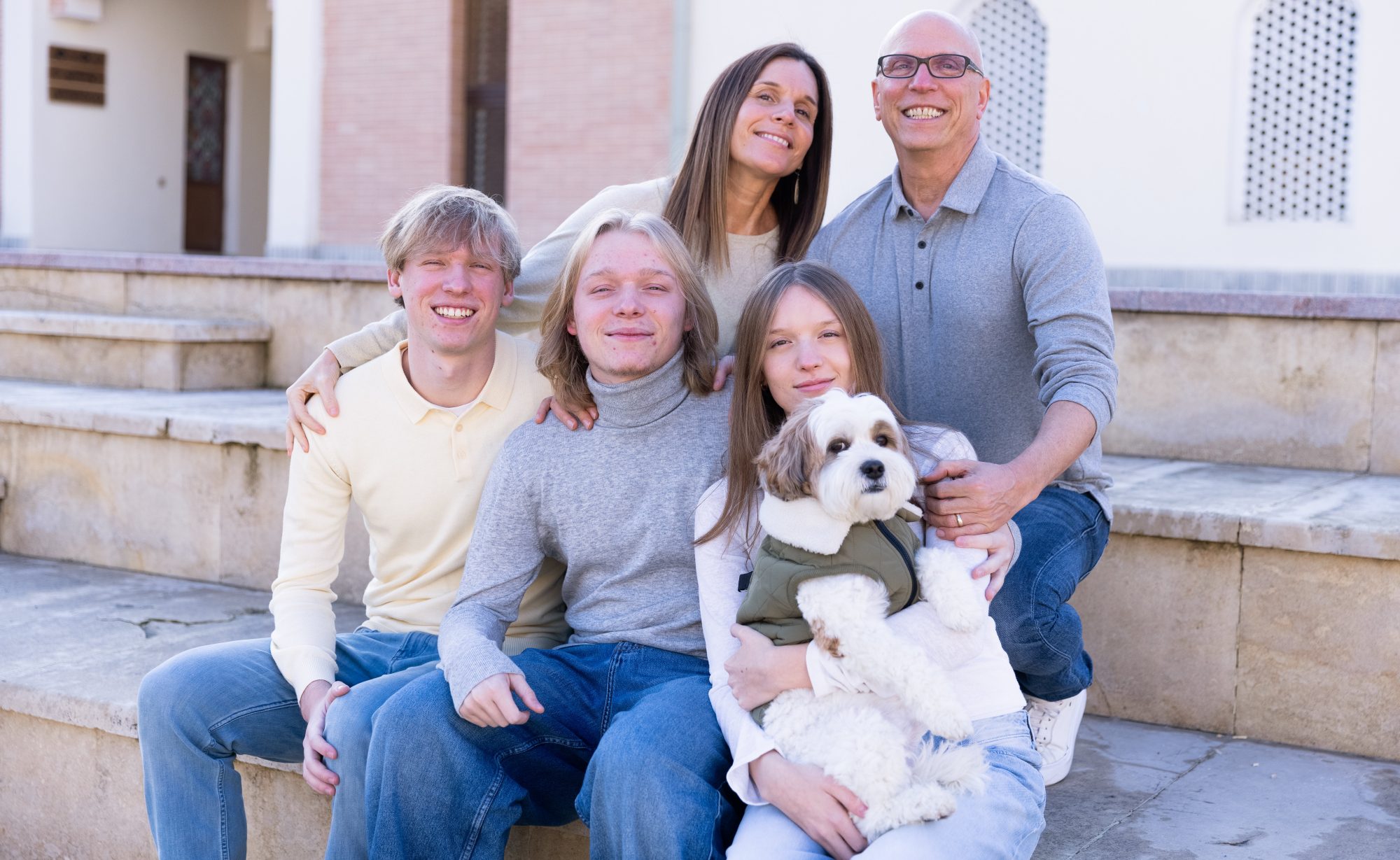
A valiant attempt at a group photo!

Happy Birthday Oliver

Maqom Restaurant Tashkent Uzbekistan

It was a special evening celebrating my son Oliver’s 17th birthday! We watched him play volleyball in the TIS tournament and then took him to Maqom (“Status” in English) Restaurant. It was a lovely spring evening and the outdoor terrace overlooking the park was a relaxing setting. We like Maqom because of the delicious food and excellent drink menu. Oliver is so charming and sociable and he made us laugh for most of the dinner. He is maturing into a handsome and kind man and we are so proud of him.

Ollie excels at volleyball which is his best sport. Unfortunately, he inherited my height but he is still taller than me! He is totally locked in on every point and his intensity is infectious to his teammates. Oliver is the team’s best setter, is developing a deadly jump-serve and rarely makes mistakes. He is only in grade 10 and so has two more years of eligibility. His team easily defeated the Westminster International School of Tashkent yesterday in one of the round-robin games in the three-day tournament our school is hosting. The finals are today, Saturday, his actual birthday.

Ocean, Oliver and Dad

We love you Ollie! Congratulations on reaching your 17th birthday.

Thinking about Ukraine

Taras Shevchenko Statue in Tashkent

Uzbekistan is a former republic in the USSR and the Russia’s attempted takeover of Ukraine is big news here. Our school also has close ties to the international schools in Kyiv through our regional schools association. I wanted to read a bit more about the history of Ukraine and purchased Anna Reid’s “Borderland: A Journey Through the History of Ukraine“. She was the Economist correspondent in Ukraine shortly after independence from 1993-1994. Her book is a bit dated and the second half was written around the time Russia took over Crimea but it all applies today. The book had the perfect amount of depth for me, focusing on the most compelling stories from Ukraine’s long history combined with her own experiences and conversations with Ukrainians. I knew of the sad and tragic recent history of Ukraine in the 20th century. I am surprised there are still Ukrainians left after the Jewish pogroms, Stalin’s forced famine, the purges of the USSR, and the Nazi invasion of WWII. I was also looking for a sense of how much much the Ukrainians differed from the Russians.

I have never travelled to Ukraine but know many people who lived there. Some of my ancestry I discovered through 23 & Me is from western Ukraine near the Polish and Slovak borders.

I didn’t know much about how Kyiv started. It was a port city on the banks of the Dnieper River over 1000 years ago. Scandinavian tribes were the first to conquer and provide structure to Kyiv in the 800s. Their DNA can still be seen in the region in the physical features of many Ukrainians. It was fascinating to learn the patron king of both the Ukrainians and Russians (Vladimir/Volodymyr) actually chose the Orthodox Church as the state religion in the late 900s. He sampled Islam (can’t drink), Catholic/Judiasm (nice ceremonies, but just not doing it) and settled on the Greek Orthodox. He thought the splendor and awe of Hagia Sophia in Constaninople is what he was after. Hence today, the Ukrainians and Russians are Orthodox. I always thought that the world would be more interesting if Islam and Christianity had not swepted through big portions of the world. It would be cool to have Eastern European people today worshiping the Slavic god Perun or the other forest-based systems and have a more diverse religious environment globally.

The courage demonstrated by the Ukrainian people has caught the imagination of the world. I wonder how this will support the country in both the short-term and long-term future.

There were lots of interesting tidbits in the book that helped me understand Ukraine and the former Soviet Union. I put some of them below for my future reference. I recommend reading the book if you want to know more about Ukraine.

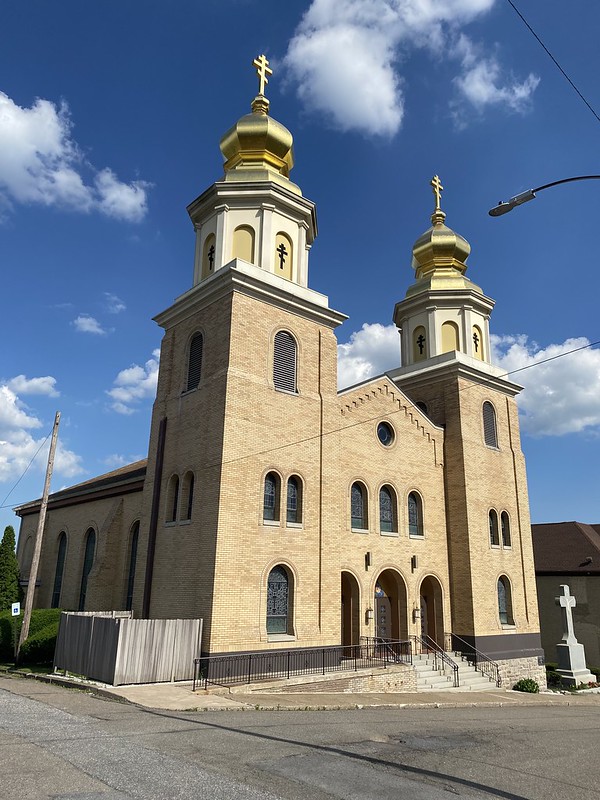
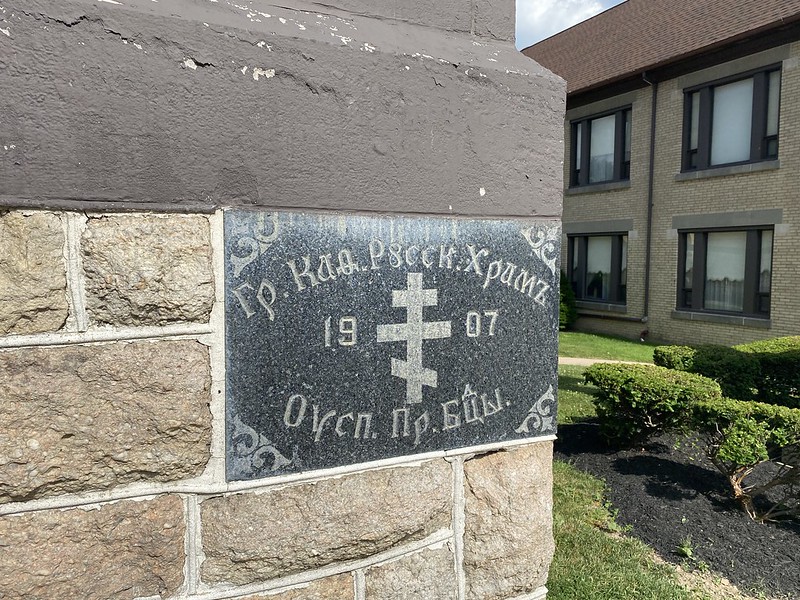
Many Ukrainians settled in my biological hometown of Freeland, Pennsylvania and I always wondered about St. Mary’s Byzantine Catholic Church. The Byzantine and Catholic churches split when Rome and Constantinople became two separate empires. The Byzantine/Catholic church came about when the Poles were running Ukraine in 1596 and a group of Orthodox bishops blended their church with the Pope in Rome, and that was the start of the Greek-Catholic or Uniate Church.

I am never surprised at the evil of the Nazis. Reid quotes Erich Koch, the head of the Nazi occupation in WWII-era Ukraine that Ukrainians were “the n-word” and fit only for vodka and the whip. War criminal Herman Goring’s solution was to kill all males over the age of 15 and and “send in the SS stallions”.

The book has a section on Taras Shevchenko, who single-handedly turned Ukraine into a literary language (see statue above). He was born in 1814 to a poor serf family south-west of Kyiv. His parents died before he became a teenager and he was raised as a “servant-boy” in the household of a local landowner. He was a natural artist and caught the attention of an art student at the Academy of Fine Arts in Kyiv and eventually, his friend bought his freedom from serfdom. He was introduced to Ukrainian free society and became a writer and poet. Because he wrote in Ukrainian, he was largely dismissed by critics and literary elites. He joined a Ukrainian secret society of intellectuals whose goal was the abolish serfdom/monarchy and unite all Slavs with Ukraine in the lead. Of course, the Tsar eventually found about them and jailed/exiled the group. Shevchenko was sentenced to 10 years in exile, but it was disorganized system and because of his connections and talent, the provincial governors allowed him to entertain groups with his singing, dancing, painting and comedy. For two years of his exile he was assigned as the official artist of a military expedition to chart the Aral Sea. He barely survived the journey and I would love to find his sketches from that expedition. I wonder what he thought about Uzbekistan? When Tsar Nicholas died, he was freed from exile, he took up his previous life as a literary celebrity and participated in poetry readings, etc. He died of “dropsy” (today known as a stroke) at the age of 47 and was immediately venerated by the intellectual elite. Today, he is the Shakespeare of Ukrainian and celebrated around the ex-Soviet world as a champion of the common people. The statue here in Tashkent should have a man with a smiling face and positive energy instead of the stern, serious look.

Other points to note:

  • The Russian words for “chain”, “whip” and “money” have Mongolian roots. This comes from when many years the Mongols subjugated the Russians and Ukrainians and laid waste to Kyiv.
  • Muscovites called themselves “Rus” the Greek word for Rossiya while the Ukrainians/Belorussians were referred to as the Rusyny, or “Ruthenians”.
  • The Cossacks are like the cowboys of Ukraine and take a big place in the folklore and founding mythology of the country.
  • Poland lost the Ukraine and its own country to Russia, Austria and Prussia in 1795.
  • By 1989 the last Soviet census, Russians made up 11 million of Ukraine’s 52 million people. I didn’t realize the Ukraine was so big, both in area and population.
  • Growing up on the Sea of Azav in the 1870s, Anton Chekhov saw the wilderness eaten away by windmills, telegraph poles, villages and ploughed fields. The sea of the steppe was lost forever to agriculture, similar to the Great Plains in the USA.
  • I learned about historical fringe religious groups in Ukriane such as the Molokans, who were Orthodox Presbyterians and the Dukhobors, who rejected Orthodox icons and traditions and lived communally.
  • Odessa must be a really nice city to live and probably feels like many of the Mediterranean cities.
  • The Ukrainians are very similar to the Russians, but are kind of the country-cousins that live on the farm. (I am stereotyping.)
  • Lviv was named in 1991 with Ukrainian independence. The Russians called it Lvov (1945) and the Poles called it Lwow before that. The city was not a Ukrainian or Russian city in the 1800s, but a Polish-Austrian-Jewish city. Reid described it as a shabbier Salzburg without Mozart souvenirs.
  • In the 25 years before WWI, more than 2 million Ukrainians and Polish peasants left Galicia. At the Treaty of Versailles, Ukraine was not represented and lost everything.