Chantal and Nadia stop by Pellizaro’s Ranch along the trail at sunset
I would like to thank the officials responsible for the making of the Apple Blossom bike trail between Iron River and Caspian. I also appreciate the newer trail from Caspian to Chicagoan Lake. I’ve ridden the entire trail several times during my holiday. It is convenient from my house and good for encouraging people to exercise. A couple of nights ago, Nadia and my sister-in-law Chantal joined me in a ride to the lake and back. The path is paved and runs alongside Highway 424, and cycling from the Iron County Museum in Caspian to the Chicagoan Inn Hotel and back is around 23 kilometers. A good workout!
Most of the ride is through a forest or alongside the road. There is not much traffic so crossing the road is not dangerous. A few hills provide good exercise but are not leg or lung crushing. There are benches periodically along the trail to stop and rest. I combined the trail with going on the George Young Fat Tire Bike Trails that are located near the path and go around Scott Lake. You can also connect to the old railway grade, now ATV/snowmobile trail back to Caspian to make a long loop.
The girls are shown above on another trail from the Chicagoan Lake Boat Landing to the public beach. We met the boys there and I went for a swim. I spent many a summer afternoon growing up at Pentoga Park, the public beach on the lake.
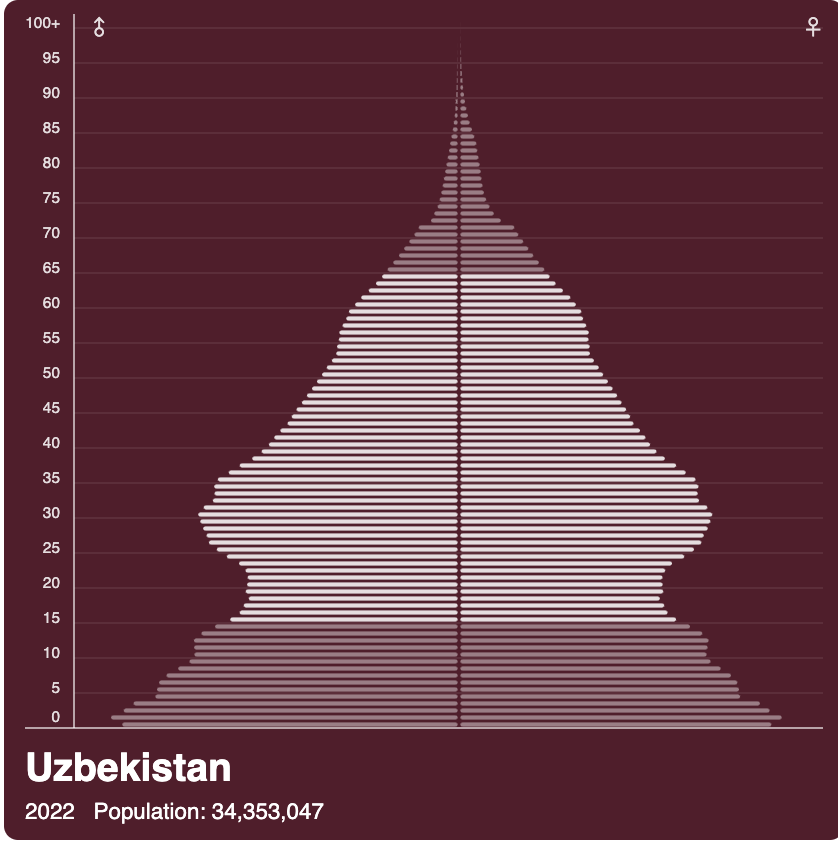
This summer, I have been interested in demographics and the role it plays in the culture, economy, education, and future implications. What sparked my interest was the release of population data last month from the Uzbekistan State Statistics Committee. I used Vizzlo to convert the data into a population pyramid. Uzbekistan is a very young country, and as you can see, the bulk of the population is under 40, and very few older people. I was especially taken aback by the fact that 60% of the population is under 30 years old. The total population of Uzbekistan is between 34-35 million people so that is over 15 million young people. No wonder there were fewer deaths in Uzbekistan than in more developed countries.
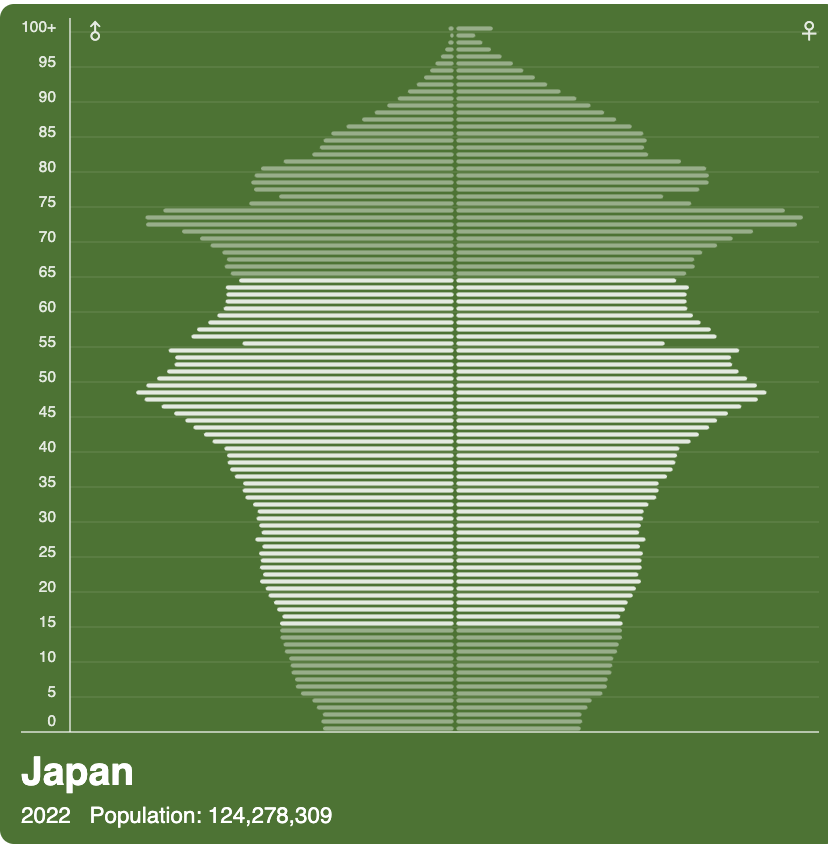
The demographics in Uzbekistan are much different from my previous school in Osaka, Japan, and much of the Western, industrialized, developed world. As you can see below in the pyramids from Population-Pyramids.net, the Japanese population pyramid looks much different and presents countries with different challenges. In Uzbekistan, the problem will be finding jobs for the big cohorts moving through working age, especially the 0-9 cohort. Japan is in trouble because it will have a decreasing number of working people to support a top-heavy, retired cohort. The USA looked like Uzbekistan in the 1950s and 1960s, but fortunately, through immigration, the USA has been able to have a stable cohort of younger workers coming up through the system, unlike Japan.
I also listened to the Sam Harris podcast interview with Ian Bremmer and Peter Zeihan “The End of the Global Order.” Bremmer and Zeihan are experts in global politics and they both said China is in trouble because the 1-child policy has warped their population pyramid. They will be facing a huge retirement cohort and few workers to support them. The population will be half (700 million) in 2100 what the population is today. The population pyramid website that a neat feature that projects the populations into the future. Here are some countries in the year 2087. I picked 2087 because that is the peak year of retirees in China. Looking like a mushroom is not good. It will be fascinating to see how humanity reacts to declining populations in most nations over the next couple of centuries.
Population Pyramids in 2087
Microsoft billionaire Steve Ballmer’s USA Facts has a lot of good demographic data for the USA. The USA increased population from 2010-2020 by 7% overall. The increase was uneven with gains in the south, Texas, LA, Phoenix, Miami and North Carolina and losses in the north, Detroit, Illionis, Pittsburgh, Long Island. People are moving to warmer weather with the exceptions of Denver and Seattle. I was curious to see that in the 2020 census, 60% of Americans (197 million) are white. The next largest groups are Latinos (61 million), African-Americans (38 million) and Asians (15 million). My home state of Michigan increased 1%, although the Upper Peninsula (UP) lost population. Iron County, where I am from, lost .3% over the last 10 years, and is down to 11,000. The peak of Iron County was during the iron ore boom years and the 1920 census counted over 22,000. Iron County is projected to lose even more over the next 10 years as over 30% of population is 65 years or older. This is in contrast to the US average of 17% 65+ cohort. The most populous and economically viable county in the UP is Marquette. They only lost 1.6% and has a population of 65+ at 20%.
The entire Kralovec family participated in today’s “Run Your Bass Off” Road Race. The 2022 version was the 41st annual race and I ran in the first race in 1981. The race is part of the Bass Festival which is held at Runkle Lake Park in Crystal Falls, Michigan. Crystal Falls is the seat of Iron County and one of our sports rivals was Forest Park High School, the school district for the east side of Iron County. I ran the 10KM race and the rest of the family completed the “Half Bass” 5KM race.
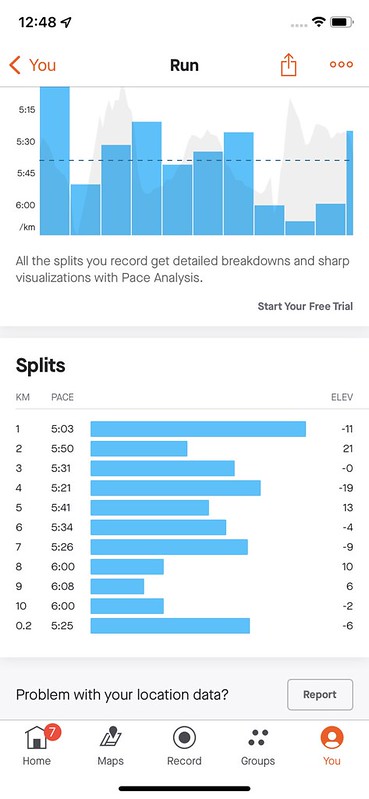
I was pleased with my performance. I don’t run often because I want to preserve my knees but I am glad I can still crank out a 10KM at a decent pace. With some training, I think I could have done better and I used the race as a training run. I always joke the name of the town should be Crystal Hills instead of Crystal Falls. There was a long hill at the 8-kilometer mark that really slowed me down as you can see with my splits below.
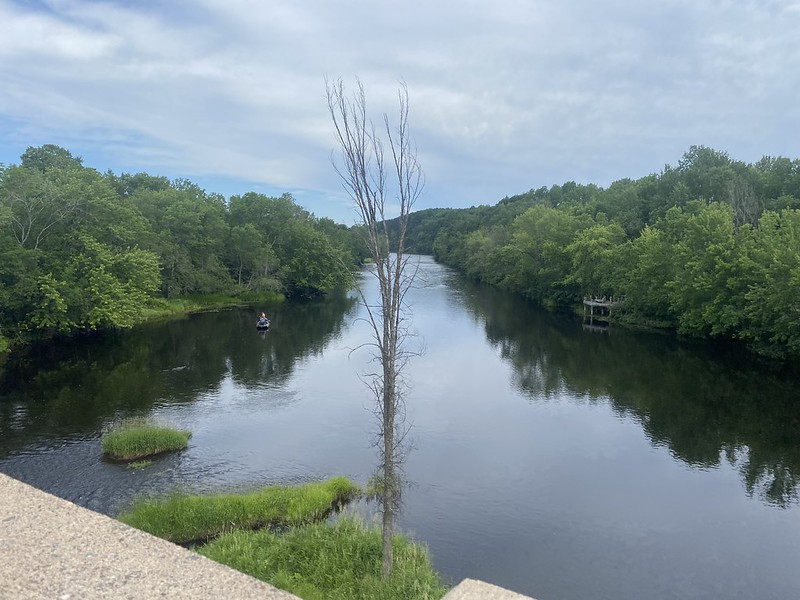
2022 Race T-shirtView of the Paint River Strava Splits
Once we get the official times, I”ll post them. I finished third in my age group. Owen finished 13th, Oliver 12th, Ocean 7th, Nadia 8th in their age groups.
I can see why Utah is one of the fastest-growing states in the USA and the Mountain West (Boise, Denver) is also growing so rapidly. It is the quality of life. The dry climate and sunny skies are so much better than wet climates with many overcast days. The views and access to outdoor pursuits are also world-class so I see why people are deciding to leave Ohio/Indiana/Pennsylvania etc and set up a life in places like Salt Lake City. Much of the growth is internal because LDS members marry young and are encouraged to have many children, although this is changing. The growth in population has brought diversity and the percentage of LDS members is probably around 50%. It is still a very white, conservative place. I would like to see the state maintain its unique characteristics and manage growth so it doesn’t ruin the place. A threat to the great lifestyle here is drought and the possibility of Utah and Salt Lakes drying up, which would add to the already growing concern of low air quality.
Oliver, Owen and Ocean play cornhole
We spent the 4th of July at a classic backyard BBQ with friends in the suburb of Highland. It is closer to the Wasatch Range and with the backdrop of mountains on three sides, pure blue skies and a large pool and green lawn, it made for a stunning backdrop to a fun day. We discovered the sport of cornhole, which I want to bring back to our school in Tashkent. It is similar to horseshoes and can be played by anyone. We also ate hamburgers from the grill, potato salad, and an ice cream/popsicle mix called “Creamies” which is famous in Utah. I love regional differences and besides creamies, we also discovered that Utah specializes in french fry sauces. Thanks to the MacPherson family for hosting us!
Juniper Canyon Courts
We’ve been playing a lot of tennis on the courts in the development. We haven’t seen anyone else playing tennis and Owen and I are always surprised that Americans do not do more exercise and use the free courts. In Tashkent, we need to reserve courts and pay a fee and sometimes they are difficult to get court times. I feel like we are playing our Indian Wells Masters tournament with the desert environment around the courts. Attending the Indian Wells Masters is on my bucket list but the tourney is usually in March when we are in school.
Timpanogos Peak in Highland, Utah
Last night we went to the soccer field of a local high school that overlooks the SLC valley. We watched literally hundreds of fireworks ignited by private citizens. It was quite a stunning scene and the cool mountain breeze made it a perfect evening to watch. The highlight was a fire that was most likely caused by fireworks gone astray. I think it was in Centerville and I got the photo below from the city’s Facebook page. The city did not have an official fireworks display this year because of the drought conditions. We saw several firetrucks speeding down the freeway to the fire.
We visited the epicenter/headquarters of the Church of the Latter-Day Saints (LDS) in downtown Salt Lake City Sunday night. We toured the Visitor Center and Tabernacle, but we were not able to see Temple Square because it was under construction. Our friend Aria is a former “sister” tour guide in Temple Square and she was quite informative about all the little-known facts about the buildings. It would be the equivalent of visiting Vatican City or Mecca as a center of a world major religion. We also finally found some run-down, older parts of the city after being in the shiny new suburbs for most of our trip. We saw some homeless people and abandoned buildings that we didn’t think existed in SLC. The downtown is quite small, with the capital, basketball arena, church headquarters taking up most of the center of the city. I guess after living in larger cities, a metropolitan area of just over a million people would feel small.
Jesus visits South America after an earthquake destroys a city
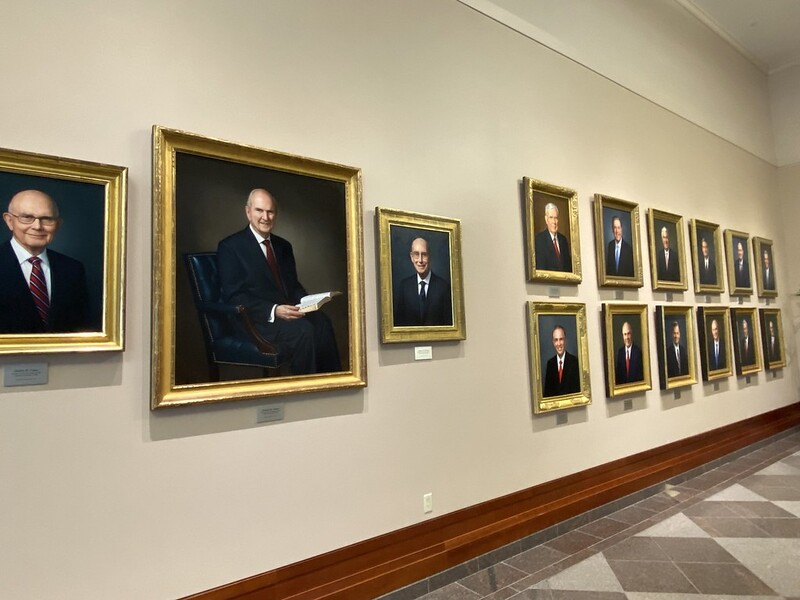
The LDS Church is very organized and the Visitor’s Center is a really good introduction to the beliefs of the church. I learned that the LDS church believes Jesus visited the Americas and South Pacific before Columbus discovered the New World. They point to the legend of the “white god” as partial evidence that this is true. The painting above is famous in the LDS world depicting the scene. We also saw the portraits of church leadership. The top position is called “The Prophet” and he has 12 “apostles”. and two assistants to lead the church. They are all older men, retired from successful careers but faithful enough to devote their “golden years” to running the religion.
My favorite part was the home of the Mormon Tabernacle Choir. The acoustics were excellent with a curved roof. One of the sisters tore a piece of paper and dropped a pin to demonstrate how well sound travels in the hall. The choir is world famous and competitive to get into.
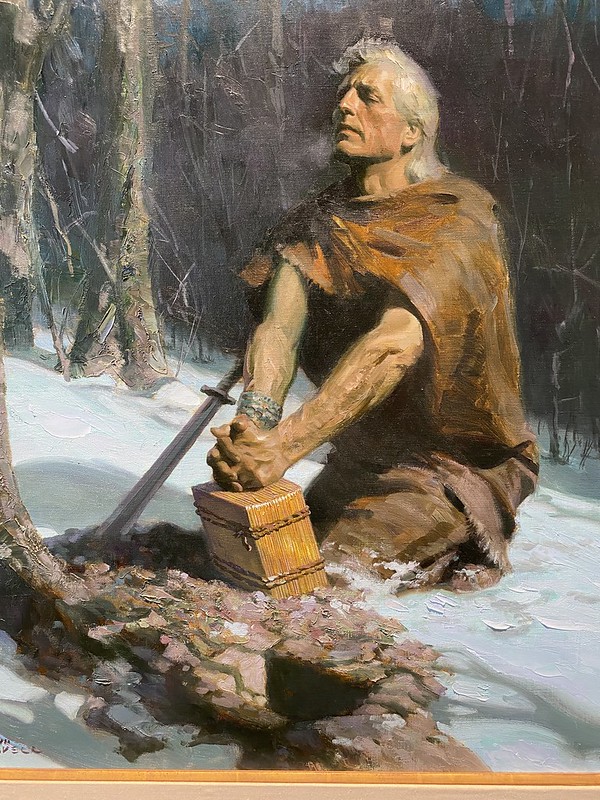
LDS Leadership Moroni burying the golden tabletsHome of the Mormon Tabernacle Choir
We ended the tour on the rooftop gardens of the center that gave us a good overview of the complex and SLC. As you can see below, the LDS administrative building is to the far left, the cranes mark the construction site of the Temple and to the far right is the tabernacle dome.
Oliver, Mason, Noah, Spencer, Owen, Ocean and Art in front of Gloria Falls
We spent the day exploring the awesome mountains around the Snowbird Ski Resort. Noah works at the resort and got us a free pass to the amusement park at the resort. We also hiked up to Gloria Falls on the White Pine Fork.
The kids made it to Red Pine Lake
The kids continued on to Red Pine Lake and camped overnight by themselves. Nadia was worried about them, but they all made it back safe and sound. The scenery was spectacular and I wish I could have gone with them.
View towards SLC
I put together a short video of our hike to the falls.
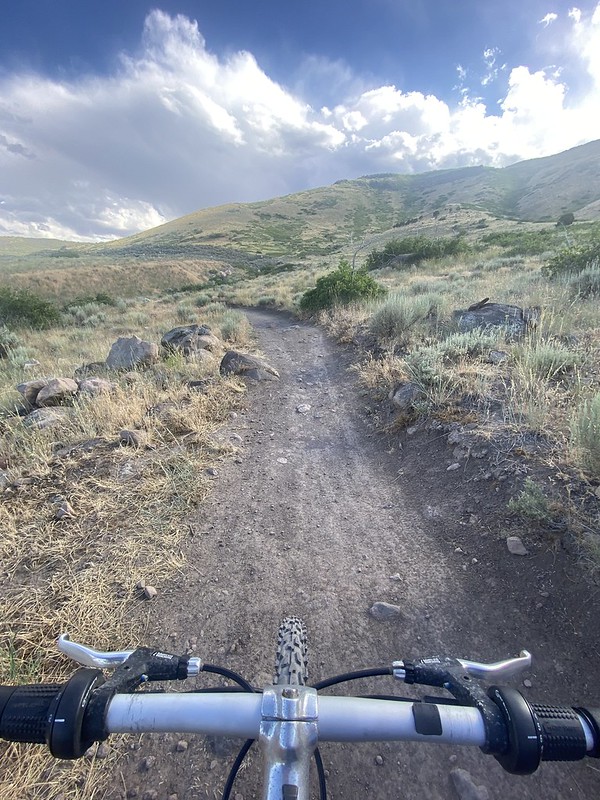
We are enjoying seeing our good friends the Tsubaki family and relaxing in the beauty of the desert topography of Utah. I went for a morning hike and an afternoon bike ride in the nearby Juniper Canyon nature area. These are the hills adjacent to the Juniper Point development where they live.
I rode the BlackRidge Trail to the Diamond Head Trail to form a 12-kilometer loop. The views were spectacular and the trail had the perfect amount of technical aspects. Being in my 50s, I don’t want to risk falling and so the trail was mostly rock-free and at a reasonable vertical slope. I can’t wait to explore more trails!
I’ve also enjoyed helping my friend Art with his side business of vending machines. They provide snacks and drinks to employees of warehouses in SLC. I didn’t really think too much about warehouses but there is a huge system of manufacturing and distributing products. Warehouses and factories allow American consumers to have just about anything they want whenever they want. I am also learning the business of vending machines and the snacking habits of most people. It takes a lot of work to supply the machines and deal with customer concerns. We moved two of his machines to a new warehouse yesterday and I was impressed with Art’s engineering mind and know-how. It was difficult to move such a heavy, large machine and get it into the employee’s lounge in the warehouse.
Cardboard Box ManufacturerArt stocking. a machineMoving the machine to a new warehouse
Suburban Salt Lake City is new and clean, much different from the older suburbs and towns I’ve been visiting in the USA.
My morning view of Herriman, Utah from the hills of Juniper Canyon
We are staying with good friends this week in Herriman, Utah, a suburb of Salt Lake City. Utah is one of my favorite places on the planet because of its climate and natural beauty. This is my family’s second visit to the state. In the summer of 2019, we stayed for a week in the southern Utah city of St. George and explored the national parks of Zion, Bryce Canyon and the Grand Canyon while we were there.
The Wasatch Range provides a dramatic backdrop for suburban Herriman, Utah.
Herriman is a southwest suburb of SLC of just over 55,000 people. It was a small town with modest homes and small ranches/horse stables and fields. Developers came in the late 90s and early 2000s and started building suburbia. The construction continues today as homes are getting bigger and bigger as they make their way up Juniper Canyon. The population of Herriman in the 2000 census was just over 1,500 people. I visited SLC in the early 90s several times and I do not recognize the place. The views of the Wasatch Mountain Range are spectacular! The Wasatch Range is both the eastern edge of the Great Basin and Range of Nevada and the western edge of the Rocky Mountains. Although it lacks the character of older cities, it fits with the desert and mountain topography, and the homes, malls, and streets are pristine. It feels like an uncrowded and richer Japan and much cleaner and an upgrade from the infrastructure in other parts of the USA.
Oquirrh Mountain LDS Temple (the angel Moroni is on top, and is often facing East, which symbolizes the Second Coming of Jesus)
Modern Utah was founded by Church of the Latter Day Saints (LDS) pioneers seeking religious freedom. SLC has become much more diverse since I visited in the early 1990s, but “the Mormans” still are a central part of life in Utah. Overlooking the valley, you can see the lit LDS temples dotting the city, much like the towers and domes of mosques in Islamic cities. The industriousness and family values of the LDS church in my opinion have made SLC and the state of Utah one of the best places to live in the USA. There is a civic spirit of giving to the greater community here that you don’t feel in other American cities. The result is a low crime rate, less income inequality, and less of the modern societal ills plaguing America right now.
The Kralovecs with Spencer and Mariah in front of the temple Oquirrah Mountain
Our friends are a practicing LDS family and I was reading the Book of Morman to learn some more about the background of the faith. Although I am not a believer, I admire that it is a truly American religion. I also need to hand it to the founder of the religion, Joseph Smith to start one of the fastest-growing religions (over 16 million members from over 30,000 congregations) on earth in upstate New York in the early 1800s. He was martyred in Illinois while leading his congregation to find a safe place to practice their faith. They were persecuted because the early LDS church believed in polygamy and the fact that Joseph Smith was divinely inspired to translate/write a new book of the Bible. Here is my summary of the dogma of the LDS faith.
The angel Moroni appeared to the Prophet Joseph Smith in 1820 at his farm in Palmyra, New York. Moroni received the story of the ancient tribes of Israel from his father, the Prophet/Angel Morman. The prophecy was inscribed on tablets of gold in an ancient language and tells the story of the lost tribes of Israel (the People of Nephi) that left Jerusalem around 500 BC and settled in the Americas. It is an epic tale of four tribes making their way into the New World. By the time European settlers arrived in the Americas, all that was left were the indigenous Americans, ancestors of one of the groups, the Lamanites. Moroni buried the tablets in 421 AD and waited for over 1000 years to reveal them to Joseph Smith in upstate New York. Smith translated the tablets into English. At the start of the scripture, 11 witnesses testify that they handled and saw the tablets. LDS members believe that the Book of Morman belongs in the Canon of the Christian Bible.
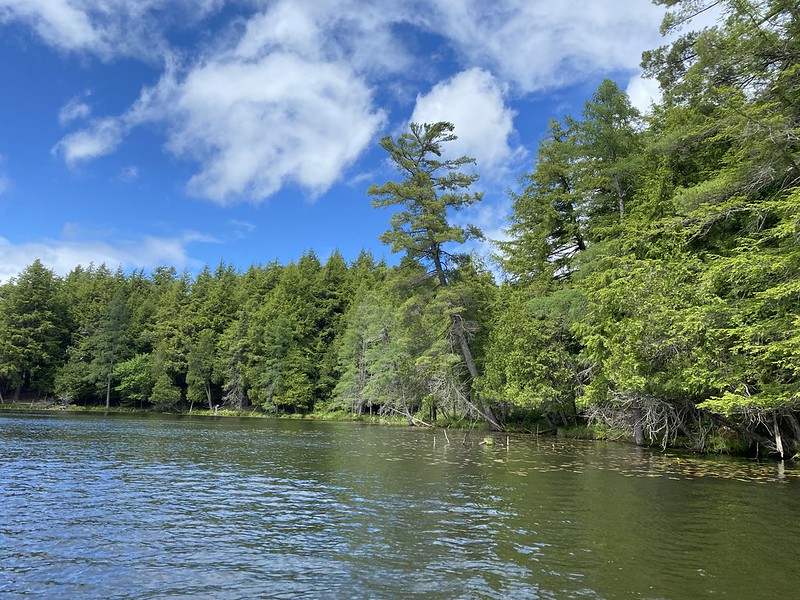
My brother Jimmer and I led the kids on a canoe trip through the Sylvania Wilderness, a National Forest Preserve about 30 miles west of my home. The US Forest Service purchased the 7,417 hectare plot saving 34 lakes and old-growth, northern hardwood forests in 1967. Thanks to a Wisconsin lumberman, A.D. Johnston who purchased 80 acres in 1895 on the south shore of Clark Lake, he thought the area was so beautiful that it should be preserved. I am very thankful that the lakes were not developed like many of the lakes up here. There are no cottages or roads going through the wilderness and very few of the lakes permit motorized watercraft. Instead, it is canoes and kayaks and the quiet of the Northwoods! The lakes straddle both the Wisconsin/Michigan state borders and the Lake Superior/Mississippi River watersheds. The lakes are deep and pristine and spring-fed and fragile due to low flush rates. The natural forest habitation around the lake preserves the beauty and the water quality. We saw several loons and bald eagles, but couldn’t see any of the park’s wolves or black bears.
Jimmer & Ocean Portage Tony & Owen in the kayaksNorthern Hardwoods
One of my big takeaways from the experience was understanding the privations experienced by early French explorers to the Great Lakes. Once we got away from the lake and into the woods, the mosquitos were all over us. Thankfully, the owner of Sylvania Outfitters advised us to hear face nets to protect us. I made our route through the park, traversing three lakes which meant 3 portages. The last one was probably about 400 meters through thick hilly forests. I underestimated the size of Crooked lake the kids were a bit cranky on the way back, but the 4-hour trip to me was pure heaven. It was a cool windy day but typical for summer in the UP. The strong winds caused white caps on the exposed parts of Crooked Lake, but other than that, it was a safe and enjoyable day out.
I highly recommend visiting the preserve which is part of the Ottawa National Forest. Sylvania Outfitters, located just outside of the park near Watersmeet, Michigan has everything you need for a day on the water including transport of canoes/kayaks, paddles, and advice on where to go. We did a cross-country ski trip with the kids years ago with them.
We are finishing our first week in the Upper Peninsula of Michigan before embarking on a week in Utah. Due to costly flights, we are flying out of Chicago and will be making the 6-hour drive south today. Before I go, I wanted to highlight some of the best aspects of our week of vacation.
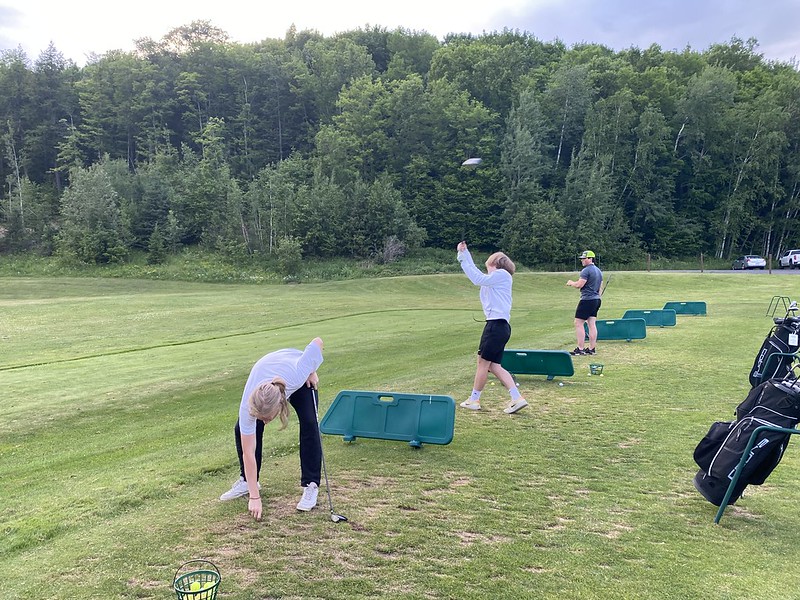
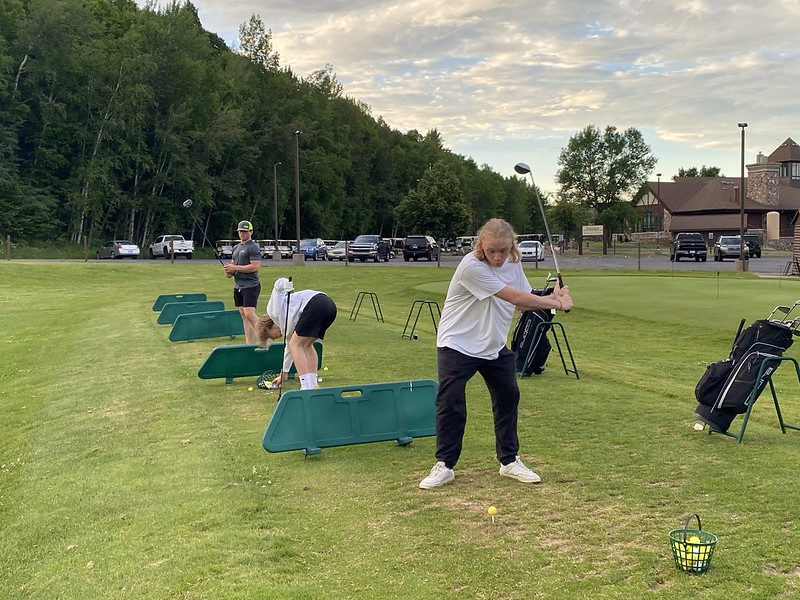
Owen likes to go to driving ranges and is getting into golf. I took the boys to the George Young Golf Course that is located 6 miles from my house on the shores of Chicagoan Lake, The lake is one of the largest and most popular in southern Iron County. I’ve been going there since I was a child, from the summer afternoon “Beach Bus” run by Iron County Community Schools to camping to visiting friend’s cottages on the lake. The history of the George Young Resort is interesting. George and Margaret Young owned the Chicago Fire Brick Factory and vacationed in Iron County. Margaret’s father was an industrialist and upon their deaths, they donated their 3000-acre estate to the people of Iron County. It was to be developed into affordable year-round recreation. Today there is a gorgeous 18-hole golf course, cross-country ski trails, indoor pool and sauna, fat-tire biking, fishing, etc. It is so nice to have a world-class resort in Iron County. They also have a really good bar and restaurant! I highly recommend it. I supported Oliver, Beau, and Owen by renting clubs and hitting drives.
Oliver Oliver, Owen, Beau
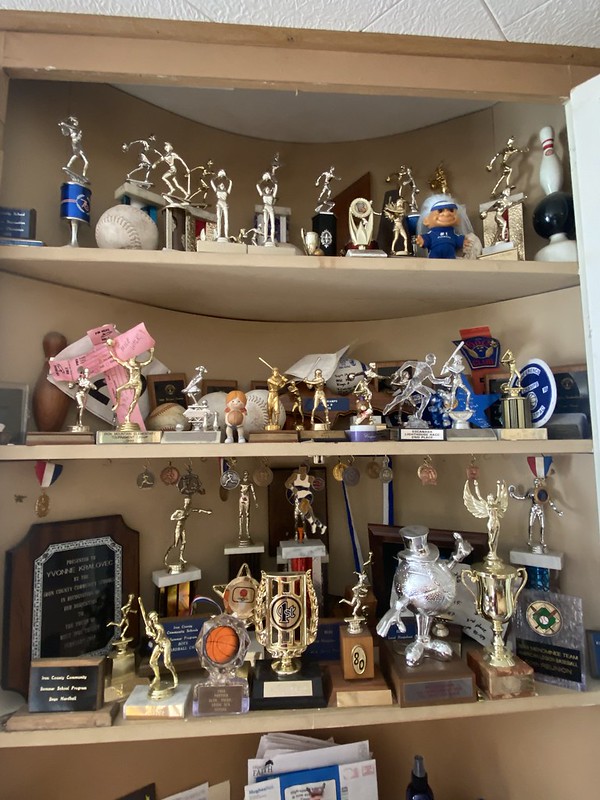
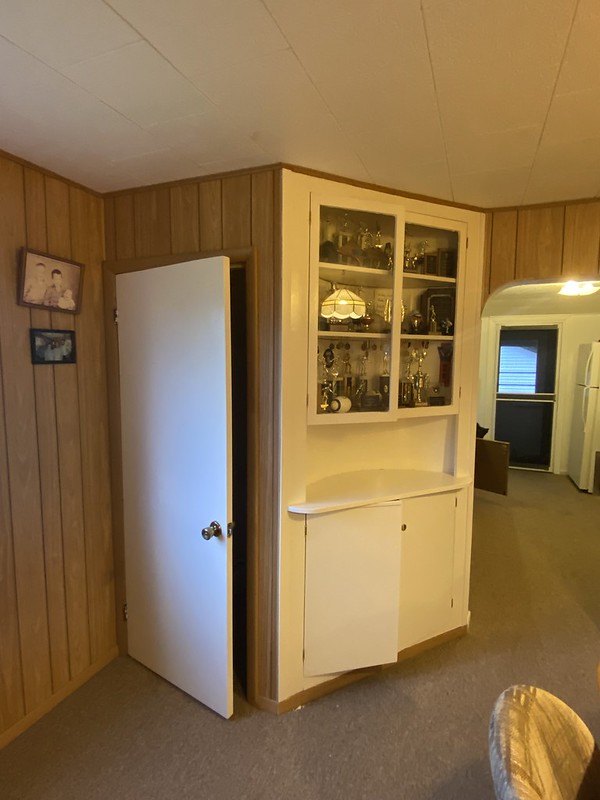
Nadia, Ocean, and I also completed a DIY project. We rearranged and painted a trophy case. My mother was an outstanding bowler, softball player, and basketball coaching legend. My parents also displayed my cross country running and basketball trophies and medals, my brothers’ trophies in football, kick-boxing, etc Sports were a big deal in my family growing up and it is nice to have a permanent display of our sporting accomplishments. Nadia and I learned we have a long way to go to hone our home improvement skills. We couldn’t close fully the glass doors on the trophy case or door. We don’t know how to adjust the hinges and we decided to wait for my construction-genius brother to come next week to help finish the job.
We would like to renovate our home over the next few years as we are looking to use it in our retirement. We like the quiet, peaceful nature of my home village of Caspian and for me, it oozes with nostalgia and fond memories of my childhood and adolescence. The UP is also great for outdoor recreation which I love. The house is quite dated and really needs some TLC. We hope to keep the Kralovec family spirit and memories while modernizing and making it more comfortable.
Before After
Yesterday we traveled to Marquette to meet our property manager and shop at Target. We also watched Top Gun: Maverick. It was a great movie, with everything that you want from the franchise; thrilling flight scenes, pilot rivalries at the Top Gun school, and a heartwarming ending.
I’ve been enjoying cycling the Apple Blossom Trail and the new bike trail between Chicagoan Lake and Caspian. The late sunsets (9:00 PM) allow for more time outdoors. I snapped this photo of the old Caspian Iron Mine shaft head at the Iron County Museum.