Karakiya Gorge Hike

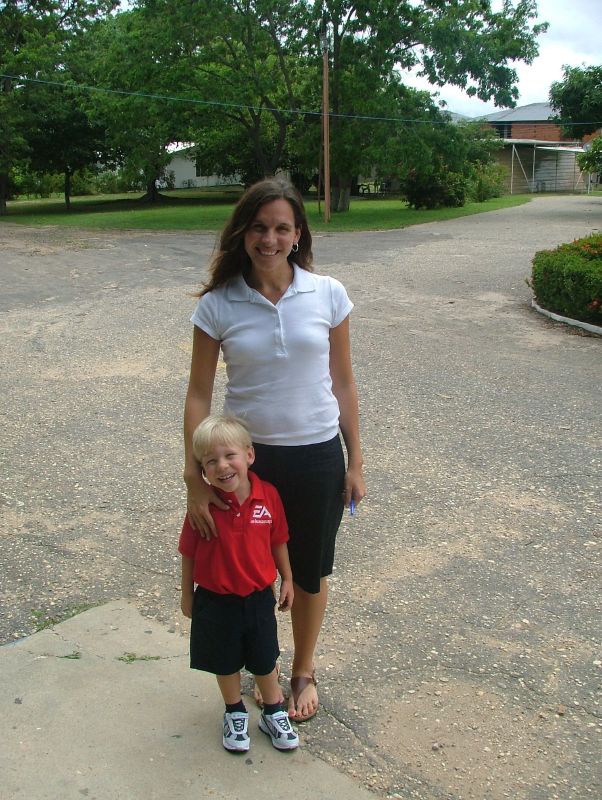
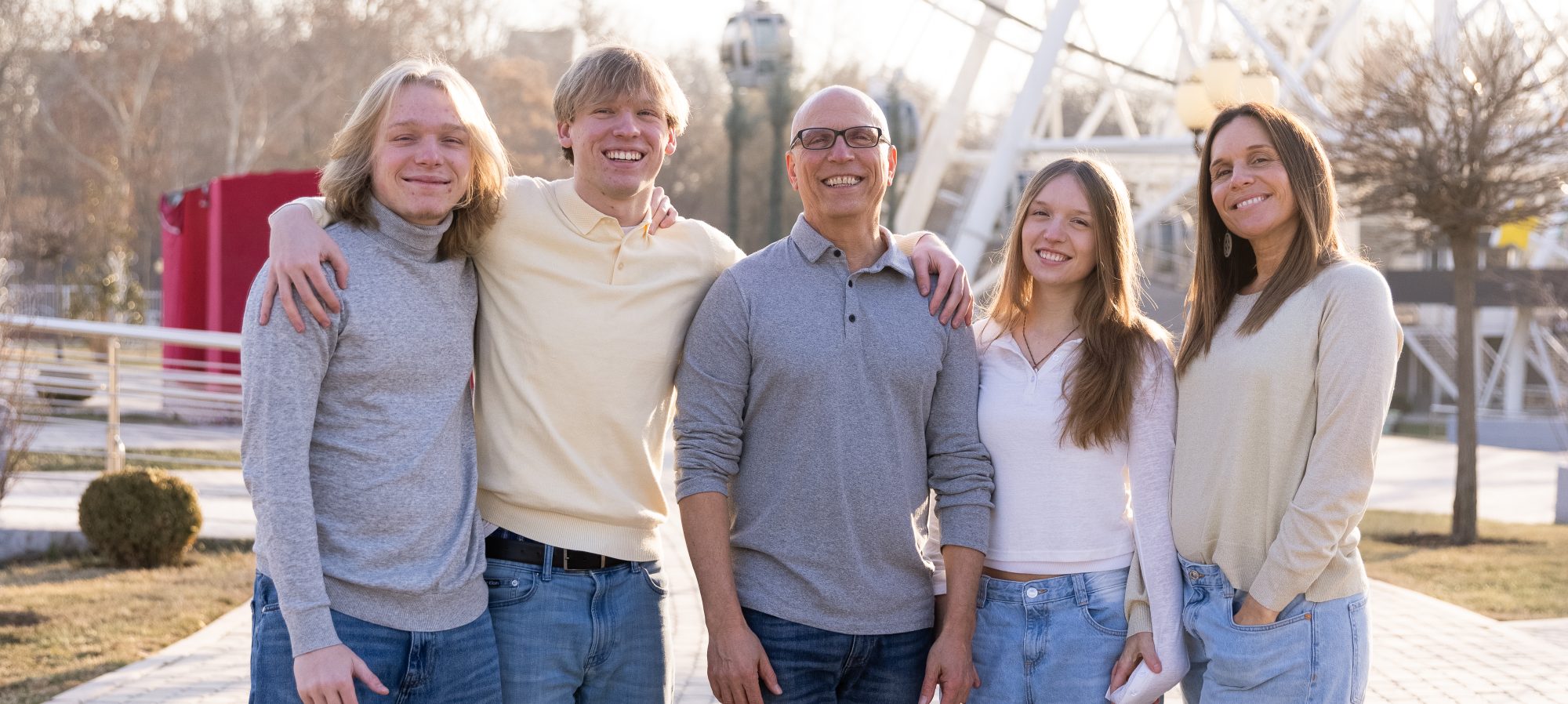
The Kralovec and Doel families at the first waterfall.

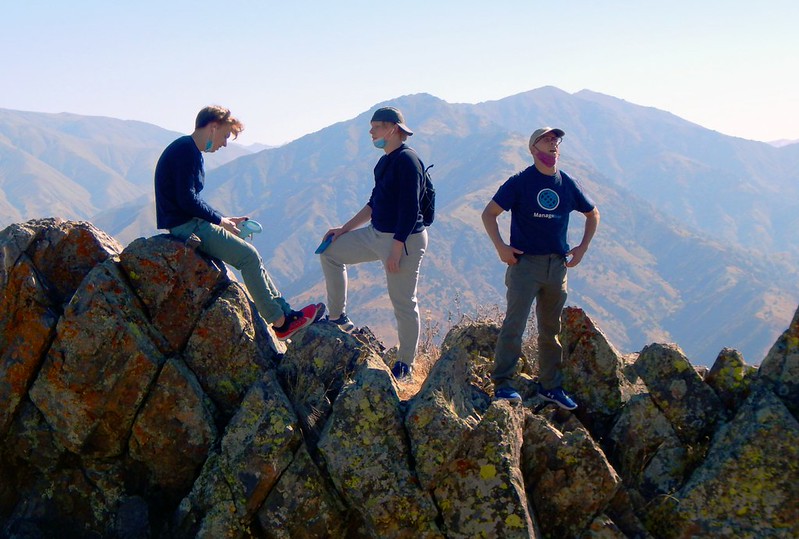
Nadia, Ocean, Oliver and I went on a guided hike with the famous Boris yesterday through the Karakiya Gorge to visit the scenic waterfalls. We met Boris and some other hikers near the “hump-backed” bridge outside of Gazalkent. We drove into the foothills of the Ugam range to the nearby village Saylyk. The 100-kilometer long Ugam mountain chain forms the border between Kazakhstan and Uzbekistan and has peaks up to 4000 meters. We didn’t go to the top peaks, but climbed almost 600 meters in elevation and did a loop of just over 13 kilometers.

The scents of the ubiquitous Clary Sage (Salvia sclarea) covered the aroma of livestock manure on our hike.

Outside of the village, the road turns into a trail. The dry foothills reminded me of the canyon country of Los Angeles. We parked the cars, made our final preparations and started walking up the trail into the gorge. The weather was perfect, with blue skies, a cool breeze and the late June flowers of wild sage, hollyhock and tansy brought color and scents to the hike.

We eventually got into the rocky gorge and we ran into several groups of picknickers and university students also enjoying the waterfalls. There are a series of waterfalls and we visited four of them. We had to climb up steep rock walls on a few occasions, but that just increased the adventure for Oliver and Ocean. After lunch, we made it out of the gorge and looped back around on the mountainsides overlooking the narrow canyon. We dropped back down to go swimming at the last waterfall. I took the plunge of a rock ledge into the cold, mountain Karakiya stream. It was very refreshing on a warm, dusty hike. My Eddie Bauer hiking chino pants were perfect; protection from thorny bushes but easy to dry while going through the stream. I highly recommend them!

Oliver at the top of the second waterfall

The views of the Ugam mountains are spectacular and bring me much solace and joy. I would like to go back to climb some of the nearby peaks and during the week, it would be a really nice place to camp. My usual complaint about Uzbekistan wilderness areas is too much grazing of livestock, but in a poor country, that is how people make a living. Thanks to Boris and Vladimir for leading the hike. I would also like to thank my wife and Oliver and Ocean for going on the hike. It was their Father’s Day gift to me. Oliver and Ocean profess not to like hiking, but they always seem to have a good time and they are strong walkers. It was a special day for me!

With my angel on our Father’s Day hike!

Partial Solar Eclipse

My family and I watched the partial solar eclipse yesterday in Tashkent. We watched several videos and talked about what was happening. Ocean and I agreed to meet in Osaka in 2034 for a predicted full solar eclipse. We made a simple pinhole (two pieces of paper) to see the eclipse and I magnified and brightened the images as you can see in the gallery above. I couldn’t tell with my naked eye that we were having an eclipse. We also talked about the summer solstice, so it was a full morning of astronomy for the family.

Summer Solstice Ride With Owen

We cycled 60+ kilometers on the eve of Summer Solstice yesterday. We rode the entire east side of the Charvak Reservoir from bridge to bridge and back. The pain and heat were relieved by the scenic views of the Tian Shan Mountains and the turquoise waters of the lake. A great day!

Cycling the Charvak Reservoir

There are many trails to explore in the Tian Shan Mountains.

Saturday I escaped the city and rode my bicycle around the Charvak Reservoir in the Tian Shan mountains. The reservoir is 46 miles (74 kilometers) from my house in Tashkent. This was my first time riding up there. I rode from my car near the dam to a bride on the far side of the reservoir. The next time I go up, I will ride around the entire lake. It is still green with patches of snow in the higher elevations which made for picturesque views.

The dam is on the far left and the flooded valley of the Chichiq River is to the right.

The road is mostly asphalt with some gravel sections. There was not a lot of traffic early, but picked up a bit later, especially around the resort areas. The photo above shows the view from near my starting point.

Panaromic View

The photo above was taken from a ridge overlooking the village of Burchmulla. I rode from the top of the ridge to the bridge you can see at the far end of the river. I fixed the tire of my gravel bike and can’t wait to get up there again!

Last night Nadia, Ocean and I bought supplies for the puppy we will be getting next week. I’ll be blogging more about our new pet ownership trials and tribulations. I noticed that some cafes and restaurants are starting to open and there were lots of people out and about.

The Case Against Sugar

To calm my mind before bed, I recently read “The Case Against Sugar” by in Gary Taubes.

In the past few years, the dangers of dietary fat have begun to look as though they were overstated, and the risks of sugar underplayed. Among the leading advocates for this reappraisal is Gary Taubes, an investigative journalist who has been reporting on nutrition since the late 1990s. His third book on the topic of diet and health, The Case Against Sugar, is a prosecutor’s brief, much like Yudkin’s own, but fleshed out with four decades’ worth of extra science and a deeper look at both the history of that science and the commercial, economic, and political forces that helped shape it.

The Atlantic, January/February 2017 “The Sugar Wars”

In my opinion I think he laid out a pretty good case against sugar. We all notice how much larger (fatter) people are today than a generation ago. What has changed? Taubes argues it is not just a question of eating more and exercising less, but also the vastly increased amounts of sugar and corn syrup that are in the modern, Western diet. He gives the history of medicine regarding sugar in our diets, the influence of the sugar industry lobbyists and how popular media and thinking has shaped our society’s view towards sugar.

This book makes a different argument: that sugars like sucrose and high-fructose corn syrup are fundamental causes of diabetes and obesity, using the same simple concept of causality that we employ when we say smoking cigarettes causes lung cancer.

Taubes, Gary “The Case Against Sugar”

After reading the book, I have to mostly agree with him. Sugar really has no place in our diet and should only be an occasional treat. I find it hard to escape sugar as it is used in many products, especially processed products like peanut butter, bottled tomato sauces, etc. If you want to lose weight and increase your chances of avoiding heart disease, cancer, diabetes, etc. it would be in your best interest to eat less sugar. My adopted mother died of diabetes and it is an insidious disease. Unfortunately, diabetes runs in her family, as she was quite active and thin, but it is a family curse and many of her relatives develop it quite early in their lives. In the advanced stages, it cuts circulation to the legs, lessens vision and eventually causes organ damage to the kidneys that leads to death. Below are some other facts I learned.

  • The origin of the word diabetes comes from Greek meaning “siphon”. If left untreated, people have an unquenchable thirst and must constantly be drinking liquids, hence the name.
  • 12-14% of Americans have diabetes and another 30% are predicted to get it at some point in their lives.
  • I didn’t know that much of our sugar comes from sugar beets. I thought it was only sugar cane. Sugar cane originated in Papua New Guinea. French naturalist and banker named Benjamin Delessert discovered a method to refine sugar from beets in 1811.
  • Nutrition is taught without much history.
  • The average American consumes
  • “okay” is the most recognizable word on earth; second is “coca-cola”
  • 12.5 million slaves were transported to the New World to work on sugar plantations
  • Many of the chocolate bars we know today were first created and mass produced from 1886 – 1930. Snickers (1930) / Hershey’s Milk Chocolate Bar (1900) / Toblerone (1908) / 3 Musketeers (1932)
  • Breakfast cereals also contribute to sugar consumption Frosted Flakes (1952) / Cocoa Puffs (1956)
  • Dietary fat is more demonized than dietary sugar and Taubes think it should be the opposite.
  • All of the sugar I consumed as a child from breakfast cereal to Kool-Aid caused a lot of my dental problems today.
  • “We now eat in two weeks the amount of sugar our ancestors of 200 years ago eat in a whole year” U of London John Yudkin (1963)
  • An apple has a teaspoon of sugar compared to almost 10 teaspoons in a Coca-Cola.
  • Sugar from carbohydrates (potatoes, example) is released slower and gentler than eating a mass of concentrated sugar
  • Americans consume between 42 and 75 pounds of sugar per year. (ouch)
  • blood sugar – Glucose circulating in our blood
  • sucrose – composed of equal (50-50) parts glucose and sucrose
  • fructose – found naturally in fruits and honey, the sweetest of all sugars
  • HFCS high-fructose corn syrup most common type is 55% fructose and 45% glucose

Covid-19 Journal #14 June 6, 2020

Donkey Pulling Wagon of Hay (north of Tashkent, June 6, 2020)

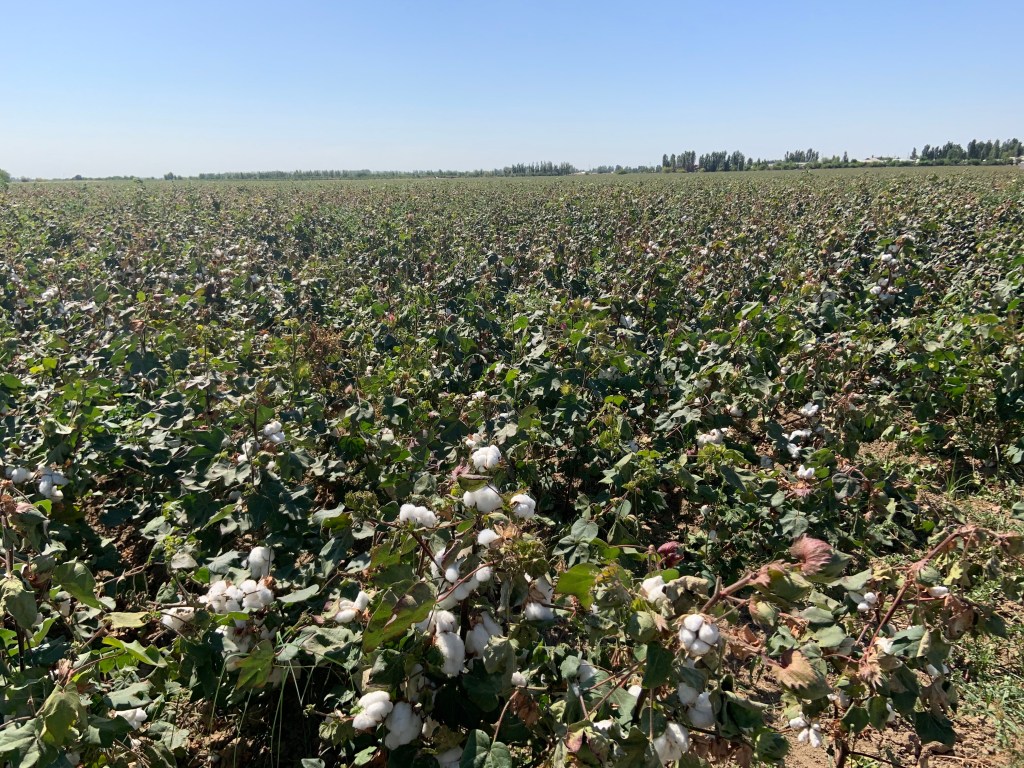
My mother used to tell me stories about her family owning a cow in the small town of Caspian, Michigan where I grew up. In the 1940s, many families owned cows. My mother laughed at the memories of negotiating with her siblings who would have to fetch the cow from the “cow pasture”, a big grassy hill overlooking the town. In Tashkent, some families still own livestock and on my long bike rides around the city in the morning, I usually run into several cows, goats and sheep. Today I saw several trucks and buggies with hay as well. Even in a modern city of close to 3 million people, the village is never far away.

Grounds of the Museum of Political Repression

The photo above is of the park of the Museum of Victims of Political Repression in Tashkent. The large complex is on beautiful urban park land along the canal and across the highway from the Tashkent TV Tower. The museum remembers victims of Soviet repression, from the time of Stalin to independence. I should go visit the museum. I appreciate the wide streets, the secularization and architecture the Soviets left, but many Uzbeks probably suffered under the regime.

A classic Soviet-era apartment building

I love getting out in the mornings before traffic starts to explore the city. The sun is rising around 5:00 AM and it is relatively cool at that time of day to cycle. I always find new streets and mahallas. Exploring a city by foot or bicycle is the only way to truly to get to know a place.

One of the many interesting pathways in Tashkent

Covid-19 Journal #13 – May 16, 2020

Teams are disinfecting parks and playgrounds in anticipation of opening on Monday. I took this photo on my street yesterday.

I am trying to figure out the mortality rate of Covid-19. There has been an immense amount of information and troublingly, conflicting information about this novel coronavirus. I guess this is the “fog of war” of the uncertainty involved in fighting this enemy disease. I have seen estimates ranging from 2% to 5.8% depending on the date, place and organization. What makes it difficult to calculate is many infected people do not show symptoms and are never tested. There is some error also with the number of deaths, but I would say the error of number of cases is probably greater because of this lack of testing. I found this State of New York study that tested 15,103 people in grocery stores and community centers throughout the state. For non-Americans reading this, the state of New York is big and surprisingly rural, with “Upstate” New York compared to my sparsely populated birth place of the Upper Peninsula of Michigan. So the study covered not only the dense metropolis of New York City, but also sparsely populated areas that border Canada and stretch almost to Cleveland, Ohio. That study found a total12.3 % of those people tested had antibodies to the coronavirus and logically, a higher percentage in NYC (19.9%).

Extrapolating this out to the entire population, this article on WorldMeter.com estimates that the current known number of deaths should be doubled and the number of cases should be multiplied by 10. That would mean a mortality rate of 0.28%, which is about 3 times more deadly than an average strain of influenza. The analysis goes on to show that 89% of the deaths were people with an underlying condition and for people under the age of 65, the mortality rate is 0.09%, which does not take into account, underlying conditions. These mortality rates will be probably change as more data becomes available.

In thinking about the situation here in Uzbekistan, I will compare it to California. The two are approximately the same size in area, with Uzbekistan having 8 million less people (think California minus the Bay Area). With significantly more testing and probably more accurate data, California has around 75,000 confirmed cases with over 3,000 deaths. The Uzbek Ministry of Health statistics report approximately 2,700 confirmed cases with 10 deaths. According to these statistics, there are probably a little over 300 confirmed cases of Covid-19 in Tashkent, with a population of 2.5 million, about the size of metropolitan Sacramento.

The country is starting to open back up. The government divided the country into three zones, red (shut-down), yellow (partially open) and green (fully open). Tashkent is a yellow zone. They are loosening restrictions starting Monday to allow for cars to travel anytime between 6:00 AM and 10:00 PM and more businesses are opening. Parks, soccer fields and green areas are re-opening but will be limited to the number of visitors at any one time. They are resuming some national flights and trains, but the country is still closed until at least June 1.

“The End of October” Lawrence Wright

I am still diving into epidemiology (even though I cannot pronounce the word) and read Lawrence Wright’s “The End of October”. It is a novel about a world pandemic that he started writing in 2017. It is good timing for the book to come out in 2020 and it is on the New York Times Best Seller list.

Wright got a lot of things right! In the novel, the president puts the vice-president in charge, governments decree quarantines all over the globe, many people denying it is serious, etc. The source of his fictional influenza is a mystery until the very end, and for those of you who have not read the book, I will not spoil it. He named it the Kongoli Fever, which came from an HIV detention camp in Indonesia where the disease first came known to the world. The mortality rate of Kongoli is significantly higher than Covid-19, 30% which causes two major wars and a massive breakdown of society everywhere.

I absolutely loved the book because it was a thrilling story combined with lessons in public health, virology and history. You can see Wright did a lot of research and he has won prizes for his non-fiction. I want to read his books on Al Qaeda and the state of Texas. But his writing is so good, that even though you are learning a lot, it doesn’t feel like a lecture. The main character is Henry Parsons, a CDC virologist.

Below are some of my take-aways from the book:

  • “Disease was more powerful than armies. Disease was more arbitrary than terrorism. Disease was crueler than human imagination.” I agree with that and it is illogical to spend more money on fighting terrorism and boosting our military than we put into public health.
  • espalier – a fruit tree trained to grow flat against a wall
  • Researchers found there are 100 billion viruses in a single liter of seawater. The total number of viruses on earth is estimated to be 100 million times more than stars in the universe.
  • 8% of the human genome includes genes from ancient infections.
  • kvetch – Yiddish for a complainer
  • Influenza A is more virulent than Influenza B. Tamiflu is a drug that is effective against Influenza A because it inhibits an enzyme that helps produce more virus.
  • The 1918 Spanish Flu infected 500 million people worldwide and killed as many as 20% of people infected. It was an H1N1 hemorrhagic flu that turned lungs into a “bloody froth”.
  • “Typically, with a pandemic, you have 2 or 3 big waves of contagion before it settles down and becomes the normal flu you get every year.”
  • I want to know more about Albert Schweitzer, the French doctor that fought disease in West Africa. His fundamental principle of morality was “good means maintaining, assisting and enhancing life, and that to destroy, to harm or to hinder life is evil.”
  • anodyne – inoffensive
  • One major reason pools are chlorinated is that polio, an RNA virus like influenza, spread through fecal matter.
  • vaccination comes from the Latin “vacca” meaning cow which is a reference to milk maids who were immune to smallpox because they were exposed to cowpox. This was discovered by English doctor Edward Jenner in 1796.

Covid-19 Journal #12: May 9, 2020

I am still healthy and looking for the positive aspects of quarantine. Spending lots of time at home with my wife and children is just incredible. We are getting closer to one another and I think we will all look back at this time as special. My children\ are teenagers and friends are becoming more important, but being stuck at home with us has been such a gift. Today for example, I helped Owen with filling in recommendation forms and we are talking about universities and careers, Ocean and I went for a bike ride this afternoon along the Ankhor Canal and Oliver was such a firecracker last night, helping us with the TIS Zoom Quiz Night. He is so funny!

The merchants of the Alay Bazaar (market) are taking hygeinic measures to stop the spread of the virus through the handling of fruits and vegetables.

The Special Commission of the Government is loosening restrictions slowly. People can drive from 7:00 – 10:00 AM and 5:00 – 8:00 PM without the special permits. They declared Tashkent a “yellow” zone so more stores and businesses are opening but not all of them. They cancelled May 9 “Victory in Europe” day celebrations here, which is a big deal in the former Soviet Republics. After a hailstorm last night, they did have fireworks downtown. I could see them on the far horizon from our second floor balcony.

Schools are still closed, mass gatherings of over 15 people are banned, you still have to wear a mask and there are police everywhere through the city. Ocean and I got our temperature checked before we went into the Makro supermarket and they gave us plastic gloves to wear.

Korzinka, a big supermarket chain, is enforcing physical distance laws and limiting the number of people in their stores at one time.

My early morning bicycle rides have been so therapeutic for me. Before around 7:30 AM, I have the city to myself. I’ve been able to access formerly busy highways and cross intersections easily, that before the quarantine, I never would have been able to. The 30 kilometers of exertion daily have calmed by psyche.

Normally this highway would have high traffic, but mostly open roads

My bike rides are also allowing me to discover more areas of the city. I had to stop and photograph the Suzuk Ota Mosque and Mausoleum Complex . The government recently restored the 14th century complex that was built for madrassa founder Suzuk Ota, who in the 13th century, founded a school and mosque that focused on teaching woodworking and other crafts. It is a huge area with parks, school buildings, etc.

Entrance to the Suzuk Ota Complex

Covid-19 Journal #11: Ride to Kazakhstan and a Broken Toe

The start of the border crossing between Uzbekistan and Kazakhstan

I finally made the ride from my home to the Kazakhstan border this morning. It is about 26 kilometers (15 miles) from my door to the border as a straight ride north through the city of Tashkent to the border. The outline of the borders of Uzbekistan looks a bit like the boot of Italy but flipped and turned sideways. The capital city of Tashkent is located near the toes, with Kazakhstan and Tajikistan on the top (north) and bottom (south) of the foot and Krygyzstan surrounding the toes. Tashkent is the capital because when the Russians conquered the area in the 1800s, they made it the capital because the major cities at the time (Samarkand, Bukhara, Khiva) were under the control of Emirs and they wanted a place to call their own. That is why it is not in the center of the country. You could ride the four countries in one day if they had open borders like within the EU. However, border crossings are cumbersome and often impossible.

Map of Central Asia (courtesy of Wikipedia)

They were a product of late-Tsarist and early-Soviet census data, ethnographic and orientalist scholarship, and also in part of the process of raionirovanie – identifying supposedly rational and viable economic units, and ensuring that each new state met minimum criteria for becoming a full-blown Soviet Socialist Republic: these included a population of at least a million, and a capital city connected by rail.

 Inevitably, the process of drawing national boundaries in a region where these borders had never existed before, where bilingualism and multi-layered identities were common, and where divisions of language and ethnicity often fell along the rural/urban divide, created many anomalies. Among the sedentary population, a wide range of older identities – Sart, Khwarazmi, Ferghani, Samarqandi, Bukharan – were subsumed under the label of “Uzbek,” which, before 1921, had only referred to particular tribal groups. Tashkent and Shymkent were both cities with a mixed population of Europeans and Uzbeks, surrounded by a hinterland populated largely by Kazakhs. The former ended up in Uzbekistan, the latter in Kazakhstan. Tajik-speaking Bukhara and Samarkand were surrounded by Turkic-speaking countryside and ended up in Uzbekistan, a decision which rankles with Tajikistan to this day.

Morrison, Alexander “Stalin’s Giant Pencil: Debunking a Myth About Central Asia’s Borders, Eurasianet.org (February 13, 2017)

During the quarantine I’ve been able to ride freely throughout the city before the police begin manning the checkpoints at 8:00 AM. As it is loosening, I am able to ride past 8:00 AM, although there are more cars on the roads. However, there is much less traffic now than before which has the benefits of cleaner air quality and easier bike riding. In some ways, I’ll miss the days of quarantine which might be coming to an end this month.

The spread of Covid-19 in Tashkent, if the Ministry of Health and World Health Organization figures are accurate has been kept in check. There are 630 confirmed cases in the city with 9 deaths in the entire country. Uzbekistan being double landlocked and not in tourist season, was never a major hotspot for the disease. The government took strong measures starting in mid to late March to physical distance the city. Now that it is May, they are slowly loosening restrictions with cars now being able to move from 7:00 – 10:00 AM and 5:00 – 8:00 PM. There is less of a police presence i the neighborhoods, although they are outside my house today. They are friendly and we have a good relationship with the mahalla (neighborhood) leaders and they let us come and go as we please.

Livestock on the roads and gas pipelines are two common sights of cycling in Uzbekistan
The Mazhid Mosque is located on highway M39 on the way to Kazakhstan

I broke my toe a couple of weeks ago. I was annoyed at having to clean the kitchen after dinner and was stuffing Tupperware and things in the refrigerator. A large, glass Tupperware full of leftover chicken fell out of the fridge from shoulder height and landed right on the end of my middle toe. The last bone of the middle toe was had a thin crack at the end. I have been taping it to the adjacent toe as there is nothing much else you can really do with it. Thanks to the Coronavirus Cycling Opportunity I’ve been able to continue to exercise through cycling while my toe is healing.