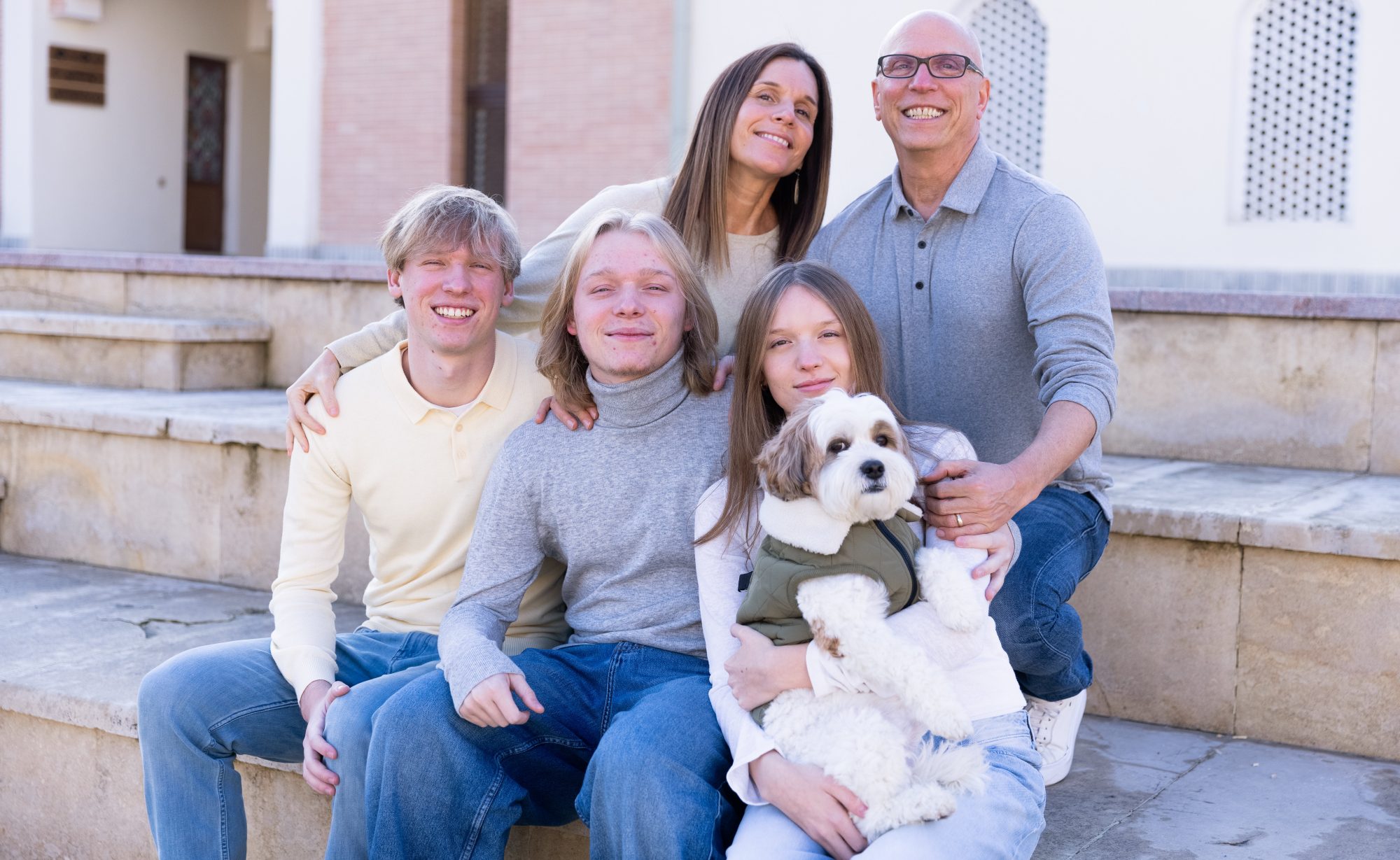
We had a really nice family Christmas! The kids don’t believe in Santa anymore, but it was still fun. They stayed up until midnight on Christmas Eve, honoring Nadia’s tradition of Latin America. They each got to open one gift and they saved the rest for the next day.
We had Christmas dinner over at the Tsubaki residence in our neighborhood. They organized games for the kids and we especially liked the “Minute to Win It”. There was plenty of food and friends and that is what Christmas is all about! We missed our extended family in the USA, Singapore and Bolivia.
I’ve immensely enjoyed playing basketball with the kids. This video below is of Owen and Oliver, but today, Ocean got into the act and played as well. She has athletic talent and is a really good shooter and passer. She could be the best athlete of the three children. Anyway, I just like getting out and playing with them. I think Owen has surpassed me athletically. He is now 15 years old and I am 50. I am feeling my age and his strength and speed going past me. He is also taller than me! No fair! Oliver has been going out with us every day and giving it a go. He is such a funny character.
Yesterday visited the beautiful Hira Mountains, a small range located on the western shore of Lake Biwa. It took us about 2 hours to reach the Jinjishu temple, in the hamlet of Bomura. The goal was a winter hike to the snow line. As you can see, we managed to get plenty of snow in an attempt to raise Christmas cheer.
The trailhead to Mount Bunagatake, the highest peak in the range (3,984 ft / 1,214 m) just past the temple, next to a massive, old sugi (Japanese cedar) tree. Unfortunately, the family was not in the mood for a 40-minute steep climb to start the walk. I was following the Lonely Planet’s (2009) Hiking in Japan guide which gave an accurate description of the hike. I’ve learned their definition of steep, really means steep. It was muddy and snow-covered in many places, lowering morale even more for the female and younger members of the Kralovec family.
I didn’t know what to expect as it was my first time in the area. There still is a couple of small ski resorts open, although, with global warming, several have closed. It has been a cold winter so far, so I should have expected snow. We got off to a late start because it is difficult to get the family out of bed in the morning, so I didn’t expect us to get far with this being the winter solstice. We successfully conquered the first steep section but stopped before attacking the next 10-minute steep climb. It was fun to make a snowman and play in the snow at the top of the first ridge.
I really want to go back and make it to the summit of Bunagatake. Next time we will definitely arrive earlier and dress warmer. It would have been good to have a thermos of hot chocolate and sandwiches, so some more preparation is needed.
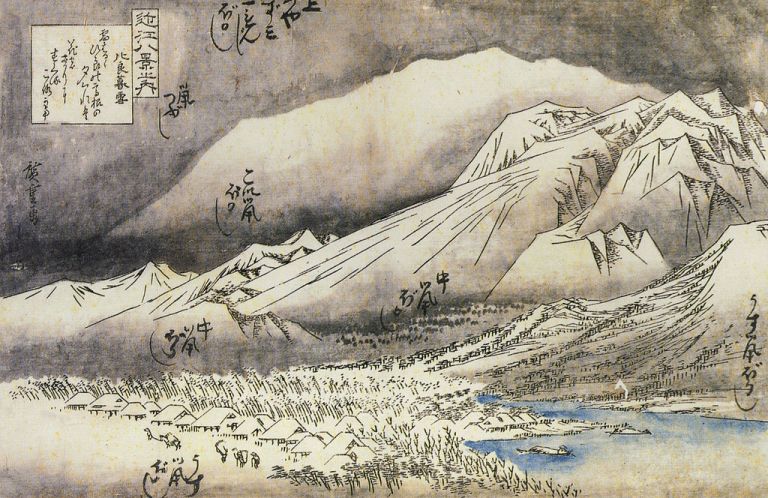
The beauty of Hira Mountains was first depicted 500 years ago in the Eight Views of Omi (Omi province is now the Shiga prefecture). The “Evening Snow at Hira” is shown below. You can see the southern part of Lake Biwa, a freshwater lake north of Osaka. The city of Otsu on the shores has made the foreground an urban scene today, but the mountains are still beautiful!
I am really enjoying the holidays. Yesterday (Wednesday) morning was mostly devoted to work, with a Skype meeting, catching up with emails and work with a colleague on our accreditation report.
Bamboo forest on the trail behind our school
In the afternoon I went for a walk/run with Nadia. My whole body was sore from a huge exercise day on Tuesday. I need to slowly build up my body instead of diving right in. It is amazing how fast you lose physical fitness in your 50s. The late afternoon and early evening was devoted to Christmas shopping for the kids. Nadia did sensational work in wrapping the presents and our tree looks ready for the season with them underneath.
We finished the day by taking the kids to Nick & Renee’s, an American hamburger and fries place in the neighboring suburb of Toyonaka.
On Tuesday, Owen had a dentist appointment downtown. Oliver and I accompanied him and we had a lot of laughs, riding the subway and then going to Burger King afterward. The kids are at such a good age right now. It is like hanging out with friends.
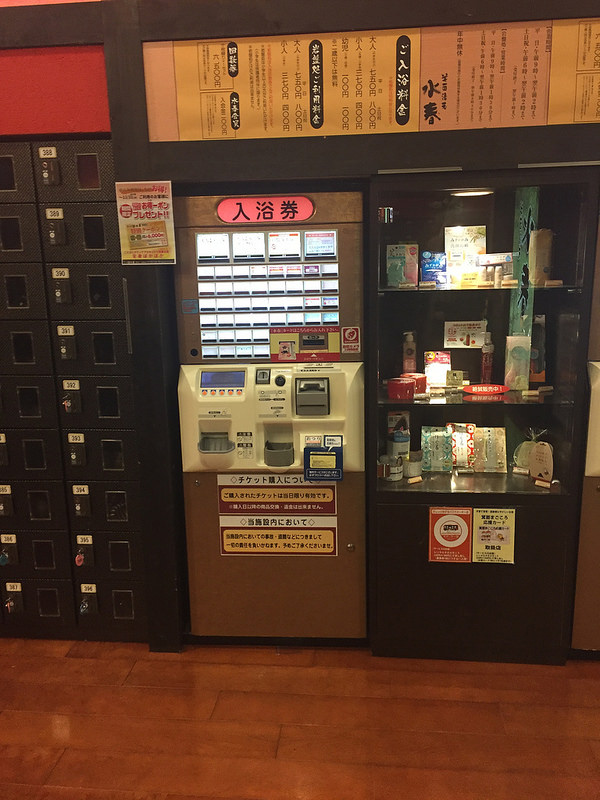
Last night I took the boys to the local public bathhouse, here in Kansai known as an onsen. Onsens are defined as a bathhouse built around geothermally heated, natural spring waters. In Japan, sentoo use heated tap water, but in Kansai, all baths, natural or artificial, are known as onsens. They used to be more popular, but as Japan modernized, more people had private bathrooms, and there was a lack of need public bathhouses.
They are similar to a hotel resort but lack a large swimming pool. We went to the closest onsen to our house, located in the mini-mall, Bb’s. The onsen at Bb’s features a huge sauna, a salt steam room, many different temperatures of baths, some with jets, others still. There is an outdoor section, surrounded by lighted bamboo forests. It has a capacity for 50-100 people.
Temperatures this winter have been near freezing so the sauna/hot tub is so refreshing. There are 4 big onsens near our house and I will try to go to all of them this winter.
Tickets cost 650-750 Yen. ($5.50)
The unusual characteristic of onsens in Japan is that people bathe in the nude, and there are sections for men and women. At first, it is strange, but one learns to avert their eyes, strategically use the hand towels provided. The boys were nervous when we went to our first onsen at a hotel when we arrived to Japan in 2014, but they have since gotten used to it. The often go with their buddies after sports practices or school events.
I like the communal nature of the onsen and that here in Japan, there is nothing perverted about public nude bathing. Families go to onsens, even bringing their young daughters (age below 5) to the male section and there is no fear of weirdos.
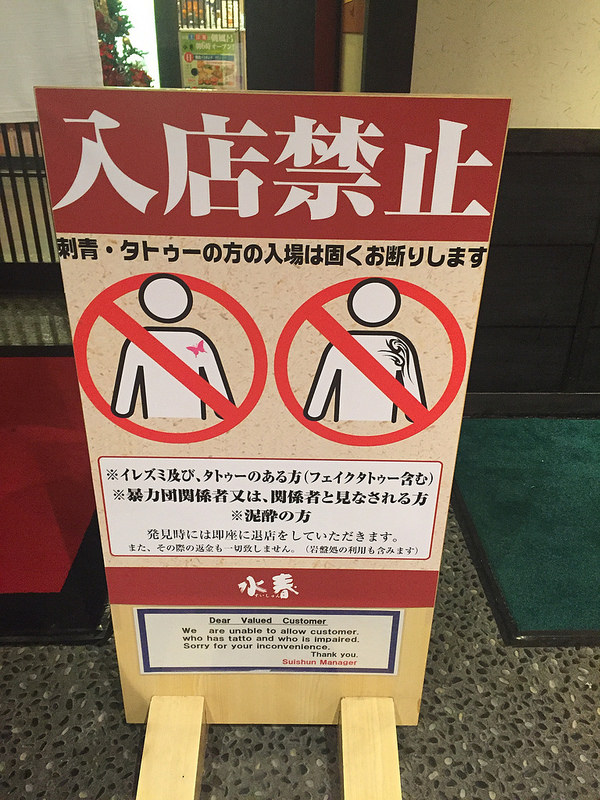
Onsen etiquette dictates that before entering the pools, it is required to bathe in the shower area. These are Japanese-style, with a small stool provided. It is funny that most onsens ban tattoos, which are culturally not acceptable. This dates back to the idea that gangsters (yakuza) sport tattoos. As more tourists visit Japan, this restriction is slowly going away, with about half of public baths now allowing them. As you can see in the sign below, Bb’s bans tattoos. Expatriates with small tattoos can cover them with a band-aid or tape and they will be OK.
Sorry, no tattoos allowed!
As I am now a middle-aged man, comfort is key. In the winter, a hot bath is vital to keeping me comfortable, so I am often preparing a bath at home. However, it is nice to go out into the cold and go to the onsen. I love spending time with my sons and it is a fun outing. I am looking forward to more visits this winter. I’ll give my definitive guide to Minoh area onsens in a future blog post.
I came across this article on National Public Radio which also appeared in London’s The Guardian, that featured the observations of field biologists here in my city of Minoh (or Minoo) Japan. I found it hilarious that we are now world-renowned for “randy” monkeys. Researchers from the University of Lethbridge in Alberta, Canada, documented female Japanese Macaques (referred to popularly as “snow monkeys”) rubbing themselves on the backs of Sika Deer. One of the author’s of study speculates that this is a learned behavior and when adolescent female monkeys do not have access to male monkeys, they resort to the backs of deer. The male deer are not bothered by the interaction.
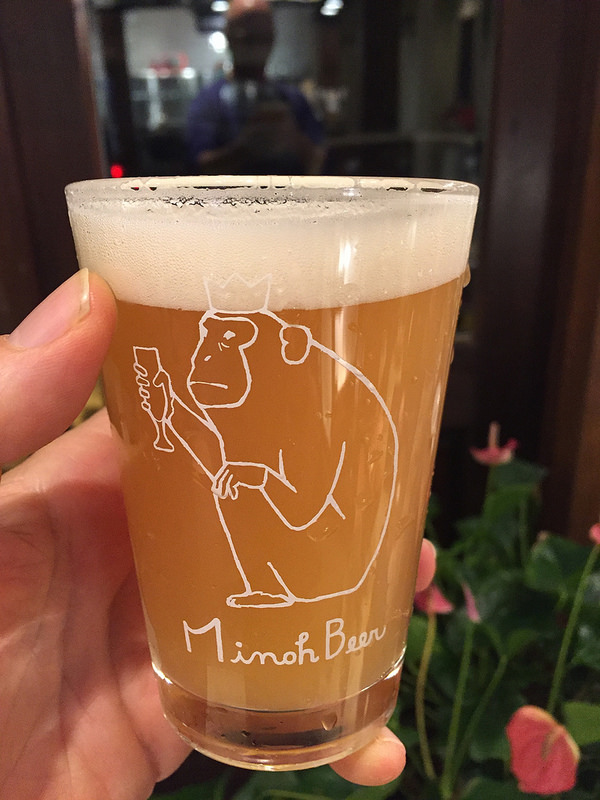
On Sunday I visited the Minoh Brewery, a small craft beer business that brews some of the best beer I’ve ever tasted. Their logo features a monkey which reflects that the city of Minoh is known for the Minoh Quasi National Park, with its colorful autumn leaves, a stunning waterfall and wildlife such as deer, wild boar and monkeys.
Below is video from the scientists. I think it is great that they are reaching out to popular culture and taking their findings to the general public.
Our Christmas/New Year’s holidays began yesterday. We are staying in Osaka this break so will enjoy time as a family in Kansai. Above is a video of Owen scoring in a junior varsity basketball game against Kinran Senri High School. Owen’s team was at a different level and in the two games they played, they scored 178 points and kept their opponents to under 50 points total. Owen really enjoys sports and is getting more comfortable playing the more games he plays. He has better fundamentals than most of the other players, but needs to be more aggressive to become a varsity starter. As a freshman, he plays a lot on the JV team and most importantly, is getting exercise, learning how to be part of a team and developing the skills of basketball. I would like to thank Coach Heimer for scheduling the game during the holidays. Nadia, Ocean and I went over to watch.
Oliver was gone most of the day with his friends. He went to the new Star Wars movie and then onsen and dinner. Like his grandfather and mother, he loves to socialize and go out with friends.
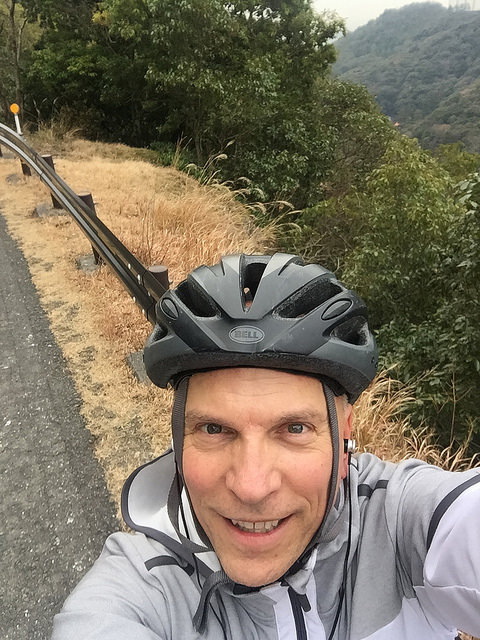
Stopping for a Selfie on my ride!
My bike ride through the hills of the Minoh National Park was so refreshing. It is so nice to have time to focus on family and exercise and take a break from a full life at school. Good to recharge the batteries!
All of us, sans Oliver, saw The Last Jedi last night. It was OK but in my opinion, nothing special. Perhaps I am a jaded middle-aged man. I found myself cheering for Kylo Ren, especially when he took out the old man Snoke and suggested to start over. I wanted a new story and characters and am done with the resistance, jedis, etc. However, franchises like Star Wars are such huge money makers (they got 7,200 yen out of us) that they will give the fans what they want. I don’t think I will see future movies in the series. It was great to share the experience with Nadia and Ocean, however. We were pretending to have the force and control others through our minds.
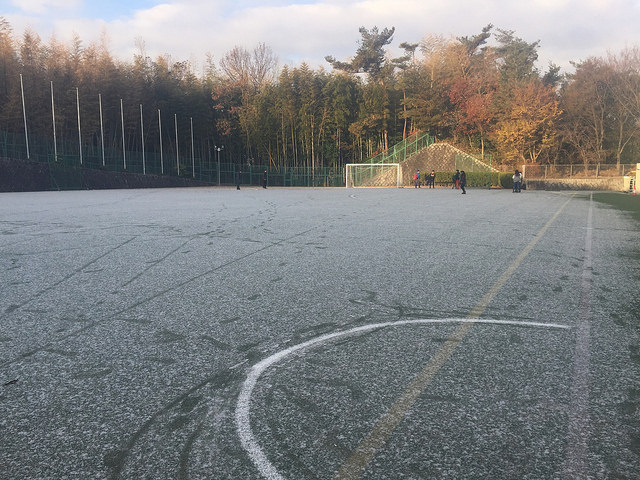
We had a light dusting of snow on Thursday.
One interesting Japanese cultural note. Japanese moviegoers will not exit the theatre until the credits are completely done. We had to shuttle out in the dark while the credits were rolling. They are also super quiet before and during the movie. I only ate my ice from Owen’s coke during action scenes to mask the sound.
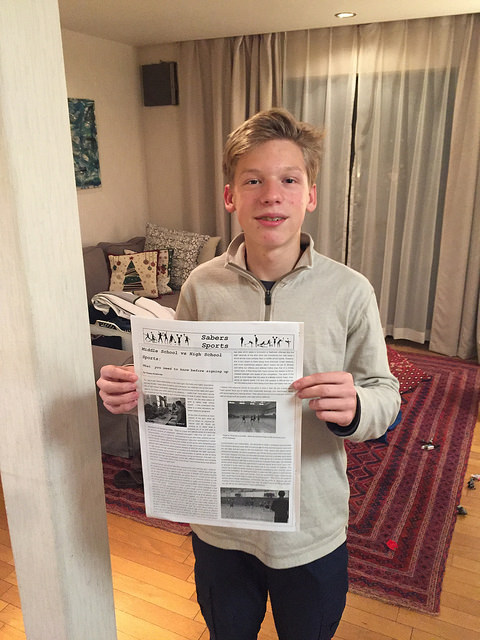
I was surprised at how touched I was by seeing my son’s byline in the student newspaper. Owen wrote an article about the transition from middle school sports to high school sports at our school. He is a ninth grader, and turned 15 on Wednesday. A cliche, but I can’t believe how fast time goes with the kids! Owen is becoming more studious, as I write this in the morning, he is finishing a mathematics project. I think the rigor of Japanese culture in our school has helped him get through his rebellious teen phase a bit quicker.
Oliver with teammates Kotaro, Aoto and Antonio
His younger brother Oliver also had an academic accomplishment. He won the middle school Knowledge Bowl on Monday! He answered many questions for his team, the “Dust Collectors”. When I asked him why they called themselves that, he replied, “It is ironic.”
Oliver is very well read and has a lot of general knowledge. At this stage of his mental development, he is lacking organization and attention to detail, but he is an avid reader.
Finally, Ocean and I went Christmas shopping earlier this week to Q’s Mall. She is such a lovely girl. She was talking in a cute British accent while we were riding to the mall. I love night bike rides with her. Wish they could last forever!
Omar El Akkad is a Canadian/Egyptian journalist who has worked in Afghanistan, Egypt, Guantanamo Bay among other places. He has taken his experiences and imagined if much of what he saw occurred in the USA and not the Middle East. He sets the second American Civil War in the years 2075-2095. Climate change and rising seas has wiped out the population centers on the east and west coast, Florida is gone and people have moved inland, causing much strife. The states of Mississippi, Alabama, Georgia and South Carolina have been cut off from the rest of the country. Violent storms, drought, and biological warfare have wiped out modern advancements in our society. That is one of his messages, that war and conflict push back societies back in time. He applies things he has seen in the Middle East during his reporting and moved them to the USA. There are refugee camps, suicide bombers being radicalized by elders, drones, etc. The Middle Eastern countries have united into the Bouazizi Empire, and they act to keep the American Civil War going, meanwhile, living in a comfortable, well-functioning economy.
Another of the points I think El Akkad is trying to get across, is that with the same conditions as countries like Afghanistan, Palestine, etc., Americans would act as they do there today. Human nature is the same everywhere. He was trying to show how people become radicalized and the damage that detention camps like Guantanamo have on people.
It is a good story and I wanted to read it to the end. I won’t give away plot details, but for me, it was a page-turner. I thought some of the premises were a bit unbelievable, however, the story made me consider what impact climate change will have on us and the strong political divisions currently in our nation.
A pilgrimage is a spiritual journey, full of thoughtful reflection and moral significance. One of the oldest pilgrimages in Buddhism/Shinto in Japan is the Kumano Kodo trails of the Kii peninsula. They are a series of paths between three major shrines in the mountainous center of the peninsula, which is a 3-hour drive away from our home in Minoh. We spent the third day of our holiday walking one of the trails to the Kumano Shongu Taisha, a big shrine.
The paths have been refurbished in the past 15-20 years, and through excellent marketing, the trails have become a national and international draw for tourists. The paths and shrines are old, dating back to 500 AD, was an area known of ascetic monks and pilgrims purifying themselves through the labor of walking long distances. When Japan began to modernize in the late 1800s, the shrines were taken down because they were a mix of Buddhist and Shinto beliefs. The land was also heavily logged and replanted with Japanese cedar and cypress. The rehabilitation, marketing campaign, and UNESCO World Heritage status have turned it into an economic boom for the interior of the peninsula. They also paired with the Camino de Santiago in Spain to advertise the dual pilgrimage, dual-faith endeavor. There are stamps people can get along the routes, which encourages walkers to complete the circuit.
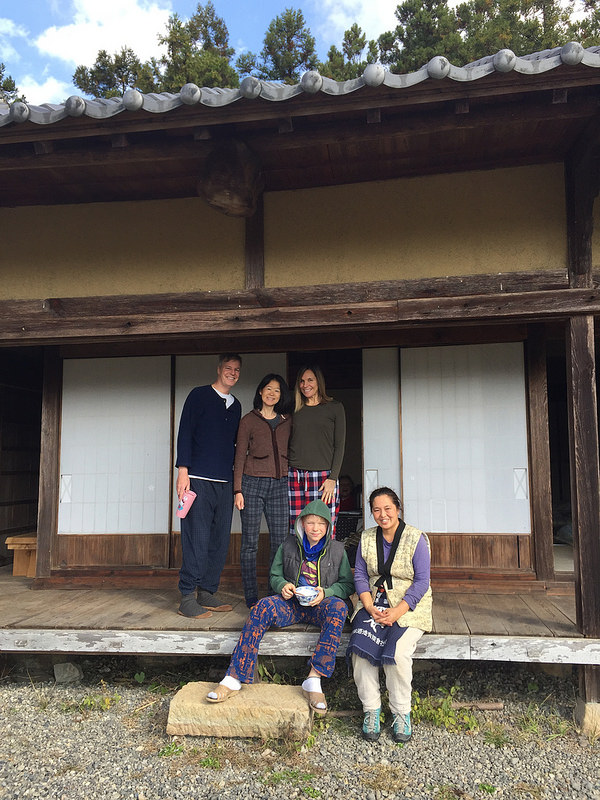
Morning in our shoji house
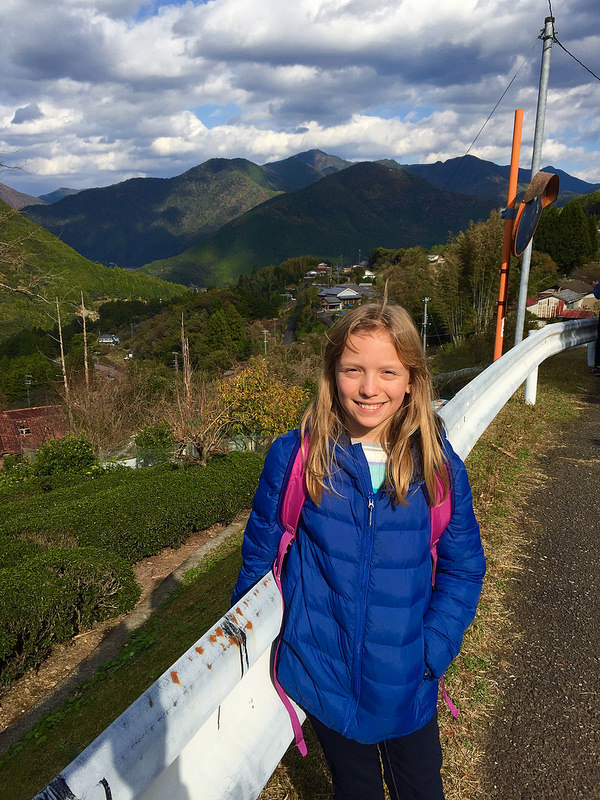
It was a nice afternoon of walking. The path was partly a paved road going through villages and partly forested dirt trails. There were interesting stops along the way, including bathrooms and places for a cup of coffee or drinks. The mountains of the Kumano river valley are not like the snow-capped Alps, but they are beautiful in their own way. We were not purifying ourselves or reflecting on the spirits of our ancestors or Buddhist deities, but we were spending time together as a family. Oliver loved fighting fantasy opponents with his friend while walking. The rest of us took pleasure in the quiet autumn colors and breath-taking mountain valley views.
The Japanese Maple is spectacular in November
A highlight for me was our accommodations. The house was over 100 years old and the owner found it abandoned and brought it to his property. It was a unique experience and gave us a glimpse into how people used to live before modernization. The traditional Shoji architecture caused me to think differently about doors and furniture. The hot water bottle in bed (see my YouTube video) was cozy.
We are spending a few days up in the mountains of the Kii Peninsula, the largest peninsula in Japan. The area is famous for a series of pilgrimage routes that criss-cross the peninsula, going between the many shrines and temples. The area has been designated UNESCO World Heritage status and I can see why.
I found an old traditional home to rent via Air BnB and it has been such a different experience. The wooden home is over 100 years old, rare in Japan, and the owner found it abandoned and moved it to his property 5km outside the town of Hongu, in the heart of the mountains. Sleeping on futons with a type of hot water bottle heater has been fun for the family. There is a really nice wood-fired bath, a traditional sun porch and a cooking rock inside. I wouldn’t want to live in one, but it has been an interesting experience.
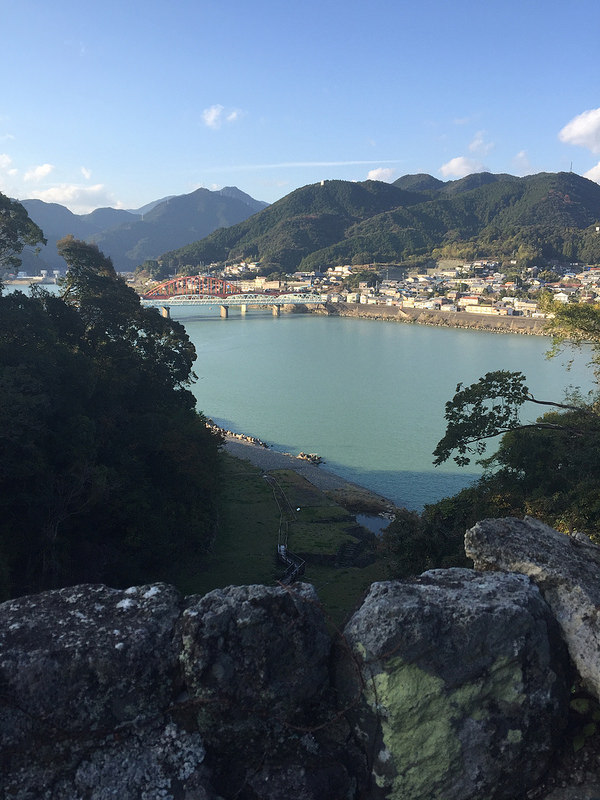
We took our time the first morning, having a leisurely breakfast and learning to chop wood. In the afternoon, we drove to east coast town of Shingu and visited the Kumano Hayatama Taisha Grand Shrine. The kids enjoyed the castle ruins and the riverfront. The Kumano River is impressive and we followed it through a steep valley. It reminded me of the River Drina through Bosnia, with the turquoise water, winding its way through steep green cliffs.
View of Kumano River from Shingu Castle
A shinto priest kindly played a Japanese flute for us and introduced us to the shrine. In all, it was a great day and we are planning to head into the mountain trails today.









 Bill's Blog