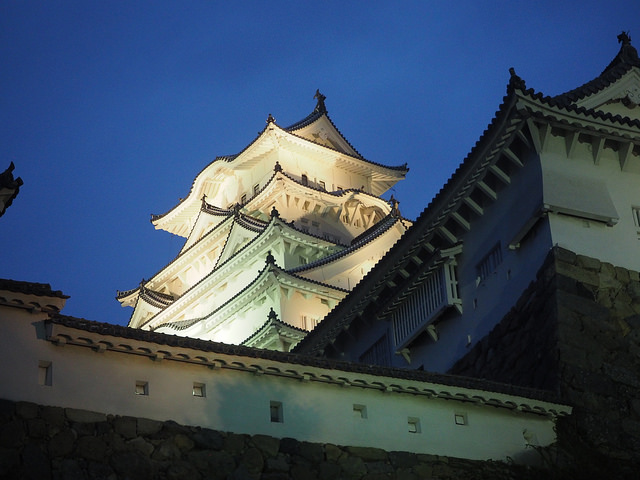
Viewing the White Egret

23308468911_54dfb2e4a9_z

On the way home from Tottori we stopped at the famous Himeji Castle in the Hyogo prefecture. It is an UNESCO world heritage site and the finest example of the classic Japanese feudal period architecture. We arrived too late in the day to enter, but we did admire it from the substantial grounds surrounding it. It is called the “white heron” or “white egret” because with the roof gables give it the appearance of the white bird taking off in flight.

Castles are always funny to me in that people don’t realize all the awful things that took place on the site. They are usually the sites of great battles where men died and if the raid successful, the women and children enslaved. Because it happened so long ago however, people look at them for the architecture and history, but not the tragic human story. Himeji is no exception to this rule and since it was originally built in the 1300s, probably many people died fighting for control of the castle and the town. It is built on a hill and dominates the city.

It is remarkable that it is still standing. During World War II, a bomb landed on the roof but failed to detonate, meanwhile the entire city was destroyed by the allies. It survived the Great Hanshin earthquake of 1995, while once again, many buildings in the city were destroyed. Earlier, it was almost demolished and developed by the locals, but the expense of tearing it down, prevented various parties throughout history from doing so.

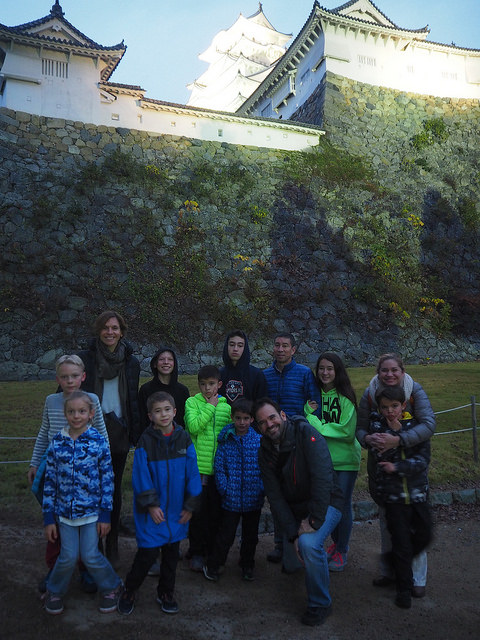
I am glad that it remained standing and perhaps if we are in the area, we will return to go inside. We found several geocaches around the castle and despite the rainy night, it was a good time. I want to thank the Tsubaki and Marce families for coming with us!
22762668424_9f5f861d13_z


Daisen National Park

During the fall break we took a few days to visit the prefecture of Tottori and the Daisen-Oki national park. It is my favorite place in Japan (so far) and it was our second visit to the area. We went with two other families from the school community. The kids had a blast, and the adults too!

22693870254_decf5955db_z

photo – Evan, Owen, Bill and Noah at Misen Peak

The highlight for me was the hike on Tuesday. We walked to the 1,709  (5,608 feet) meter high Misen Peak, in the Mount Daisen National Park. Despite fog, rain and cold winds, I had a wonderful day with my family and friends. Much of the pleasure of the hike was taken away by the clouds and fog obscuring the spectacular views to the nearby Sea of Japan. It was made up for me by spending the day outdoors and with my family. Highlights included walking through the gloomy beech forests near the town, with the falling leaves and then leaving the forest past the tree line to the summit. The winds whipping up the face of the mountain and going over at low points on the ridge were amazing to walk through! They were interspersed by quiet areas protected by rocks and bushes. It was a difficult hike with rocky steps mostly going straight up for the 6 miles up and down the trail. Nadia and the rest of the mothers and children made it to the turnaround point, close to the end of the beech forest. Owen and I and the three others went on from there to make the summit. The next day we saw snow on the mountain, so overnight, the icy winds and rain must have turned to snow, shortly after we left the summit. It was about 3 hours walk up and 2 hours walk back. The hot bath at our pension was just what the doctor ordered upon return, and a 2 hour nap!

23026434870_14ab41c14d_z

photo – Although it Daisen looks like Michigan, you don’t get Buddhist shrines in the forest like in Japan.

Daisen mountain has that classic volcano look from the west, but it has not erupted for the past 10,000 years. It has long been the center of worship, with the Daisen-ji temple founded almost 1,300 years ago. Shugendo, an ancient Japanese religion adapting shinto, taoism, buddhism and other beliefs, is practiced here. Adherents seek awakening through understanding the relationship between humans and nature and practitioners do this through denying themselves worldly pleasures and spending a lot of time on the mountain.

23322216625_435c24c609_z

photo – The kids heading up the stairs of the Daisen-ji temple.

It is pretty close to Osaka (2-4 hours) and is a relatively remote, unpopulated part of Japan. The area around the mountain reminds me of the Upper Peninsula of Michigan, so that might be one of the reasons why I love going there.

23322717156_0737827198_z

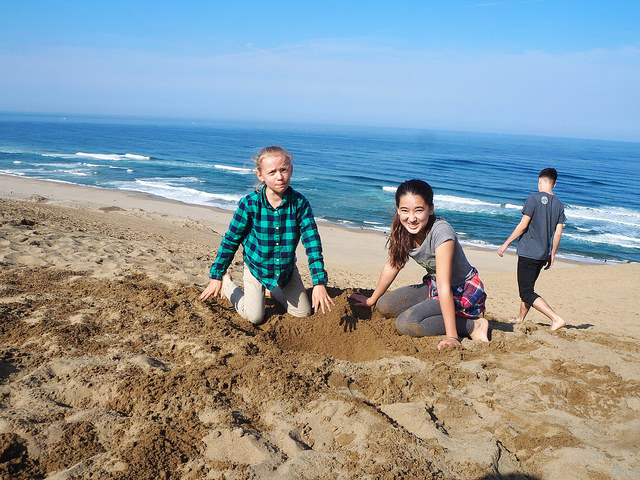
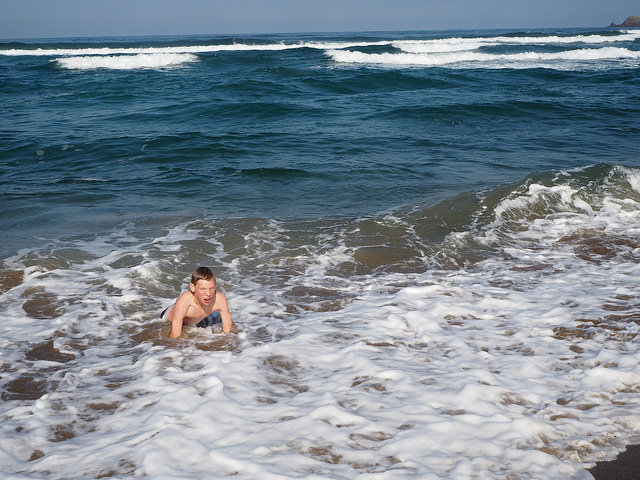
On the other side of the prefecture(state) are the Tottori sand dunes, which we visited the day before. Kids love them! It made for a perfect sunny afternoon. The weather was so nice that a couple of us even went for a swim. The huge dunes were a blast to climb up and sprint down. The crashing waves of the sea were relaxing. It might have been our last warm day of the season, as it is getting cold with the onset of winter.

23240496772_57610e118d_z

The dunes were shaped by winds bringing sand up from the sea. Over 100,000 years of this formed the only large dunes in Japan. Since World War II however, they have been shrinking due to a government reforestation program and tsunami walls further up the coast, changing wind patterns. Today they are 16 kilometers long and 2 kilometers wide.

A wonderful autumn break!

Quirky Japan: Children at Play Signs

22841528780_c4b59b907b_z

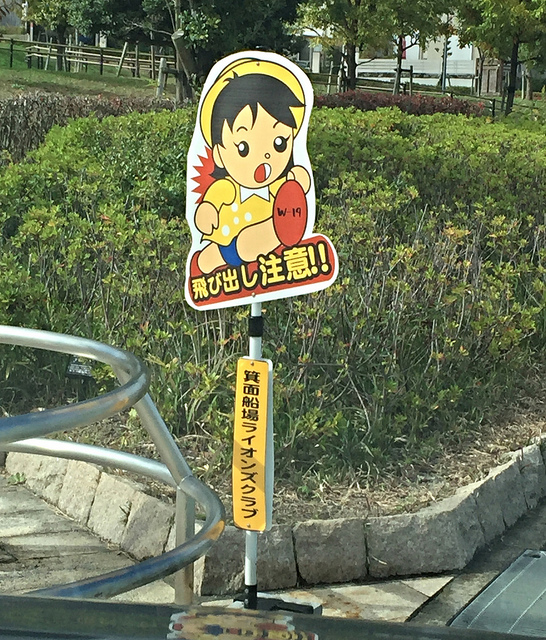
(photo – A sign at a nearby park cautions drivers that children are near)

This is another in my continuing series of “quirky Japan” which covers the little things about life in Japan that makes it distinct.

My brother and I used to joke about the “Slow Children at Play” (see below) that why are government authorities criticizing the speed of kids in a particular park. Did they take 40-yard dash times like in the NFL and deem them slow? I don’t think we consciously realized that they were meant as a warning for drivers to slow down because there is a high probability of children crossing streets or riding their bicycles in the vicinity. As a parent I am now very aware of the purpose of the signs.


ps16

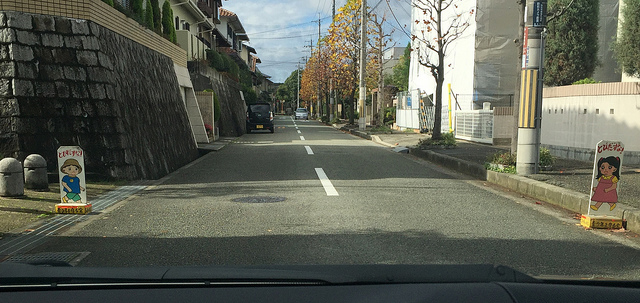
Japan takes these signs to a new level as you can see in the lead photo of this post. Mascots and cartoon figures are very popular here so it makes sense that they could be used instead of the traditional sign in the USA. I think it is much more effective that a street sign because it is so different. There are many different styles of these signs depending on the municipality or school. Below are warning signs at a pedestrian path in my neighborhood.

22841535050_284b34931b_z

The other aspect I want to feature is the ubiquitousness of vending machines. They are everywhere! There must be thousands of beverage vending machines in the Osaka metropolitan area. I will pay more attention to them and later do a more in depth blog post. I am curious about the economics behind them. How much money do they make? How often do they need to be re-stocked? Do they malfunction often?

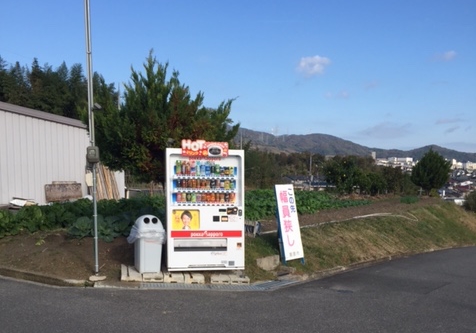
My children cannot pass one with out asking me for change. They feature both hot and cold drinks and there seems to be a vast number of different drinks to choose from ranging from teas and coffees, to water, sports drinks, energy drinks, etc. The machine below is on a corner across from the park in our neighborhood. On the other side are rice paddies. They can’t have that many people patronizing the machine. Where does it get electricity from? So many questions…

23173621841_e434be2c22_o


Farewell to Bangkok and Lumphini Park

I am partial to big parks in urban areas. In all of the cities I have lived in or visited, I always make a point to spend some time in them. I guess being from a small town, I have a need for the green of nature, or at least, to get away from cement, steel and glass. My all time favorite is Kings Park in Perth, Australia. I used to run in there often, but that was before the internet, so no blog posts 😦 .

My final post from Bangkok is about Lumphini Park. We stayed in serviced apartments down the block from the park, so I went for a morning or evening run/walk four times. A prime attraction are the large monitor lizards (photo above). One was crossing the running trail and going into the lake and I saw another swimming in the lake. It was quite tame and easy to approach and photograph.

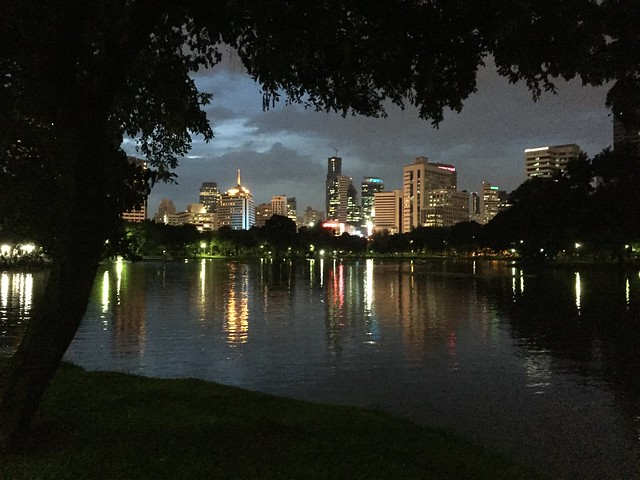
There is a 2.5 kilometer paved and marked path that circles the park. Both in the morning and evening, there were many people walking and running the path, although it didn’t feel crowded. The artificial lake offers some nice views of the central business district, much like in Central Park. Many older people were stretching or doing thai chi exercises. It was like a village inside a big city, dotted with shrines, outside restaurants and playgrounds. It is a great place to people watch.

View of the city from the Hangover II Hotel

I really enjoyed my week in the city. I wouldn’t want to live downtown where we were staying however. Traffic is a big problem as it limits ease of getting around. We were endlessly waiting at traffic lights with hundreds of motorcycles and scooters weaving in and out of traffic lanes. I would guess that air pollution is quite high. The infrastructure is falling apart, with electrical wires loose on every pole, a poor sewage treatment system resulting in a polluted Chao Phraya river and odors wafting up from the city streets and sidewalks.

My morning commute

The Thais do have beautiful smiles and positive attitudes. The temples and shrines of Therevada Buddhism are ornate blasts of color and give such an exotic feel to the city. The hustle and bustle of the people of Bangkok also is lively, giving the city a good vibe. We had some really good meals and there were lots of cafes to choose from. Thai cuisine’s focus on spices, jasmine rice and vegetables makes it one of my  favorite cuisines. We avoided the seedy sex trade sections of the city, but we did see groups of older men obviously there for that. They are also set up for tourism and so going to the muay thai boxing, taking a cooking lesson or riding an elephant is quite easy to organize. Tropical cities remind me of my first posting overseas, Barranquilla, Colombia and walking through the city brought back fond memories of my time there.

Chao Phraya River at night

I hope to explore more of the country on future visits as well as the rest of South East Asia.

Muay Thai Boxing

We attended a muay thai martial art match during our time in Bangkok. The sport is called the “art of the eight limbs” because the 2 fists, 2 elbows, 2 knees and 2 shins are used to strike the opponent. Elements of muay thai have made it into the mixed martial arts (MMA) which is currently popular in the USA. I am not a fan of violent sports like this, but I went for the cultural experience. As you can see in the video above, there is a pre-fight ritual dance. There is live music played during the pregame and matches. I think it is some type of Buddhist music and dance, but am not sure. The Thai people have fought for centuries, as the city-states and ports, wrestled for control over the vast forests and rivers of southeast Asia. It makes sense that they would develop their own form of martial art.

We had ringside seats and it was quite easy to arrange tickets from our hotel. Thailand is set up for tourists and the expensive, ringside seats were exclusively for tourists while the locals were higher up in the stadium. It was a regular Monday night card of 9 bouts at Rajadamnern Stadium . The first matches were young guys, probably between 16 and 19 years old. Thais are quite small and the weights for the fighters ranged from 103 pounds to 123 pounds. They were in peak physical condition however, and I would not want to fight them. Their chiseled physiques were evidence of years of intense conditioning.

Fighters in the first round and initial stages of the fight did a type of a rhythmic step while sizing up the opponent and delivering few kicks or punches. As the fight went on they became more aggressive. Bouts lasted from 5 to 9 rounds of 3 minutes each. I was surprised that it was a lot of clinching. They would hold each other around the shoulders and use their knees to deliver body shots.

In the featured match, Kuman Doy knocked out Phet Kriangkrai. It was an even fight until one shot to the head put down poor Phet, who had to be taken out on a stretcher.

It was fascinating to watch the trainers prep the fighters between rounds. They would douse the fighter in water and give vigorous muscle massages. Each fighter had two or three coaches who during the massages, would scream instructions and advice to them. Each fighter, especially the more experienced, had family and friends supporting them in a section behind their corner. In the crowd, people were betting with informal “bookies” who would be holding up two or three fingers. I am not sure what exactly they were betting on.

I wondered about the young men who participated in this sport. Were they poor and had to do it to try to get out of the cycle of poverty? It would be a tough life and I felt a bit sad for them. I would not go back again, but it was a fascinating evening.

It reminded me of the last time I went to a martial art event. When I was a child, my father took my brother and I to Brown County Arena in Green Bay, Wisconsin to watch professional wrestling. These were the 1970s, way before cable television and the WWF and on Saturday night, we used to watch the American Wrestling Association  a professional wrestling promotion company based in Minneapolis, Minnesota. There were some great characters like “Mad Dog” Vachon , Baron Von Raschke and Andre the Giant. As kids we loved the and I remember how exciting it was to go and see it live.

One Week in Bangkok…

I am spending a week in Bangkok and am taking pleasure in getting to know better this busy, odiferous, sensual enriched massive tropical city. It is one of the biggest tourist destinations in the world, with over 16 million foreigners visiting each year. Buddhism, brought to the Thais in the fifth century and strengthened in the thirteenth century, gives the culture a welcoming openness. Combined with inexpensive standard of living, warm weather and nice beaches/forests (rapidly being lost however), I can see why so many people come here.

The video above shows a bit of the Chao Phraya River, which the city was founded in 1782, succeeding the ancient trading post of Ayutthaya. It has grown to over 14 million people since then. The Thais are a distinct ethnic group, with influences from the Khmer (Cambodia), Mon (Burma) and the Chinese among other groups.

My view from a tuk-tuk

Mainland Southeast Asia is one of the most fertile, biodiverse biomes on earth because of the high temperatures and high levels of rainfall. The modern countries of Myanmar, Thailand, Cambodia, Laos and Vietnam have had their cultures shaped by this. I would guess there are probably many similarities among the populations and I hope to visit all of them sometime during my time in Asia. I especially want to see Angkor Wat, which was once one of the largest cities on earth.

The view of the CBD from the shores of an artificial lake in Lumpini Park.

We are staying near Lumpini Park and it is my favorite part of the city. At dusk and dawn, there are hundreds people jogging, walking, doing aerobics and practicing thai chi. It is a SE Asian version of Central Park. I run the 2.5 kilometer loop in the evenings to get some exercise after sitting and eating all day at the conferences. My least favorite part of Bangkok is the traffic. It is very noisy and the stop and go traffic, with motorcycles zipping by, even makes walking on the sidewalk risky. It really lowers one’s quality of life here. It makes getting around a logistical problem and forget about running/riding a bike here. The pollution levels alone would make it unhealthy, let alone safe from being struck by a vehicle.

This our typical view from the taxi each morning on the way to the conference.

 I hope to get some more blog posts out this week as I get to know more about this fascinating city.

Happy Birthday Vietnam

Last night I attended a reception hosted by the Vietnam Consul General, Tran Duc Binh at the Rihga Royal Hotel in downtown Osaka. I was representing the school with two colleagues on the leadership team. We are pictured above with the Consul General and his lovely wife Nguyen Viet Anh. There were about 500 people in attendance on the eve of the 70th anniversary of National Day of the Socialist Republic of Vietnam.

I learned much about Vietnam in listening to the Consul General’s speech. The country has experienced incredible economic growth in the past 20 years. Their largest trading partner is Japan, and so the business community in Osaka was well represented at the party, as well as other consulates in Osaka. I didn’t know Vietnam was so big, with more than 90 million people. They have had quite a 70 years, going from resisting the occupations of France and the USA and getting over a civil war. I wonder what the future holds for the country, now with a better economy, but a growing powerful neighbor in China. When the speeches got a bit dry, I read on wikipedia where the Vietnamese people are genetically, in the middle of the east Asia – south Asia continuum. I admired the women’s national dress, the Ao Dai (photo below courtesy of (Impresive magazine) It is stylish, yet looks super comfortable. I think my wife Nadia would look great in it.

We ate and drank well – thank you for Consul General Duc Binh for the invitation! That is a one of the nice things about working in international education is the contact with the international diplomatic community.

Afterwards, we explored a bit of the old Fukushima neighborhood of Osaka. The city is great for the small alleys with loads of great restaurants, cafes and bars. It really is a foody paradise. The canals of the Yodo river and city lights were also picturesque. All in all, a pleasant evening out.

Ventura California

After a day of shopping at an outlet mall, we spent a couple of hours on Ventura Beach, located in the city of Ventura. It is located just northwest of the Los Angeles metropolitan area. We enjoyed a bit a swimming and playing on the beach. The water was quite cool and the cold breeze kept most people away so we had lots of space to run around.

Ventura is famous for its agriculture because two rivers empty to the sea nearby and it created super fertile soil. It is still today one of the biggest citrus growing regions in the world. We saw some of the migrant workers in the fields as we headed from Caramillo to Ventura. It is far enough out of LA to feel a bit like the desert west and had a much different feel than the city.

It was nice to get a taste of California surfing beach culture. Traffic also was not too bad on the way home, something that is always a concern in LA.

Father’s Day 2015

I had a really nice day Father’s day with the kids. The only negative was Nadia was traveling today and couldn’t be there with us. I did go to the airport with her in the morning and see her off. She is chaperoning the World Scholar’s Cup team that is competing this week in Kuala Lumpur, Malaysia.

I spent father’s day exactly how I wanted to, with my children. We played basketball in the school gym and then went to Starbuck’s for a light brunch.

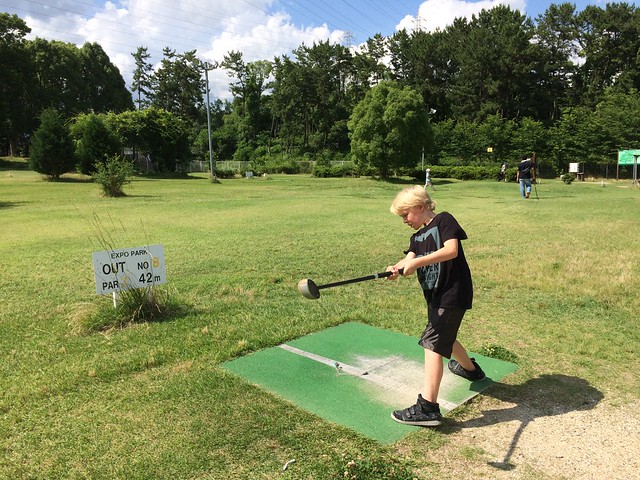
After a nap, the kids and I rode our bikes to Park Golf, a “mini-golf” course in Expo ’70 Park. I have never seen a course like it before. Each hole is around 40-60 meters in length. We used sticks resembling wooden drivers and the ball was similar to a croquet ball. The par 66 course is a total of almost a kilometer. The kids loved it because a variety of skill levels can enjoy the course. For serious golfers, one can work on the short putting game and for kids, they can just  whack the ball as many times as they want.

I shot a 71, Owen a 78, Oliver a “110” and Ocean a 139. To play is costs 400 yen ($3.20) for kids and a 200 yen to rent a ball. You can play for as long as you want. The course was not crowded either. It is a nice thing to do for a morning or afternoon for a family.

We finished the day off with dinner and a couple of episodes of Modern Family. The kids are being nice and pretending the pasta I prepared was delicious. It was just a super nice day – what a privilege it is to be a father!

A final thought – I miss my father – here is a photo from 2007 with all of the Kralovec men!

Gamba Osaka

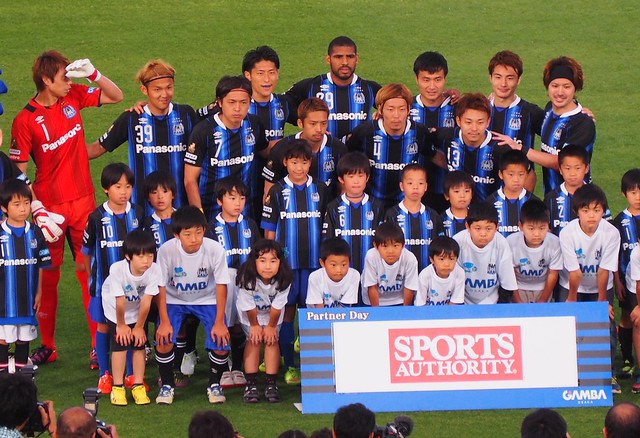
We just got back from attending the  top professional soccer league (J-league Division 1) game between the local Gamba Osaka versus south Tokyo-based Kawasaki Frontale. The top player for Gamba, Usami #39 (back row, second from left) scored in the 43rd minute of the first half. Kawasaki equalized in the 81st minute of the second half and the game ended in a 1-1 draw. I thought Gamba dominated the first half and Kawasaki the second, so it was a fair result.

The “Gamba” comes from the Italian word for leg and the Japanese “gambate – go for it”. They seem to be modeled after Inter Milan and I did see some Italian signs of the fan clubs around the stadium. They are the defending J-League champions, but are third in the table this year, behind FC Tokyo and Urawa Red Diamonds. There biggest season was in 2008, when they won the Asian version of the Champions League. The team started from the defunct B team of cross-town rival in the J-League, Cereza Osaka.

Gamba plays in Expo 70 stadium which is very close to our house in Minoh. They are building a new Suita Stadium, which is close by the current stadium. It will open next season. Both stadiums are in the Expo ’70 or Bampaku park and it is a really nice area. We bike and run around and in the park often.

Tribalism and Nationalism are present in soccer stadiums around the world, including Gamba Osaka

My favorite player for Gamba tonight was striker Takashi Usami. He is only 23 years old and an aggressive, exciting player. He took a lot of shots on goal, which I like to see. He spent a couple of years in Germany, one playing for Bayern Munich. Attendance was over 18,000 and the stadium, although a bit old, was quite comfortable. The crowd was not as big or crazy as the Hanshin Tiger game. A nice evening out!